
Barefoot Theatre Collaborative’s Gabriela: The Musical Dresses for the Revolution


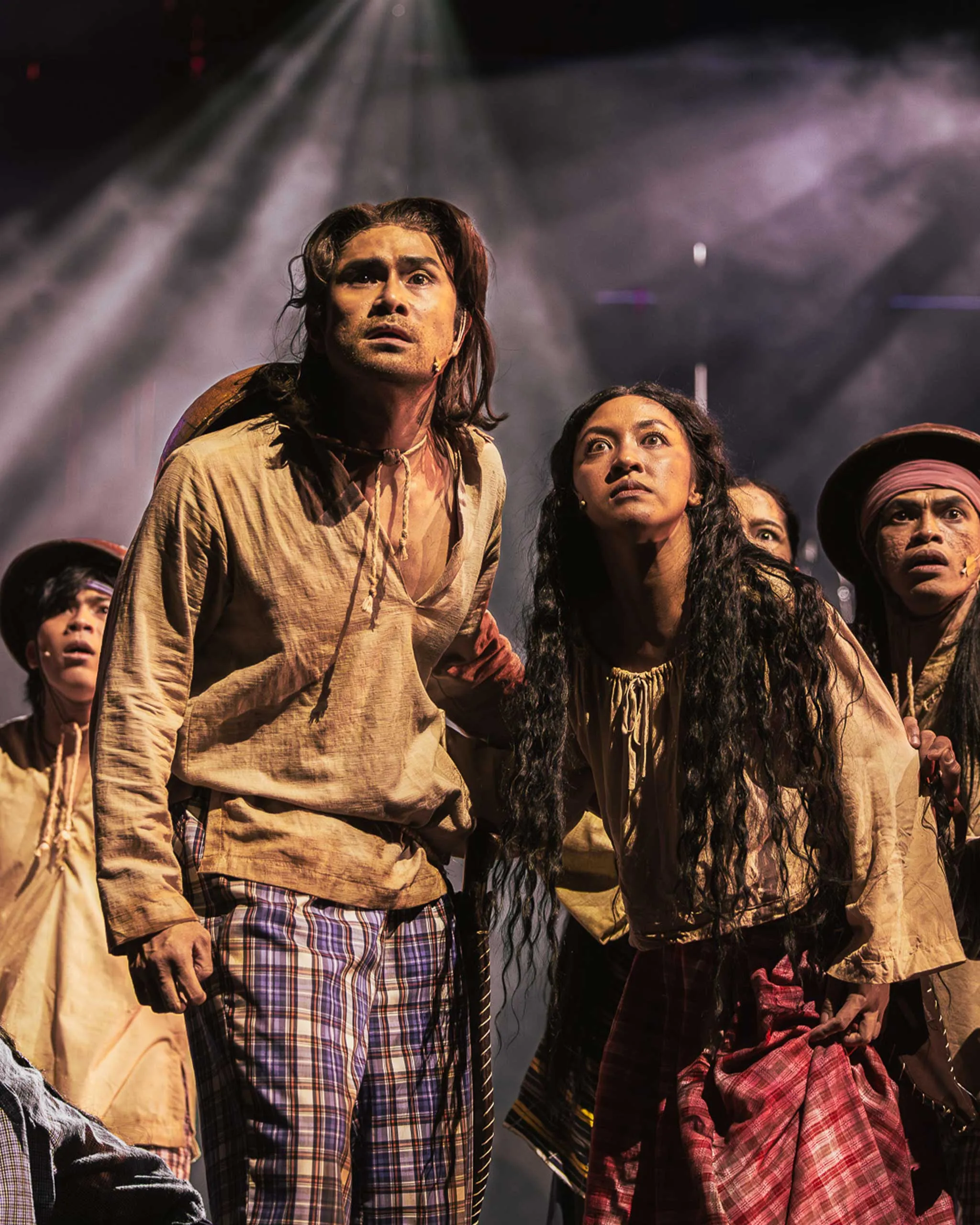
Gabriela: The Musical takes 1700s dress and modifies it for the contemporary stage. Photographed by CJ Ochoa, courtesy of Barefoot Theatre Collaborative
Costume designers Arvie Santos and Kath Allen Baillo talk with Vogue Philippines about what it takes to clothe a period piece.
The minute the curtains rise at Gabriela: The Musical, audiences are treated to an ensemble dressed for the 1700s. As early as its opening number, the class distinctions among the characters are clear: The townspeople below the stage balcony wear camisas and salakots, contrasting starkly with the alcalde and principalia looming over them in top hats and baros. Costume designers Arvie Santos and Kath Allen Baillo bring subtle details to the troupe’s costumes, introducing bursts of color and different weights of plaid.
For the two, the 18th-century tradition of layeringLayeringThe practice of combining multiple garments of different lengths, textures, and weights to add depth, warmth, and visual interest. In skincare, layering means applying products from thinnest to thickest consistency,Go to Layering Glossary is both a blessing and a curse. With its mix of hues and patterns, layers make mix-and-matching easier. Santos explained, “Our approach was to look at the costumes not just as individual pieces of clothing but as part of a larger visual composition.” Baillo also clarified that the process involved extensive research: “During the design process, Arvie and I made sure to align heavily with research and dramaturgy.”
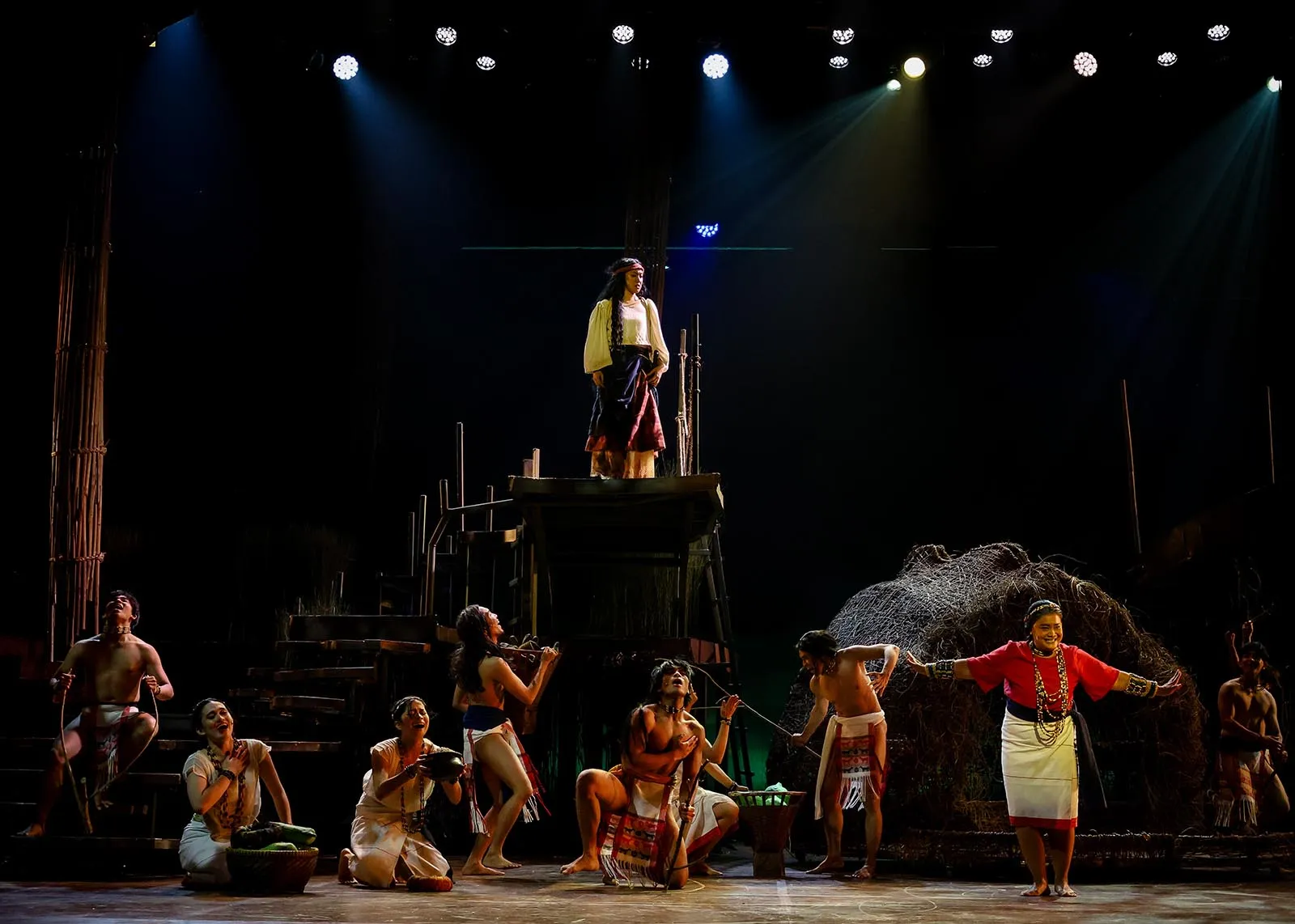
Many technical adjustments are necessary to accommodate choreography. “We definitely made adjustments to the fabric, length, and measurements for better mobility and comfort of the actors,” Baillo said. Santos agreed, specifying changes to the length and silhouetteSilhouetteThe overall outline or shape of a garment or look, such as A-line, column, or hourglass. Silhouette defines the first visual impression of an outfit and is often the mostGo to Silhouette Glossary of the say. “We also decided not to use actual materials for some of the costume pieces. For example, instead of using an actual piña fabric for the baro and barong, we looked for alternatives that have similar appearance and quality.”
There is, however, a particular appreciation that comes from watching a historical musical filled with stunts and choreography. After all, traje de mestizas and baro’t sayas were not exactly made to be danced in. The costumes offer a unique lens through which to understand the resilience of women in the olden days, who continued to work and revolt despite wearing restrictive clothing. This narrative is reflected in Gabriela Silang’s eventual change throughout the story, from a gaudy traje de mestizaTraje de MestizaThe traje de mestiza is a nineteenth-century formal dress of Filipino women of means, an elaborate baro't saya in fine fabrics, finished with a panuelo and tapis. It preceded theGo to Traje de Mestiza Glossary at her first introduction to a looser baro’t saya by her final bow.


As the musical explores Silang’s life, the Itneg characters Kunyap, Tagaben, and Dawak are introduced to both the audience and the townspeople, reminding them that this story is rooted in reality. Designing costumes with respect to a living culture was a challenge for the two designers, with Santos admitting that he initially “overthought this part of the process.”
He explained, “I wanted to make sure that the design is respectful and meaningful and not simply using indigenous clothing as an aesthetic.” Baillo reiterated the importance of aligning with dramaturg Katt Sabate and director-playwright Pat Valera when developing costumes for the indigenous characters, alongside conducting their own research. The team used actual Itneg garments such as the tapis and baal to help explore the Itneg’s oneness with the world.
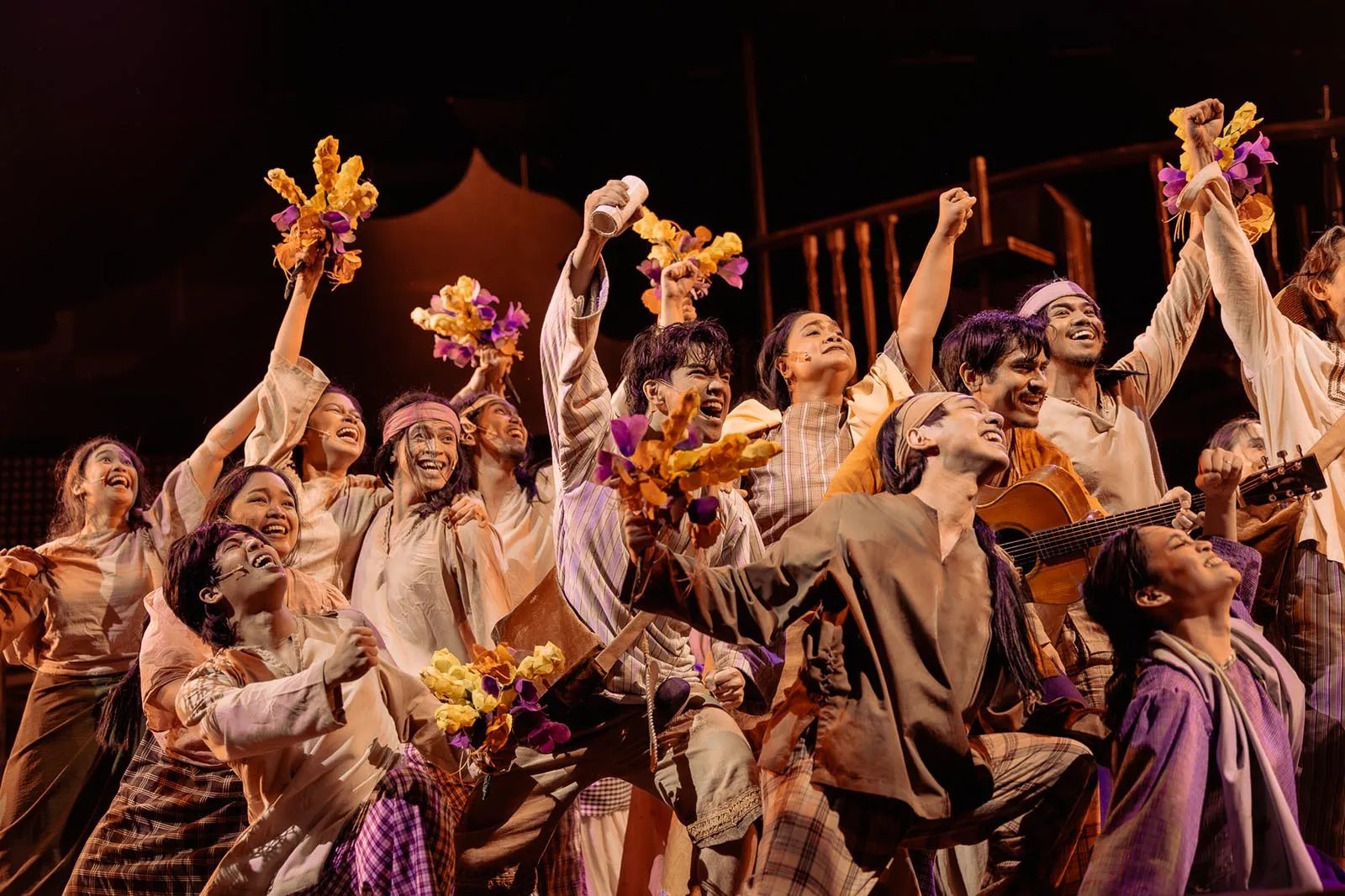
The designers’ work in building a visual world for Ilocos, one costume at a time, is echoed in the messaging of the second act. In finding the Itneg people, the allegory of weavingWeavingWeaving refers to the technique of interlacing two sets of yarn, the warp and weft, on a loom to create cloth, central to Philippine textile heritage. Regional weaving traditions, fromGo to Weaving Glossary is introduced as a means of connecting the lives of all Filipinos. Santos reflected on the beauty and weight of this symbolism. “For me, weaving kasi is a beautiful metaphor of unity: different threads and colors come together to create one piece. I also think reflection din siya of us Filipinos, different in many ways but connected by our shared history and culture.”
Gabriela: The Musical runs until December 6, 2026, at the Hyundai Hall in Areté. You can find tickets here.
Frequently Asked Questions
Gabriela: The Musical focuses on the life of heroine Gabriela Silang, told through the lens of love, revolution and the birth of a people.
Gabriela: The Musical is written and directed by Pat Valera.
Arvie Santos and Kath Allen Baillo are the costume designers of Gabriela: The Musical.
Gab Pangilinan plays the titular role of Gabriela Silang in Gabriela: The Musical.
Gabriela: The Musical runs until Dec. 6, 2026, at the Hyundai Hall in Areté, Quezon City.