
Avid Liongoren on the Long Road to Bringing Zsazsa Zaturnnah to the World


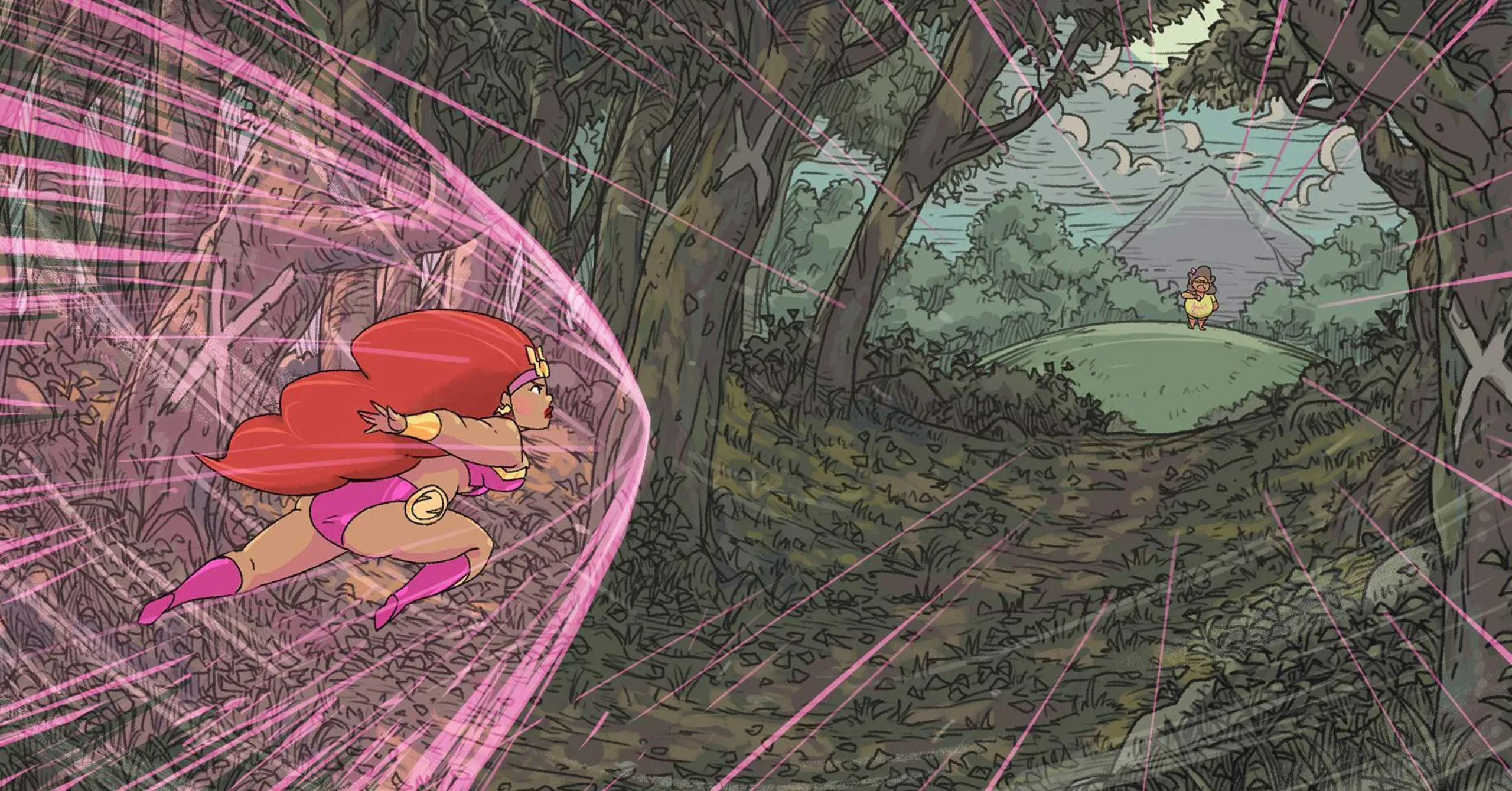
Zsazsa speeds through a vibrant forest setting inspired by the Philippine countryside. Courtesy of Rocketsheep Studio
Zsazsa speeds through a vibrant forest setting inspired by the Philippine countryside. Courtesy of Rocketsheep Studio
After receiving a standing ovation at the Marché International du Film d’Animation (MIFA) in France, Avid Liongoren reflects on the six-year journey of bringing Zsazsa Zaturnnah to life and his growth as a filmmaker.
Receiving a standing ovation on the global stage is no small feat. Avid Liongoren, director of Zsazsa Zaturnnah, knows this well, so he couldn’t help but look back on the journey of the past few years and what it took to get this far. Just as heroines in superhero films struggle at the beginning of their origin stories, Liongoren acknowledges that despite the recognition he has received now, everything is still in the process of falling into place.
A few weeks ago, the Filipino animated film Zsazsa Zaturnnah premiered at the Marché International du Film d’Animation (MIFA) in Annecy, France, under the Midnight Specials section. The film is an animated adaptation of the popular Zsazsa Zaturnnah komiks, and it received a standing ovation at the international animation event.
In an interview with Vogue Philippines, Liongoren enters the meeting with a smile, showing the tiny drawings he had made just a few minutes earlier. It’s the same smile seen in photos from France after his work premiered and was warmly received. Recalling that moment, Liongoren says that it was a huge relief, given that it was the brainchild he had been working on for six years. “It was well received. You know, just to have an entire packed cinema react to what we made? That’s precious, very precious,” he says.
Amid this success, he couldn’t help but remember how, just a few years ago, he had finished his first few films and his team couldn’t even get into festivals despite all their hard work. Now, the tide has turned, and they have been able to use that momentum to their advantage by negotiating and finally having the freedom to choose which festivals to join. “We were submitting and we were getting rejection letters all over. [But now] we already had festivals lined up for Zsazsa even when we were not [yet] finished because they’ve heard of the project. They’ve seen the work in progress, the rough cut of it, and they would invite us already.”

Carrying Philippine heritage in the film is one thing, but queer representation is another. Adapting Carlo Vergara’s novel into an animated film two decades later meant adding elements that make the work more relevant and timely in today’s context. “At that time, LGBTQIA media just meant that gay characters are either tragic or the butt of all jokes. Now, we have many stories. I guess the challenge now is to let people know that this is just one story,” he explains.
Liongoren acknowledges that they have taken a step toward representation, but he also hopes this won’t fall into what he calls the “beauty queen dilemma,” where representation is limited to just one story. “Suddenly this one story should hit, should represent the entire community, but it’s not. That’s the challenge,” he adds. “With more stories like this out there, the communities [will be] more vocal.”
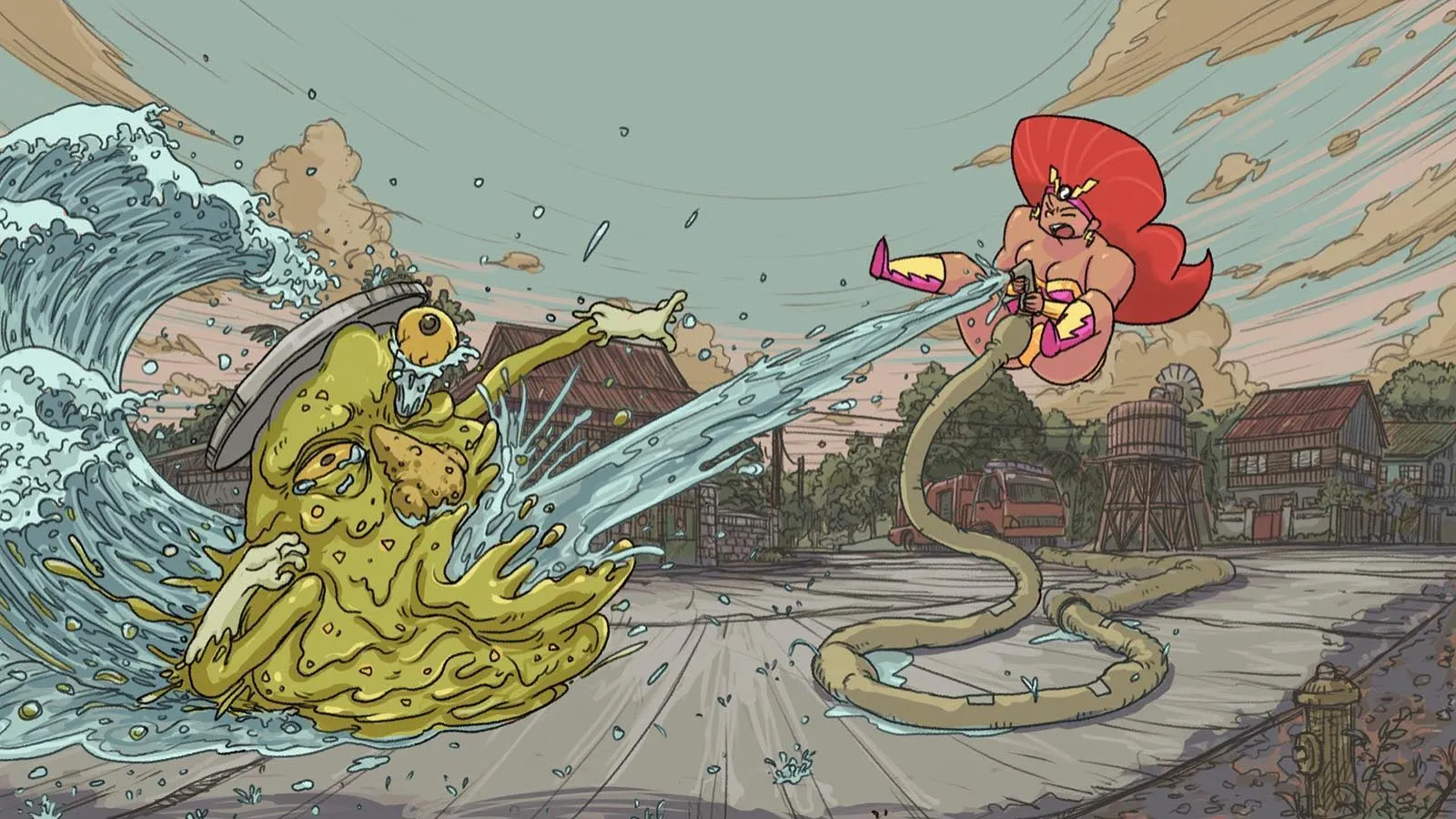
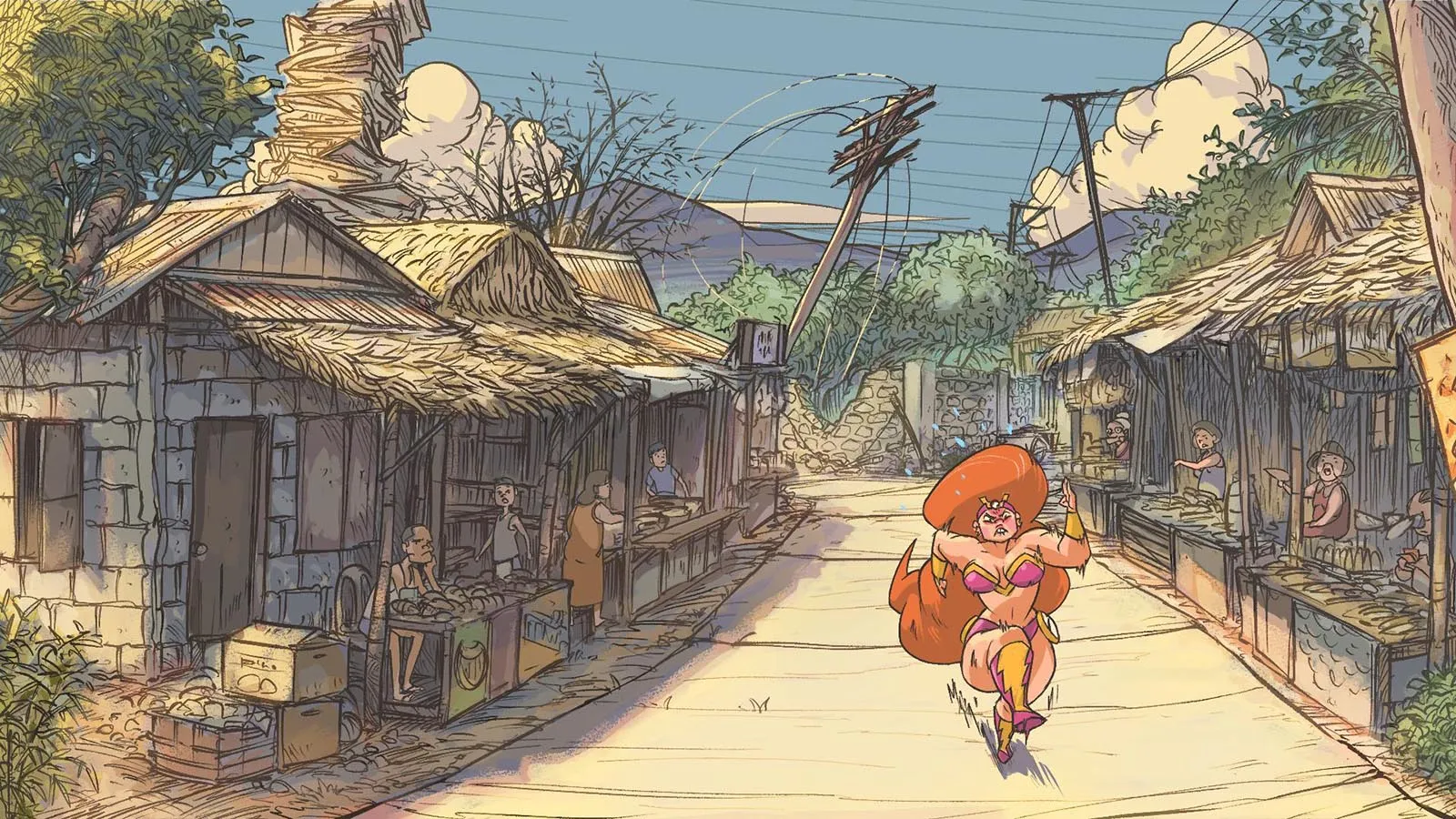
With Zsazsa Zaturnnah‘s distinct visual identity, the film is another addition to the growing body of Filipino pop culture. Liongoren says that the biggest inspiration behind its look was the desire to make the film feel more Filipino. Growing up exposed to foreign media like anime and Disney, he says this often pushes people working in animation and graphic arts to draw characters in a similar style.
“We made the characters browner, all of them. They don’t have sharp noses, and the settings, of course, look like Laguna. We don’t know what Filipino cartoons look like yet. Nobody has tried it. At least, our directive was to try to make the characters ethnically Filipino.”
Working on the film for half a decade, calling the shots, and deciding its technical aspects became another chapter in Liongoren’s journey as an artist. He even reached a point where, after working on it for so long, he wondered whether there would be any reward for all the effort. But if anything, he is most thankful for the people who applauded the film, especially the team that changed his perspective as a filmmaker.
“When you’re a young filmmaker, you tend to think that whatever good you do, it’s because of you. It’s because you’re talented or great at what you do. But then over the years, you realize that if you’re part of a project, you are just a part of [it]. A film is the sum of the efforts of so many people.”
In this same context, Liongoren acknowledges that while his team is receiving recognition, he is still facing the other side of filmmaking, which is making a living from it. While it is difficult, he still hopes more people will be encouraged to create because, to him, “it will really take everybody to create an animation scene.” He hopes not only to survive, but also for the people in the animation industry to thrive in a more sustainable environment where they can make a living despite the growing threat of being replaced by artificial intelligence.
“I don’t know what our place in it is, but despite all that, I still hope that somehow it pays off and there’s still enough people out there who appreciate this art form,” he he says, expressing hope for the future of animation.
Frequently Asked Questions
Avid Liongoren is a Filipino filmmaker and animator. He directed the animated film Zsazsa Zaturnnah, an adaptation of Carlo Vergara’s popular komiks, and is known for creating works inspired by Filipino culture and pop culture.
Zsazsa Zaturnnah is a Filipino superhero story created by Carlo Vergara. It follows Ada, a gay beautician who transforms into the superhero Zsazsa Zaturnnah after swallowing a magical stone. The komiks has also been adapted into a musical, a live-action film, and an animated movie.
Carlo Vergara is a Filipino comic book creator and illustrator. He is best known for creating Zsazsa Zaturnnah, a groundbreaking Filipino superhero story that features LGBTQIA+ representation.
The Marché International du Film d’Animation, or MIFA, is one of the biggest animation markets in the world. Held every year in Annecy, France, it brings together filmmakers, studios, producers, and distributors to showcase animated projects and connect with the global animation industry.
Anime is a style of animation that comes from Japan. It includes many different genres and is known for its distinct art style, storytelling, and memorable characters, making it popular with audiences around the world.
- Exclusive: A First Look at BINI’s “A Parallel World” for Dreamworks’ ‘Forgotten Island’
- Behind the June/July 2026 Issue: Ang Pagbuo ng Isang Edisyon Nakasalin sa Filipino
- Filipino Folklore Takes the Spotlight in DreamWorks’ Upcoming Film Forgotten Island
- From Maximum Pleasure Guaranteed to Forgotten Island, Dolly de Leon Shows No Sign of Slowing Down