Francis Dravigny on Working with Philippine Fibers


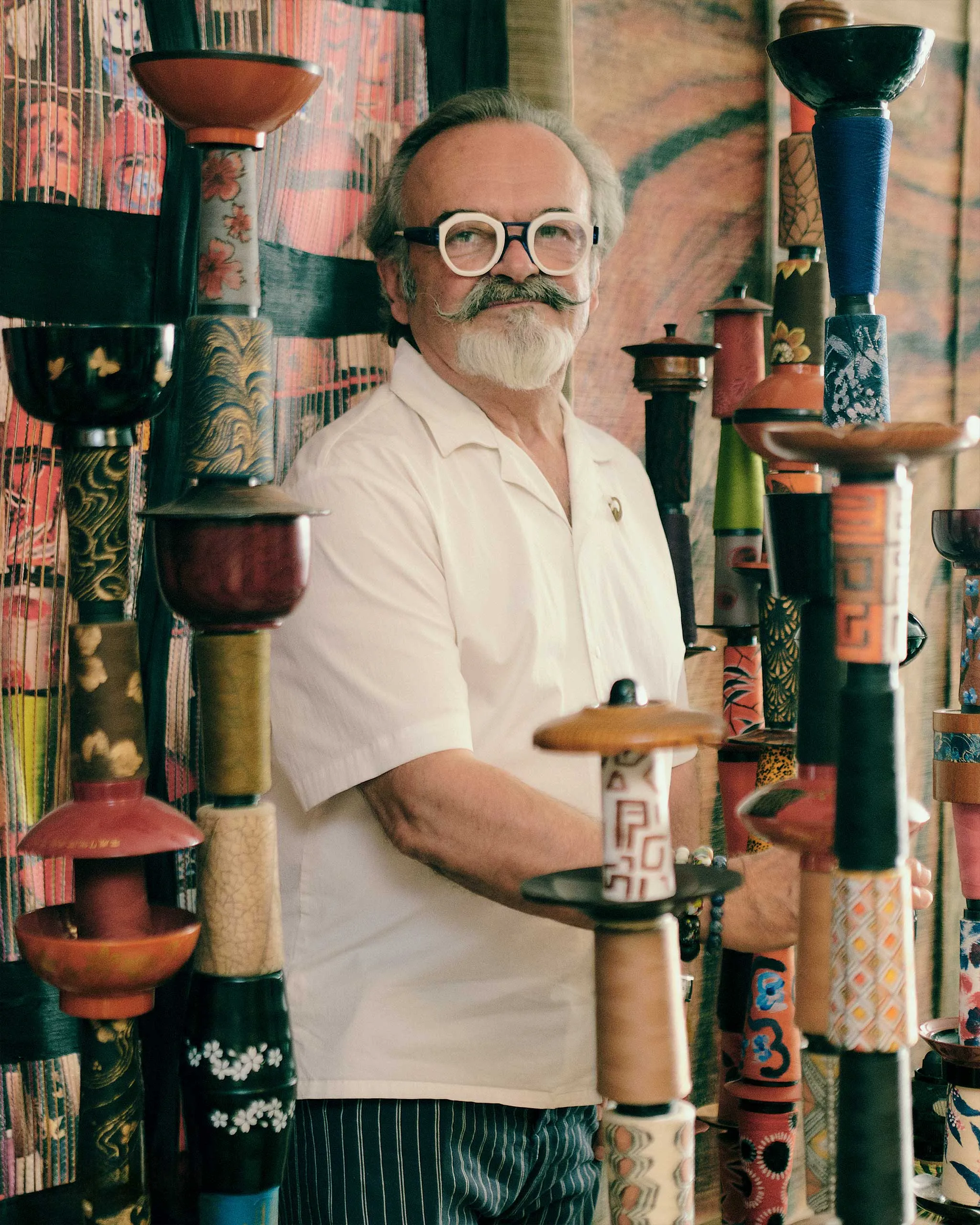
Photographed by Zach Aldave for the November 2026 Issue of Vogue Philippines
For more than three decades, the French designer and artist has built a life in Cebu showing us the endless possibility of local material.
Francis Dravigny has been cutting things apart since he was four years old. His mother, he remembers, used to tell him that this was his first instinct as a child, and decades later, the habit has become one of the defining gestures of his artistic practice. He cuts up old kimono, faded banig, antique fabrics, strips of leather, remnants from his own textile production, and whatever else he finds with a surface, color, or texture worth preserving. He then combines them with abacaAbacaA strong natural fiber from the abaca plant, also called Manila hemp, native to the Philippines. Designers and weavers use it for textiles, bags, hats, and sculptural fashion, prized forGo to Abaca Glossary and other Philippine fibers, weaving and manipulating them into something that did not exist before. “I cut, cut, cut,” he laughs, “and I continue now.”
It is an appropriately unruly way to understand Dravigny, whose career has never moved in straight lines. Born in Reims, in France’s Champagne region, he grew up in a family with generations of ties to the wine trade, with his great-grandfather even travelling to Russia to make Champagne for the Tsar. Dravigny eventually studied art and jewelryJewelryDecorative adornments worn on the body, from fine pieces in gold, diamonds, and pearls to fashion jewelry made of accessible materials. Jewelry completes an outfit and often holds sentimental orGo to Jewelry Glossary design in Paris, establishing a jewelry business in 1978 before moving into furniture and furniture accessories. Older industry accounts place Cartier, Fred, Van Cleef, Neiman Marcus, Sonoma, and other international names among the companies connected to his design career.
The Philippines entered his life almost by accident. In 1993, a family friend asked him to help find a furniture factory in Thailand or the Philippines. After first travelling to Thailand, he came to Cebu, where he found a company working with rattan furniture. He stayed, beginning a relationship with the country that would eventually reshape his career and, by his own account, his understanding of materials.
There is a particular irony to the way he tells the story. The furniture project that brought him to Cebu involved a new generation of plastic furniture designed to replace materials such as rattan and wicker. The concept became commercially successful and was copied across the region, and three decades later, Dravigny speaks with some regret about the proliferation of plastic furniture that followed.
“Sometimes I feel guilty because I brought this technology with my friend to the Philippines,” he says.
That discomfort would eventually point him in another direction. When Dravigny first encountered Philippine fibers, he discovered a material culture that he felt had been overlooked by the international design industry. Abaca, raffia, buntal, pandan and other fibers became his new field of study. He travelled around the country, visiting markets and communities and learning how materials were harvested, prepared, dyed and woven. One of his earliest major discoveries was the work of Tboli weavers in Mindanao, whose ikat textiles he began bringing to France and presenting to an international audience.
AbacaAbacaA strong natural fiber from the abaca plant, also called Manila hemp, native to the Philippines. Designers and weavers use it for textiles, bags, hats, and sculptural fashion, prized forGo to Abaca Glossary, scientifically known as Musa textilis, is native to the Philippines and remains one of the country’s significant fiber crops. The plant has long been associated with Philippine craft and industry, from cordage and handicrafts to specialty paper and other industrial applications, but for Dravigny, its value was never simply functional.
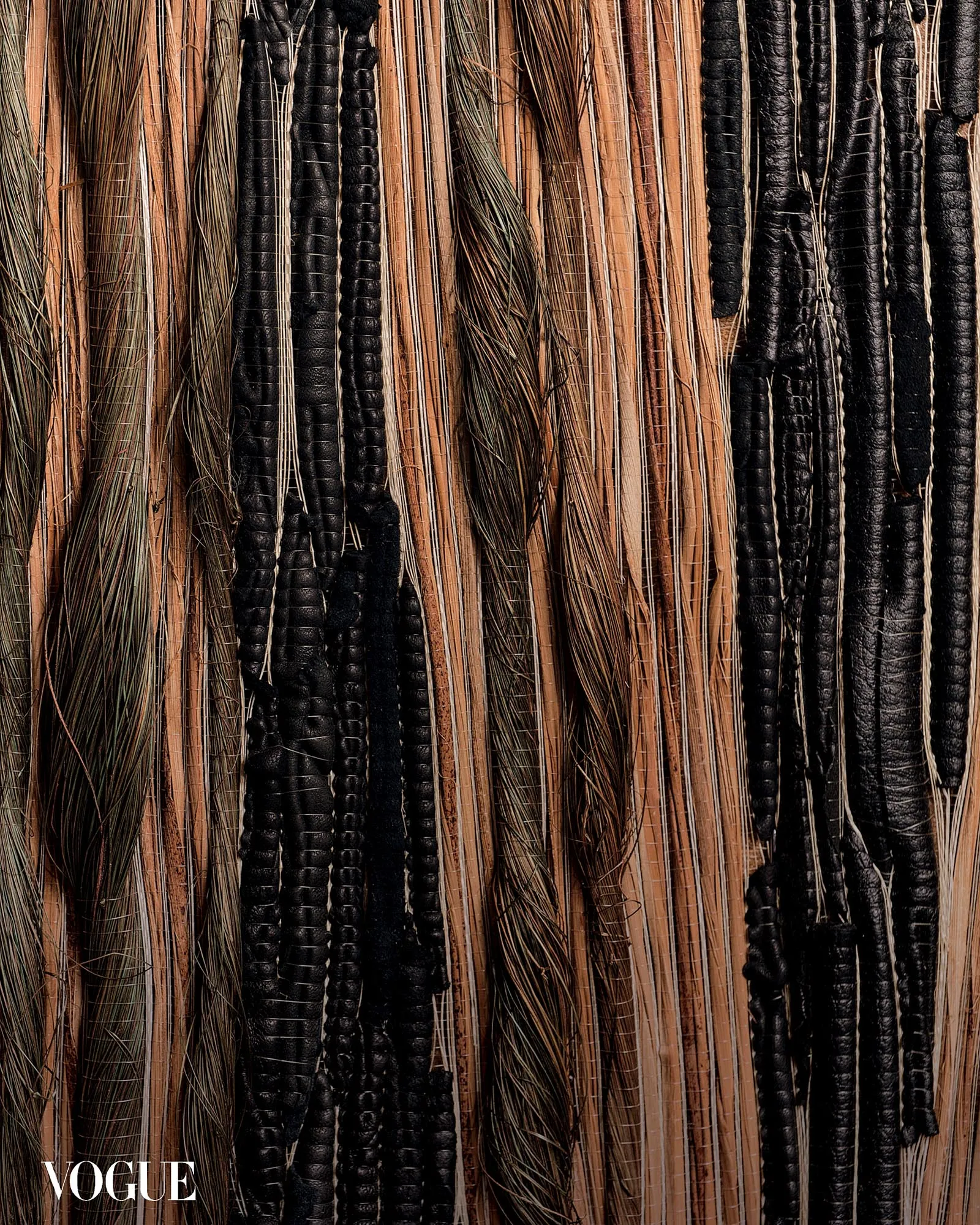
He became fascinated by everything embedded in the process. A fiber passes through farming, stripping, knotting, dyeing and weaving before it becomes fabric, with individual techniques carrying their own histories. In Tboli ikat, for instance, the pattern is created through a laborious process of tying and dyeing before the material is woven. Dravigny came to understand that the textile itself could communicate information about the people who made and wore it. “Each pattern has a meaning,” he says. “It’s like an ID of the people wearing it.”
That attention to process became central to his work, but it also created a practical problem. Traditional Philippine looms produced widths that could be difficult to sell into the international interiors market, where larger dimensions were often required. Dravigny and his team began developing wider looms, eventually reaching 1.4 meters while retaining hand-weaving techniques and traditional materials. The change allowed Filipino weavers to work toward an international market without abandoning the skills that made the textiles distinct in the first place.
The result became the foundation of Cebu Interlace Weavers, which has spent decades turning Philippine fibers into high-end textiles for interior projects. In 2018, the Department of Science and Technology described Interlace as having produced thousands of fabric iterations incorporating abacaAbacaA strong natural fiber from the abaca plant, also called Manila hemp, native to the Philippines. Designers and weavers use it for textiles, bags, hats, and sculptural fashion, prized forGo to Abaca Glossary, raffia and other tropical fibers, with materials used by international luxury brands including Chanel, Dior and Louis Vuitton. Vogue Philippines has also reported that Dravigny’s fabrics have been used in fashion, including a Rajo Laurel gown worn by Dolly de Leon to the 2023 BAFTAs.
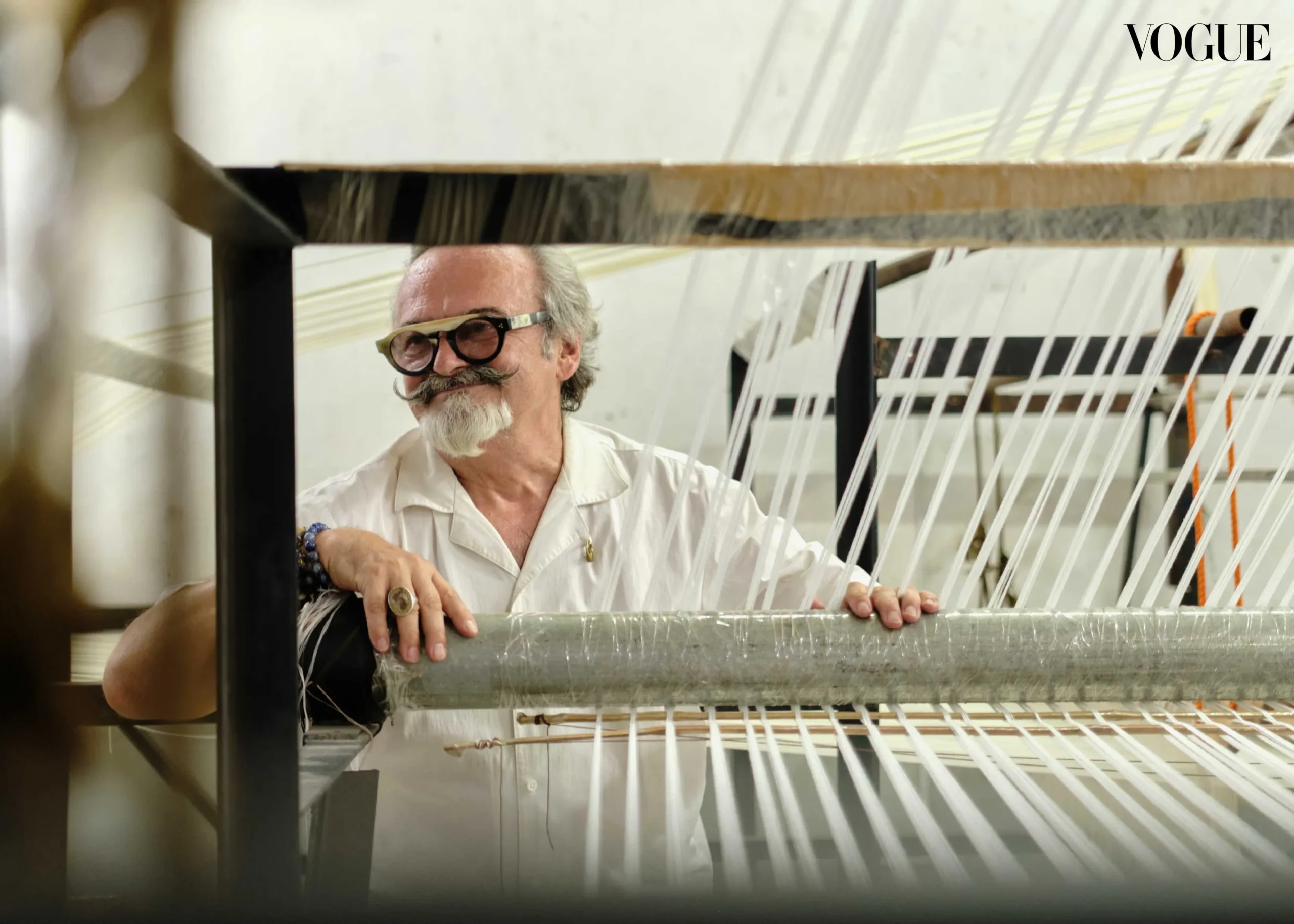
Yet Dravigny talks about this work with an unusual insistence on the people behind the material. “When I sell 100 metres of fabric, I don’t only sell fabric,” he says. “I sell half a percent of fabric and the other half percent is the story of the Philippines.”
The wording may be characteristically French-English, but the idea is straightforward, and that’s the notion that the value of the finished textile comes from a chain of labor and knowledge that begins long before it reaches a loom. Dravigny describes the farmer who grows the abaca, the people who strip the plant, those who knot the fibers by hand, and the weaver working at the loom. A single loom, he explains, can involve a much larger network of people whose work supports its production.
That is also why he has become vocal about the future of Philippine fibers. Dravigny is critical of the practice of exporting raw materials without building enough value-added production around them. He argues that when the material leaves the country before it can be processed into yarn or woven goods, the economic chain surrounding it disappears with it. His concern has been documented beyond his interviews; a British Council report on sustaining handloom weaving in the Philippines has likewise identified sourcing and supply issues around abacaAbacaA strong natural fiber from the abaca plant, also called Manila hemp, native to the Philippines. Designers and weavers use it for textiles, bags, hats, and sculptural fashion, prized forGo to Abaca Glossary, including concerns raised by Dravigny and weavers in Lake Sebu.
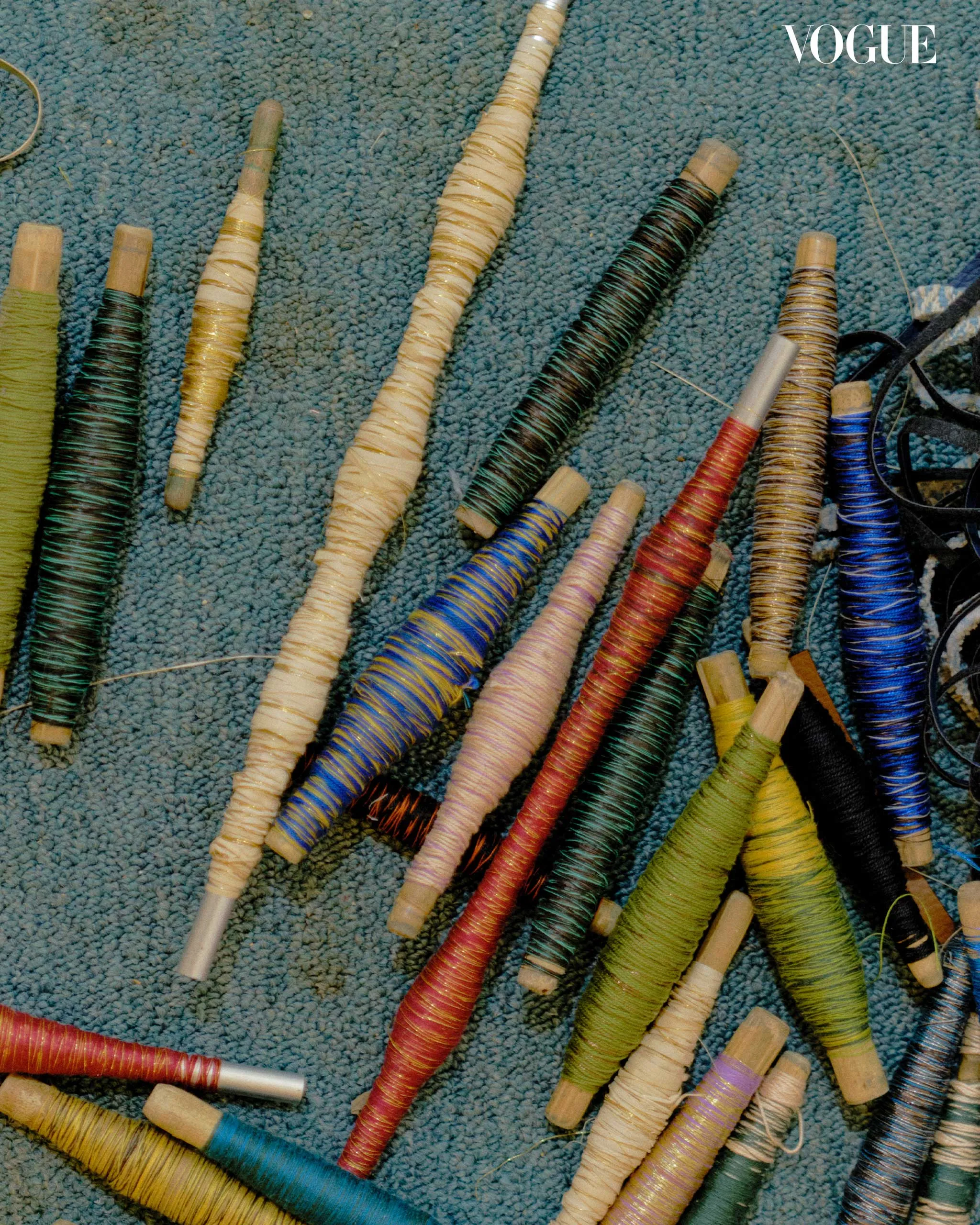
For Dravigny, the question is ultimately about building an industry that can sustain the people who possess the knowledge in the first place. He has spent years speaking with government agencies about the issue, while arguing that Philippine design should compete internationally through craftsmanship, specificity and quality.
“The Filipino people are talented, they are creative, but not enough people are exposed to the international market.” There is an opportunity for Philippine materials in specialized, high-end markets where limited production and handcraft can be assets rather than disadvantages.
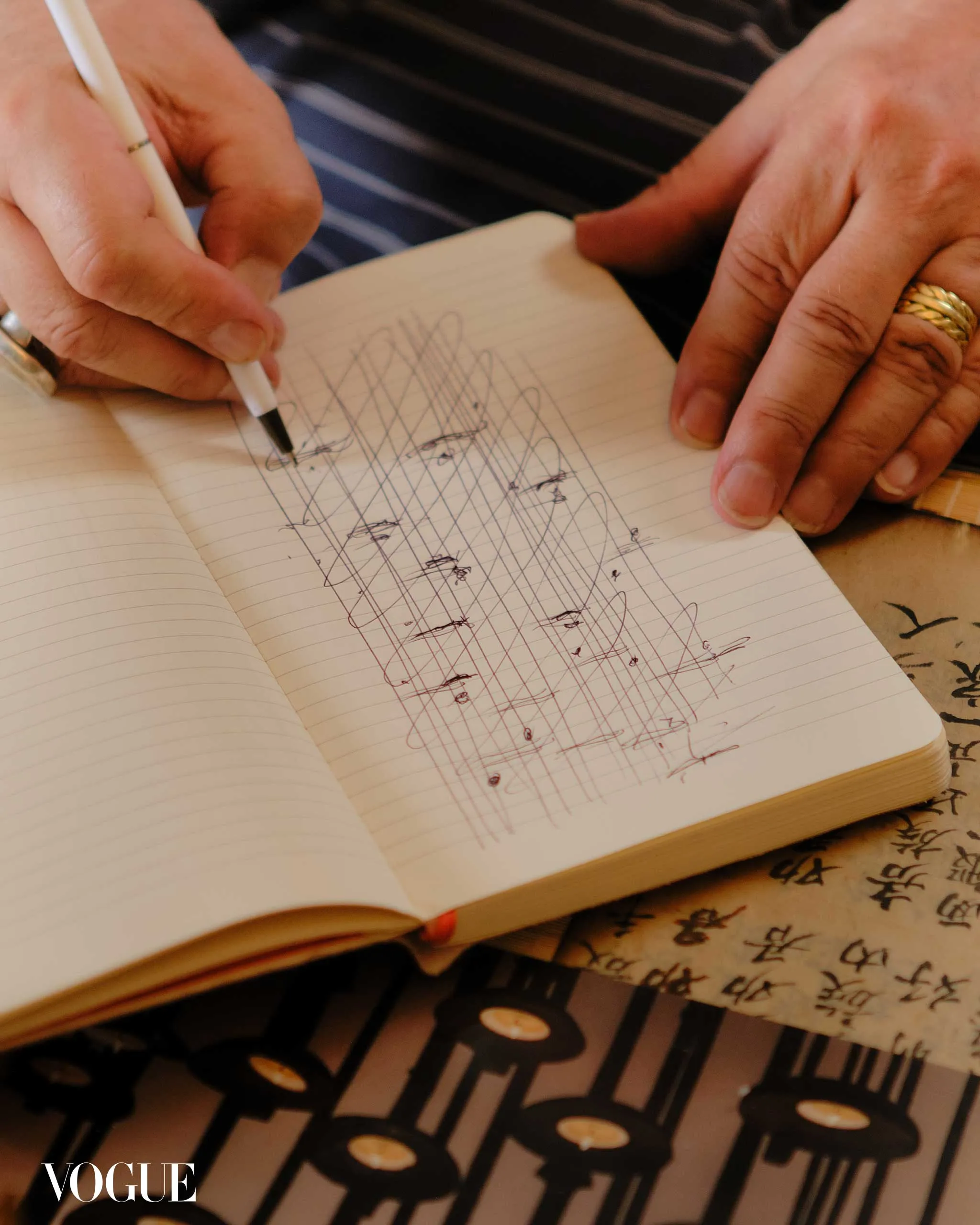
After about two decades of running the business, though, another shift began to take shape. Dravigny had learned how to develop new patterns, manage production and work with international clients. What had once been exciting had started to feel routine.
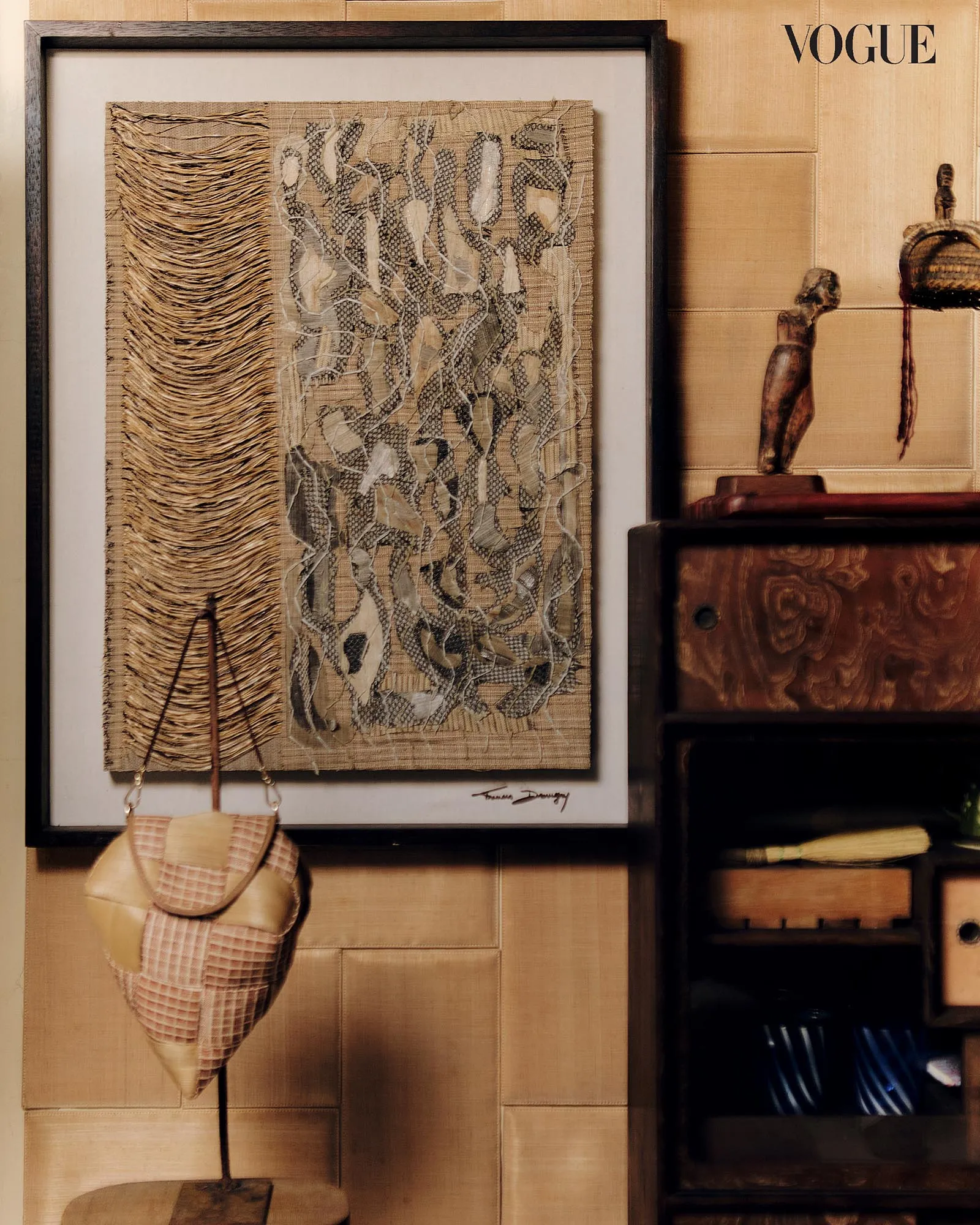
“I want to go further,” he says. The answer to that was a return to art. The fabric he had spent years producing for interiors became the raw material for his own textile pieces. Leftovers were no longer scraps; they became components. His practice began to absorb the same instinct for experimentation that had characterized his earlier design career, only now there were fewer commercial rules governing what he could make. “It gives me life, creating fabric for interior design. It gives me the opportunity to come back to my real artistic soul.”
“It gives me life, creating fabric for interior design. It gives me the opportunity to come back to my real artistic soul.”
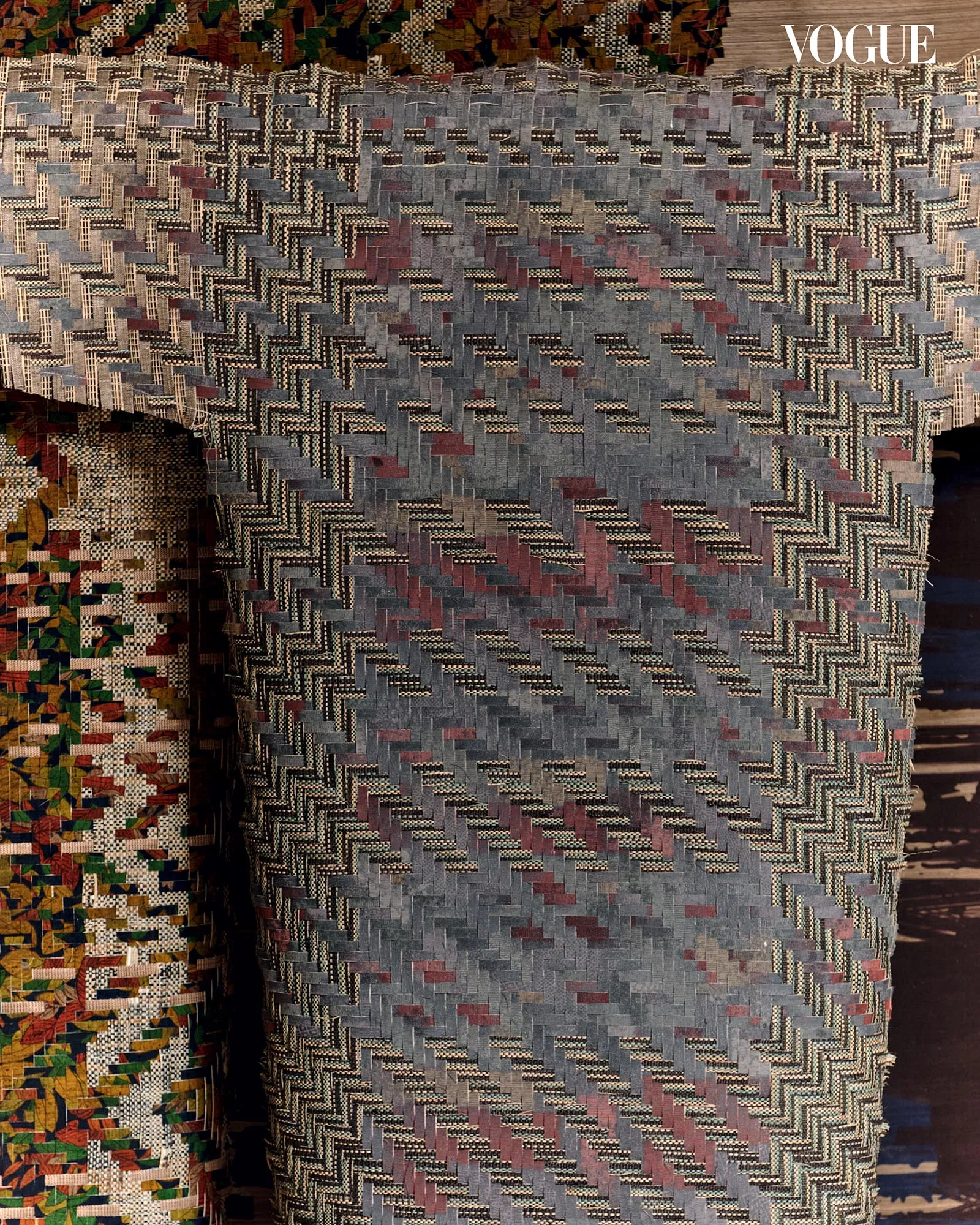
And his technique is distinctly his own, describing it like a cook describing a recipe: fabric is cut, stripped, glued, layered and woven in combinations that have been refined through years of experimentation. Kimono might meet Philippine abacaAbacaA strong natural fiber from the abaca plant, also called Manila hemp, native to the Philippines. Designers and weavers use it for textiles, bags, hats, and sculptural fashion, prized forGo to Abaca Glossary, old banig might be combined with raffia, and antique cloth can sit alongside industrial remnants. Even recycled leather and copper wire enter the weave. In one story, he remembers noticing an old, faded carpet in Shanghai and immediately wondering what could happen if he took it apart and incorporated it into his work.
The resulting pieces carry several histories at once. “You have Filipino materials here, but you also have Japanese and French elements. So, everything, it’s a huge melting pot or blend of different cultures to make each piece pop.”
That instinct has become increasingly visible in his recent art practice. In 2025, his work appeared in exhibitions including Beyond the Bark, where he translated the textures and structures of tree bark into textile compositions using abaca, local fabrics, cloth and Tboli materials, explaining that he studies bark closely before attempting to recreate the sensation of it through fabric.
In 2026, Dravigny continued expanding the possibilities of the medium. He showed at Art Fair Philippines with Qube Gallery, and participated in Woven Traces at Alliance Française de Manille, an exhibition centred on the afterlife of objects and the reclamation of discarded materials. He also exhibited with American printmaker Charles Lahti in Kundiman, incorporating Lahti’s printed works into his textile practice.
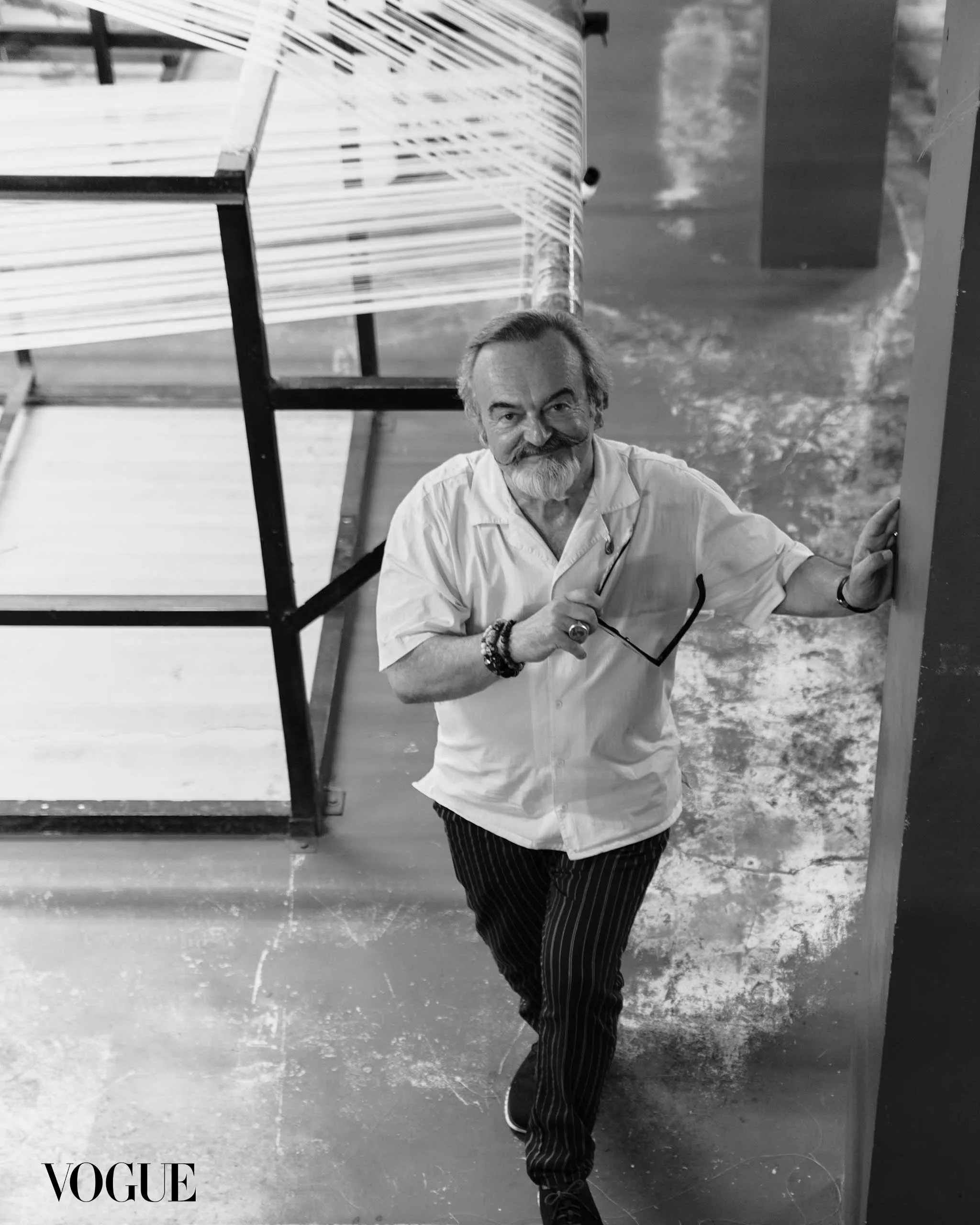
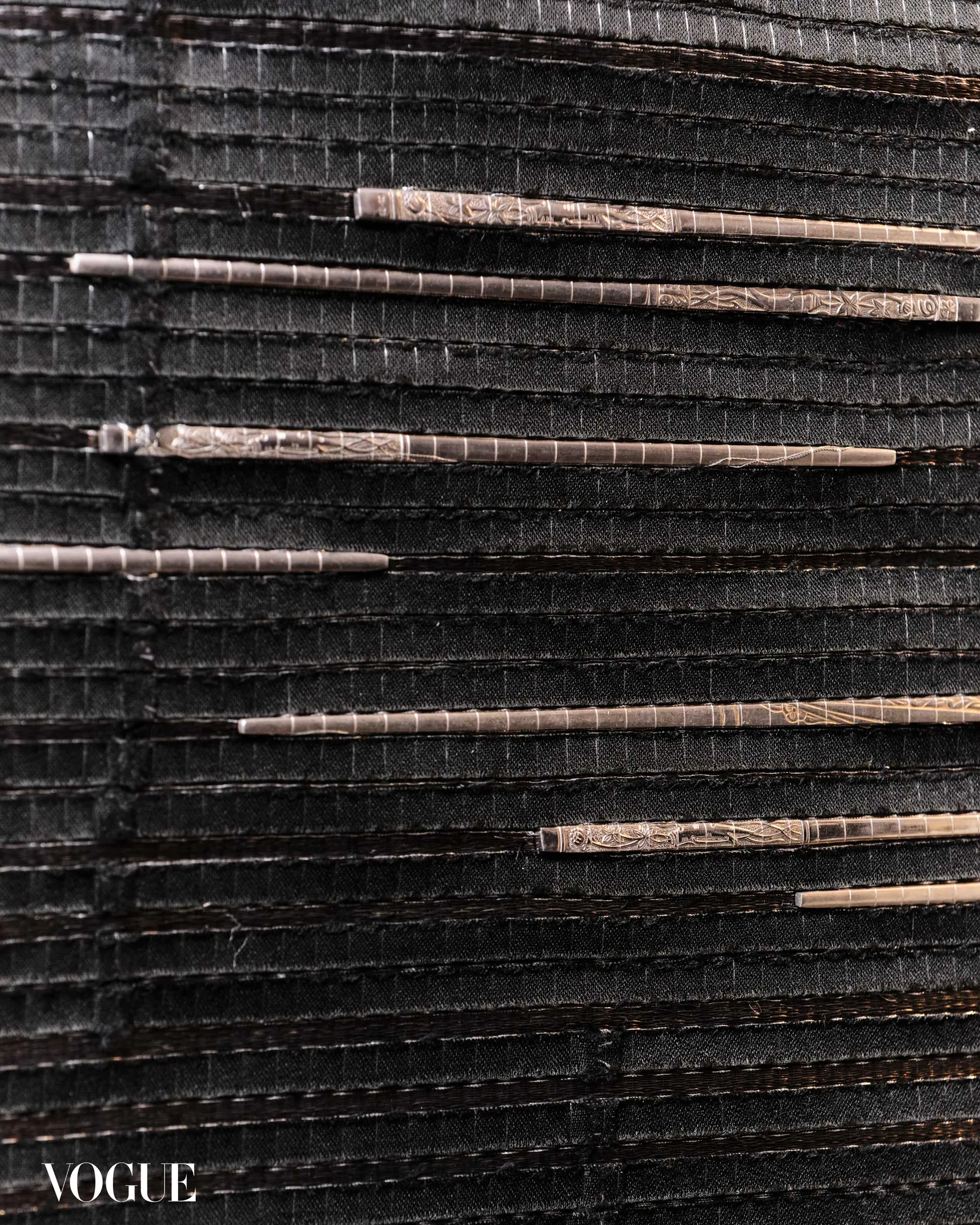
There is something fitting about the fact that Dravigny arrived at this point after spending so many years in design and manufacturing. Art does not abandon those worlds; it absorbs them. The knowledge of the loom remains, and so does the commercial discipline, the interest in materials, the familiarity with international design, and the eye of a jeweler trained to notice surface and detail; but now those skills have become part of a more personal vocabulary.
“I don’t use a brush anymore, I use my fabric and chisels, weave and do many other things,” he says.
For a French designer who arrived in Cebu looking for a furniture factory, it has been an unexpectedly long journey toward becoming an artist rooted in the material culture he encountered here. Three decades on, Dravigny remains interested in the same basic question that has followed him from jewelry to furniture to textiles and, finally, to art: What else can this material become?
With abacaAbacaA strong natural fiber from the abaca plant, also called Manila hemp, native to the Philippines. Designers and weavers use it for textiles, bags, hats, and sculptural fashion, prized forGo to Abaca Glossary, raffia, banig, old fabrics and countless discarded fragments passing through his hands, the answer keeps changing. The material holds the memory of where it came from, while the act of cutting, combining and weaving gives it another life. That process has become Dravigny’s signature, with a practice built in Cebu, informed by France, sustained by Filipino craft, and still driven by the same impulse he had as a child to take something apart and see what might be made from it.