
For Tamara “Solem” Al-Issa, To Craft Is to Dialogue With Clay, Geography and Memory


Photographed by Vanessa Cassar
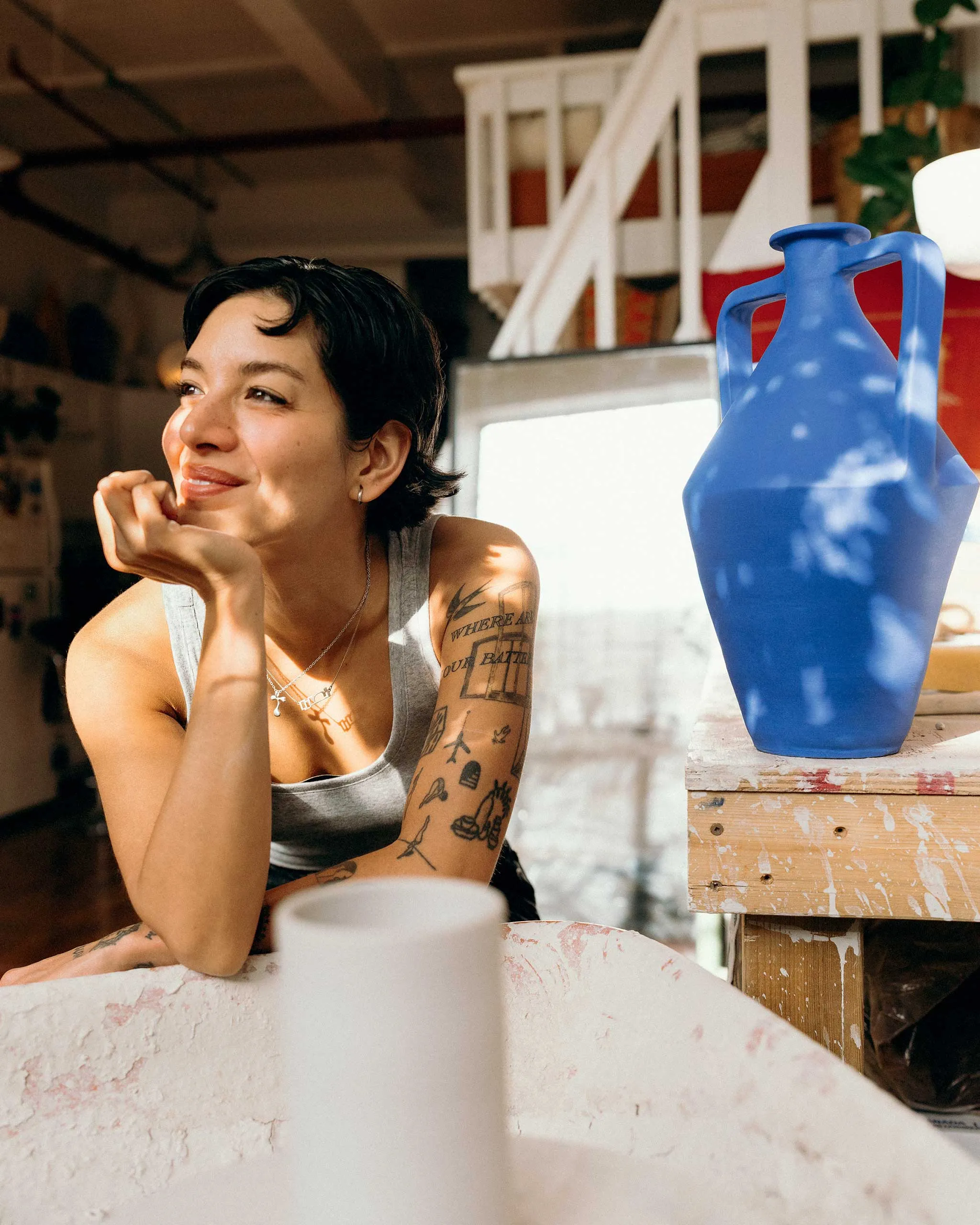
Potter, sculptor, and ceramicist Tamara “Solem” Al-issa’s craft is a reflection of her personal style.
In Jeddah, the Saudi Arabian city where Tamara “Solem” Al-Issa grew up, Joan Miró sculptures tower so casually over the highways. In her homeland, says the Toronto-based Syrian-Filipino potter, sculptor, and ceramicist, “We had this almost quiet appreciation for strangeness and the strange art that existed on the streets, and I think that I kept that wonder and awe inside me for so long.”
Tamara dials in from London, on the tail end of a two-week trip. When she lands in Toronto, she will return to a joyful routine of building vessels and teaching classes in her own pottery studio, which she established on a whim in 2021.
A graduate of the University of Toronto, she got her start in the craft when she attended a drop-in pottery class during freshman year. “I’ve always been a really visual person, and I’ve always appreciated aesthetics. That was the difference between me and the rest of my family, they’re very, very intellectual,” Tamara says, pertaining to her mother who was a flight attendant and her father who was a pilot (which is how they met), and the rest of her family who are in STEM fields. “I just always had a thing for tactile forms and I needed to be surrounded by beauty.”
She has plenty of memories from toddlerhood, but a particular one strikes her now: when she was three, her mother asked what she wanted her bedroom to look like. “I asked for the walls to be painted as if they were the outside,” Tamara recalls. Luckily, her tiles were already brown like soil, so only the walls needed recoloring. They became awash in green to mimic landscapes, and the ceiling was covered in strokes of blue to resemble the sky. “And I wanted glitter on my ceiling,” she recounts. “I remember my mom blowing glitter on the wet paint just to make it a big universe for me to disappear into.” Her mother, a hobby seamstress, even sewed butterflies onto the curtains so they gave the illusion of flight each time the wind blew.
Tamara found beauty in the sciences, too. Excellent marks in high school science compelled her towards physiology and human anatomy as an undergraduate, where her freshman anatomy course entailed fascinating visits to the morgue. “I realized that the body is a sculpture and that the anatomy is art.” She began working there as part of her stint as an anatomy teaching assistant: “I dissected cadavers, and I taught this to medical and dentistry students and also anatomy artists, the people that draw textbooks and stuff,” she reminisces. “I know it sounds really graphic, but when you dissect a segment and you look inside, you open up a world of just… it’s an arrangement. It’s so beautiful. Until now, I always think to myself that if art doesn’t work out, I would go right back to that because I’m very fulfilled by the visual aspect of it all.”
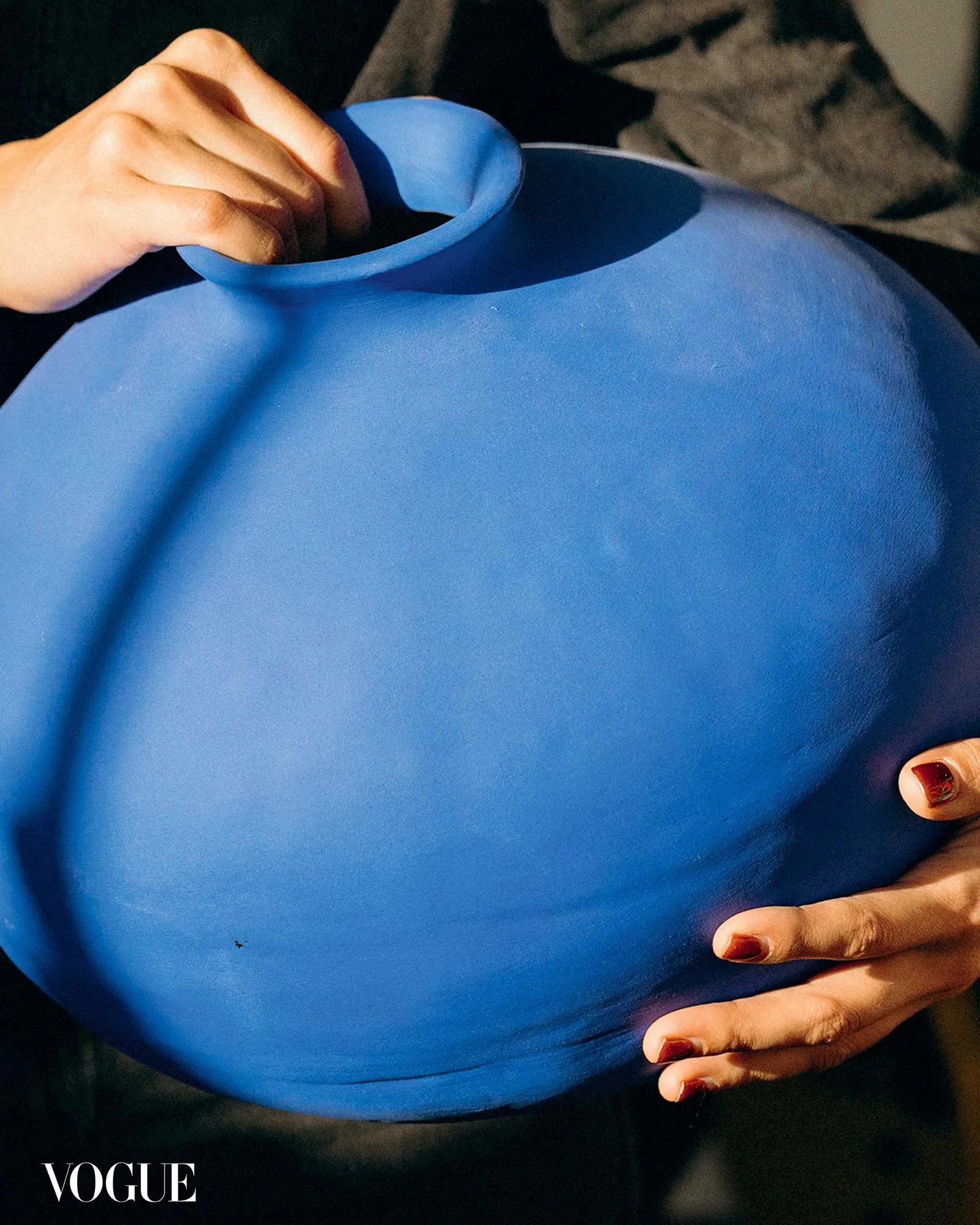
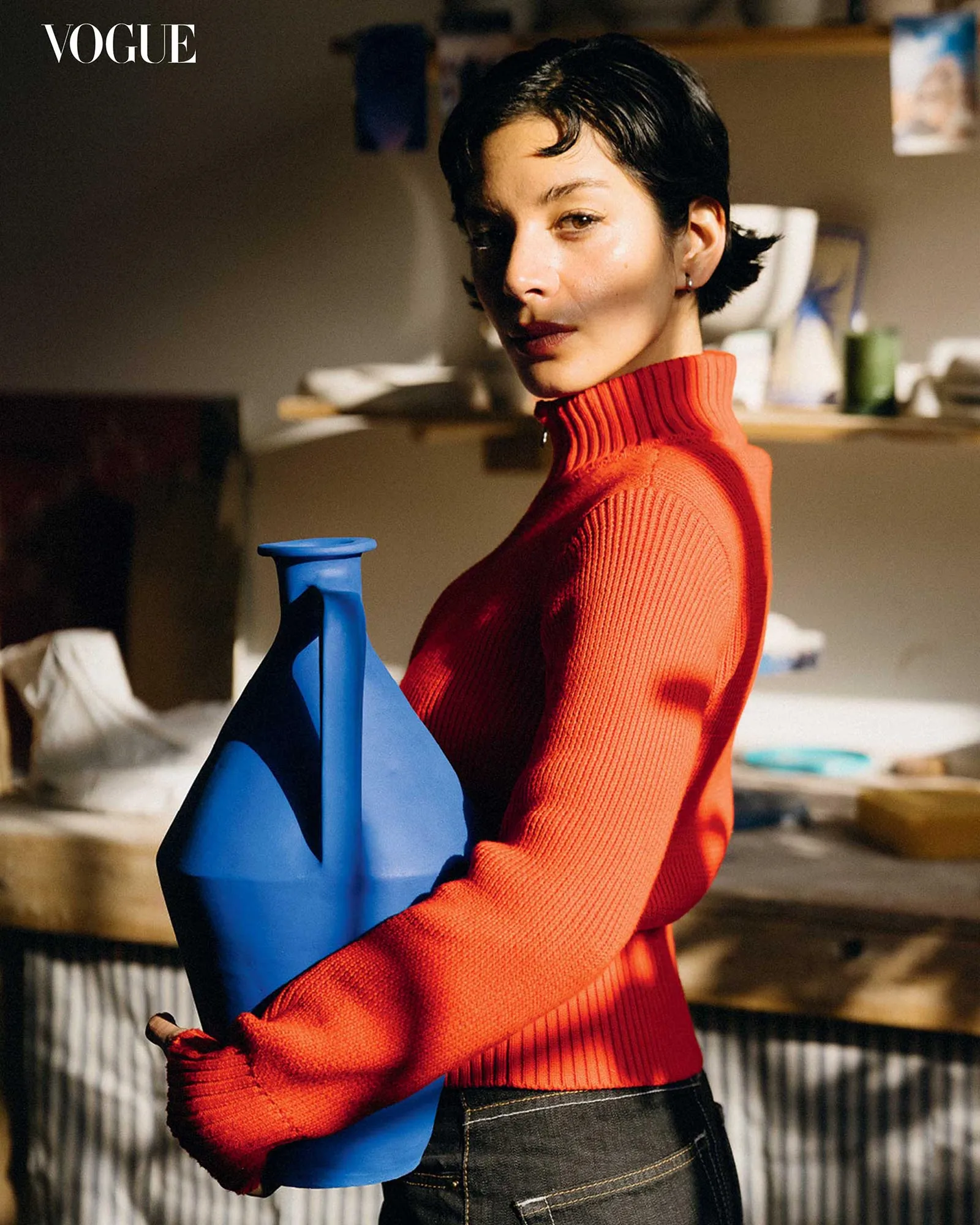
Like human bodies, her vessels are amorphous but precise forms, marked by their organic quality. Her Deep Blue collection is perhaps her most recognizable work; an accidental trademark. “I’ve been practicing using that color for a long time and trying to see how rich I could get it.” She found herself playing with firing schedules, which is an intricate step-by-step program that involves a set time and temperature for the kiln, in order for clay to achieve a particular outcome. The slightest tweaks can completely alter results, and one specific firing schedule led her to what is now her signature cobalt. “I don’t feel drawn to any other color as much as I feel drawn to blue,” she intimates. “I think it’s really profound, and I think that it will always have this lasting impact on me and on everyone. Every artist has had a blue period. We obviously have Yves Klein, who dedicated his whole practice to blue. Picasso had a blue phase, Matisse, Frida Kahlo, all of these greats, they’ve been touched by blue.”
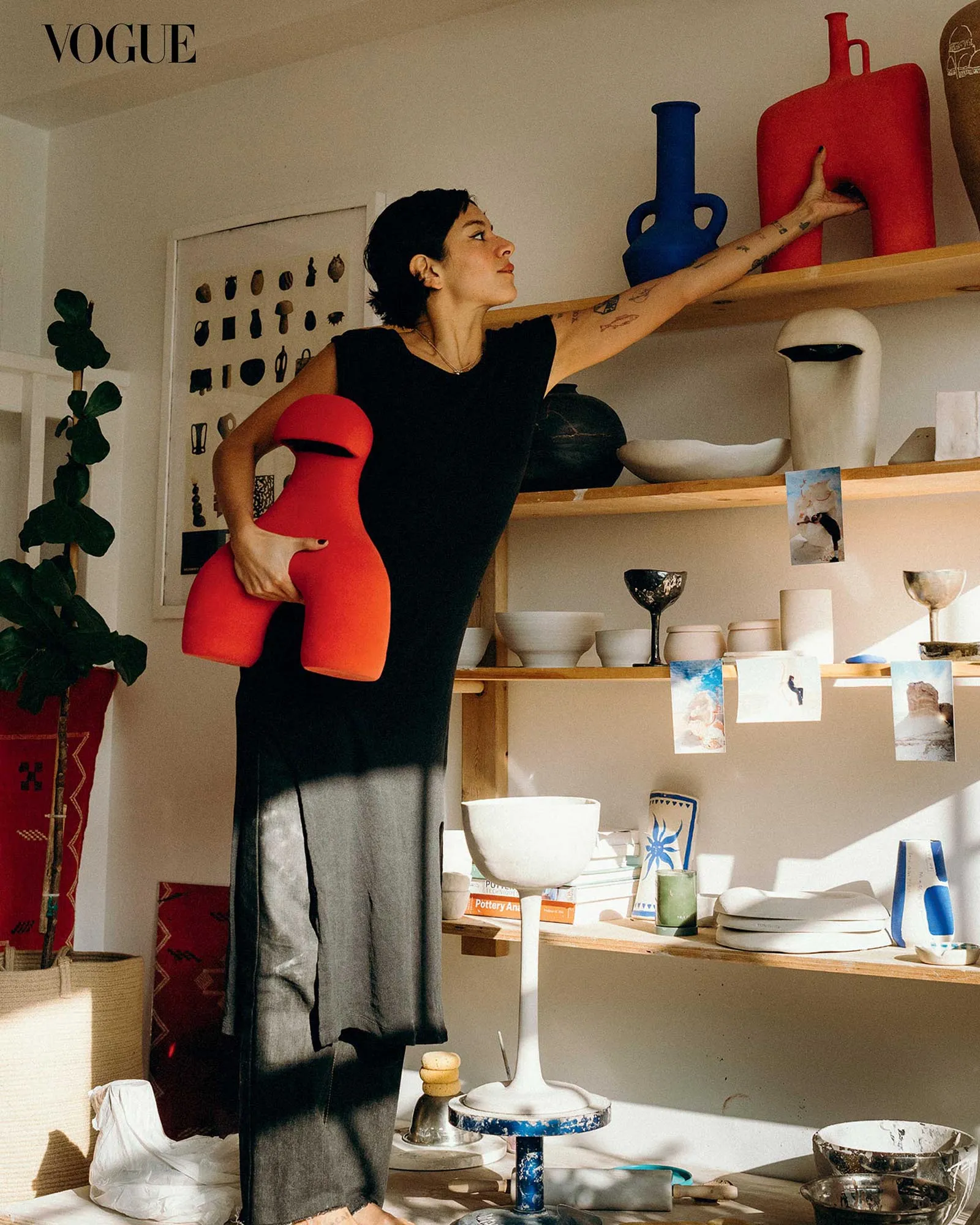
She has explored other colors though, particularly for her Character series which introduced vases and lamps in red and yellow. She describes it as a breather, initiated by a desire to experiment and broaden her range. Without intending it, her Character pieces took after the forms of Miró’s highway sculptures in an accidental veneration.
As time goes on, Tamara finds her works more strongly anchored by a sense of place, which is also why she loves to explore. A recent trip to the Middle East proved to be most illuminating; she immersed herself in the cultures of Egypt, Saudi Arabia, and Lebanon. Returning to Saudi for the first time since she migrated over a decade and a half ago, she was moved by how profoundly it has changed for the better. When she left, women weren’t driving or working in humanities. Now, she proudly says, “there’s a really robust grassroots movement that’s led by women in the arts and design. I got to teach at the Saudi Arabia Museum of Contemporary Art while an exhibition of mine was going on there. I was teaching wheel throwing with two other instructors who I became very close with very quickly. I was looking at women that were in their hijabs, in their niqabs, in their abayas on the wheel, killing it.”
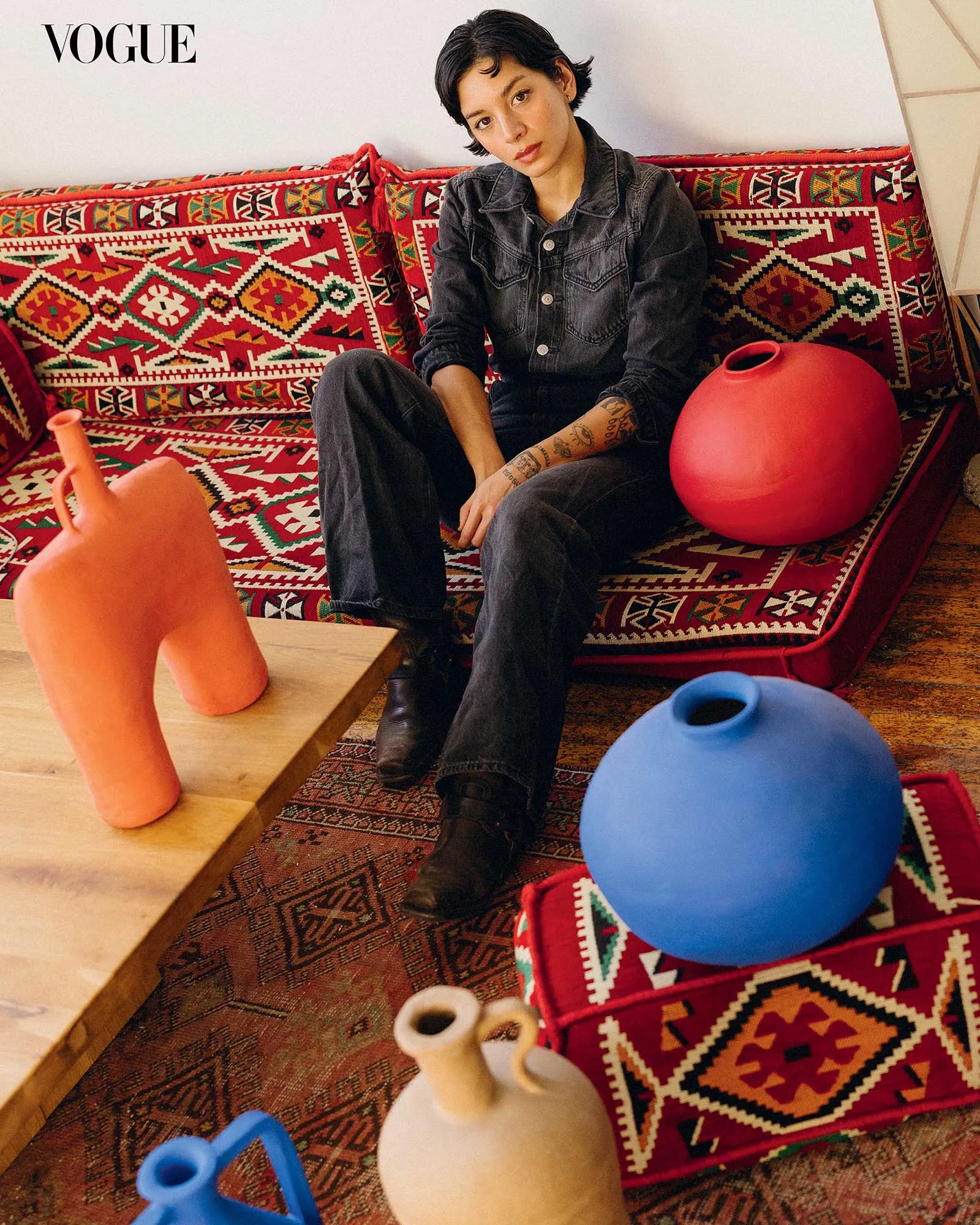
Like geography, Tamara’s practice is informed just as greatly by clay itself. She finds the deepest connection with her work during the conceptual phase when material takes form. “Clay also has memory,” she asserts. She narrates an instance where she twisted up a vase handle that had already been bent downward. After firing, she was incredulous to discover that the handle had returned to its original downturned shape. “It remembers how you move it. Every step of the way is a dance. Even the way you pick it up. The way you place it down, the way you treat it, it’s going to remember.”
For her, clay is a living thing. “It really begs the question of, ‘How do we define life?’. Something aside from a heartbeat and communication, it’s, for example, trees and plants. They’re alive. But what about clay?” she ponders. “It moves on its own. It comes from the earth. It’s an organic material that takes alchemy and all four elements to create a piece. It has its own way of communicating.”
Frequently Asked Questions
Tamara “Solem” Al-Issa is a Toronto-based Syrian-Filipino potter, sculptor, and ceramicist who grew up in Jeddah, Saudi Arabia. A University of Toronto graduate, she established her own pottery studio in 2021 after discovering the craft through a freshman-year drop-in class.
Deep Blue is Tamara’s most recognizable body of work, built around a signature cobalt tone she developed by experimenting with kiln firing schedules. She describes an enduring pull toward blue, citing artists like Yves Klein, Picasso, Matisse, and Frida Kahlo as fellow blue-period predecessors.
Before pursuing ceramics full-time, Tamara worked as an anatomy teaching assistant, dissecting cadavers for medical, dentistry, and anatomy-art students. She describes the body as a sculpture, saying the experience revealed an “arrangement” and visual beauty that continues to inform her approach to organic, amorphous vessel forms.
Tamara describes clay as retaining the physical history of how it was shaped — citing an instance where a bent vase handle returned to its original downturned form after firing. She considers every stage of handling, from lifting to placing, part of an ongoing exchange with the material.
A recent trip through Egypt, Saudi Arabia, and Lebanon deepened Tamara’s connection to place in her practice. Returning to Saudi Arabia after over a decade, she taught wheel throwing at the Saudi Arabia Museum of Contemporary Art and noted the growing grassroots movement led by women in arts and design.