Rug Designer Iñigo Elizalde Finds Inspiration Everywhere


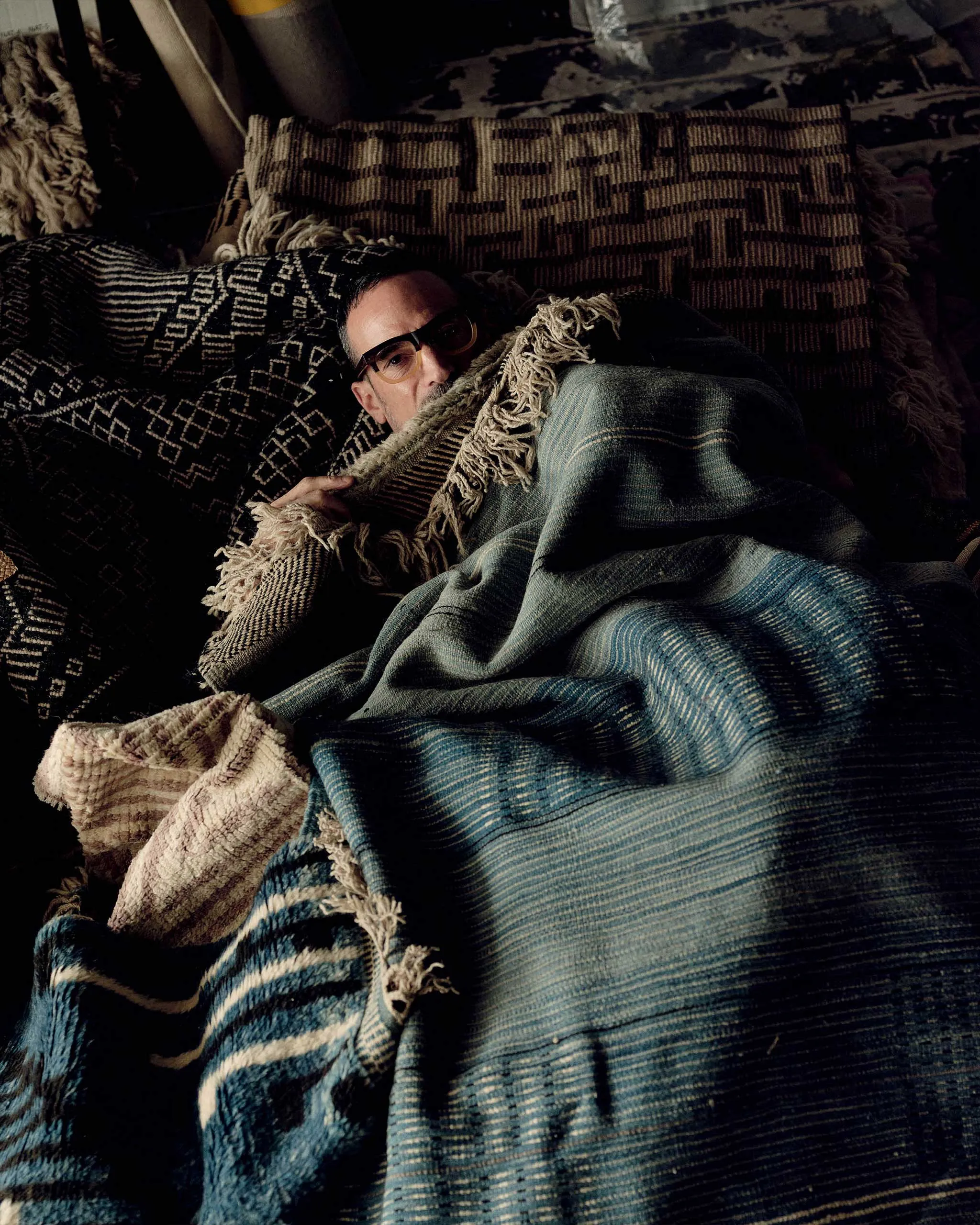
Photographed by Artu Nepomuceno for the September/October 2026 Issue of Vogue Philippines
The design of an Iñigo Elizalde rug is usually a product of deep research and extensive travel, but sometimes, it is the result of fortuitous moments and happy accidents. One collection, Elizalde recalled, came about after reaching a dead end trying to mash Philippine Art Deco with New York Art Deco. “We were just kind of cramming everything together. It was a collection that suffered from overdesign, because we’ve been working in it for such a long time, but nothing was coming out of it,” he says.
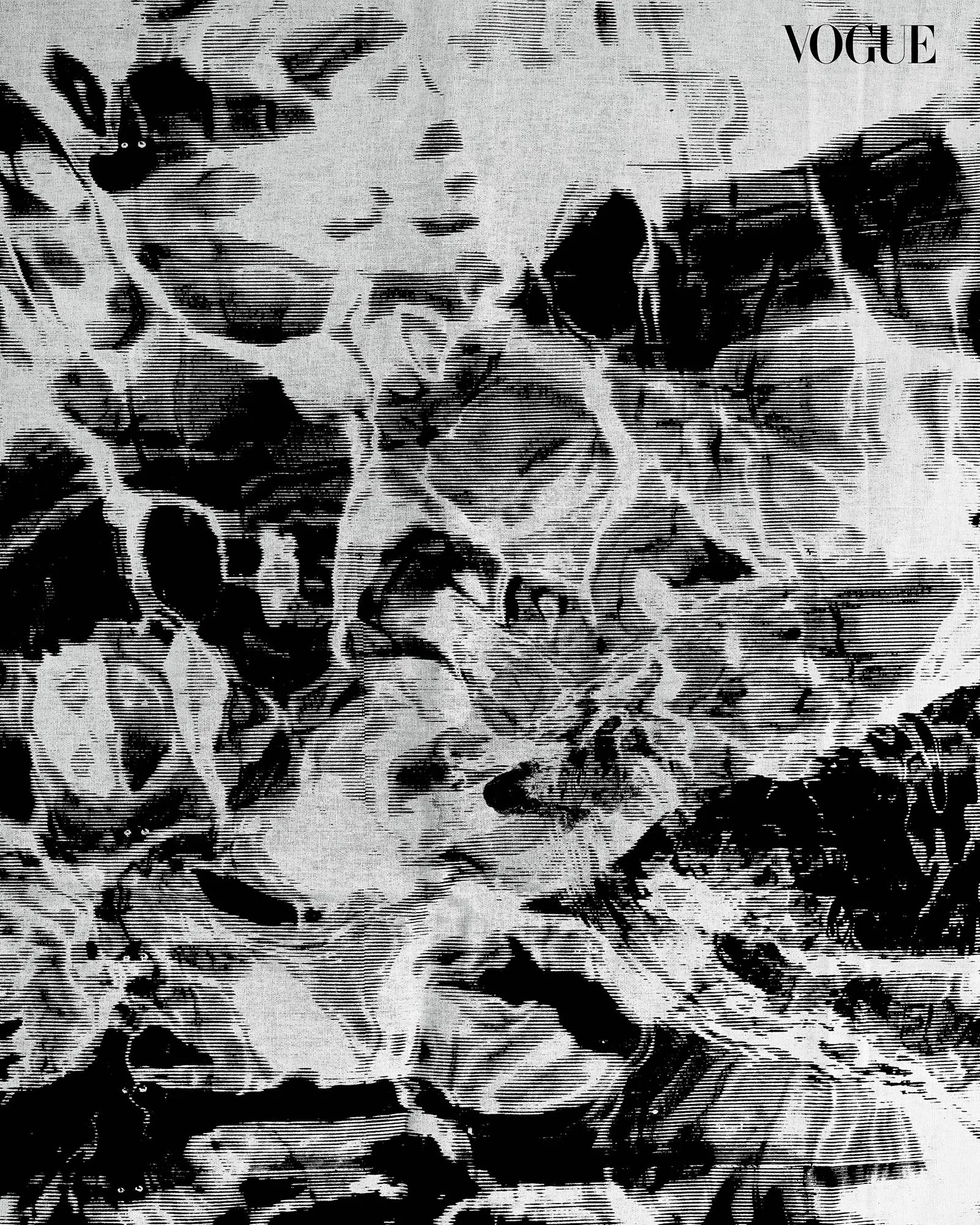
One afternoon, the entire office building where his Manhattan studio was located was hit by a power surge. “All of our computers froze and started glitching. I screamed at everyone to take screenshots of their screens. And from the screenshots, this was born, which are all of the glitches.” He unfurls a few rugs with a common linear theme interrupted by diagonal shifts and staticky breaks. Most of them were made by artisans in rural Nepal, hand-knotting on a giant loom, an ancient precursor to the computer code used to program our machines today.
The meta-ness of it all is, of course, not lost on Elizalde. “What attracted me and what still attracts me to the whole practice is the fact that we’re working with a technology that is thousands of years old, but we’re living in the present. Hence the use of photography and the concepts and everything, to infuse this tradition with very contemporary design work. It’s very specific.”
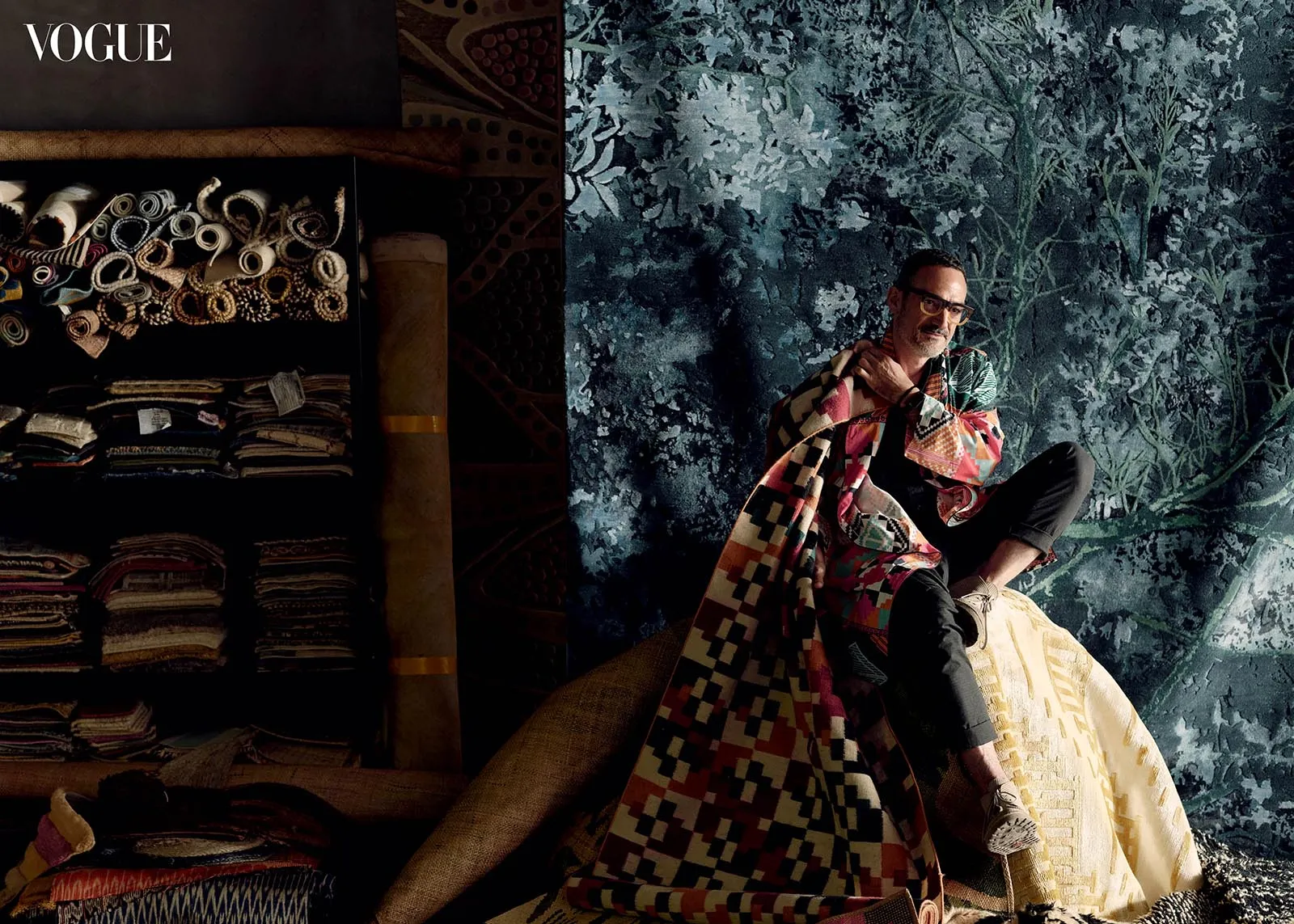
Lately he’s been working on a collection based on photos of lasers that he takes at music festivals and raves. His surroundings are a constant source of inspiration, whether it’s the graphic urban grit of airport tarmacs and EDSA traffic, or the unfolding patterns found in nature, like animal skins and ocean waves. “Everything is fair game. At the end of the day, we have to have fun. I’m not going to make another paisley rug,” he laughs. “It’s very concept-based, which is the fault of my education. Every collection that we do, the next one will kind of go against it and balance off of it. And the other one will bounce off of that.”
Elizalde, a fine arts graduate from the Rhode Island School of Design, sees carpet design as an extension of his earlier practice. For his thesis, he wove these huge shapes in the attic of a house he shared with his friend, the late Carlos Celdran, a fellow art student. But Iñigo’s love for textiles began in the home, growing up in a house that was filled with fabrics from all over the world. “Different prints, different textures, different colors, and I think my love of that took over from what used to be a very solitary studio experience of painting and doing sculpture, to a more collaborative practice that I gravitated toward.”
After various post-college stints in graphic design, theater production, art direction, and brand management, Elizalde discovered how his drawings and sketches could be translated into carpets when a family friend in rug manufacturing gave him the opportunity to design a collection. He calls it a lightbulb moment, deciding that this craft was something he could really sink his teeth into and ride wherever it would take him. In 2010, he joined his first international trade show and caught the attention of a Vogue.com writer who filed his Bicol-woven wool rugs under “Need It Now.”
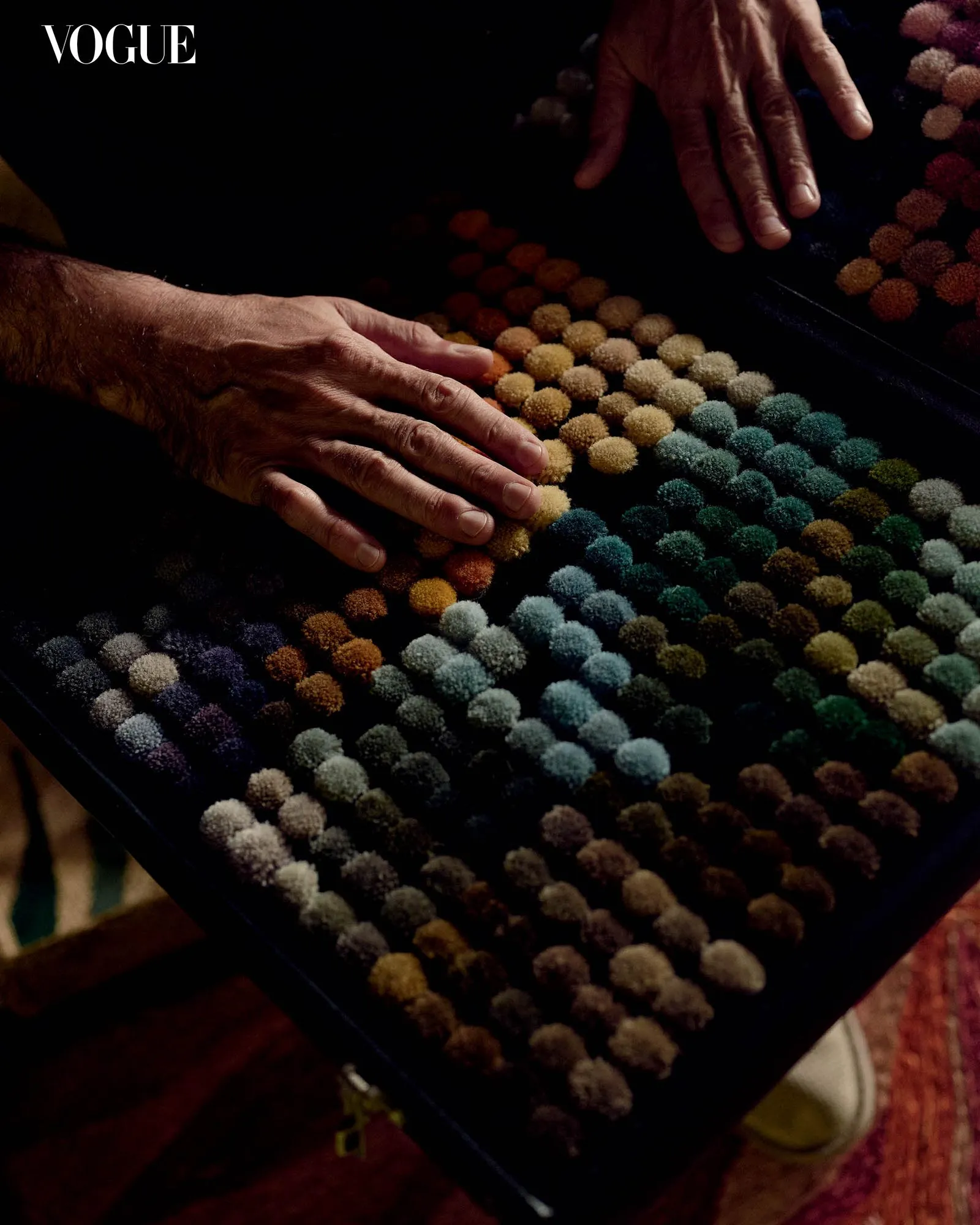
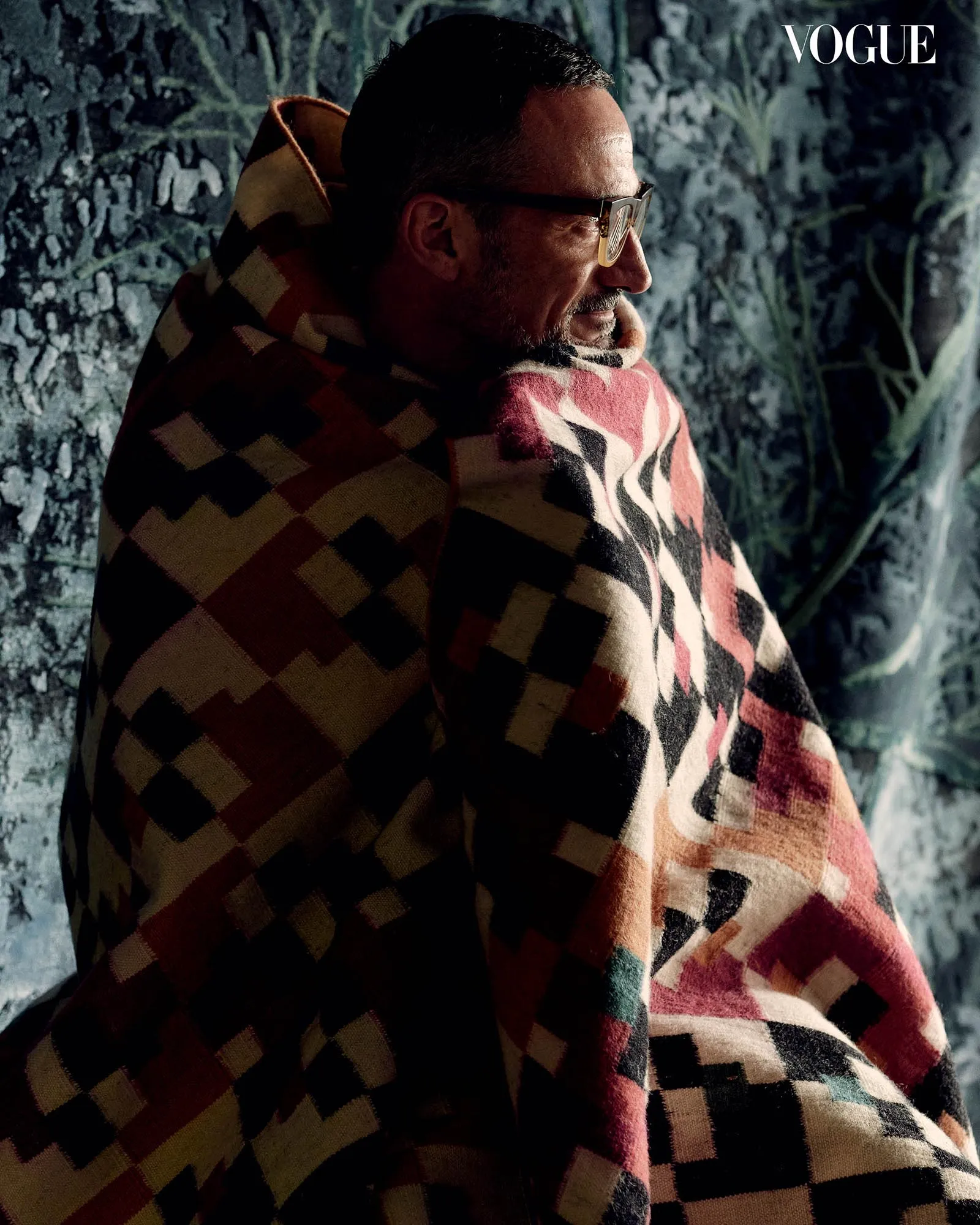
After a decade and a half building his business in New York, running a successful studio with pieces that were regularly featured in interior design and architectural magazines, Elizalde moved his studio to the Philippines, unofficially opening his space in the YMC Building in Makati earlier this year. The homecoming was part personal and part practical, the latter fueled by his interest in everything about traditional Philippine textiles and fabrics, from embellishment and embroideryEmbroideryThe decorative stitching of designs onto fabric by hand or machine, central to Philippine formalwear. Hand embroidery from places like Lumban in Laguna and Taal in Batangas adorns barongs, ternos,Go to Embroidery Glossary to the weaving techniques particular to different regions of the archipelago. He works with communities in Samar to make banigs and weavers in Bicol to manufacture abaca rugs, challenging them with designs they had never attempted before and in the process, proving that there is a market for non-traditional mats.
One of his favorite experiments is to send out a signature design, a hexagonal pattern based on the bathroom tile of a club in New York City, to rug makers in different countries and see what comes back. A rug from Nepal will be different from a rug in Afghanistan, even more so a rug from Morocco, where they tend to interpret the design with their own flourishes. Each version carries the textural fingerprint of its makers: the wool from a particular highland sheep in Afghanistan, the nettle grass that only grows at the base of the Himalayas, a cactus fiber called Sabra silk harvested in northern Morocco.
This production map reflects decades of seeking out mills, factories, or artisan communities that specialize in a particular technique. All of the studio’s hand-knotted rugs are produced in Kathmandu, while pieces built for hospitality and high traffic are tufted in China. India does all of the flat weaves, a process that favors geometric shapes over organic ones.
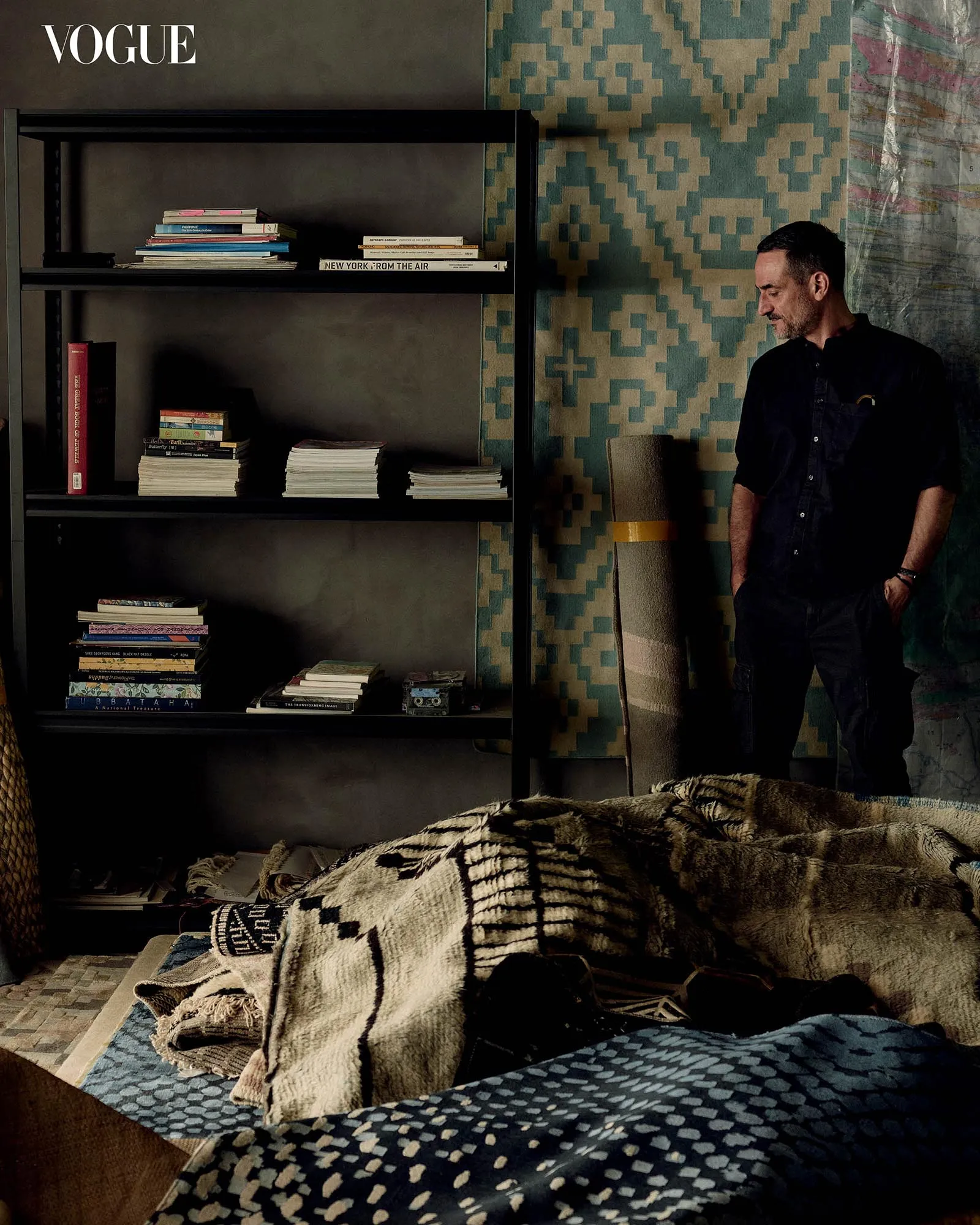
Elizalde remembers the first time he walked into a factory in Nepal. There were chickens, sheep, and dogs everywhere, lolas dunking skeins of wool in vats of natural dyeNatural DyeColor derived from plants, roots, bark, leaves, minerals, or insects rather than synthetic chemicals. Used in traditional Philippine textiles and revived by contemporary designers, natural dyeing produces rich, organic shadesGo to Natural Dye Glossary, weavers working line by line, looping yarn around rods to build up pile height. It was unreal, he says, if not miraculous how a full carpet could arrive in his hands months later, hand-knotted into three dimensional existence on the basis of a photograph.
The rug he calls “Dakila,” the studio’s hero piece and the one he will never let go of, was conceived from a picture he took in a Philippine rainforest at two in the morning. The carpet is as lush as the canopy it depicts, with seventeen different colors and pile heights that shift across its surface like topography. “Every square inch is a hundred knots made by human hands. So that in itself is a thing of wonder,” he says. “People see the finished product they put in their living room, but it takes a lot of work, not just to make, but to concept and to map out. It’s a hugely collaborative process.”
Besides private residences and returning clients, whom he calls “repeat offenders,” his rugs are installed in retail spaces like the Louis Vuitton Manila boutique and upcoming projects with JJ Acuña and Tarzeer. His dream project, he says with a smile, is to do a casino, where the sky’s the limit and carpet design is intentionally stimulating. He’s also been obsessing over the grid patterns of drum machine beats, which he hopes to translate into sound with a musician. He doesn’t like to work alone, he insists. “I am definitely not an island, I’m always asking for advice.”
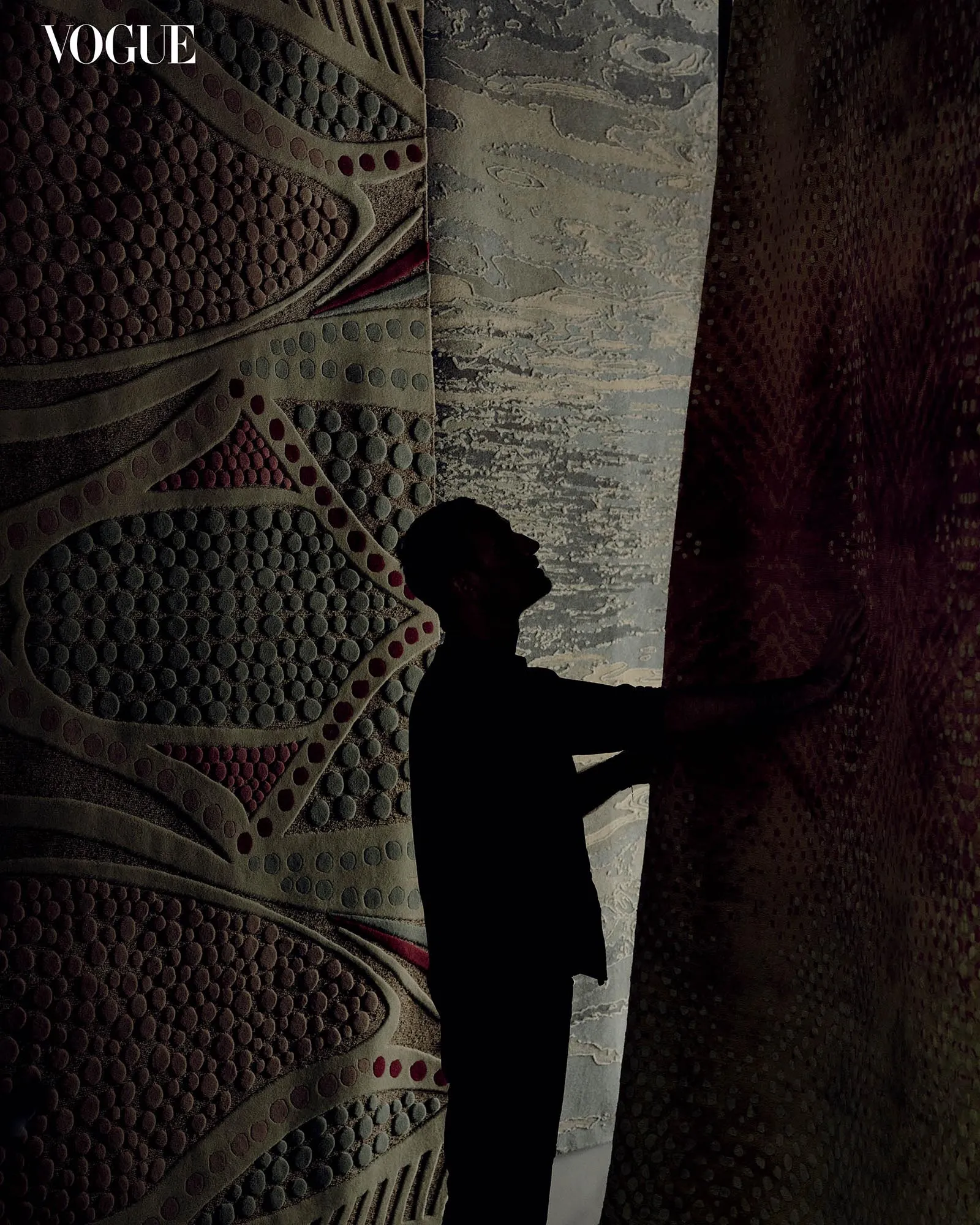
This is where Elizalde sees the practice heading: always trying to innovate, to look at unusual source material, and to elevate the art of rug making into something that’s a “little bit more.”
“You make it for someone who’s going to live with it and revisit it every single day. It’s not just a one-off, one-stop shop thing,” he says. “It’s an object that has an incredible provenance and an incredible situation, wherever it ends up existing.”
From the first woven grass mats that protected people from dirt floors to the highly detailed Kilim rugs knotted over 2,500 years ago, rugs have been part of the human story, woven not just for utility or decoration, but as expressions of spirit and humanity’s relationship with the divine. To lay a rug beneath your feet is to come into contact with the world: to see its colors and hear its music, even as lasers and drum machine beats.
By AUDREY CARPIO. Photographs by ARTU NEPOMUCENO. Art Direction by France Ramos. Producer: Mavi Sulangi. Videographer: Lynyrd Matias. Photography Assistant: Ed Logarta. Videography Assistant: Dome Plaza.