
Kasibulan Responds to Philippine Realities Through Women Artists


Photographed by JL Diquit
Photographed by JL Diquit
At JCB Gallery, the Filipino women’s art collective responds to the state of Philippine life today through cloth, collage, and interconnected crafts.
Above layers of distressed inabelInabelA handwoven cotton textile from the Ilocos region, known for its durability and geometric patterns. Traditionally used for blankets, clothing, and home furnishings, inabel has found new life in contemporaryGo to Inabel Glossary, a traditional handwoven fabric, the shape of an eye emerges from embroidered thread. This is Elaine Lopez-Clemente’s Ules (Blanket), a patch-sized artwork whose counterpart Mata-mata is named after the eye-like diamond motifs that make up the textile, a pattern that can only be seen upon stepping closer. The two are framed separately with subtle differences between them, but together they form a diptych, a pair of eyes that return the viewer’s gaze with curiosity, or perhaps questioning, caution, concern.
As the waves of cloth begin to resemble a rolling landscape, the work brings one into a state of watchfulness. Somehow, you feel involved, and it reminds you that even something as simple as a look can tell a story.
This invitation to pause and look closer is shared among the 18 Filipina artists who comprise Kontra Korapsyon (Against Corruption), the latest exhibition by women’s art collective Kasibulan or Kababaihan sa Sining at Bagong Sibol na Kamalayan (Women in Art and Emerging Consciousness), the first of its kind in the Philippines. On view at the JCB Gallery in Manila, the show gathers select works from the group’s founders alongside that of current members, weaving their cross-generational experiences and outlooks on labor, inequality, state repression, and the environment into one conversation.
The exhibition also marks the eve of the group’s 40th anniversary. Formed in 1987 by Imelda Cajipe Endaya together with Brenda Fajardo, Julie Lluch, Anna Fer, and Sister Ida Bugayong, the collective grew in the post-martial law years following the EDSA Revolution. It was a time when fiber works, handicrafts, and functional objects were not considered legitimate art, a perception they sought to change. Central to their cause was an emphasis on perspective: to not only raise their visibility in a male-dominated scene, but to honestly share what they saw.
It was this background that prompted curator Portia Placino, who runs JCB Gallery, to propose a shift in the exhibition’s focus. The initial title of Kananayan (Fellow Mothers) was not true for all 18 participating artists, while recent events saw their attention drawn to issues beyond family. More than a common experience, both Placino and the group believed that the theme had to be anchored in a shared condition.
Another challenge was timing. Originally slated to fall during the 2025 midterm elections, the show was pushed to Women’s Month in March, and again rescheduled due to calendar conflicts. When Placino finally landed on the May 14 opening, the members of Kasibulan gathered with the previous night’s headlines fresh in their minds: a dramatic evasion of arrest and a security incident that placed the entire Senate building under lockdown.
Kontra Korapsyon, which runs until August 14, has since become a site of discussion for both the collective and their audience; a chance to filter the noise, see through the distraction, and reflect on what’s really happening in the Philippines.
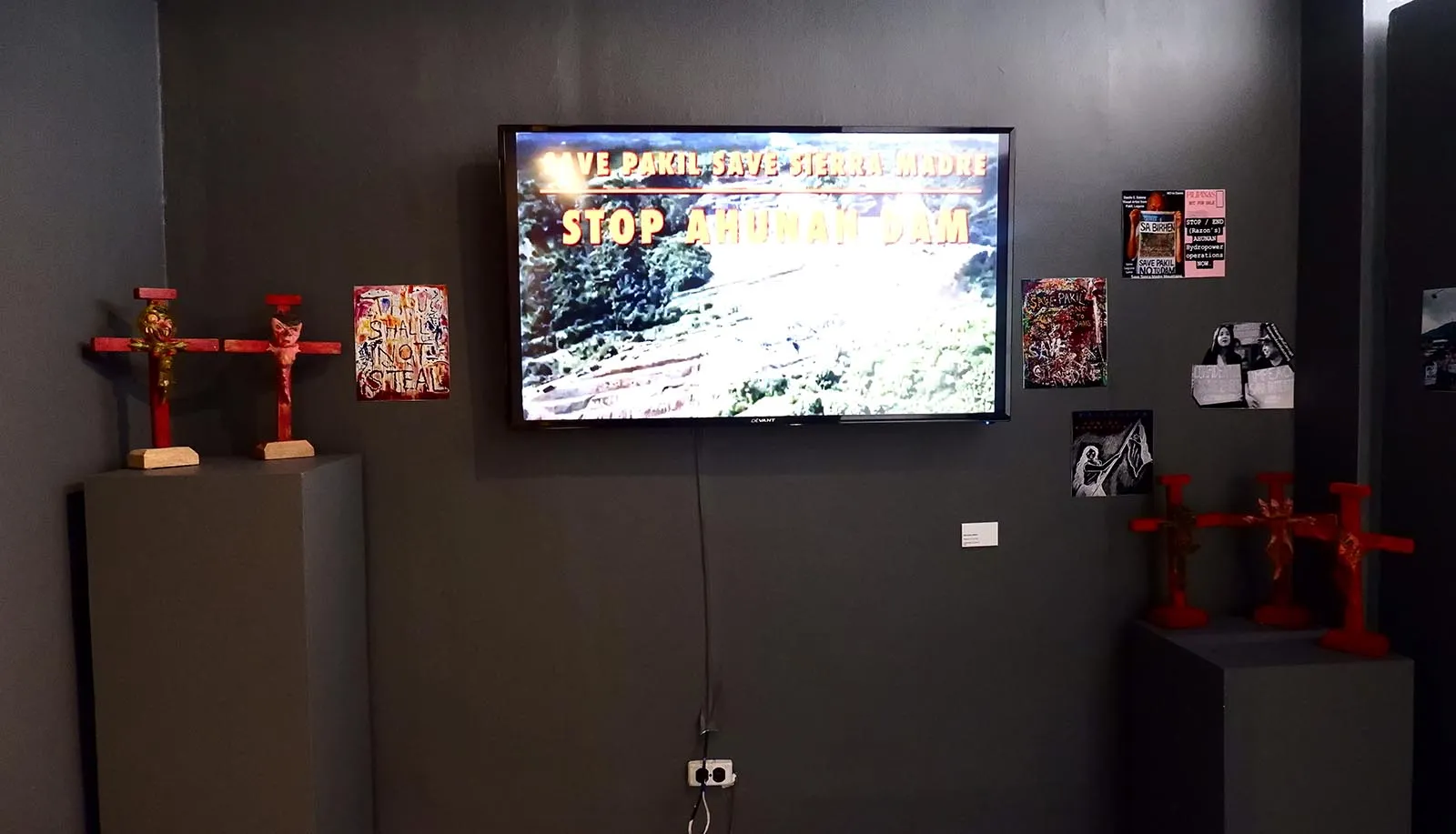
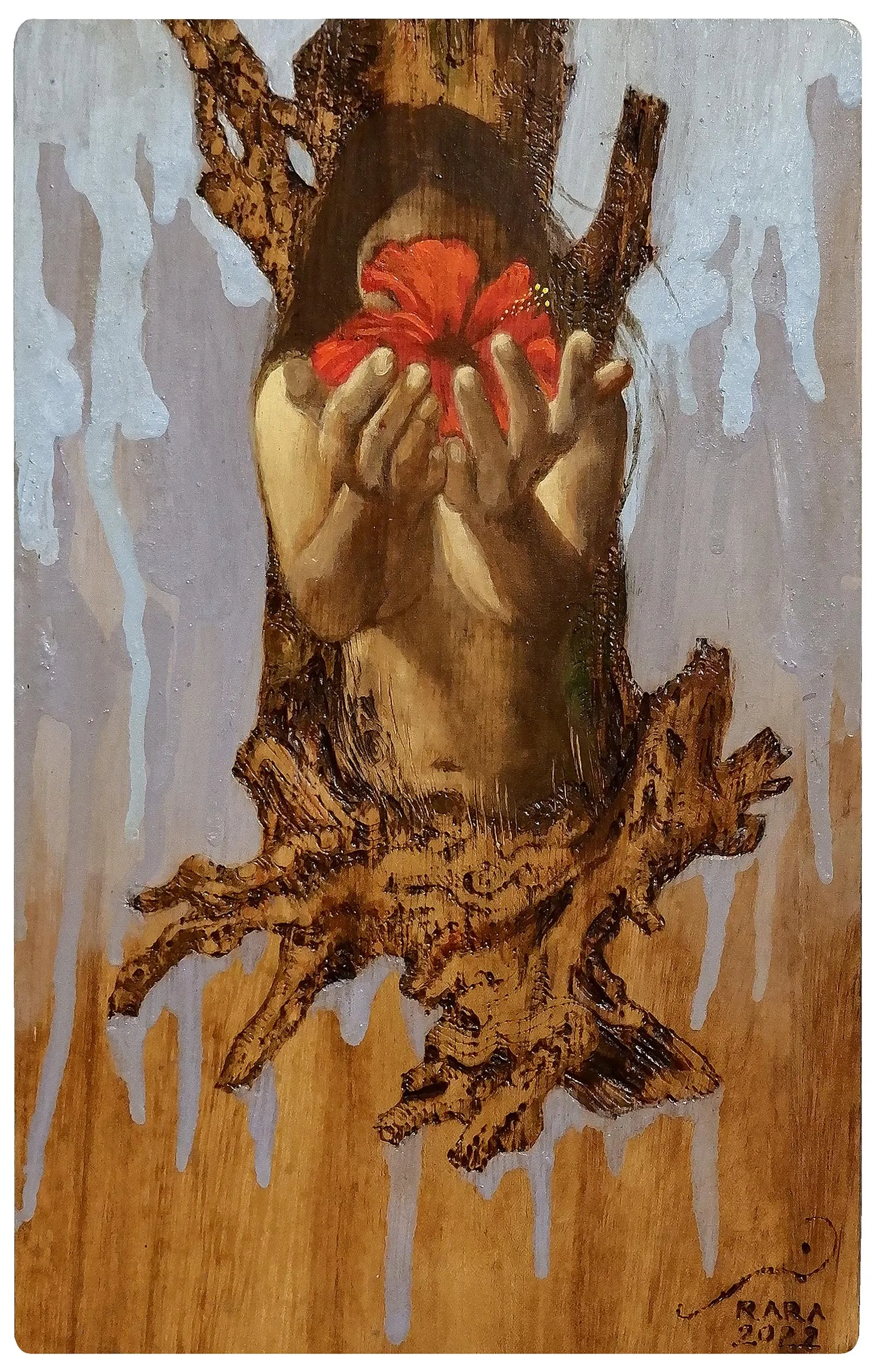
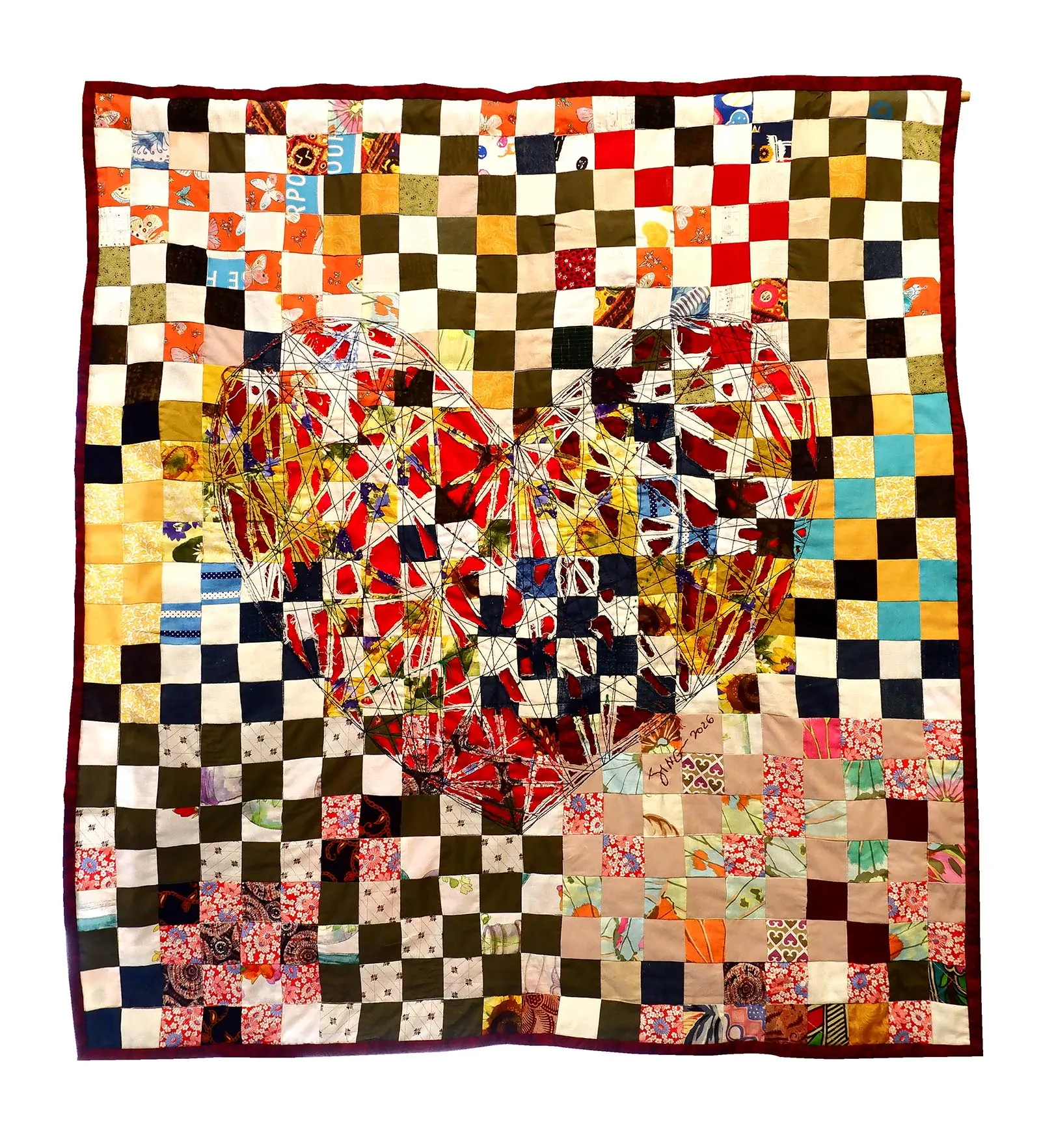
Part of that conversation occurs through the artists’ materials, of which the exhibition displays a wide range. From Laura Britt-Fermo’s quilted fabrics to Rara Carillo’s pyrography and Aba Lluch Dalena’s multimedia installation Pilipinas Not For Sale (which flashes videos of the community opposition to a dam project along the Sierra Madre), diverse mediums such as cloth, wood, and film offer different ways of looking at our relationships with the natural world and the destructive acts that threaten it.
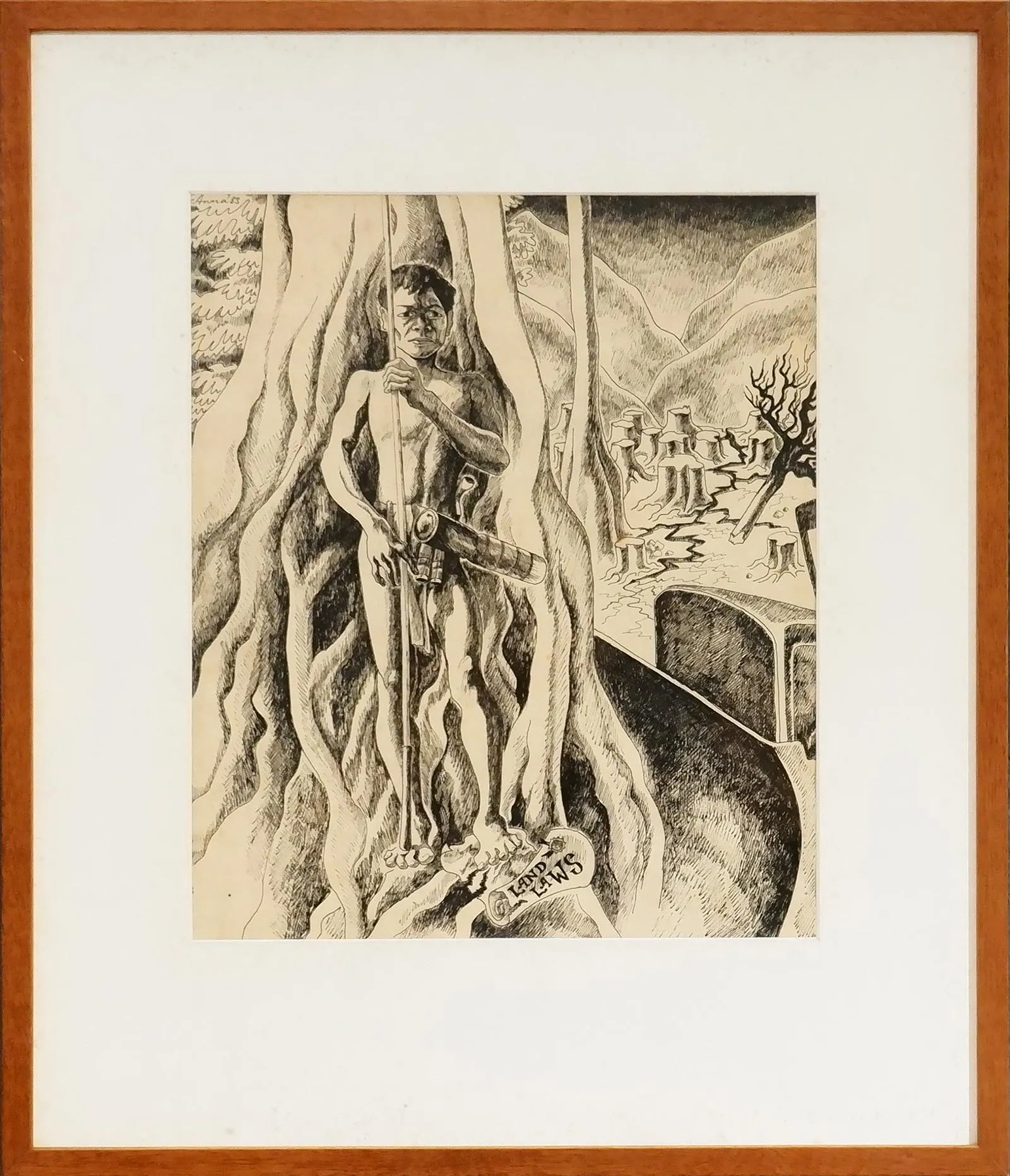
Pointing to a 1983 illustration by cofounder Anna Fer, which depicts commercial logging and deforestation in Palawan, Placino talks about the importance of placing older and newer pieces in one space, allowing viewers to piece together the historical narrative and see how much has changed or stayed the same. “Information [online] is so fast, but if you look at archival works, then you realize: Ah, the problem in Palawan from the ‘80s, we’re still having this problem,” she says. “It’s not recent corruption. It’s this long-term, consistent corruption.”
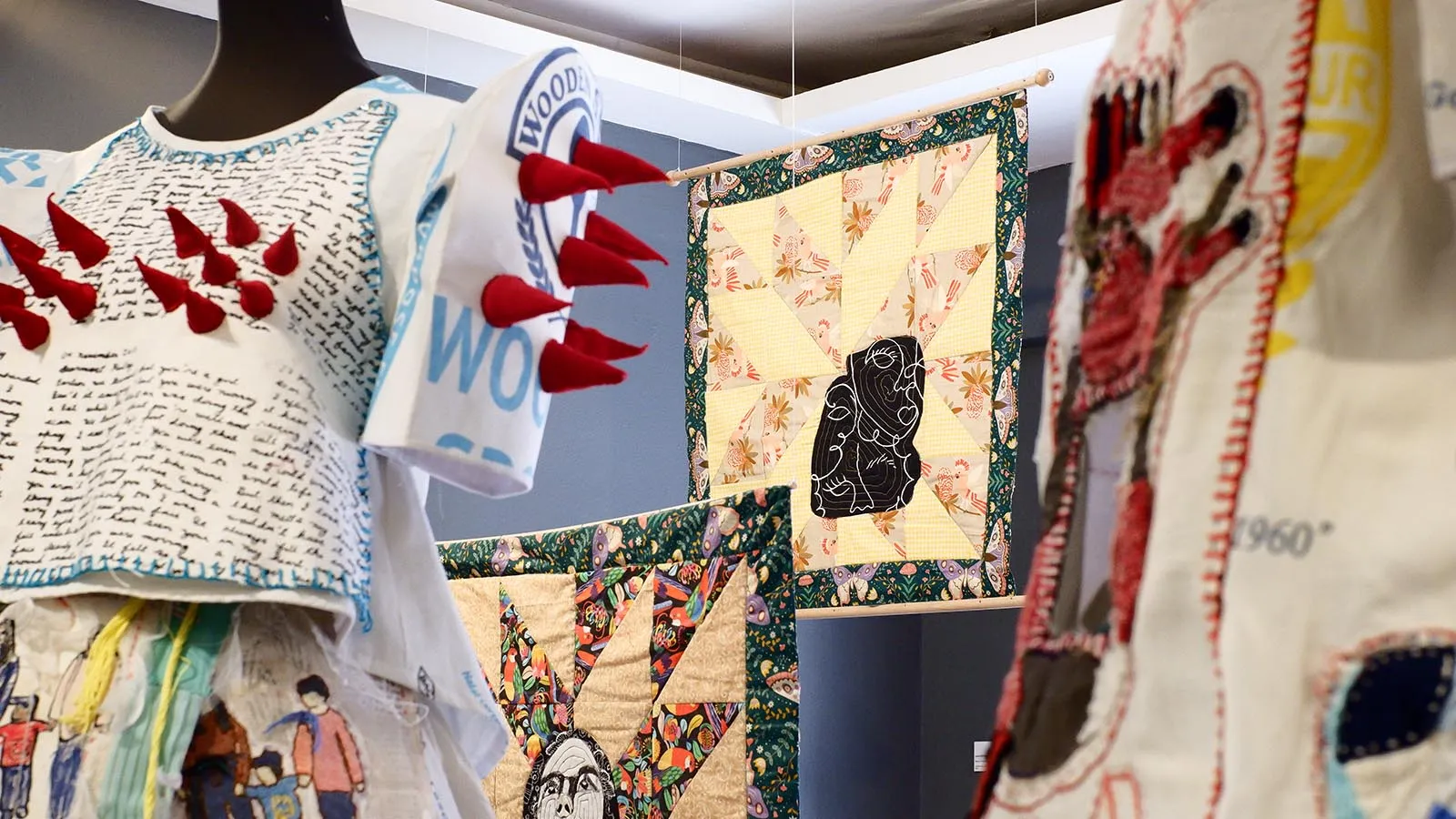
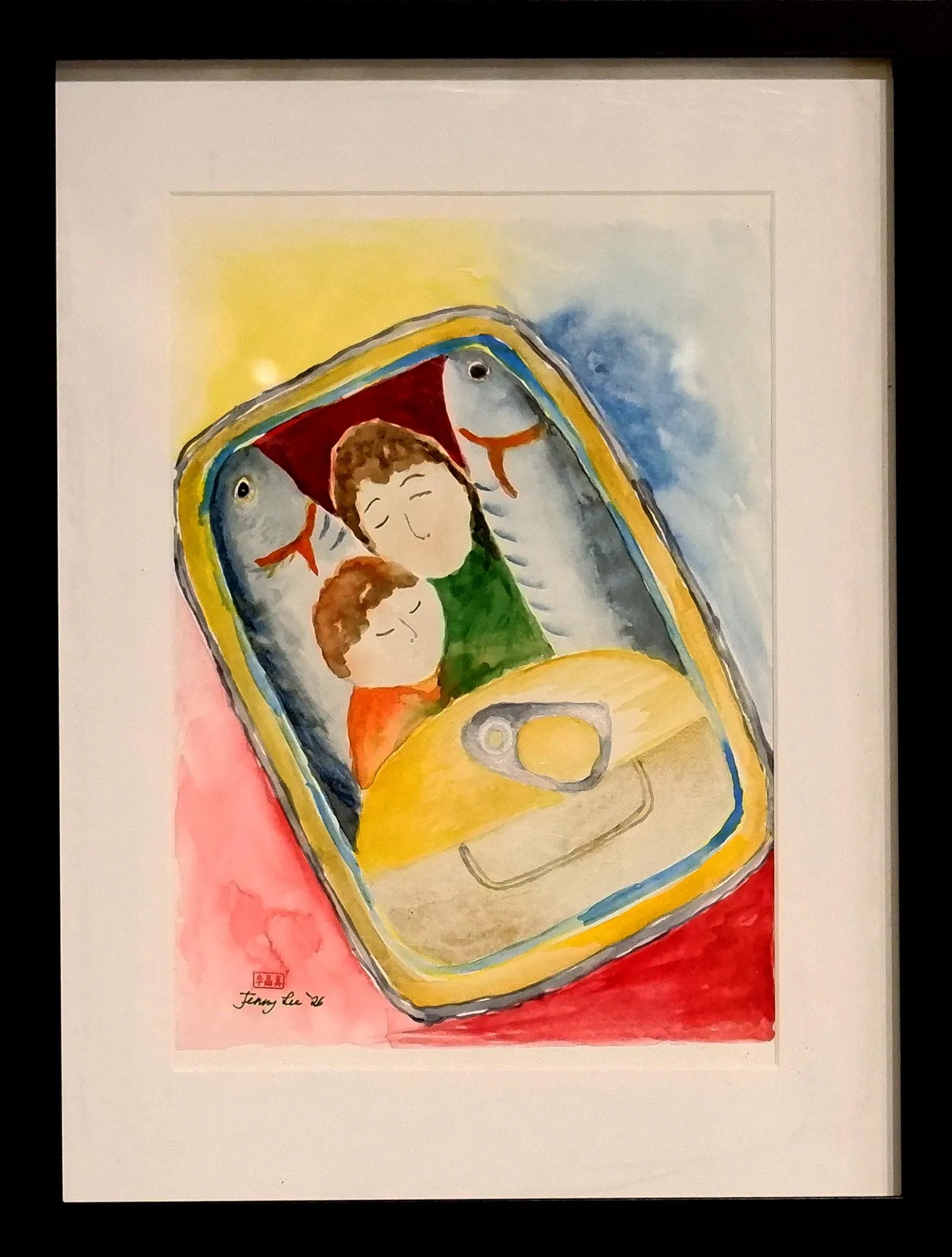
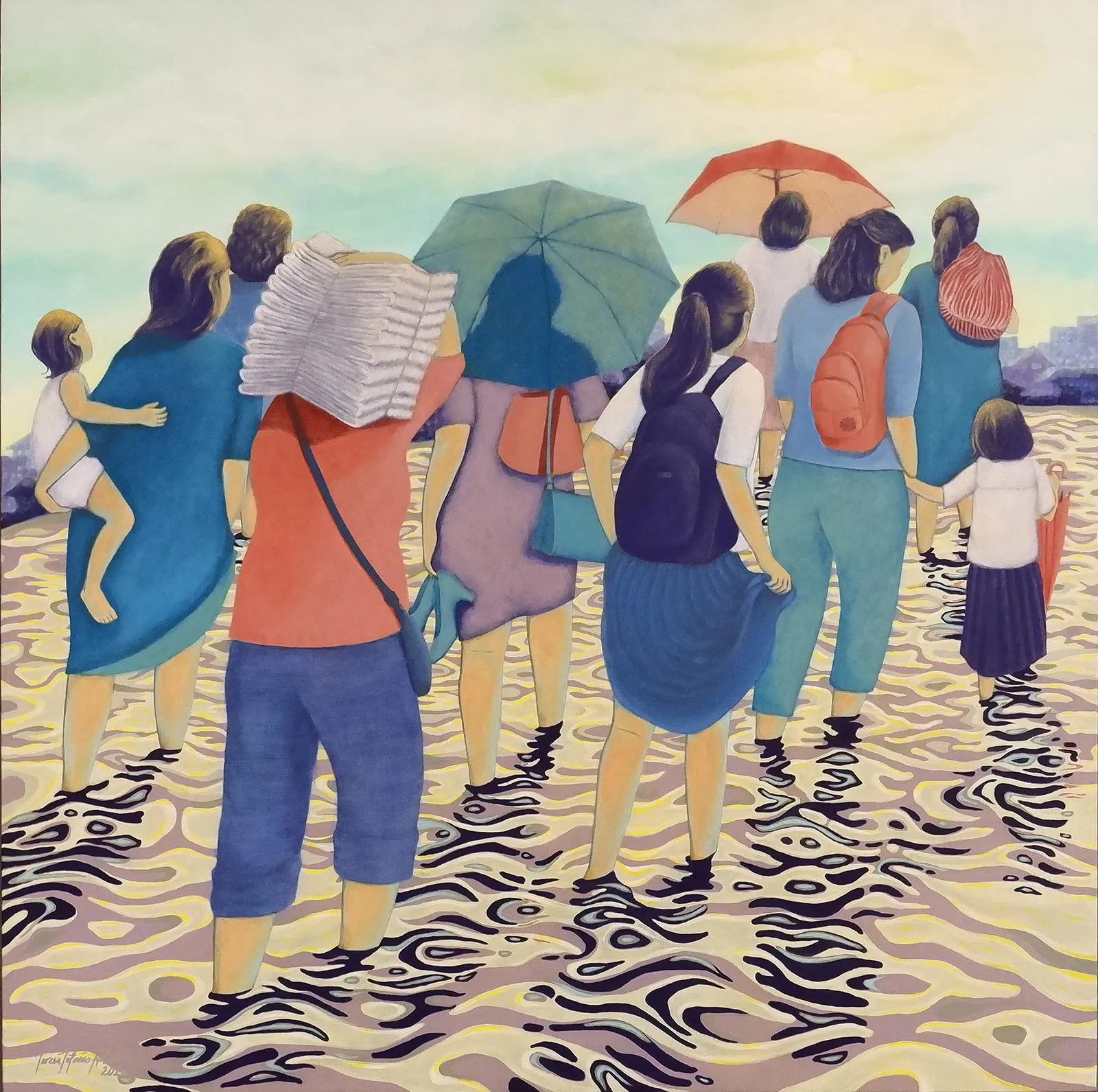
The theme extends to the opposite wall, where acrylic works evoke recent flood control scams, and a watercolor painting titled Madonna sa Lata (Madonna in a Food Tin) builds on artist Jenny Lee Bonto’s experiences at a volunteer kitchen, serving nutritious meals to the members of society who lack them most. In a collaborative piece nearby, ternos made of flour sacks use embroideryEmbroideryThe decorative stitching of designs onto fabric by hand or machine, central to Philippine formalwear. Hand embroidery from places like Lumban in Laguna and Taal in Batangas adorns barongs, ternos,Go to Embroidery Glossary and appliqué to recall similar topics, such as the dangers of export-oriented agriculture, and the needs of parents to sustain and nourish their children.
Instead of assigning these issues to separate domains, the women of Kasibulan perceive them as interconnected realities that each have the power to impact the other. What can be done in the home, in the community, has value because it’s where the people are.
The thought resonates with Placino, who once questioned her ability to contribute. She shares that before she became a curator, her background in art studies led her to juggle teaching and writing projects until 2018, when she gave birth to her daughter. At first, she felt as if “everything stalled,” but after entering the Ateneo Art Awards in 2021 and winning a Purita Kalaw-Ledesma Prize for Art Criticism, while raising her child and working from home, she realized that she wasn’t “starting from zero” as she had previously thought. “Postpartum, you can’t be the same person,” she reflects. “But that doesn’t mean [you’re] a worse person or a less person. It’s just different because of what you need to carry with you.”
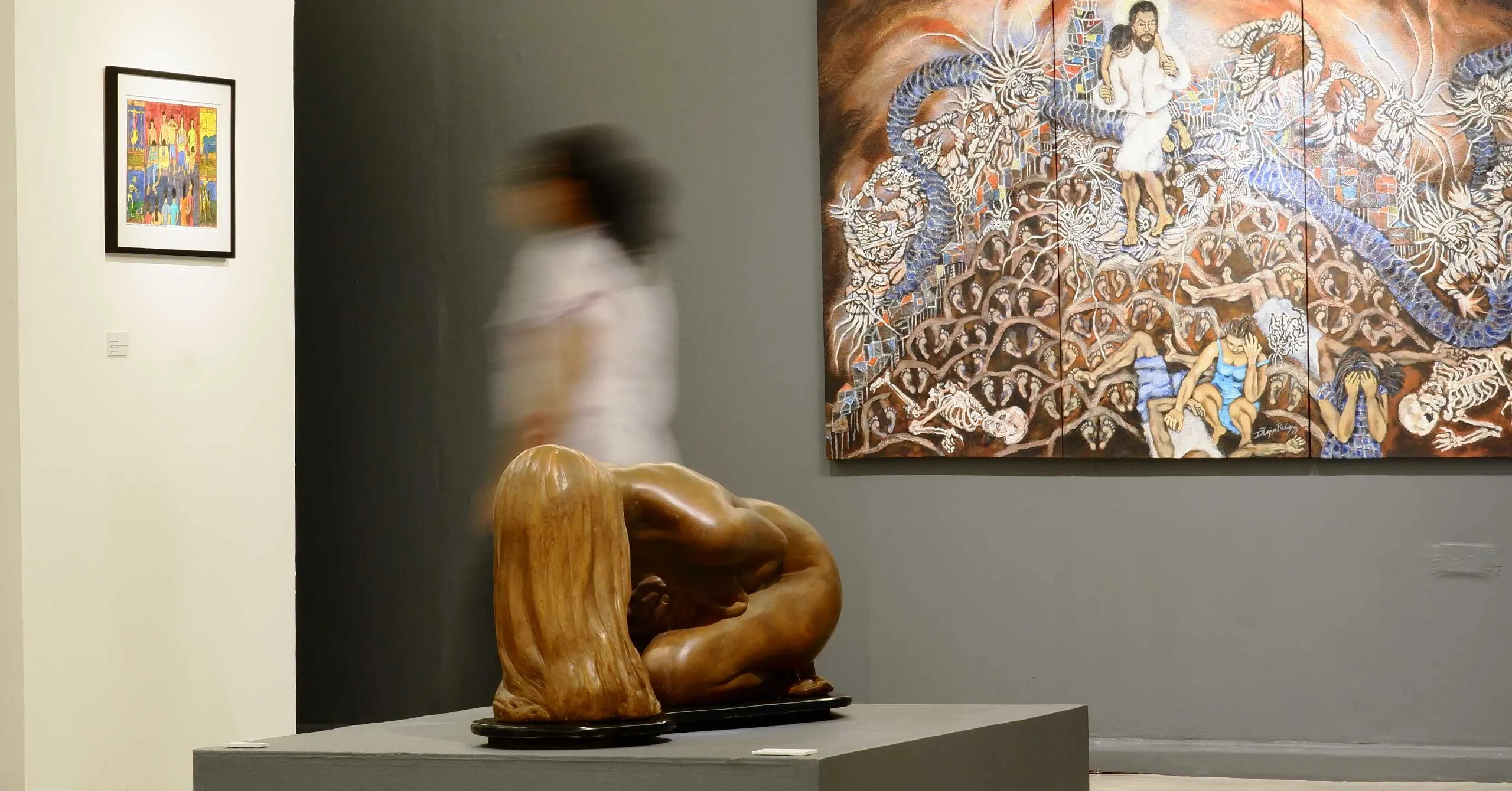
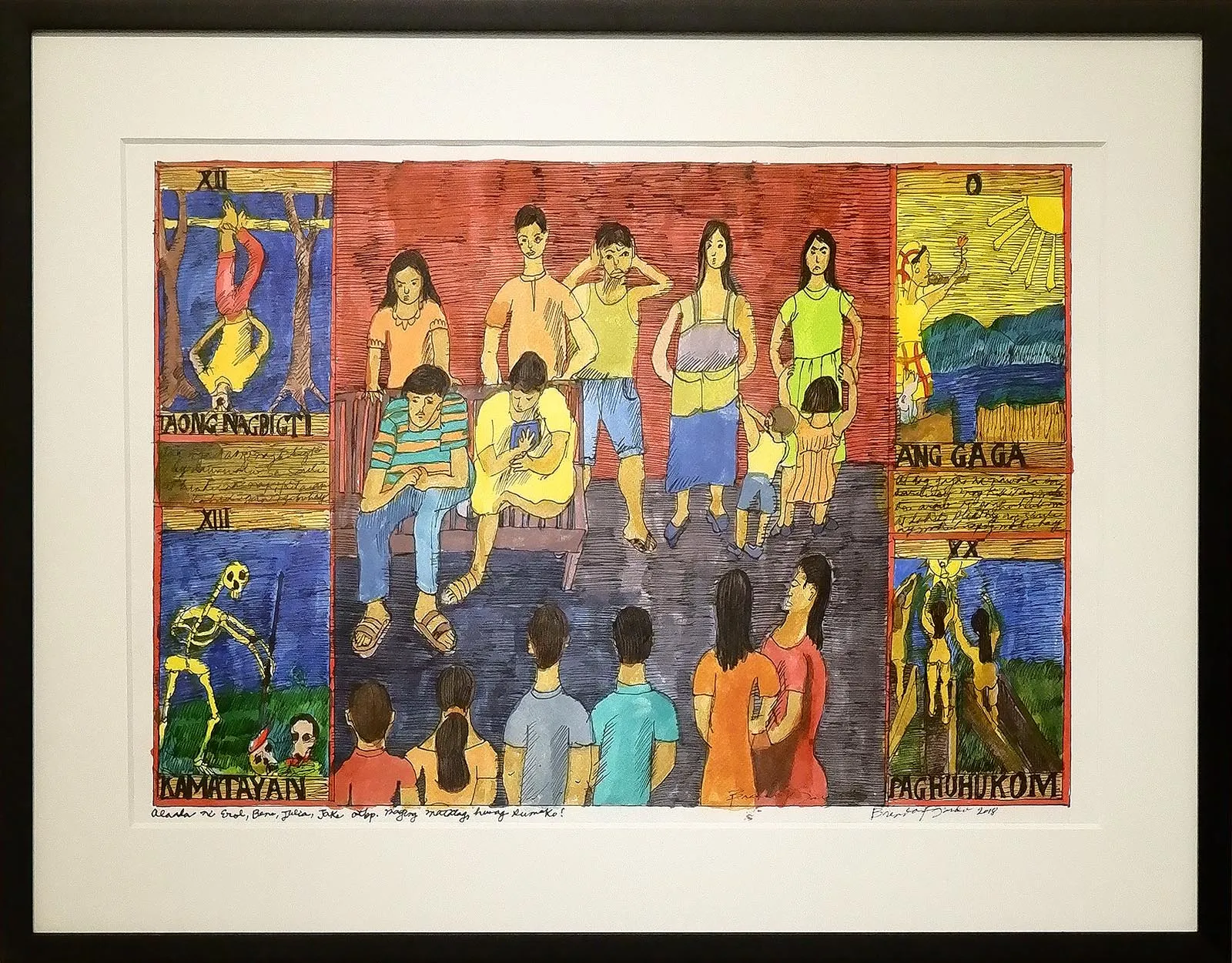
What women carry is another topic that the exhibition addresses, as the far corner of the gallery brings together a trio of works that contemplate the “War on Drugs” campaign. A cast marble sculpture of a woman folded in grief is Julie Lluch’s Lamentations, next to a mixed-media triptych of a mountain of bodies, Imelda Cajipe Endaya’s Bangungot ng Mabuting Pastol (Good Shepherd’s Nightmare), and a colored ink drawing of a gathering, Brenda Fajardo’s Alaala ni Erol, Bens, Julia, Jake, ATBP. Maging Matatag, Huwag Sumuko! (In Memory of Erol, Bens, Julia, Jake, and Others. Be Steadfast, Do Not Surrender!).
The three pieces summon a deep sense of loss, compounded by the positions women hold as leaders, mentors, mothers, partners, sisters, and children. It is a struggle that can feel overwhelming, as if starting from nothing. But the members of KASIBULAN urge viewers to see, in both their art and activism, that they are always drawing from more.
While the exhibition is small in scale, Kontra Korapsyon is a show whose scope is large, and whose artists refuse to shrink from view. As students and visitors enter the space, the collective renews their conviction that art can do more than serve as a visual artifact or a reflection of current events; it can be future-prompting, a means of encouraging ourselves to see that there is more we can do. It’s an awareness the group has arrived at together, across years of sharing their practice, finding the honesty and support that is possible when we look to each other.
KASIBULAN’s Kontra Korapsyon is an ongoing exhibit at JCB Gallery, Philippine Women’s University, Manila City, until August 14, 2026.
Frequently Asked Questions
Kasibulan or Kababaihan sa Sining at Bagong Sibol na Kamalayan (Women in Art and Emerging Consciousness) is the first women’s art collective in the Philippines. Founded in 1987, when Filipina artists had few opportunities to exhibit, the group sought to expand what was considered art by presenting textile works, handicrafts, and daily objects rooted in sociopolitical realities.
The collective was founded by five Filipina artists, namely Brenda V. Fajardo, Anna Fer, Julie Lluch, Sister Ida Bugayong, and Imelda Cajipe Endaya, the latter of whom was the group’s first president.
Portia Placino is a curator and independent art writer who runs JCB Gallery. Her curatorial work focuses on marginal art practices from regional and feminist perspectives, while her writing projects look at contemporary art under sociopolitical strain. She is the recipient of a Purita Kalaw-Ledesma Prize for Art Criticism and has been published in ArtAsiaPacific, ArtReview, and Art+ Magazine.
Kontra Korapsyon responds to sociopolitical topics in the Philippines from the perspective of Filipino women artists. It is a call for critical perspectives on issues like environmental harm, political dynasties, and invisible labor, through its presentation of art as a form of resistance and solidarity.
- Imelda Cajipe Endaya on Five Decades of Art and Activism
- A Tribute to Brenda Fajardo: The Artist, Teacher, and Cultural Worker Who Dreamt With Her Eyes Open
- Imelda Cajipe Endaya Looks Back Through Decades of Printmaking at Art Fair Philippines 2026
- In Yakisugi, Milo Naval Asks Us to Reexamine Our Relationship With Nature