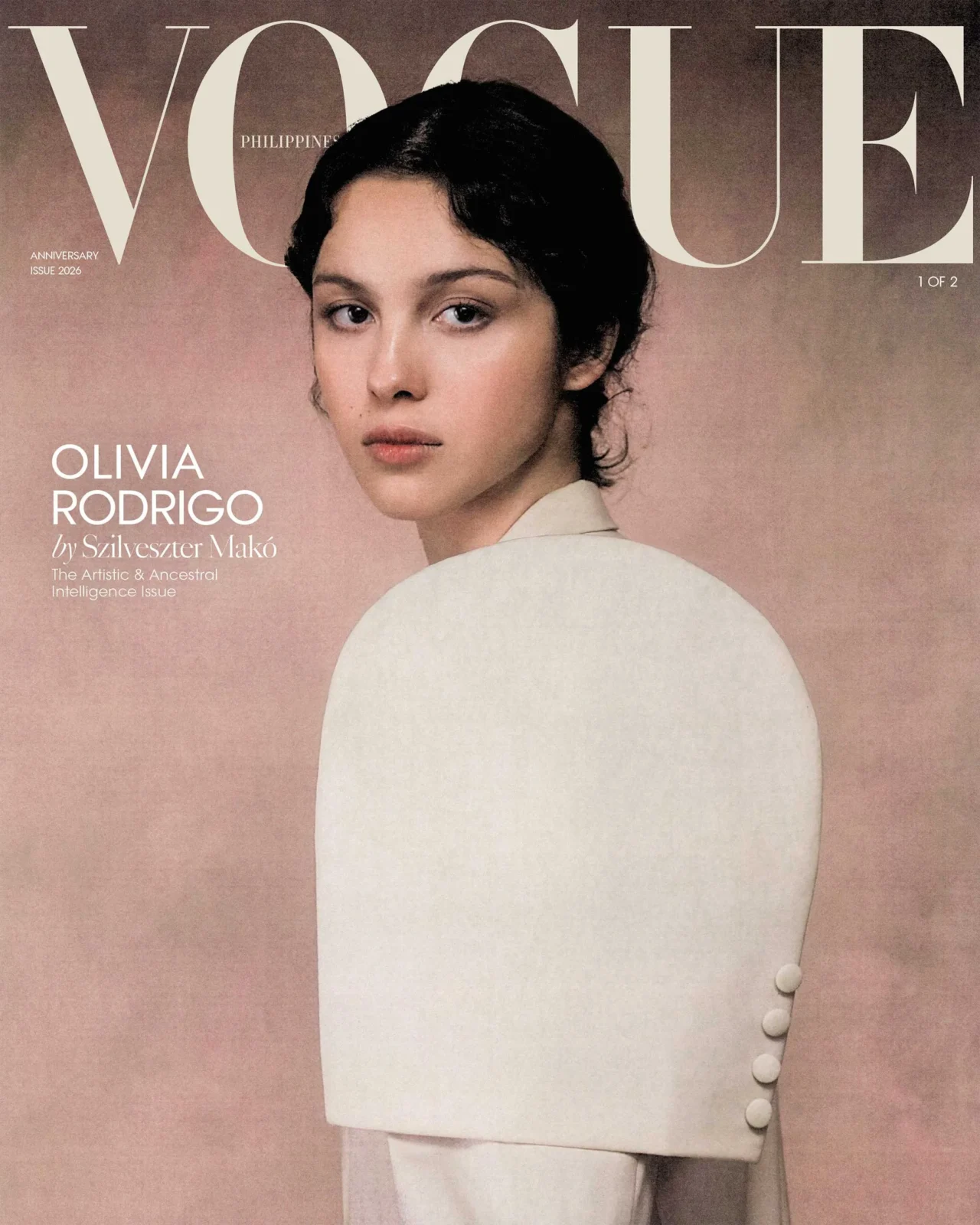
The Women That Keep Boholano Craft Alive


The age-old skills keeping Boholano crafts alive were passed on from generation to generation; from woman to woman. Today, the remaining artisans do their part to ensure that their practices outlive them. Photographed by Borgy Angeles for the September/October 2026 Issue of Vogue Philippines
Across Dauis, Antequera, and Tubigon, we meet the Boholano women keeping their locale’s artistic traditions alive.
Our van has driven past our destination, but we don’t know it yet. In fact, we’re not sure of its exact address in the first place. All we know is that we’re headed to the home workshop of a jewelryJewelryDecorative adornments worn on the body, from fine pieces in gold, diamonds, and pearls to fashion jewelry made of accessible materials. Jewelry completes an outfit and often holds sentimental orGo to Jewelry Glossary maker in Dauis, and that she is one of the last remaining artisans of her kind.
We soon become aware of our misstep, and the vehicle reverses before halting in front of a house by the main road, where we finally meet Erma Bunachita. The 69-year-old silversmith has a jolly aura about her, laughing as she reveals why her home’s facade is intentionally nondescript. It turns out, she doesn’t put up tarpaulins or signages that will identify her as a jeweler, lest tourists swarm past her gates and bombard her with orders she can’t fulfill. She wants to, though. The problem is that no one else wants to learn the craft.
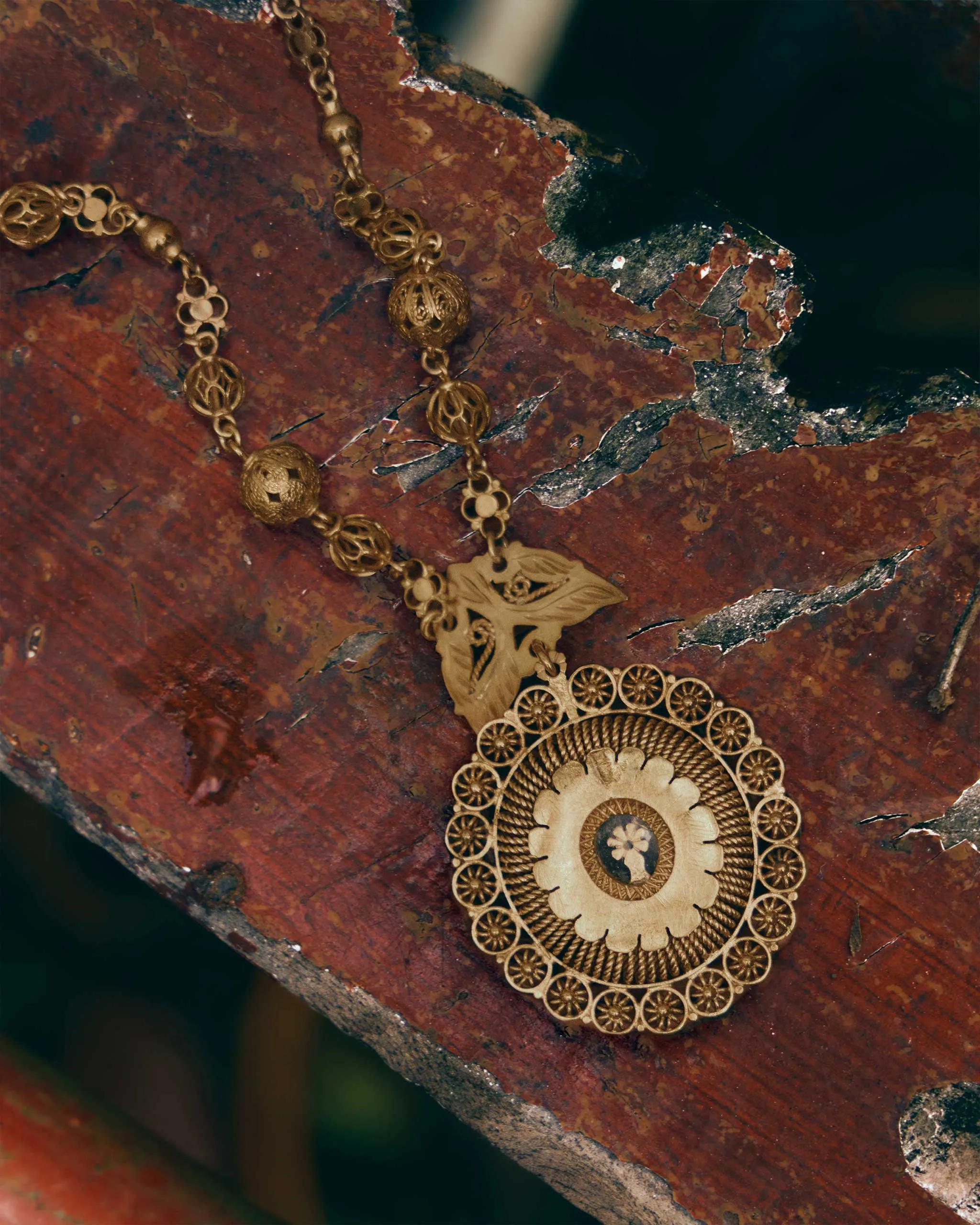
Erma’s passion for the art of tamborin jewelry is one she inherited from her grandparents and parents. In her paper “Faith and Filigree,” art historian Dr. Florina H. Capistrano-Baker expounds on what she calls the “classic” heirloom tamborin: a gold necklace characterized by “ornate beads of diverse sizes and decoration arranged in symmetrical patterns, meeting at a central element that is usually shaped like a bow, a garland, or wings, from which dangles a cross or an elaborate medallion, called relicario. Gold filigree and repoussé beads are most commonly used, sometimes combined with coral beads or pearls as accents.”
These necklaces are said to take after the holy rosary, as suggested by the late curator, antique dealer, jeweler, and art historian Ramon Villegas in his book Kayamanan: The Philippine JewelryJewelryDecorative adornments worn on the body, from fine pieces in gold, diamonds, and pearls to fashion jewelry made of accessible materials. Jewelry completes an outfit and often holds sentimental orGo to Jewelry Glossary Tradition. “The tamborin, ostensibly religious, became a way of flaunting wealth,” he wrote.
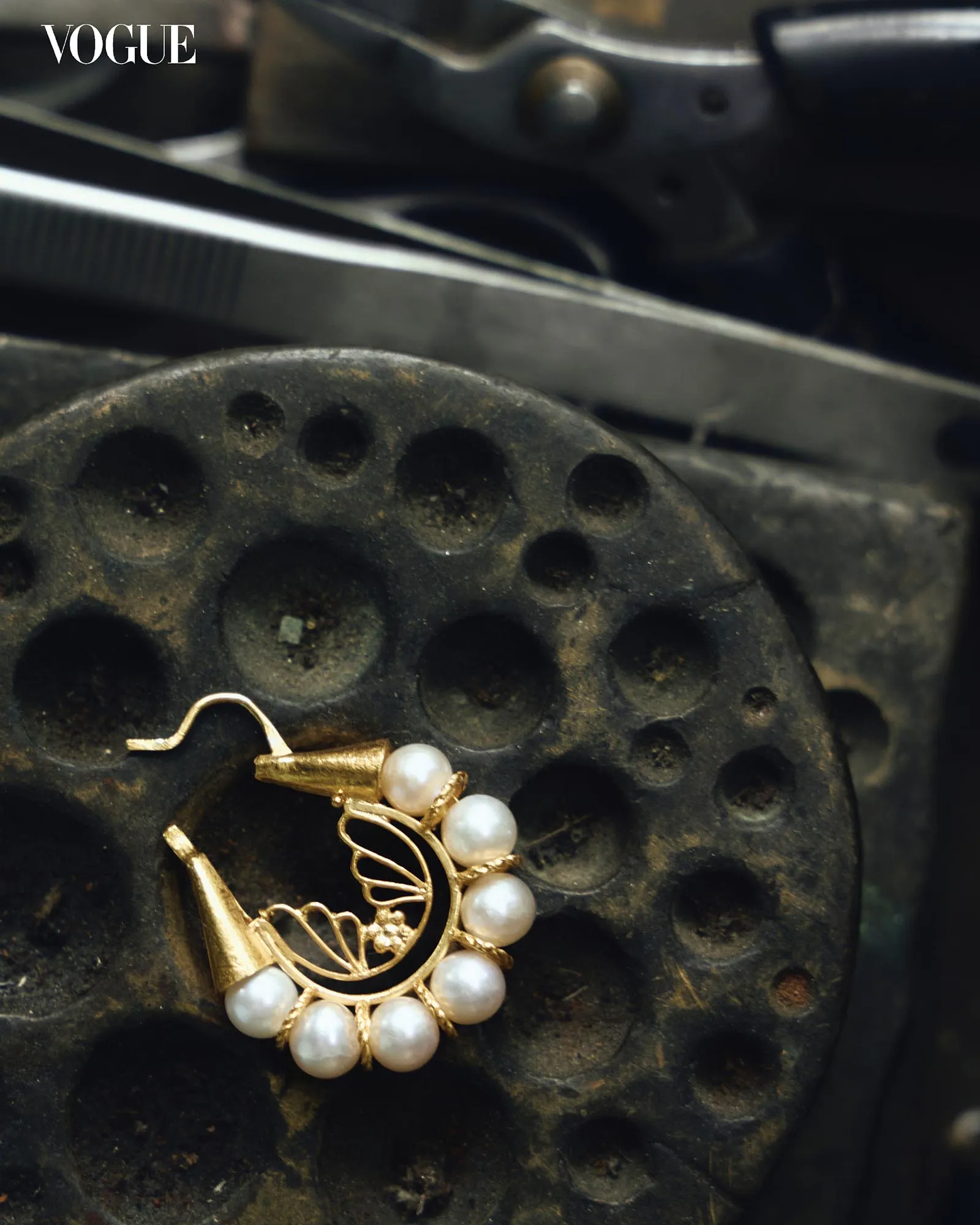
All this of course is common knowledge to Erma, who mindlessly rattles off jargon during our conversation while simultaneously soldering an earring. “Malapit na akong di makakita! [I’m nearly blind!]” she later teases, when speaking of filigree’s intricacy. The wooden desk on which she works is positioned on the patio by their main door, illuminated by sunlight and a view of the street. In an open shed nearby are her metalworking machines purchased from Meycauayan, where tamborin jewelryJewelryDecorative adornments worn on the body, from fine pieces in gold, diamonds, and pearls to fashion jewelry made of accessible materials. Jewelry completes an outfit and often holds sentimental orGo to Jewelry Glossary making also persists at the hands of a few artisans.
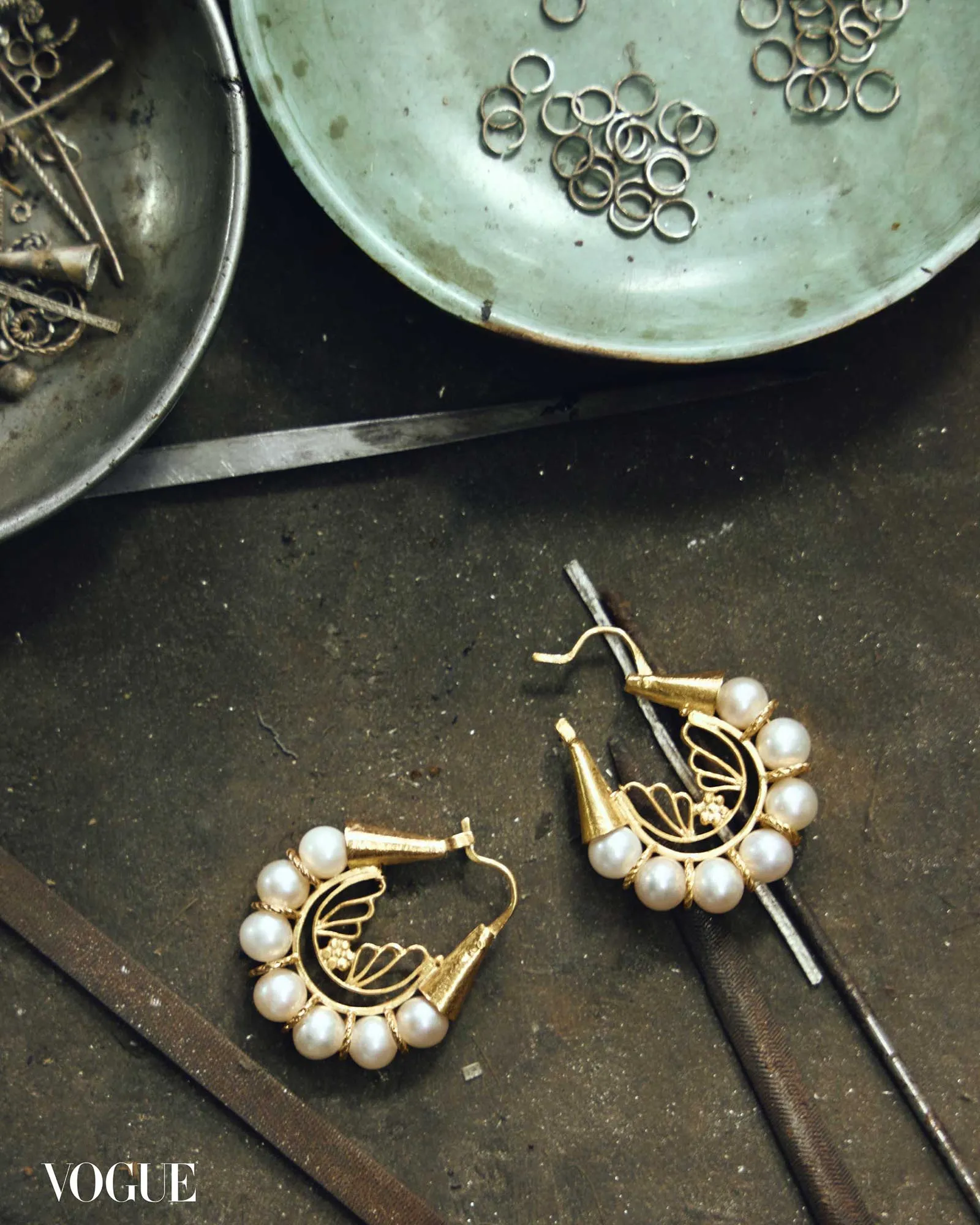
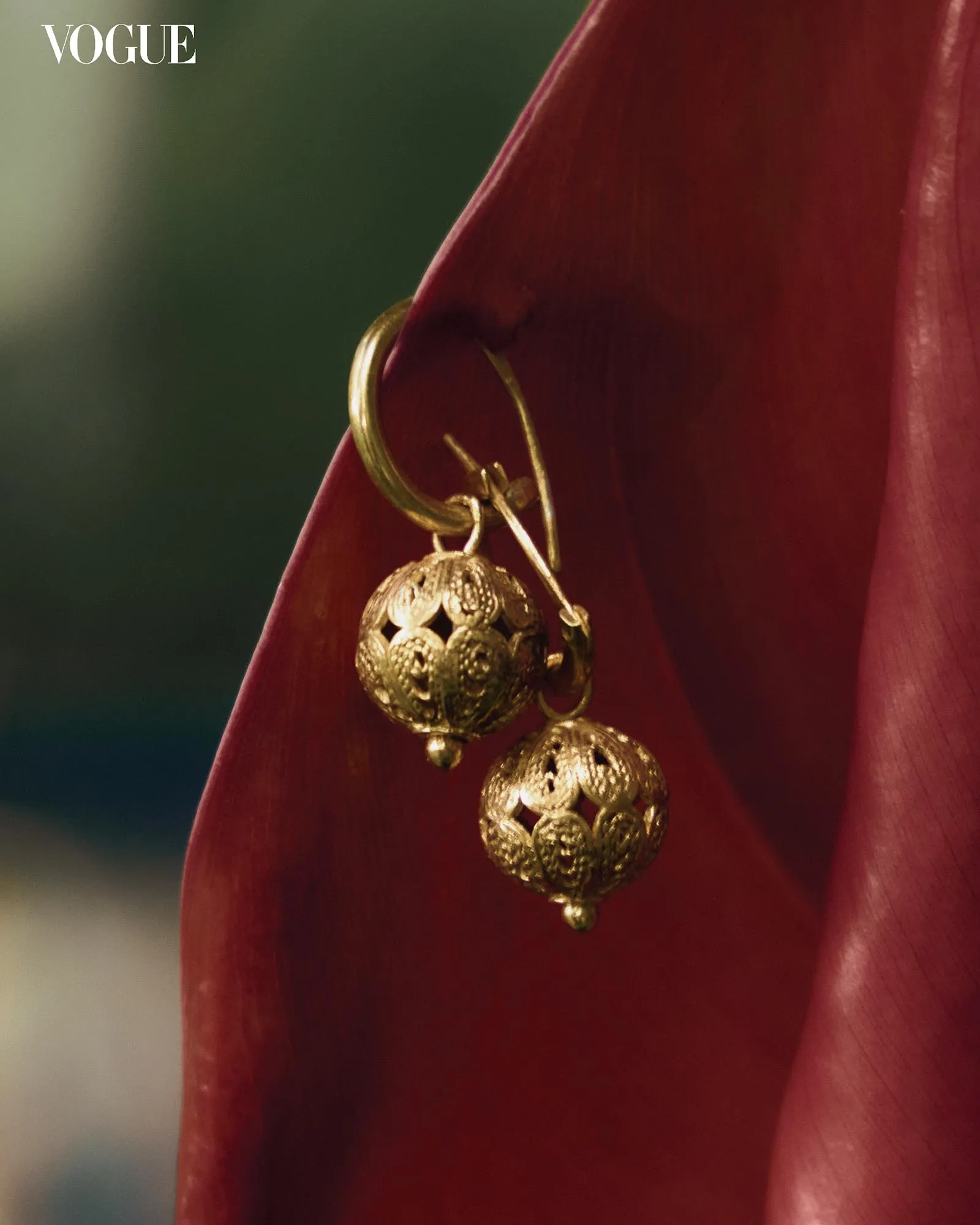
Though she has been in business since teenhood, an uptick in orders came after 2006. “Nang dumating dito si Sir Ino Manalo, [then museum director at the Metropolitan Museum of Manila] at si Ma’am Bea Zobel [de Ayala, philanthropist], doon kami na-recognize,” Erma recounts. She makes every piece individually by hand, so to meet the surge in demand, Erma enlisted the help of two neighbors already armed with silversmithing experience. Erma has since reverted back to a one-woman team, but no matter; she gets to do what she loves in peace, from eight in the morning to five in the afternoon. Sometimes, a looming deadline requires overtime. She doesn’t seem to mind.
Over in Antequera, 54-year-old basket weaver Ricarda Hermosisima keeps busy well into the night. Her work days begin after breakfast at 7 A.M. and usually conclude by 10 P.M. She likes to weave with the radio on, and during seasons where she needs more income (say, a new school year rolls around), she’s at it ’til the wee hours of the morning, sometimes up to 3 A.M. despite the eye strain.
Her tenacity has led to tangible triumphs like being able to put four out of six kids through school so far, and even expanding her clientele to include Turkish tourists who now regularly visit her during their bi-annual trips to the Philippines.
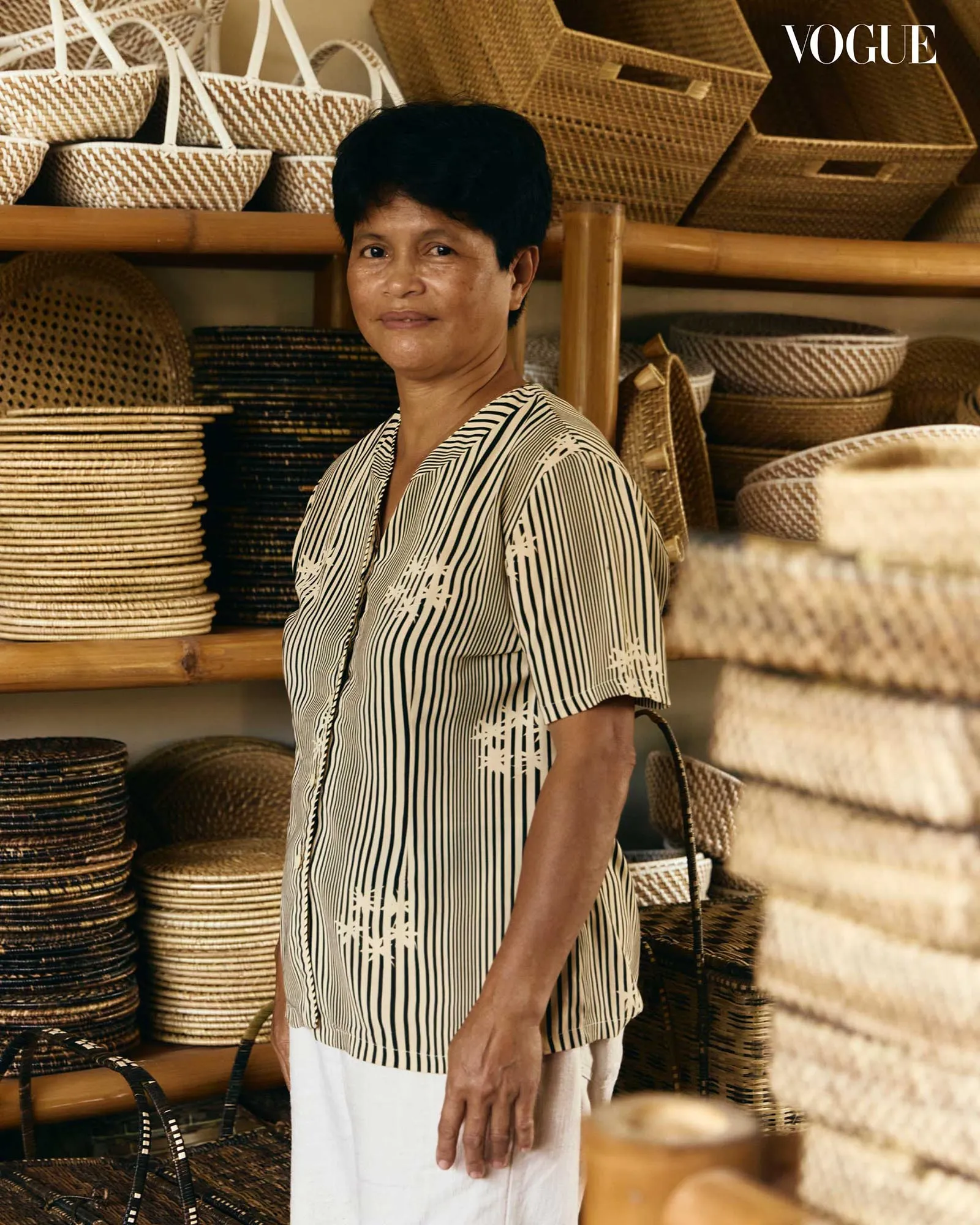
Ricarda and I meet in Antequera’s municipal tourism office and display center, where we find her in the process of weaving a picture frame with nito and rattan. Touted as the “Basket Capital of Bohol,” Antequera is known for its rich cottage industry where among its 21 barangays, each one specializes in a unique pattern or technique with varying degrees of density and design complexity. Tourism officer Ma. Lorna Jadulco takes us around the display center, pointing them out: Tupas is known for their sinuksok method, Cansibuan for their miniature baskets, and Canlaas for their solihiya weave. Despite their respective specialties, the more expensive and commonly exported weave is called hapao or tuhog-tuhog, which artisans across the municipality know how to do.
Ricarda’s family is from Danao, and like many Boholano craftsmen we spoke to across a plethora of fields, her passion was ignited by a childhood of watching her parents and grandparents fashioning objects from long, organic strands. Her mother, now 79, still weaves; all Ricarda’s children know how to, upon their mother’s advice that the skill is an essential safety net in cases of unemployment. The kids continue to help their mother weave before or after school, and the family has made a bonding activity out of it during weekends.
In recent years, her job has taken her to Manila Fame and Likha, trade fairs that have introduced her to the many weaves of our archipelago. She praises the Igorots and Muslims for their impeccable handiwork, gushing about how thrilled she was to observe the differences and similarities between their work, and how she was able to converse with her fellow artisans about who they are and what they do.
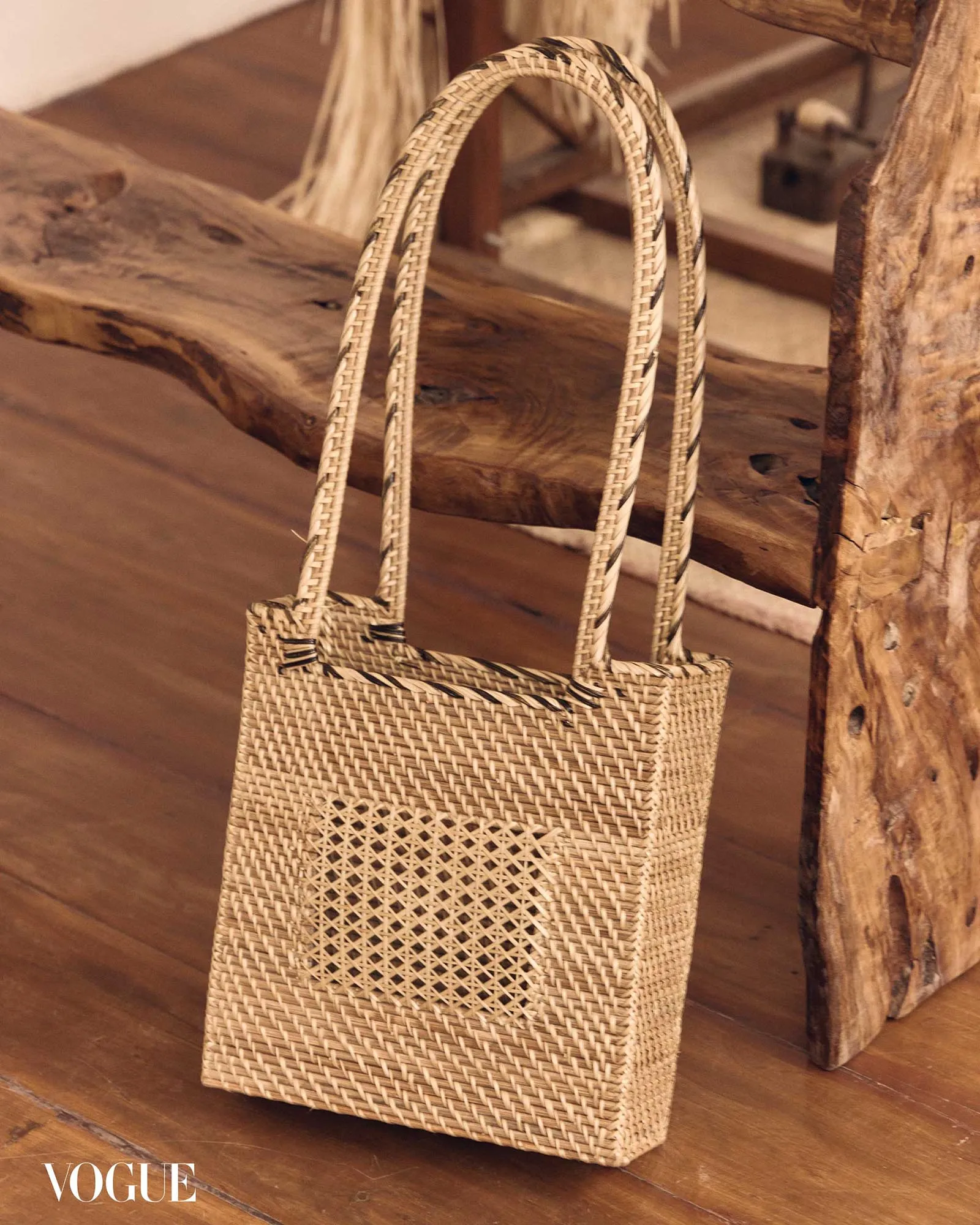
“Kapag mahal mo yung ginagawa mo, masaya talaga,” Ricarda tells Vogue, but she’s also the first to point out that enthusiasm can only get her so far. Like Erma, Ricarda’s friends encourage her to post more on Facebook to attract more commissions, but she’s overtaken by the fear of underdelivering due to a lack of apprentices.
She observes that it might be due to the ubiquity of cellphones. “Kids these days really aren’t interested in baskets,” she remarks poignantly in Filipino. Although basketry is widespread enough that even children generally know how to do it, no one is interested in making it their livelihood. It doesn’t help that some parents trivialize the tradition by using it to scare their kids. “If you don’t study, you’re just going to end up a weaver,” is a statement thrown around, Lorna confides. Ricarda, who never graduated from school, says nothing. Though she’s actively doing her part to ensure that the practice outlives her.
She herself has been invited to schools for one-day sessions intended to refresh pupils’ basketry skills, and hopes for the establishment of a more immersive long-term program. Specifically, integration into the curriculum through technical livelihood or practical arts classes, so that an aptitude for it can be honed over time.
“We don’t use any machines, it’s all manual.”
Elsewhere, training sessions are already in place in Tubigon, where they are known for weaving a different material: raffia.
One organization putting forward workshops is the Tubigon Loomweavers Multipurpose Cooperative, which was established with the support of the Department of Trade and Industry. “Our cooperative started on February 12, 1989,” shares product manager Ma. Lourdes Yosoya, who tours us around their spacious workroom. “We have 60-something members, mostly mothers. We have only one guy here.”
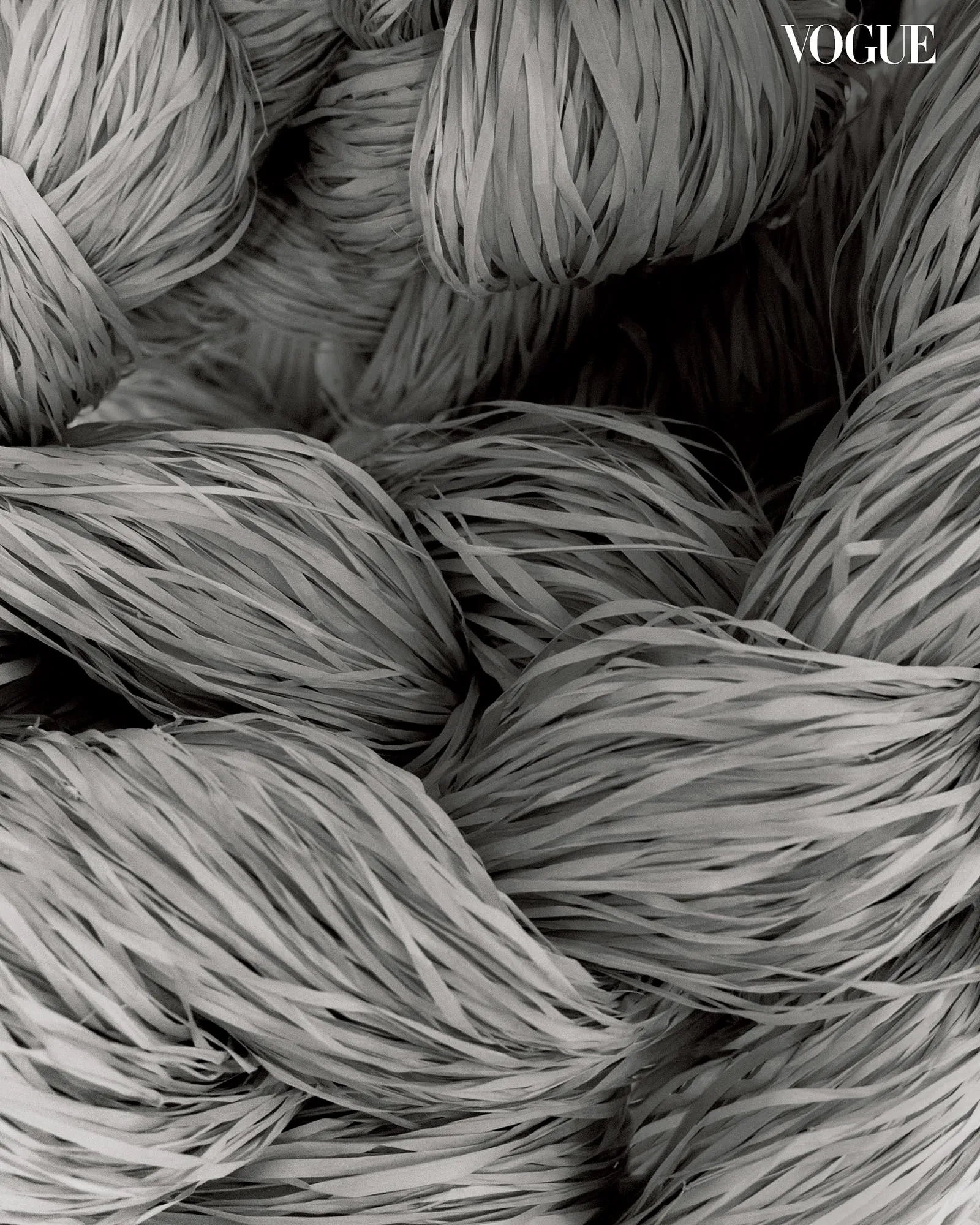
Speaking Filipino, Lourdes informs us, “We don’t use any machines, it’s all manual.” The extensive process begins with the harvesting of buri shoots, which are separated into strips then bleached, boiled, then dried. At the cooperative, they have dedicated workers for knotting then spooling the fibers, so that weavers can easily set up the warp and weft on their looms, a step that takes up to one day alone.
Lourdes gestures to a row of about 20 looms on one side of the room, presently dedicated to completing a single order placed from France, where they intend to use raffia to cover the walls. Near the entrance, 200 rolls of woven raffia (their most in-demand product) are headed to Vietnam. The cooperative mostly produces bags, placemats, table runners available to purchase in the gift shop outside, but what they export are usually yards of already-woven fabric with which buyers are free to do what they wish.
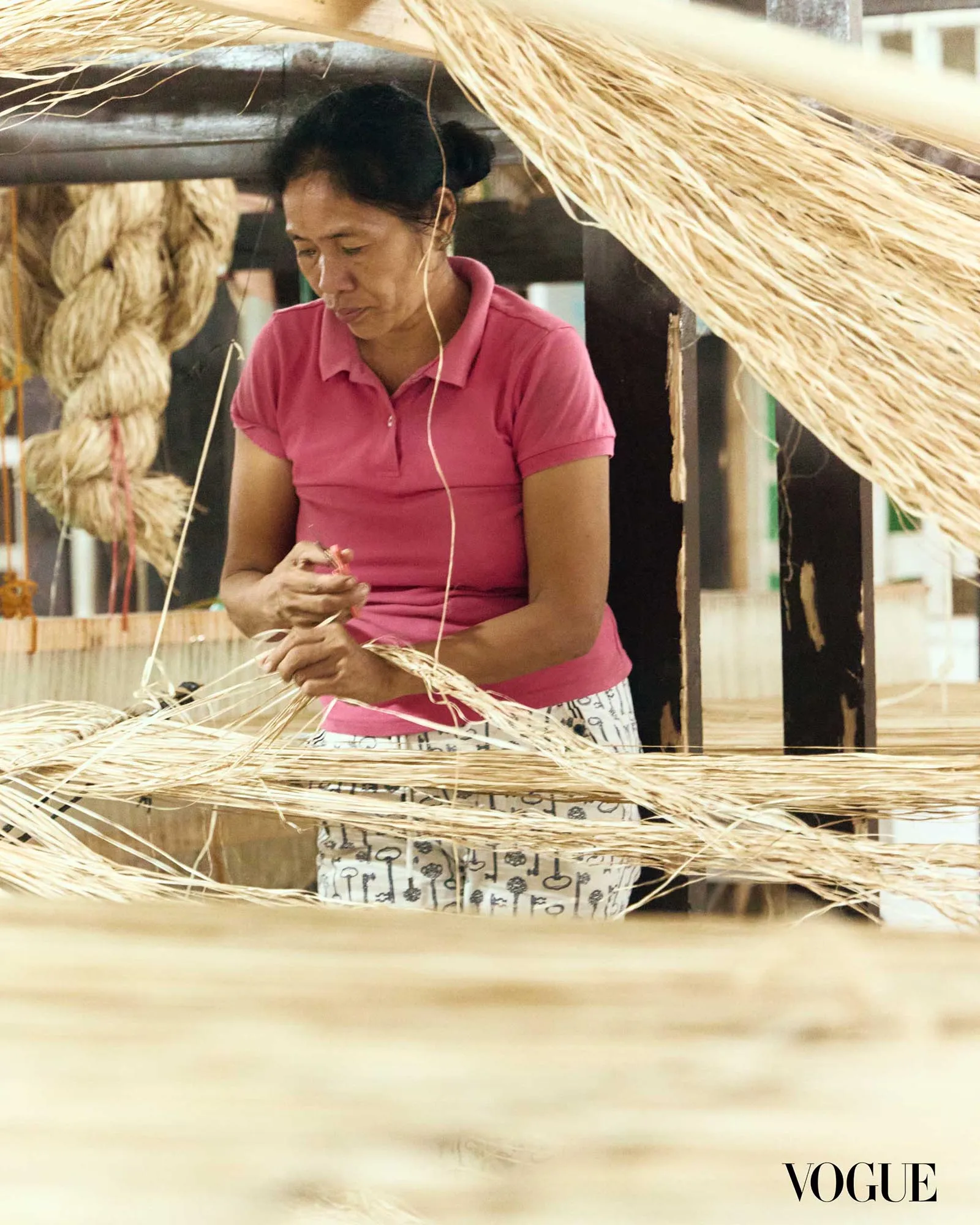
On the other hand, Tubigon Raffia Gallery operates on a larger scale, despite launching in 2023. Architect and creative director Nigell Abarquez states, “Right now, we’re supporting about 10 communities, not just in Tubigon. We support communities from nearby towns, from Buenavista up north, Calape down south, and up in the mountains in San Isidro and Catigbian.”
Their supply chain is made up of eighty to ninety percent women, and isn’t limited to weavers, but also includes harvesters and knotters. Unlike the cooperative, Nigell’s weavers all work remotely, with the raw materials sent to them and their output picked up, “so they can earn decently without having to leave their houses, so they could provide for their families. They can tend to their kids, which is the most important.”
He continues, “The difficult thing with the buri palm is that it can’t be cultivated. They choose where they want to grow, but where they grow, they grow in numbers.” He goes on to break down the technicalities: when harvesting buri palms, there’s no need to cut down the tree, just the bud. According to Nigell, a mature buri palm is ready to harvest about once every two weeks. “It’s a very sustainable and renewable resource.”
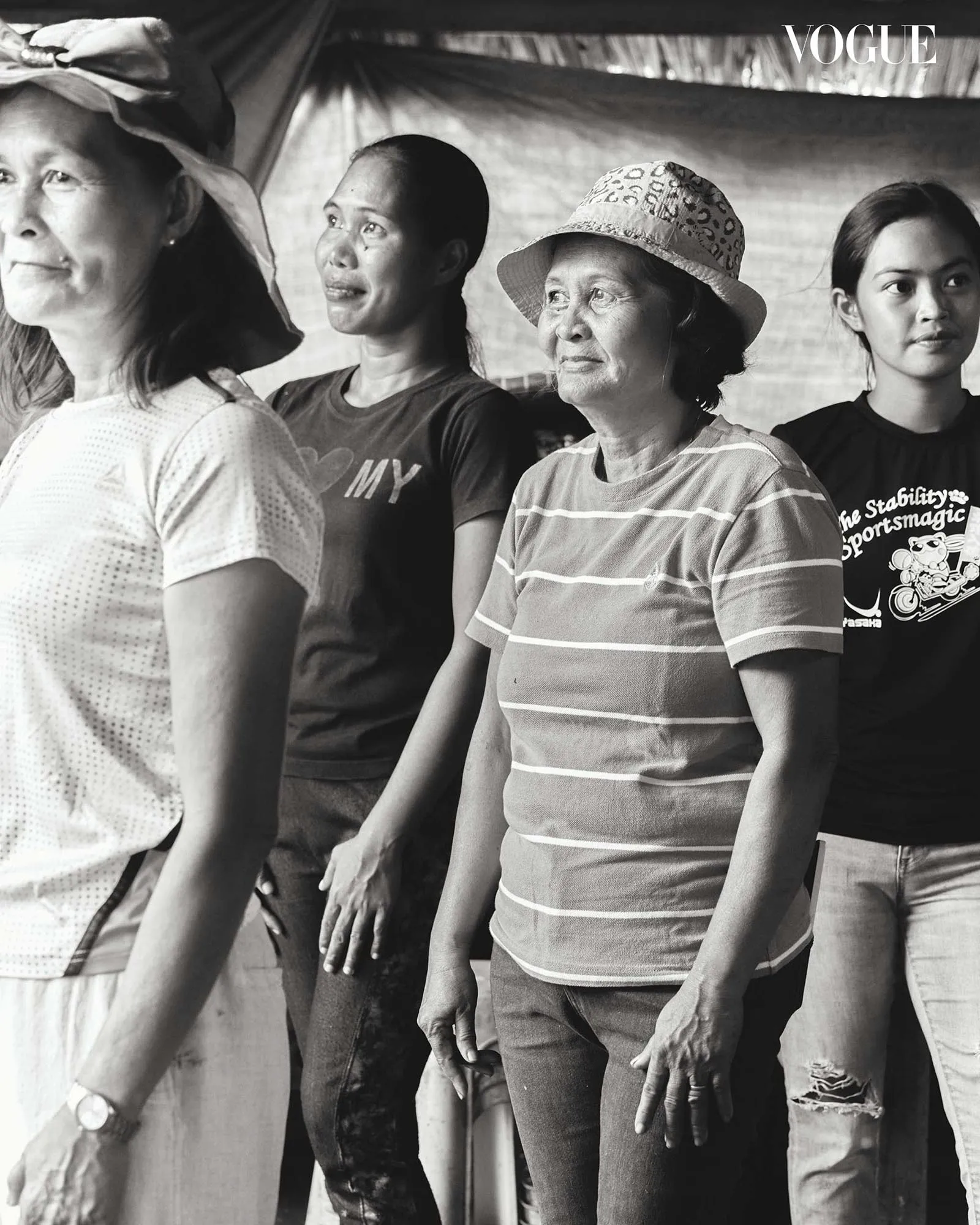
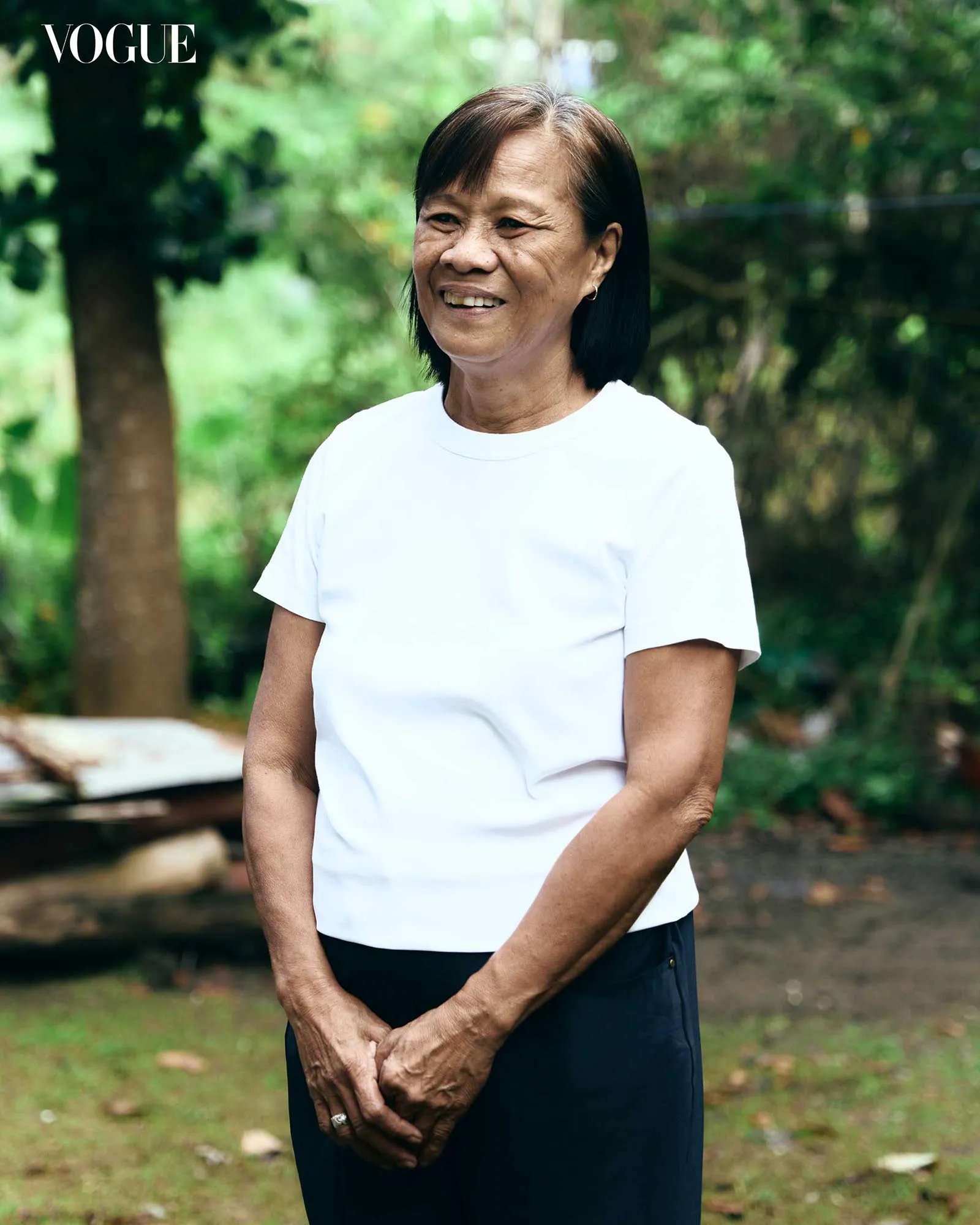
An itch for innovation prompted him to experiment by incorporating synthetic materials such as wire frames to produce hanging lamps. From there, they ventured into homeware, fashion, and art, “but really, the bulk of our production is supplied to exporters as far as Pampanga. And I think the reason why they like the raffia from Bohol is because they said it’s sturdier than elsewhere.” Additionally, they’ve forged collaborations with luxury hotels, the local government, and global brands, which challenge the gallery to explore novel color combinations and patterns.
Nigell expresses his desire to keep expanding their practice, echoing a dream that Erma declared with gumption: “Pangarap ko lang may magpagawa sa’kin! [My only dream is that people keep commissioning me to make things!]”
Maybe it’s because he works with a wide network of artisans, but Nigell is uncharacteristically optimistic about the future of Boholano craftsmanship. “This part of Bohol is really rural. There’s not a lot of big industries here, you know?” he intimates. “So when we hear stories that we were able to help send their kids to school and some of the kids are also learning the trade because they can also help with their household income, that’s the gratifying part for me. We’re not there yet compared to other handicrafts, but at least we’re getting there.”
By TICIA ALMAZAN. Photographs by BORGY ANGELES. Styling by NEIL DE GUZMAN. Art Direction by MCAINE CARLOS. Fashion Editor: David Milan. Producer: Bianca Zaragoza. Photography Assistant: Rojan Maguyon.
Special thanks to National Museum of the Philippines Bohol, Neil Gerard P. Reyes, Information Officer II, Bohol Island UNESCO Geopark, Joanne M. Pinat, Program Manager, Municipalities of Alburquerque, Antequera, and the Province of Bohol, Kapunungan sa mga Mang-asinay sa Alburquerque (KASAMA) together with the Saltpotters, Tubigon Loomweavers Multipurpose Cooperative, Tubigon Raffia Gallery, and The Bellevue Resort Panglao.