
Ahead of Vogue World: Milano, a Visual Feast Celebrating Decades of Italian Fashion Splendor


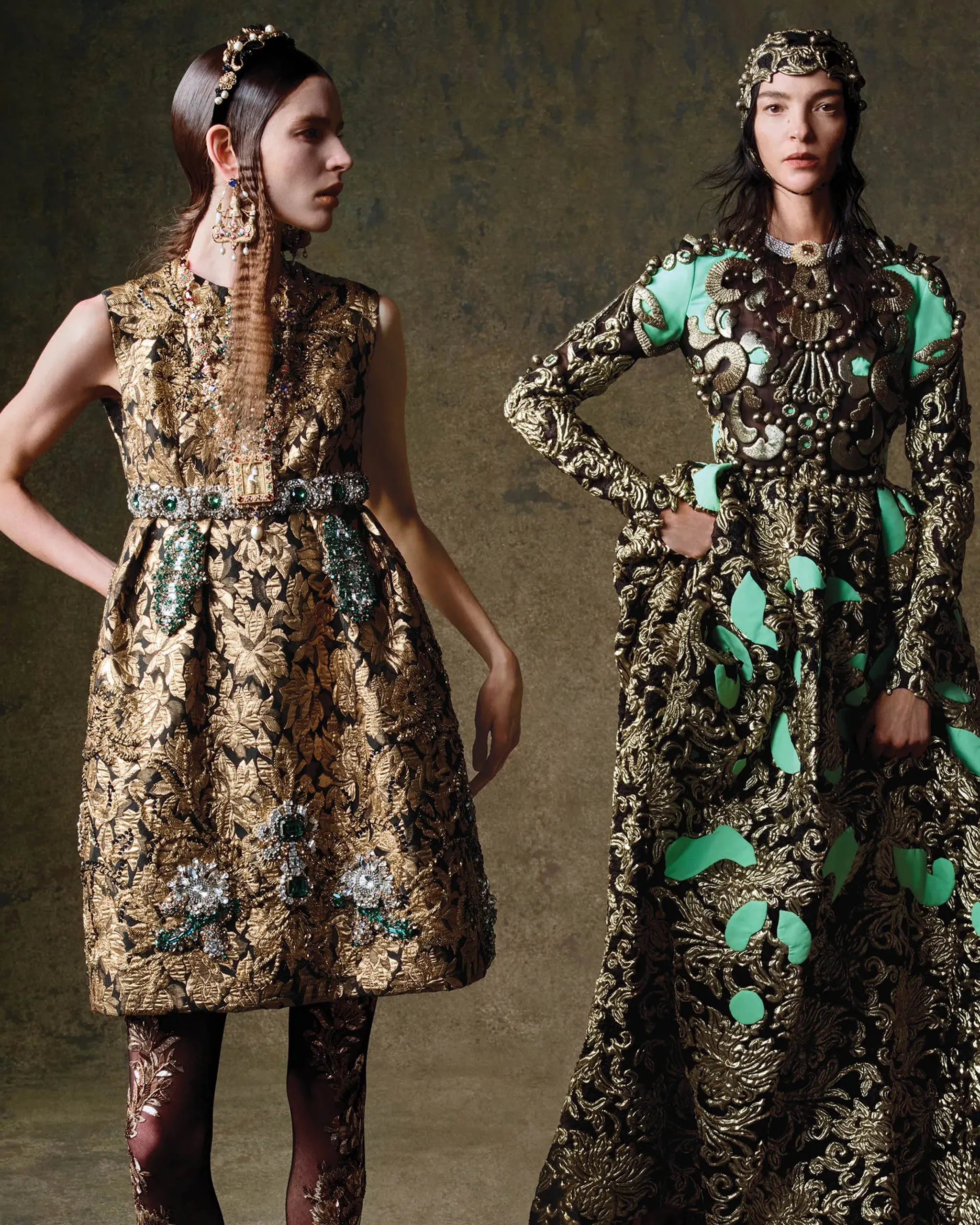
RENAISSANCE WOMEN
Model Libby Taverner (left) wears Dolce & Gabbana Alta Moda Milan 2016 and Dolce & Gabbana Alta Gioielleria. Model Mariacarla Boscono wears a fall 2018 Valentino Haute Couture gown and Damiani High Jewelry necklace. Fashion Editor: Amanda Harlech.Photographed by Ethan James Green. Vogue, October 2026.
Beneath the glorious, soaring glass-and-iron dome of Milan’s Galleria Vittorio Emanuele II, visitors queue every day to perform an unusual ritual: They place one heel on the private parts of a bull rendered in mosaic on the ground beneath them, press down hard, and spin around three times for good luck. So many do so, in fact, that the Galleria’s tesserae are gradually but constantly ground away. Earlier this year, in May, the resulting crater had to be restored once again; by early June, the replacement marble had been stabilized and polished, and the public was invited to resume their spinning.
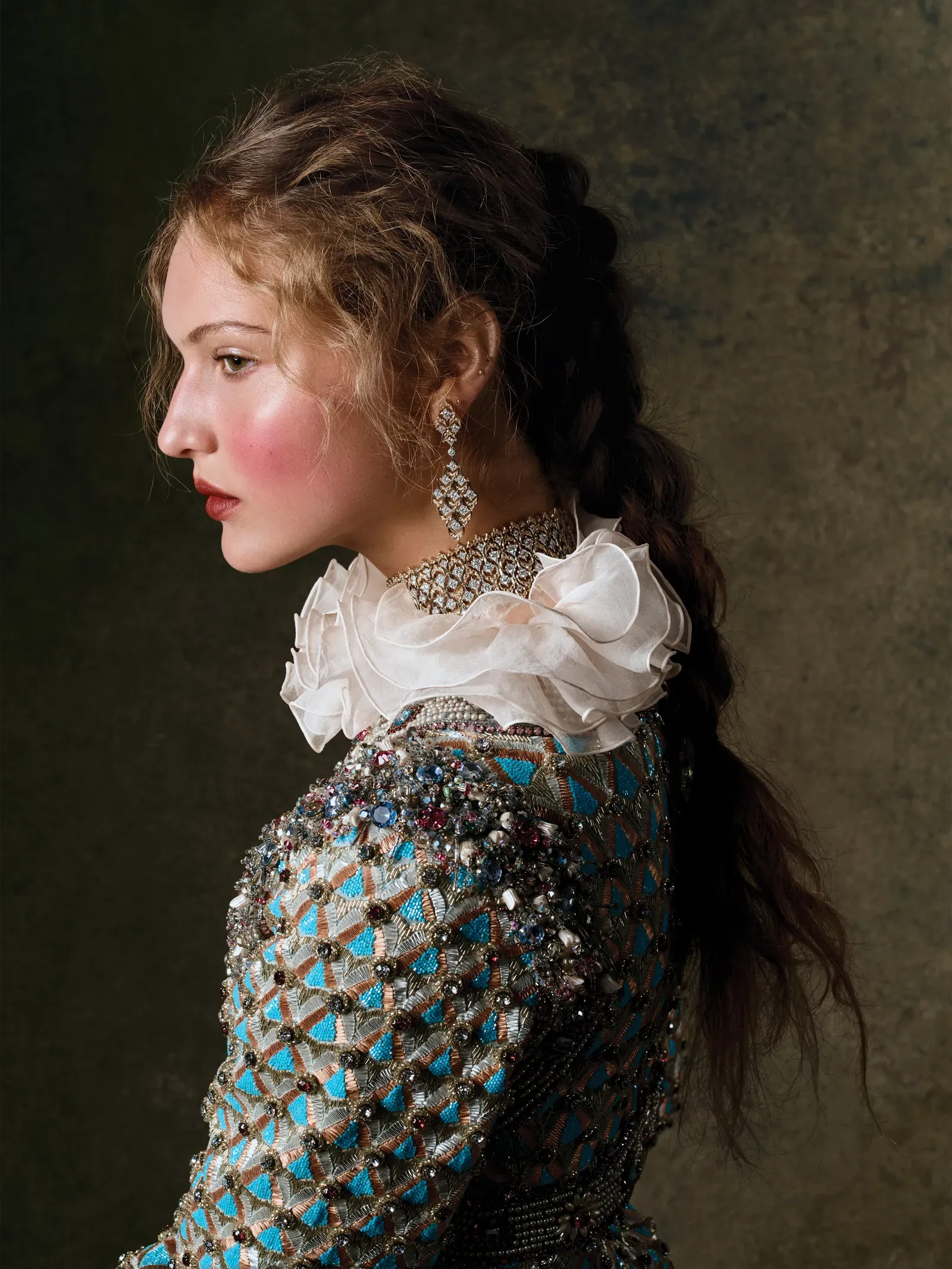
Model Angelina Kendall in an embellished spring 2025 Valentino Haute Couture dress. Buccellati High Jewelry earrings and bracelet.
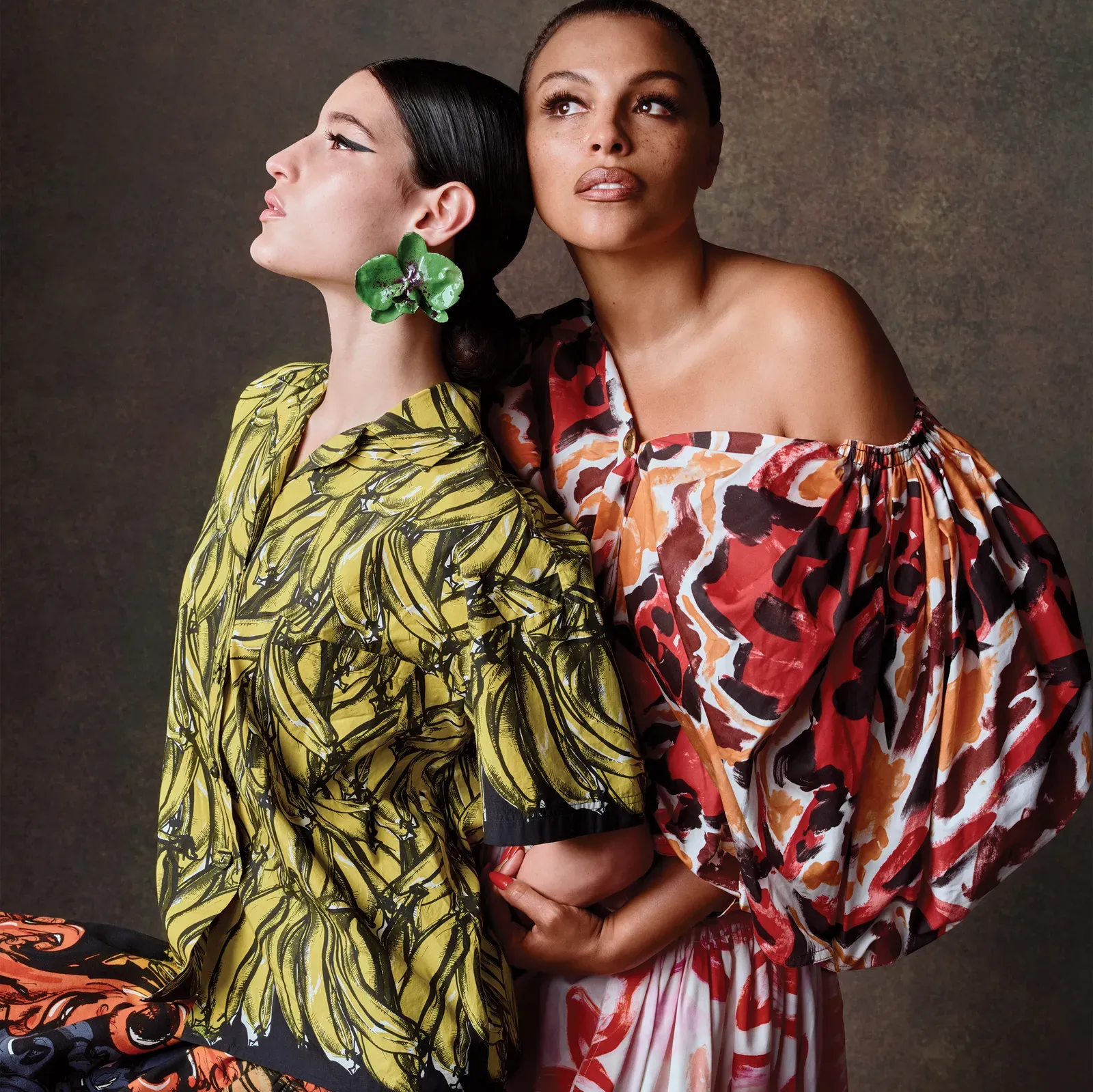
Models Luiza Perote and Paloma Elsesser embody the Italians’ love of bold, in-your-face patterns. Perote is totally bananas for spring 2011 Prada, while Elsesser mixes it up in spring 2020 Marni.
The Italian fashion system has also been spinning since the mid-1970s, when Milan emerged as the global center of an advanced network of industries devoted to clothing, textiles, and design. Like that much-abused bull, Italian fashion’s rise was built on history and tradition, with a legacy of craft extending back to the Renaissance. Yet what arose was technologically and aesthetically radical: a new synthesis of specialist manufacturing and industrial scale, animated by pioneering designers—not least Giorgio Armani, who founded his company in 1975—prepared to dismantle established ideas of how clothes should be constructed, presented, and worn.
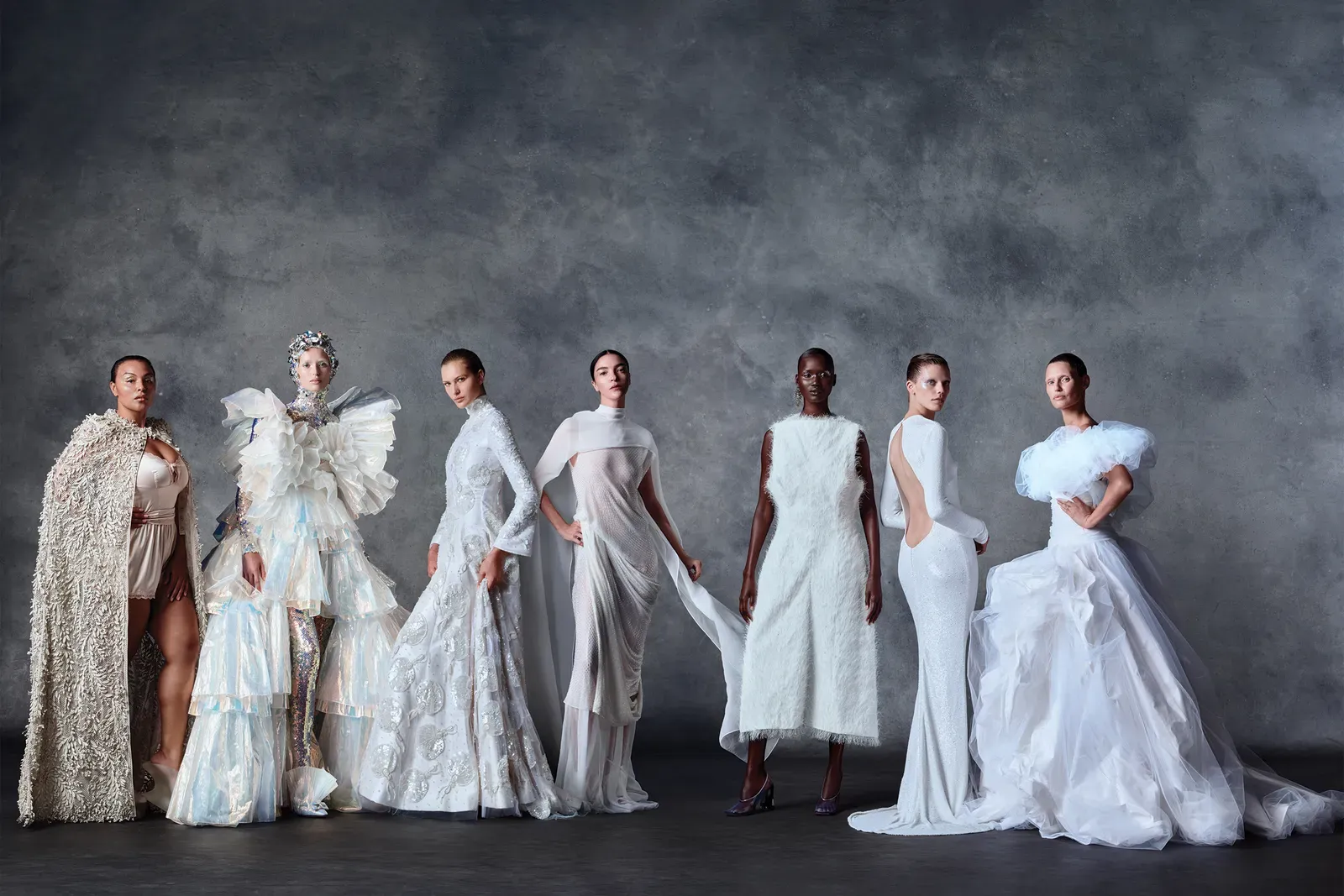
From left: Elsesser wears Fendi Couture by Maria Grazia Chiuri. Model Stella Hanan wears Valentino Haute Couture by Alessandro Michele. Kendall wears Giorgio Armani Privé by Silvana Armani. Boscono wears Ferragamo by Maximilian Davis. Model Abény Nhial wears Bottega Veneta by Louise Trotter. Model Betsy Gaghan wears Gucci by Demna. Model Bianca Balti wears Dolce & Gabbana Alta Moda by Domenico Dolce and Stefano Gabbana.
Half a century later, that system remains formidable. Almost 80 percent of the supply chain managed by Kering—the group behind Gucci, Bottega Veneta, and Saint Laurent—is located in Italy. However, what once represented modernity and innovation is now discussed at least as often through the prism of heritage, craftsmanship, archive, and tradition. These qualities remain enormously valuable, of course, though in the wrong hands they can also become stultifying. Italian fashion, then, stands at a crossroads between past and future, heritage and progression, craft and technology. Can it use what it has inherited as the foundation of another great leap forward?
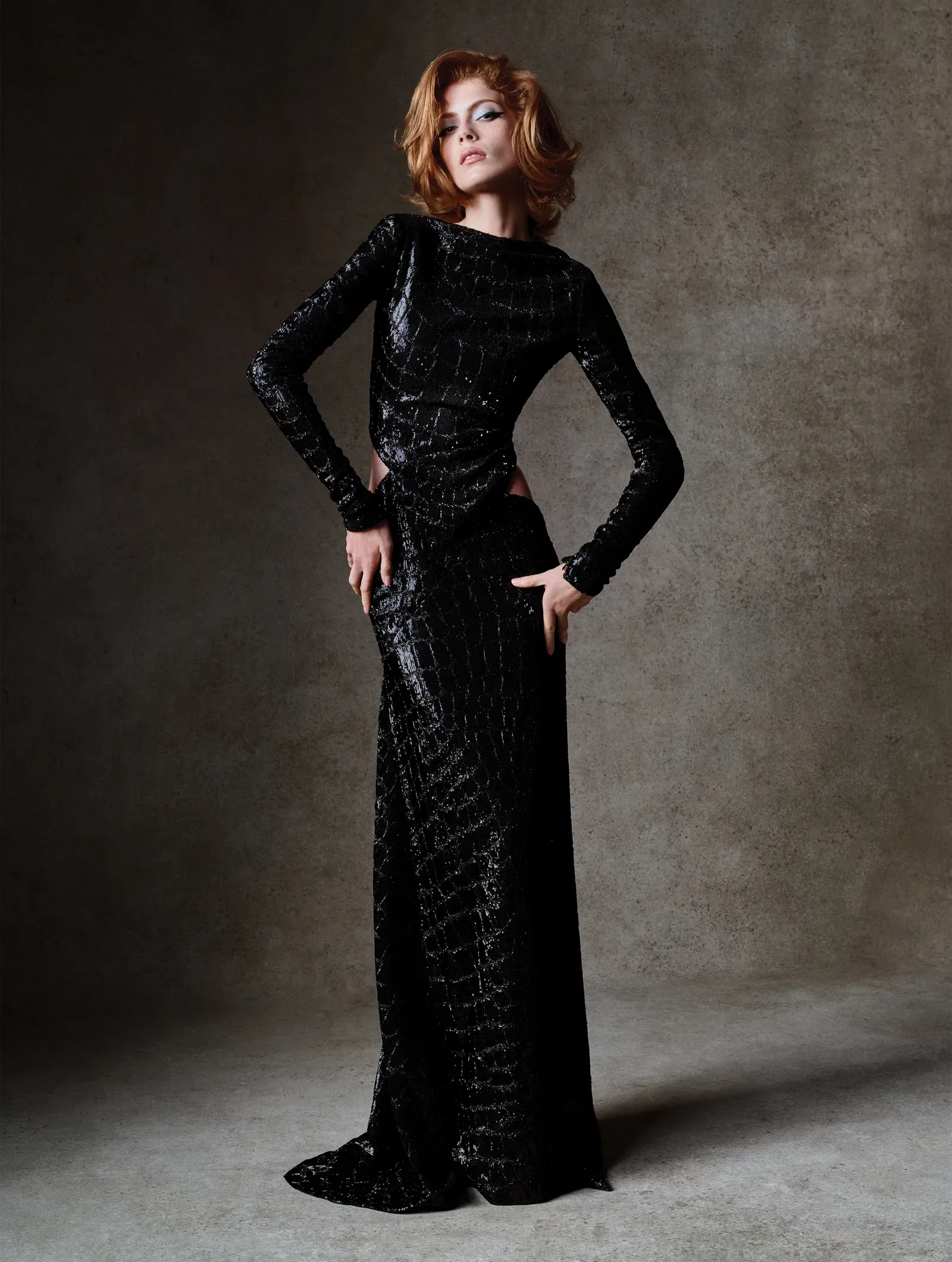
For model Leticia Hall, bombshell glamour looks like a slithery, sparkling cutout Gucci gown from resort 2027.
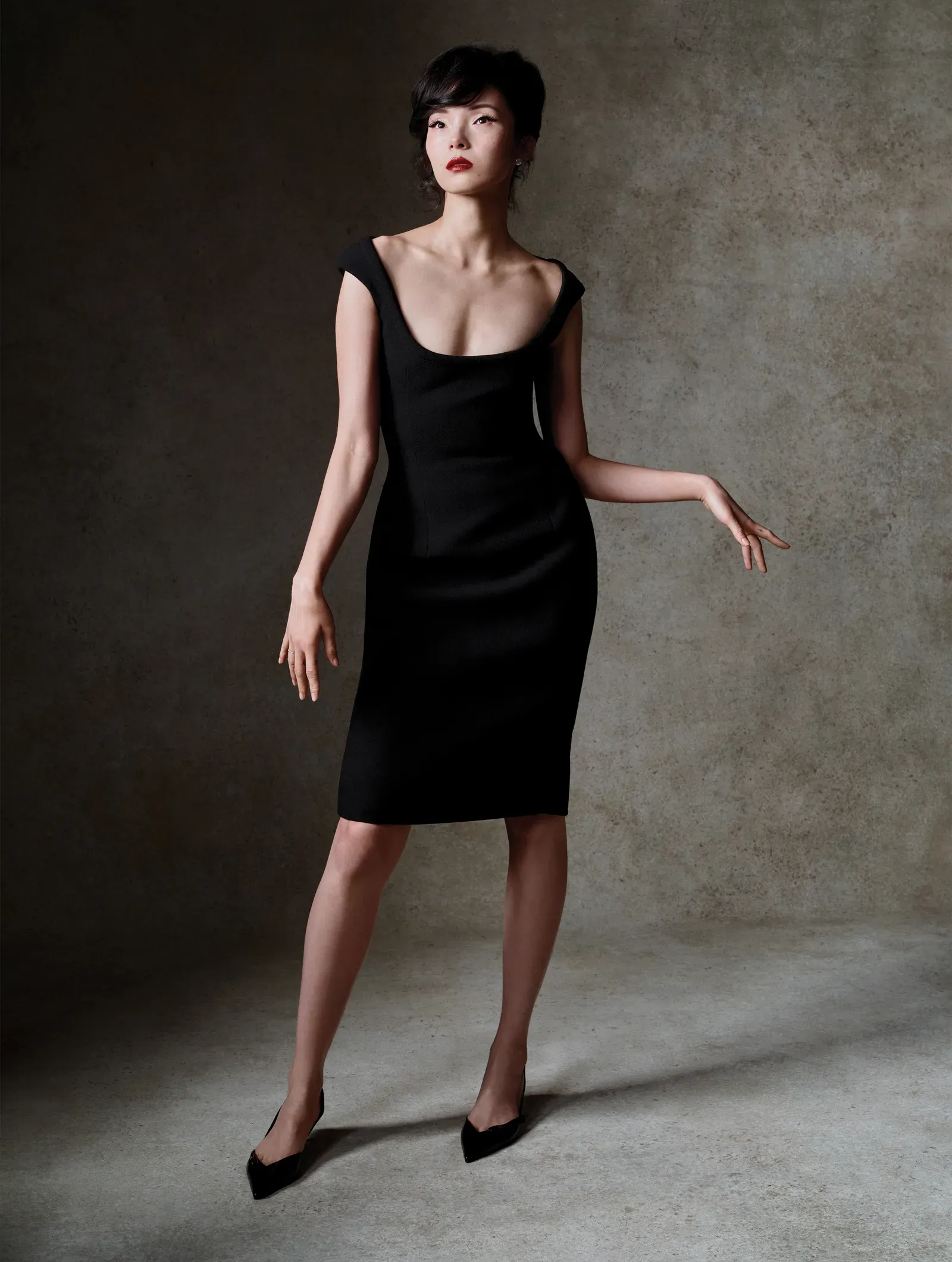
Model Xiao Wen Ju plays the femme fatale in a fall 2024 Miu Miu LBD. Prada shoes.
The Galleria—and Vogue WorldVogue WorldVogue's large-scale live event that blends runway, performance, sport, and culture in a major city, celebrating fashion beyond the traditional show format. The 2026 edition took place in Milan atGo to Vogue World Glossary: Milano, staged here on September 22—perfectly embodies that crossroads. It was the site of the first Prada store and remains home to Italian names both long-established and repeatedly reinvented. It is itself a marvel of 19th-century technology and, positioned between the Duomo and La Scala, connects two great Milanese temples of human invention—one devoted to faith, the other to performance—through a cathedral dedicated to commerce.
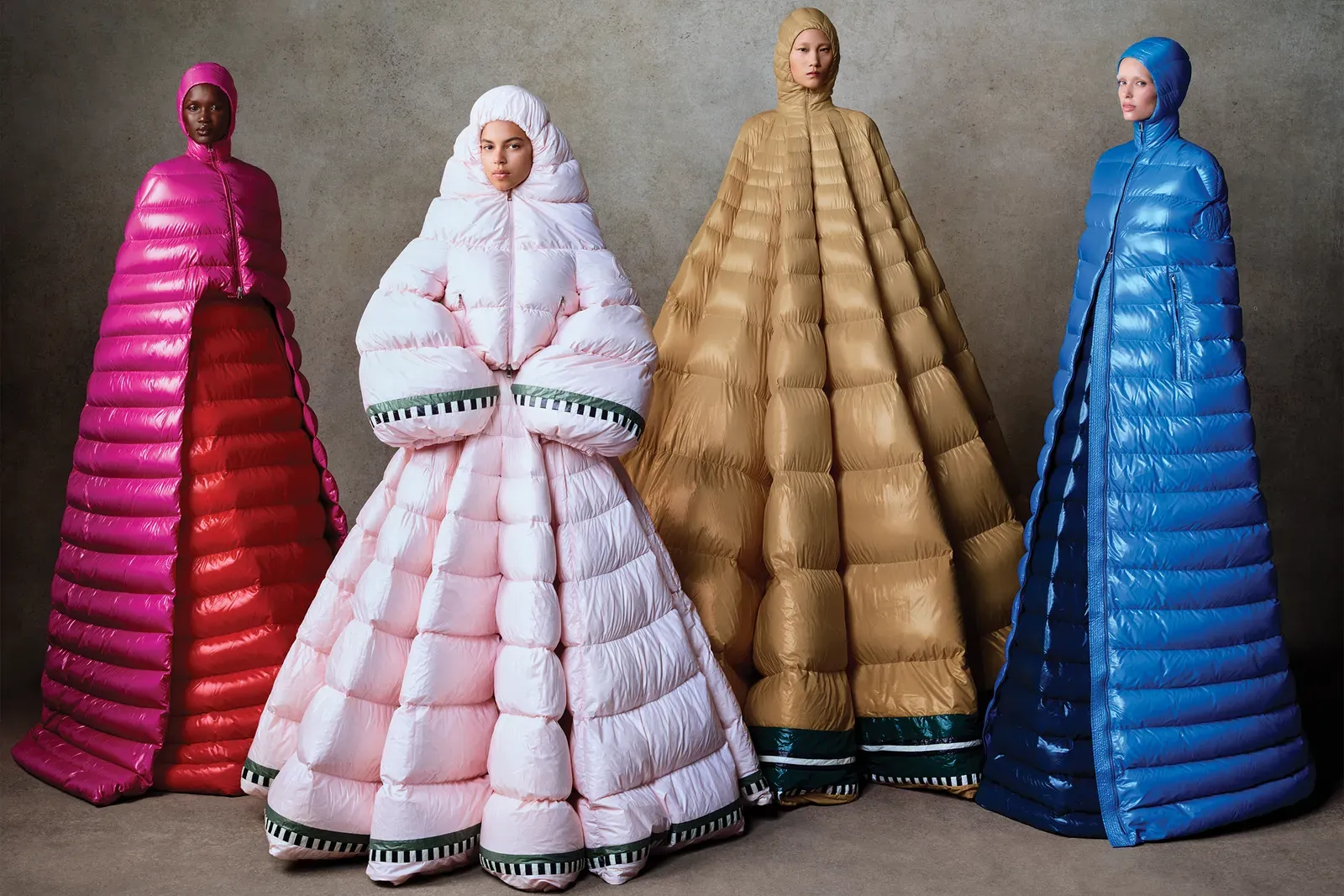
From left: Models Nhial, Emeline Hoareau, Canlan Wang, and Hanan switch into sport mode in 1 Moncler Pierpaolo Piccioli puffer dress gowns from the fall 2018 and 2019 collections.
Our fifth global fashion celebration is a story emerging through distinctive acts centered on themes as diverse as craft, industrialization, image making, intelligent technology, and imagination. Beginning with the precious surfaces of the Italian handiwork—velvet, brocade, lace, and embroideryEmbroideryThe decorative stitching of designs onto fabric by hand or machine, central to Philippine formalwear. Hand embroidery from places like Lumban in Laguna and Taal in Batangas adorns barongs, ternos,Go to Embroidery Glossary—the drama unfolds into the machine age, where tailoring is made lighter, more formfitting, and more expressive by Giorgio Armani and others. From there, a Made in Italy movement centers the bombshell glamour of Versace and Dolce & Gabbana and the saturated patterns of Missoni and Pucci. Finally, the monochrome clothes of the final act offer blank canvases for experimentation, looking toward a future in which technology can enhance and elevate the human creative process.
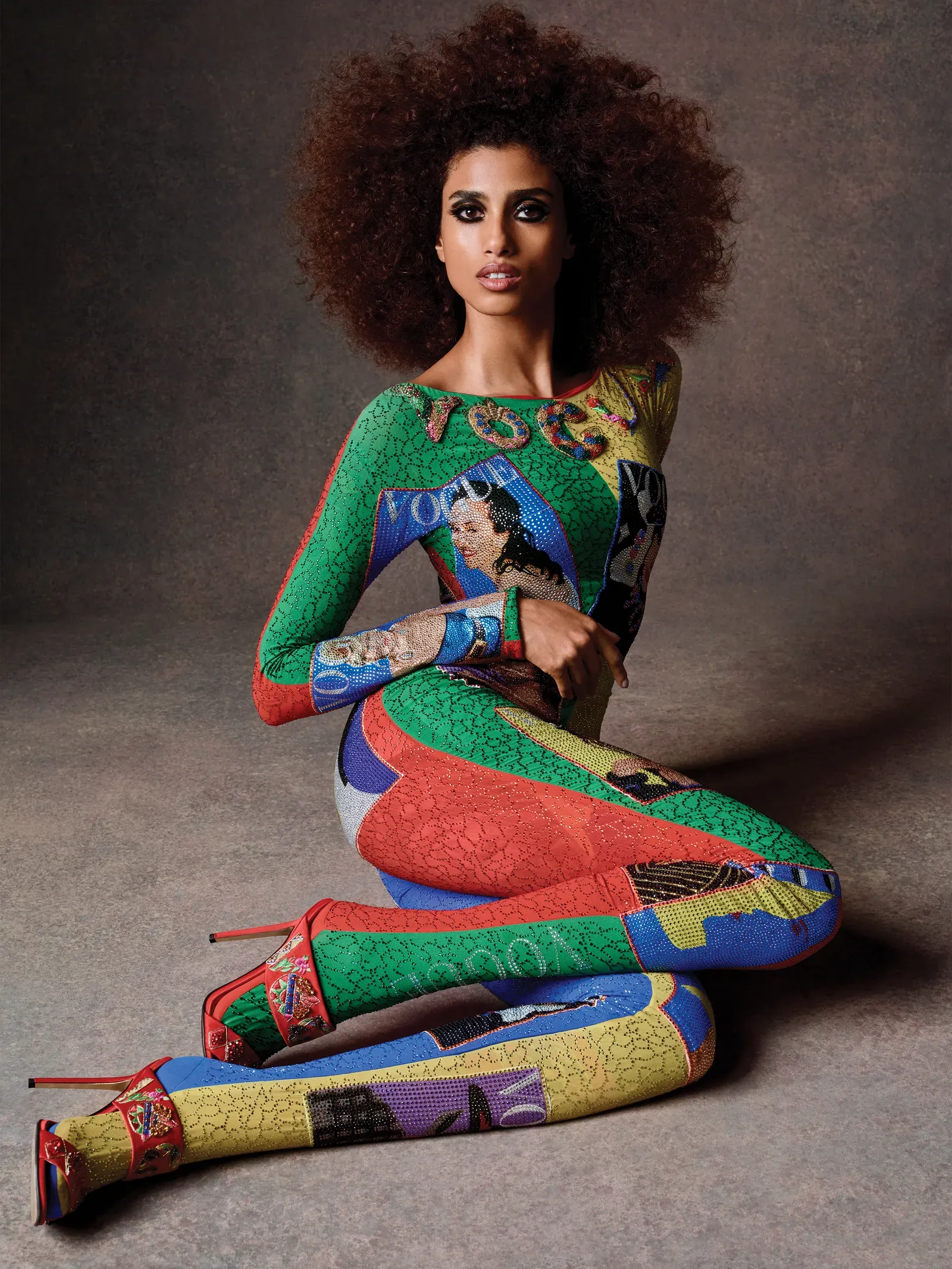
In her bedazzled Versace Vogue catsuit from spring 2018, model Imaan Hammam is in just the right place.
The clothes photographed in these pages occupy that same territory. Produced by some of Italy’s greatest makers—Valentino, Armani, Dolce & Gabbana, and Versace among them—they come from techniques, silhouettes, and visual dialects accumulated over generations. However, like all fashion, their impact depends on how contemporary designers reflect their moment, from Prada’s incorporation of sportswear motifs and technical materials into its unique articulation of femininity to Pierpaolo Piccioli’s radical performance of couture silhouettes via Moncler’s first Genius collection. And as Versace’s remade tribute to Gianni Versace’s 1991 Vogue cover catsuit attests, Italian fashion became globally dominant not only because Italy produced extraordinary clothes, but because those clothes were also translated into extraordinary images that propelled fashion into the bloodstream of culture.
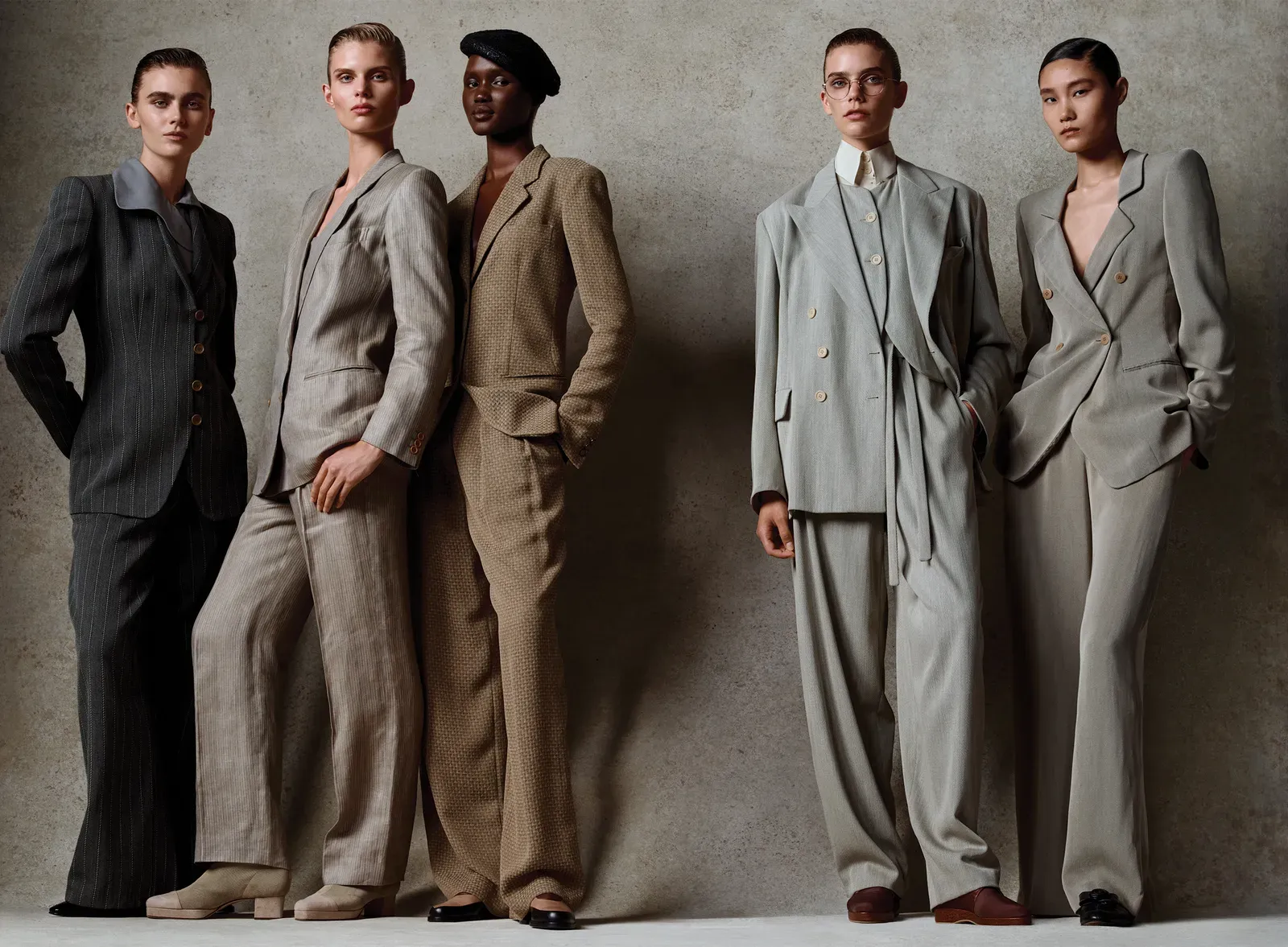
From boxy blazers to fitted suiting, Giorgio Armani’s tailoring altered the course of fashion—in Italy and beyond. from left: Model Mia Armstrong turns back the clock in fall 1993; Heiner in spring 1986; Nhial in fall 1993; Gaghan in fall 1993; and Wang in fall 1995.
Our hunch is that Italian fashion—and the sensibility that created it—is positioned for a fresh Renaissance. Technology, of course, possesses no cultural meaning by itself—instead, meaning emerges from the human decisions through which it is shaped and applied. Italy’s fashion system was created through exactly such decisions: converting inherited skills into modern processes, and manufactured clothes into globally compelling images. New technologies now challenge Italian fashion to perform that conversion again.
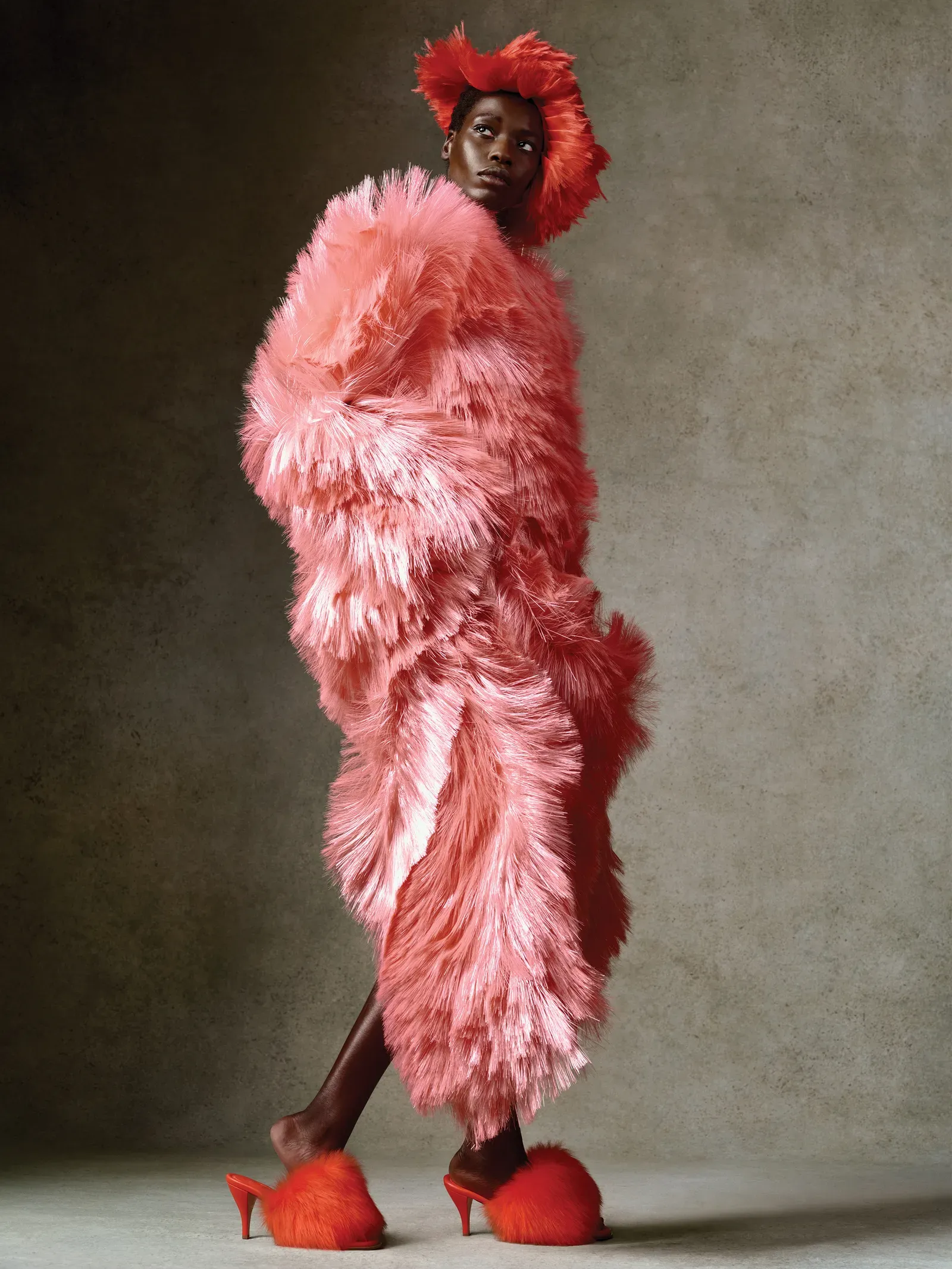
Model Awar Odhiang in one of Louise Trotter’s fiberglass looks from Bottega Veneta’s fall 2026 collection.
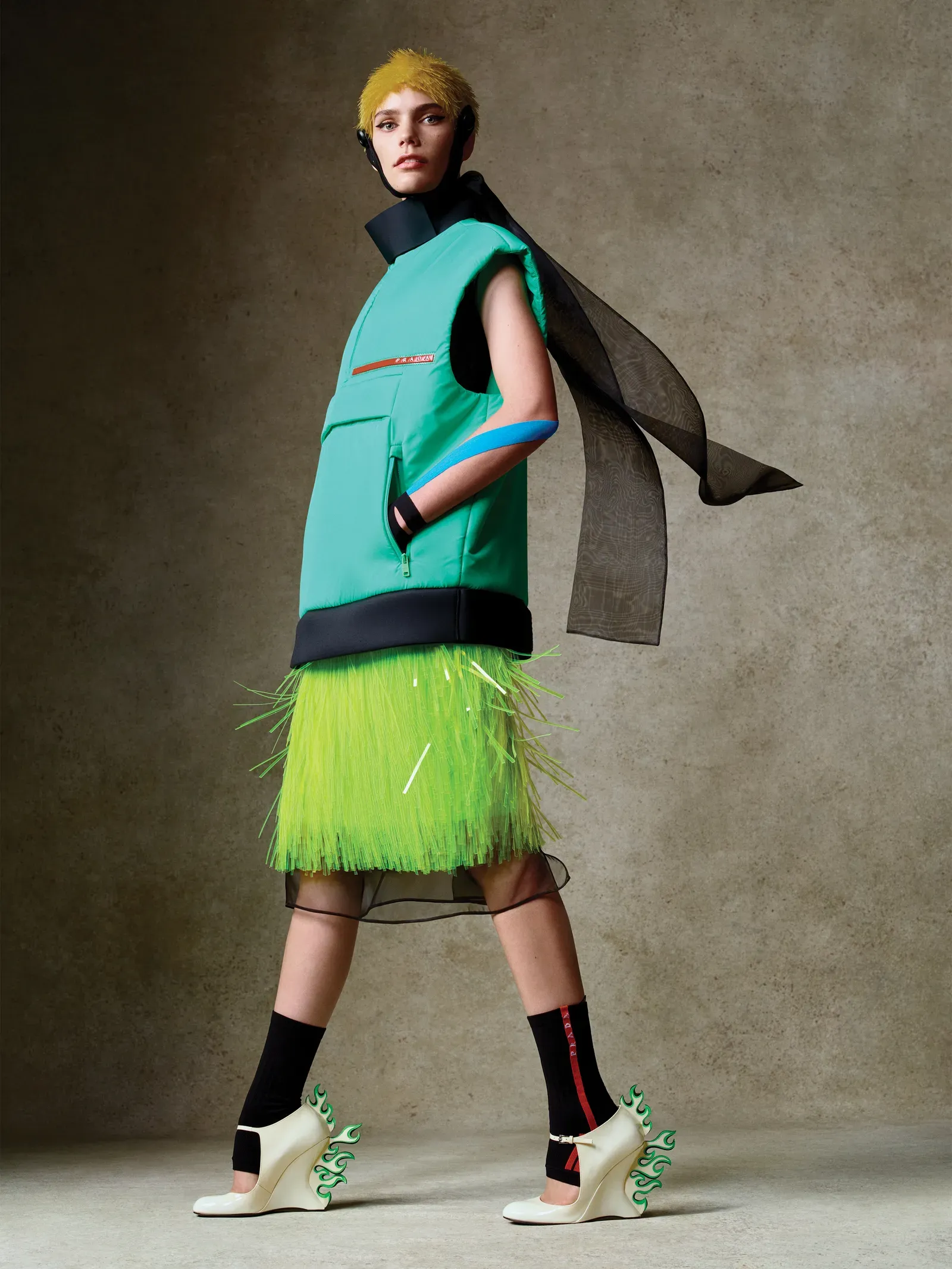
Gaghan is scorching in her dynamic Prada fall 2018 getup. Prada fall 2011 hat.
Down on the Galleria floor, the bull offers an answer. Tradition survives there not by standing still, but with action—and by being remade, rebuilt, and improved. Fashion’s spin never ceases.
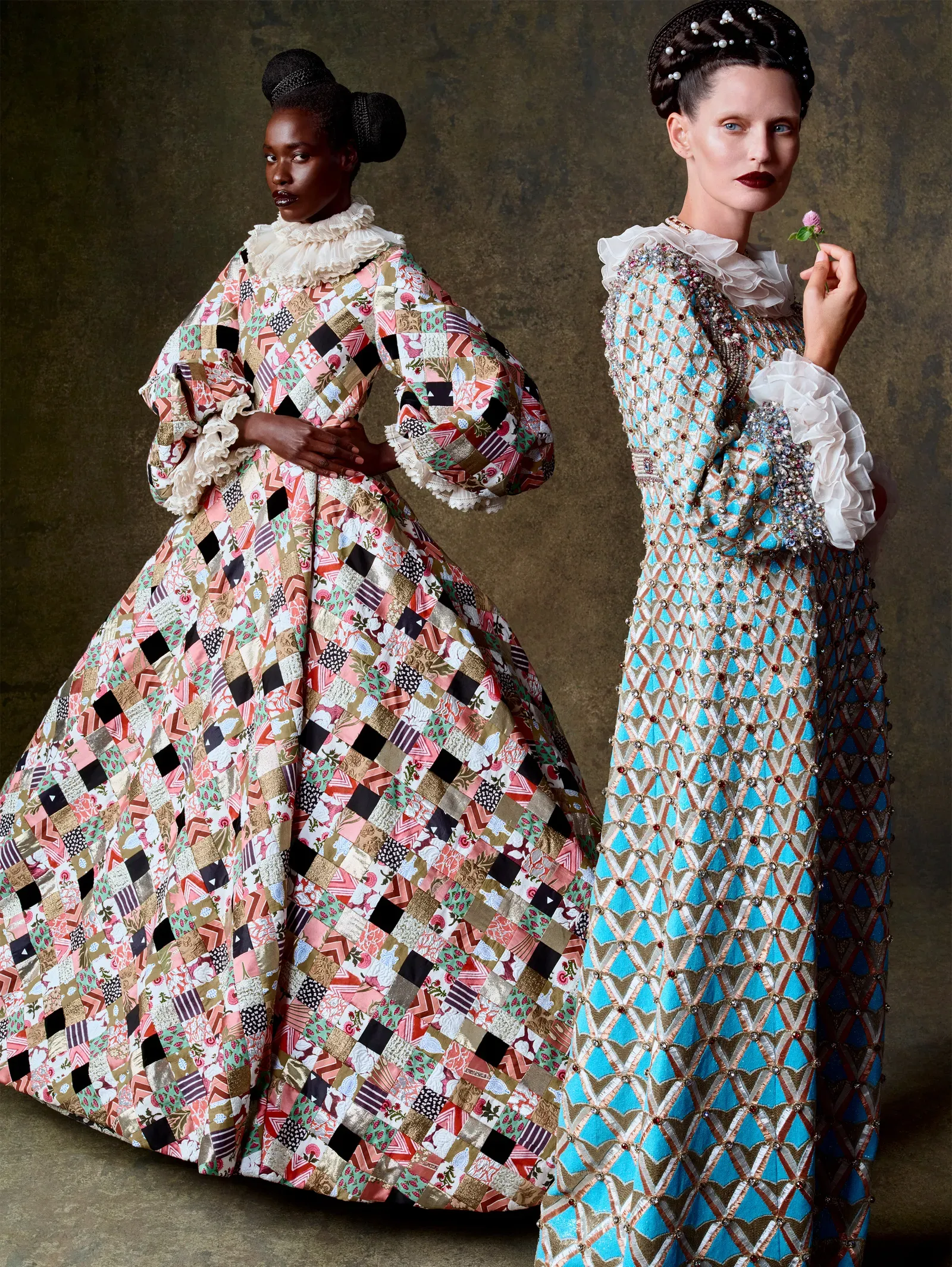
Model Awar Odhiang in Valentino Haute Couture 2025. Model Bianca Balti in Valentino Haute Couture 2025. Bvlgari High Jewelry necklace.
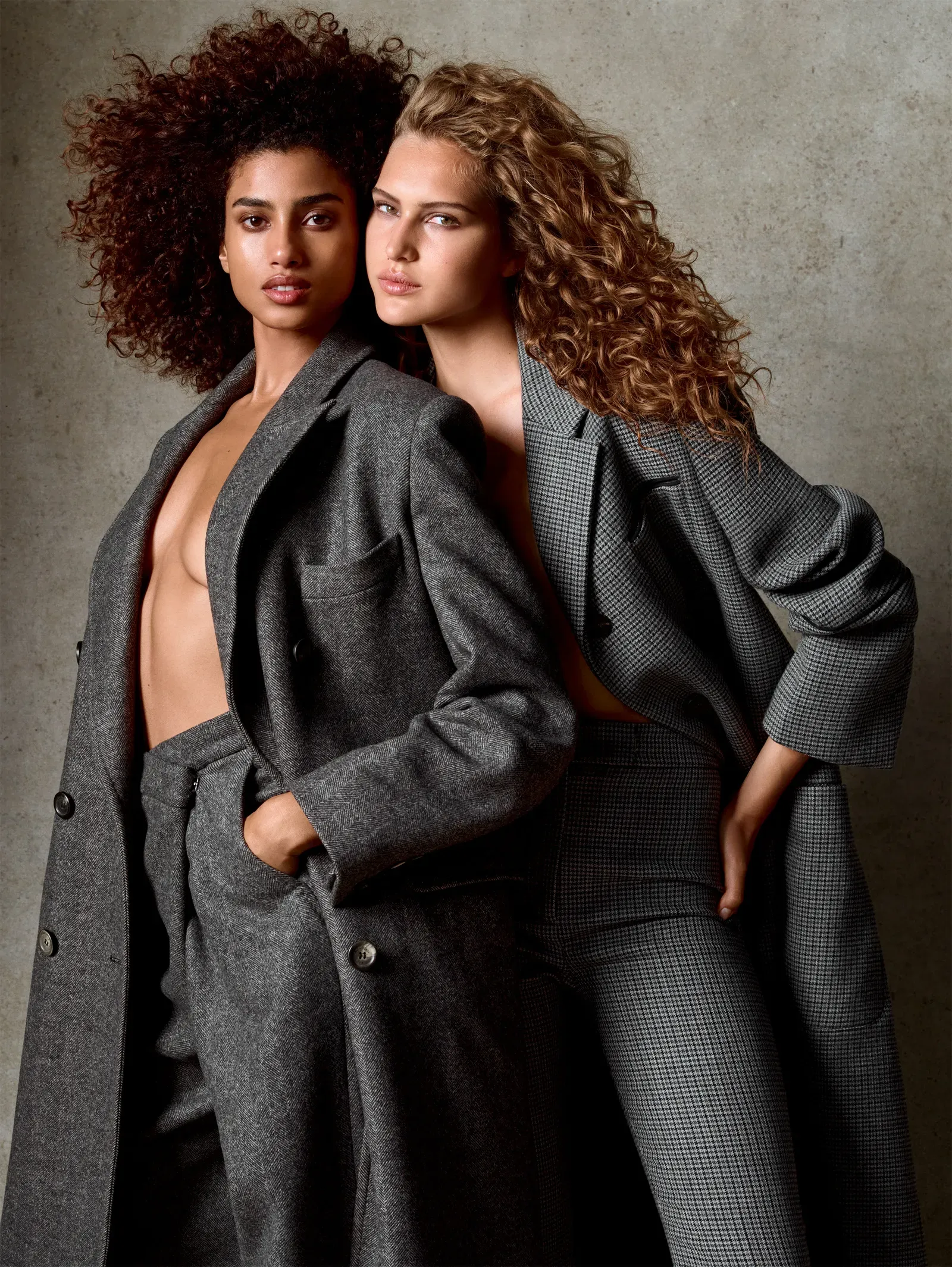
Model Imaan Hammam in Max Mara fall 2023. Model Angelina Kendall in Ferragamo fall 2023.
In this story: hair, Kiyoko Odo; makeup, Lynsey Alexander; tailor, Anh Duong; manicurist, Lora De Sousa.
Produced by BIG ONE at Studio Rouchon. Set Design: Felix Gesnouin.
This article was originally published on Vogue.com.