
Vogue Profiles: Sophie Hong on the Art of Making Clothes That Matter


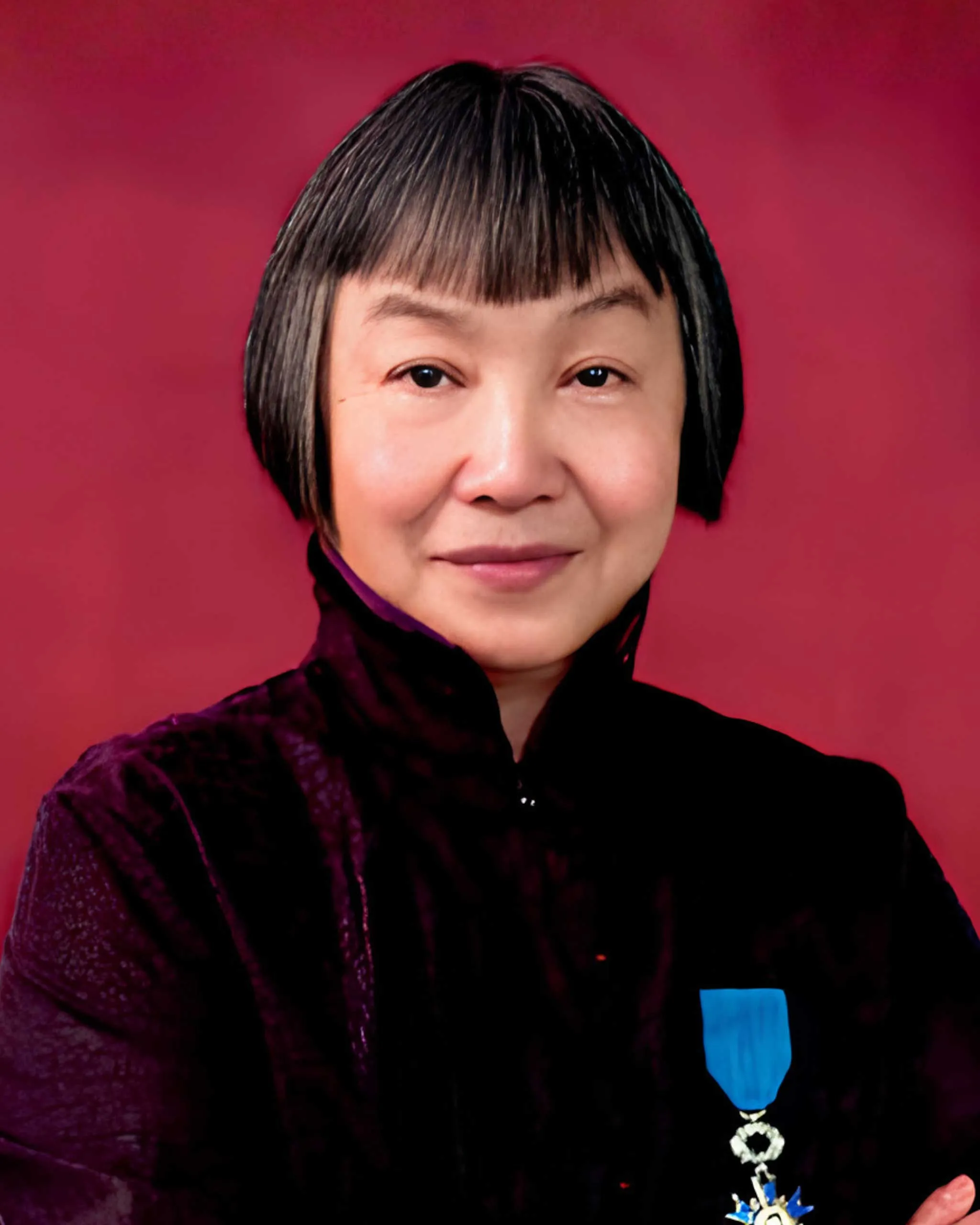
Courtesy of Fashion Week Asia
The Taiwanese designer reflects on three decades of working with traditional craftsmanship, natural materials, and the experiences that shape the way we dress.
For 30 years, Sophie Hong has woven traditional Asian craft and contemporary Western aesthetics into her designs. But her work goes deeper: the Taiwanese fashion designer developed her signature fabric, Hong Silk (also known as Sophie’s Silk), which takes its cues from the Xiangyun silk, a 500-year-old natural dyeing technique.
In her designs, Hong focuses on the nature of the materials and the relationship between clothing and the human body. “I want clothes to be more than objects to look at. I want them to become part of people’s lives, taking on new meaning through the experiences of those who wear them,” she says.
For her Fashion Week Asia collection, she continues her long-standing exploration of natural materials, traditional craftsmanship, and contemporary clothing. “For me, clothing is not only about its outward appearance. It also carries time, culture, and the experiences accumulated throughout the making process,” she says. “Every piece of fabric has its own character. I prefer to respect its qualities rather than force it into a predetermined form.”
In the Vogue Profiles interview series, we speak with creatives and cultural voices about their taste, worldview, and inner life, and explore what informs their creative choices. Below, designer Sophie Hong takes us through her design philosophy.
Vogue Philippines: Apart from the upcoming show, what’s capturing your attention these days?
Sophie Hong: I am very happy to have been invited to Fashion WeekFashion WeekA series of seasonal events where designers debut their latest collections, setting the tone for upcoming fashion trends and showcasing creativity, craftsmanship, and innovation across the global fashion industry.Go to Fashion Week Glossary Asia, and I am particularly excited to meet local artisans, designers, and people working with materials here in the Philippines. Taiwan and the Philippines share similarities in climate and living environments. I am curious to learn how local communities work with natural resources and materials, and how traditional craftsmanship continues to evolve.
Beyond presenting my own work, I hope to visit local workshops and production spaces, meet craftspeople, and understand their working processes. I have always believed that craftsmanship should not exist only as something to be preserved or displayed. It needs to remain part of everyday life, continually practiced and developed through exchange.
I hope this visit will be the beginning of future conversations and collaborations.
What has shaped your creative eye the most?
Life itself, and the experience of making things and solving problems with my own hands. Throughout my years in fashion, I have traveled to many places and met people from different backgrounds.
By speaking with customers, I learn about the problems they encounter when wearing clothes and what they actually need. These everyday experiences eventually find their way into my designs.
I also spend time in factories, learning how materials are produced, how the industry operates, and how different stages of production come together. I have great respect for everyone involved in this process because no work is ever created by one person alone.
Without the people who work alongside me, we would not have achieved what we have today.
I also believe that creators need to understand their own cultural roots. Especially now, as artificial intelligence rapidly changes the world, information and images have become incredibly easy to access. But firsthand experience remains irreplaceable.
Many of the most important judgments come only after you have traveled, observed, made things yourself, encountered problems, and found ways to solve them.
How would you describe your aesthetic—not just in your work, but in the way you live?
My aesthetic has a great deal to do with making choices. I have always hoped to achieve something very simple: “To make the right clothes for the right people, to be worn at the right time.”
Whether a garment is appropriate is not simply a question of how it looks. It also depends on the wearer’s body, age, lifestyle, and the occasion.
I love visiting flea markets and looking at clothing and everyday objects from different periods. Some of these things are rarely seen today, but the craftsmanship can be extraordinary. Even the ways garments were repaired or mended are worth studying.
I hope these memories and skills can be preserved so that younger generations will have the opportunity to discover them.
I particularly admire people who truly know how to make clothes and objects with their hands. Their understanding of materials, techniques, and beauty often comes from years of practice.
For me, aesthetics is not about following a fixed style. It is about learning to observe, understand, and make thoughtful choices in everyday life.
What do you think people misunderstand about creativity?
Many people think creativity means having unlimited freedom to do whatever they imagine, without considering practicality or what the final result might become.
But I believe something very simple: “You can have many ideas, but don’t create waste.”
Creativity is not just about coming up with new concepts. We also need to consider whether something is beautiful, whether it deserves to exist, and whether it can actually be used.
In today’s world, we do not need to create more things that damage the environment. I often encourage people to work with their hands. If your clothes can still be worn, keep wearing them. If you can repair them yourself, even better. Because our hands, hearts, and minds work together. When you actually make, repair, or transform something, you begin to understand the materials and the environment in which you live.
I don’t think creativity always has to begin with something entirely new. Sometimes it emerges through using, repairing, and rethinking what already exists.
When do you feel most like yourself?
When I am quiet and paying attention to the small changes happening around me. Take the morning sunlight, for example. It may seem unchanged, but within just a few moments, the light, colors, and atmosphere have already shifted. Life is constantly moving, and everything is changing.
I think we should also learn to adapt to our surroundings, remain flexible, and allow ourselves to change rather than stay fixed in one state. I don’t consciously try to explain myself through any particular philosophy.
Many things happen naturally in everyday life. I observe, I experience, and I adjust my pace as things change.
Is there a ritual or habit you return to whenever you need clarity or inspiration?
I don’t really have a particular ritual. For me, what matters most is to keep observing and keep learning.
I enjoy conversations with experienced people. They may come from completely different fields, but they have spent years doing things, developing their expertise, and gathering life experience. Simply talking with them can be a wonderful way to learn.
Recently, I had conversations with Chiu Fu-sheng, which reminded me how people from different backgrounds can offer entirely different perspectives. Running Librairie Le Pigeonnier, the French-language bookstore, also gives me opportunities to encounter different books, ideas, and people.
Whether I am at the bookstore, in my studio, or meeting people elsewhere, I enjoy listening and learning from their experiences.
I don’t approach these encounters expecting to find a particular kind of inspiration. For me, remaining curious and willing to learn is already enough.
What are you saying through your work that words alone can’t express?
“Just look at my work.”
Has success changed the way you create—or the way you define success itself?
No. I still work, learn, and take care of my everyday life. Cooking, walking, making things—none of that has changed. I can appreciate luxury, but I can also live very simply. To me, there is no contradiction between the two.
Beyond fashion design, I am also involved in many forms of artistic and cultural exchange. For example, if someone is researching art history and I happen to know an artist or have access to relevant information, I am happy to make an introduction and help people connect. My studio, my space in Paris, and Librairie Le Pigeonnier all provide opportunities for creativity, reading, and exchange to continue.
These are not things I started doing because of success. They have always been part of my life. Of course, recognition is gratifying, but it has not changed the way I approach my daily work. I simply continue doing what I believe is worth doing.
What are you learning to let go of?
I am learning to slow down and to entrust more responsibilities to the people I work with.
When I am always around, I find it difficult not to step in and say, “This should be done this way,” or “That needs to be changed.” Sometimes I need to physically step away and give others the space to take over and approach things in their own way.
I also hope the people I work with will become more proactive, make their own decisions, and gain experience through the process. Only then can I truly learn to let go. I think that is something I am still learning.
What kind of legacy do you hope your work leaves behind?
“If the work truly has an impact, it will endure on its own. I don’t need to decide in advance what it should leave behind.”
Frequently Asked Questions
Sophie Hong is a prominent Taiwanese fashion designer and multi-disciplinary artist with over 30 years of experience. Known for blending traditional Asian craftsmanship with contemporary Western aesthetics, she is also an advocate for sustainable design, cultural preservation, and cross-disciplinary art.
Her collection focuses on honoring natural materials and traditional craftsmanship through clothes meant to be lived in and cared for over time. The lineup prominently features her signature “Hong Silk,” a unique fabric inspired by a 500-year-old natural dyeing technique.
She got her start studying fashion design at Shih Chien University in Taipei before expanding her craft abroad. She went on to hone her skills at top fashion institutions in Tokyo, New York, and Paris, including hands-on experience at couture houses.
Sophie strongly believes in making practical, lasting clothes, famously operating under the principle to “never create waste.”
Hong Silk (also known as Sophie’s Silk) is designer Sophie Hong’s signature textile, developed through years of natural dye research. It is an updated version of Xiangyun silk (or mud silk), a 500-year-old Southern Chinese artisan fabric.