
The Unofficial Guide to Scaling Your Creative Business with Vania Romoff, Hindy Weber, Chrissi Morillo, and Joyce Oreña



Photographed by Kim Santos
At Vogue Threads Manila 2026, creatives talk business and dish out tips on how to upscale a creative venture.
In opening the first panel of Vogue Talks at Day 2 of Vogue Threads Manila 2026, moderator and Vogue Philippines Beauty and WellnessWellnessA holistic approach to wellbeing that includes physical health, mental balance, sleep, nutrition, movement, and self-care. In beauty and lifestyle, wellness has expanded from spa treatments to therapy, mindfulness, andGo to Wellness Glossary Editor Joyce Oreña asked the room, “Who in this room is a creative?” While guests proudly raised their hand at the question, a moment of hesitation was observed with her follow-up, “Who in this room has a business?”
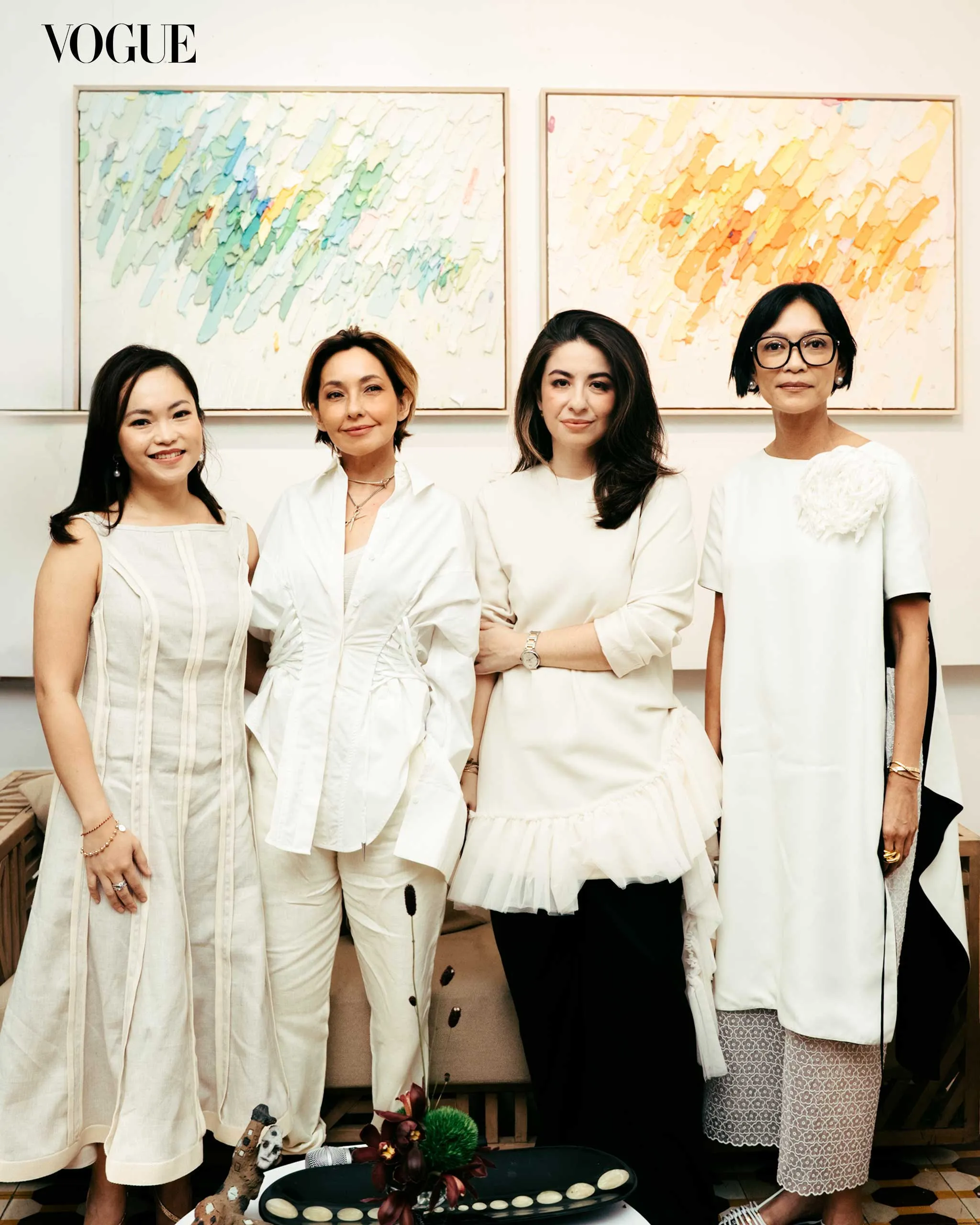
Enter Filipino designers Vania Romoff and Hindy Weber, accompanied by Security Bank Head of Investment Strategy Chrissi Morillo. At “Capitalizing the Craft: How Creatives Can Scale Their Business” artistic hopefuls are reminded to ground the passion in the pragmatic. Presented by Security Bank, the panel provided tips and tricks to navigate the entrepreneurial aspect of being an artisan.

Step 1: Hone your brand’s artistic vision
Romoff lamented her first decade in the industry, calling it her “incubation period” where she was allowed to make mistakes and build confidence in her particular point-of-view in design. Oreña agreed, saying “it takes time” and creatives must “learn to take a step back” from the pressure of social media.
Romoff warned about how it preys on vulnerability, “You unconsciously get to compare your success with what other people are doing and where they’re at in their career and that can really hinder your experience.” She reminded everyone that what we see floating on the digital web is not an invitation for lateral comparison, “We cannot be at the same point at the same time. One [could be] starting out, one is figuring out their aesthetic, the other one is trying to scale already.”
Weber, on the other hand, finds her creative vision as being guided by her own pillars of nature, people and flexibility for her own life: “If it ticks those pillars, then the idea stays.”
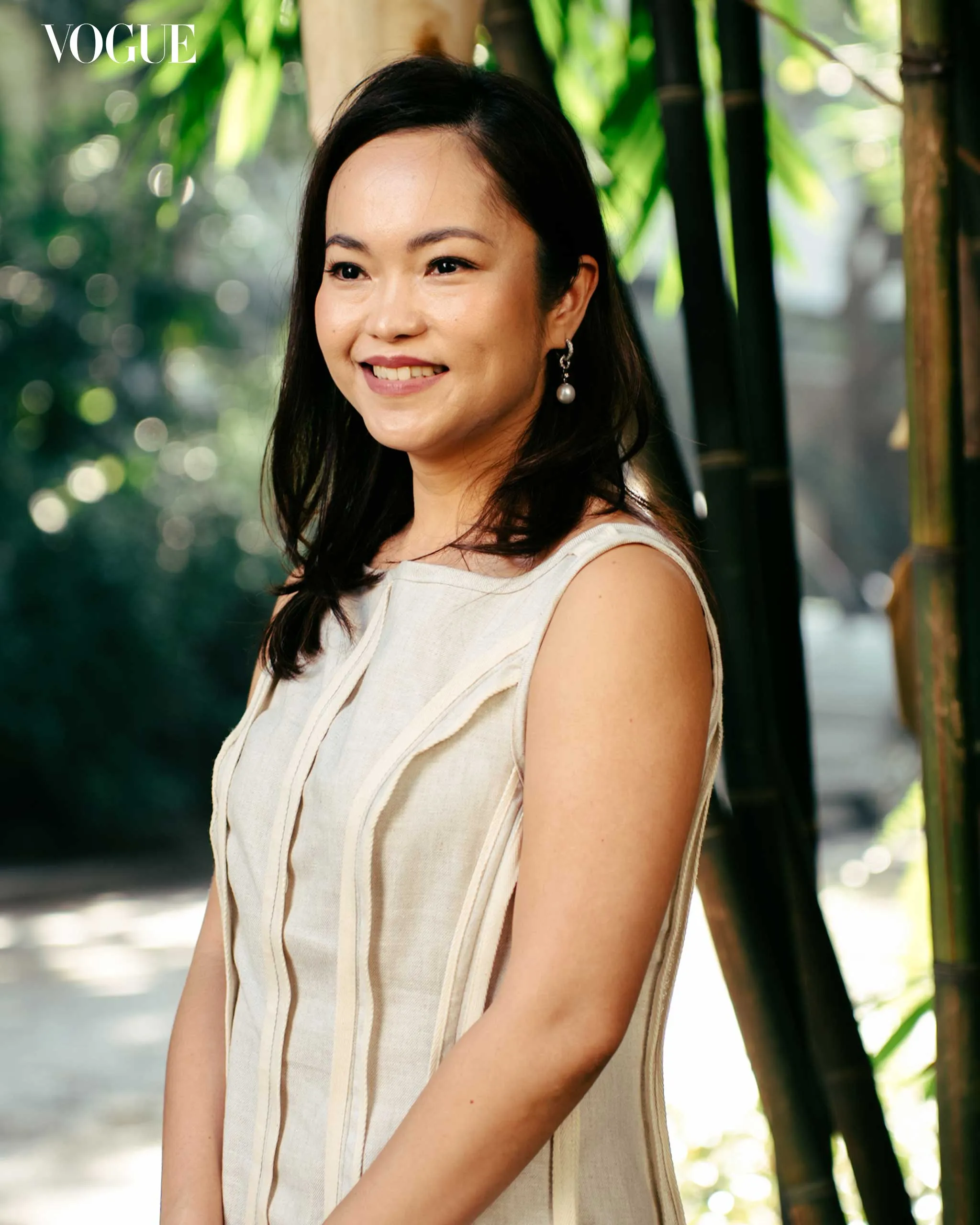
Step 2: Build a business strategy
Once the artistic vision has been pinpointed, Romoff and Weber agreed that it’s time to consider the market. Weber noted that her business plan is simply a Venn diagram with two circles, one dedicated to what matters to her and the other dedicated to what matters to her community: “If no one’s going to buy it, then it’s just a beautiful idea.” And although ideas may consistently be beautiful, it doesn’t exactly guarantee cashflow.
Morillo advised that the best thing one can do is to start taking note of your finances, “It starts with knowing where you are at any point. How much is coming in, how much is going out. You shouldn’t be blind at any point in your business.”
She also encouraged creatives to ask “Can your business afford it?” and “How are you going to finance it?” With available financial partners, fashion entrepreneurs are better equipped to answer these introspections, and create an infrastructure for their brand to finally take the next step: “Creativity definitely builds the brand, but the financial discipline would build the business.”

Step 3: Find help for what comes next
“[Admit] that you may not know it all. [Get] yourself in a room with people that know more than you and [be] okay with that; [try] to absorb as much knowledge,” Romoff advised. She joked how in strategy meetings, she prefers to draw than look at numbers. But Morillo reassured, “Don’t be afraid of numbers. Managing money is inevitable, but be inspired by the fact that this is your engine to continue with your craft.”
Whether that means learning everything through mentors and classes such as in the case of Weber; partnering with banks that guide you throughout the cycle of your business as Morillo advocates; or trusting a team of people who are more financially-savvy than you are like Romoff, the message is clear: You can’t do it alone.
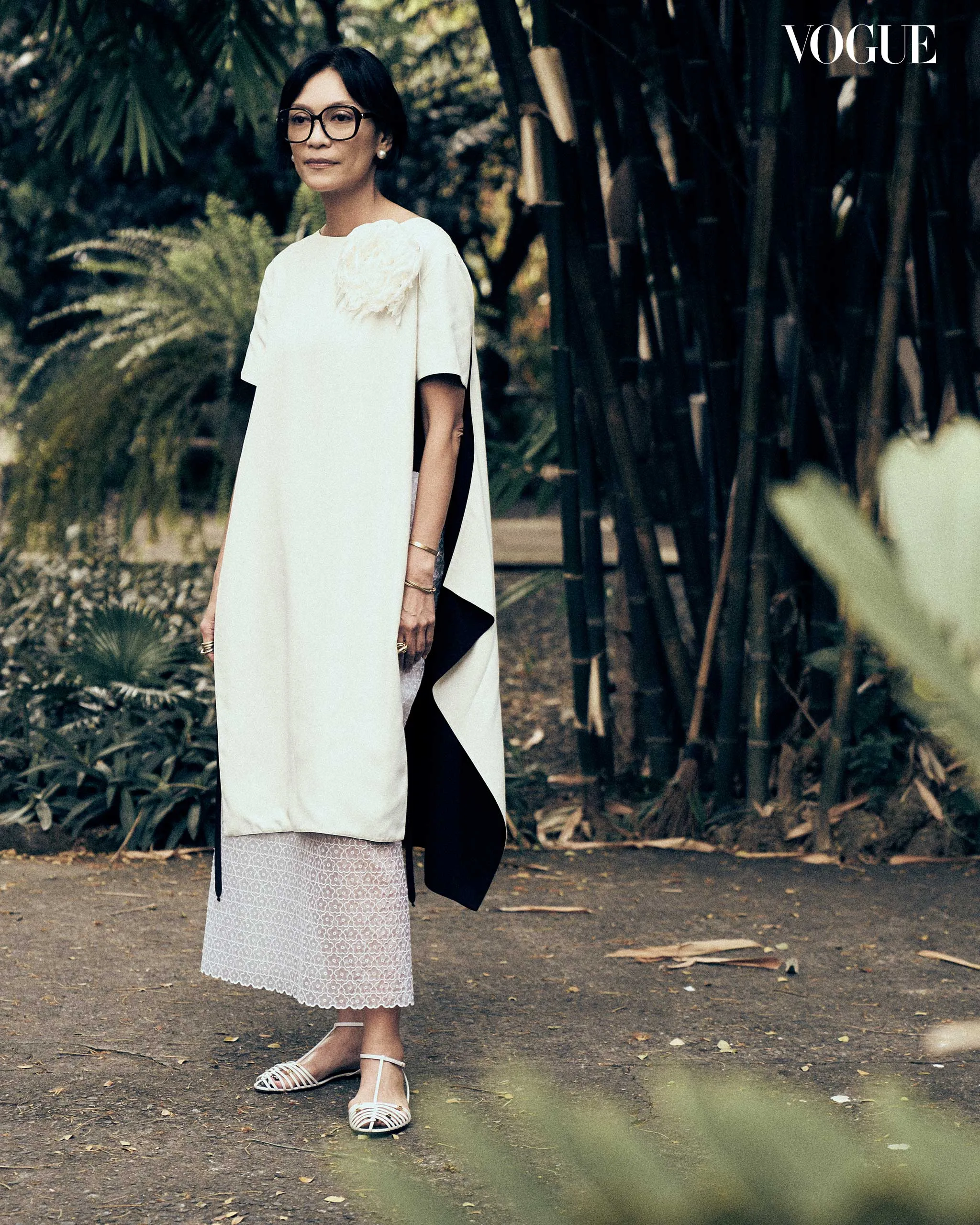
Step 4: Aim for sustainable growth
What Morillo calls “The North Star,” long-term goals of a business, should be something brands aspire to. Weber recalled how shifting her perspective from thinking of the brand’s next collection to a longer, five-year goal for the brand expanded her growth exponentially: “I can’t stress enough the importance of working capital.”
Romoff also admitted, “I think my definition of success when I was 16 years old, bright-eyed and hopeful, is very different from my perceived idea of success now.” As such, her business strategies have since changed, but it is in that adaptability and foresight that her brand continues to thrive.
Morillo’s final advice for the guiding light is financial resilience and diversification: “It starts with a vision. But for that to endure, the business eventually needs to become something that can thrive beyond the founder.”
Frequently Asked Questions
Vogue Threads is Vogue’s annual event to celebrate the craft communities and cultural stewards that have shaped the Filipino creative identity.
This year, Vogue Threads takes back the meaning of A.I. as Artistic or Ancestral Intelligence. It’s dedicated to honoring the knowledge and craftsmanship that keep Filipino heritage alive.
The Vogue Talks are happening on October 26 to 28, 2026 at F.A.B. Creatives.
The panelists at the talk were Filipino designers Vania Romoff and Hindy Weber, and Head of Investment Strategy at Security Bank Chrissi Morillo, moderated by Vogue Philippines Beauty and Wellness Editor Joyce Oreña,
The Vogue Talks for Day 2 were “Capitalizing the Craft: How Creatives Can Scale Their Business,” “Past, Present, Precious: Filipino Heritage and Contemporary Jewelry,” and “Prompting the Past, Archiving the Present: AI in the Age of Disinformation.”