
Yana Kalaw, Kill Joy Studios, and Lilah Roché on Their MNL Fashion Week Collections


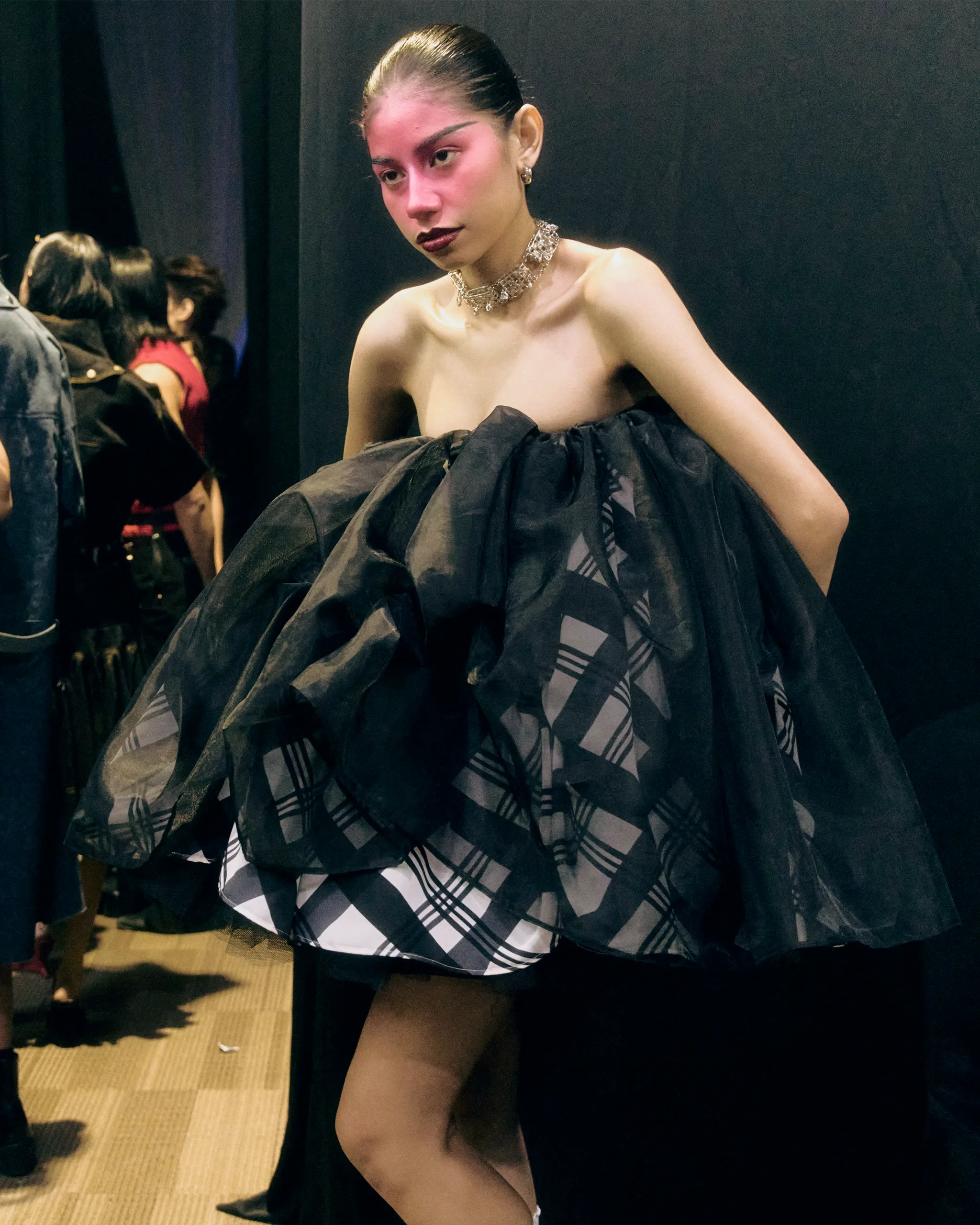
Photographed by Jom Ablay
A trio of emerging designers brought idiosyncratic visions to the event’s 2026 edition, delving into queer femininity, Andy Warhol, ’90s counterculture, silver-screen sirens, and kontrabidas from Philippine cinema.
Now in its sophomore edition, MNL Fashion Week is more than a schedule of runwayRunwayThe platform or catwalk on which models present a designer's collection to an audience of editors, buyers, and guests. Runway shows establish the creative statement of a season, and Vogue'sGo to Runway Glossary shows.
It is a haven and incubator where established and next-generation Filipino designers develop their identities, build their brands, and showcase their collections to the world. Held from September 3 to 6, this year’s edition featured 11 Filipino labels on the runwayRunwayThe platform or catwalk on which models present a designer's collection to an audience of editors, buyers, and guests. Runway shows establish the creative statement of a season, and Vogue'sGo to Runway Glossary, including Antonina, Ha.Mü, Yong Studio, Charlotte Folk, Randolf, Nicolò, Proudrace, Lorico, Lilah Roché, Yana Kalaw Studios, and Kill Joy Studios.
The diversity of this year’s designers also reflects a generation unwilling to settle on one definition of Filipino fashion. Yana Kalaw Studios explores grief, self-discovery and femininity; Kill Joy Studios draws on Manila memories, music, family, and queer identity; while Lilah Roché reimagines the Manila noir action film through a powerful female protagonist.
In conversation with Vogue Philippines, the three designers break down the concepts, references, and techniques behind their collections.
Yana Kalaw
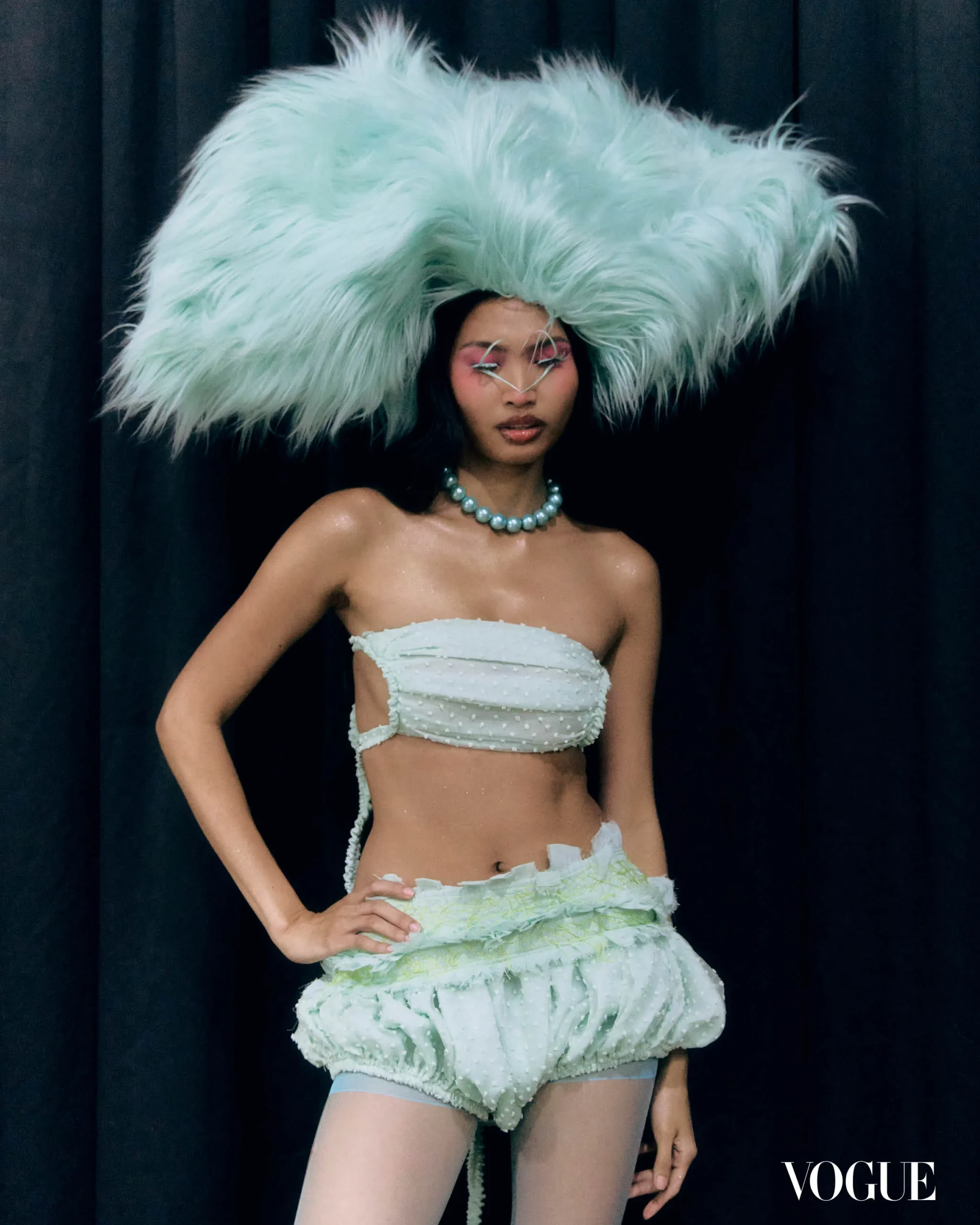
Vogue Philippines: Tell us about your MNL Fashion WeekFashion WeekA series of seasonal events where designers debut their latest collections, setting the tone for upcoming fashion trends and showcasing creativity, craftsmanship, and innovation across the global fashion industry.Go to Fashion Week Glossary collection. What inspired it?
Yana Kalaw: Last year, I released a ready-to-wear collection sharing the stories of queer women through my art because I feel like our stories are yet to be told. This time, I wanted to share my own story. This collection is about my experiences and how they shaped how I see the world.
What ideas or themes did you want to explore through this collection?
I wanted to explore themes of grief and becoming: grieving the lost time you spent trying to be someone you’re not, and becoming the person you really wanted to be.
How did you approach the design process, from the initial idea to the finished looks?
I think it’s been a long time coming for this collection. I’ve been trying to create this ever since I started [studying] clothing technology. It’s been the same idea ever since, but the perspective just shifted. I think I realized that instead of finding new shapes and silhouettes that I’m unfamiliar with, I leaned toward the things I’ve learned throughout the years and elevated them to how [they appear] now in the collection.
Were there any particular materials, techniques, silhouettes, or details that became important to the collection?
In general, I really love fabric manipulations and this collection made me explore more on my usual stitching techniques. It made me realize that I’m very intuitive in designing, in the sense that my drapingDrapingA technique in which fabric is shaped directly on a dress form or body to develop a design, rather than starting from a flat pattern. Draping lets designers see howGo to Draping Glossary and stitches don’t have specific rules that they follow.
How do your background or life experiences shape the way you design?
I am a very emotional person, but I’m not an eloquent person. So with that, it is usually through my designs, my art, that I try to express and communicate the things I feel.
As a Filipino designer, how do you think your perspective comes through in your work, whether consciously or unconsciously?
Since the Philippines is a very religious country, I grew up in a traditional conservative environment. This upbringing made me feel very restricted with what I wear, so now that I’m able to decide for myself, I can now explore clothing I wasn’t really allowed to wear—and it shows in my designs.
What do you hope people take away from this collection when they see it on the runway?
I want people to see how beautiful embracing your femininity can be since I really, really believe that femininity has no gender. I feel like you don’t have to be queer to get it—that femininity is something you feel, something that is just inside you that wants to come out, and I want people to celebrate that.
Eugene Malabad of Kill Joy Studios
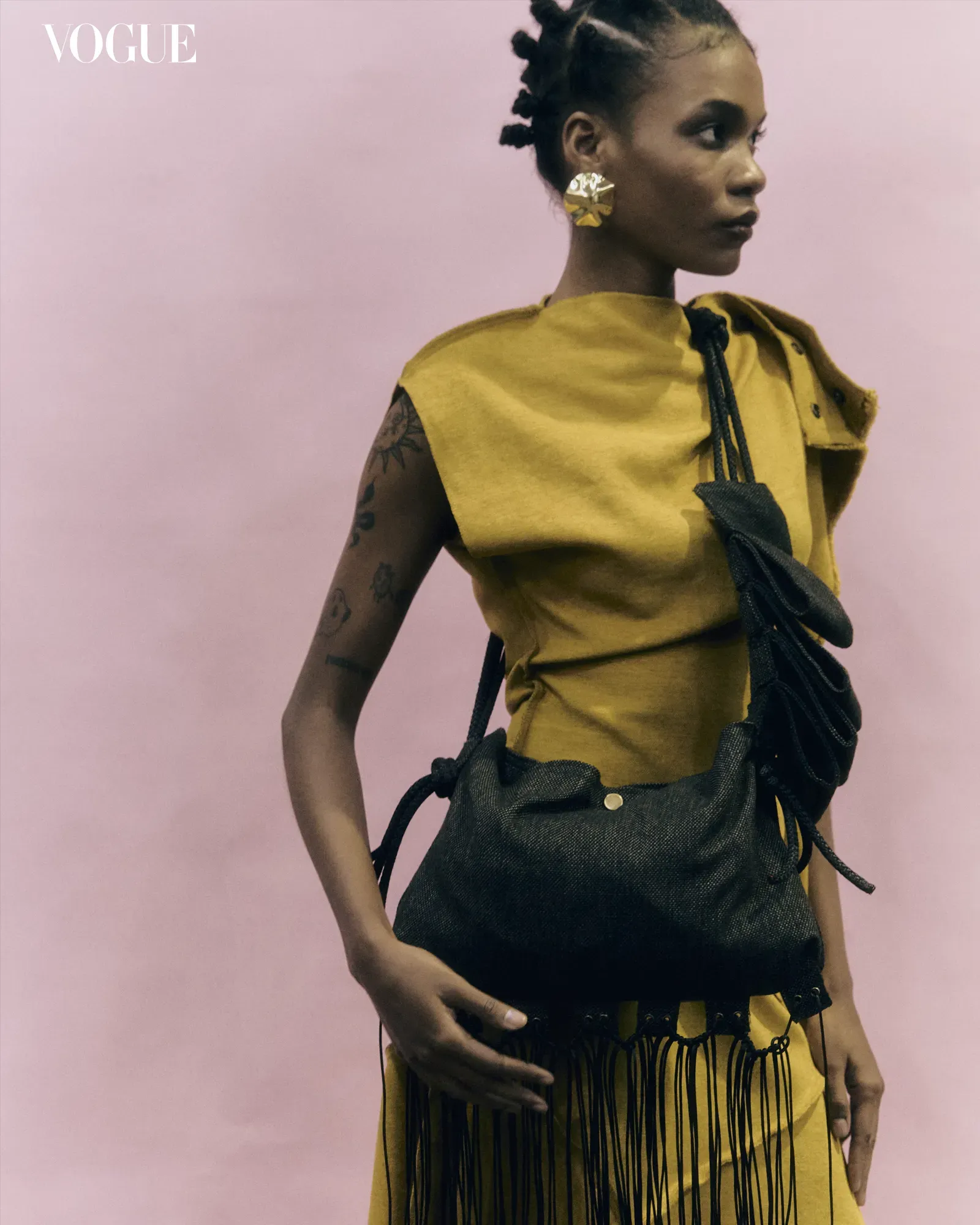
Vogue Philippines: Tell us about your MNL Fashion WeekFashion WeekA series of seasonal events where designers debut their latest collections, setting the tone for upcoming fashion trends and showcasing creativity, craftsmanship, and innovation across the global fashion industry.Go to Fashion Week Glossary collection. What inspired it?
Eugene Malabad: [My collection] Kalye Trez Mixtape started from a collection of personal references: my memories of growing up in Manila, my grandfather’s connection to the Air Force, ’80s and ’90s music, coming-of-age films, and my experience as a queer Filipino designer. I wanted to treat these references almost like a mixtape, mixing things that feel nostalgic, personal, and familiar into something that feels distinctly mine.
The collection is also a continuation of my earlier work with Rotonda (2022), but this time, the references are much more personal and fragmented. Instead of focusing on one specific narrative, I approached the collection like a mixtape, bringing together memories, music, Filipino culture, family, and different eras and translating them into a contemporary wardrobe.
What ideas or themes did you want to explore through this collection?
This collection brings together different themes, from the stories and desires I have for myself and for the brand, to the DNA, details, and technical codes that make Kill Joy Studios what it is. It’s still very much a work in progress, but through this collection, I’m trying to explore, define, and stamp the brand’s DNA into the industry while continuing to write its story.
The references range from the grittiness of Gregg Araki’s films and Danny Boyle’s Trainspotting, to ’80s synth-pop, dance music, and the attitude of ’90s grunge. I also looked at zodiac signs and the astrology imagery commonly seen on jeepneys, which evolved into the Astro Tsuper Series, a continuation of the visual language I explored in Rotonda, where I documented what I encountered while commuting. I also explored Andy Warhol’s use of color and silkscreen printing, translating these references through Kill Joy Studios’ visual language.
How did you approach the design process, from the initial idea to the finished looks?
I started with the design codes from the core products I’ve been developing and selling over the past four years, then edited and rearranged those details in different ways while keeping the same Kill Joy Studios voice. I wanted people who are already familiar with the brand to recognize details they’ve loved before but experience them in a new context.
From there, we started diversifying the initial ideas into different articles of clothing. A tassel belt became a detail on a fringe skirt, while the orange stitching we consistently use across the brand became an entire orange ensemble, almost like representing the brand through a single color. We also pushed our bleaching technique further and developed it into a series of stripes and variations across different pieces.
For the show, we established the casting flow first, then developed the colors and techniques around it. Maira Nina Cuyana also helped me with the styling. I told her that my assistant and I would create individual pieces that we wanted each model to be centered around, and from there, we exchanged ideas on how to build and pair the rest of each look.
Were there any particular materials, techniques, silhouettes, or details that became important to the collection?
JAG Jeans PH powered the show, giving us the freedom to choose different denim qualities and other materials and notions for the collection. Most of the denim used in the collection came from them. As a brand that predominantly works with denim, we focused on applying our bleaching techniques, combinations of topstitching, and metal hardware to the materials they provided.
We also revisited the macramé techniques we developed for Rotonda (2022), still using street cable wires as the main visual reference for the pieces. While Kill Joy Studios can be edgy, I’ve always wanted color to bring a sense of optimism and humor into the clothes. We worked mainly with the brand’s established colors: orange, mustard, and indigo, with touches of black.
Silkscreen printing is also one of the techniques we introduced and are beginning to explore further as part of the brand’s visual language.
How do your background or life experiences shape the way you design?
I’ve been interested in fashion since I was in Grade 4. When I first became obsessed with fashion in 2009, at nine years old, watching fashion shows on YouTube became a habit. I remember being fascinated by how brands arranged their looks and how a collection gradually unfolded as a show progressed.
In a way, this debut runwayRunwayThe platform or catwalk on which models present a designer's collection to an audience of editors, buyers, and guests. Runway shows establish the creative statement of a season, and Vogue'sGo to Runway Glossary collection feels like I’m fulfilling something my younger self always dreamed of. The way I design has also remained quite personal; I’m often just trying to make clothes for myself, or make the things I want to wear. I think that instinct has stayed at the core of how I approach the brand.
As a Filipino designer, how do you think your perspective comes through in your work, whether consciously or unconsciously?
I feel like the grittiness and funkiness of Kill Joy Studios have a natural parallel to the Filipino experience. There’s a certain resourcefulness, humor, energy, and ability to make something out of what’s around us that I see reflected in the way I design.
A lot of the things I reference are very familiar to me as a Filipino—jeepneys, the streets, the things I grew up seeing and hearing—but I’m interested in taking those references and reinterpreting them through my own perspective.
What do you hope people take away from this collection when they see it on the runwayRunwayThe platform or catwalk on which models present a designer's collection to an audience of editors, buyers, and guests. Runway shows establish the creative statement of a season, and Vogue'sGo to Runway Glossary?
For the first time, I want people to experience the Kill Joy Studios universe as a whole through the runwayRunwayThe platform or catwalk on which models present a designer's collection to an audience of editors, buyers, and guests. Runway shows establish the creative statement of a season, and Vogue'sGo to Runway Glossary. Beyond the clothes, the models’ looks, movement, colors, proportions, music, and production all come together to create what I hope feels like a sensory experience that screams Kill Joy Studios.
At the same time, I want it to feel like a work in progress. The brand itself is essentially a journal that is constantly being written, and this collection is another chapter in figuring out what Kill Joy Studios is, what it can become, and how I want people to experience it.
Lilah Roché
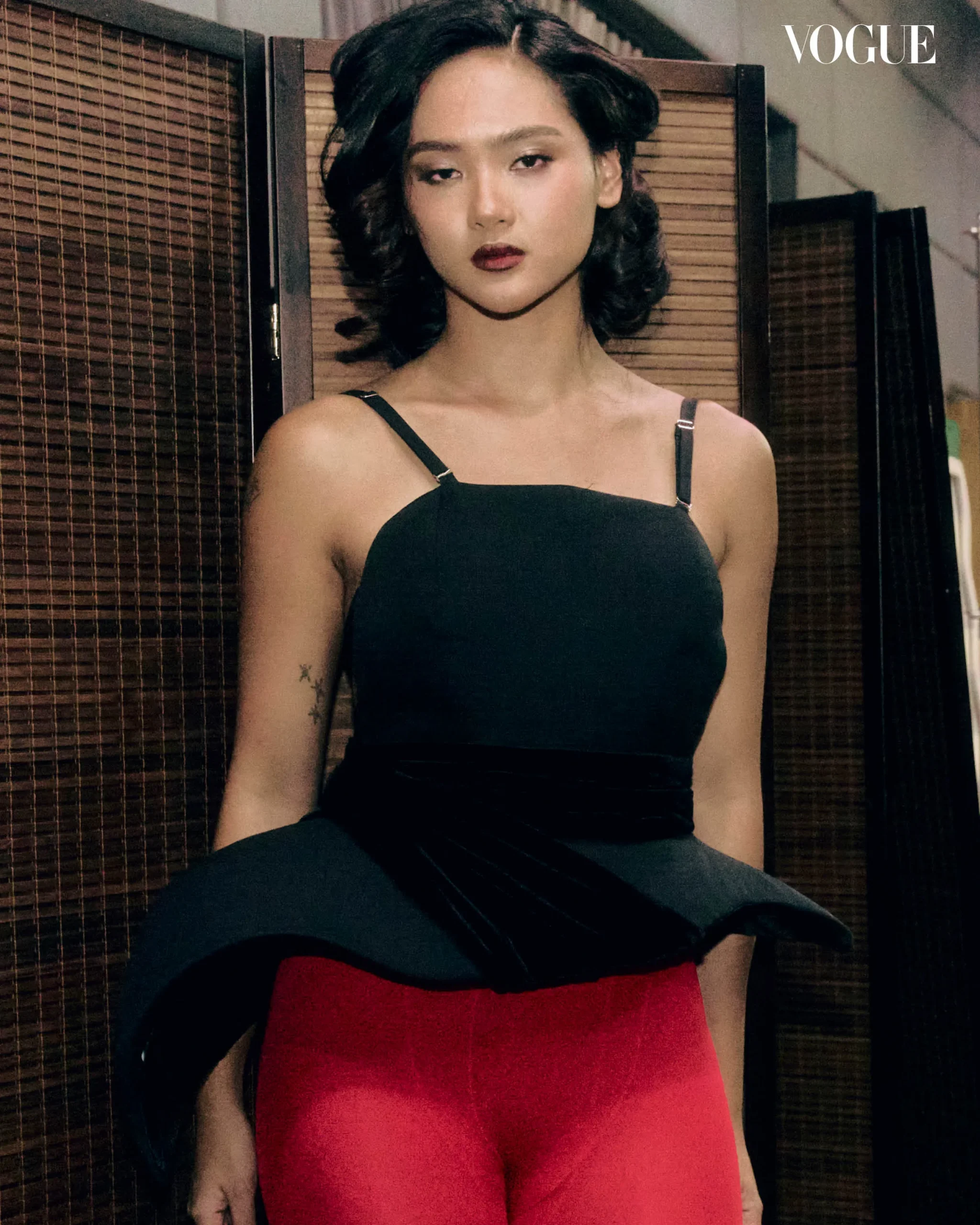
Vogue Philippines: Tell us about your MNL Fashion Week collection. What inspired it?
Lilah Roché: My collection is titled Sampaguita Queenpin. It is inspired by late ’60s to early ’80s Manila noir action films, ones that star FPJ [Fernando Poe Jr.] or Rudy Fernandez. For this, I am doing a reimagined, female, contemporary version of Asiong Salonga.
My narrative starts with a sampaguita girl at the church. As the looks progress, it reveals the succeeding life experiences that led her to become Ermita’s hottest girl, a Kingpin’s woman, and a bride who takes over Manila’s underworld. Then, as if life couldn’t have been any more dramatic, she loses the Kingpin. Losing her Kingpin is not her coming back to the shadows. She will rise to take over the underworld; a queenpin no man could ever replace.
I chose this concept because of my parents. I grew up watching their favorite action movies, including their remakes, like Coco Martin’s Ang Probinsyano and Batang Quiapo. I even watched Sigabo while making this collection. So I thought, why not make a female version of this? Dark, femme fatale, powerful, and sexy.
What ideas or themes did you want to explore through this collection?
I explored historical references because I have been watching fashion archives. My girls took to the runway in their old Hollywood makeup and hair. I even had some wear seamed stockings, which were very popular in the ’40s and ’50s. With their makeup, I decided not to go for modern favorites like brushed-up eyebrows and such. I also didn’t want to go for another modern hairstyling favorite: the wet look. I said, put them in the sexiest ’20s to ’50s hairstyles.
How did you approach the design process, from the initial idea to the finished looks?
This isn’t my usual creative process, but for this one, I didn’t start with drawing. I already had this idea from last year. I just didn’t know when and how I would make this happen. Since my forte is in garment construction, I drafted whatever idea I had at the moment onto a pattern. From there, I went with whatever I could think of. It was build-as-you-go, with no extremely solid, religiously planned looks, just me having fun with the process.
Were there any particular materials, techniques, silhouettes, or details that became important to the collection?
Fabrics that are associated with power and sexiness. [In the past] my branding revolved around the heavy use of wool. For this one, I decided to explore…most especially with velvet. I also added my new favorite color of creamy silk. It’s not just yellowish cream. It’s not off-white either. It’s the perfect cool-toned cream silk. When I found it, I even bought the entire roll because I just fell in love with it.
How do your background or life experiences shape the way you design?
A few sentences aren’t enough to capture the experiences that shaped me. Seven years in the industry (I started my brand right after I graduated senior high school with a fashion design-strand diploma; I was establishing it in my very first year of college), I could have had the best and the worst of my career. I’ve had mistakes that almost cost me my career, and rejections that felt too painful because I was measuring my worth through contest applications.
I also had big wins that kept me going. Most importantly, I’ve had many, many, many people who are rooting for me and supporting me, even people I’m not close with. I realized that no one was expecting too much from me but myself… because, as other people see it, I’m doing the best that I can. To translate this into my designs, my language has become unapologetically sexy, removing ornamentation to show garment construction, powerfully structured… loud through silence. However, despite the highlights of this, my brand remains grounded because every inquiry, every appreciation, every transaction is important to me.
As a Filipino designer, how do you think your perspective comes through in your work, whether consciously or unconsciously?
My perspective revolves around highlighting the technicalities of garment construction. I sewed everything in this collection. I shaped and built the corsets. Tailored the suits and tops using handsewn canvas technique. I never skipped a necessary handstitching. I think about the insides just as I think about the outside. My inside seams are bias-bound, if not with a lining. My suit followed a careful technique in lining that the sleeves should have a different lining fabric because it should drape differently from the rest of the suit. So everything in this collection is like a painting to me. They are my art, and I am the artist.
What do you hope people take away from this collection when they see it on the runway?
I want them to be immersed in this fantasy. You see it, you feel it, you hear it, and you smell it.
Frequently Asked Questions
MNL Fashion Week was founded by celebrity stylist and creative director John Lozano. Formerly known as BYS Fashion Week, it was rebranded as MNL Fashion Week in 2025 with the ambition of bringing Filipino designers and brands onto a larger regional and international stage.
The second edition took place from September 3 to 6, 2026, at SMX Convention Center at SM Aura Premier.
The 2026 lineup included Yong Studio, Charlotte Folk, Randolf, Proudrace, Antonina, Nicolò, HA.MÜ, Lorico, Kill Joy Studios, Lilah Roché and Yana Kalaw Studios.
The Young Designers showcase is a platform for emerging Filipino talent within MNLFW. This year, JAG presented alongside Yana Kalaw Studios, Kill Joy Studios, and Lilah Roché, giving the three young designers a dedicated runway on opening night.
Kill Joy Studios draws directly from Manila streets, jeepneys, family memories and popular culture, while Lilah Roché looks to Filipino cinema, and Yana Kalaw Studios reflects on the experience of growing up within a conservative Filipino environment.