
“This Is Where Everything Started for Prada”: Lorenzo Bertelli on the New Prada Galleria


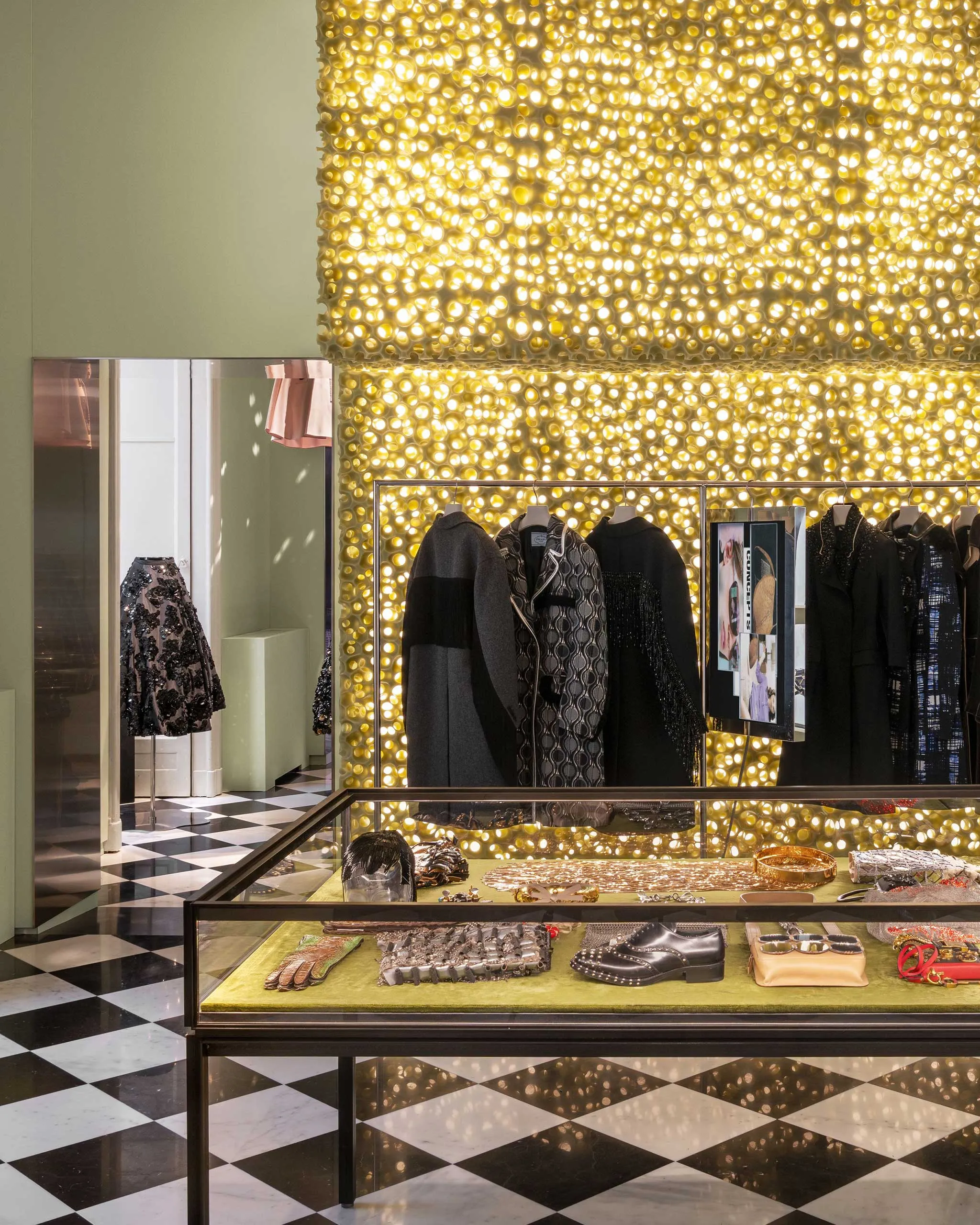
Pradasphere, at Prada Galleria Vittorio Emanuele II.Photo: Courtesy of Prada
On Tuesday, Prada will preview its newest—and oldest—store.
This typically paradoxical Prada position is thanks to that store’s location: Milan’s Galleria Vittorio Emanuele II. It was here that the company, founded in 1913 and originally called Fratelli Prada, opened its first-ever point of sale. More than a century later, Prada is unveiling an expansion of that original site—most recently used exclusively as a womenswear boutique—into an eight-floor complex encompassing womenswear and menswear, food, art, private hospitality and, for the first time on a permanent basis, an exhibition dedicated to Prada itself.
From its first Milanese store opened by brothers Mario and Martino Prada, Prada has grown into a global fashion business with 423 directly operated boutiques and reported group revenues of €5.7 billion last year. Since the late 1970s, Mario’s granddaughter, Miuccia Prada, and her husband, Patrizio Bertelli, have driven that growth. Now, Prada is turning its eye for expansion towards its origin story.
The new development is christened Prada Galleria after the arcade it sits within: a Milan landmark that, on September 22, will host the 2026 installment of Vogue WorldVogue WorldVogue's large-scale live event that blends runway, performance, sport, and culture in a major city, celebrating fashion beyond the traditional show format. The 2026 edition took place in Milan atGo to Vogue World Glossary. The Galleria, completed in 1877, was built to connect two established poles of Milanese life—devotion, represented by the Duomo, and culture, by La Scala—with an indoor thoroughfare dedicated to a newer preoccupation: shopping.
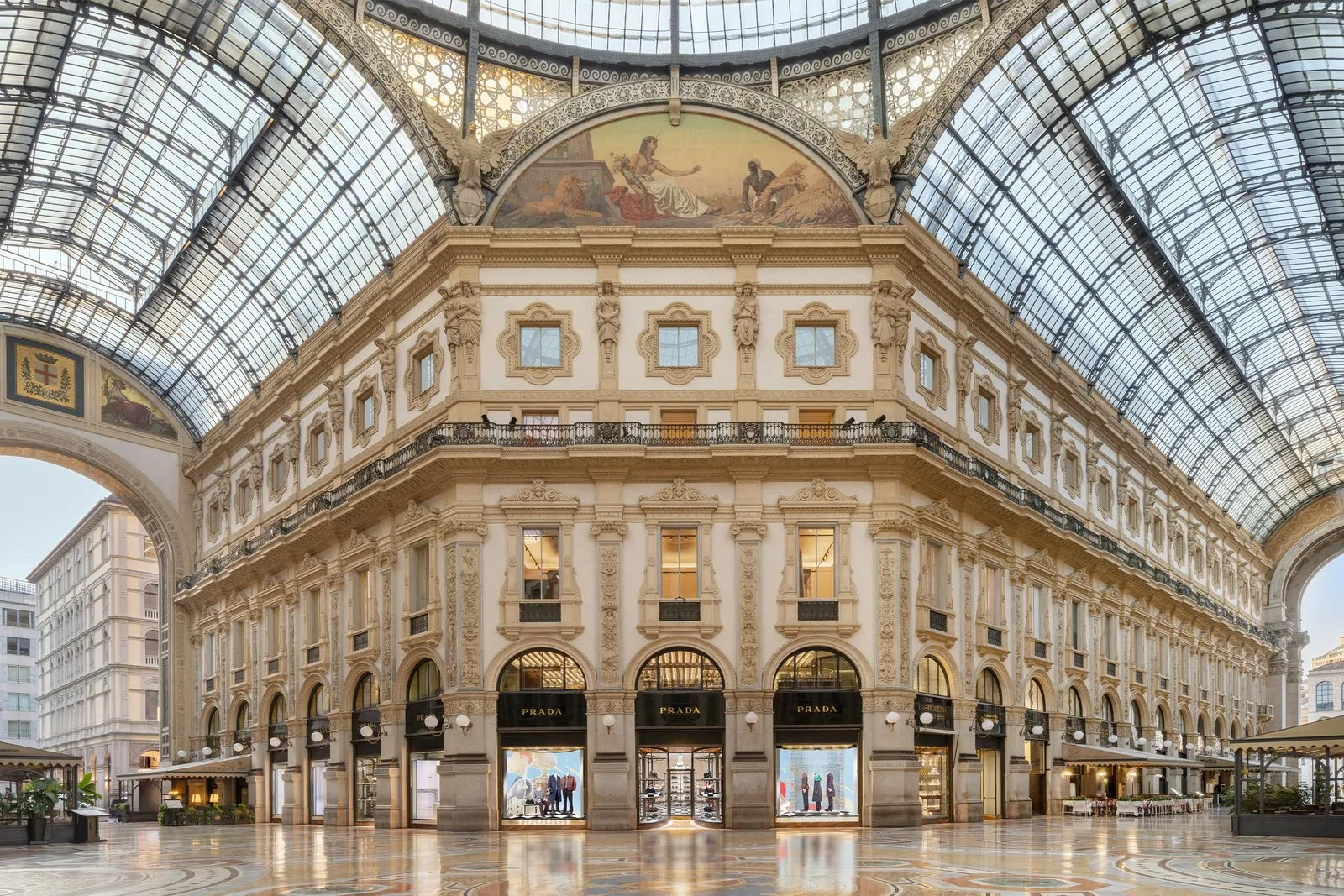
The enlarged and redefined Prada space links several pre-existing elements. The historic womenswear site will be merged with the existing menswear boutique via an underground tunnel the company is tantalizingly calling the Passaggio Segreto, or Secret Passage. Osservatorio Fondazione Prada, inaugurated in December 2016 and dedicated to artistic curation, occupies the uppermost levels. Marchesi 1824, the historic Milanese pasticceria Prada Group acquired in 2014, has operated its Galleria outpost here since September 2016 and will be subsumed into the larger Prada complex.
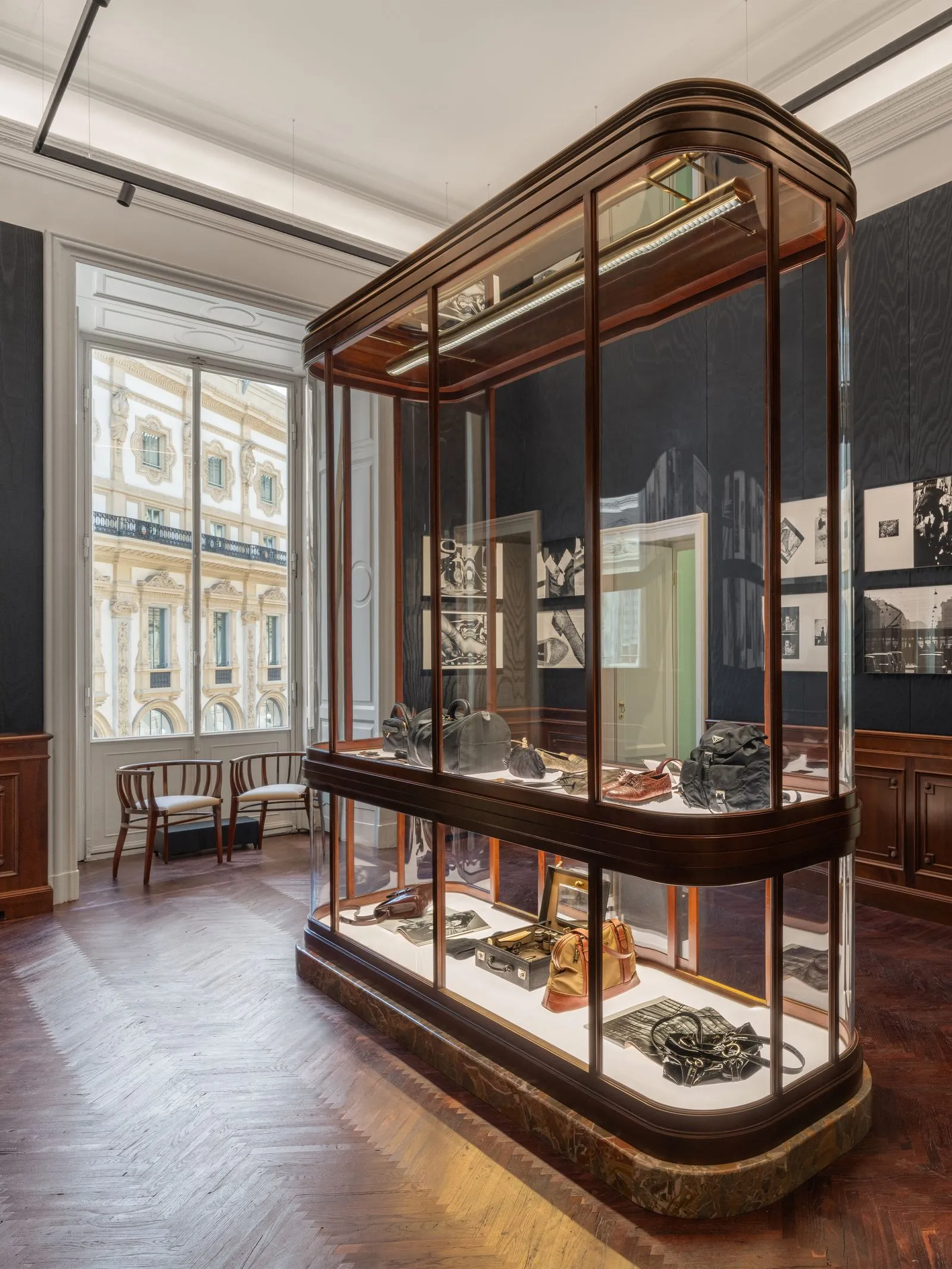
The architectural strategy of expansion through connection reflects the project’s brand-building strategy. The piano nobile, first-floor space of the original store site will now house a new Pradasphere display, the first permanent exhibition devoted to the house. Tracing the company’s history from the founding of Fratelli Prada, it is designed to connect Prada’s lesser-known origin story with its more celebrated recent history.
Underground, meanwhile, the Passaggio Segreto will, the company says, display lesser-known episodes and objects from the archive: early experiments and obscure “firsts” intended to reveal continuities within Prada that were previously either unknown or overlooked. Above, the invitation-only Appartamento has been conceived under Miuccia Prada’s direction as a hypothetical domestic space: a glimpse into her interior aesthetic.
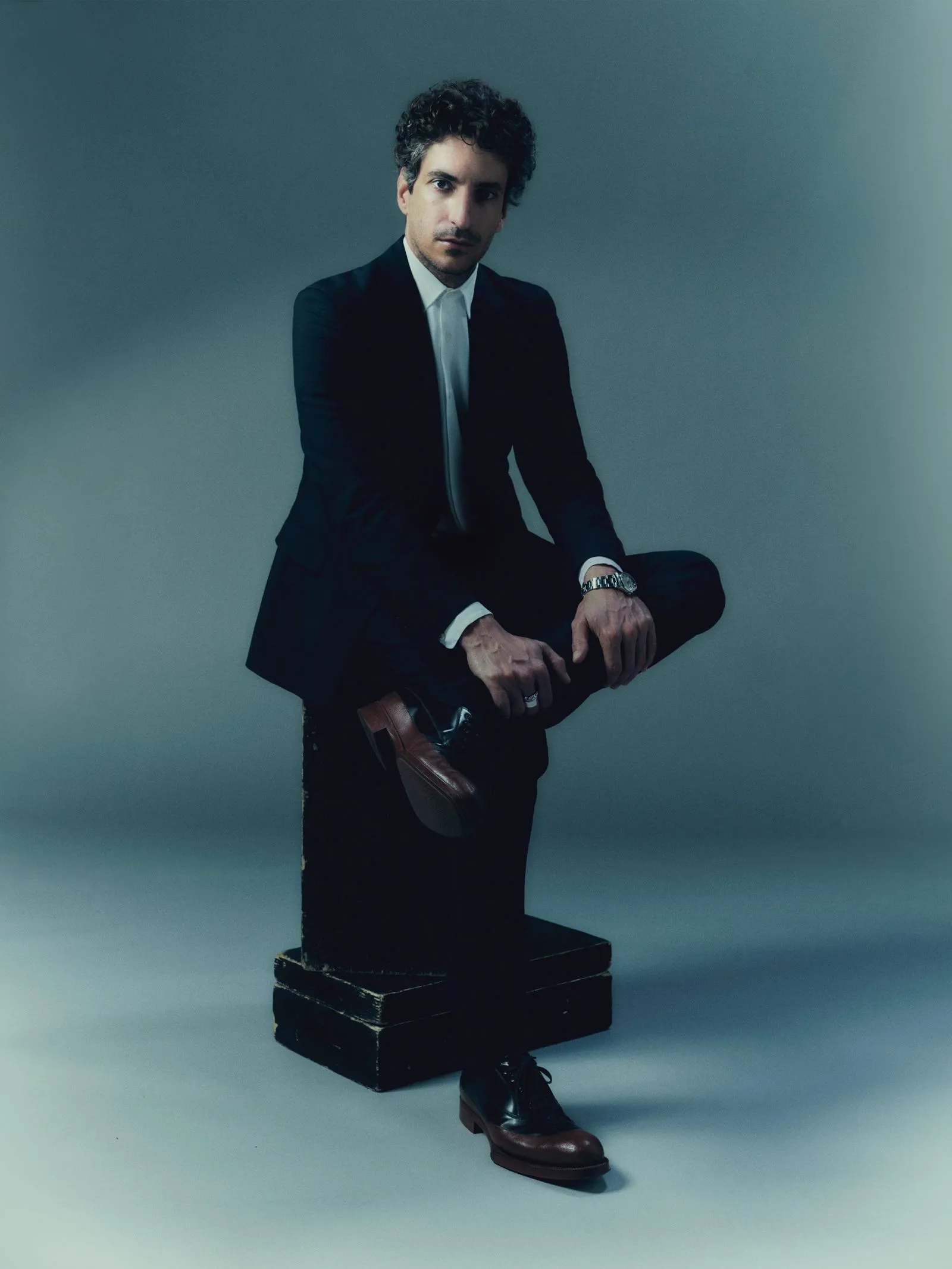
Before today’s preview, Vogue Business connected with Prada Group’s CMO and head of corporate social responsibility Lorenzo Bertelli (not to mention Mario Prada’s great-grandson) to ask why the company’s strategy for the future demands a new approach to its past.
Vogue: What does this particular site mean to you and your family?
This is where everything started for Prada, so it has a sentimental legacy for the family. Our other stores have been an execution of my mother and father’s ideas, creativity, and vision. This one is different. It was something really personal for them, and both of my parents have been emotionally involved in the project. Because, as you will see, it isn’t only about the store formula. It is about telling our story.
Vogue: And what is that story?
When a lot of people think about the story of Prada, they begin with my parents: the ’70s, ’80s, and ’90s, and what they created then. People forget that Prada’s origins really begin with Mario, my mother’s grandfather, and his brother Martino, when they opened this store. So this is an opportunity to share that family story. That is probably the biggest difference between what you are used to seeing in Prada stores and what you are going to encounter in this one.
Vogue: The Prada your parents shaped has always been about challenging tradition. So has it been challenging to approach the task of explaining your own tradition and history?
What you will see, especially in the Pradasphere, is that what my parents created did not come out of the blue. There was continuity with what my mother’s grandfather started and with the origins of the brand. That is something many people know less about, and it became our focus.
One of the biggest challenges was deciding what to talk about and what to show. But having so many things in the archive and so many stories to tell is a good problem to have. In fact, the museum space will continue to evolve, because we have discovered so many things we want to share.
Vogue: How did you approach that storytelling?
The biggest question was choosing the narrative perspective, because there are so many ways to see the story: through product; through culture; through the wider history of Milan and the fashion sector; through architecture; or simply through family history. We will only really understand how well the direction we have taken works once we start receiving feedback from visitors, because when you talk about yourself it is hard to zoom out and have an objective view.
This is also something very new for us: we have always been quite esoteric about this knowledge of our family. We haven’t really shared it. We have always been a little shy about it. So we will see.
Vogue: The store contains what Prada calls a Passaggio Segreto, connecting the women’s and men’s stores. The term itself suggests that you are digging into Prada’s less familiar stories. There is something tantalizing for visitors in the idea that they might discover things they never knew existed.
Exactly. The Passaggio Segreto connects the spaces, but it also becomes a place for hidden treasures and unearthed pieces from the archive that people may never have been aware of. It is a place for the unexpected. Of course, there is also the store itself, which is beautiful, and the spaces dedicated to our clients. But in a way we take that for granted.
I think some of the most appealing parts of the project will be the areas not dedicated to commercial sales, but to telling the story of Prada. And then, above that, you have the Osservatorio, part of Fondazione Prada, which is also very close to my mother’s heart. There is the Appartamento too, which she has approached in a way that reflects how she might imagine living herself: something created from a very personal perspective. It offers a hint of something we have not really disclosed before. She put a lot of effort into it, and I think it will also become part of her legacy for the future.
Vogue: When you said this is only the beginning, does that suggest Prada is going to focus more widely on telling its origin story and the period of its history before your mother began working in 1978?
I was only a kid, but I remember that when the first Prada store in New York opened [in 1996], the original concept had something in common with the Galleria and spoke about Prada’s heritage. But at that time, Prada was really known for modernism and minimalismMinimalismA design approach built on clean lines, restrained color palettes, and a small number of well-made pieces. Minimalist fashion favors quality, fit, and fabric over embellishment, helping people build versatileGo to Minimalism Glossary. So telling that older story was not particularly successful because people didn’t understand it in the context of seeing Prada as something new.
If you look at the maturity of the brand today, though, Prada is established. Even if it remains very closely associated with minimalismMinimalismA design approach built on clean lines, restrained color palettes, and a small number of well-made pieces. Minimalist fashion favors quality, fit, and fabric over embellishment, helping people build versatileGo to Minimalism Glossary, nylon, and those big moments of the ’80s and ’90s, the brand is now at a different moment in its life. I think the customer is at a different point too. There is now a willingness to explore Prada’s heritage because the brand is no longer perceived as a novelty. Every moment in the evolution of a brand requires a different way of communicating.
In fact, this has already begun. In a few of our stores, we have apartments containing furniture and art personally curated by my parents. There are only a handful of them, and they are reserved for top clients, but this is becoming a broader way of communicating.
Vogue: How does this new emphasis on Prada’s past speak to its approach to the future?
It is very common today that when you don’t have something to say in the present, you go back and talk about old ideas. And more broadly, I also think we are living through a moment when people are worried about the future—about geopolitics, the environment, AI. There are a lot of things to be scared of. So it can be uncomfortable to think about the future.
So one of the challenges with this project was that we didn’t want to be seen as a brand looking at the past because it no longer knows how to express the future. Especially within the exhibition, we are showing you our past while also showing that we believe strongly in the future and intend to keep moving forward.
Vogue: Every heritage brand was once an innovation brand. Yet many eventually suffer a kind of mid-life crisis.
That’s often when brands no longer know how to move forward. After the innovation that establishes the brand DNA, they can end up simply re-elaborating the past. I think this is a problem every brand faces. The only solution is to have an understanding of contemporary society while still pushing forward. Even then, there are no guarantees of success. But I think that’s really the soul of Prada: to continue pushing forward with positivity.
“Mobile, singular, visionary, irrational”: Inside Prada Galleria
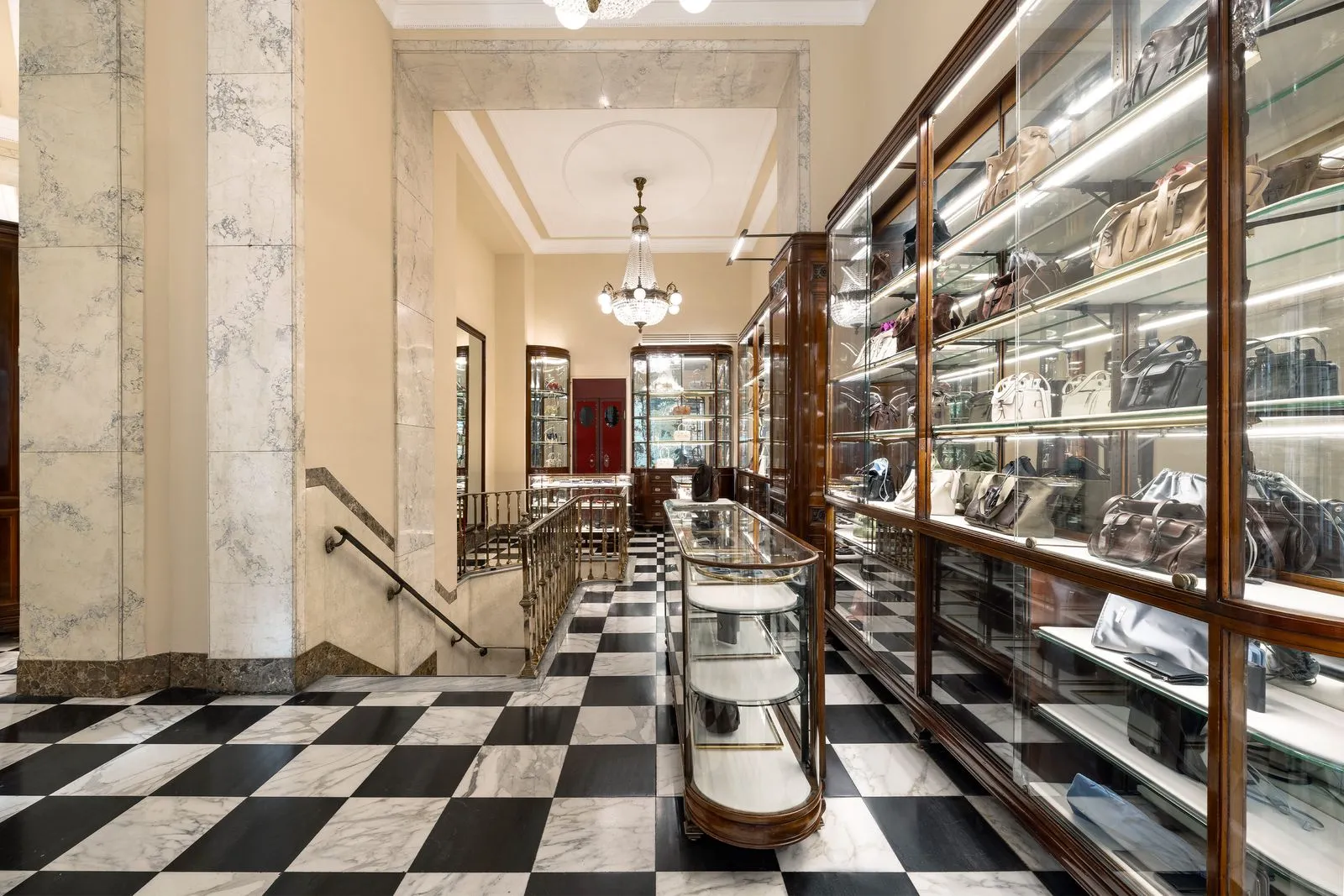
“Luxury objects and luggage”: As archival photographs now on display reveal, this was the promise offered by Fratelli Prada on the original sign of the store they opened over a century ago. That store, occupying a single unit of the Galleria Vittorio Emanuele II, still remains: its curved wooden displays and cashier’s desk, sourced from England and Germany, stand today just as they did then.
From here on in, the ‘new’ Prada Galleria ‘store’—more accurately, a massively reorganized coalescence of existing spaces with some striking new additions—unfolds as a painstakingly curated crystallization of Prada’s progress across four generations. In our interview, Lorenzo Bertelli suggested that the sections dedicated to brand storytelling might prove more attention-grabbing than the retail spaces. The plot twist is that the new subterranean retail area includes the brand’s first-ever in-store make-up and beauty displays, a new approach to merchandising Prada’s big-selling eyewear category, produced under license by EssilorLuxottica, and some fascinatingly arranged homeware: artfully jumbled crystalware alongside reverently vitrined Prada-stamped Japanese kitchen knives that I had no idea existed and now quite powerfully desire.
This section, which also contains Prada’s totemic nylon luggage, becomes purposefully gender-neutral as it approaches the new Passaggio Segreto. The darkened passage is lined with displays of Prada grails. These include a crystal dress from The Great Gatsby, a cache of the iPhone-predating LG Prada touchscreen smartphones from 2008, a trove of vintageVintageClothing and accessories from an earlier era, generally at least twenty years old, that reflect the style and craftsmanship of their time. Vintage pieces offer unique character and often superiorGo to Vintage Glossary Prada show invitations from the long-gone Via Fogazzaro days, and the original James Jean animated film produced as part of the house’s 2008 Fairy collection.
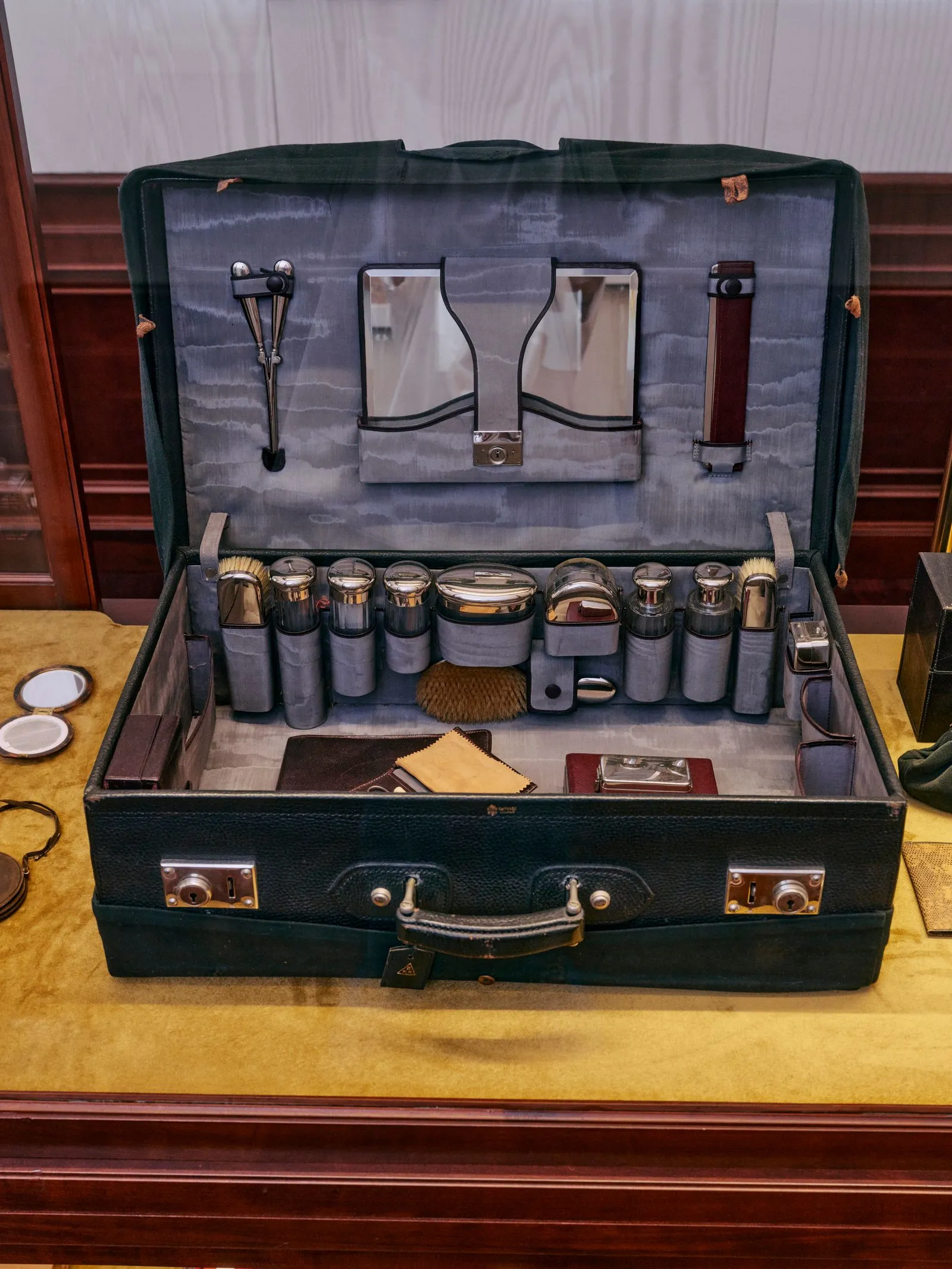
It is a jackdaw smorgasbord of archival souvenirs designed to remind passers-by of moments in Prada’s evolution. Upstairs in the new Pradasphere exhibition—a permanent display accessible through pre-booking once it opens to the public on September 23—a much more linear throughline traces Prada’s progress. It begins with Fratelli Prada’s original universe of travel and luxury: fitted cases, metal-clad brushes, luggage tags, purse clasps, branded tissue paper, and the 1922 royal warrant that allowed the house to incorporate the Savoy coat of arms into its marque.
From there, the story swerves to the period when Miuccia Prada and Patrizio Bertelli arrived to upend that bourgeois beginning with a modernist, minimalist departure. We see the earliest nylon grips, totes and backpacks; then come the first ready-to-wear collections, pressed between Perspex like dried flowers. The wrapped, statuesque black coat-and-trouser combination that was look one in show one, Fall/Winter 1988, is displayed beneath a Mrs Prada quote promising “contrasts and contradictions”.
From the 1990s onwards, the house’s output is represented as a non-chronological accumulation of Prada projects: Linea Rossa’s tilts at the America’s Cup, the development of Fondazione Prada, architecture, film, photography, retail experiments and the increasingly elaborate visual languages of the collections themselves. The exhibition’s phrase for this is “continuity in discontinuity”: following this rubric, the room of fashion looks selected by Miuccia Prada sets pieces from different seasons against one another according to recurring oppositions and affinities. It culminates with the Prada-designed spacesuit intended for Nasa’s planned Artemis IV moon landing in 2028.
It’s a lot of material to jam into eight quite compact spaces—in one display of rotating archival circle skirts you have to be careful to avoid contact—and by the time you reach the ninth room, a cinema, you suddenly feel extremely expert in all things Prada.
But maybe the most revealing space of all is the one shown to the fewest people. Up on the third floor, the Appartamento has, as their son said in his interview, been interior designed by Mrs Prada and Mr Bertelli as a reflection of their own personal tastes. A carefully eclectic mix of furniture—from lushly ornamental 18th-century commodes and foxed gilt mirrors to comfortably ugly mid-century velvet armchairs—is placed with chessboard precision facing the center of each room. Flooring ranges from freshly stained original antique parquet to a Barbie-pink thick-pile wall-to-wall carpet I can imagine Mr Bertelli internally wincing at. The green marble bathroom, containing twin sinks and a free-standing bath, is quite enormous: about the size of a padel court.
The walls are decorated with photography by Andreas Gursky, ranging from ultrawide images of brutalist apartments and a Bauhaus DIY store to tightly framed close-ups of stove-tops (thankfully for guests at the private dinners to come here, there is also a functional industrial kitchen in one back room). Two of the Gursky photographs reproduce enlarged pages from an edition of Robert Musil’s The Man Without Qualities. And in one of these is buried a sentence that seems to contain a clue to the very Prada-ish logic underpinning the whole project: “Besides the world common to everyone—that fixed world which can be investigated and dealt with by reason—there exists a second world; mobile, singular, visionary, irrational.”
This enormous, ‘new’ Prada Galleria ‘store’ reveals much more about Prada’s origins and history than ever before, while preserving the mysterious aura of creative playfulness mixed with intellectual severity that has become so central to the appeal of its luxury objects.
This article was originally published on Vogue Business.