
Chris Habana on Designing Jewelry for the 2026 Met Gala


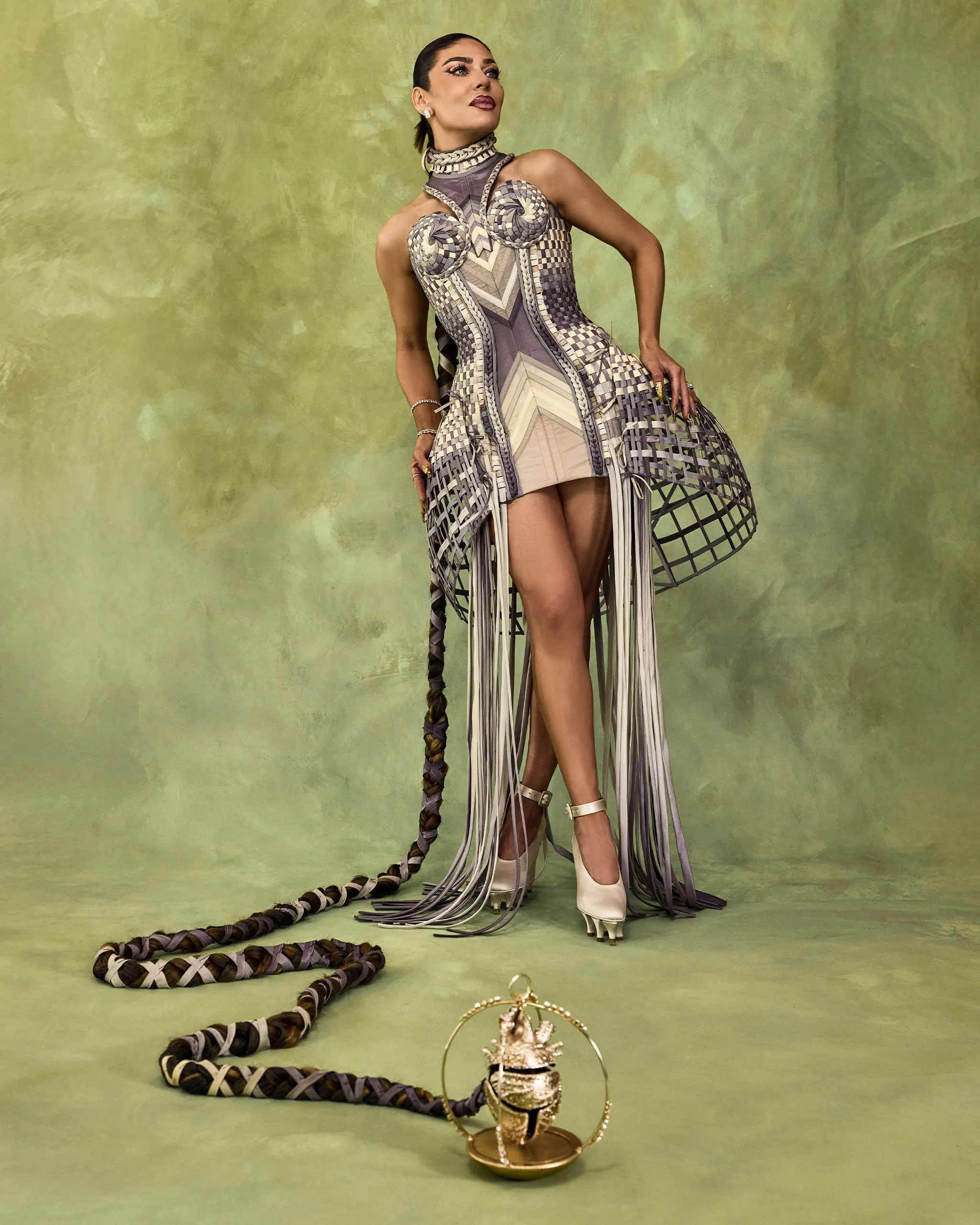
Photographed by Joseph Bishop, photo courtesy of Chris Habana
In an interview with Vogue Philippines, Chris Habana talks about his designs for the 2026 Met Gala.
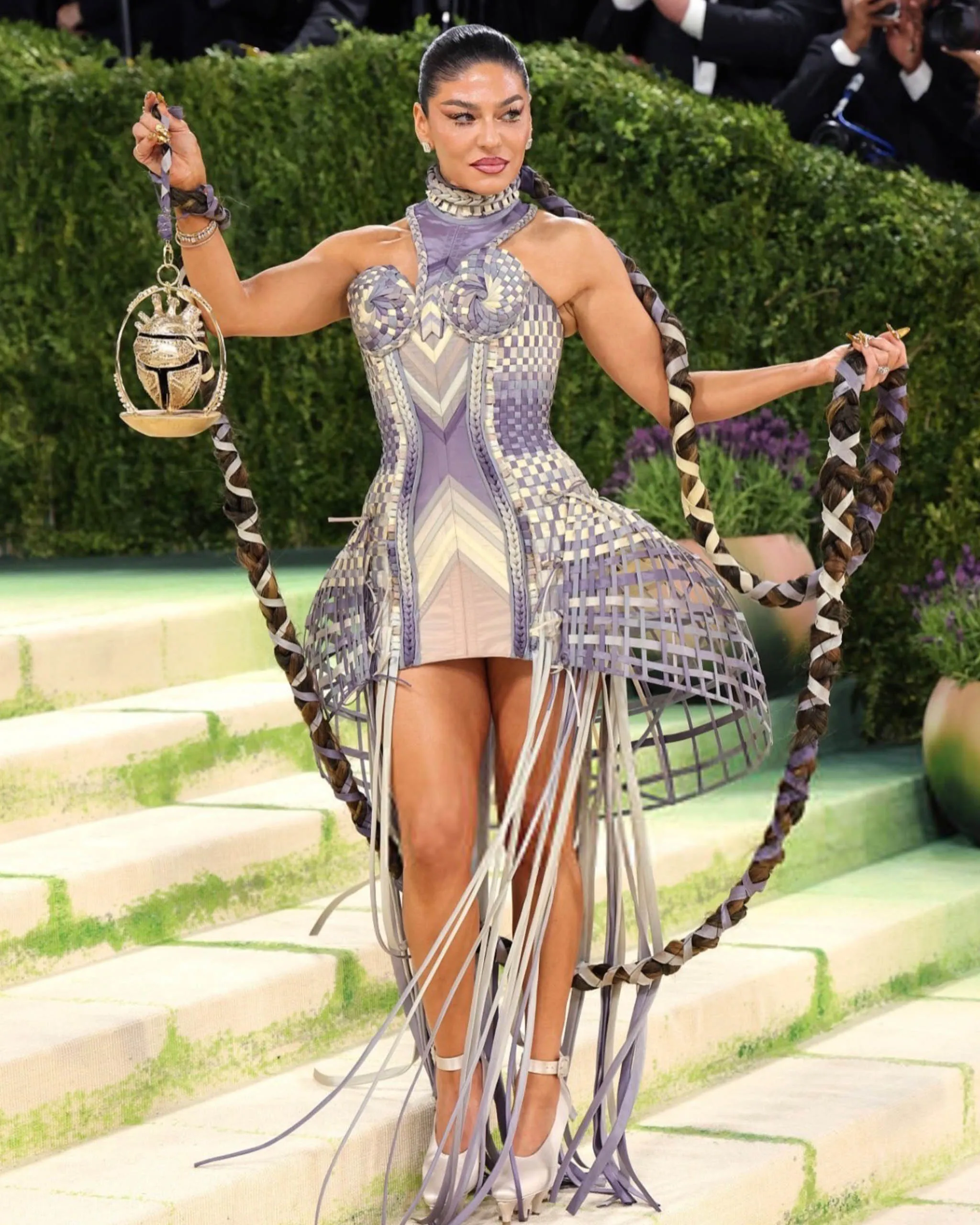
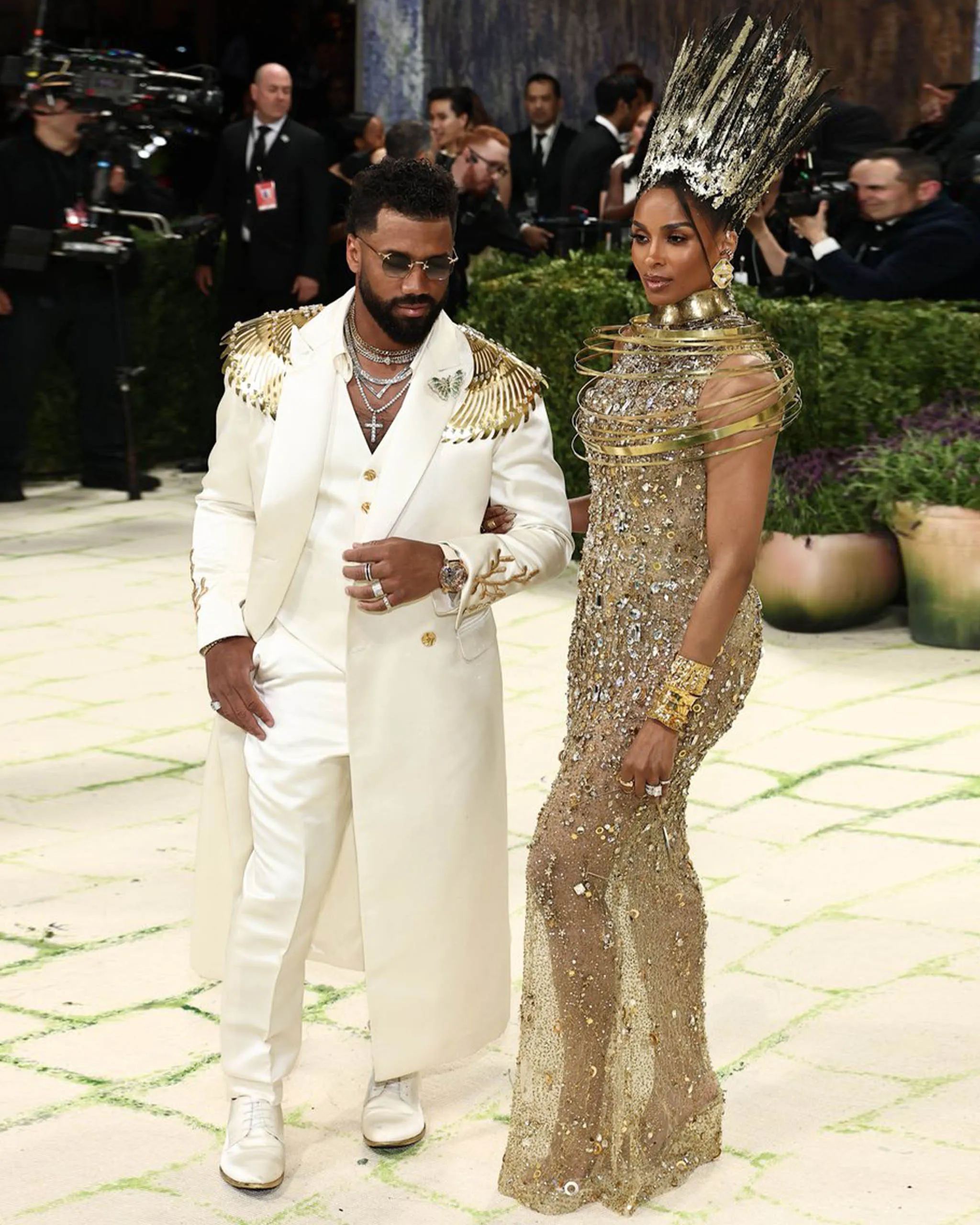
On the first Monday of May, Chris Habana’s creations were seen on the 2026 Met Gala red carpet, worn by American football quarterback Russell Wilson and creative entrepreneur, archival fashion collector, and philanthropist Sabrina Harrison. With the dress code, “Fashion Is Art,” the jewelry designer toed the line between human anatomy, myth, craft, art, and fashion.
Post-Met Gala, Vogue Philippines converses with Chris Habana to learn more about the finer details of his designs. This interview is edited for brevity and clarity.
For this year’s Met Gala, the theme was Costume Art with the dress code Fashion is Art. How did you feel about it when this was first announced?
The dress code resonated with me, especially when I had seen the brief where it related to the body. In the work that my studio and I have done, you can really see the human anatomy as a base point. I was hopeful to get some sort of request for it. Thankfully, we did!
When approaching a collaboration for a high-ticket event such as the Met, what is your approach usually like? Do stylists often come to you with clear visions from the get-go, or do you mostly come to the main idea together? How did these processes pan out with Sabrina Harrison and Russell Wilson?
These days, both stylists and their creative talents have definitive jumping-off points for me to interpret. It’s really my job to distill the brief I’m given and hopefully come up with special pieces that can live on.
For Sabrina, Carlos, her stylist and creative lead, asked me to imagine a beating heart – then I ran with it. For Russell Wilson, Jan Quammie, Russell’s stylist, gave me a very specific reference to Michael Jackson in “Remember the Time” and how to interpret that for a metal piece to accent his Brandon Blackwood coat. From there, the wings of Osiris came to mind, and I started sketching.
Stylists play a significant role in these collaborative pieces. Could you tell us more about your relationship with Sabrina and Russell’s stylist, and what the process was like for each, from beginning to end?
Well, Carlos Alonso Parada and I have been friends for years. Carlos is a super-talented stylist based in Dallas. He’s been such a supporter of our brand, and he introduced us to Sabrina Harrison when she first stepped onto the Met Carpet in 2024, where we designed and created her full look. The process with him and Sabrina this time around was so seamless. While we did get up to the last minute for the piece, this came about relatively painlessly [laughs]. I enjoyed every minute. For Jan, we had worked on a stage job prior, so this was just our second job. I really appreciated her entrusting me to come up with a concept for Russell. That trust a stylist puts in you is precious for sure.
Take us to the technical aspects of each piece. What materials were involved, and how many people and hours did it take to complete?
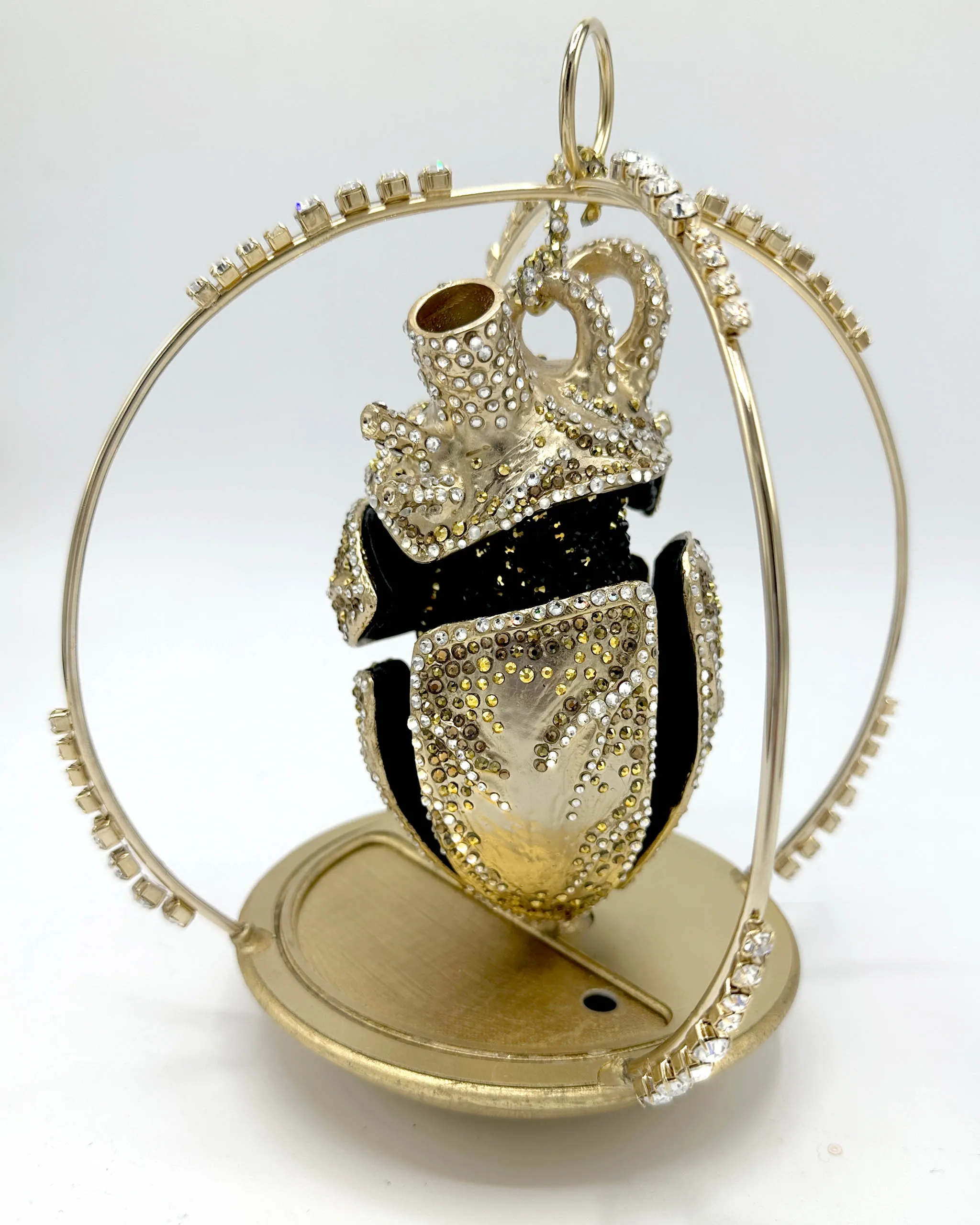
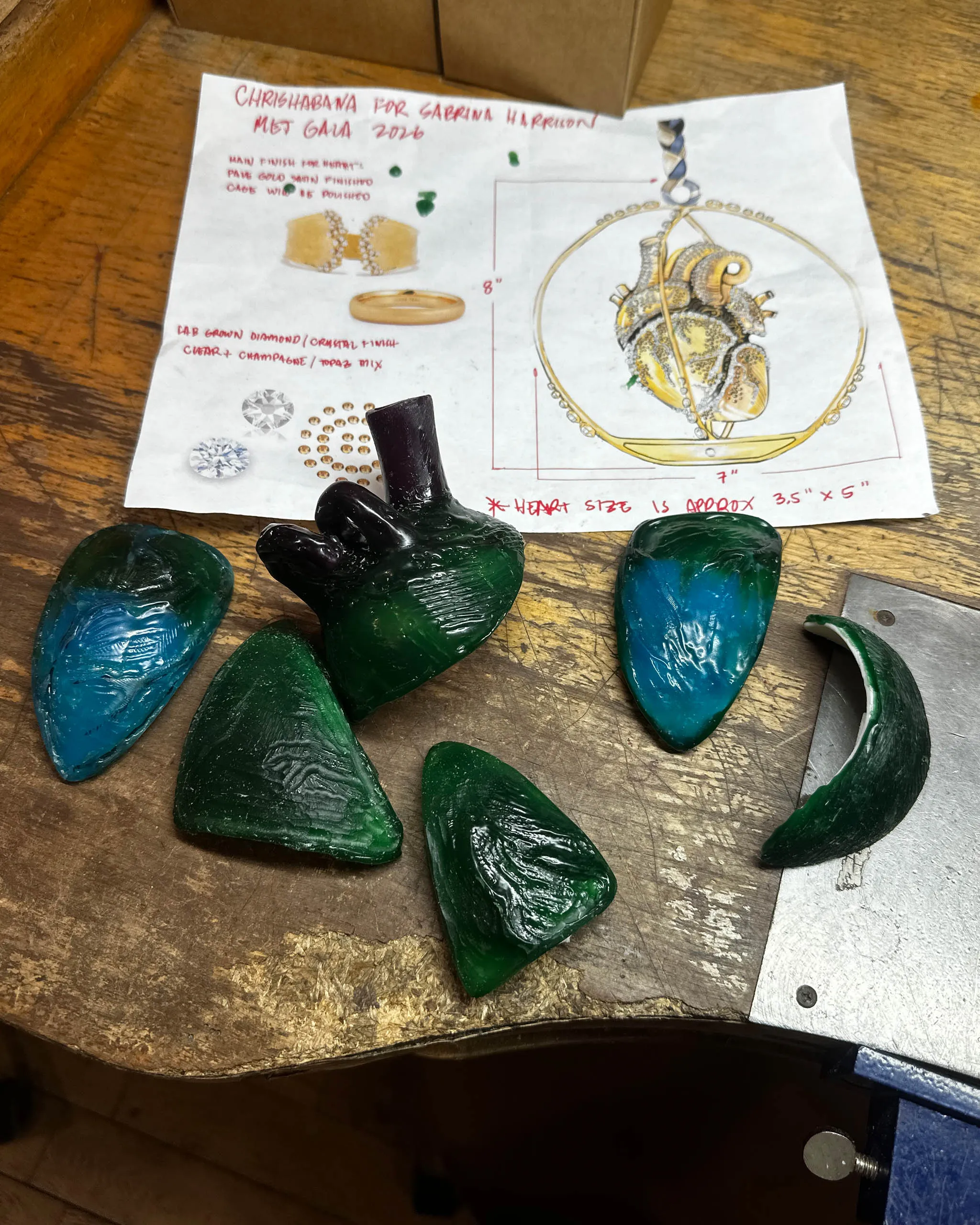
These projects were so different from each other. For Sabrina’s Beating Heart purse, it was designed and crafted in 3 weeks, and started with rounds of sketching and technical development. It combined traditional jewelry hand-craft techniques mixed with technology and animatronics. We worked with Cameron Hughes, a designer who specializes in animatronic motion, to mechanize the beats of each heart panel.
As Cameron worked on the base and mechanism, I worked with Jake Alfonzo, who hand-carved in wax the heart panels. The wax carvings were cast in brass and satin, finished in a pale gold to match the tones of Sabrina’s Gaultier dress. The last step was to assemble the piece it together and crystallize it with Preciosa crystals. We had the piece pretty much ready for Sabrina 2 days before the gala!
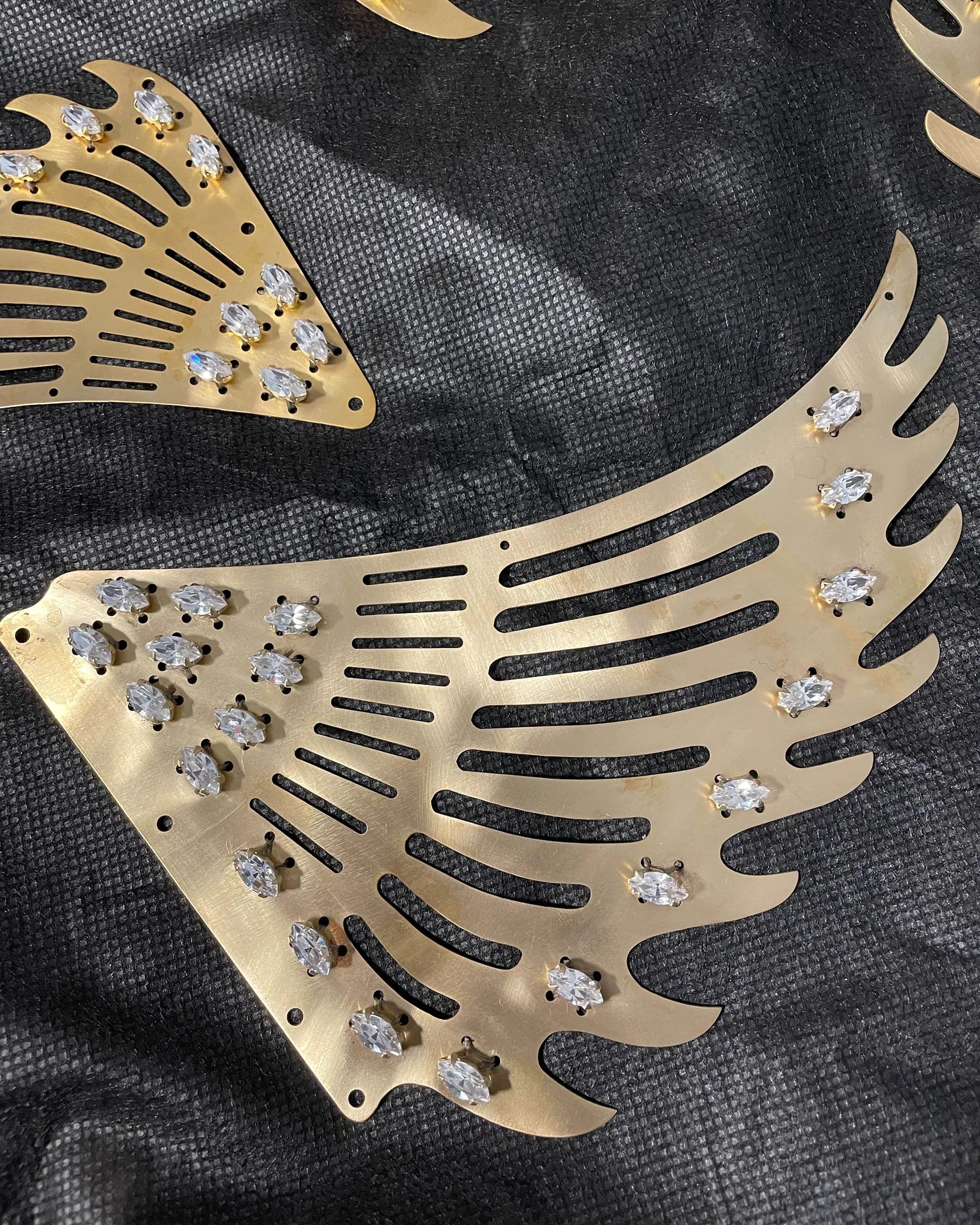
Russell’s shoulder embellishments were simpler in comparison, but worked up to the point. It probably took 5 days to do it, I think. After the idea was approved with Jan, I laid out the pattern for the pieces to be cut from 22-gauge brass sheets. We had to plate and satin finish the piece, but not until the team hand-sewed Preciosa Navette setting crystals to accent it. At the end, we stitched the piece to the jacket a couple of hours before it hit the carpet.
Sabrina’s bag distills Frida Kahlo’s ability to transform pain into power. Why did the beating heart feel like the most apt encapsulation of this idea? Through this creation, which aspects of the women’s shared Mexican heritage did you wish to highlight?
The Beating Heart was actually so perfect on multiple levels. Not only did it have references to Frida Kahlo’s work in the imagery, specifically for me, the “Two Fridas”, but it is also an integral part of the human body, a focus of the gala’s them
Also, a little fact: Sabrina’s dress was from an archival Gaultier collection celebrating Mexican culture, so Carlos and Sabrina both felt a kinship to her own Mexican heritage and thus felt the connection to Frida Kahlo. When I think about Frida Kahlo’s visceral expressions of pain in her brilliant work, I see a throughline to Sabrina and her own self-expression. She always wants to push the aesthetic boundaries of the gala and her look. The purse looked like an anatomically real heart, but expressed in a more grand, extravagant, and precious way.
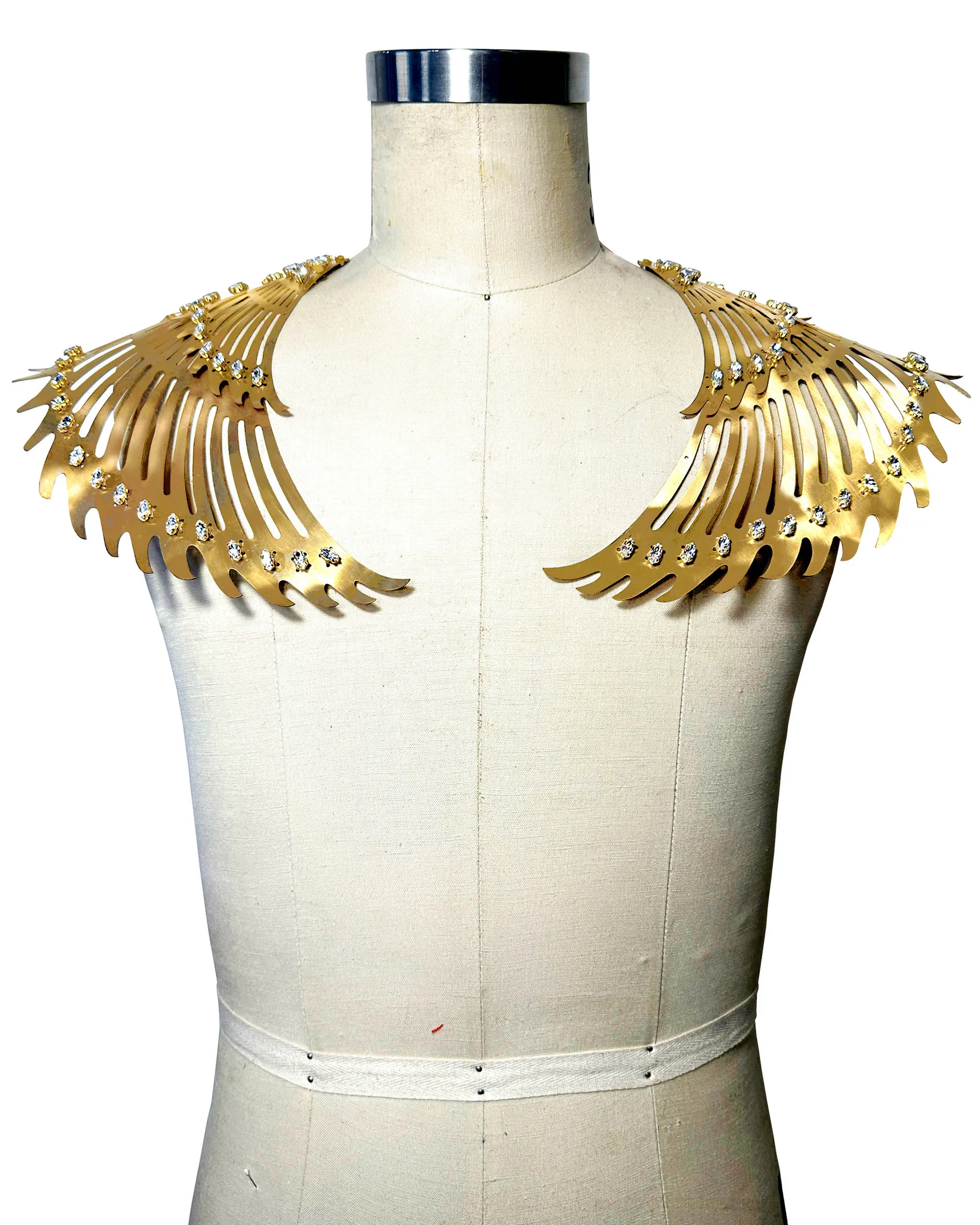
For Russell, you crafted custom shoulder pieces; you married ancient Egyptian ceremonial armor with architectural depictions of African royalty. How did you meld these two cultures while equally paying respect to both? Which aspects or values of theirs did you specifically wish to highlight?
Russell’s idea came very seamlessly. The wingspan shape and anatomy gave way to his own body structure. And to me, African royalty was ancient Egypt, so it was really a matter of me trying to express it in the most modern yet regal way. I hope we were able to do that in the end.
Which theme would you love to see for the Met in the future?
How about an Olympics of indigenous, ceremonial costumes from every country? Or give us a Madonna theme! Actually, why don’t we pay homage to iconic costumers past and present? I always feel like costumers are overlooked in fashion circles when there is the reality that it’s all costumers and fashion designers are all just creatives making clothes. In the end, it’s all costume, isn’t it? We are all playing dress up in some way, so give all of us our due.
Which personalities do you hope to design for or dress for the Met in the future?
You know, when Triangle of Sadness came out, and I saw Dolly Deleon for the first time, I was really hoping she would go, and somehow she would call us! But we have yet to dress her in her full look. And while I do have certain artists I’d love to dress for the gala, for me, it’s about the work we do. I mean, I am so proud of this purse we did for Sabrina. I feel like this project has challenged us in the best ways possible. So when we can come up with pieces like this where the clients allow us to dream and really go in on a project, it’s truly magic. You can’t beat that.
Frequently Asked Questions
Chris Habana is a Filipino-American jewelry designer based in New York, known for his edgy, unisex, and punk-inspired accessories.
Launched in 2008, his label CHRISHABANA has become a staple among celebrities such as Rihanna, Madonna, Beyoncé, and Nicki Minaj.
Chris Habana was named Accessory Designer of the Year at the 2012 New Now Next Fashion Honors and recognized by Vogue Talents/Vogue Italia in 2013.
Russell Wilson’s custom shoulder embellishments were inspired by Michael Jackson’s “Remember the Time” music video, ancient Egyptian ceremonial armor, and the wings of Osiris.
The design was inspired by Frida Kahlo’s artwork, specifically The Two Fridas, capturing visceral expressions of turning physical pain into visual and artistic power.
- Jewelry Designer Chris Habana is All About Punk, Instinct, And Artistry
- AI to Reality: How Designer Chris Habana Brought Erykah Badu’s Vision to Life
- Filipino Designer Chris Habana Created Beyonce’s Comeback Halo
- Colman Domingo, Leon Bridges, Sabrina Harrison, and More Wore This Filipino Designer to the 2024 Met Gala