The Story Behind Audrey Hepburn’s Pearl Necklace In Breakfast At Tiffany’s


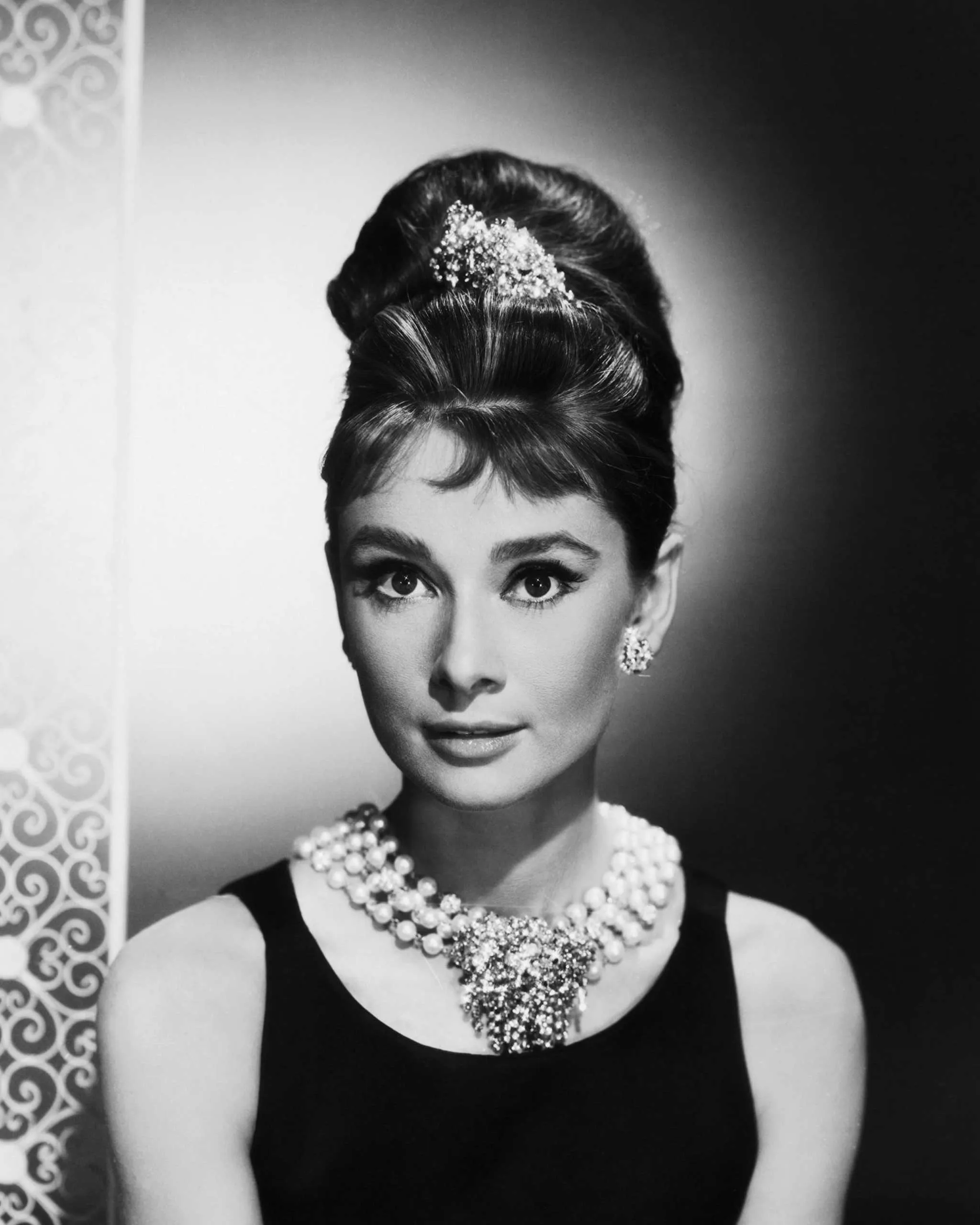
Hepburn on set wearing her non-precious pearls. George Rinhart/Getty Images
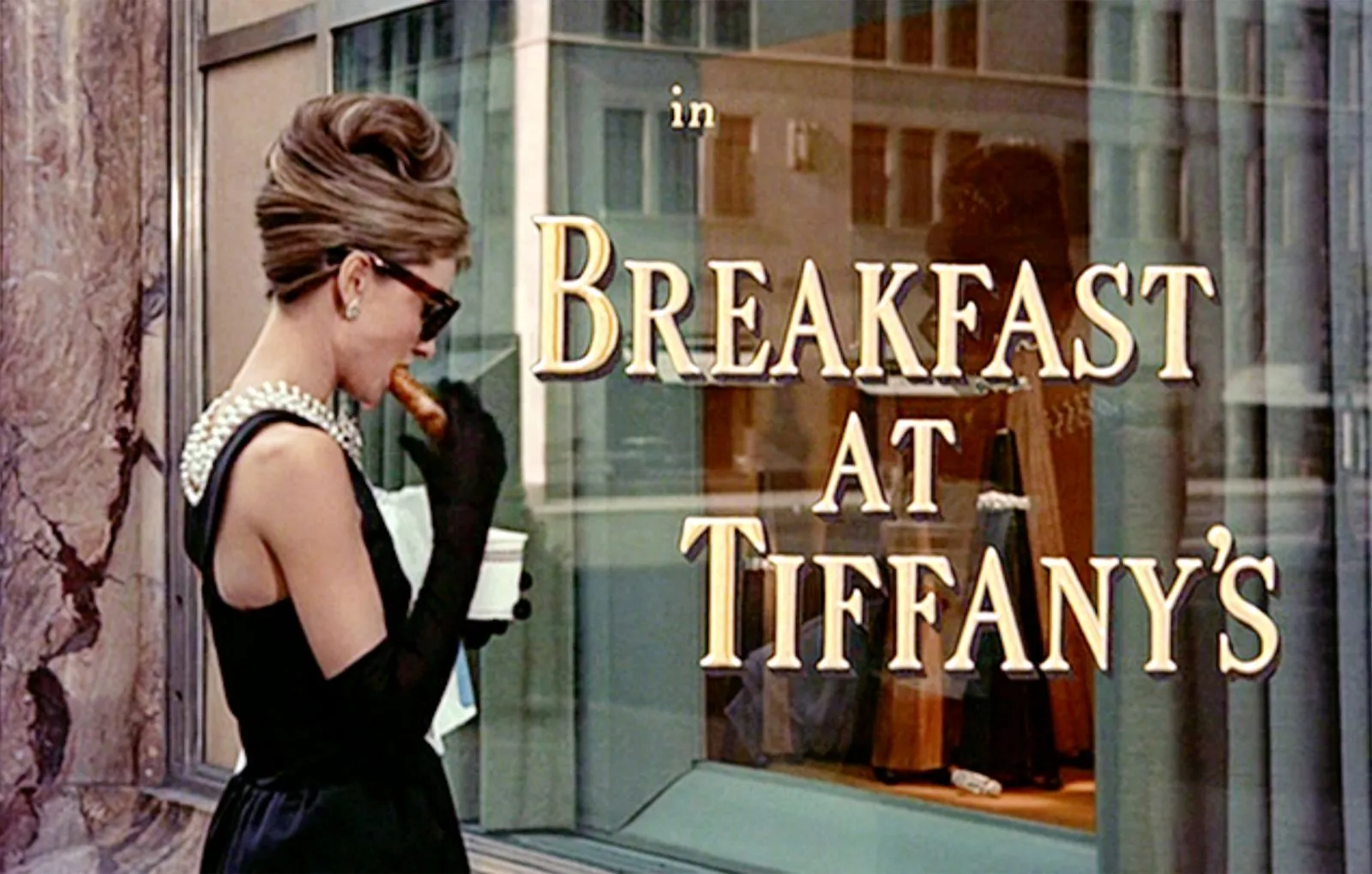
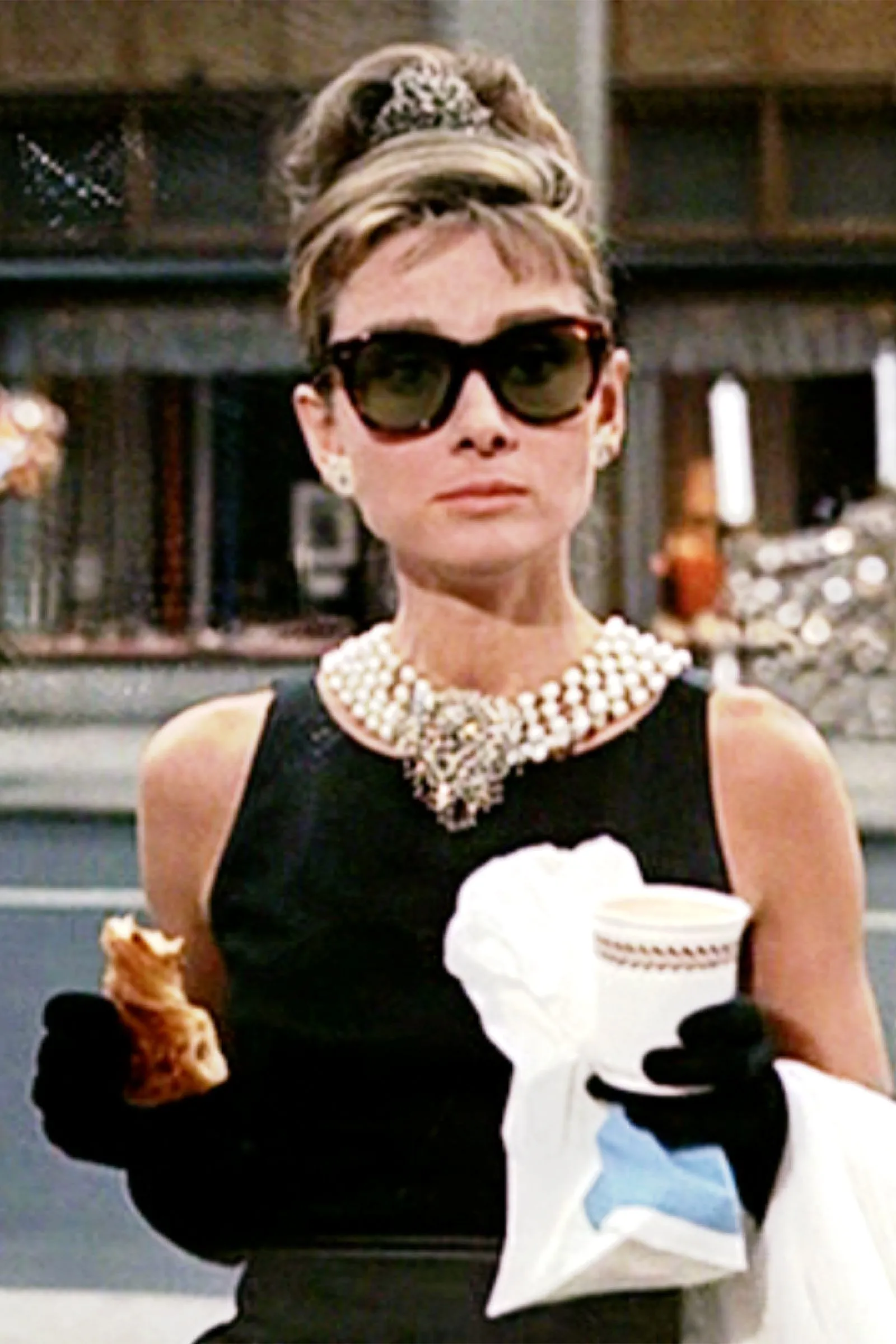
Under the lavender light of dawn in New York City, a yellow taxi stops in front of Tiffany & Co. on Fifth Avenue. A slender figure emerges, dressed in a sleeveless black Givenchy dress, her arms covered by elbow-length gloves. She moves slowly towards the shop window. The camera lingers first on her back: her hair swept into an elegant updo, almond-shaped diamanté clips at her ears, and the open cut of the dress revealing her shoulders. Above the black straps of her dress runs a five-strand pearl necklace, luminescent and striking. As the camera pans, the delicate features of Audrey Hepburn’s face come into view. Her eyes are hidden behind dark sunglasses; a small diamanté coronet crowns her hair. As Holly Golightly, Hepburn elegantly bites into a croissant and sips coffee from a paper cup. The opening frames of 1961’s Breakfast at Tiffany’s are some of the most memorable – and most stylish – in cinematic history.
Lily Collins (taking a break from playing Emily in Paris, Rome and potentially Greece), is set to star as Hepburn in a film about the making of the adaptation of Truman Capote’s novella. While Hepburn’s Hubert de Givenchy gown remains one of the most iconic dresses ever captured on film (she and the French couturier had a 40-year friendship, with him also designing her costumes for 1953’s Funny Face and 1957’s Sabrina), the pearl necklace she wears – which closes at the front with a sparkling clasp – is also one of the most memorable jewellery pieces in film history. Poignantly, the most famous pearl necklace in the history of cinema was not made of pearls at all. Rather it is non-precious costume jewellery, created by the French jewellery designer Roger Scemama.
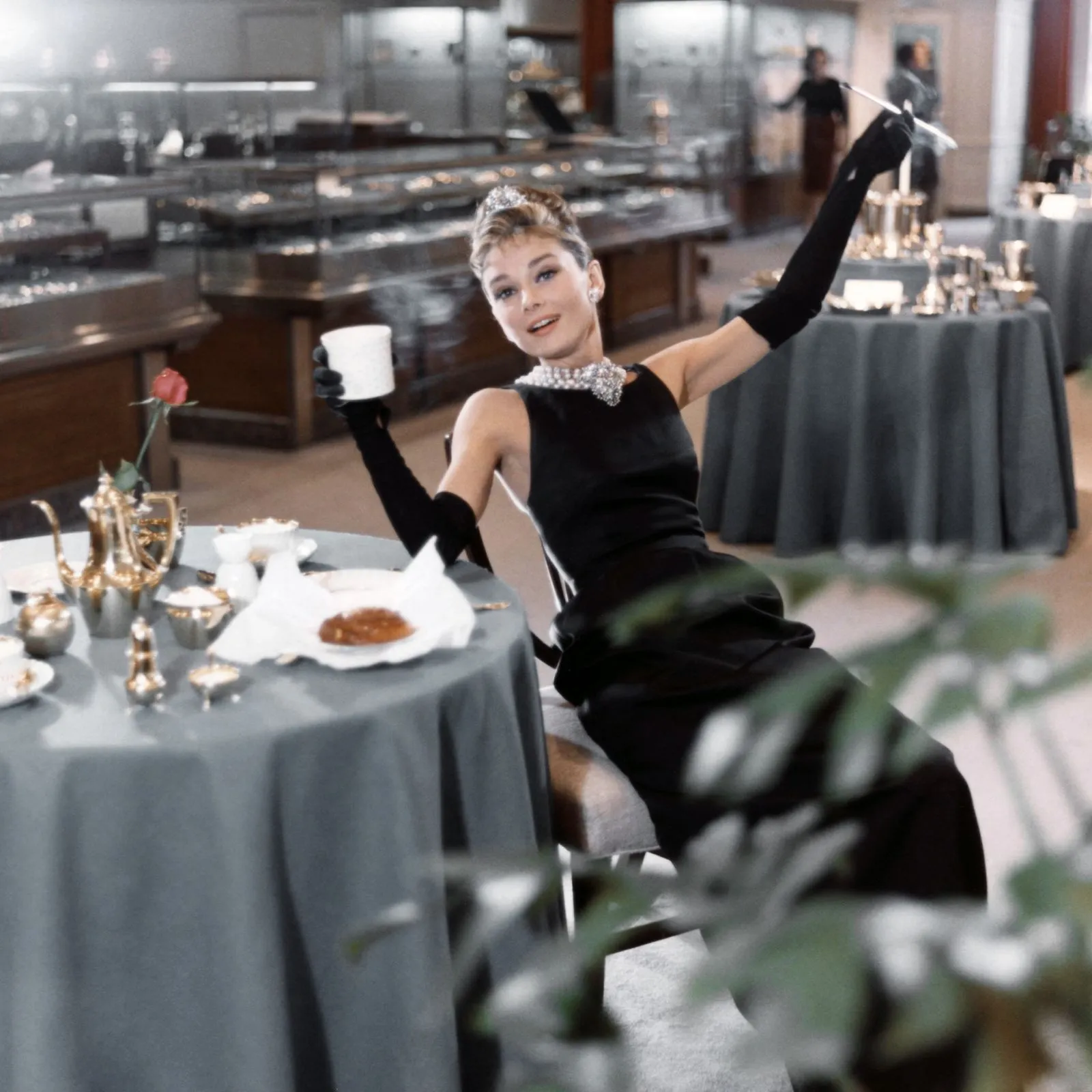
To begin with, the film faithfully echoes the look described in Capote’s story, in which Golightly is introduced wearing “a slim cool black dress, black sandals, a pearl choker”. The multi-strand pearl necklace complements the architectural simplicity of the dress. On set, a necklace made of real pearls and precious stones would have been an impractical costuming choice: it would have taken longer to produce – and of course cost far more. But most importantly of all, it would not have been right for Holly Golightly – a young woman in the process of inventing her identity and her place in New York society. As her supposed talent agent, OJ Berman, memorably tells Paul Varjak (the “kept man” and struggling writer played by George Peppard): “She is a phoney.” Costume jewellery, therefore, becomes a perfect metaphor for a character whose glamour is largely performative.
Jewellery historian Vivienne Becker, author of Fabulous Fakes: History of Fantasy and Fashion Jewellery, notes that the film appeared at a point she describes as the “golden era of couture”, when fashion houses collaborated closely with costume jewellers to complete a carefully orchestrated aesthetic. According to Becker, it was Christian Dior who first formalised the concept of the “total look” in the late 1940s, giving accessoriesAccessoriesThe finishing pieces of an outfit, including bags, belts, scarves, hats, eyewear, and jewelry. Accessories can elevate a simple look or define it entirely, and fashion editors often treat themGo to Accessories Glossary an increasingly central role in fashion. Scemama also produced costume jewellery for Dior and other couturiers of the time.
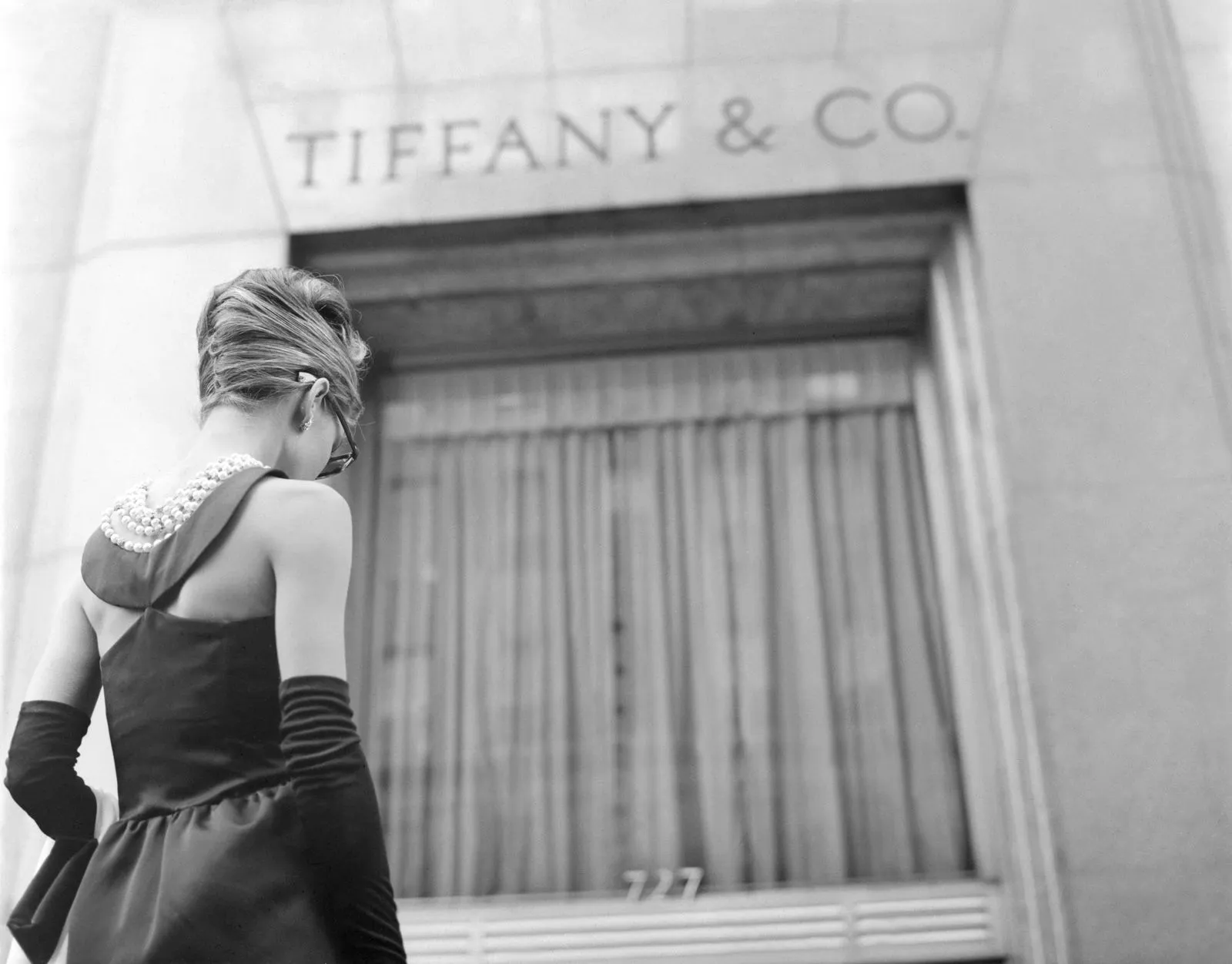
“Fashion or couture jewellery, far from being imitative or déclassé, reached new heights of imagination, sophistication and elegance,” Becker says, pointing to Hepburn’s appearance in the film as a perfect example. “The necklace and diadem are unforgettable, made even more poignant as she gazes longingly at the ‘real’ gems in Tiffany’s windows.”
Not all the jewellery Hepburn wore in the film was created by Scemama. Some pieces were commissioned by the film’s costume designer, Edith Head. These include the striking black-and-crystal earrings and the flamboyant necklace in shades of black, silver and crystal that Holly wears to a party. Plus the simple pearl studs she pairs with an apricot double-breasted coat with a high funnel neckline and a fur bucket hat during her visit to the Tiffany & Co. store with Paul.
Inside the Tiffany & Co. boutique, Holly’s refuge from what she calls the “mean reds” (to her, a severe iteration of anxiety worse than the “blues” ), she tells Paul: “It isn’t that I give a hoot about jewellery, except diamonds, of course.” After a brief pause, she glances towards the display window and adds softly: “Like that.”
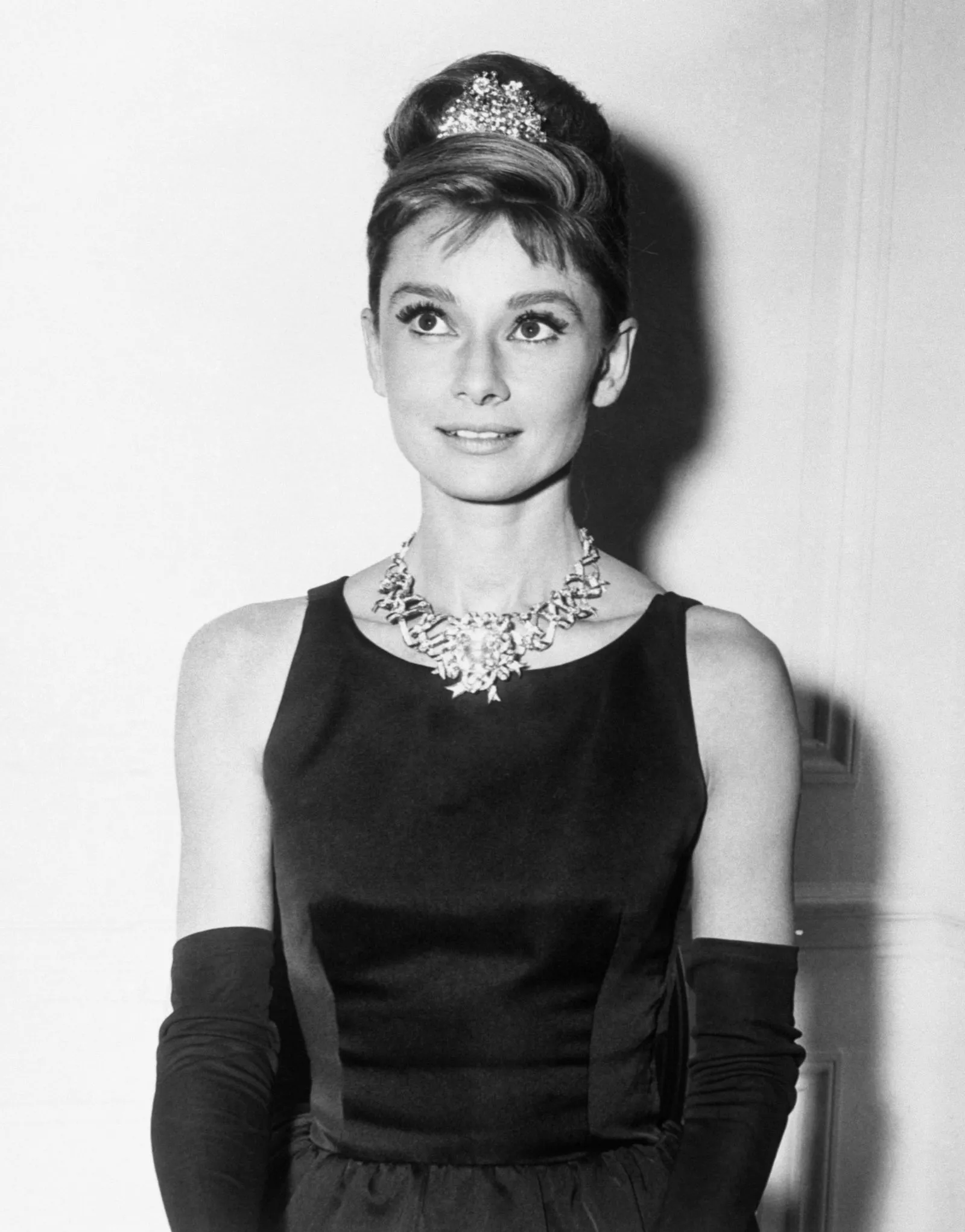
The diamond Golightly is referring to is the legendary Tiffany Diamond, a 128.54-carat cushion-cut Fancy Yellow diamond and the only piece of genuine high jewellery to appear in the classic film. When the scene inside the Fifth Avenue store was filmed on a Sunday, its production required an extraordinary level of security. Reporting on the filming of the scene in October 1960, the New York Herald Tribune noted that the “all-day production, manned by seventy-five technicians, two dozen extras, twenty Tiffany clerks, thirty Tiffany executives and assorted guards and onlookers, cost $45,000 because everyone was paid double time for working on a Sunday”.
The Tiffany Diamond itself was cut from a 287.42-carat rough stone discovered in 1877 in the Kimberley mines of South Africa. The jewellery brand’s founder, Charles Lewis Tiffany, purchased the gem for approximately $18,000, earning him the nickname “the King of Diamonds”, as stones of such magnitude tended to only be owned by royalty at the time.
Although the diamond does not appear on Hepburn in the film itself, she famously wore it for the movie’s promotional photographs. For those images, the stone was mounted in the Ribbon necklace, designed by Jean Schlumberger for Tiffany & Co., an intricate pavé-diamond design in intertwining platinum and gold. Only two people have worn the stone since: Lady Gaga wore it to the 2019 Oscars, and Beyoncé wore it to appear in Tiffany & Co.’s 2021 “With Love” campaign.
This article was originally published on British Vogue.
Frequently Asked Questions
The five-strand necklace was made by French costume jewelry designer Roger Scemama, who also produced pieces for Christian Dior and other couturiers during what jewelry historian Vivienne Becker calls fashion’s “golden era of couture.”
No. Despite its appearance, the necklace was non-precious costume jewelry rather than genuine pearls, a deliberate choice reflecting Holly Golightly’s performative glamour and invented identity.
The Tiffany Diamond is a 128.54-carat cushion-cut Fancy Yellow diamond, cut from a 287.42-carat rough stone discovered in South Africa’s Kimberley mines in 1877 and purchased by founder Charles Lewis Tiffany.
No, the diamond does not appear on Hepburn within the film itself, though she wore it mounted in Jean Schlumberger’s Ribbon necklace for the movie’s promotional photographs.
Only two people have worn the Tiffany Diamond since Hepburn’s promotional photos: Lady Gaga wore it to the 2019 Oscars, and Beyoncé wore it in Tiffany & Co.’s 2021 “With Love” campaign.