
Jann Bungcaras on “The Anthology of the Left-behind” and the Power of Eco-Collaboration


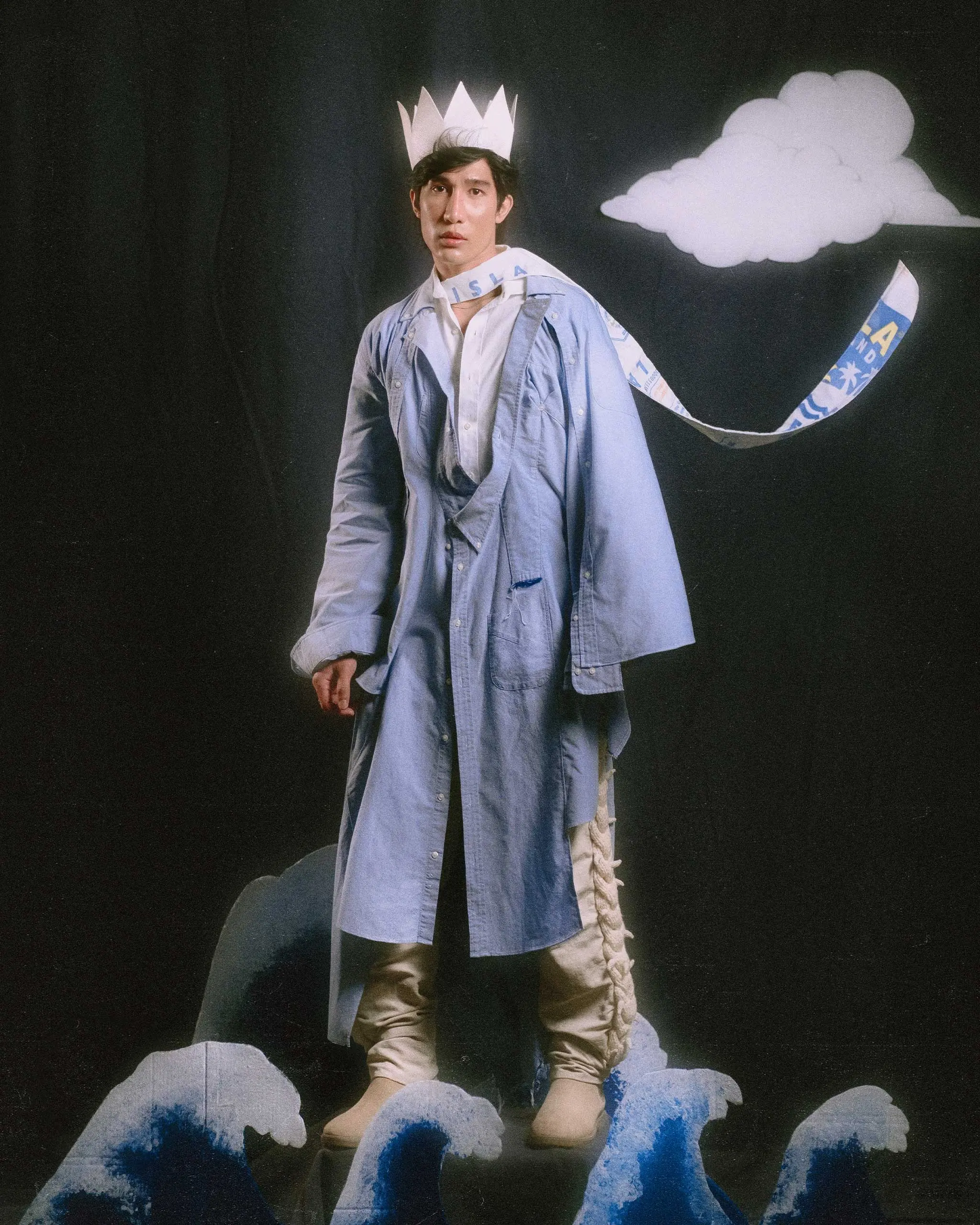
Photographed by Alan Rico Jr.
The Filipino designer talks about working with nine eco-designers, the potential of factory rejects, and the personal stories behind his latest collection.
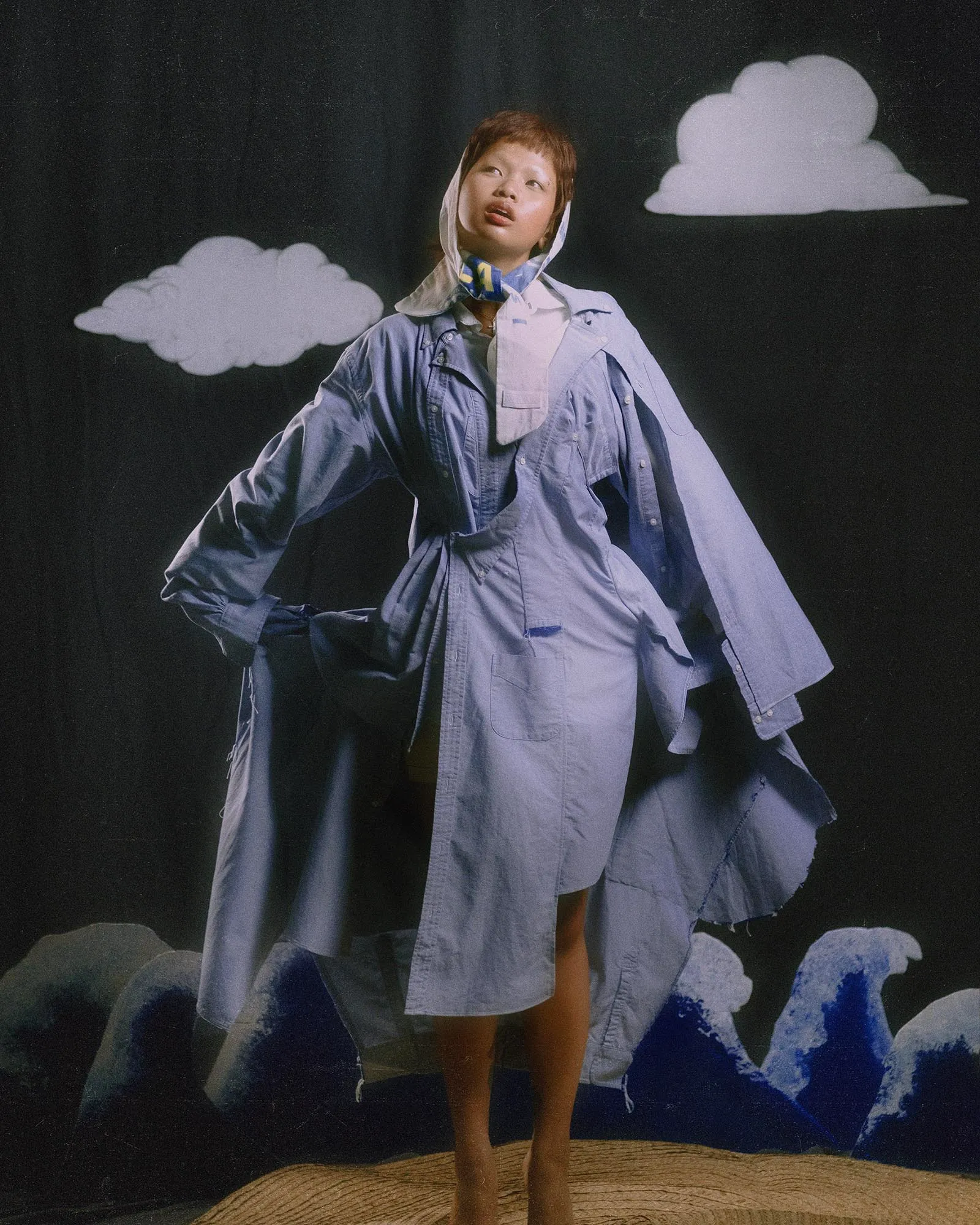
For Jann Bungcaras, fashion has long told stories. In “The Anthology of the Left-behind,” the collection brings together nine eco-designers worldwide to transform TAL Apparel’s rejected garments into a collection about resilience, identity, and self-acceptance. Created in collaboration with TAL Apparel and the Redress Design Award, the collection unfolds three chapters: “Off the Pedestal,” “Reconstructing Resilience,” and “Loved into Being.”
In this interview with Vogue Philippines, Bungcaras discusses the personal experiences behind the collection, the role of collaboration in sustainable fashion, and the need to address textile waste at the production stage. (This interview has been edited for clarity and brevity,)
Vogue Philippines: What first inspired you to create The Anthology of the Left-behind, and what did you want the collection to say?
Jann Bungcaras: “The Anthology of the Left-behind” is a unique collection because it is done purely through eco-collaboration, which was my main takeaway from my first year as a member of the United Nations Fashion and Lifestyle Network. As mentor, juror, and brand target to the 15th cycle of designer cohorts for the Redress Design Award, I was completely hands-off in the garments’ production, a complete surrender, since I am used to micromanaging. The garments and chapters were made before the collection concept emerged. Like an anthology, the capsule collectionCapsule CollectionA small, cohesive set of pieces released together, often in limited quantities, around a single theme, color story, or collaboration. Capsule collections let designers and brands test ideas, reach newGo to Capsule Collection Glossary only became whole when all three stories were connected.
It was the realization that no matter how different our upbringings are as artists, our similarities outweigh our differences, that inspired me to create “The Anthology of the Left-behind.”
As artists, we are all an anthology of different stories. We all experienced a fall from grace, a fight for survival, and a found acceptance.
Aside from the emotional aspect, I wanted to prove that when competition among designers pursuing the same goal is replaced with collaboration, a greater collection story is narrated.
Also, our eco and circular efforts will be more effective if we work with kindred organizations such as TAL Apparel and Redress Design Award.
The collection title is also a play on words since its acronym is TAL, which is the main sponsor. The Left-behind aspect can also be understood as the rejected garments.
There is a great thesis when it comes to pre-consumer waste that I wanted to share as well, since this is the first time that we will be incorporating 100-percent factory rejects rather than discarded materials. We wanted to highlight that even removing the consumer as a factor, textile waste can still be created in the form of rejected garments and can still contribute to pollution.
You collaborated with nine designers from around the world, with each group interpreting a different chapter of the story. What was it like to give other designers space to interpret your personal experiences through their own creative perspectives?
During my presentation as mentor, I opened with a collage of my Schön! Magazine editorial in collaboration with their editor-at-large Douglas VanLaningham, So Undercover, and asked the designers what they felt. Casbeth Marobane (South Africa) was intrigued; Nathan Moy (Hong Kong) found them beautiful, and the others were speechless.
The next slide was a collage of our lookbooks; I then asked the same question, and supermodel Bonnie Chen exclaimed: “It is so you!” And I agreed, explaining that my brand has always been a reflection of me. An autobiography but in upcycled clothing. And since I was the target brand and mentor to these eco-design cohorts, that was their challenge: how to incorporate Europe’s Ecodesign for Sustainable Products Regulations with our brand’s ethos of intrapersonal storytelling radiating outwards using TAL Apparel’s rejected chambray shirts.
Giving the Redress 15th cycle of eco-designers the freedom to interpret my story with my guidance, which later evolved into all our stories as artists, I imagine is akin to when Maalaala Mo Kaya tries to make an episode of you as the designers approach me from time to time, asking about my journey and other personal questions I was open to answer.
The collection is made entirely from TAL Apparel rejects. How did working with discarded materials shape the way you approached the designs?
Designing through materiality is one of our strengths as an eco-sustainable and circular anti-fashion designer, as we make sure that the materials we use for our creations do not cause a negative environmental impact and are even net-negative when it comes to carbon emissions, because we are taking back or preventing waste from the environment while ensuring a closed-loop system. And since the beginning of our brand, we have only worked with discarded materials as the baseline or starting point of our products and creations to accomplish our mission of making fashion part of the solution rather than the problem.
To emphasize the circularity we are creating, we even accept clothing donations from our clients in exchange for stackable discounts through our Forever Discounts initiative. We have collaborated with PUP’s Patse Creatives and with Greenpeace Cebu through Look Like Lance.
TAL Apparel Ltd, being an immense manufacturing powerhouse, did not forget their responsibility toward the environment, as during our tour at their factory they showed us pattern-making technology that ensures as little waste as possible, how their staff painstakingly try to repair damaged goods, and will only reject output when they are unmendable.
Designing around and working with TAL Apparel’s Chambray rejects is somehow easier in comparison to restyling and upcyclingUpcyclingThe practice of transforming discarded materials or old garments into new items of higher value and quality. Upcycling reduces waste by reusing fabric and parts, and designers use it toGo to Upcycling Glossary donated clothing, because with TAL we get the materials in numbers instead of just one piece.
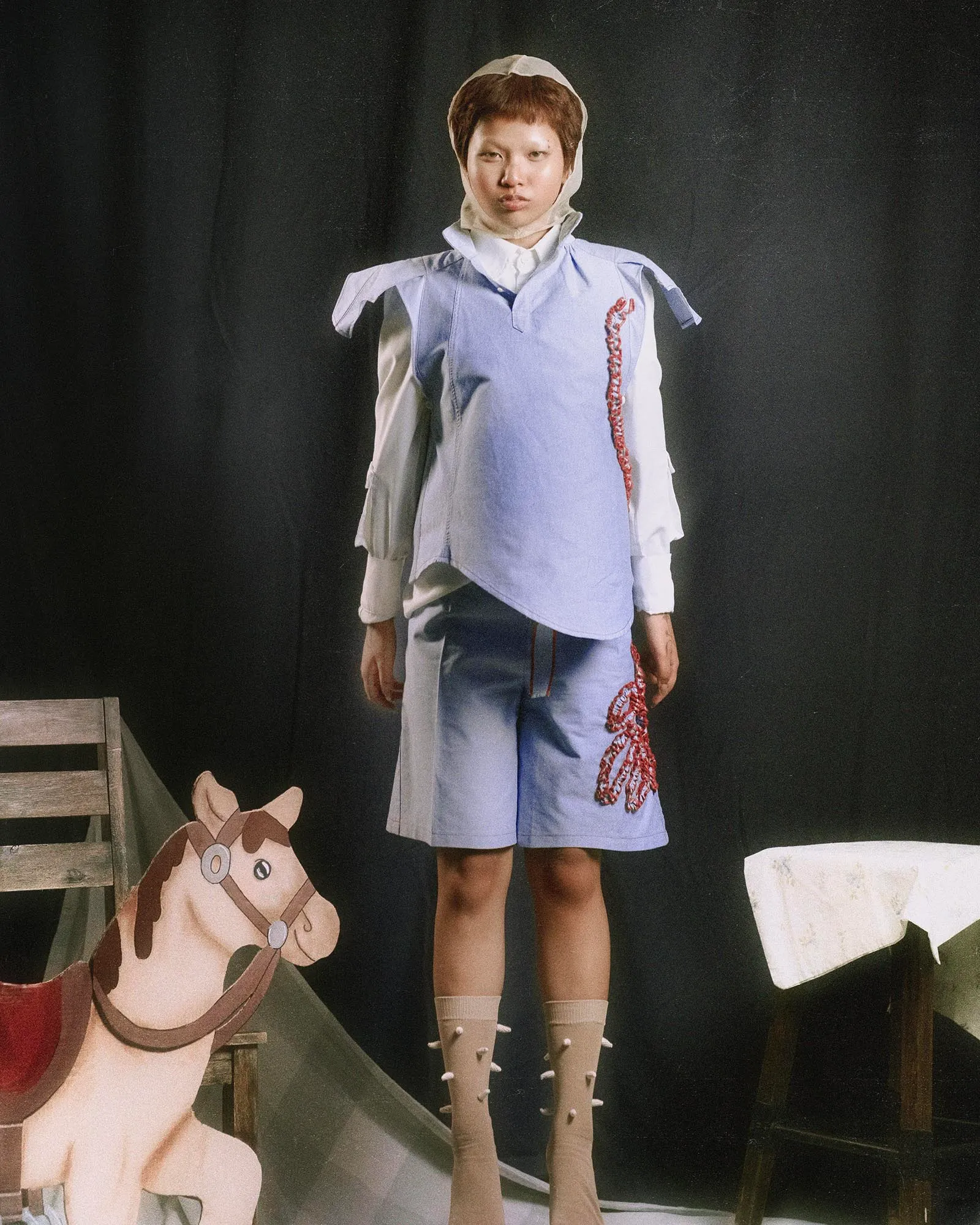
How we approach designing or upcyclingUpcyclingThe practice of transforming discarded materials or old garments into new items of higher value and quality. Upcycling reduces waste by reusing fabric and parts, and designers use it toGo to Upcycling Glossary an already finished piece truly depends on the garment’s story. For the Anthology, some chapters require the portrayal of destruction and resilience; therefore, each damage panel is highlighted in that look, while the final chapter only incorporated one chambray shirt transformed into a fully finished ensemble—no raw edges, no damage shown—correcting the reason it was rejected in the first place. One thing is for certain throughout the process, though, and that is to make sure to cause as little waste as possible.
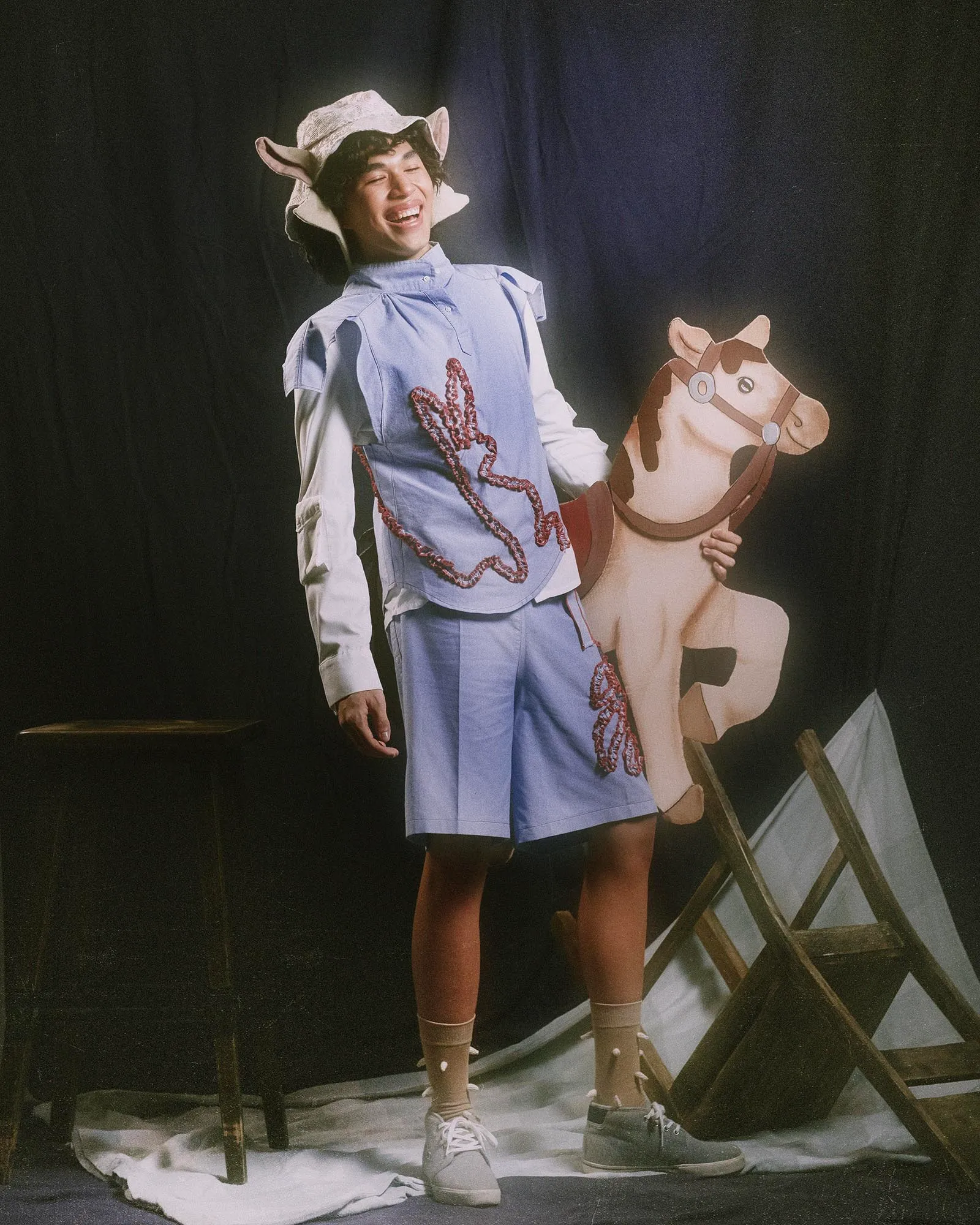
There are references to The Lord of the Flies and The Velveteen Rabbit throughout the collection. What draws you to fiction and familiar stories as a way of exploring real-life experiences?
Throughout my collections and creations, we use familiar narrations of fiction and history as bridges to connect with our clients, wearers, and viewers, and communicate with them our point of view in a way that they can understand and relate to. We retell these stories through clothing for them to evoke a memory or feel an emotion; one of the ways for a person to keep a piece of clothing longer is when they have an emotional connection to it.
Since day one, all my collections have begun with an intrapersonal realization inspired by my personal experiences and ideals.
I gravitate toward these stories because I feel like this is how I can be understood. Though I can fully understand myself, interpersonal communication can be my weakness, and ever since I was younger, I tend to show my feelings akin to characters I can relate to.
For the “Anthology of the Left-behind,” familiar narrations like Lord of the Flies were used to portray the boundlessness of creating your own rules after falling from the pedestal; it showcased freedom, and with that came danger, and with the struggle to survive on our own two feet and hands, we reconstruct into different versions of ourselves as we develop resilience; and in the finding of our true identity, we related to The Velveteen Rabbit as we transformed into a version we can fully accept and love- unconfined, uncontrolled, just our true selves and expressions, “Loved into Being.”
After completing the anthology, what do you hope people take away from the collection, both as fashion and as a story about finding your own way?
Before considering the heartfelt anthology narrating the stories of kindred souls, I wanted to shed light on the gravity of waste that is caused even in the pre-consumer stage, with carbon emissions caused throughout their production line adding up to their negative environmental impact. 3 to 5 percent of all produced garments are considered rejects and labeled as fabric waste to be disposed of. This is why knowing that TAL Apparel collaborates with organizations such as Redress Design Award and independent entities such as ours to give life to their rejects is a win for the environment, considering that they produce approximately 12 million pieces per year, which would mean that they can have the hypothetical 360,000 to 600,000 rejected pieces per year as well.
With this in mind, during an invitation to mentor a group of students from Saint Benilde months ago, I vehemently disagreed with their presentation that focused on the idea that textile waste pollution is caused by consumers, because pre-consumer waste is premeditated and a corporate tactic to avoid more business expenses.
To help lessen, or even end, textile waste pollution, government intervention must happen, because even if consumers stop disposing of clothes, or even if most mindsets shift and end-consumers prefer secondhand clothing rather than brand-new, pre-consumer waste will still happen in huge numbers if no laws are passed to prevent it. Europe combats this notion by implementing the ESPR, or the Ecodesign for Sustainable Products Regulation, making sure that fashion brands will never destroy rejects or even unsold items the way Louis Vuitton incinerates their surplus products to give an illusion of exclusivity.
I am first and foremost an environmental activist; hence, in all my collections, one of the main takeaways would always surround the problem we are trying to solve textile waste, and in this case, pre-consumer waste in the form of factory rejects. I wanted people outside the eco-design industry to rethink how they see clothing now, knowing that waste cannot just be produced once they throw away a garment, but also during a garment’s construction.
I reiterate that there should be a change in consumer mindset when it comes to acquiring brand-new clothing, and hopefully they will tend to lean toward purchasing factory overruns, secondhand items, eco-sustainable brands, or consider renting when needed to acquire clothes that are not present in their closet, or not buy anything at all and just be creative.
Fashion and environmental takeaways aside, another lesson that I want people to learn from this anthology is the notion that paving one’s path will never be easy, especially if we go against what the community we were born in deemed as normal or acceptable. I experienced the chapters of this anthology because I decided to be a creative, a designer, an artist in a family of calculating politicians. I wanted people to realize that they are not completely alone in this journey.
Frequently Asked Questions
It is a capsule collection by Filipino designer Jann Bungcaras, created in collaboration with nine eco-designers from around the world, TA Apparel, and the Redress Design Award. The collection transforms rejected chambray garments into wearable pieces that explore identity, resilience, and self-acceptance.
Bungcaras worked with nine eco-designers: Wen Hanzhang, Mara San Pedro, Casbeth Marobane, Nathan Moy, Hawon Park, Lucie Albert, Hugo Dumas, Heyun Pan, and Carla Zhang. TAL Apparel provided the rejected garments and production support, while the Redress Design Award helped bring the designers together.
The collection consists of three chapters: “Off the Pedestal, which explores breaking away from expectations; “Reconstructing Resilience,” which reflects the struggle and reinvention that follow; and “Loved into Being,” which centers on self-acceptance and belonging.
The collection was made entirely from rejected chambray garments supplied by TAL Apparel. Rather than relying on discarded fabric scraps, the designers reworked completed garments that had been rejected during production, demonstrating how these pieces could be transformed into new designs.
Bungcaras hopes to raise awareness of pre-consumer textile waste, which occurs before garments reach consumers, while encouraging greater collaboration in sustainable fashion. On a personal level, the collection reflects the experience of forging one’s own path, overcoming adversity, and finding self-acceptance.