
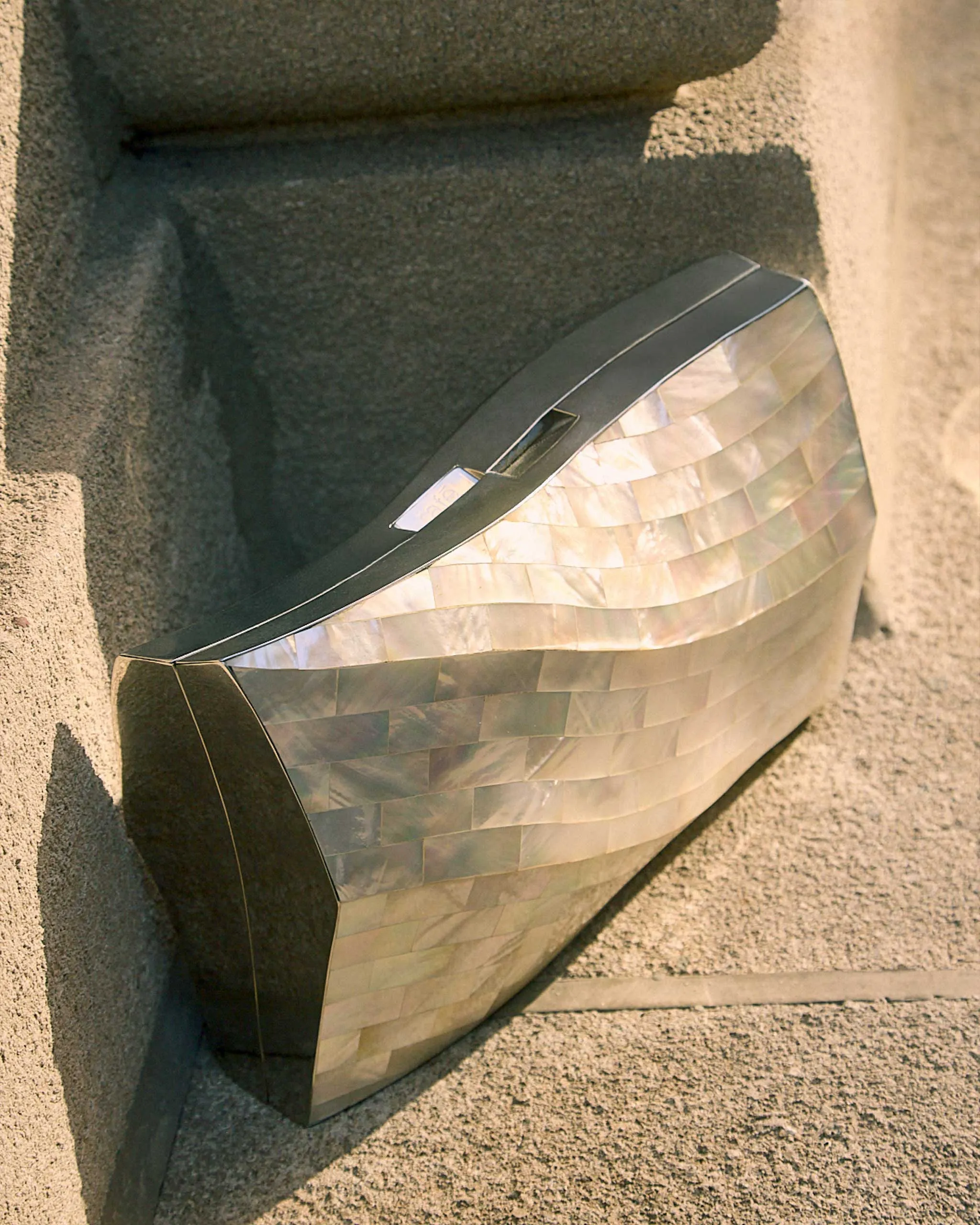
Photographed by Alejandro Suarez
For Rafè Totengco, New York-based bag designer and recipient of the Accessories Council’s 2025 Design Excellence Award, to design is to dream with his feet on the ground.
Many years ago, in the Totengco home, it was nearly impossible to find the large chalkboard unattended in the hallway. You could walk by at any hour of the day and likely find the little Rafè there, content to be covered in chalk dust if it meant he was left to draw for as long as he wanted to. He would come to the board even on Sundays, while his family got dressed for church. “My sisters were mortified to be seen with me: disheveled, dusty, and utterly unconcerned,” he tells Vogue humorously. “They begged our mother to do something about it.”
The bag designer is in Vienna, generously recalling his childhood with glee. Each year, he makes it a point to go someplace he’s never been, and this year, he ticked the Austrian capital off his list. He didn’t yet know that within less than three weeks upon returning to New York, he would be lauded on two separate occasions: in late October, Consul General Senen Mangalile of the Philippine Consulate in New York celebrated Rafè Totengco along with other Filipino-American designers for Filipino-American History Month, while in early November, the Accessories Council granted his Azura minaudière the Design Excellence Award in the Bags Over USD1,000 category.
“Winning the Design Excellence Award has been both deeply reassuring and profoundly encouraging,” Rafè gushes. “It tells me that my work truly connects with people, that the vision and passion I pour into each design are being seen and appreciated.”
Both recognitions are a fitting tribute to his nearly three decades in the industry; a journey that, ironically, he never thought would manifest.
“I didn’t use to care about fashion,” he says. “I was just a kid who loved to draw.”
It seems like his family is to thank for the sartorial push. At his sisters’ urging, their mother handed Rafè a box of fabrics to take to the tailor. When asked what he would like to have made, the young boy was astonished; the possibilities unfolded before him and stretched into a seemingly endless horizon. Alight with excitement, he left the fabrics with his tailor and promised to return in a few days.
He went straight to purchase a copy of Manila Women’s Wear magazine, where he discovered sketches by the late fashion illustrator and designer Danilo Franco. Fascinated, Rafè began to trace over Franco’s sketches, altering details like pockets and collars to fit his own style. He spent days training his hand and pairing up drawings with fabric swatches, and eventually, these pages are what he took to his tailor. “The first time I saw my reflection wearing the clothes I had imagined, I felt transformed, completely exhilarated,” he remembers. “I was in fifth grade.”
He began devoting his allowance to fashion magazines, from GQ and Vogue to Per Lui, Depeche Mode, and L’Uomo Vogue, and became a constant visitor at the tailor’s. Even his La Salle uniform got a makeover. He added epaulets to his polo’s shoulders and pleats to his khakis. Bemused but clearly proud of his younger self, he says, “You can imagine the principal’s reaction when he saw me. He tolerated the epaulets and baggy pleated trousers, but he drew the line at my fisherman’s sandals.”
It was only natural that his career began with a bespoke practice alongside a ready-to-wear capsule. Moving to New York in 1989, he initially endeavored to develop a clothing line as he did in Manila, where he made clothes for his friends and a few of their parents. Working as an assistant on Seventh Avenue, however, elucidated just how different the landscape was from home. “Launching a collection required significant capital, from developing samples and marketing them, to producing the pieces in multiple sizes and colors.”
Pivoting to handbags and accessories was his way of staying connected to fashion “without the constraints of fit and sizing.” In fact, getting into handbags was an accident. After enrolling at the Fashion Institute of Technology, he began designing belts that he eventually sold to a SoHo boutique. In a previous interview, he recalls the serendipitous phone call that ensued: The buyer called me a week later and said, ‘The belts are gone, I want more. Do you make bags?’”
“Yes,” Rafè said. “They’re just late.”
He hadn’t designed a single handbag in his life.
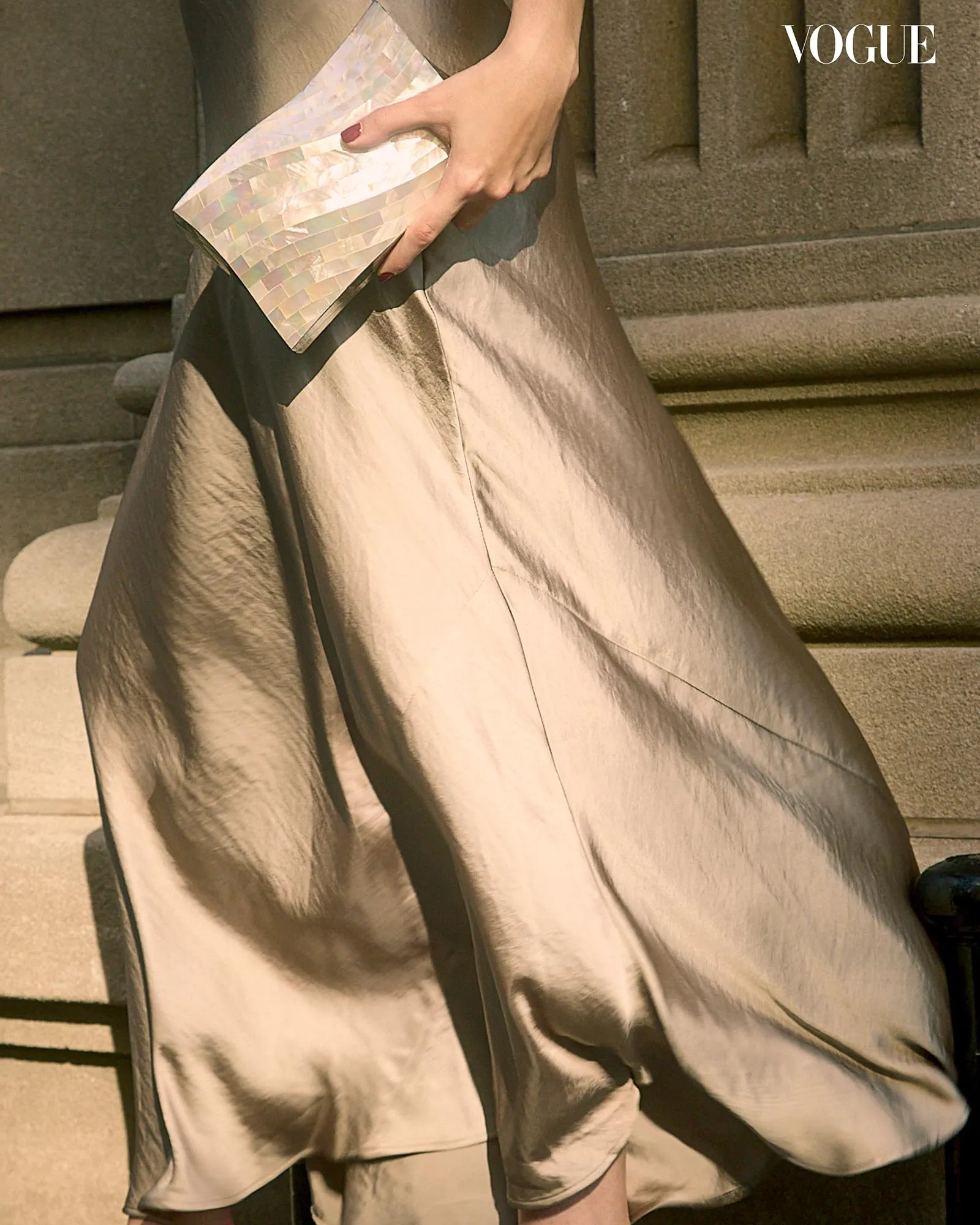
Nearly 30 years later, his brand Rafè New York has a hefty portfolio of designs, some of which have appeared in the hands of notable personalities on the carpet and on the screen. And Just Like That’s Carrie Bradshaw paired her looks with a multicolor Aya frame clutch, and emerald green Joanna clutch, while actress Simone Ashley wears the award-winning Azura minaudière during what looks to be the Met Gala, in behind-the-scenes images of the forthcoming Devil Wears Prada 2.
“What I love most is how a handbag can capture the mood and personality of the person carrying it,” the designer explains. “It’s the finishing touch to any outfit, the piece that ties everything together. The wrong bag can throw off the entire look, but the right one? It can make you unforgettable.”
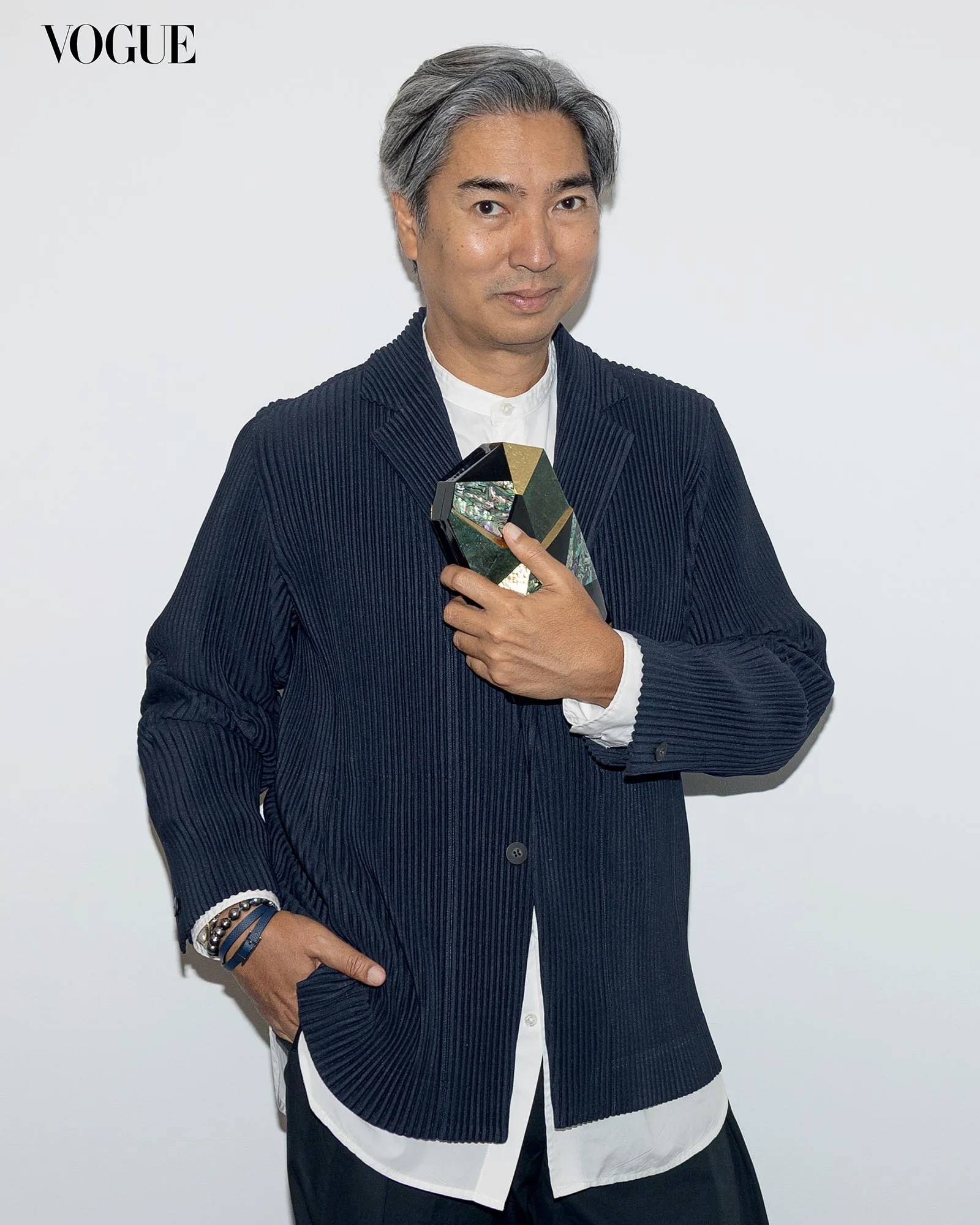
His bags are manufactured in the Philippines, India, Madagascar, and a few in China; in the past, a portion of his collection was made in Italy. He selects partners based on their mastery of technique. “For example, if I’m looking for intricate handwoven leather or detailed beadwork, I turn to India. For hand-embroidered straw clutches or shell-inlay minaudières, I collaborate with artisans in the Philippines. It all comes down to understanding each location’s core strengths and entrusting artisans with the designs they can bring to life most beautifully.”
His design ideas are in a constant state of flux, ever percolating. He culls from “the swirl of images in my memory (and, honestly, on my iPhone),” before whittling down his selection to key references. This tight edit then informs “the colors, materials, surface treatments, and all the little details I want to weave into the collection. It’s a bit like dreaming, but with my feet on the ground.”
His latest release taps into the convergence of the Big Apple’s uptown sophistication and downtown edge. Taking cues from images of Jackie Onassis photographed by Ron Galella and what he describes as the timeless appeal of Gossip Girl’s Blake Lively and Leighton Meester (who both carried Rafè bags on the show), his new offerings capture the point where New Yorker polish and nonchalance meet.
He finds muses in both the city itself and the denizens who inhabit it, but when you ask him about his heroes, they come from all over the world. “I’ve always been drawn to creatives who stay true to themselves. Dries Van Noten, with his poetic use of color, embroidery, and print. Jil Sander, the master of minimalism, purity, and precision. Martin Margiela, the enigmatic deconstructionist who challenged convention. Rei Kawakubo, whose radical imagination turned clothing into art. Issey Miyake, a pioneer of fabric innovation and movement. And Miuccia Prada, ever intellectual and subversive, blending beauty with irony.”
In the motherland, he admires Ben Chan of retail giant Bench for the way he and his team foster Pinoy pride through events like TernoCon or fashion week. As an observer, Rafè can conclude that “the energy, enthusiasm, and ‘can-do’ spirit in the local design scene have never been stronger.” And he partakes when he can, like collaborating with Bench twice, or having his wares available locally through Rustan’s.
“My Filipino identity is at the heart of everything I create,” he intimates. “It shines boldly in my Spring/Summer collections through hand embroidery, floral motifs, and handwoven materials, celebrating the artistry of my heritage. In other seasons, it whispers more subtly through the careful treatment of embellishments and handcrafted details. For me, designing is inseparable from being true to who I am: my roots, my culture, and my unique point of view.”
He continues, “As a creative, I love to explore new ideas and push boundaries. Some endeavors succeed, others yield mixed results. It’s a constant tug-of-war between instinct and experience.” After over 20 years in the industry, Rafè says he’s still a student of his craft, forever learning. “And that, to me, is the most beautiful part of the journey.”
By TICIA ALMAZAN. Portrait by TAMMY DAVID. Photographs by ALEJANDRO SUAREZ.


