
With Phoebe English, The Slow Path Is the Only Way Forward


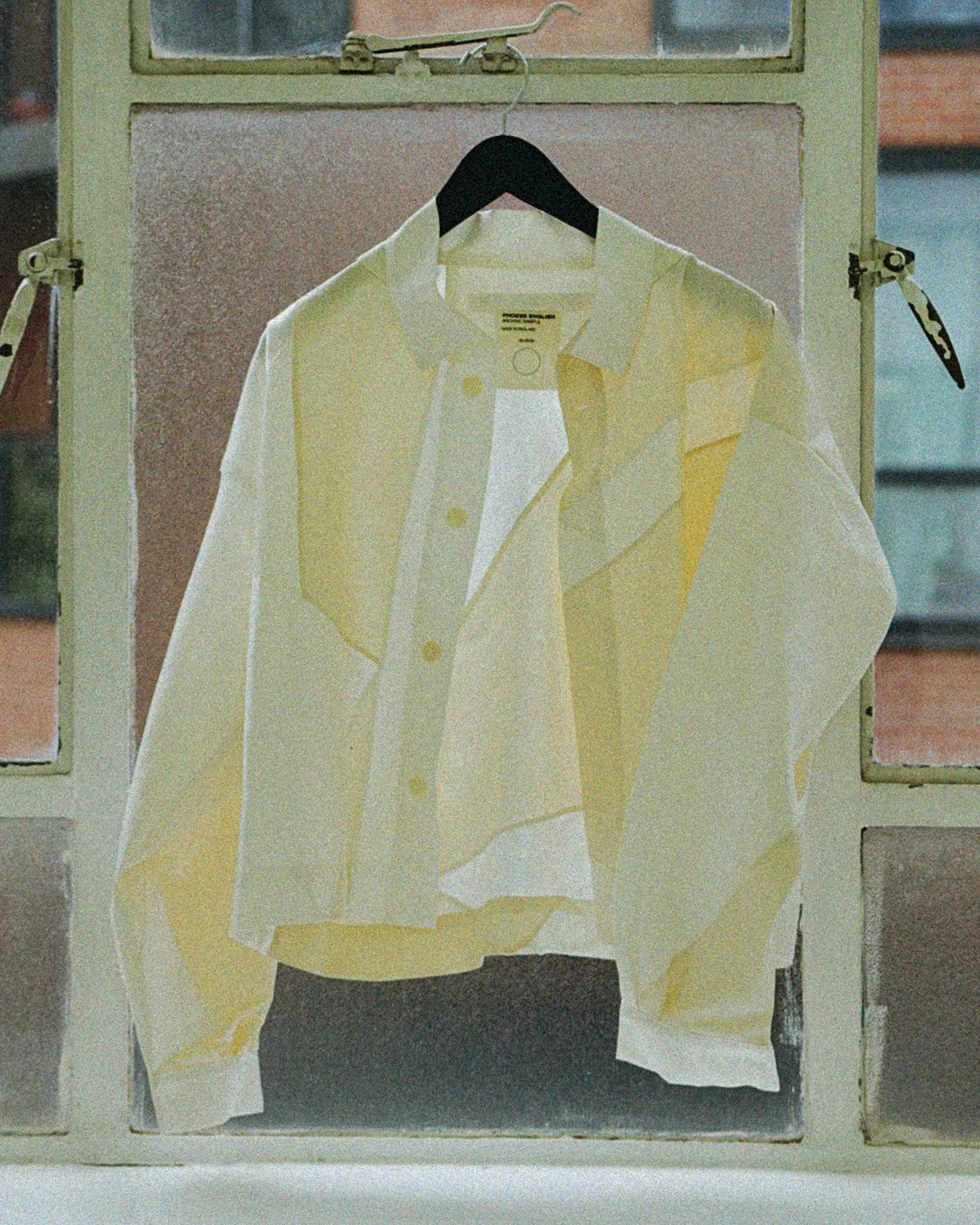
Jappy Gonzalez, founder and managing director of multi-brand store Univers, introduces the Philippine market to Phoebe English. “It’s an anti fast fashion brand,” he observes. “And we welcome that in Univers. She’s a refreshing addition to our roster where it adds a layer of circularity.” Photographed by Lily Ashrowan
With Phoebe English, the slow path is the only way forward.
For anyone engaged in fashion, whether as a consumer, creator, professional, or producer, there comes the inevitable period of reckoning. Specifically, a reckoning with the industry’s environmental impact on our planet, as one of the world’s most polluting sectors.
For Phoebe English, the British designer and Central Saint Martins alum mentored by the late Louise Wilson, her turning point came at around 2018, eight years after she launched her namesake brand.
“I think there were lots of things going on at that time, and I think a lot of people had their own climate realizations. I guess for me, it was understanding the vastness of the damage of the worldwide fashion and textile sector, and although we’re very small, we’re still part of that space. There were also lots of things going on politically which felt very panic-inducing or very frightening.”
She sprung into action as swiftly as she could. Overhauling their systems, she describes, felt like controlling a boat. “It definitely wasn’t the vision I had at the beginning,” she says of her brand’s focus on slow fashionSlow FashionAn approach that favors buying fewer, better-made garments designed to last, in contrast to the quick turnover of fast fashion. Slow fashion values quality, timeless design, repair, and responsible production,Go to Slow Fashion Glossary. “It’s something I came to, and I had to pivot not only the way I was working but how the studio ran and how we sold our clothes and who we sold them to and how we communicated about them. It’s a lot easier I think to set something up in a particular way, but it is much harder to change something you’ve done. Hopefully we’ve got somewhere a little bit with it along the way,” she laughs. “It’s like trying to turn a boat. We’re quite a small boat, so it’s been a slow case of turning around. But I think if you’re in a huge ship, it’s much harder to do that.”
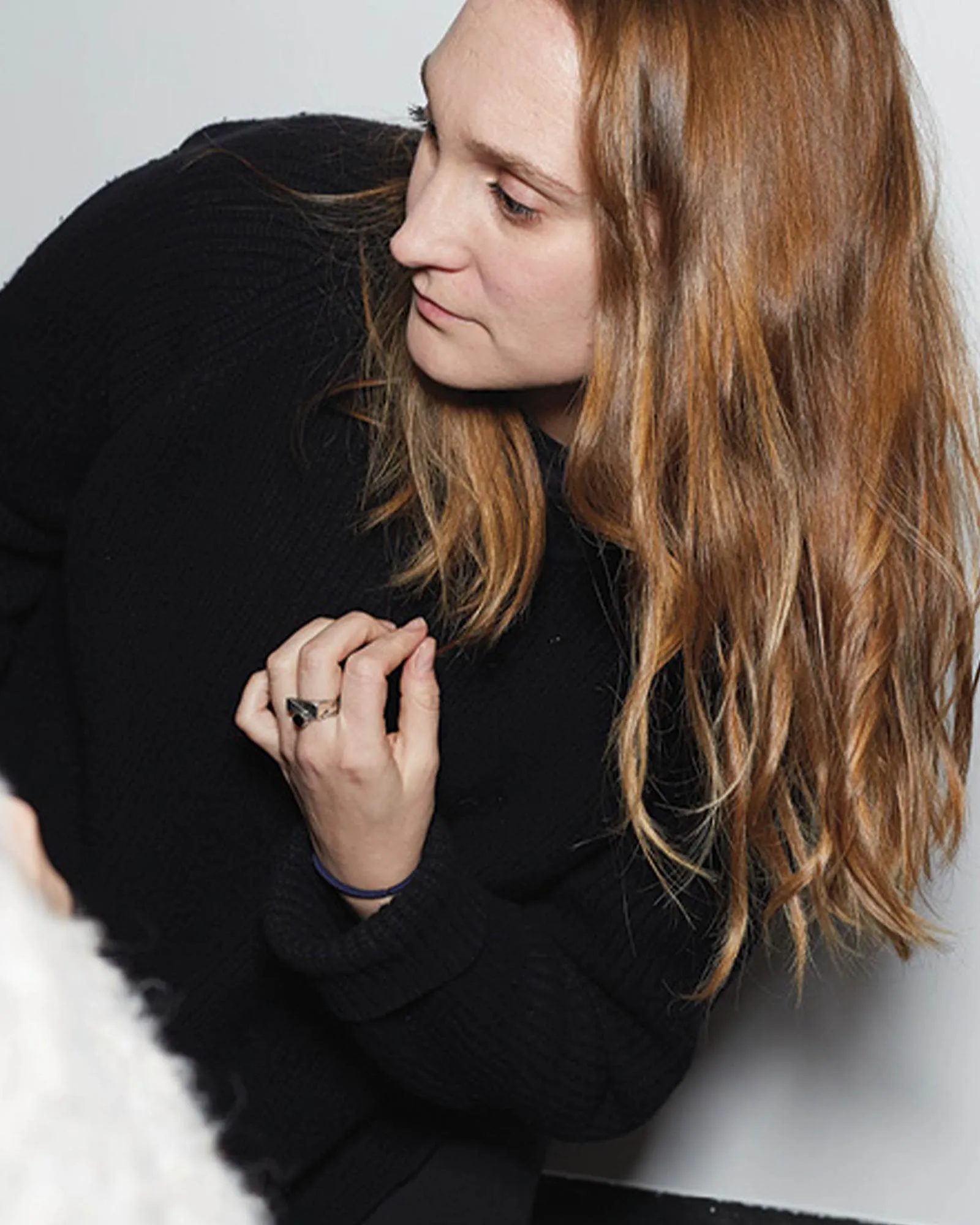
The Phoebe English brand operates on an unhurried scale, producing just one collection a year, which they showcase at London Fashion WeekFashion WeekA series of seasonal events where designers debut their latest collections, setting the tone for upcoming fashion trends and showcasing creativity, craftsmanship, and innovation across the global fashion industry.Go to Fashion Week Glossary. Their process occurs in reverse, as informed by the intentions behind their ethos of sustainable design. If fashion students are taught to sketch before procuring fabric, Phoebe and her team first look at the materials available to them before they conceptualize.
“So it’s really a case of exercising this approach to design development, which we term as ‘responsive design,’ responding to the realities of the material rather than the traditional route which is how I was taught to design. It’s not just a case of buying fabric we like,” she emphasizes. “It’s about responding to waste materials that we’ve sourced and foraged ourselves. We’ve worked with foraged materials in many different ways.” They use the word “forage” to refer to the act of gathering, but she makes it clear that their components don’t just come from forests.
She explains, “Receiving the waste or fabric off-cuts takes some time, and then obviously analyzing and organizing and sorting that fabric when it gets to the studio in terms of fiber content or size of fabric waste.” Sometimes they work with tiny swatches, but other times they work with meters of deadstock, leftover, or surplus material.
It’s not always clothing they work with, however. The brand has also partnered with hotel chains who regularly get rid of high quality cotton bedsheets, and sometimes even work with digital print companies who send over silk fabrics which have copyrighted print that needs to be obscured with overdyeing processes. For natural dyes, they’ve collected bushes ripped out of train lines during storms, and even commune with local cafes, who provide the brand with avocado stones that are used as natural dyeNatural DyeColor derived from plants, roots, bark, leaves, minerals, or insects rather than synthetic chemicals. Used in traditional Philippine textiles and revived by contemporary designers, natural dyeing produces rich, organic shadesGo to Natural Dye Glossary to achieve a light golden hue.
“There’s lots of really technical things about working in this way that do lead to a longer time frame, so it can be quite slow,” Phoebe admits. “But then we use all the information that we have from our textile waste to help inform the actual garments. So, for example, if we’ve got really small off-cuts, we might be joining them together in an interesting combination of different opacities or different tones, then we might work into that further once we’ve made that patchwork surface by steaming and crunching it and crinkling it, and sort of fundamentally destroying its nice smoothness, which is what we’ve done in this collection we’ve just launched two weeks ago.”
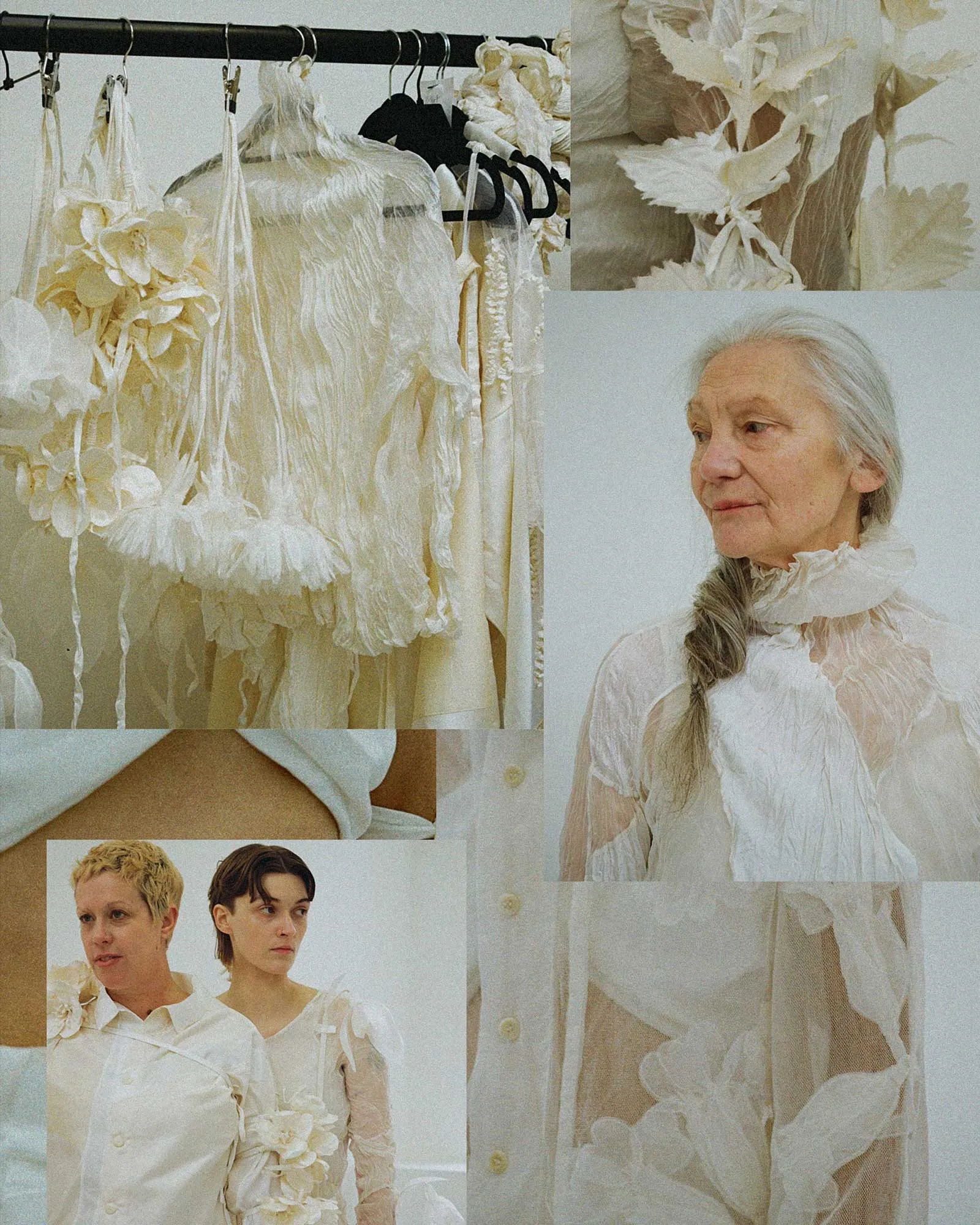
Titled Lost Touch, their latest release is a collection of only 12 cream looks, and is somewhat of a botanical calendar. The designer assigned one look to each month of the year, and a plant or flower to each look. “It was about the passing of time, and also the reassurance and the predictability of knowing that these plants or these flowers are going to appear at particular times, sort of greeting them like old friends. [I was] trying to translate that adrenaline of seeing a particular plant or flower in its full flush of growth at its peak growing time across the year, and how glorious that can feel when you experience it.”
Even when it comes to stockists, the brand prizes a highly bespokeBespokeClothing made to a client's individual measurements and specifications, with the client involved in choosing fabric, cut, and details. Bespoke garments involve multiple fittings and meticulous craftsmanship, and they differGo to Bespoke Glossary approach. Like their process for individual clients, buyers from boutiques are welcome to select looks from Phoebe’s vast archive. Their model doesn’t allow them to recreate a look to a T, but rather to explore novel touches and slight modifications to their designs. “In the fashion space, everything is for sale and then it goes on sale relatively quickly after it’s delivered in store, which I feel like that kind of fast turnover of ideas is also quite wasteful. So this approach is us thinking about the clothes as intended to be relevant for as long as they can.” The intention with everything they do, she says, “is that they don’t go out of fashion after six months.”
“The pieces are tailor-made for our store, quite literally,” says Jappy Gonzalez, founder and managing director of concept store Univers, who brings Phoebe English to the Philippines for the first time. “There’s a movement in fashion where things need to slow down, and Phoebe English represents that. For example, a pattern she developed in 2017 can still appear in her collections today. The idea is sustainable; it’s not about change but about evolution.”
Brought up in the midlands, Phoebe has always been in touch with nature, despite not growing up with a garden at home. The earth has always been a part of her language, and it’s the same manner she’s raising her children. “This is the age they’re learning speech. So for me, making sure that their early words and their vocabulary include plant-heavy knowledge is really important to me as a parent specifically.” Nature, as she’s observed, is an omnipresent entity, imbued even in spaces where we might not readily see it; in her words, like flowers blooming in the cracks of a pavement.
“I think it’s always present and trying to reach us no matter how hostile an environment we build, and increasingly hostile space that we transform our world into,” she poignantly remarks. “It’s all ever-present and it is part of us, and I think we ignore the connection at our own peril.”
With Lost Touch, plants are a reminder of the interconnected relationship between beings. Phoebe nurtures that affinity through design, yes, but also through the plain insistence on an unaccelerated pace.
By TICIA ALMAZAN. Photographs by LILY ASHROWAN. Portrait by ASIA WERBEL.
Frequently Asked Questions
Responsive design is Phoebe English’s approach of selecting available foraged or waste materials before conceptualizing a garment, reversing the traditional method of sketching first and then sourcing fabric.
The brand uses foraged and waste materials including deadstock fabric off-cuts, surplus hotel bedsheets, silk from digital print companies, storm-damaged plant matter for natural dyes, and avocado stones for golden hues.
Lost Touch is a 12-look, all-cream collection functioning as a botanical calendar, with each look assigned to a specific month and paired with a corresponding plant or flower.
Phoebe English makes her Philippine debut at Univers, a concept store founded by Jappy Gonzalez, who notes the brand’s pieces are tailor-made specifically for the store.
Phoebe English’s shift toward slow, sustainable design began around 2018, roughly eight years after launching her namesake brand, prompted by a broader reckoning with the fashion industry’s environmental impact.
- Pia Jauncey Steps Out in Bulgari’s Eclettica High Jewelry Collection in Milan
- Loewe Brings Out This Year’s Bright Young Things in Its Spring/Summer 2026 Campaign
- Interior Becomes Exterior: Make Yourself at Home in the Warmth of Gold and Texture
- A Tale of Harvest Set in Sorsogon, Where Community Nurtures the Land