
Vogue Profiles: Chinggay Labrador on Making Her Own Kind of Magic


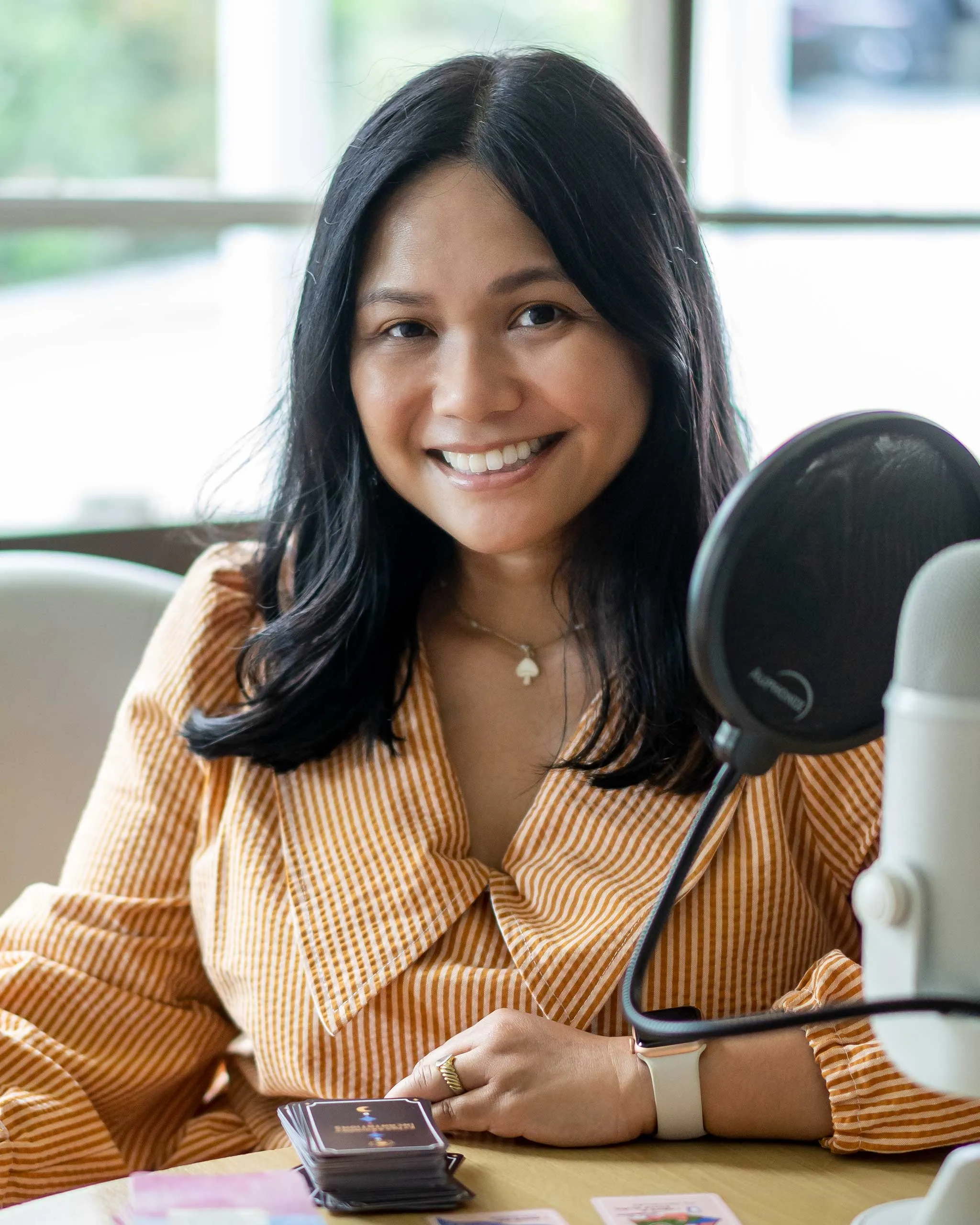
Courtesy of Chinggay Labrador
The writer and artist talks about tarot, astrology, and the everyday rituals that help her reconnect with herself and her creative practice.
If you’re invested in tarot readings and astrologyAstrologyThe practice of reading planetary positions and zodiac signs for insight into personality, relationships, and timing. A fixture of modern lifestyle and wellness culture, astrology shapes horoscopes, eclipse rituals, andGo to Astrology Glossary, Chinggay Labrador might have already popped up on your feed. Through her brand Practical Magic, Labrador has published guidebooks on astrology and tarot and designed her own tarot and oracle decks. The writer and artist also provides tarot readings, where she uses tarot cards to understand the present rather than predict the future.
In the interview series Vogue Profiles, we speak with Filipino creatives and cultural voices about their taste, worldview, and inner life, and learn about what informs their creative choices. Below, Labrador shares her current creative practices and inspirations.
Vogue Philippines: What’s capturing your attention these days?
Chinggay Labrador: I’ve really been enjoying writing for fun lately. It’s something that I haven’t been able to do a lot because most of my work already consists of writing (the tarot readings I do are largely written, plus I also do some freelance writing for corporate clients). When something you enjoy as a hobby is also what you do for work, it can be challenging to draw lines between something you do for yourself and something you do for others.
I’m part of Writing Club spearheaded by life coach Aurora Suarez, where we’ve been working on exercises from “The Way of the Fearless Writer” by Beth Kempton. It’s been so interesting to me to move through different avenues and approaches to writing; it’s certainly helped me reconnect to the part of this practice/craft that I find so fun. I’m also currently doing a poetry journaling workshop by author and teacher Susannah Conway, where we use poetry to open us up to new ways of journaling. Both these workshops have really helped me find fun with words again.
What has shaped your creative eye the most?
I’m really inspired by architecture (which I studied but never practiced), and I can trace this interest back to when I was six or seven years old. My older brother, Albert, at the time, was an architecture student at UP. As part of one of his assignments, he needed to visit Casa Manila in Intramuros, and he took me with him to the museum. I don’t remember much about that particular visit, but what’s stuck with me is that, since that one visit, I have always looked forward to going to historical buildings or museums that have an interesting architectural background.
One of the most recent tours I did was with my brother, the same one who went with me to Intramuros when I was a kid. We took an architectural tour of the Barbican in London, which is easily one of my favorite buildings. The tour allowed us access to parts of the complex not usually visited by the public. We also learned about how the building was conceptualized, the materials, how it’s evolved for residents and as a public space, and how it’s maintained to keep its integrity decades after it was designed and built. The most enriching part of our day at the Barbican was how we ended it watching a concert in one of the theaters; it felt like we got to experience the famously brutalist building in so many ways.
How would you describe your aesthetic—not just in your work, but in the way you live?
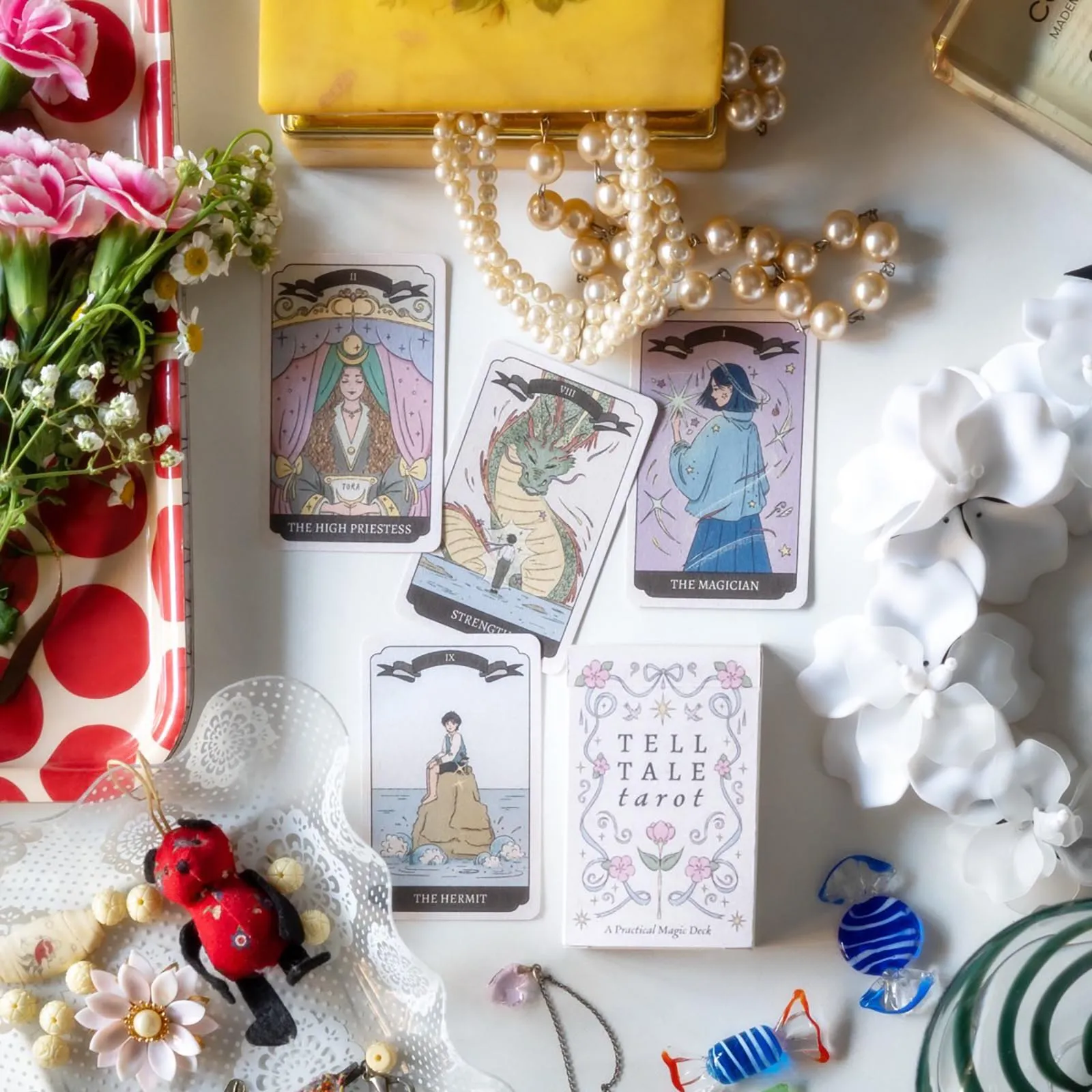
I have always been drawn to color and varying textures, and it’s something that shows up in the decks I design and collaborate on. My love for color most clearly shows up in my home, which I renovated in 2024. I chose a lot of boldly patterned wallpaper, strong colors, and artwork that’s bright and vivid.
What do you think people misunderstand about creativity?
That you have to know how to draw or be proficient with some type of artistic medium to be considered creative. I think, as humans, we all possess the creative gene, it just shows up in different shapes and forms for different people.
When do you feel most like yourself?
I am a natural hermit, so I feel most myself when I am at home, reading a book, journaling, or just tinkering around with the things I collect. On the opposite end of the spectrum, I also feel most myself when I am exploring a new city without a plan, allowing myself to get lost.
Is there a ritual or habit you return to whenever you need clarity or inspiration?
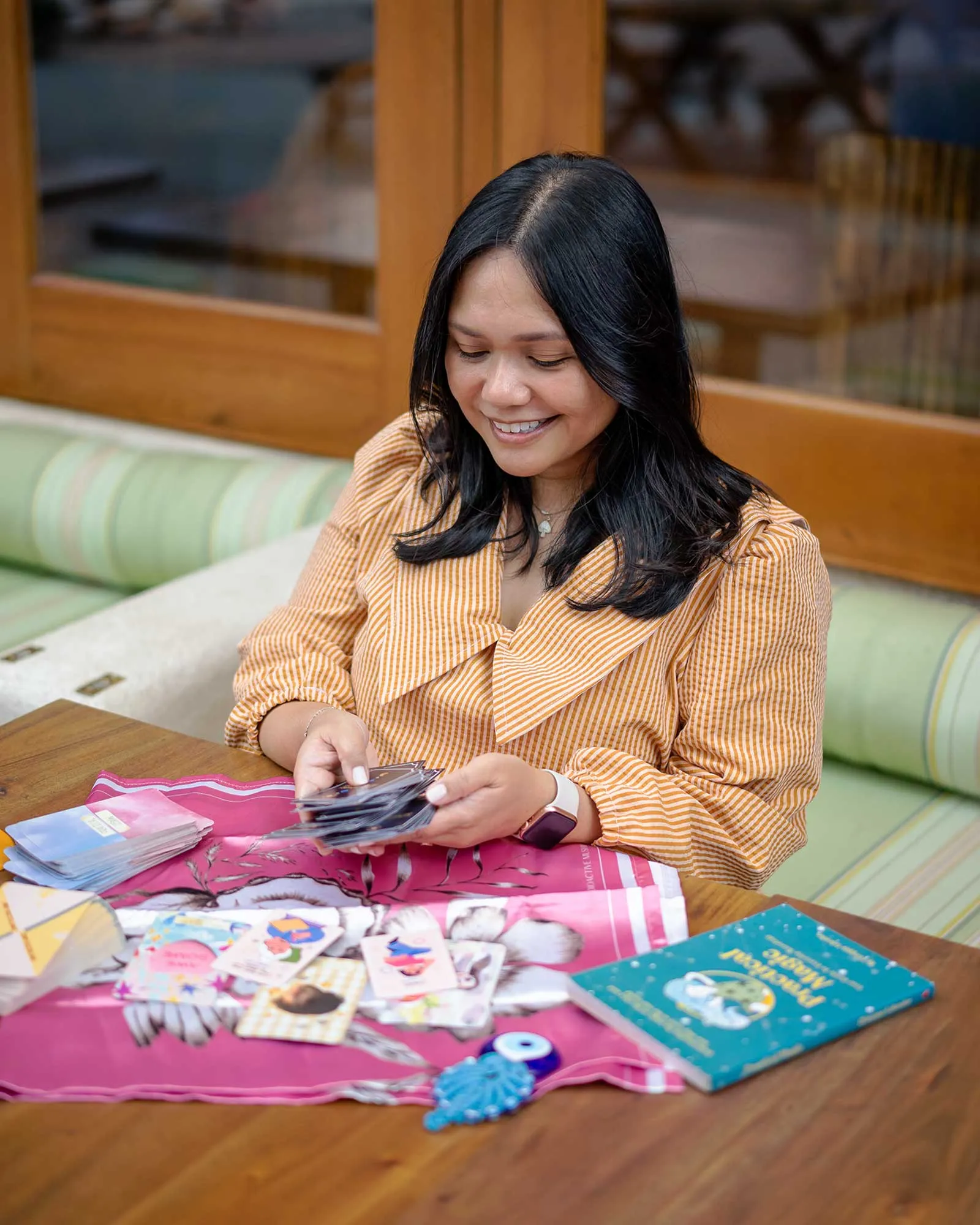
Every day, I pull a single tarot card for myself. It’s an extremely grounding practice that I use to help me process what happened in the day rather than predict what’s going to happen next. I’m also a big proponent of journaling and have adapted Julia Cameron’s morning pages ritual (from The Artist’s Way) to suit my own routines. I start the day doing three pages of stream-of-consciousness writing (preferably with a fountain pen I love) while having my coffee.
What are you saying through your work that words alone can’t express?
Everyone can allow magic to liven up their lives!
Has success changed the way you create—or the way you define success itself?
I create for myself. I don’t want to put pressure on any of my projects (especially with Practical Magic) by thinking about what other people will think or how many units I’m able to sell. I think creative success comes when you’re content with what you make and put out there. The rest is just a bonus!
What are you learning to let go of?
I’m learning to let go of metrics! Social media used to be such a happy, community-driven place, but the past few years have really impacted the way things move over there. There’s so much AI slop and manipulation of the algorithm that the numbers game has become pretty inconsequential now. I’m instead shifting to the relationships and community I’ve been able to build over the years and our one-on-one interactions through my newsletter or even through personal messages and emails.
What kind of legacy do you hope your work leaves behind?
I hope my decks and readings help people find a way back to themselves.
Frequently Asked Questions
Chinggay Labrador is a freelance writer, artist, tarot reader, tarot deck creator, and founder of the product ecosystem Practical Magic.
Practical Magic is a brand, product ecosystem, and book series created by Filipina artist, author, and tarot reader Chinggay Labrador.
Labrador has authored a few books, such as Practical Magic: Your Guide to Everyday Astrology and Practical Magic: Modern Musing on the Tarot.
Yes, Labrador has designed several tarot decks, including the Practical Magic Start Deck, Pinoy Practical Magic Tarot, and the Extraordinary Incantations Tarot/Oracle Deck.
To book a tarot reading, you can schedule directly through her official platform.