
The Gods and Spirits of Philippine Folklore


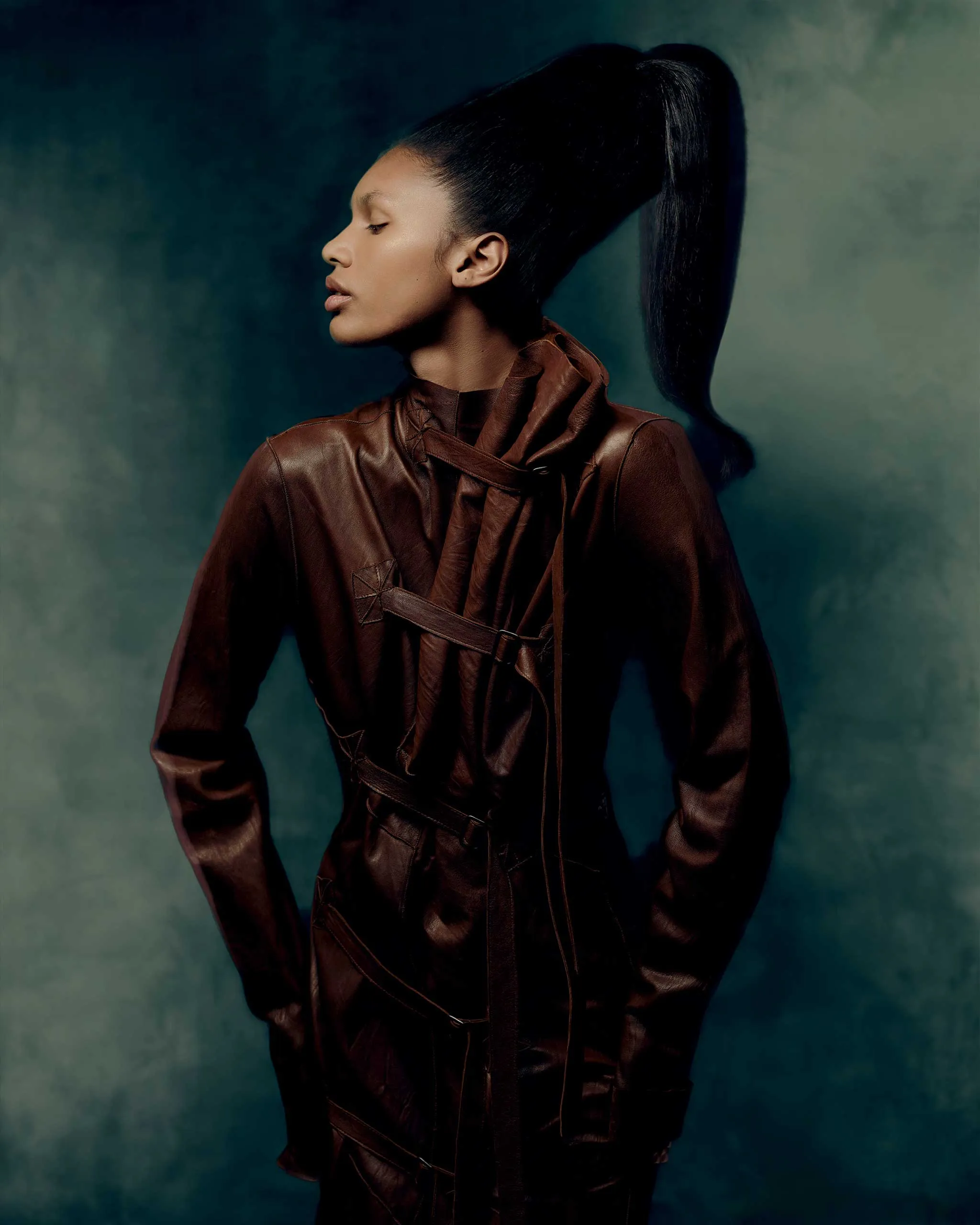
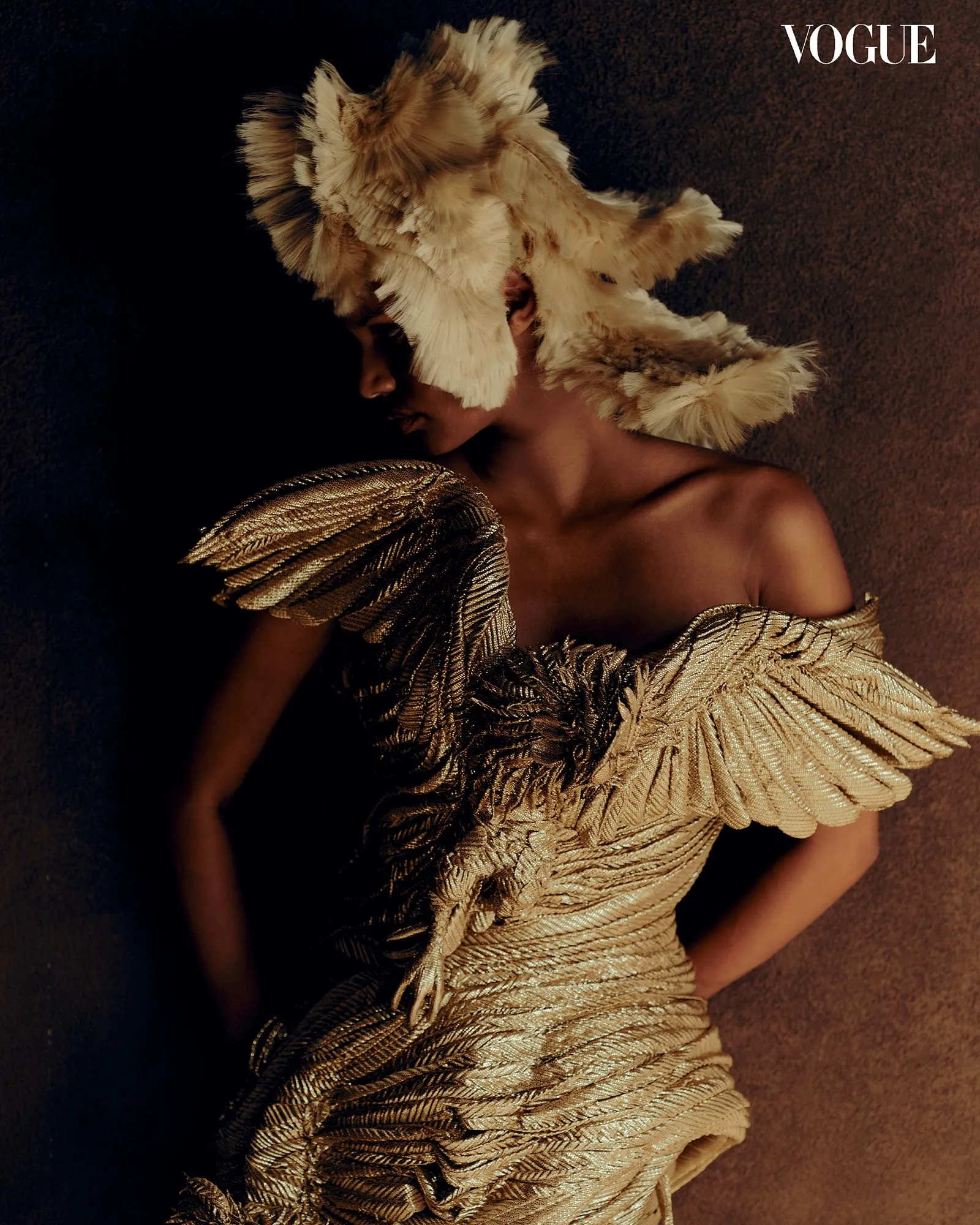
The BAKUNAWA is a giant sea serpent or dragon said to have swallowed six of the seven moons created by Bathala. Archival JEAN PAUL GAULTIER dress. Photographed by Artu Nepomuceno for the November 2026 Issue of Vogue Philippines
From moon-eating serpents to mountain goddesses, the country’s mythologies and folklores trace both our origins and our evolutions.
There is no single Philippine mythology. Author and researcher Jean Karl Gaverza tells us this before we get very far into gods, monsters, or moon-eating serpents. For him, the distinction is not semantic. It is historical.
“I don’t use the terms ‘Filipino mythology’ or ‘Philippine mythology,’” he says promptly. “I use the term ‘mythologies in the Philippines’ because there are 175 different ethnolinguistic groups in the Philippines, each with their own culture and language, and to show how diverse the belief systems of the Philippines are.”
A linguist by training and the writer behind virtual database and research repository Philippine Spirits, Gaverza has spent years documenting the gods, spirits, creatures, and belief systems of communities across the archipelago and is especially attentive to the language used around them.

For him, the plural matters because the stories were never singular to begin with. Across the archipelago, communities developed their own gods, spirits, monsters, cosmologies, and explanations for the natural world. Some stories resemble one another. Others diverge completely. A deity might appear human in one tradition and animal in another. A creature known today as a national folk figure may, in fact, belong to a much more specific cultural history. Gaverza prefers “mythologies” and “folklores” for precisely this reason.
“Folklore is the giant umbrella under which everything is,” Gaverza explains. In academic terms, myths tend to place gods and goddesses at their center and often explain natural phenomena, while legends sit closer to historical memory. “Folklore is a reflection of the people that believe in it. These stories are very real to people.”
“Folklore is a reflection of the people that believe in it. These stories are very real to people.”
That reflection can begin with something as distant as the moon. Before an eclipse could be scientifically explained or predicted, watching it disappear into darkness required a multiplicity of stories to understand the phenomenon. In the best-known Cebuano telling, the Bakunawa, a giant serpent or dragon, devours six of seven moons, leaving the last one vulnerable. When the creature returns during an eclipse, people make noise like banging pots to drive it away. But even this story is only one variation. “There are around 16 different Bakunawa creatures in the Philippines,” he says. “The moon-eater myth is very prevalent in all areas in the Philippines.” He points to corresponding moon-eating beings and stories across Ilocos, Pampanga, Batangas, South Cotabato, Lake Lanao, Surigao, and elsewhere, different communities looking upward at the same darkening sky and finding their own explanations for what they saw.
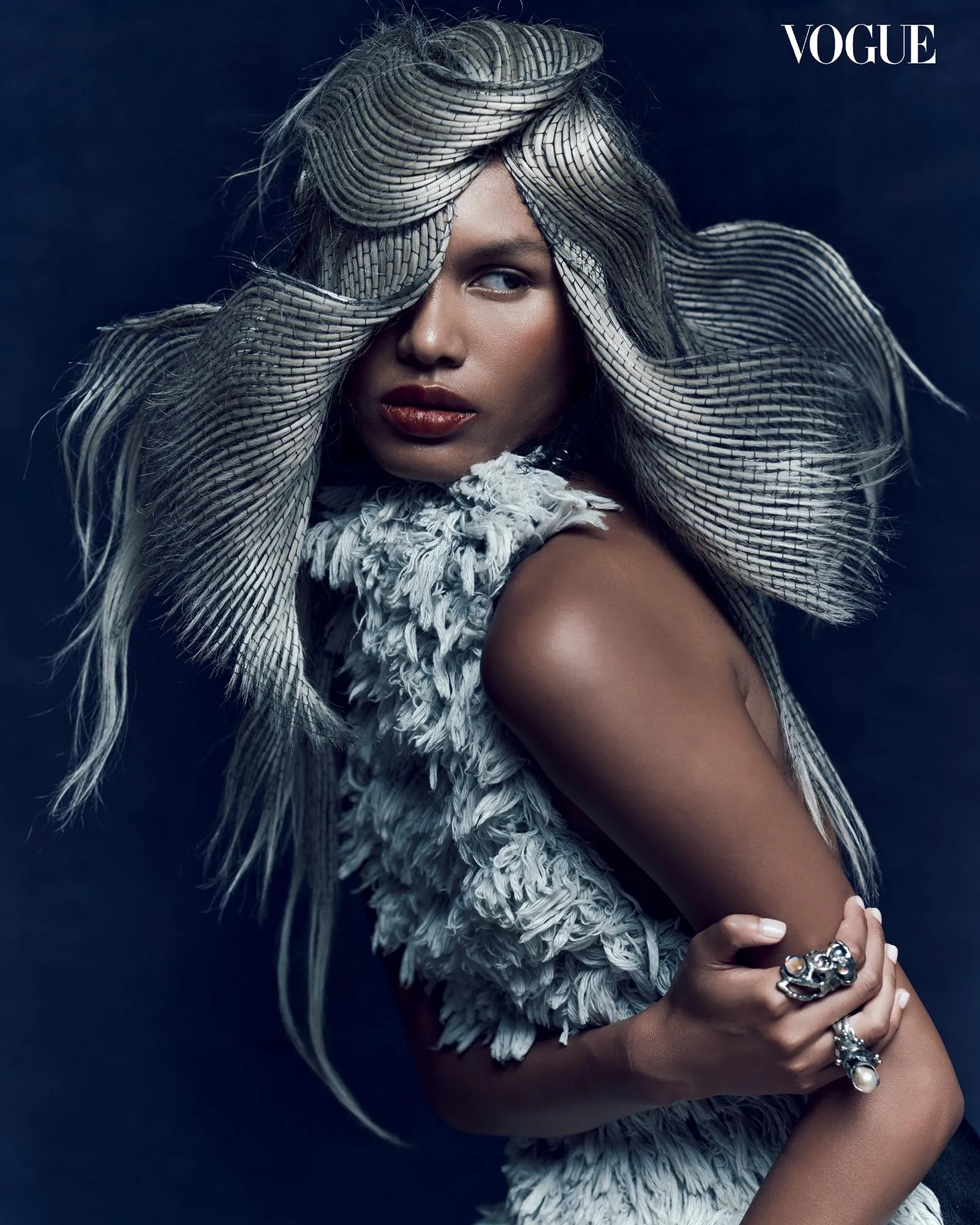
The same impulse to understand the natural world runs through the celestial deities Mayari, Tala, and Hanan. In widely circulated Tagalog traditions, Mayari is associated with the moon and night, but her domain extends into “combat, war, revolution, the hunt, weaponry, beauty, strength, and the night,” Gaverza enumerates. Yet even Mayari changes depending on which community and source one encounters. “Mayari in Kapampangan has the form of a kingfisher, or a bird,” he says. There are sources, he adds, that contest whether Mayari should be understood as Tagalog or Kapampangan at all, which goes to show that the most familiar version of a story is not necessarily its only version, nor the form in which everyone once understood it. Sometimes it is simply the version that traveled farthest.
Tala, meanwhile, belongs to the stars. In Tagalog traditions, she is remembered as a guide through darkness, her role tied not only to the heavens but to the practical realities of travel. “Tala uses stars, or light spheres, to ferry fishers to safety at night,” Gaverza says. In an archipelago shaped by coastlines, rivers, fishing, and movement between islands, the stars were more than beautiful objects in the sky. They were directional and, at times, necessary for survival. Gaverza also points to the Tres Marias, an association of Hanan, Tala, and Mayari with the three stars of Orion’s Belt.

Hanan occupies another threshold: dawn. Her stories center on beginnings, transitions, and the passage from one stage of life to another. “People pray to her for if they’re doing a big life event, if they’re closing a chapter in their life and they’re looking for new beginnings,” Gaverza explains, naming adulthood, death, planting and harvest seasons, and the New Year among the transitions associated with her. “The prayers to her are conducted at the break of dawn and her symbol is the rooster.”
These deities may reside in the heavens, but their meanings remain grounded in ordinary life. Stars lead fishermen home. Dawn opens another day and another season. The moon measures time in the sky. Myth turns the rhythms of the world into narrative.
The earth below was just as inhabited. When asked what common thread, if any, can be found across otherwise different belief systems, Gaverza points to nature. “If you go past an anthill, you say, ‘tabi tabi po.’ If you want to cut down a tree, you have to ask permission from the spirits. If you want your harvest to be bountiful, you make what the Igorot call a kanyaw,” describing sacrifice offered to appease spirits.
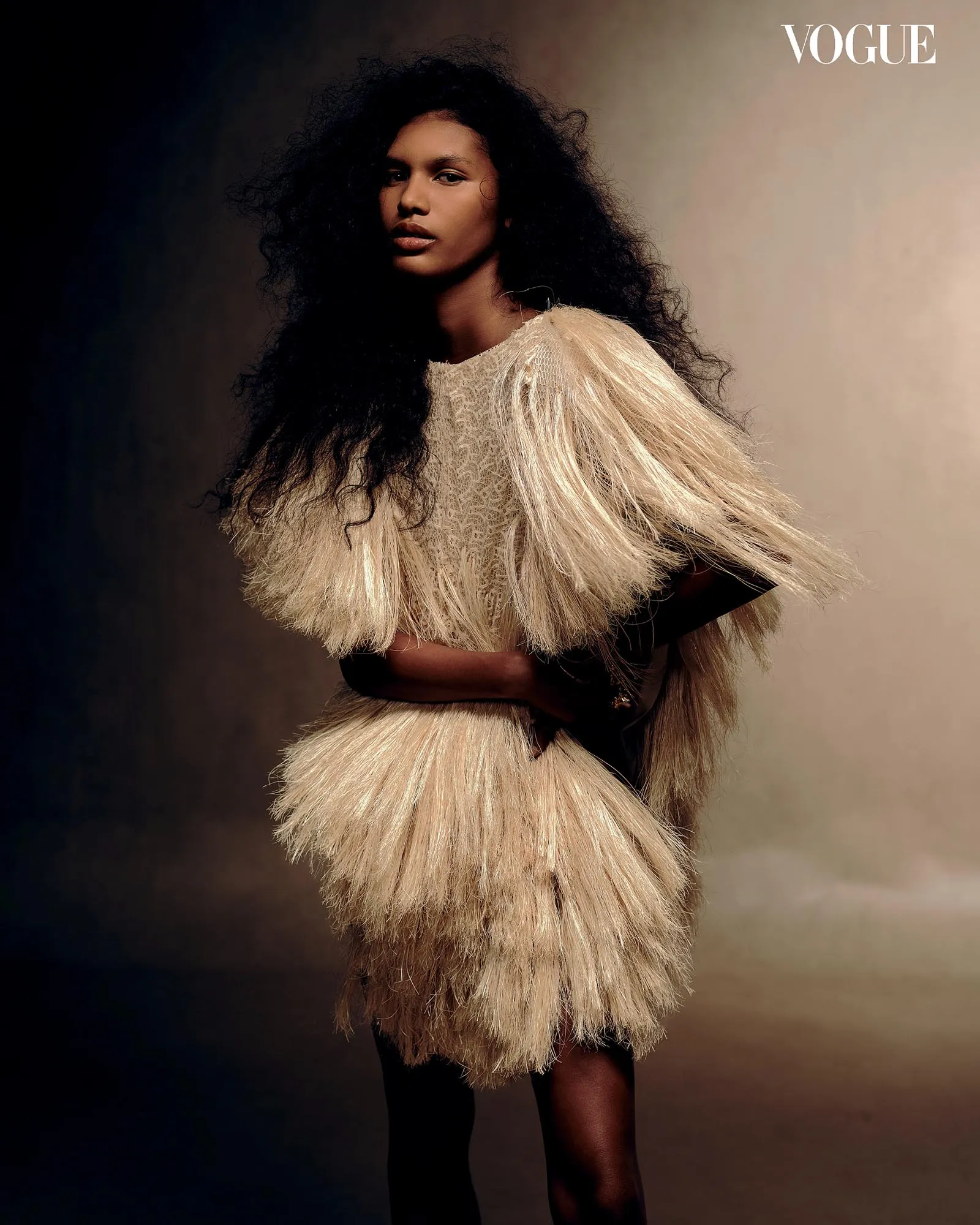
Mountains, forests, trees, rivers, and fields were therefore not empty backdrops against which human life unfolded. They were spaces shared with other presences, entered with caution and negotiation. “With these cultural communities and ethnic groups,” Gaverza notes, “[we know that] precolonially, we lived with the land.”
Few words show how drastically that worldview can be altered through translation as clearly as diwata. The term is routinely rendered in English as “fairy,” a comparison Gaverza rejects immediately with fervor. “My God. No. Do not say it’s a fairy,” he warns. “Because diwatas are gods.”
He traces the word to deva, a term for divinity with roots in Hindu-Buddhist traditions. “Diwatas are powerful. They are gods. They can change the weather. They can turn people into pigs. They can make volcanic eruptions happen, that sort of thing.” Calling them fairies, he argues, places these once-powerful divine beings into an entirely different hierarchy. “The reason that they’re ‘fairies’ is because of colonial influence, because they did not want people to worship these women as goddesses,” he says pointing to the likes of Cebuana mountain goddess Maria Cacao and Maria Makiling of Laguna. “There are also male diwatas, but the Spanish and even the Americans said, no, they’re just fairies. You have to talk to the saints. You have to talk to God instead of worshiping these diwata.”
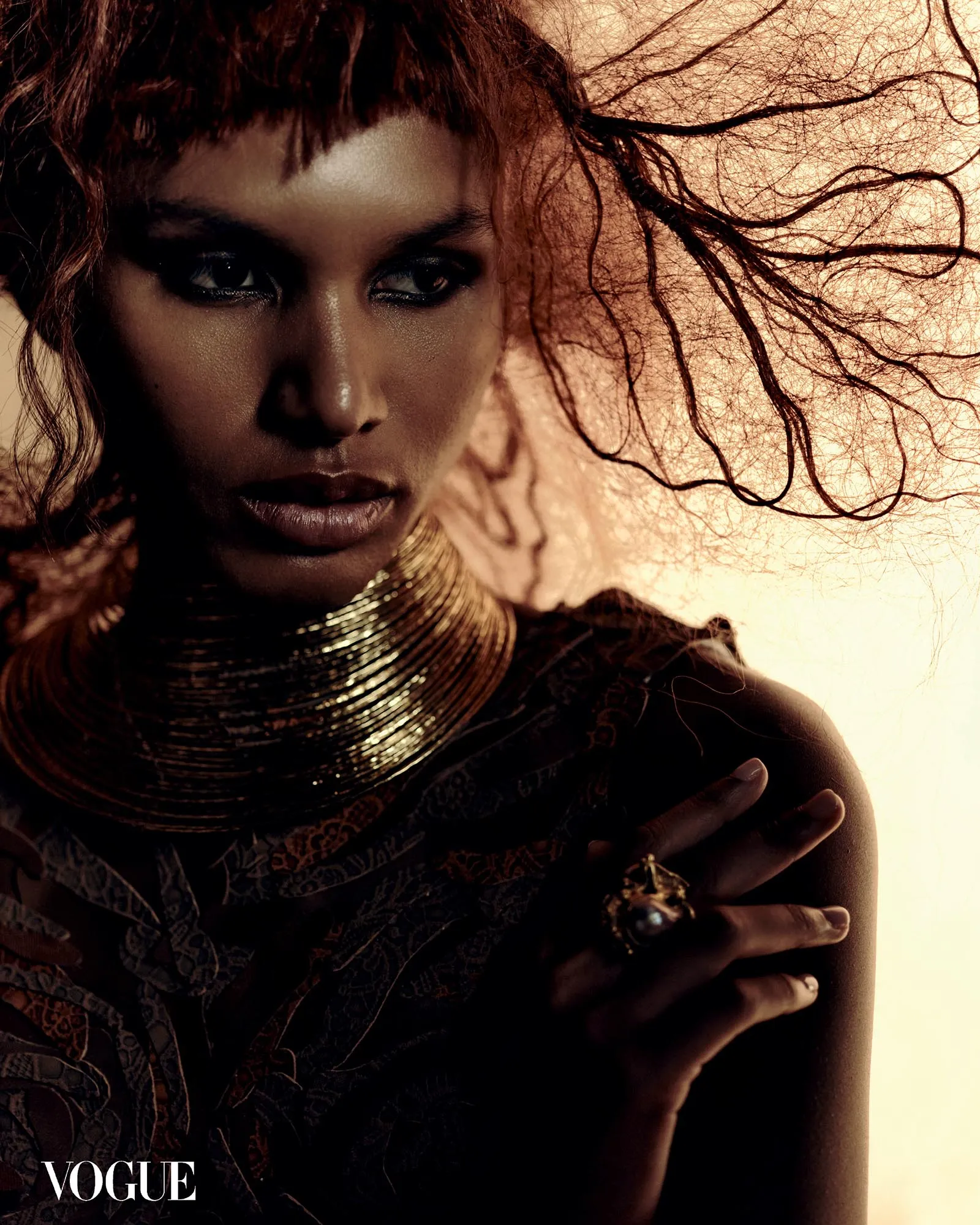
But mythologies and folklores in the Philippines are not fixed records of an earlier world. They change because people change, absorbing new religions, languages, political realities, media, and ways of seeing. The tikbalang makes this evolution particularly visible. Today, it is popularly imagined as a tall, horse-headed figure haunting forests and mountain roads, often associated with trickery. Earlier accounts present something considerably more sinister.
The tikbalang many Filipinos recognize now emerged through later storytelling. “Now, because of popular works like the Trese series and movies by Peque Gallaga, the tikbalang has become a symbol of masculinity,” he says. The idea that someone can wrestle a tikbalang, take three golden hairs from its mane, and force it into servitude, is, according to Gaverza, relatively recent.
“That is very different from before, where it was a spirit of pestilence that only makes you sick and wants to kill you.”
The transformation happened within a surprisingly compressed period. “That idea of the pestilent tikbalang was 200 years ago, and the modern one was just coming from the 1980s.”
It is tempting to divide these stories into what is ancient and therefore “authentic,” and what came later and therefore is not. Gaverza cautions against doing so. “It’s dangerous to assume that just because it’s not modern, it means that it’s precolonial,” he says.

“There are still new spirits being born even in the modern period.” Centuries of colonization introduced new words, religions, and ways of interpreting existing spirits. Dwende, Gaverza notes, comes from the Spanish duende de casa, or spirit of the house. “So the Spanish, because everything they know is dwende, suddenly said all house spirits are now dwende,” he explains. Yet different communities already had their own house and nature spirits, among them figures such as the Kaiban in Ilocos and the Kama-kama in Panay.
Film, comics, literature, the internet, and popular culture also continue to change which version of a creature becomes dominant. Gaverza sees spirits and stories as capable of being born through perception itself. “There are new spirits because of the way people perceive these legends,” he says. “These end up taking a life of their own.”
What survives today, then, is not a pristine archive untouched since the precolonial period. It is evidence of movement and contact, of cultures meeting, stories being translated, beliefs being challenged, and communities adapting what they inherited.
This is also why Gaverza is so resistant to packaging this abundance into a single “Filipino mythology.” What is often presented as national, he argues, is simply the tradition that became most visible. “It’s not Filipino mythology; it’s Tagalog mythology,” he says of many popular representations. “Everyone sees Bathala with the abs and the Greek-god physique, and that’s not true for the other ethnolinguistic groups in the Philippines.”

Elsewhere, gods can take radically different forms. “You have, again, my example of Kapampangan myth: those gods and goddesses are animals. They have animal forms,” he says. “You have other places where it’s a hybrid-animal form. You have Manobo gods and goddesses that are human in form.”
These differences are more than colorful variations on the same theme. In Gaverza’s view, they reveal the particular histories and values of the communities from which they emerged. He offers the example of a Kapampangan goddess associated with assassins. Kapampangan communities, he explains, were historically divided into groups called balen, which could become involved in territorial wars and blood feuds. “So you can see, because they had these blood feuds, the gods that they believed in reflected that,” he says.
A god of war, a mountain diwata, a spirit of pestilence, a creature eating the moon: each emerges from a particular way of living and understanding the world. “These stories are important because they show who your community is,” Gaverza says.
“You become a good Filipino by becoming a good member of your ethnolinguistic group”
For him, recognizing those distinctions does not weaken a broader Filipino identity. It makes that identity more truthful. “You become a good Filipino by becoming a good member of your ethnolinguistic group,” he says. “You become a good Filipino by being a good Kapampangan, by being a good Ilonggo, by being a good Manobo, by being a good Tboli.”
“They galvanize our belief systems,” he continues. “It makes us closer to the communities. It makes us closer to the environment that we are a part of.”
Seen this way, mythologies and folklores in the Philippines are not simply stories of origin. They are records of evolution. They preserve traces of how different communities understood the sky, the land, conflict, harvest, illness, travel, religion, and one another, while also showing how those understandings shifted through trade, cultural exchange, colonization, migration, cinema, comics, and the internet.
Perhaps that is why the plural matters so much. There was never one mythology, one origin, or one Filipino story, but many, shaped by different landscapes, languages, communities, encounters, and generations. Taken together, they bring us closer not only to the worlds our ancestors once inhabited, but to the long, unfinished history of how those worlds have continued to change.
Gaverza hopes that movement continues. And for the artists, writers, and storytellers who carry them forward, Gaverza’s advice is simple: “Make it reflect the origins.” What he hopes for is, “new stuff,” he says. “Make more Forgotten Islands. Make more Treses.”
But create them with curiosity and care. “Read a lot more,” he advises. “Get into contact, making sure that these beliefs are not commodified.” Research, for him, extends beyond reading what can be found online. “The best way is: travel,” he says. “If you’re going to write about it, you’re going to look at the environment in which these people live.”
Go to the places themselves. Look at their plants and animals. See their festivals. Speak with the communities and the elders who still carry the stories by heart.
To return to these stories is not to retreat into the past. It is to recognize how much of the past is still moving with us: in the names we use, the warnings we repeat, the creatures we reinvent, and the ways we continue to make sense of the world around us. The richness of mythologies and folklores in the Philippines lies precisely in that abundance. Each retelling adds another layer to a history that has never stood still.
The best way to honor these stories, as Gaverza notes, is not only to preserve them, but to keep meeting them again, curiously, carefully, and in all their plurality, as both records of where we have been and living evidence of who we are still becoming.
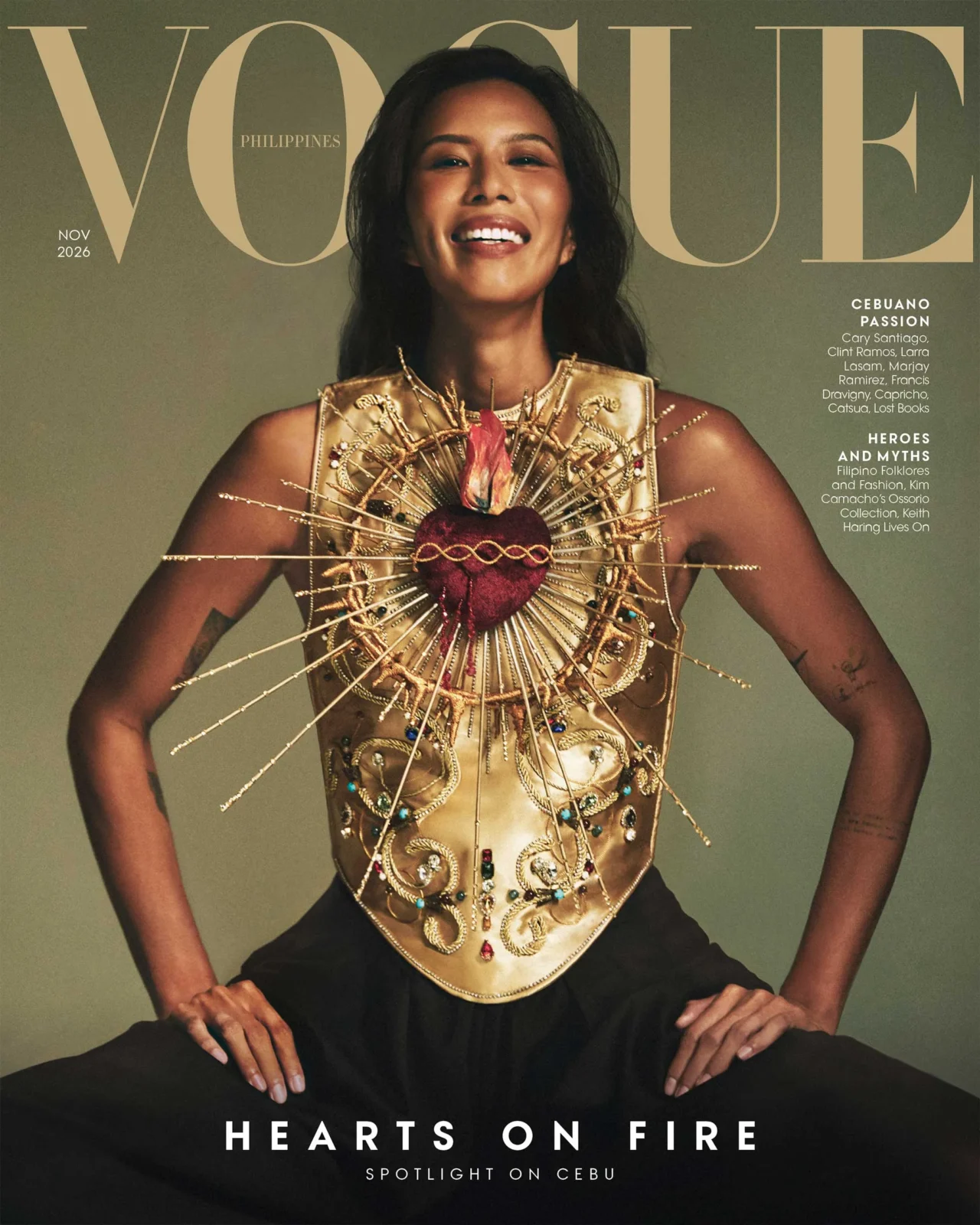
By BIANCA CUSTODIO. Photographs by ARTU NEPOMUCENO. Hair by INDIRA SCHAUWECKER, FRANCESCO FONTANA, and CHERRY REYES of TONI & GUY. Makeup by PAM ROBES. Deputy Editor: Pam Quiñones. Beauty Editor: Joyce Oreña. Fashion Editor: David Milan. Talent: Maya Nazarae Wynder. Fashion Team: Neil de Guzman, Ticia Almazan. Multimedia Artist: Mcaine Carlos. Producer: Mavi Sulangi. Account Manager: Alicia Esguerra. Toni & Guy Team: Glenda Eugenio, Lindsay Agapito, Tina Alvaran, Carol Cobey, John Alrey Valencia, Lea Luna. Videographer: Lynyrd Matias. BTS Videographer: Robyn Josue. Digi Tech: Choi Narciso. Lighting Tech: Odan Juan. Makeup Assistants: Dexter Barredo, Dorothy Mamalio. Photo Assistant: Tatiana Punzalan. Video Assistant: Dome Plaza. BTS Video Assistant: Jom Ablay. Production Assistant: Irone Caleda.
Brought to you by Kraver’s Group. Special thanks to Discovery Primea and Nude Floor