
This Local Brand Turns Plant-Based Textiles Into Everyday Products


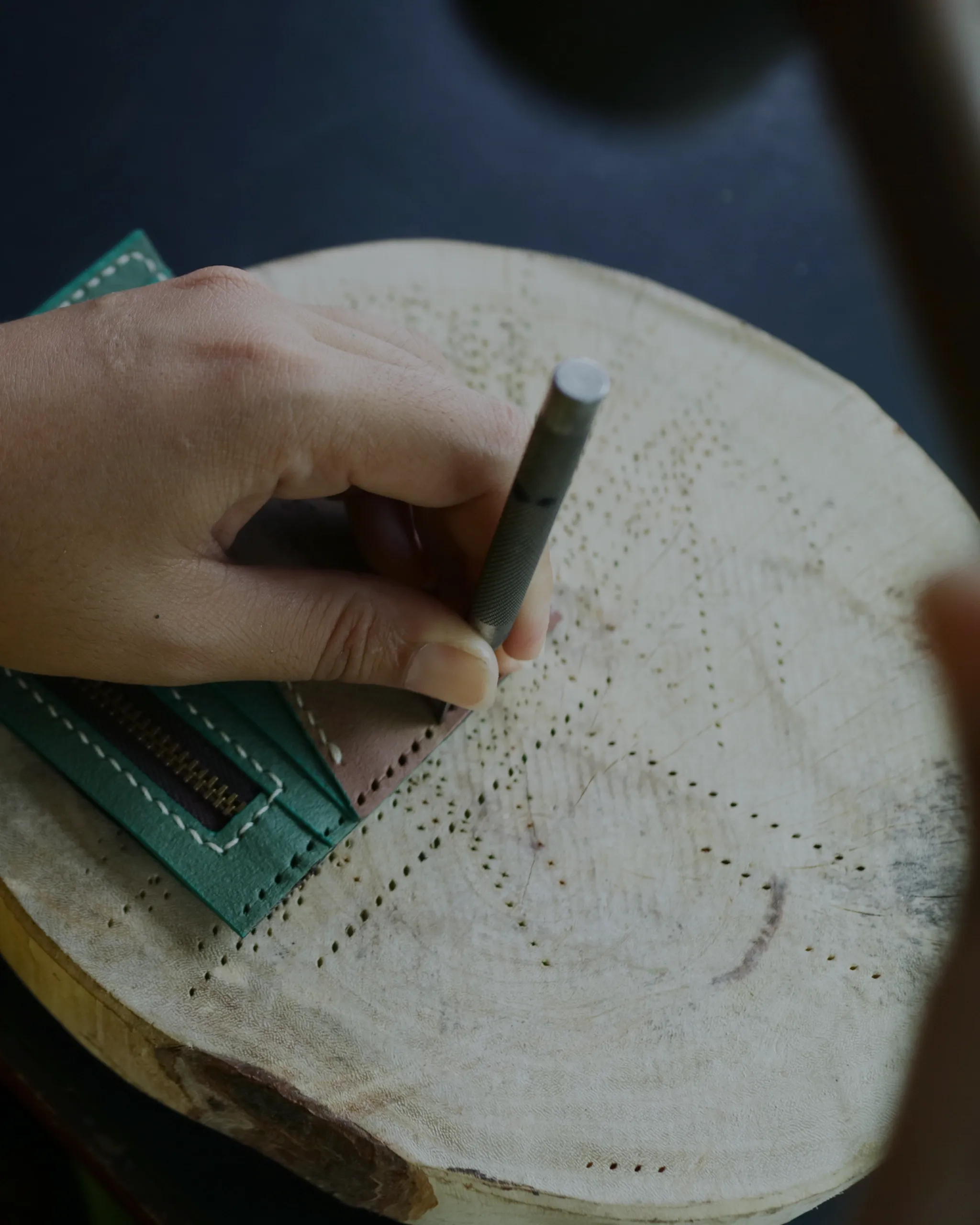
A small wallet crafted from plant-based textiles, receiving its final touches. Courtesy of Caddat Handcrafted
Caddat Handcrafted grew from the Cadauan family’s curiosity about the potential of discarded wood and leaves.
Spending his days on construction sites as a construction worker, Gil Cadauan uses most of his free time to look for wood and leaf residue that others consider waste. He experiments with these materials, finding ways to turn them into something new. This curiosity eventually led him to develop Caddat Handcrafted, a brand that makes products out of plant-based textiles.
Whenever there’s a clearing on the construction site, Gil sees the wood and leaves and thinks of combining these materials to create something leather-like.
“First, gumawa ka muna ng maliit na fabric, mga 10 centimeters. From there, tingnan mo ‘yong quality. It took me 10 years to develop the fabric itself. Siyempre, it doesn’t stop there. If mayroon nang fabric, i-prove mo na pwede pang gawing finished product [First, create a small piece of fabric, around 10 centimeters. From there, assess its quality. It took me 10 years to develop the fabric itself. Of course, the process doesn’t end there. Once you have the fabric, you need to prove that it can also be turned into a finished product],” says Gil.
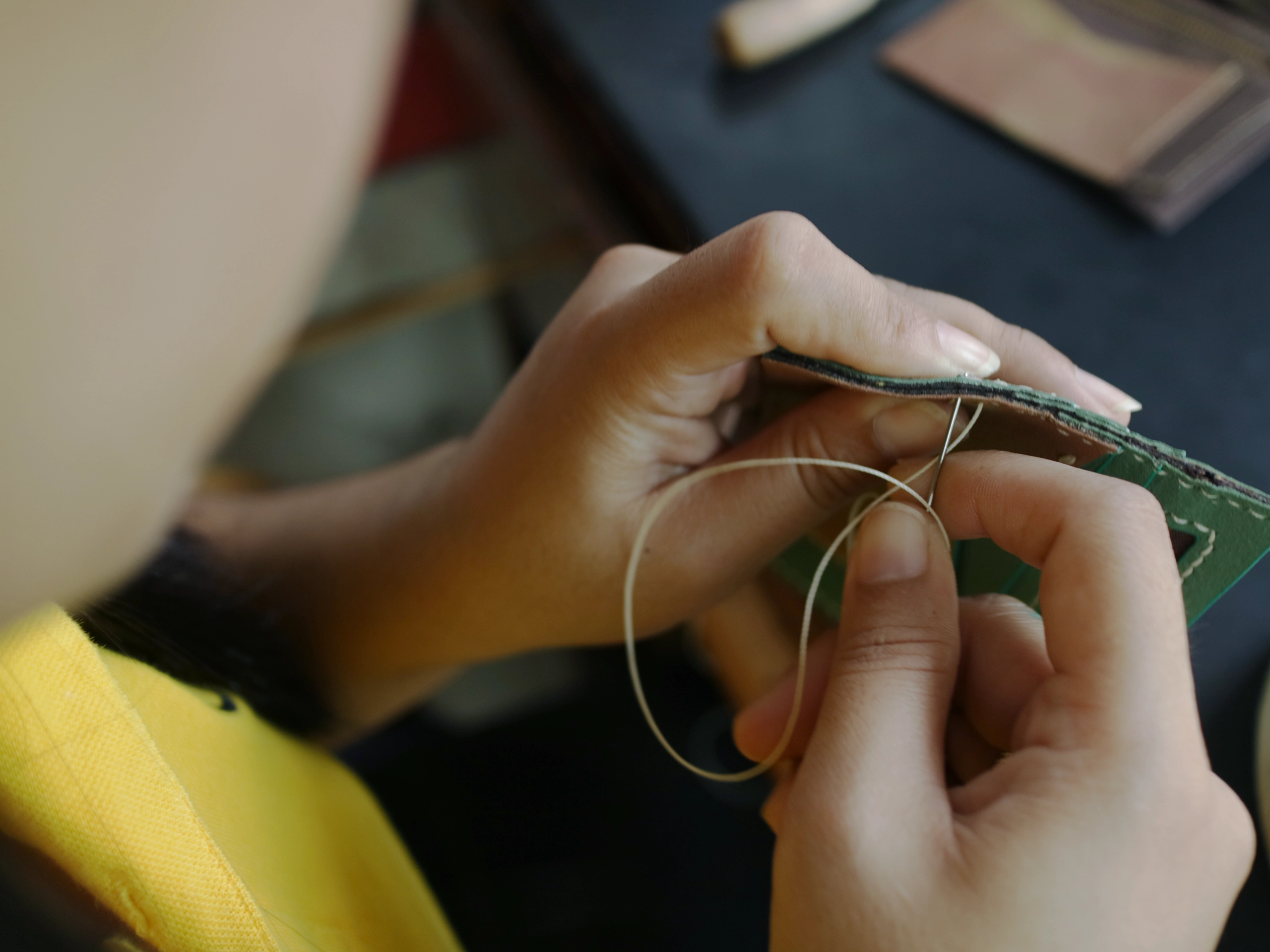
After successful experimentation and collaboration with his family, they created a small piece of leather-like material that they used to make wallets, purses, and eventually bags. For the Cadauan family, the curiosity that started with the head of the family has now become a way for them to bond as they run their family business. Everyone has a role to play, and they are all clear about the direction they want their brand to go in.
“Leather as anything that is not [the] animal kind can be called vegan. Meaning, even synthetic [leather] can be called vegan. Kaya tinanggal namin sa branding ang vegan leather. Kami ay 100 percent plant-based textile [Any leather that does not come from animals can be considered vegan. This means that even synthetic materials can be called vegan. That’s why we removed the term ‘vegan leather’ from our branding. We are a 100% plant-based textile brand],” Gil clarifies.
Michelle, Gil’s daughter, handles the marketing and orders. Despite the business’s growth, she says they always keep sustainability and environmental friendliness in mind. “We have to receive orders. We don’t mass-produce, especially since our raw materials are scraps. Usually, if we have exhibits, that’s the only time we create a volume. But [we don’t] have a monthly target number of products. It’s just customized for the people who order,” she says.
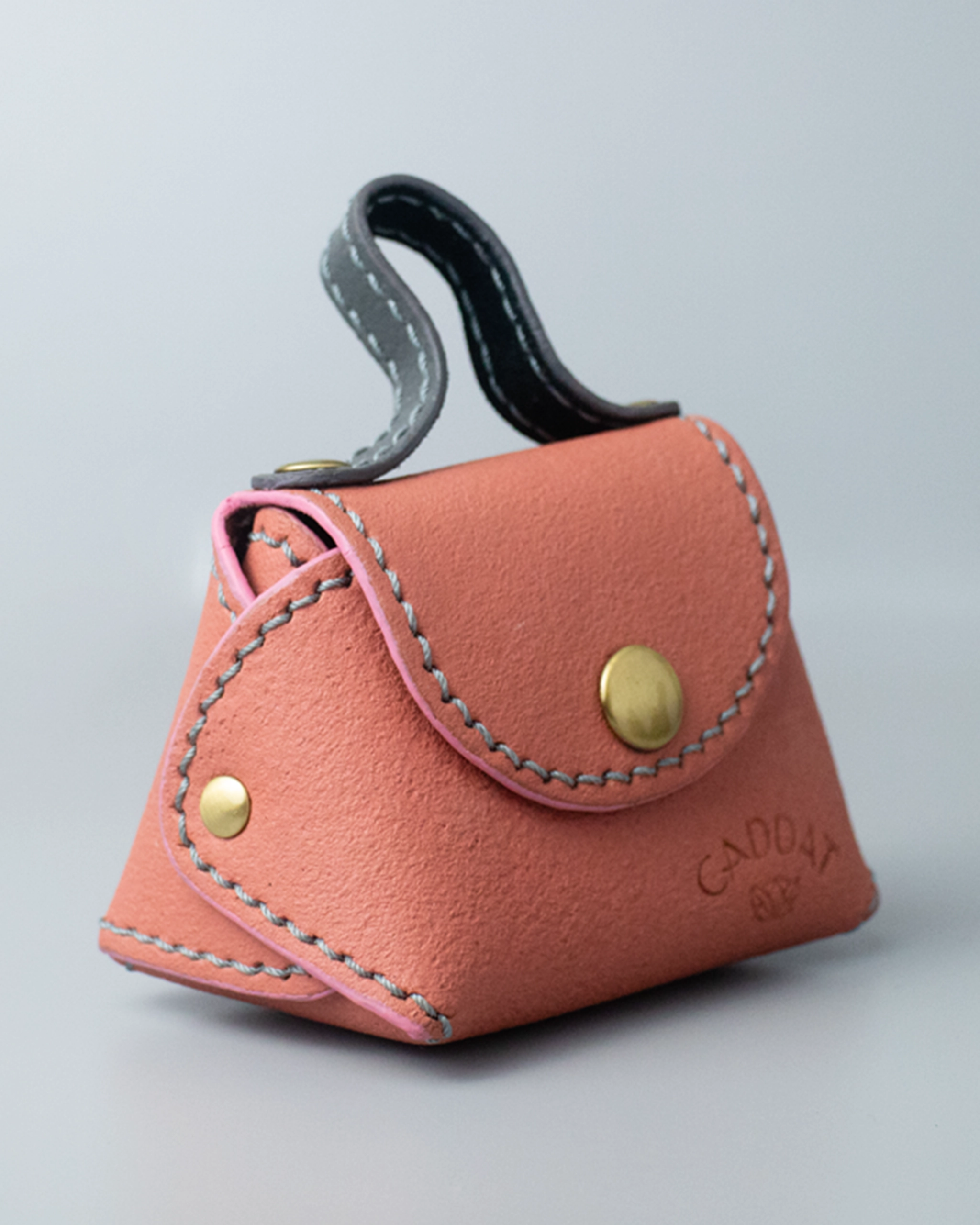
For the Cadauans, running this business is also a way to stand firm in their values and principles as Filipinos and as exhibitors who participate in pop-ups and markets. “As much as possible, sa mga designs namin, we incorporate Filipino [culture]. We’ll have designs na mixed ng modern and traditional [patterns]. Hindi tayo gaya-gaya lang sa uso. The challenge is, how do we make this our own? [As much as possible, we incorporate Filipino culture into our designs. We create pieces that blend modern and traditional patterns. We don’t simply follow trends. The challenge is figuring out how to make these designs uniquely our own],” adds Michelle.
The family’s curiosity doesn’t stop with wood and leaves. Through collaborations with local designers, they continue to explore new possibilities for their products while introducing their work to a wider audience. From abacaAbacaA strong natural fiber from the abaca plant, also called Manila hemp, native to the Philippines. Designers and weavers use it for textiles, bags, hats, and sculptural fashion, prized forGo to Abaca Glossary to banana fibers, the Cadauans remain open to experimenting with materials that reflect their commitment to sustainability. For them, it’s not just about growing a business, but also finding their place in the evolving slow fashion movement.
Frequently Asked Questions
Caddat Handcrafted is a family-owned, 100% plant-based textile brand that creates wallets, purses, and bags. Instead of using animal hides or synthetic “vegan” leathers, the brand transforms discarded wood, leaves, and other natural fibers like abaca and banana into leather-like handcrafted pieces.
Gil Cadauan is the founder and head of the family behind Caddat Handcrafted.
Michelle Cadauan is Gil’s daughter, who handles the marketing, customer orders, and design direction for Caddat Handcrafted.
Caddat Handcrafted is based in Lucban, Quezon. They also regularly showcase their products as exhibitors at various pop-ups and local markets.
You can place an order directly through their official Facebook or Instagram accounts. Because their raw materials are sourced from natural scraps and they avoid mass production, items are made-to-order and customized for each buyer.