
Cary Santiago Reflects on 40-Plus Years in Fashion


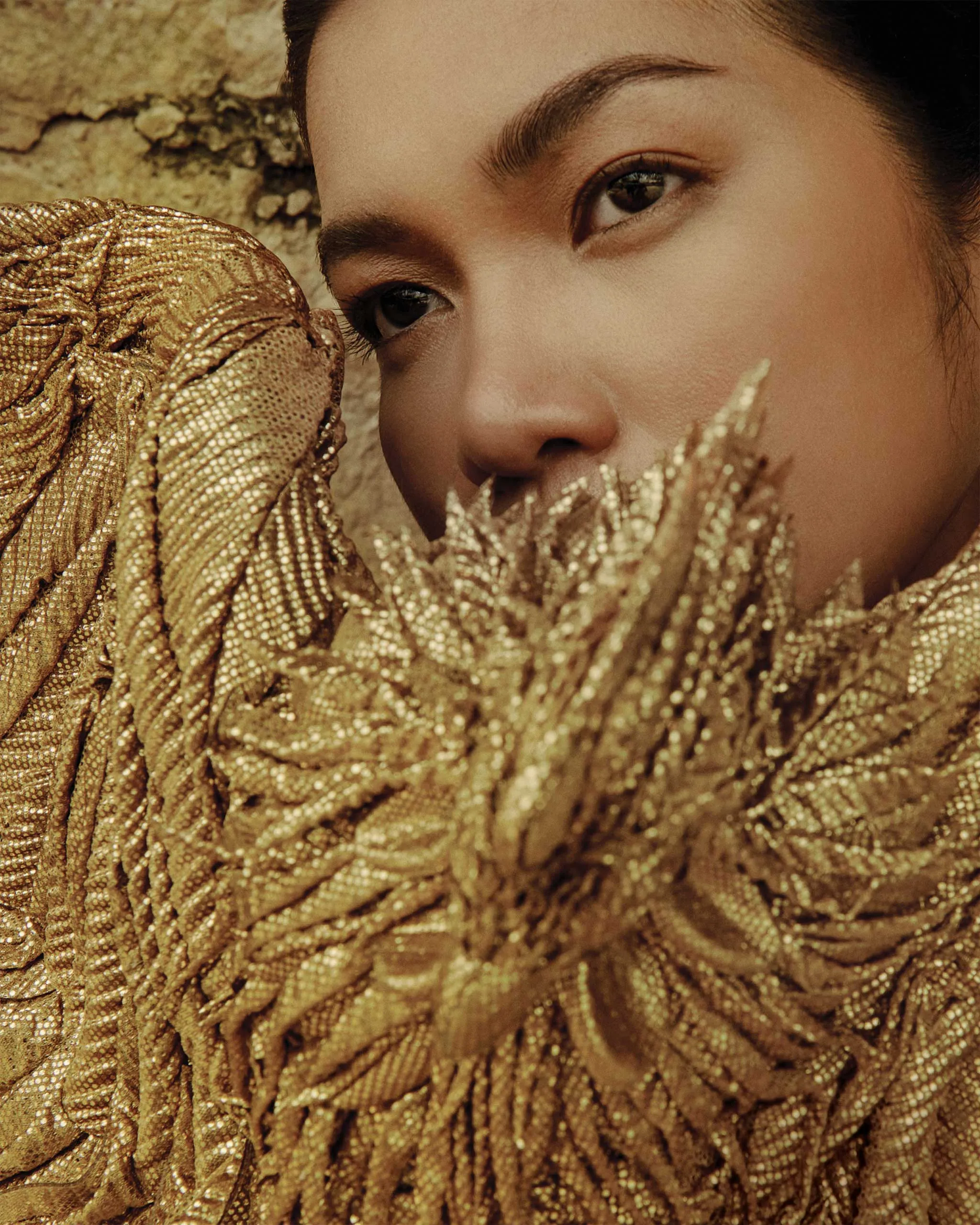
Photographed by Jerick Sanchez for the November 2026 Issue of Vogue Philippines
With his unwavering passion and decades of recognition, the Cebuano designer affirms that the best designs begin with an emotion.
Inside Cary Santiago’s atelier, there’s a song in the air, the voice soft and lilting, the language most likely French or Arabic, but somehow the feeling carries over. A longing usually kept inside, but now filling the space around Cary as he finishes a pattern and begins drapingDrapingA technique in which fabric is shaped directly on a dress form or body to develop a design, rather than starting from a flat pattern. Draping lets designers see howGo to Draping Glossary on a nearby mannequin. “It’s something I don’t understand but I know it’s a love song,” he says, already hearing the familiar melodies in his head. It’s a calm that allows him to tap in. “You pause for a while, cross your legs, and you say, this is an emotional song. I want to be emotional today.”
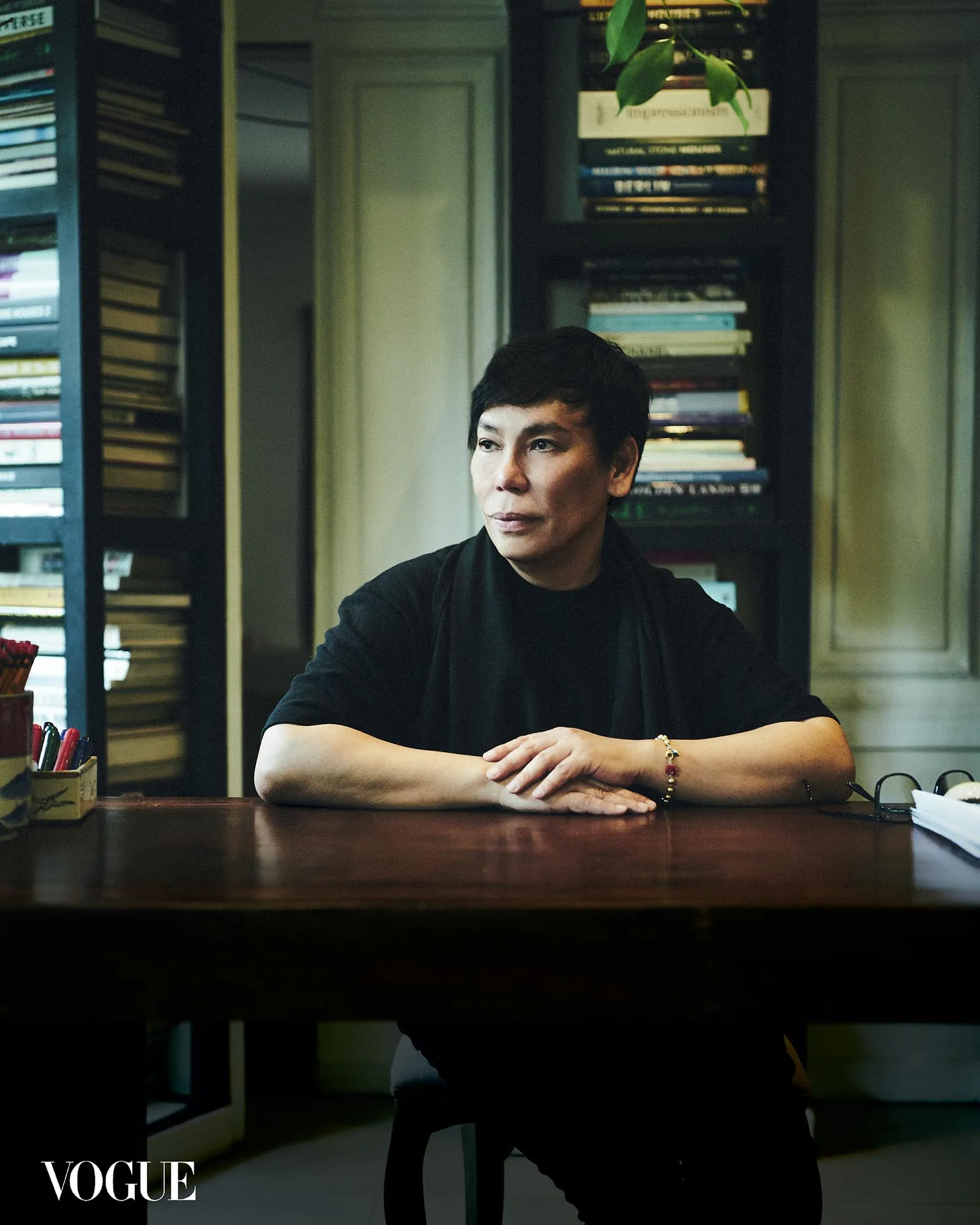
Like music, design speaks to you beyond words, something that the Cebu-born couturier is attuned to. In his studio in the highlands of Talisay, Cary intentionally keeps a full room, surrounding himself with keepsakes that inspire him from his four-decade career. There are pillows and carpets from Syria, a globe that reflects his travels and love for geography (“I can name all the countries there”), and stacks of hardbound books on art, history, and culture, the self-proclaimed key to his heart. “If you want to make me happy? Books,” he tells Vogue.
Today, he sits at a desk complete with pencils, highlighters, fountain pens, and markers, in the midst of preparing for a number of projects: the Cary Santiago gala show in September; an exclusive pop-up in Manila toward the end of the year; an interior design commission for Bawbawon Resort in Plaridel; and the next installment of the Young Designers Competition, an event that marked his breakthrough two decades earlier, when he took home the grand prize.
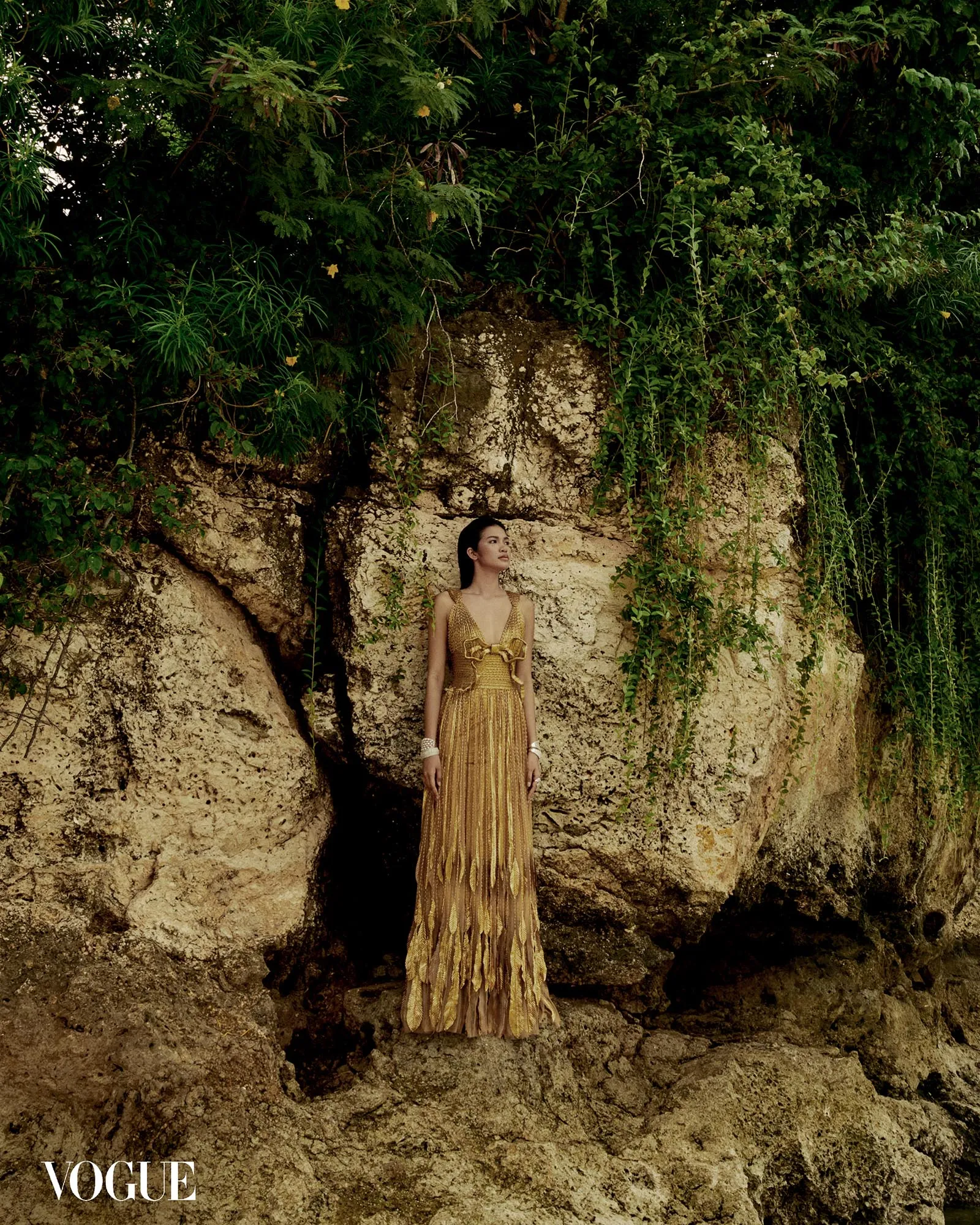
The year was 2004. Cary had entered the contest on a friend’s encouragement. His piece: a TernoTernoA modern Filipiniana dress defined by its dramatic butterfly sleeves, often made from piña or other sheer fabrics. The terno evolved from the baro't saya in the twentieth century andGo to Terno Glossary named after the first Philippine eagle born in captivity, a conservation triumph for the critically endangered species. He remembers witnessing Pag-asa, or Hope, during a trip to Davao and feeling moved by the creature’s majesty, which became his inspiration. Pag-asa: The Philippine Dream was made with two layers of jusi fabric dyed with Kapeng Barako, along with 5,000 feather quills that were cut, shaped, and stiffened to create a plumage.
“It opened opportunity,” Cary reflects. An all-expenses paid trip to Paris for one, but perhaps more significantly, recognition from the local fashion scene that first shaped his practice. When the designer found himself back in the Philippines two years later, after the 2006 Lebanon War disrupted his work at a couture house in Beirut, he was welcomed by the people his pieces had touched, and invited to present a collection at a showcase here in 2007.
“It was the first time ever in my life that I was given a standing ovation,” Cary recounts, the gratitude clear in his tone. “Because I’m a ghost designer back in Beirut, so I never had that feeling of being elated, being acknowledged [for] your work.” (A body of designs that include the dresses worn by Katy Perry in her 2007 “E.T.” music video.)
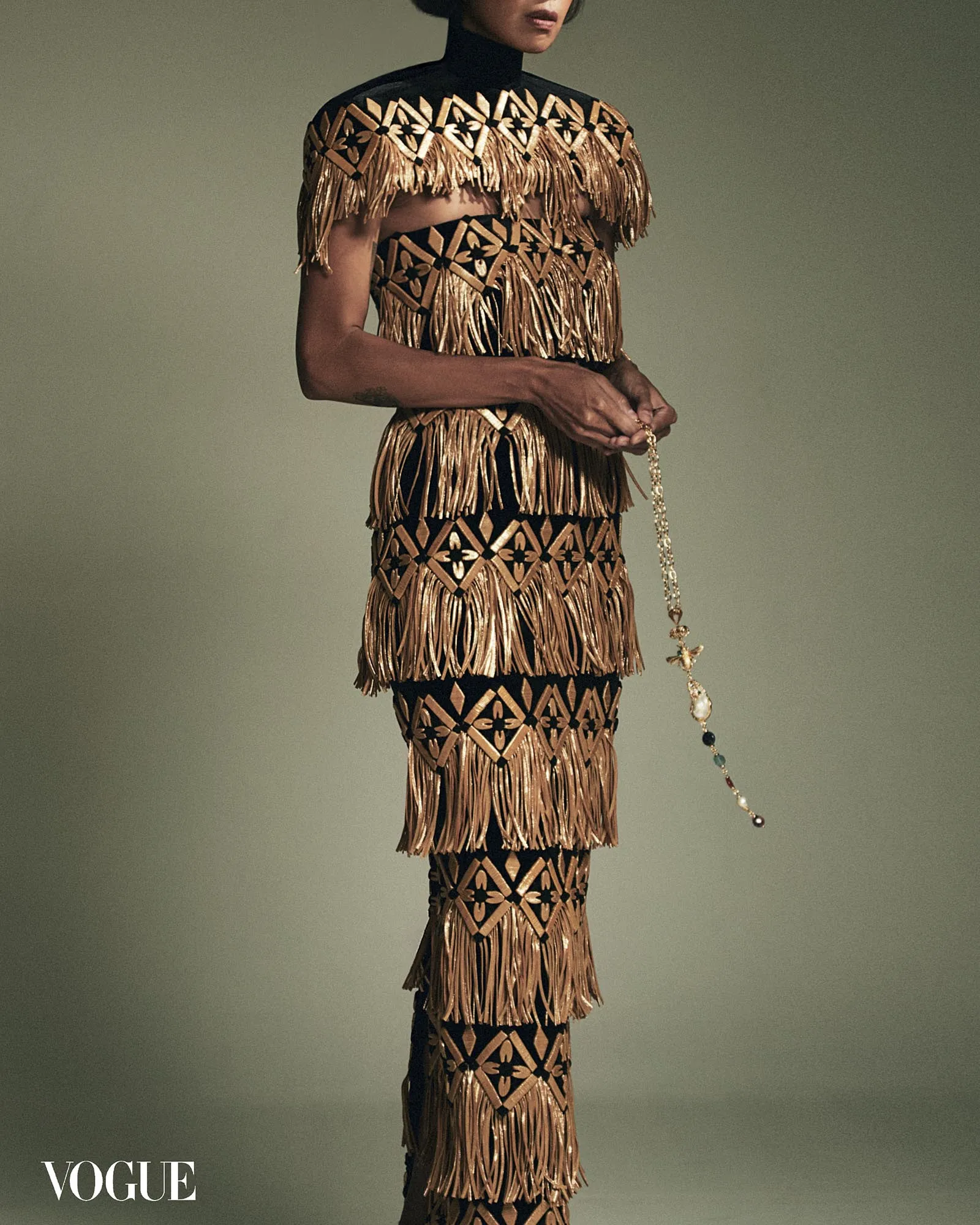
That show featured 21 designers, who themselves expressed that Cary deserved the finale. His collection Dragon Dance was a feat in fabric manipulation: seamless nude gowns with sculptural weaves and hand-sealed bias cuts that rippled across the body like reptile scales, moving effortlessly with the wearer. Onstage, Cary was shocked to see industry veterans and celebrities applauding him, some even going backstage to fit the dresses. The following week, a respected fashion columnist reviewed him in the newspaper. “It said: Lastly, Cary Santiago, it feels like he’s going to be Manila’s next big thing. I cried!” he exclaims.
“It was the first time ever in my life that I was given a standing ovation.”
This was the moment that every budding artist dreams of, and one that Cary had been waiting for since childhood, when before he was old enough to realize it, his mother had been training him in the foundations of fashion design.
From age seven, Cary spent much of his time folding, drawing lines, and tracing images of clothes from magazines, tasks given to him by his mother who was the kosturera or seamstress in their community. It was a rhythm he grew accustomed to. Soon, he began to make original sketches and his mother’s work orders became his, too. “I [would] always volunteer to say, my mom will stitch and I will do the sketching. I will make the design for you.”
The youngest of six siblings, he recalls that his first clients were his sisters, relatives, friends, and his mother. “I think just to make me happy because she saw me very eager already,” he quips. Her support was paired with guidance, prompting him to ask: Who would wear this? How is it worn? Where is the opening? From initially wanting to put everything on his dresses, he gradually learned how to edit, a skill that served him in high school.
Then 15 years old, Cary saw an advertisement outside his campus: a ready-to-wear company seeking a part-time fashion designer. The sketches he submitted were accepted, and it launched him down a path that led to opening his own small atelierAtelierThe French word for workshop, describing the studio where a designer's garments are cut, fitted, and finished by hand. In couture, the atelier is the heart of the house, homeGo to Atelier Glossary in the early ’90s. The space doubled as his quarters, but clients only saw the young creative’s confidence, and his reputation reached an Iraqi American couple who hired him to work at a couture house in Dubai. In his mid-twenties, Cary set off on his first trip abroad with his mother’s blessing.
Now proudly in his mid-fifties, Cary claps his hands together and announces, “Lunch is here, stop everything!” The room erupts in a mix of chatter and laughter, but not before the collective response goes, “Yes, mother!” A table is set up outside with the designer’s definition of a feast: fresh lumpiang ubod made with ube, Cebu-style pancit, torta cebuana, puto and pusô (rice cooked inside a handwoven pouch of coconut palm leaves), and the main event, lechon.
In true maternal fashion, Cary passes the juiciest and most tender cuts of the slow-roasted Talisay pig to the rest of the table, placing it directly onto our plates. For the couturier, the delicacy mirrors the dedication that’s required of his craft; it is a labor of love, as each piece takes hundreds of hours to create. “Haute couture is a slow process. Like food when it’s slow cooked, it’s delicious,” he says. “You cannot edit the process. There’s no shortcut.”
The Filipino designer spent three years in Dubai, honing his technique in moulage and fabric manipulation, which set him apart from his bead-heavy contemporaries. Then, he followed his co-designer to an atelierAtelierThe French word for workshop, describing the studio where a designer's garments are cut, fitted, and finished by hand. In couture, the atelier is the heart of the house, homeGo to Atelier Glossary in the Lebanese capital, where they spent another three years. A city known for its creative and cultural heritage, it became the backdrop of a burgeoning romance.
“Haute couture is a slow process. Like food when it’s slow cooked, it’s delicious. There’s no shortcut.”
The story is one he’s distilled into a fragrance: Bench’s On Love, War, and Haute CoutureHaute CoutureA protected French term for made-to-order, handcrafted fashion produced by houses that meet strict criteria set by the Chambre Syndicale. Haute couture involves multiple fittings and hundreds of hours ofGo to Haute Couture Glossary, whose notes of sampaguita and green bergamot recall innocence and youth from the Philippines to the Mediterranean, with a musk and amber dry down that evokes warmth and sensuality. The room falls quiet as Cary intimates, “It was a love reciprocated,” the shimmer plain in his eyes. “I’m emotional because I will not be able to find that kind of emotion again.”
Separated by war and diverging life paths, Cary closed the chapter with his partner and returned to Cebu, where his arrival was met with an influx of orders, a sign to stay. Instead of designing anonymously for the Western fashion calendar, he could now concentrate on his own bespokeBespokeClothing made to a client's individual measurements and specifications, with the client involved in choosing fabric, cut, and details. Bespoke garments involve multiple fittings and meticulous craftsmanship, and they differGo to Bespoke Glossary practice with his work attached to his name.
Last year, he presented a 50-piece collection that translated various fauna into soft sculptures: eagles and herons emerging from braided busts and feather-like organzaOrganzaA sheer, lightweight, crisp fabric made from silk or synthetic fibers, valued for its structure and subtle shimmer. Organza is used for ternos, bridal gowns, sleeves, and overlays, where itGo to Organza Glossary gowns, with animal patterns echoed through embossment and fabric tiling appliqué (a technique that involves hand-stitching fabric blocks to form a mosaic design), accented by jewelry from Cebu-based brand Diagold. He also conceptualized and produced the inaugural Philippine Terno Gala in 2023, a now biennial event that recently assembled the likes of Joey Samson, Jojie Lloren, and Cebu’s Edwin Ao, Jun Escario, and Protacio. Next up, he plans to open a “pret-a-couture” pop-up in Manila, which will allow shoppers to mix and match his pieces.
Narrating these changes, Cary sees a throughline in the sensitivity that’s carried him through his career and personal life. Couture, he believes, is not purely cerebral, but an art that asks one to feel deeply, so that the finished piece may evoke the same level of exhilaration. “May emotions dapat. Hindi siya beautiful lang. [It needs to have emotions. It can’t just be beautiful.]”
This, a lesson he picked up from his fashion heroes: Jean Paul Gaultier, Christian Lacroix, Azzedine Alaïa, Gianfranco Ferré, and more recently, Daniel Roseberry at Schiaparelli. It is also a value that extends to his client relationships, where trust and candor are essential from the very beginning, and he’s been known to turn away those who don’t share his vision. He says that “when you’re honest, everything follows,” from the technical details of the custom piece to the memories and close-knit bonds that are born from that first point of contact.
“And like the changing of guards, we need to support the new designers,” Cary remarks. “So this is where I involved myself in the Cebu Young Designers Competition.”
After 13 years, the CYDC was revived in March 2025, preceded by a selection process that narrowed down a shortlist of 36 designers into eight finalists, who participated in a mentorship program with industry experts, many of them YDC alumni. Cary was a mentor and panelist for the final runway, but he also took care of finding the event’s sponsors. It was important to him that the aspirants were given a strong foundation, and that the cash prize was substantial to allow them to mobilize. He lauds his mentees and Grand Winner Sarah Tutor, sharing, “This competition is very beautiful for our community. Because this is what we call continuity.”
Later in the day, a number of finalists arrive at the atelierAtelierThe French word for workshop, describing the studio where a designer's garments are cut, fitted, and finished by hand. In couture, the atelier is the heart of the house, homeGo to Atelier Glossary bearing a gift for “Mama Cary”: a potted Phalaenopsis or moth orchard, his favorite flower. Their names (King Rosales, Caesy Coronel, John Ivan Galochino, Cris Escobido, and Joshua Chiong) are ones to watch out for.
“It’s a cycle. You win, you won, you give back, you help,” Cary intones, conveying how natural the process feels. After working in fashion for over four decades and garnering acclaim in the past two, the “Phoenix of Philippine Couture” finds comfort in returning his recognition, guiding the next generation of designers and giving them a platform to leap and find their wings.
In today’s age of ready-made clothing and AI, he believes that an appreciation for art and nuance is still alive among the youth, and that the future of the craft remains bright. “Haute couture is an expression of the designer,” he says, “but it also celebrates the hands that stitch each of the beautiful embellishments on the gown, and it celebrates the body that wears them.” For Cary, couture has always been something intimate, rooted in connection, but also a level of care and vulnerability that some tend to dismiss as weak. It is the opposite. To get to that point, it takes the courage to lead with an open heart and the confidence to sing your own song, even before anyone knows that it’s your voice singing it.
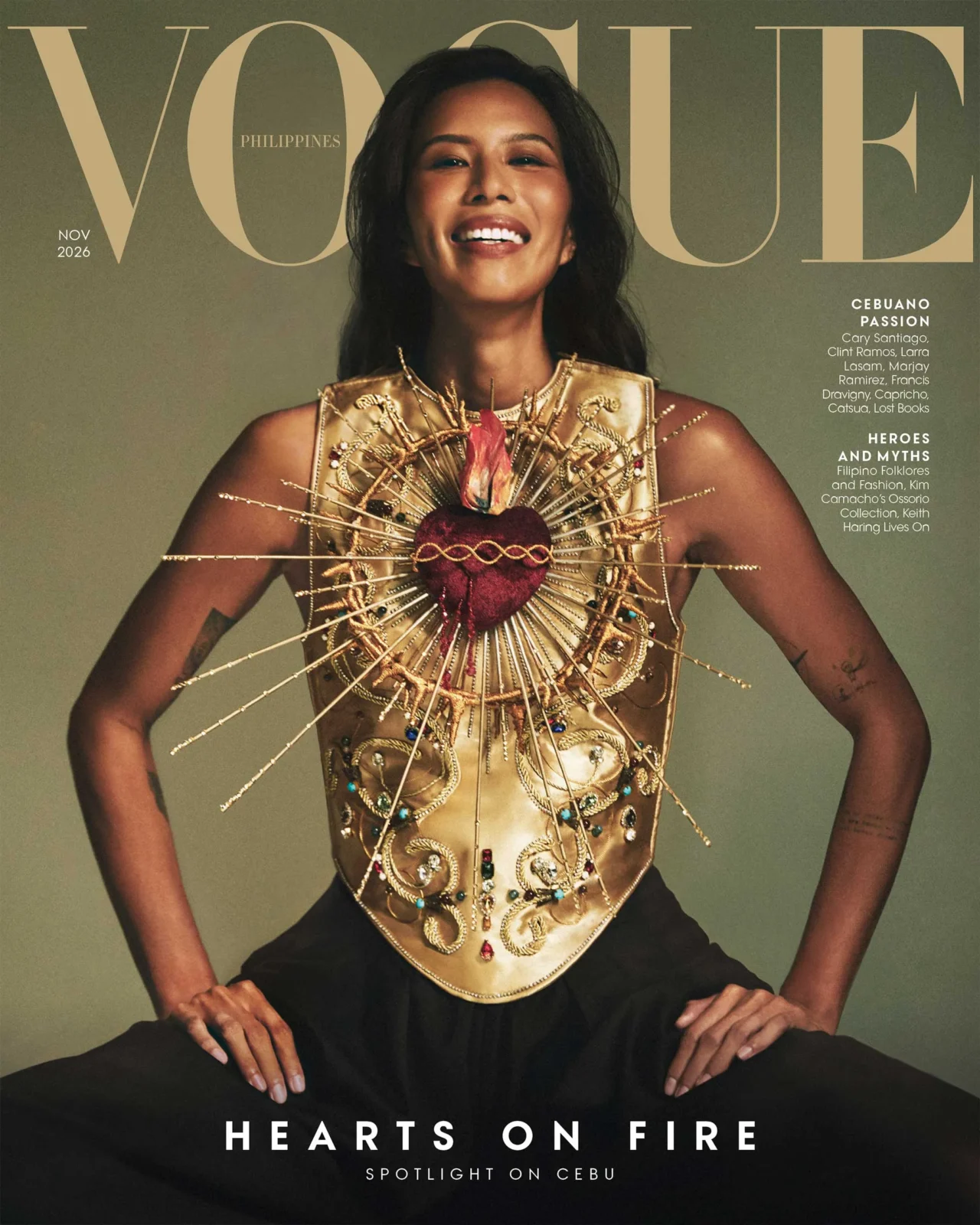
By AYLLI CORTEZ. Portrait by KARL KING AGUÑA. Fashion Editor: David Milan. Producer: Bianca Zaragoza. Media Channels Editor: Anz Hizon. Media Channels Copywriter: Aylli Cortez. Media Channels Video Editor: Wainah Joson. DOP & Editor: Robyn Josue. Gaffer: Jom Ablay. Colorist: Alyssa Medina. Sound Design: Alex Stanley