
Vogue Profiles: Anisah Farid Finds Beauty in Differences


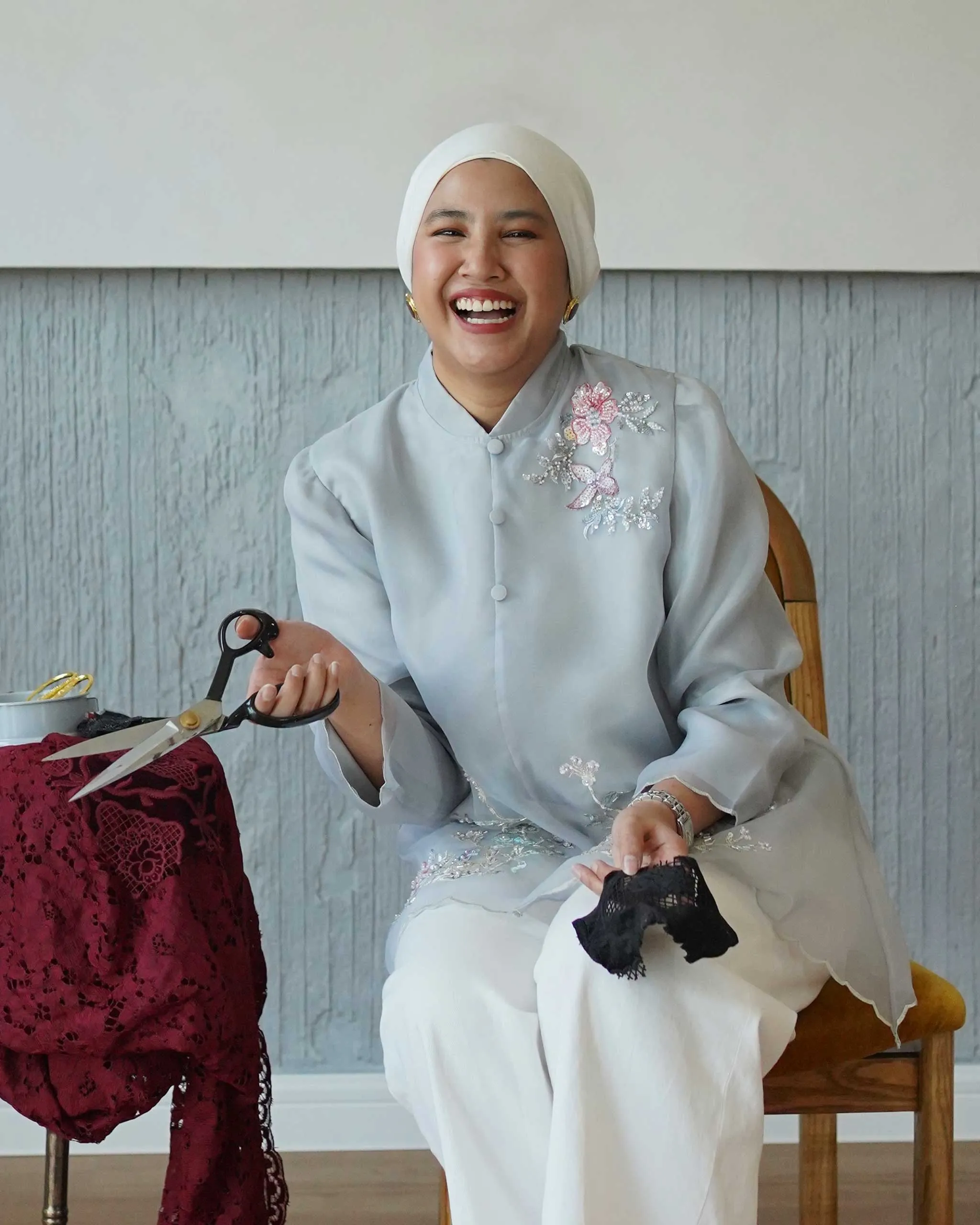
Courtesy of Fashion Week Asia
The Malaysian creative draws on cultural heritage and diverse textiles to explore individuality through the contemporary womenswear of her brand, Plazä.
Inspiration comes in different forms. For Anisah Farid, founder and creative directorCreative DirectorThe person who sets the overall visual vision of a fashion house, publication, or campaign and guides designers, photographers, and stylists toward it. A creative director's influence shapes collections, imagery,Go to Creative Director Glossary of Plazä, the belief that fashion should embrace and celebrate our differences inspired her to establish the brand.
Farid earned a degree in Fashion Pattern Cutting from the London College of Fashion, which laid the foundation for her early career in fashion houses across London and New York before returning to Malaysia. These experiences have helped shape her brand, particularly in its approach to reinterpreting Malaysian heritage and craftsmanship through a contemporary lens. The result is a collection of pieces that celebrate individuality and the multifaceted women of today.
Her latest collection, “Reunion,” brings this vision to life. Farid began designing the collection by imagining different personalities coming together. No two pieces are the same, yet together they take on new meaning. Drawing from materials and textiles across Asia, the collection brings together Thai silk, Indian saris, Indonesian lace, Malaysian batik and songket, traditional pelikat, and East Coast batik. These heritage textiles are juxtaposed with contemporary fabrics such as velvet, organza, and satin twill.
“I began designing this collection by imagining different personalities coming together. I wanted every piece to have its own identity, its own character, its own way of expressing itself, just like us as individuals,” she tells Vogue Philippines ahead of presenting some of the pieces at the inaugural Fashion Week Asia.
In the Vogue Profiles interview series, we speak with creatives and cultural voices about their taste, worldview, and inner life, and explore what informs their creative choices. Below, designer Anisah Farid explains how her ideas about heritage, craftsmanship, and tradition shape her practice.
Vogue Philippines: Apart from the upcoming show, what’s capturing your attention these days?
Anisah Farid: Motherhood, actually! I just became a mother this year, and it’s been the most beautiful, humbling, and fascinating experience. It’s made me see the world through a completely different lens, appreciate the smallest things, and rediscover a sense of wonder in everyday life. I’m learning just as much about myself as I am about [my son]!
What has shaped your creative eye the most?
People’s stories, without a doubt. I developed this fascination when I was living in New York, where I would attend The Moth, a storytelling event where strangers share real, personal experiences. I loved how people from completely different walks of life could fill a room with laughter, tears, and a sense of connection, simply by sharing their three-minute stories.
It taught me that everyone carries a world within them, shaped by their experiences and perspectives. That philosophy has become central to how I design. Rather than imposing a single aesthetic, I like to explore different personalities through silhouettes, textures, and techniques, allowing each piece to tell its own story while finding a sense of belonging within the collection. Because ultimately, I’m not just interested in how clothes look, but in the people, emotions, and experiences they represent.
How would you describe your aesthetic—not just in your work, but in the way you live?
I’m like a very chaotic blurb. I’m quite spontaneous too; I rarely have a plan, and I love the excitement of not knowing what’s next. Of course, that comes with a few bumps along the way, but I’ve always found more joy in living in the present, within my means, and embracing life’s craziness.
Ironically, I’m the complete opposite when it comes to my work. I can be obsessively meticulous, perfecting every little detail until I’m completely satisfied. Perhaps that’s why I enjoy messiness in my personal life. When you spend so much time striving for perfection in your craft, there’s something liberating about allowing the rest of your life to be beautifully imperfect.
What do you think people misunderstand about creativity?
That you’re either born with it or you’re not. I believe everyone possesses creativity to some degree; it just manifests differently. Creativity isn’t exclusive to artists or designers. It can be found in the way someone solves a problem, tells a story, cooks a meal, or simply approaches everyday life.
I think the biggest misconception is that creativity is a gift reserved for a select few, when really, it’s something we can all nurture through curiosity, observation, and the willingness to experiment. Sometimes, being creative simply means having the courage to see things differently.
When do you feel most like yourself? (Not necessarily while working)
Right now, it’s simply being in my living room with my baby, singing Wheels on the Bus for the hundredth time, with banana purée in one hand and an oat milk latte in the other. Haha! It’s wonderfully ordinary, and I wouldn’t trade it for anything.
Is there a ritual or habit you return to whenever you need clarity or inspiration?
I do a single-line sketch without lifting my pencil off the paper. It forces me to let go of control, to surrender and trust where the line goes. There’s also no erasing the mistakes; they simply become part of the drawing.
What are you saying through your work that words alone can’t express?
That there is room for all of us. We don’t have to look alike, think alike, or come from the same place to belong together. We live in a world that often encourages us to fit into certain molds, to look a certain way, or to belong somewhere. But I’ve always believed that individuality is something to be celebrated, not compromised.
Has success changed the way you create—or the way you define success itself?
I think the biggest shift has been realizing that success isn’t really about me. When I first started, it was easy to associate success with personal milestones and achievements. But now, I find greater meaning in what my work can do for others, whether it’s creating opportunities for artisans, supporting the people who bring my ideas to life, or making someone feel celebrated through what they wear. Success feels much more meaningful when it becomes something you can share.
For Fashion Week Asia, I had the privilege of working with a third-generation embroidery artisan from Penang, a self-taught metalsmith, and a community of batik artisans from Malaysia’s East Coast. Different people, different generations, different crafts, all coming together. And that’s what has redefined success for me. It’s no longer just about how far I can take my work, but how many people I can bring along on that journey.
What are you learning to let go of?
The idea that I have to do everything, and do it perfectly. I’ve always been someone who pours my whole heart into whatever I do, sometimes at the expense of being present for everything else. Motherhood and building Plazä have taught me that time and energy are precious, and I’m learning that giving my best doesn’t always mean giving everything I have.
What kind of legacy do you hope your work leaves behind?
I hope my work reminds people that it’s possible for them too. That no dream is too far-fetched, no ambition too big, and that where you begin doesn’t have to determine how far you can go.
To me, my work would mean very little if it didn’t inspire someone else to do better than me, go further than me, and dream bigger than I ever dared to. I don’t want my legacy to be about how far I’ve come, but about how much further someone else believes they can go because of it.
Frequently Asked Questions
Anisah Farid is the founder and creative director of Plazä, a Malaysian brand that celebrates individuality and embraces differences through contemporary design.
Anisah Farid earned a degree in Fashion Pattern Cutting from the London College of Fashion.
Plazä is a fashion brand founded by Anisah Farid on the belief that fashion should embrace and celebrate differences. Its designs reinterpret Malaysian heritage and craftsmanship through a contemporary lens.
Farid draws inspiration from cultural heritage, diverse textiles, and women’s multifaceted identities, bringing traditional Asian materials together with contemporary fabrics.
“Reunion” explores the idea of different personalities coming together. The collection combines textiles from across Asia, including Thai silk, Indian saris, Indonesian lace, Malaysian batik, and songket, with contemporary fabrics such as velvet, organza, and satin twill.
- Asia, In Its Own Language: Inside the Kong’sear of Fashion Asia Hong Kong’s 10 Asian Designers To Watch
- Novel and Maligaya Clothing Co. Named To Fashion Asia Hong Kong’s 10 Designers to Watch 2026
- At Bangkok’s Silk Festival 2025, the Country’s Silk Industry Is at the Fore
- The Terno Today: Works by Our Seasoned Designers