
Alicia Keys Closes Out Vogue World 2026: Milano in a Hand-Painted Dress by Francesco Risso


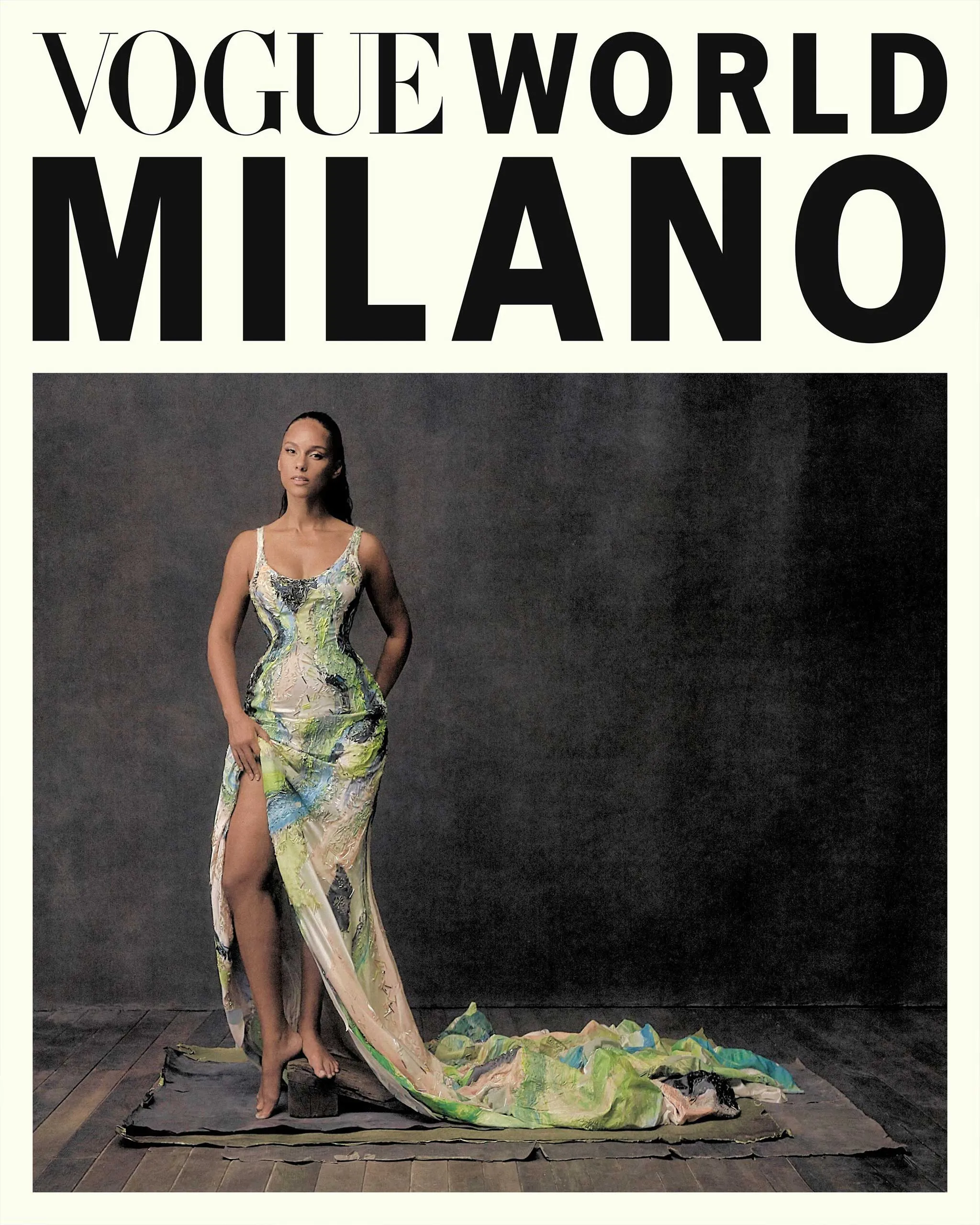
Photographed by Szilveszter Makó
There’s a common Italian musical expression describing someone who plays a musical score with passion. Called “Lento con fuoco,” it’s a phrase that also aptly captures the bold rhythm and range typical of R&B and soul, genres in which singer and songwriter Alicia Keys—with over 90 million records sold and 17 Grammy Awards to her name—is considered a living legend. “Lento con fuoco” doesn’t ask the musician to rush or be fast, but to dream and, in turn, inspire others to dream. It is in that spirit that Keys closed out the Vogue World: Milano runway show, at her piano at the center of the Galleria Vittorio Emanuele II, singing Donna Summer’s disco classic “I Feel Love,” surrounded by models in a series of ethereal white dresses.
To celebrate the occasion, Keys was photographed by Szilveszter Makó wearing a dress by Bureau of Imagination, Francesco Risso’s collaborative project with Alex Sossah. “When Alicia Keys was confirmed, we spoke with her before deciding who should design the dress. It had to embody performance, movement, art, and painting,” says Luca Galasso, the fashion director of the cast and special performers for Vogue World 2026: Milano. “We asked ourselves who creates art in a modern and contemporary way, more than anyone else, and Francesco Risso’s name stood out. Alicia dreams—she’s a dreamer. I am, and Francesco is. It was perfect.”
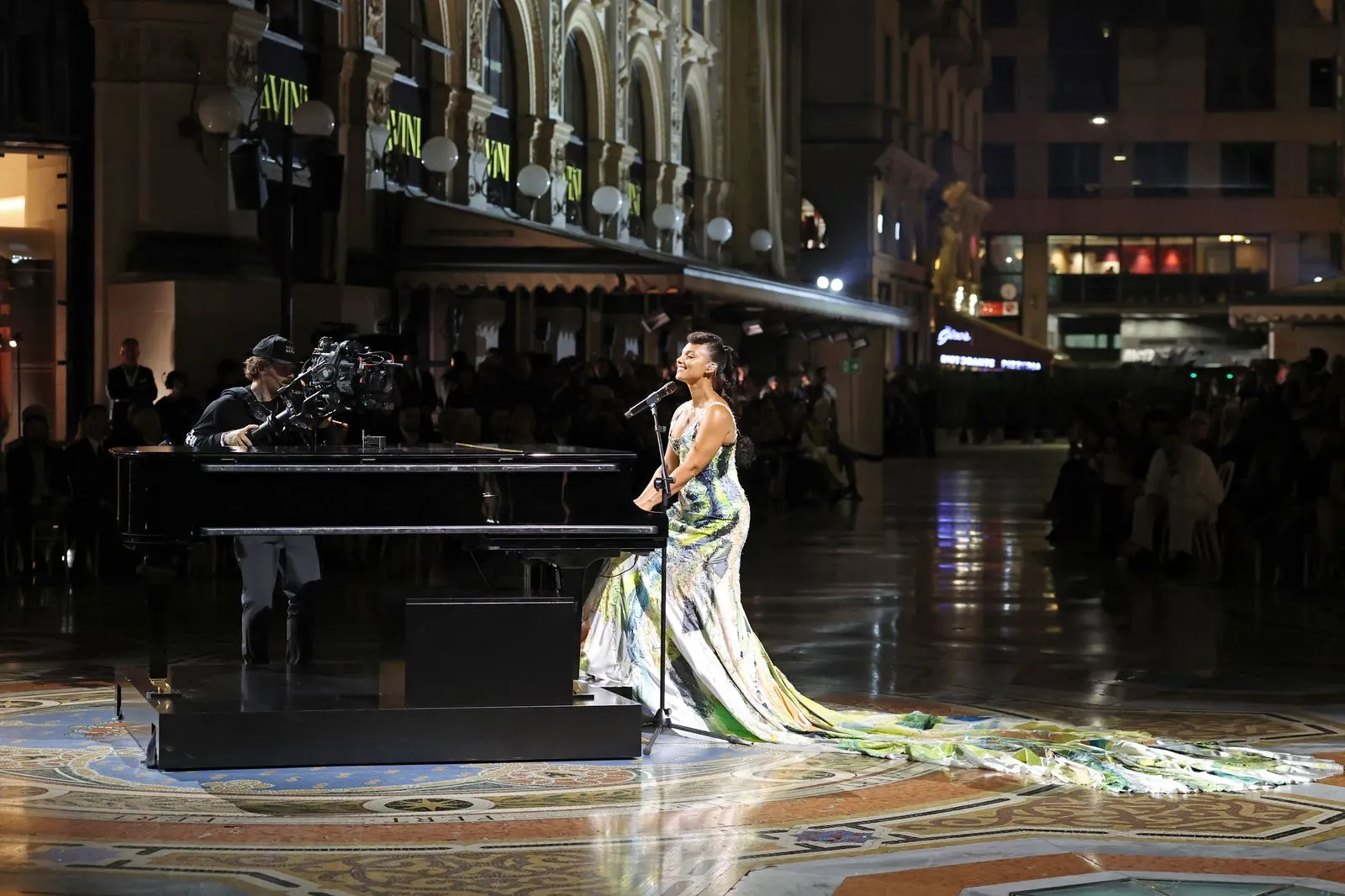
“The starting point was the idea of fragments: pieces that have already lived in some way and that come together to give life to another story,” Risso tells Vogue of the dress, which was crafted from scraps of satin, chiffon, georgette, and crêpe de Chine, all bound together with thread and beads. “I was fascinated by the idea that the boundary between where one fabric ends and another begins would almost disappear. These are two pieces that become almost one when Alicia moves.”
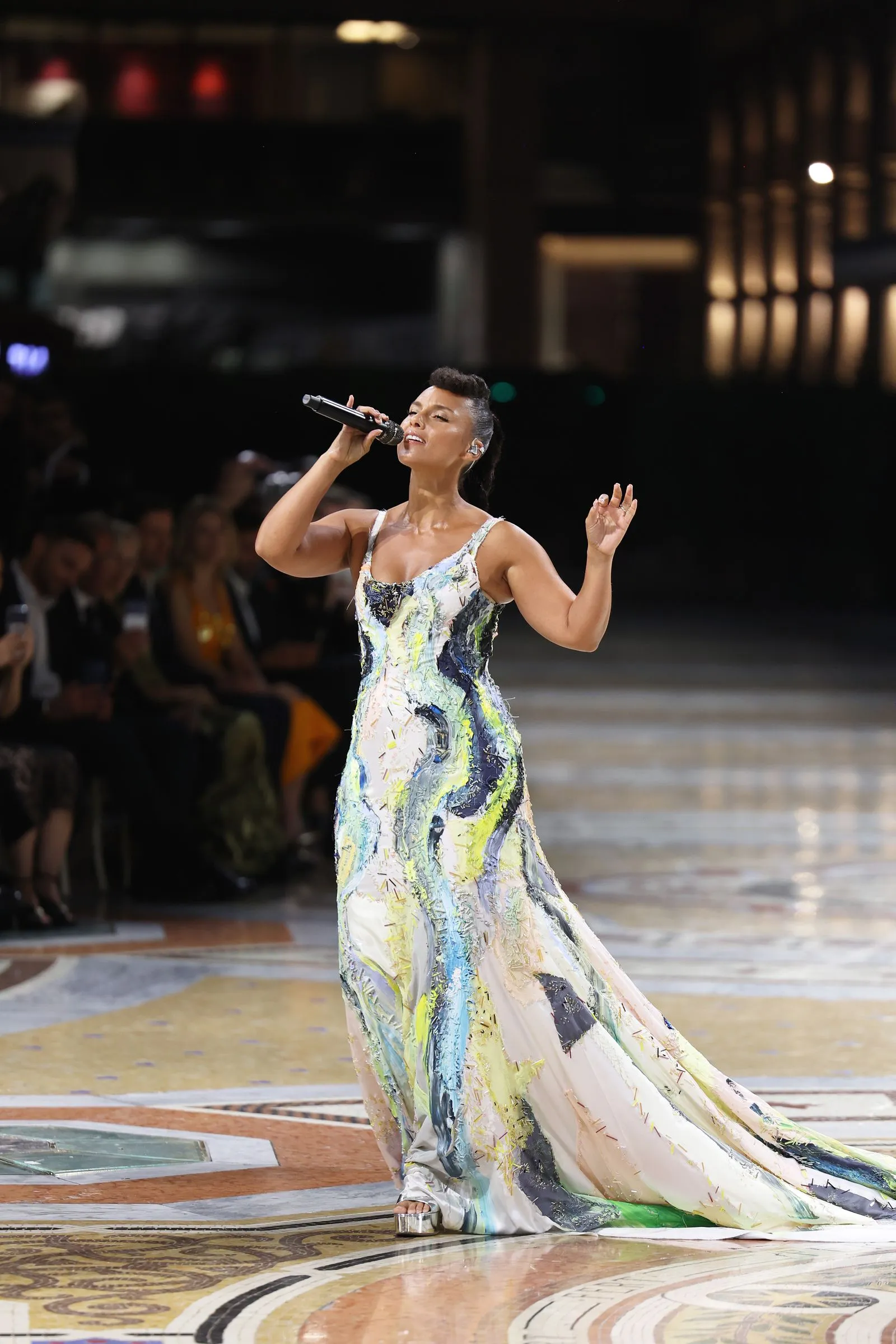
Risso and Sossah emphasized the importance of movement and the need for it to follow Keys’s body throughout the performance. “You have to think about how it catches the light, about what happens to a train as it sweeps across the stage. We knew Alicia would close Vogue World with a performance, so the look had to have presence and emotion, but also movement,” Risso said of the collaboration with the artist. “We wanted to create something that felt solemn without becoming too formal or stiff. We felt it was essential to create something that would allow Alicia to fully inhabit it. For me, dressing someone for a performance never means imposing a character on them; the clothes must become part of their own language.”
Both delicate and monumental, the dress also embodies Risso’s concept of Italian craftsmanship—the central theme of Vogue World 2026: Milan. “For me, Italian craftsmanship isn’t just about perfection—it’s also about the hand,” the designer said. “That is, understanding the material so deeply that you can manipulate it, transform it, and allow ‘accidents’ to happen.”
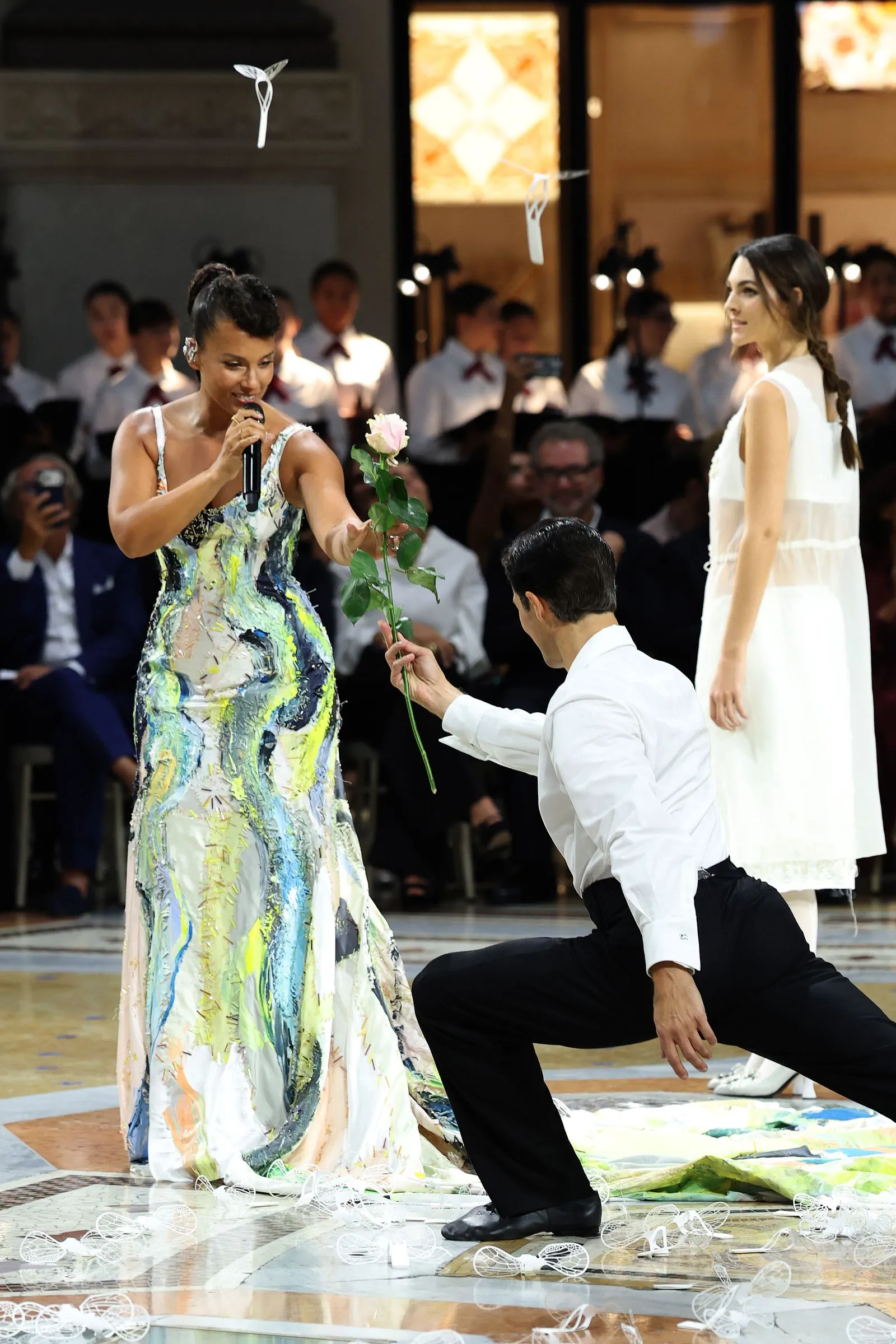
The look itself is a slip dress assembled from different elements that extends into an enormous train that was then painted by Flaminia Veronesi, who decorated the entire surface entirely by hand as if it were a canvas. “We exaggerated the train until it reached the same length as the dress,” said Risso. “There’s something almost contradictory about this: softness and structure, masculine and feminine, something unfinished set against something solemn. It’s a work that speaks of accumulation, transformation, and memory.”
Keys rarely wears dresses—her approach to style is much more casual. Still, Risso’s work resonated deeply with her, in part due to his own freewheeling approach to a formal gown. “We’re interested in the unexpected outcomes that can arise when different objects, garments, materials, and people come into contact with one another,” he says. “The dress is part of our ‘Vestige’ language, in which one-of-a-kind pieces are created through composite parts. What’s new, perhaps, is the context: taking that handmade, intimate process and letting it become something enormous through Alicia and her performance.”
This story was adapted from one that originally ran on Vogue Italia.
In this story: hair, Chuck Amos; makeup, Carol Lopez Reid; set design, Edith Di Monda; executive producer, Siyan Chen; 1st photo assistant, Gianluca Malavota; photo assistant, GV; production assistant, Isabella Gao, Haffid El Maataoui; set design assistants, Lucky Sturm, Giulia Ceraolo, Dario Taverna; location, Cracco.