
Vogue Profiles: Inside Photographer Belg Belgica’s Creative World


Courtesy of Belg Belgica
For this photographer, creativity is about showing up, staying curious, and looking closely. He shares what continues to inspire his work.
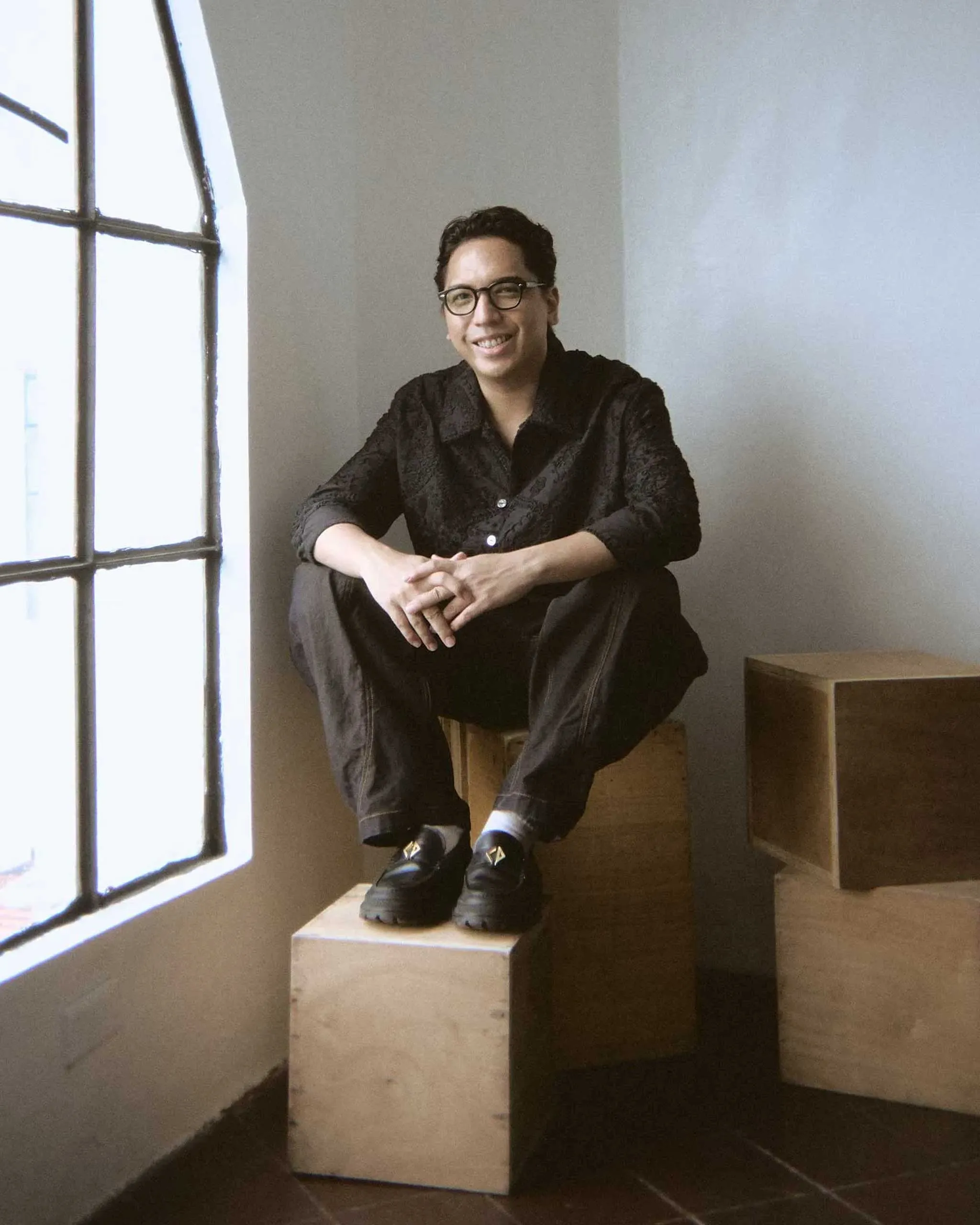
At First United Building in Escolta, Manila, photographer Belg Belgica finds his creative home. There, he co-founded Espacio Creativo Escolta, a creative studio and rental space for photo shoots, video productions, and creative campaigns.
Belgica worked in the corporate and medical fields before becoming a full-time creative. As a photographer, he made his name shooting fashion editorials and celebrity portraits, including James Reid, Andres Muhlach, Kara David, Nouri June, and Brent Manalo. At the recent GQ Philippines launch, Belgica also captured guests in a painterly, nostalgic, and old-world portrait aesthetic. Outside of photography, he maps out the history and heritage of the City of Manila through his online social media series, The Heritage Journal.
In the interview series Vogue Profiles, we speak with Filipino creatives and cultural voices about their taste, worldview, and inner life, and learn about what informs their creative choices. For its first iteration, a peek into Belgica’s mind.
Vogue Philippines: What’s capturing your attention these days?
Belg Belgica: I’ve been thinking about how life is so fleeting and the things we risk losing—old buildings, old relationships, present relationships that mean a lot to us. But I’m also wondering about how these losses are meant to make space for new communities and new possibilities
What has shaped your creative eye the most?
They say we create new ideas or art by recombining elements from our past experiences. Growing up in our ancestral house in San Miguel, Manila, I was fascinated by old houses and the stories they carry. I would even ride the jeepney to Escolta every Sunday to shoot on the street.
Living in Manila taught me to look for beauty within imperfection rather than wait for everything to be perfect. As a teenager, I would also consume a lot of photos shot by amazing photographers such as Annie Leibovitz, Steven Meisel, and Helmut Newton. Fashion taught me how to construct an image, while heritage taught me how to really look at one. Somewhere between those two is where I think my visual language lives.
How would you describe your aesthetic—not just in your work, but in the way you live?
There’s an Italian word called sprezzatura, or studied carelessness. I like it when something looks cool and effortless, but I also value the preparation that comes with it to make something look effortlessly chic and beautiful.
What do you think people misunderstand about creativity?
People always wait for inspiration to come. But it’s all about showing up, being curious, doing the work, and allowing yourself to make things that aren’t perfect. Some of my favorite ideas didn’t arrive as big moments of inspiration. They came from walking around, talking to people, noticing something I had seen a hundred times before, and suddenly seeing it through a different lens.
When do you feel most like yourself?
I feel like I’m most myself when I’m in my studio in Escolta. Escolta alone is my safe space, and it has always been. I’m surrounded by authentic people who share the same love for art, for beauty, and for the community.
Is there a ritual or habit you return to whenever you need clarity or inspiration?
I journal when I need clarity. It’s important for me to dump all the thoughts in my head and read them word-for-word to spark inspiration or solutions.
What are you saying through your work that words alone can’t express?
There’s a certain hunger in my work that I find difficult to put into words. I’ve always been in this relentless pursuit of greatness, of making an image that feels impeccable, that transcends the assignment or the moment it was created for. I don’t know if you ever really arrive at greatness, and perhaps that’s the point. The pursuit itself keeps me curious, restless, and constantly asking what else is possible.
Has success changed the way you create, or the way you define success itself?
Definitely. I used to associate success with climbing the corporate ladder or shooting numerous covers. And those things still mean a lot to me. But as I’ve gotten older, I’ve realized that success is also having the freedom to choose what deserves my energy.
Being able to open our own studio, create work I’m proud of, support other creatives, and contribute to a community I genuinely care about feels just as significant as any byline or covers.
Success now feels less like being seen everywhere and more like being able to create an impact on other people’s lives.
What are you learning to let go of?
I am learning to let go of the idea that everything I make has to mean something. Being in corporate for a decade made me feel like every project had to be bigger or better than the last. I’m learning that not everything needs to become an achievement. Sometimes I can shoot something simply because I’m curious about it, or make something because it brings me happiness.
What kind of legacy do you hope your work leaves behind?
I’d love for my photographs to eventually become a record of this particular moment in Manila: the people, fashion, buildings, communities, and creative energy that existed here during my lifetime.
Beyond the photographs themselves, I hope I’ve helped people look at Manila with a little more curiosity and affection. If someone looks at my work decades from now and understands a little bit about what it felt like to be here, now, I think that would be a beautiful legacy.
Frequently Asked Questions
Belg Belgica is a fashion, portrait, and cultural documentation photographer and the co-founder of Espacio Creativo Escolta.
Espacio Creativo Escolta is a heritage-building creative studio and rental space.
Espacio Creativo Escolta is located inside the First United Building along Escolta Street in Manila.
He is known for his fashion and portrait work, as well as being the co-founder of Espacio Creativo Escolta.
Belg Belgica is based in Manila, Philippines.
- Meet Kenza Le Bas, the Photographer Behind Vogue Philippines’ August 2026 Cover
- The Portrait Architects Behind The Lounge Booth, Hollywood’s Sought-After Photography Service
- A Decade On, Xyza Mizrahi Is Still Mother to the Philippine Ballroom Community
- Meet Adrian Martin, the Filipino Photographer Behind Your Favorite Celebrity Portraits