
A Tale of Comme des Garçons, Set in Manila’s Creative Landscape


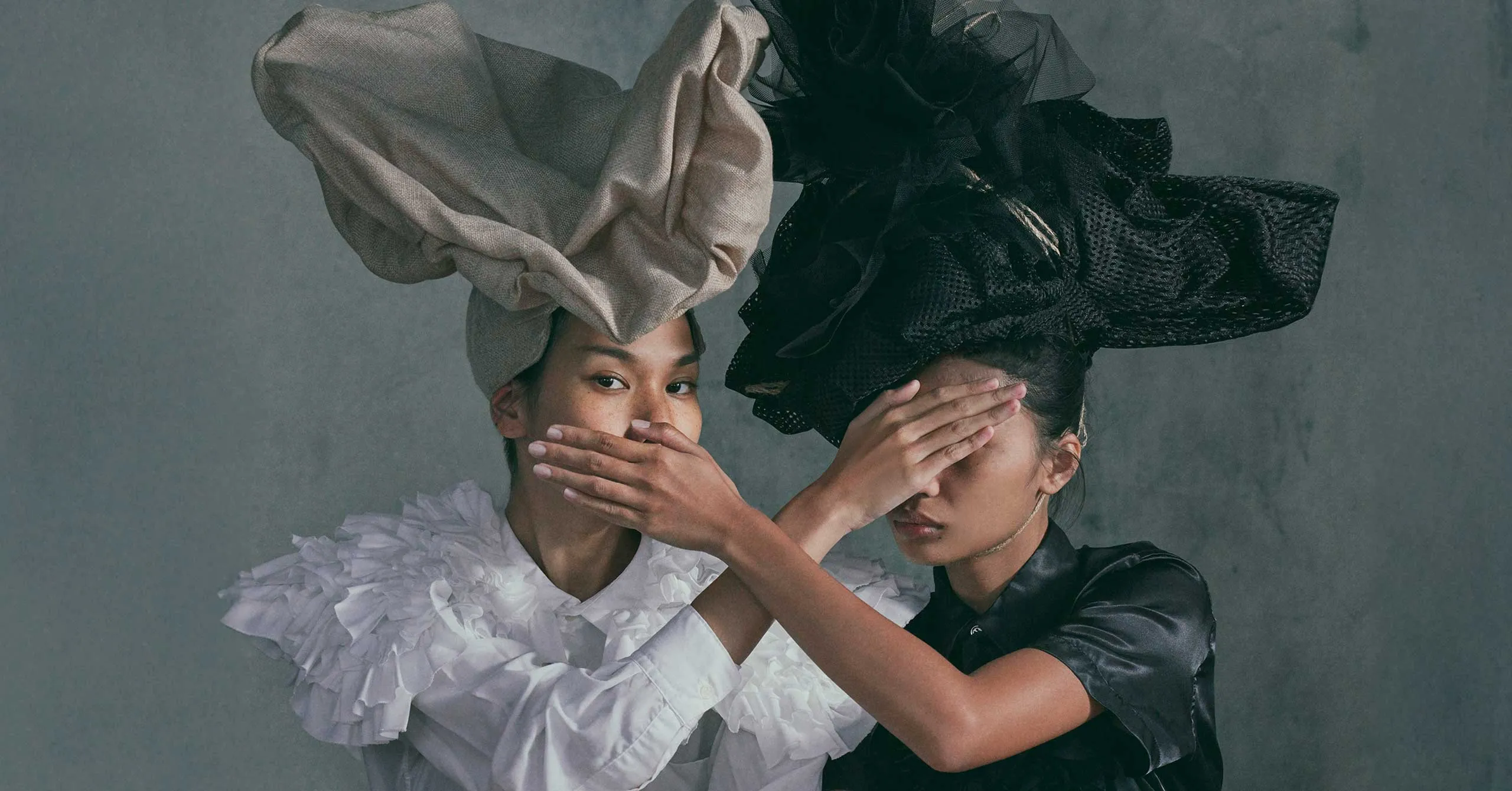
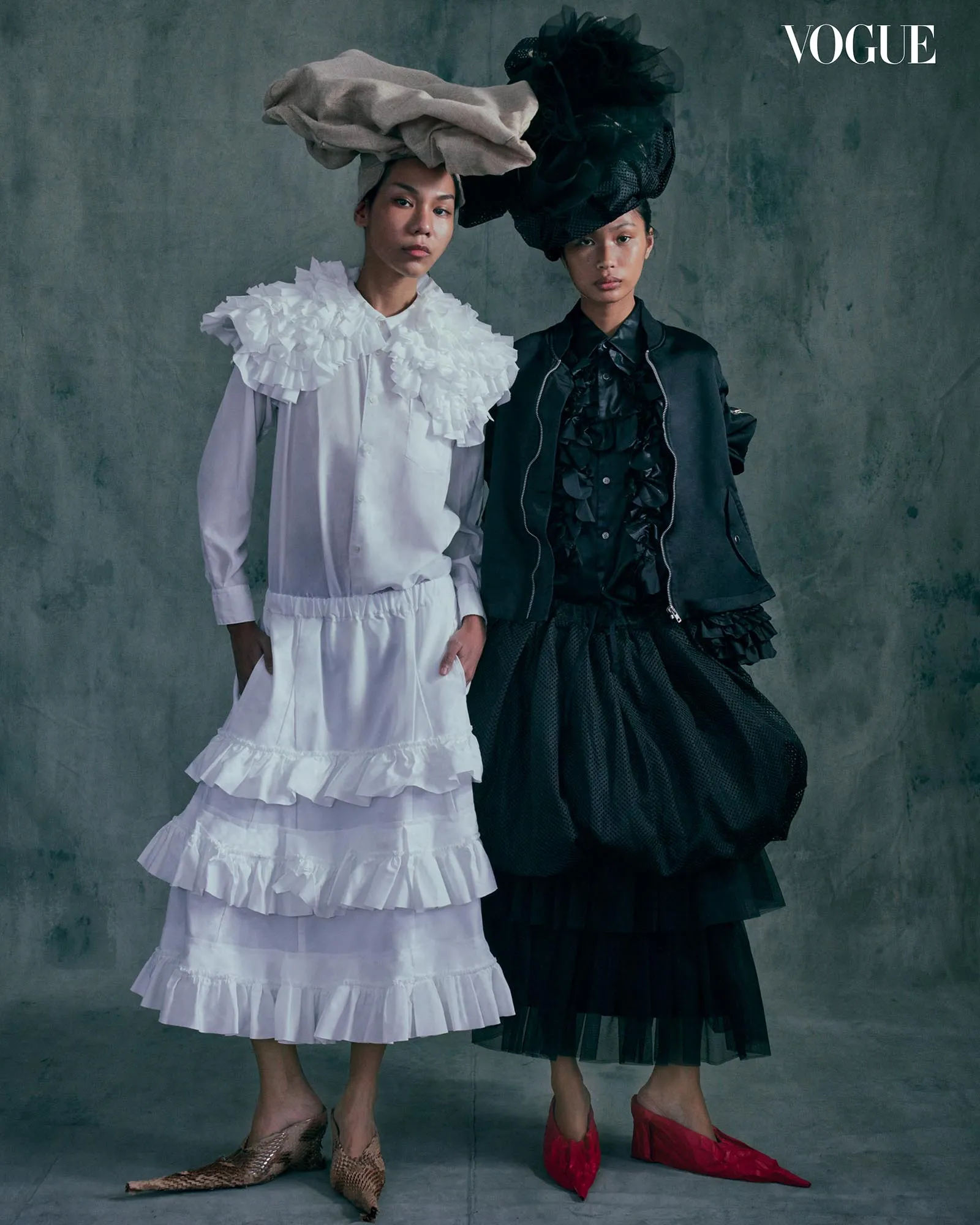
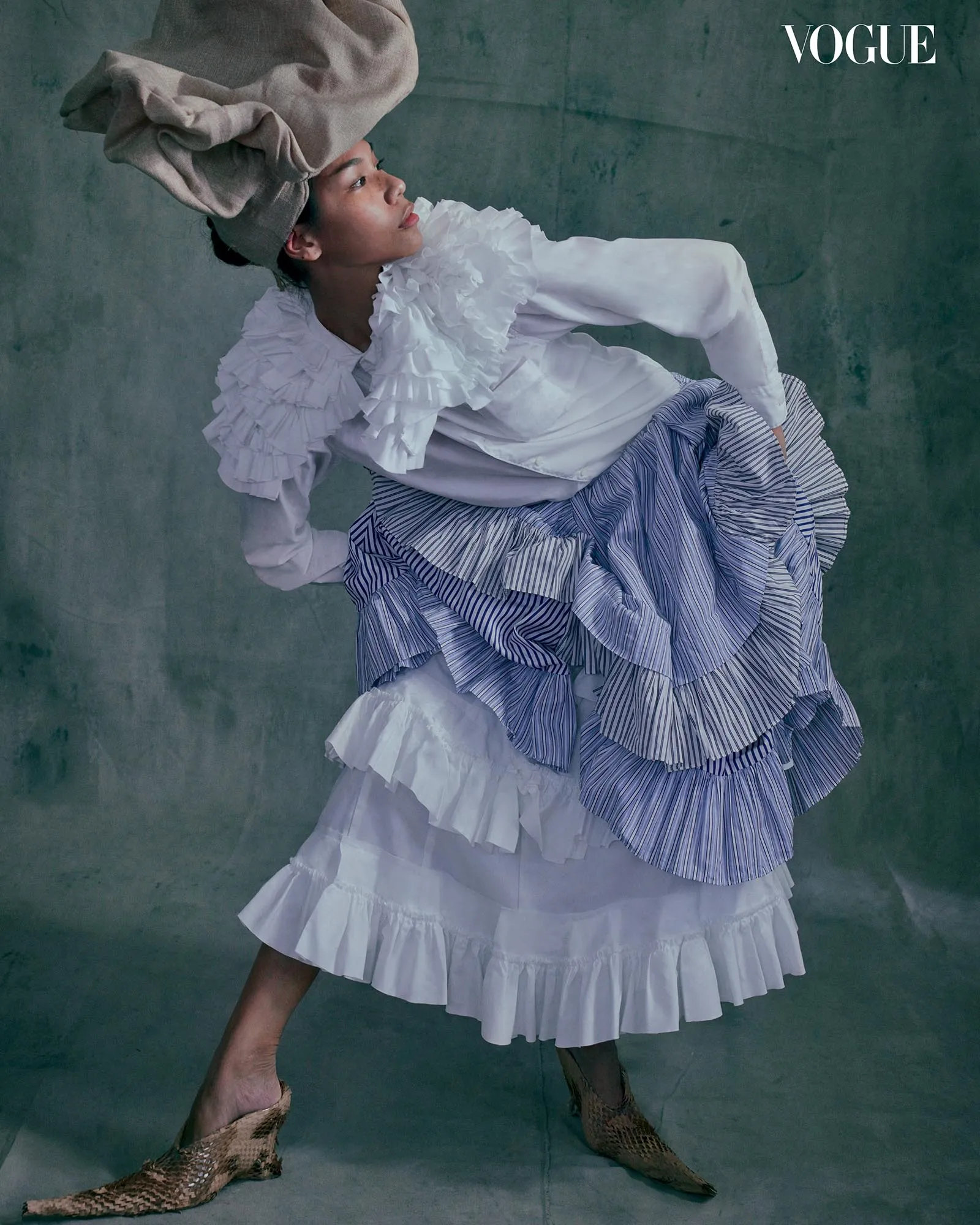
Isla wears a COMME DES GARÇONS shirt; Chloie wears a COMME DES GARÇONS shirt with a BLACK COMME DES GARÇONS skirt worn as a hat. Photographed by Mark Nicdao for the September/October 2026 Issue of Vogue Philippines
Isla wears a COMME DES GARÇONS shirt; Chloie wears a COMME DES GARÇONS shirt with a BLACK COMME DES GARÇONS skirt worn as a hat. Photographed by Mark Nicdao for the September/October 2026 Issue of Vogue Philippines
For over a decade, Univers has helped create a space for the ideas, community, and creative energy surrounding Comme des Garçons to take root in Manila, and in the artists who continue to shape the city’s creative landscape.
Every city has its own unofficial geography. There are the places that appear on maps, and then there are the places you only find if you know where to look, like a gallery tucked behind an unassuming façade, a community that gathers after midnight, or an artist’s studio above an old commercial building. The city’s creative life has always unfolded in these in-between spaces.
This extends toward fashion, which at its best becomes part of the culture surrounding it. It is a point of entry into a wider way of thinking that can shape the people who encounter it, wear it, and build upon its ideas. For the past 14 years, multi-brand stores Univers and Homme et Femme have helped cultivate that space for Comme des Garçons in Manila, connecting Kawakubo’s world with a local creative community that continues to interpret and expand upon it. Rei Kawakubo understood this before Comme des Garçons became synonymous with avant-gardeAvant-gardeExperimental, boundary-pushing design that challenges conventional ideas of beauty, shape, and dress. Avant-garde fashion favors unusual silhouettes, materials, and concepts, often appearing on runways and in editorials before its ideasGo to Avant-garde Glossary fashion. Since founding the label in Tokyo in 1969, she has treated clothing as a way of questioning accepted forms. Her garments, oftentimes asymmetrical and deliberately unresolved, ask what beauty and identity could become.
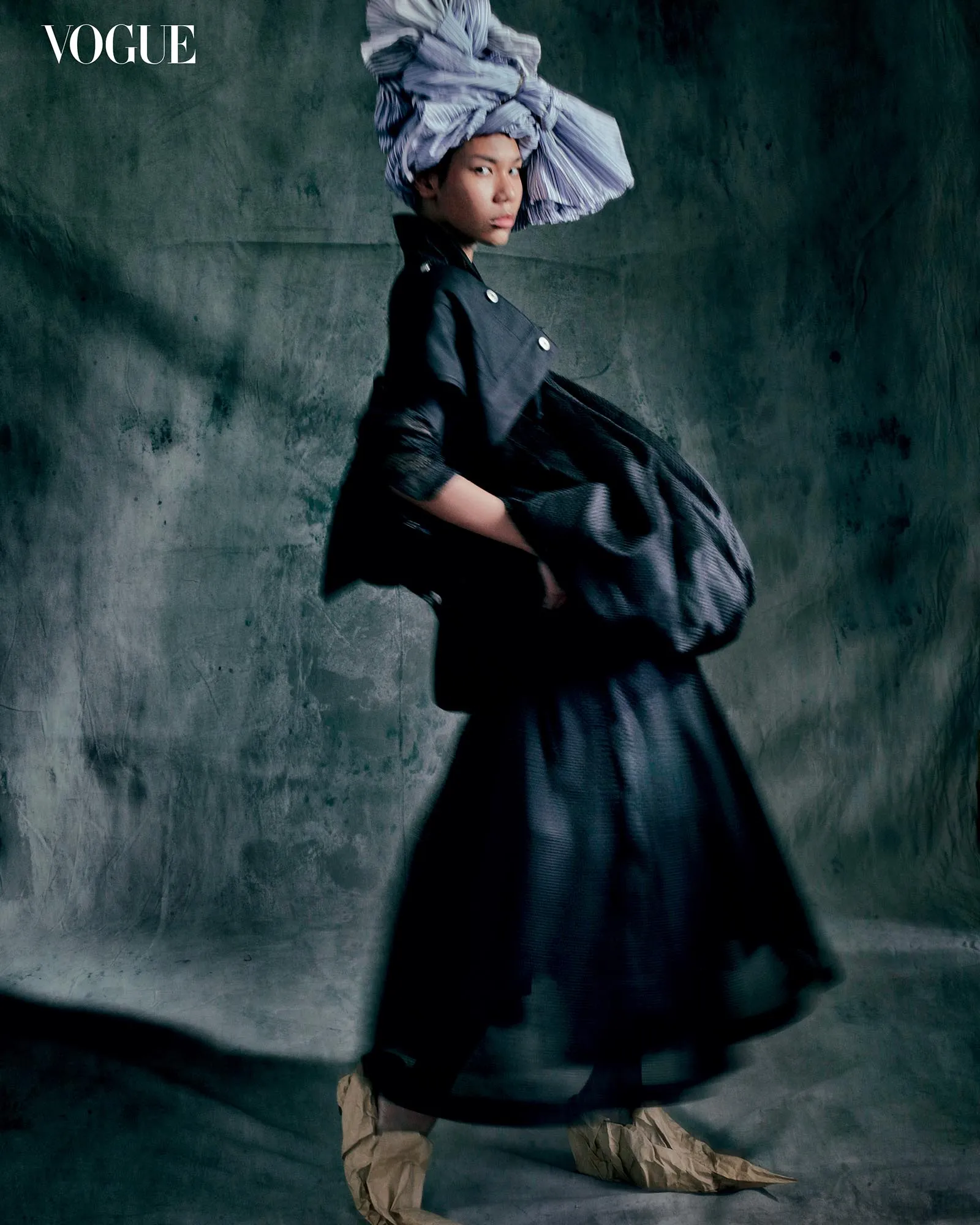
as a hat. Photographed by Mark Nicdao for the September/October 2026 Issue of Vogue Philippines
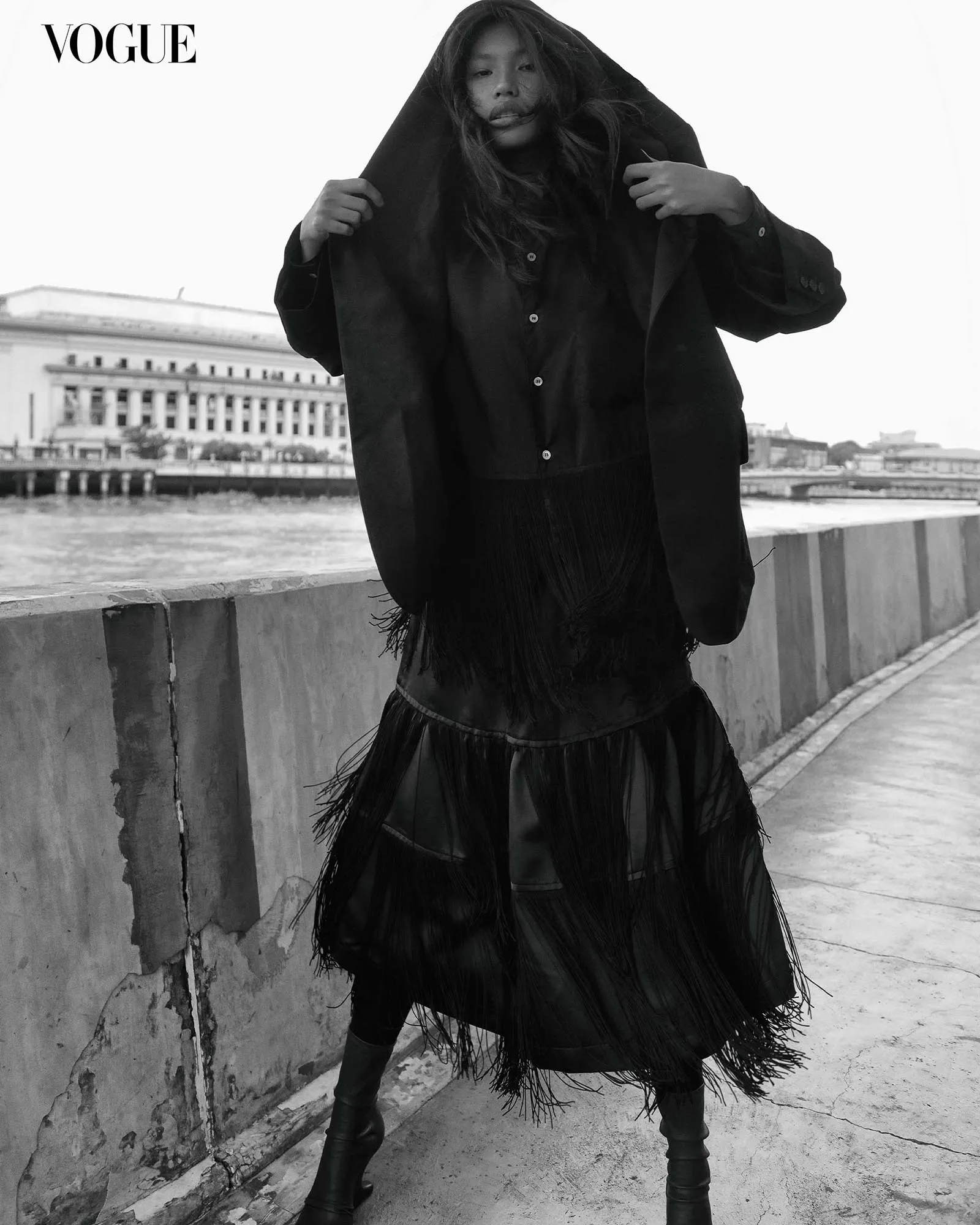
That philosophy inevitably escapes the boutiques, as it finds its way into people who recognize something of themselves in its refusal to conform. In Manila, that refusal has long existed in the practices of artists who have built their own visual languages at the margins, where making has always mattered more than fitting in.
To ask where Comme des Garçons lives in Manila is to ask where creative independence continues to flourish.
“I think my work exclusively lives in the periphery. Things are more open to possibilities.”
— MANUEL OCAMPO
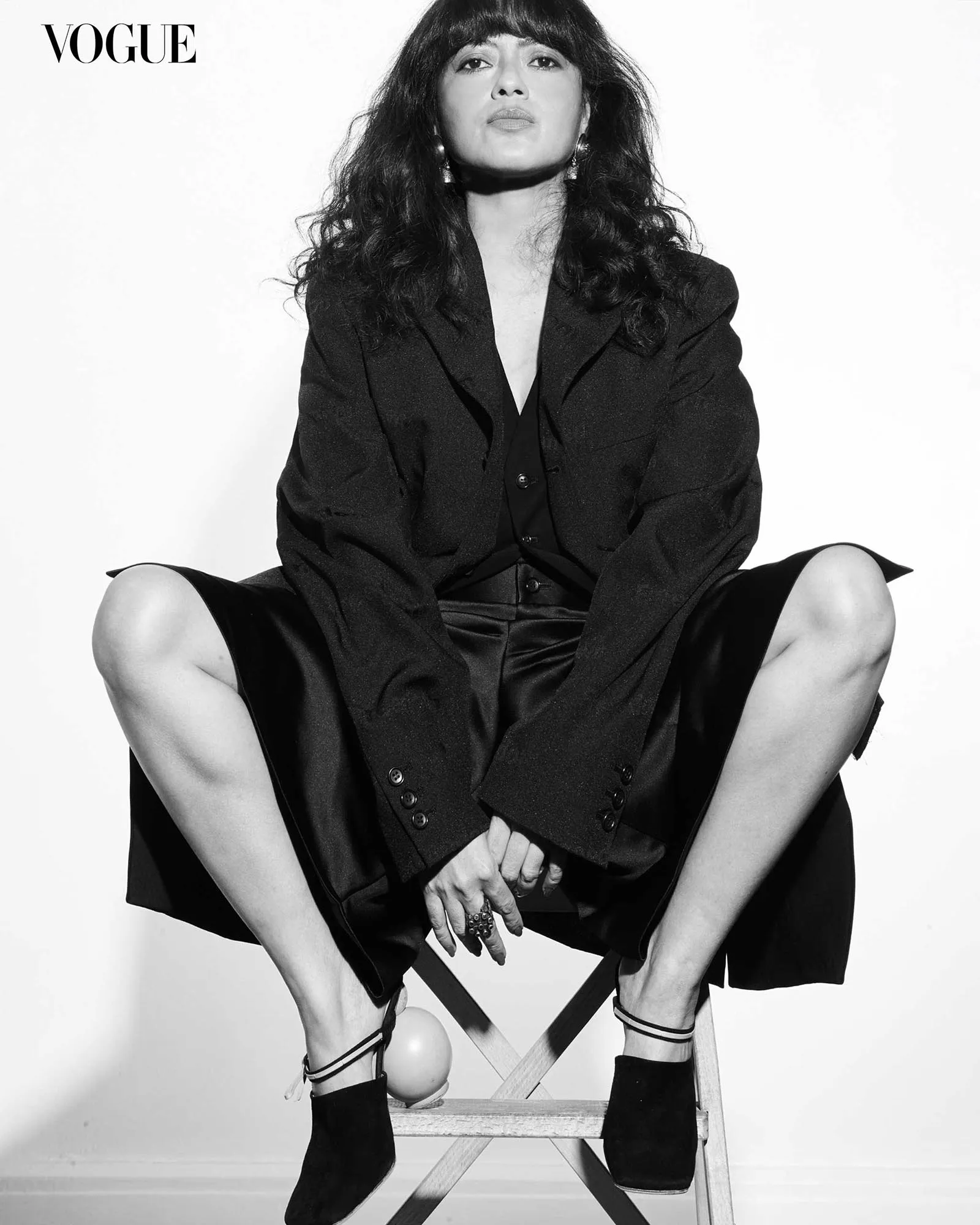
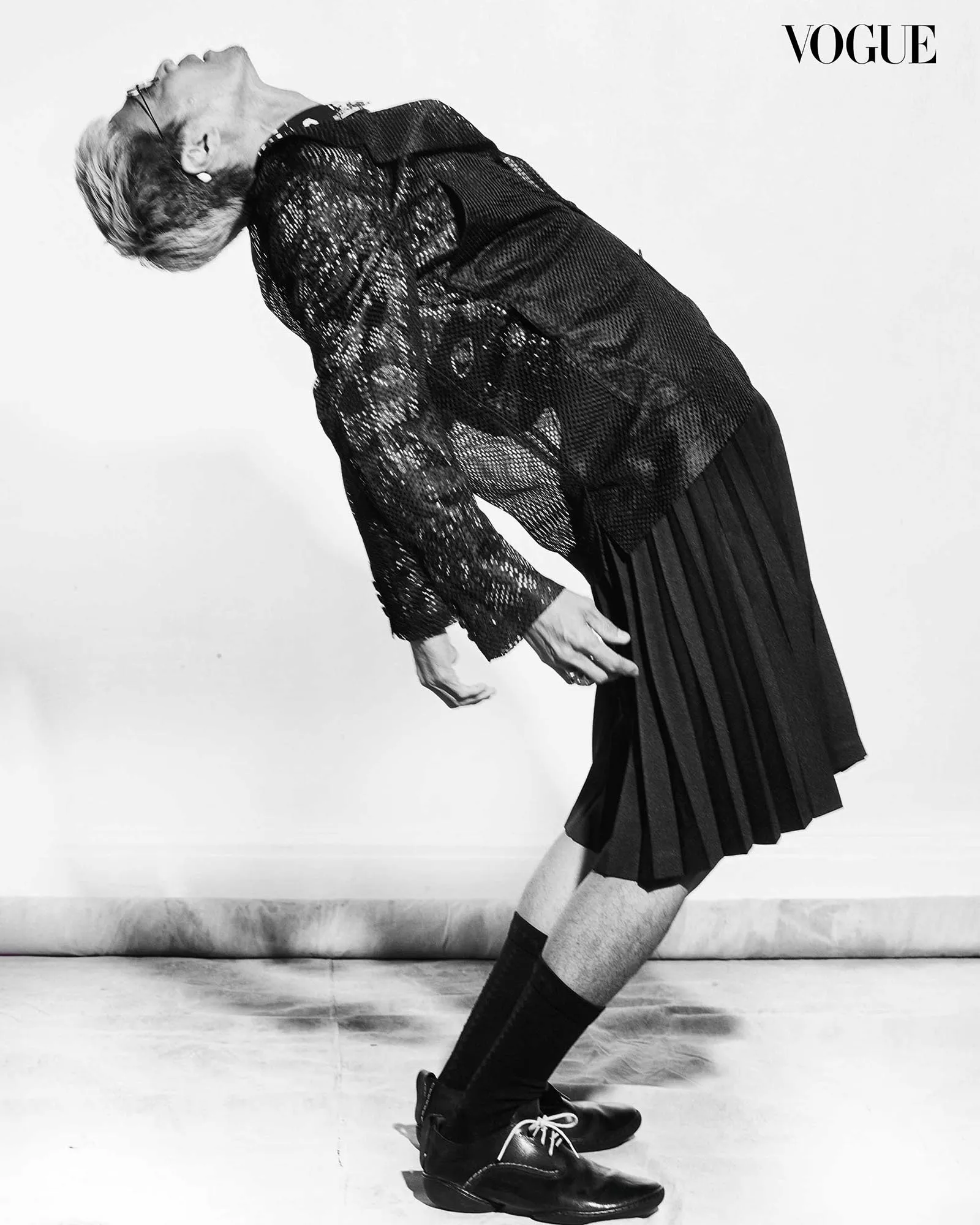
For Manuel Ocampo, the answer lies somewhere at the margins. “I think my work exclusively lives in the periphery,” he says. “There’s more freedom here, and you have more of a license. Things are more open to possibilities.”
The periphery has also always been fertile ground for Kawakubo. Her 1981 Paris debut unsettled an industry preoccupied with refinement, presenting garments that appeared unfinished, torn apart, and unconcerned with prevailing ideals of luxury. Critics dismissed the collection, but it proposed something more radical: that beauty could emerge from incompleteness.
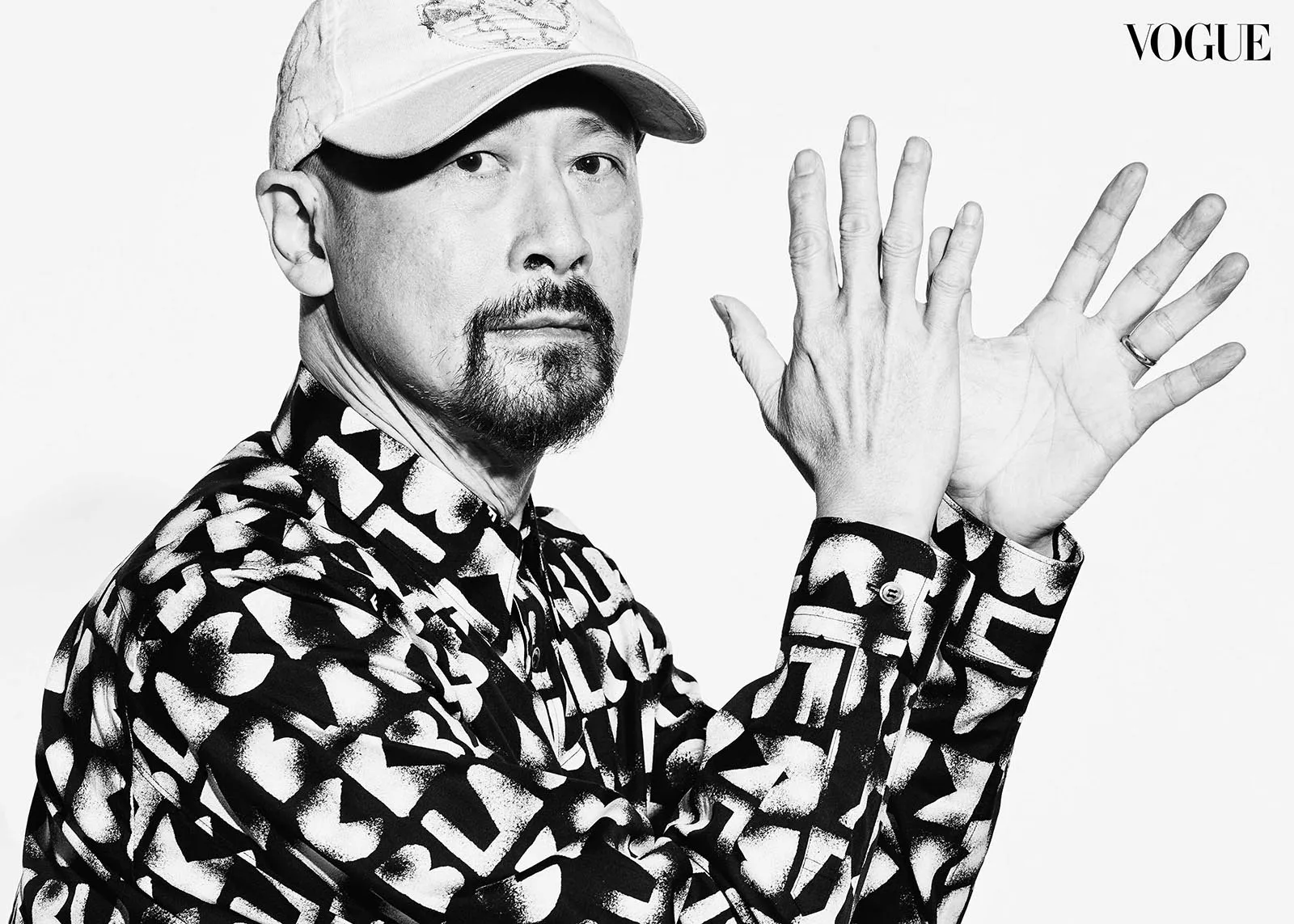
Ocampo’s paintings undertake a similar dismantling, though through symbols rather than cloth. Religious iconography, political emblems, and fragments of popular culture collide until their original meanings dissolve. His interests, however, lie outside the conventions of contemporary art. “My interest really is more on folk art, outsider art, art of the insane, because for me, there’s more you can do or say as an outsider.”
The affinity between Kawakubo and Ocampo is less aesthetic than methodological. Both distrust polish, and both find possibility in disruption. Ocampo describes his own process as consuming every visual language available before keeping only what remains. “Too polished, too clean, too sterile,” he says, has never interested him.
If Ocampo’s work dismantles inherited systems, Wawi Navarroza’s photographs reconstruct them.
Her long-running exploration of what she calls the “tropical gothic” begins with the understanding that Filipino identity has never been singular. “My work lives in that world,” she says, describing an identity shaped by colonial histories, indigenous knowledge, and global culture.
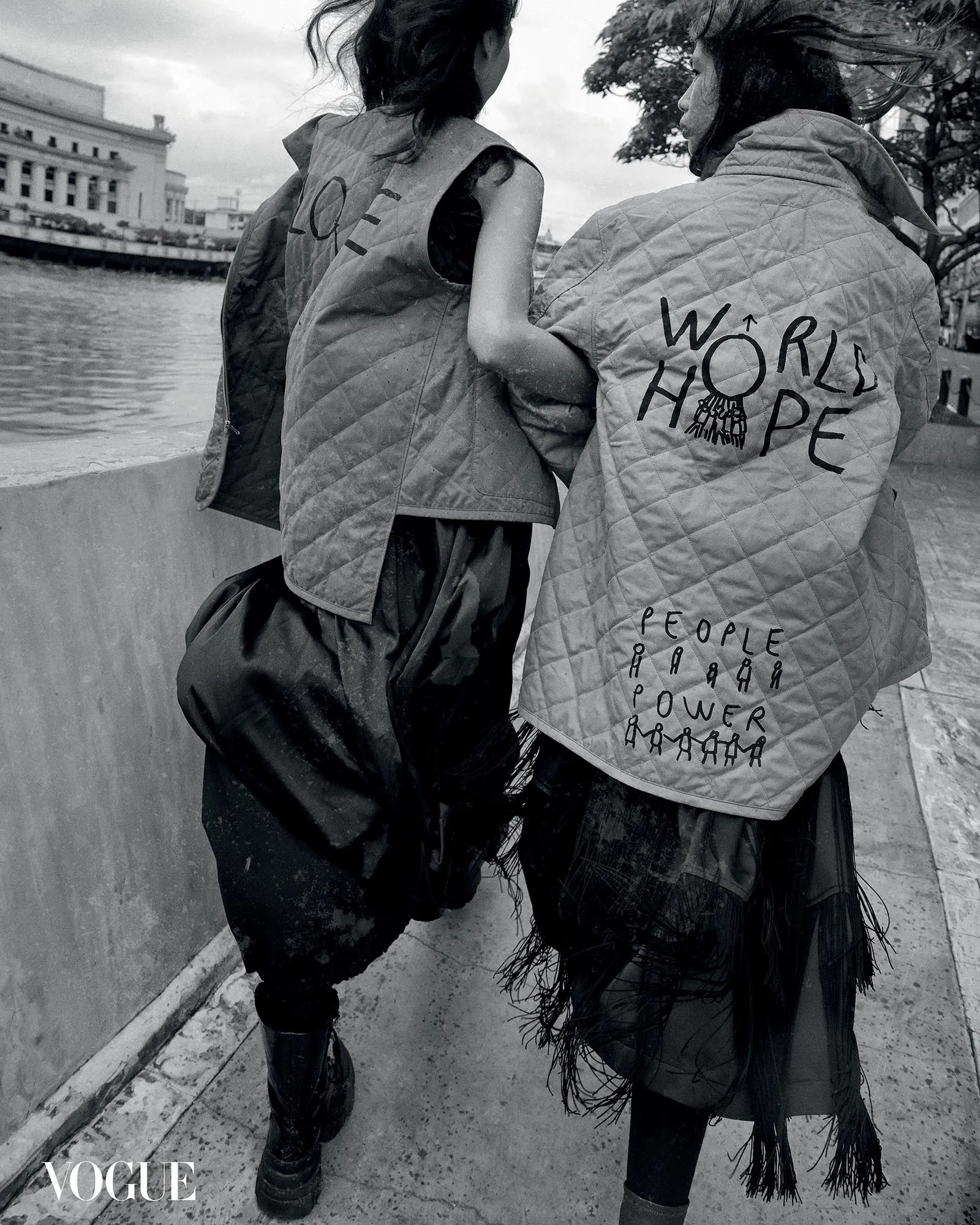
Photography, in Navarroza’s hands, is also an act of assembly. “I think of the streets as a collage of time and of sentiment and color,” she says. The image becomes a collage of histories, references, and symbols rather than a straightforward portrait. Similarly to Kawakubo’s garments, her work resists fixed categories. “When I’m creating, I’m really exploring the unknown,” she says. “So how can you put labels on the unknown?”
“When I’m creating, I’m really exploring the unknown.”
— WAWI NAVARROZA
This further translates toward her photographs, which begin with the self but ultimately turn toward the viewer. “With my self-portraits, audiences think it’s about me, but it’s really not about me. It’s about the one who’s looking at the artwork as well, so it becomes a mirror.” Meaning is left deliberately open, asking the viewer to complete the work through their own interpretations.
Kiko Escora approaches the city from another register altogether. His Manila exists after dark.
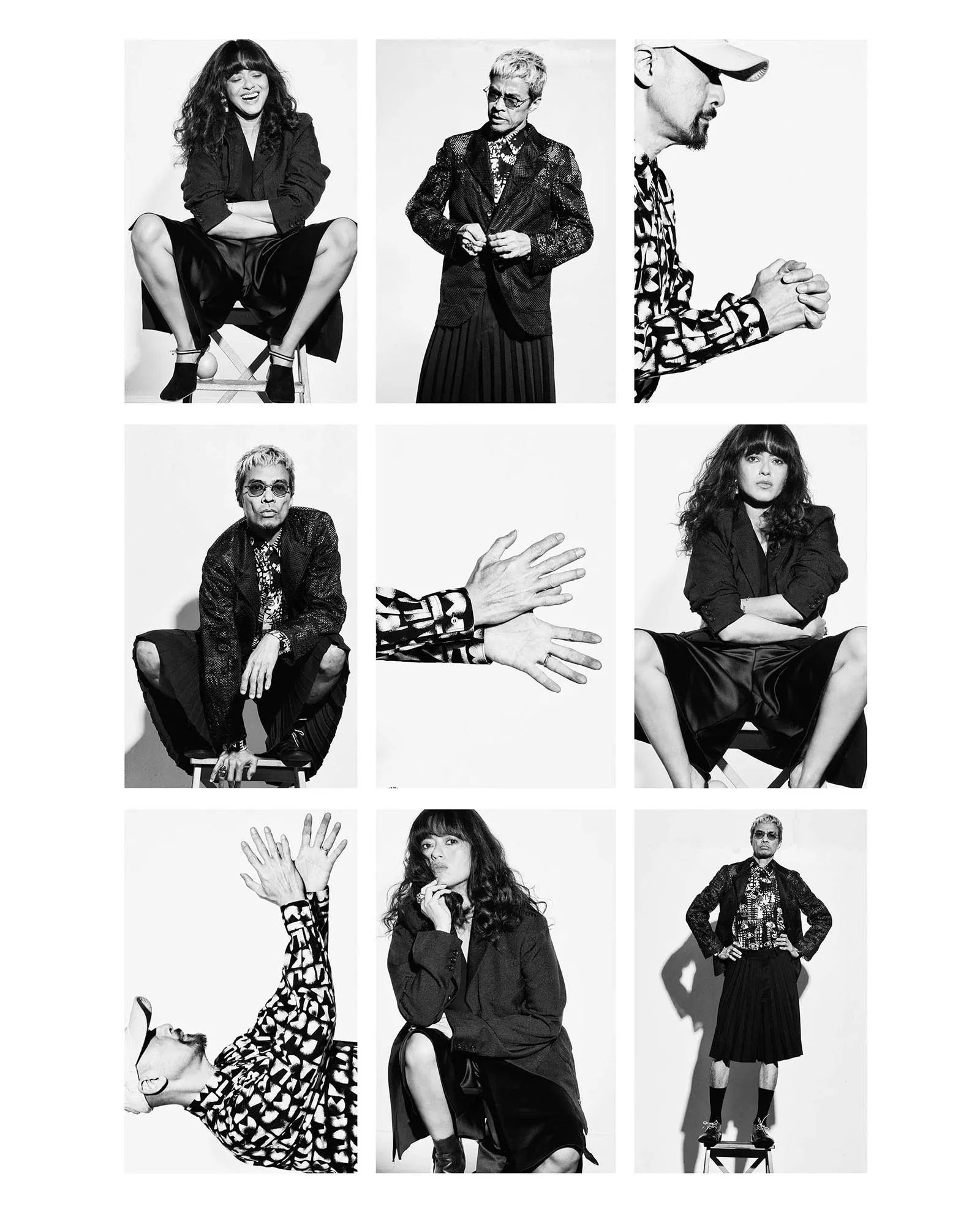
“My work is largely based on the people of Manila, especially the nightlife,” he says. “It’s about the relationship, or lack of it, among people in public places.” His paintings linger in bars, clubs, and apartments where intimacy and solitude occupy the same room. Their subjects feel like fleeting encounters, with people suspended somewhere between performance and vulnerability.
And Escora has little patience for prescribed paths. “Screw the rules. You should make your own rules,” he says. “Rules are just necessary if they’re convenient. But if they’re not convenient for you, why would you bother?” And that ethos extends beyond his work, with a practice that shifts between painting, installation, sculpture, and carpentry because, as he puts it, “they’re all my work, and they’re all evolving at the same time.”
Perhaps that is where Comme des Garçons ultimately resides in Manila. Not in garments alone, but in the refusal to become fixed.
Univers remains the home and meeting point of Comme des Garçons in Manila, but what it has helped build over 14 years reaches well beyond its doors. The studios, galleries, photographs, and artists that have grown alongside that presence are part of the same creative ecosystem, one that Univers and Homme et Femme have helped establish and sustain those who continue to occupy their own margins, embrace contradiction, and make their own rules.
Fourteen years since its arrival in the country, Comme des Garçons has become a way of thinking. In Manila, that philosophy has always found willing company.
By GABRIEL YAP. Photographs by MARK NICDAO. Deputy Editor: PAM QUIÑONES. Art Director: JANN PASCUA. Styling by NEIL DE GUZMAN and NIÑA CUYANA. Makeup: Noel Inocencio. Hair: JA Feliciano. Models: Isla Feria & Chloie General. Account Manager: Bettina Mendoza. Producers: Mavi Sulangi & Bella Maristela. Creative Production Associate: Esab Raymundo.
Frequently Asked Questions
Comme des Garçons is an avant-garde fashion label founded by Japanese designer Rei Kawakubo in Tokyo in 1969. The brand made its Paris debut in 1981 during Prêt-à-Porter week.
Yes. The Comme des Garçons Manila flagship store is located in Greenbelt 2, Makati City.
Manuel Ocampo is a contemporary Filipino artist whose work fuses secular, historical, and religious iconography. His work features motifs from Filipino kitsch, art history, and literature.
Wawi Navarroza is a Filipino lens-based artist known for her vibrant, photographic tableaus and self-portraits.
Univers (UNIVERS d’homme et femme) and Homme et Femme are multi-brand stores in the Philippines owned and operated by H&F Retail Concepts, Inc., founded by Jappy Gonzalez.
