
How Mountaineering Reveals the Philippines’ Hidden Sights


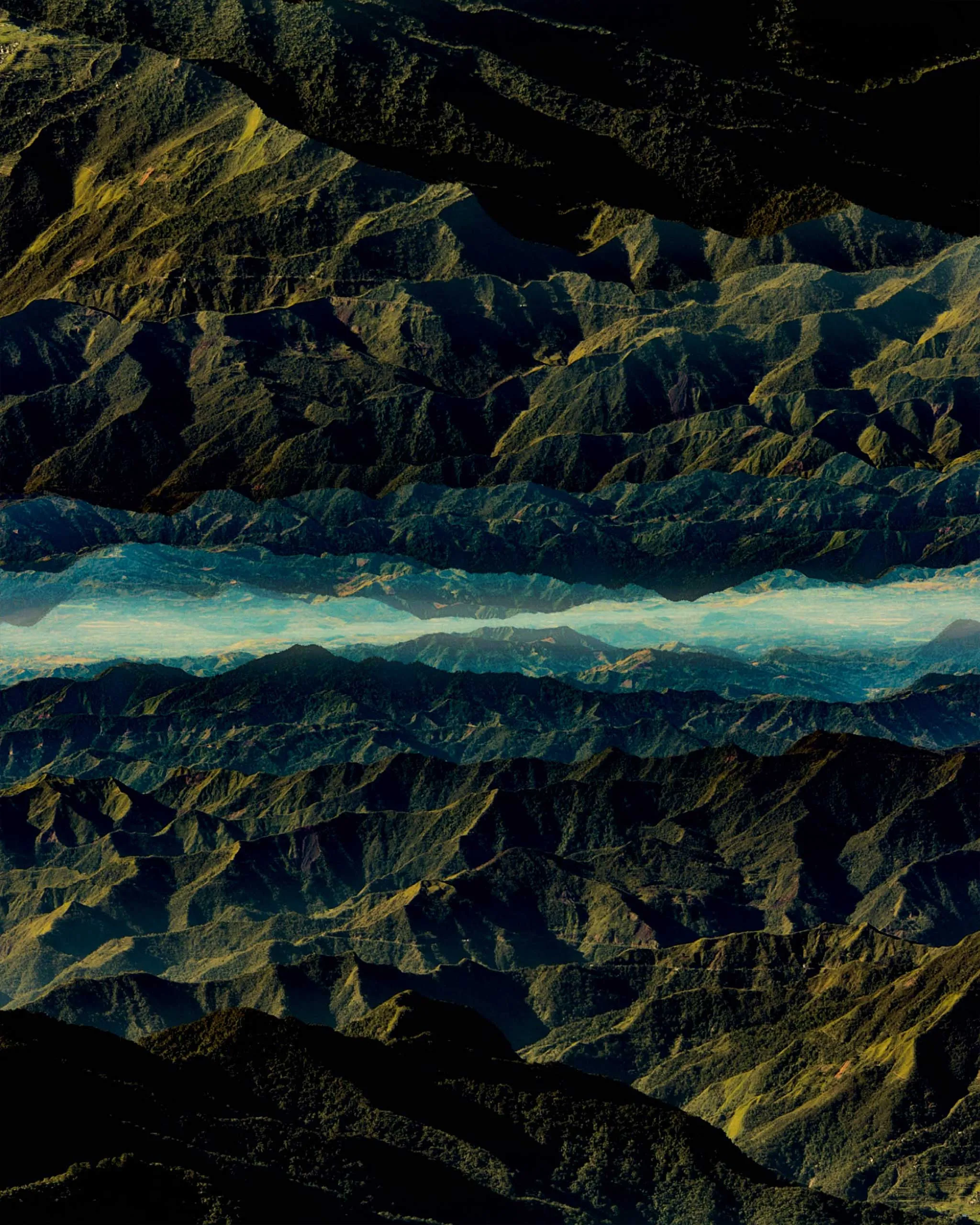
The jagged silhouette of Mt. Guiting-Guiting in Sibuyan Island, Romblon. Photographed by Raf Halili
Conversations with mountaineers and adventurers offer a look at remote peaks, forgotten trails, and breathtaking views still waiting to be uncovered.
There are many mountains that make you earn the privilege of seeing it. For many experienced Filipino mountaineers, those moments arrive in Sibuyan Island.
After nearly 14 hours of climbing over serrated ridgelines, balancing along knife-edge traverses, and rationing a few liters of water as the Romblon sun beat relentlessly against exposed slopes, our team was driven only by the will to survive. Mt. Guiting-Guiting, also known as the sawtooth mountain, had earned its reputation as one of the Philippines’ most difficult climbs. Veteran mountaineers such as Gideon Lasco and Win Calleja have even cited the mountain as one of the few that can stand shoulder to shoulder with Mt. Halcon and Mt. Mantalingajan, and as a training ground for those attempting more arduous expeditions abroad.
But by the time Mayo’s Peak came into view, it was easy to understand why mountaineers fell in love with such a rugged landscape despite its danger. Standing at the edge of this campsite, which is a well-known viewpoint and resting area, the fatigue momentarily disappeared, as clouds rolled over the surrounding peaks, revealing and concealing the mountain’s jagged silhouette. The ridges that had punished climbers all day caught the afternoon light, and beyond them stretched an island unlike anywhere else in the country.
Sibuyan has often been called the “Galápagos of Asia,” and standing there, it becomes obvious why, as millions of years of isolation have created an ecosystem found nowhere else on Earth. Endemic pitcher plants cling to moss-covered forests, rare birds call from canopies untouched by roads, and ancient trees disappear into clouds drifting between peaks. It is the kind of place that reminds visitors how little of the natural world truly belongs to us.
I believe mountains have a way of changing one’s relationship with the Philippines.
The country has built its global identity around its tropical islands, deservedly so. But somewhere along the way, we forgot to look up. Some of the country’s greatest wonders exist days from the nearest road, hidden behind forests and rivers that cannot be consumed through a weekend itinerary. They demand patience and humility, but in return, they offer something far greater than a photograph.
The deeper reaches of the country’s highlands reveal a Philippines few people encounter. Photographer Raf Halili, a longtime travel companion whom I previously met on an expedition to Sibuyan, once described mountaineering as “a glimpse into the actual identity of the Philippines.” Away from cities and heavily commercialized destinations, he found something more enduring: in conversations with local farmers, evenings spent in guides’ homes, and communities whose way of life remains inseparable from the landscapes around them.
“Within cities and famous tourist attractions, our culture can often get blurred by the effects of Westernization,” he says. “That’s why I especially love places like the mountainous Cordillera Administrative Region, because they’re one of the very few places that have been untouched by early colonization, and it’s by this factor that I get to discover the Philippines for what it truly is. It’s through mountaineering that I get to have these genuine cultural experiences.”
That idea surfaced repeatedly along the Pacific Coast Trail, a rugged through-hike pioneered by the Yabag Mountaineers that traverses nearly 50 kilometers of remote coastline between Aurora and Quezon. The journey was relentless, with storms rolling in without warning and rivers swelling into dangerous crossings. Yet those became footnotes to what the trail ultimately revealed. What remained were the Agta communities tucked between forest and sea, isolated from the nearest city. Here, children played along untouched beaches while evenings ended with conversations held beneath improvised shelters. That hardship eventually turns into stories. As Halili puts it, “beauty has always been there; you just have to know where to find it.”
Many outdoorsmen share that sentiment. In a conversation with adventurer Javi Cang, he once observed that while many people travel to disconnect from the world, he travels “to connect to the world, in a deeper and more intimate way.” Standing before immense landscapes, he says, reminds him how insignificant we really are, and how privileged we are to witness places that have existed long before us. That privilege, he believes, comes with responsibility.
The mountain does not care how experienced a climber is. It rewards respect. Unfortunately, respect is becoming increasingly difficult to find.
Sibuyan Island, despite being recognized as one of the country’s most important biodiversity hotspots, continues to face pressure from mining interests that threaten watersheds, forests, and endemic habitats. Conservationists have long argued that the ecological value of the island far outweighs the short-term gains of extraction. The question has never just been about minerals; it has always been about what kind of inheritance we choose to leave behind.
And Sibuyan is hardly alone.
Mt. Hamiguitan, another UNESCO-recognized biodiversity treasure, still faces environmental pressures beyond its protected core. Other mountains tell stories of loss. Trails once walked have since given way to roads and infrastructure projects. Mt. Mapalad, my mother mountain (a term used to describe the very first mountain a person has ever climbed), no longer resembles the mountain where many hikers first discovered the outdoors since its closure. Mt. Batolusong continues to change alongside the rapid development surrounding it, with windmills and roads being paved through its foothills. Mountains rarely disappear overnight; often, they vanish one road, one quarry, and one cleared hillside at a time.
That same sense of fragility emerged while recently traveling through the rice terraces of Ifugao. For days, the journey moved from village to village, staying in family-run homestays, sharing meals, and following ancient footpaths carved into the mountainsides. One morning, overlooking the terraces of Batad, a local mother quietly offered a sobering thought.
“It’s through these remote and pristine places that I get to understand how important it is to live communally with nature, treating it with utmost respect and care.”
“In 50 years these rice terraces might not even exist. Not many people tend to them anymore,” she says in a mix of Ilocano and Tagalog.
The statement was difficult to reconcile with the landscape before us. Here was another UNESCO World Heritage Site admired around the world, yet sustained by a shrinking number of people willing, or able, to continue generations of labor.
These landscapes can’t be preserved by designation alone. They survive because communities choose to care for them. “Another thing I learned through mountaineering, is that a beautiful place can often be traced to rightful stewardship of the land,” Halili explains, “and it’s through these remote and pristine places that I get to understand how important it is to live communally with nature, treating it with utmost respect and care.”
Over time, mountaineers often realize the summit has rarely been the point; it’s about returning with a deeper understanding of the places that shape us, and recognizing that wonder carries a heavy responsibility.
The Philippines is blessed with beaches that deserve a postcard, but between those coastlines rise peaks that tell older stories; of forests older than memory, of Indigenous communities whose lives remain intertwined with the land, of species found nowhere else on Earth, and of ordinary Filipinos working to protect all of it.
If we’re lucky, the mountains allow us to witness those stories. If we’re wiser after leaving them, we’ll make sure they’re still there for the next generation to climb.
Frequently Asked Questions
Mountaineering is the sport or activity of ascending mountains toward a high-altitude summit.
Veteran Filipino mountaineers, including Gideon Lasco and Win Calleja, count Mt. Halcon, Mt. Mantalingajan, and Mt. Guiting-Guiting among the country’s most difficult climbs.
Mount Guiting-Guiting is a mountain on Sibuyan Island, Romblon, rated 9 out of 9 in difficulty by Pinoy Mountaineer, the Philippine trail archive run by anthropologist Gideon Lasco. Its name means “jagged” in the Romblomanon language, reflecting its sharp ridgelines.
Philipp “PJ” Santiago II was a Filipino climber who died at Camp 4 on Mount Everest while attempting an ascent that would have ended a 20-year drought for Filipino summiteers, sparking mixed public reactions about the risks of mountaineering.
Gideon Lasco is a Filipino medical doctor, writer, anthropologist, and mountaineer who has climbed over a hundred mountains across the Philippines, including peaks in conflict-affected regions like Lanao del Sur, Sulu, and Basilan, and has chronicled his ascents as both personal and symbolic journeys.
