
Food for Skin’s Angela Ursem Wants Circularity to Become Ordinary


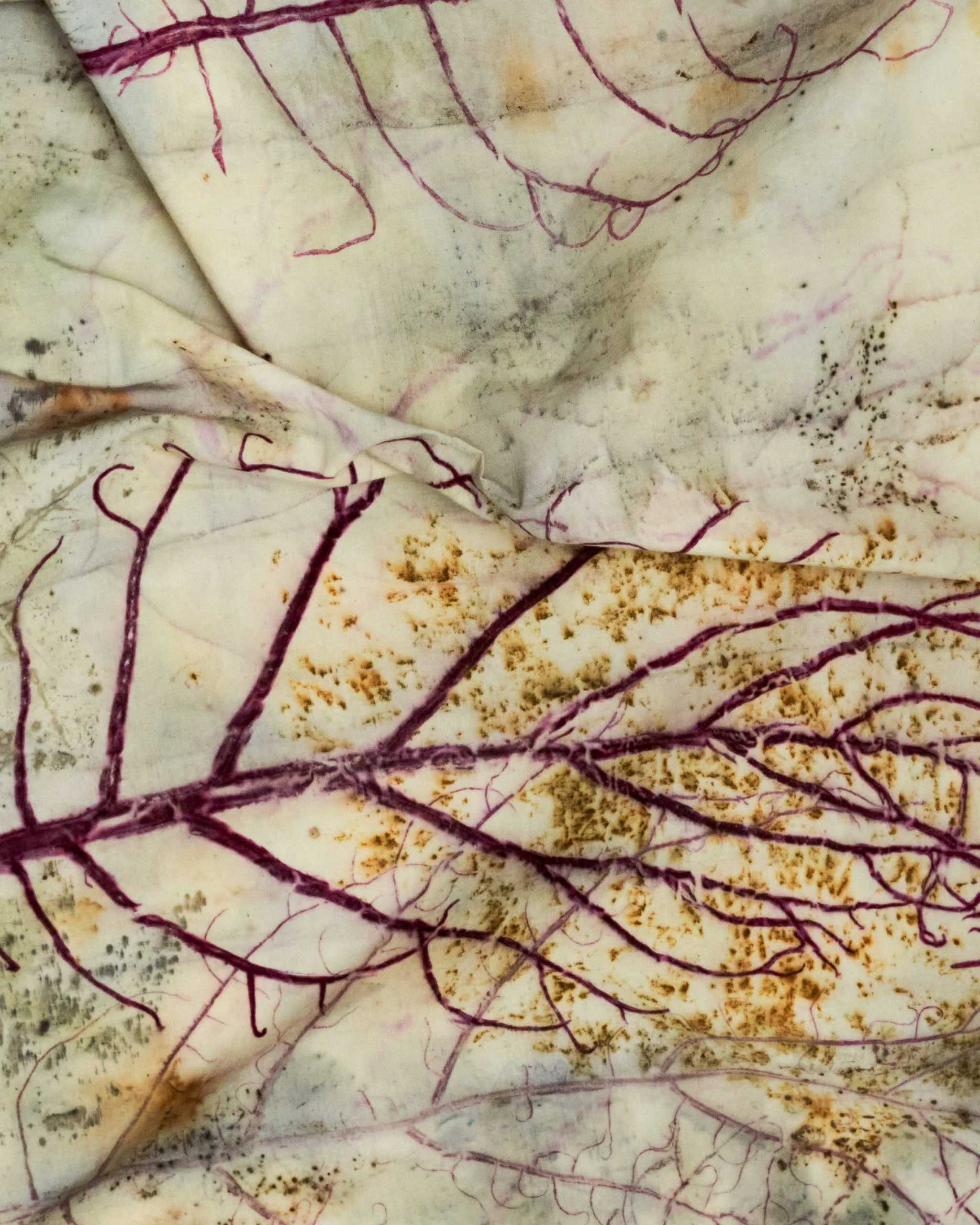
Photographed by Colin Dancel
As the Cartier Women’s Initiative marks 20 years of championing women impact entrepreneurs, the 2026 fellow is rethinking responsible skincare, starting with fewer products, food waste, and unbridled honesty.
There is no shortage of choice in beauty. A single shelf can promise clearer pores, brighter complexions, younger-looking skin, stronger barriers, and seemingly everything in between. For Angela Ursem, however, more choice only made choosing harder.
“I vividly remember standing in front of a shelf in a perfumery, surrounded by beautiful packaging and even more beautiful promises, and feeling completely overwhelmed,” she recalls.
Around a decade ago, Ursem had set out to make her skincare routine more sustainable. “It sounded simple. Instead, the deeper I looked, the more I felt I was being fooled,” she says, noting that a product might be sustainable in one way but ineffective in another. “I wanted to make a responsible choice, but I could no longer tell what was genuinely better and what was simply clever marketing.”
A call to her sister Cathy, a skin specialist who shared the same frustrations, planted the beginnings of Food for Skin, the Dutch skincare company Ursem now leads as co-founder and CEO. Their proposition was straightforward: Take the “fluff, fear and nonsense out of beauty and replace it with fewer, better products.”
Five years into building the company, Ursem became the first Dutch fellow of the Cartier Women’s Initiative, receiving first place for Europe in its 2026 cohort. The recognition arrives as the initiative itself celebrates its 20th anniversary under the theme “Women Lighting the Path.” Since its creation in 2006, the initiative has sought to support women entrepreneurs using business to address social and environmental challenges. More than 20 fellows from Southeast Asia and Oceania alone have since joined its community, working across issues from food waste to women’s health.
“We often talk about skin as if it is a problem that constantly needs to be fixed. I no longer see it that way.”
“Leadership is about far more than individual achievement,” says Yanina Novitskaya, CEO of Cartier Southeast Asia and Oceania. “It is about creating visibility, opportunity and confidence for others.”
It is an ethos Novitskaya sees reflected across many of the women-led businesses emerging from the region. Their strength, she says, often lies in how closely their solutions are tied to problems they have experienced or observed themselves. “They share a common starting point: a deep understanding of the problem they are trying to solve. I think that combination of empathy, insight and ambition is one of the region’s greatest strengths.”
For Ursem, that problem began in the bathroom cabinet. As a result, Food for Skin operates according to three words: “clean, green, and lean.” Clean means every ingredient must have a reason for being there. Green considers not only whether an ingredient is natural, but how it was grown, processed, and extracted. Lean means resisting the temptation to continually add another step. “We do not believe people need another 10 steps in their bathrooms,” Ursem says. “Every product should have a clear purpose.”
That thinking extends to the ingredients themselves. Forty percent are upcycled from leftovers from the food industry, including oils derived from tomato seeds, carrots, cucumber seeds, pumpkin seeds, and avocados. “They were not chosen because they sound appealing,” Ursem clarifies. “Each has a clear purpose in the formula and offers valuable fatty acids, antioxidants or other components that can support the skin.”
The idea emerged from a contradiction Ursem realized. Natural ingredients may sound environmentally virtuous, but they still require land, water, and energy to produce. Ursem began wondering why new crops should be grown for cosmetics when useful materials were already being discarded elsewhere. “A tomato that has already served the food industry can continue its life in a face cream,” she says. “I love the simplicity of that idea.”
Food for Skin translates this philosophy into an equally pared-back routine. The Carrot Cleanser gently removes makeup, dirt, and sunscreen; a serum is selected according to the skin’s current condition; and the bestselling Tomato Base Cream moisturizes and supports the skin barrier. In the daytime, sunscreen completes the routine.
The distinction between skin type and skin condition is particularly important to Ursem. Rather than permanently defining a complexion as oily, dry, or sensitive, she encourages paying attention to how skin changes with hormones, weather, travel, stress, and environment. “The most important thing I have learned is what an extraordinary organ the skin is,” she says. “We often talk about skin as if it is a problem that constantly needs to be fixed. I no longer see it that way.”
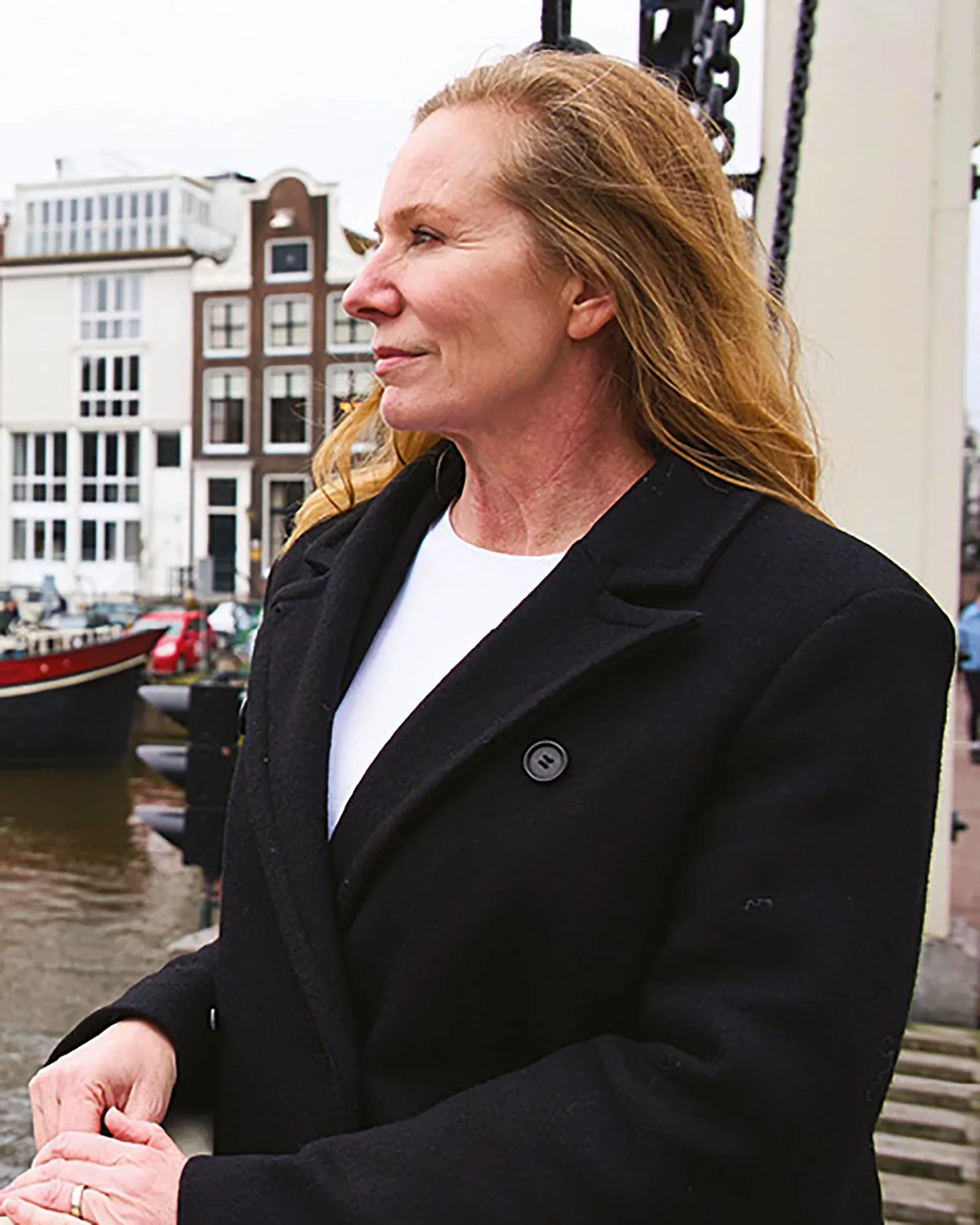
It is an unexpectedly restrained proposition for an industry whose growth has often depended on convincing consumers to add another serum, active, mask, or treatment to the shelf.
Ursem believes a healthier relationship with beauty begins by relinquishing the pursuit of perfection. “Real skin is not flawless. It changes, it reacts, it ages and it carries your life,” she says. “Skincare should support it, not make you feel inadequate.”
Sometimes, that means simply leaving it alone. Constant cleansing, exfoliation, and layering of active ingredients can interfere with the very barrier consumers are trying to strengthen. “Very often, less is the answer.”
The same scrutiny applies to the way Food for Skin communicates. For Ursem, transparency means going beyond what a company is technically permitted to claim and asking whether it is telling consumers the whole story. “Consumers should not need to become detectives to buy a face cream,” she says.
The principle, she admits, made business more difficult on occasion. Food for Skin has rejected ingredients that could legally be marketed as natural because their processing did not meet the company’s standards. Its “clean, green and lean” requirements can also mean choosing more expensive solutions and accepting smaller margins. “Enough is enough,” Ursem affirms. “Money is a means to keep good things moving, not the reason we started.”
That willingness to build differently is precisely what the Cartier Women’s Initiative hopes to amplify. Five years into building Food for Skin, that work culminated in an emotional moment for Ursem in Bangkok, where she accepted the Cartier Women’s Initiative first-place award for Europe from Amal Clooney.
“The award itself was extraordinary, but the emotion came from something deeper,” she recalls. “In that moment, I felt seen. Not only as an entrepreneur, but for what we have been trying to do all these years: make the world a little better through the choices we make as a business.”
For Ursem, the recognition affirmed a mission that has never been about perfection. “Every day we try to make skincare more honest, circular, and responsible,” she shares. “Standing on that stage felt like someone was saying, ‘We see what you are trying to change, and we believe it deserves support.’”
“Women do not need to be fixed or taught to become more like men,” Ursem says of leadership. “We should have the confidence to use our own strengths and expand the idea of what powerful leadership can look like.”
For Novitskaya, the initiative’s anniversary is therefore less a finish line than an invitation for more women to step forward. What makes her optimistic about the next generation is their willingness to act before having every answer. “They are not waiting for the perfect moment before taking action,” she says.
Ursem is entering a new chapter herself. After five years focused on the Netherlands, Food for Skin is preparing to expand across Europe, supported in part by the USD 100,000 grant that accompanied her first-place recognition. But she says the fellowship’s community, knowledge, and network may ultimately prove even more valuable. Her ambition is not merely for Food for Skin to become bigger. She wants circularity to become ordinary.
“We will know we have succeeded when responsibility is no longer what makes Food for Skin different, but what defines the beauty industry as a whole,” she says.
Perhaps there is something fitting about building that future from what was once discarded: tomato seeds, fruit kernels, imperfect avocados, and ideas the beauty industry had overlooked. If the next chapter of beauty is to ask more of the companies making it, perhaps it can begin by asking a little less of our skin.
In this story: The above image by Colin Dancel was photographed for the exhibit Earthbound. It is a joint, ongoing collaboration between Marionne Contreras, Geraldine Javier, and Steffi Cua, produced with the latter’s fashion brand Idyllic Summers.
Frequently Asked Questions
Angela Ursem is the co-founder and CEO of the all-natural skincare brand Food for Skin. At the 2026 Cartier Women’s Initiative in Bangkok, Ursem accepted the first-place prize for Europe.
Founded by sisters Cathy Molenaar and Angela Ursem, Food for Skin is a Dutch skincare company that offers natural, plant-based products using circular ingredients with a ow-impact production chain.
Food for Skin operates according to three words: “clean, green, and lean.” The brand believes that skincare should be simple, transparent, and circular. Forty percent of the brand’s ingredients are also upcycled from leftovers from the food industry.
According to their website, the Cartier Women’s Initiative is an annual international entrepreneurship program that aims to drive change by empowering female entrepreneurs. It was founded in 2006. To date, the Cartier Women’s Initiative has spent more than USD 14 million toward funding female impact entrepreneurs through a holistic program of financial sponsorship, training, mentorship, and networking.
In celebration of the program’s 20th anniversary, the 2026 Cartier Women’s Initiative awards ceremony was held at Chulalongkorn University in Bangkok, Thailand.