
Isabel and Alfredo Aquilizan Bring Portals to the Hermès Maison Shanghai


Courtesy of HERMÈS
Courtesy of HERMÈS
Marking the flagship’s first collaboration with Filipino artists, Portals: The Passage of Time tells a story of craft, motion, and imagination.
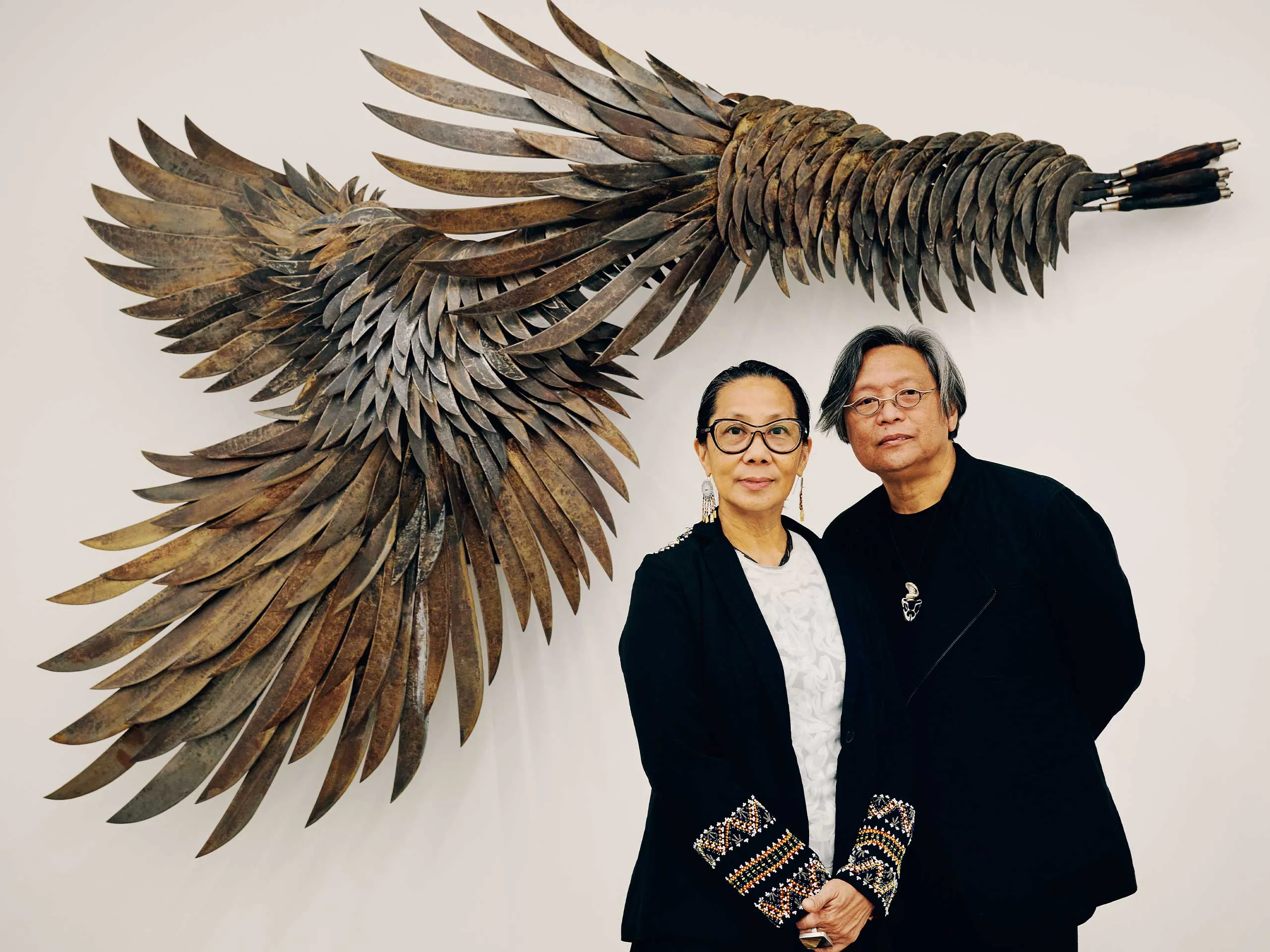
Before travel became central to their artistic practice, Isabel and Alfredo Aquilizan led lives that were shaped by movement: Alfredo attending camps and athletic meetups through high school, before pursuing further studies in New York, and Isabel going on holiday trips with family and weekend getaways with friends. When the two emigrated to Australia in 2006, together with their five children, one of their first art projects involved traveling to engage with regional communities in Queensland.
Isabel recounts one journey: a three-hour flight to Cairns, another two hours to Cooktown in a six-seater plane, and a 100-km drive down branching off-roads. It is these experiences of passage that inform the couple’s work, which spans sculptural pieces and site-specific installations or interventions. Thousands of miles later, they have come to see space and time more fluidly, understanding that moving and looking forward is also an act of looking back.
“Travel for us is not simply about moving from one place to another,” Isabel tells Vogue. “It is also what we carry with us, what we leave behind, and how our sense of home and identity changes throughout.”
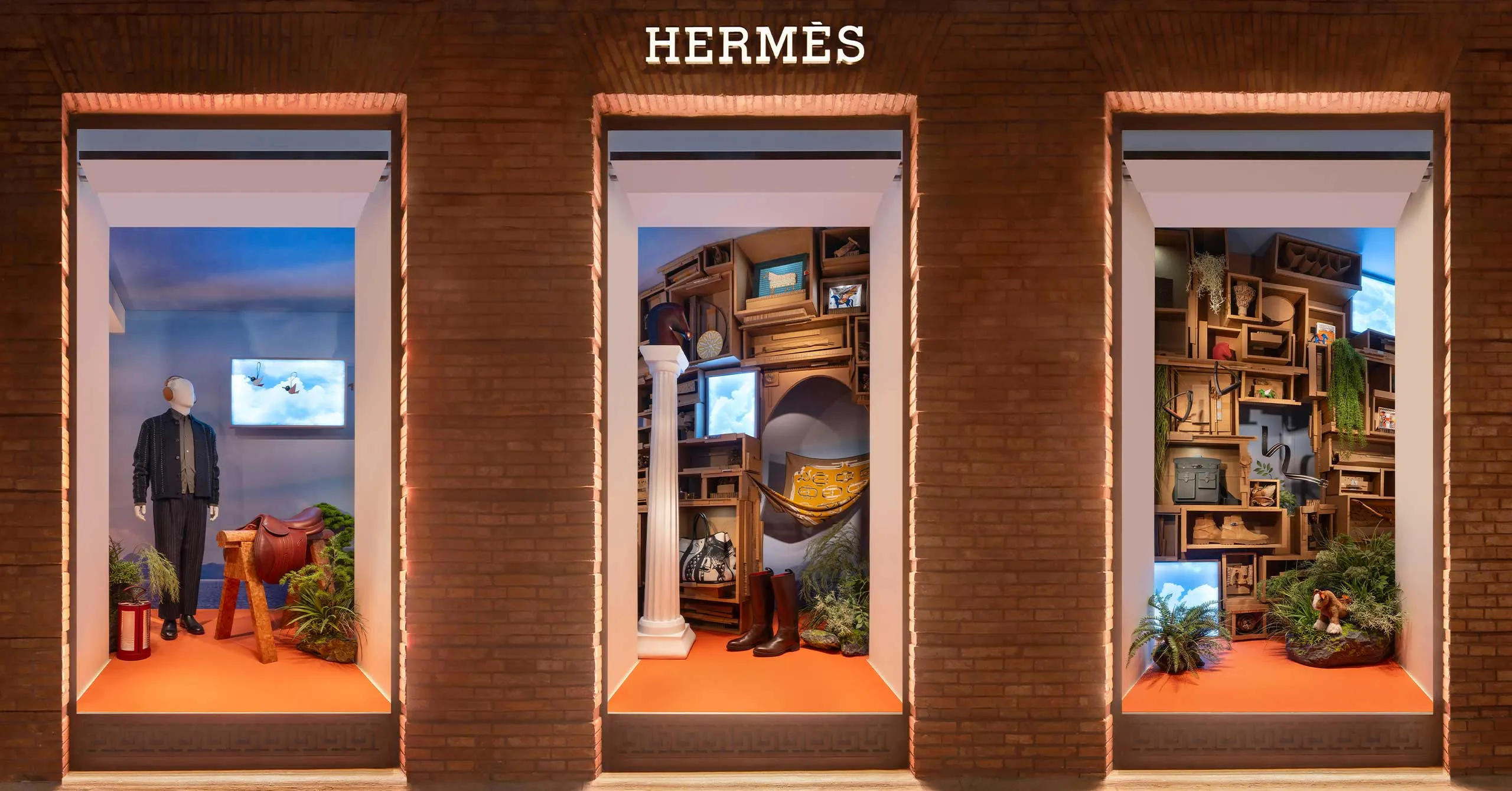
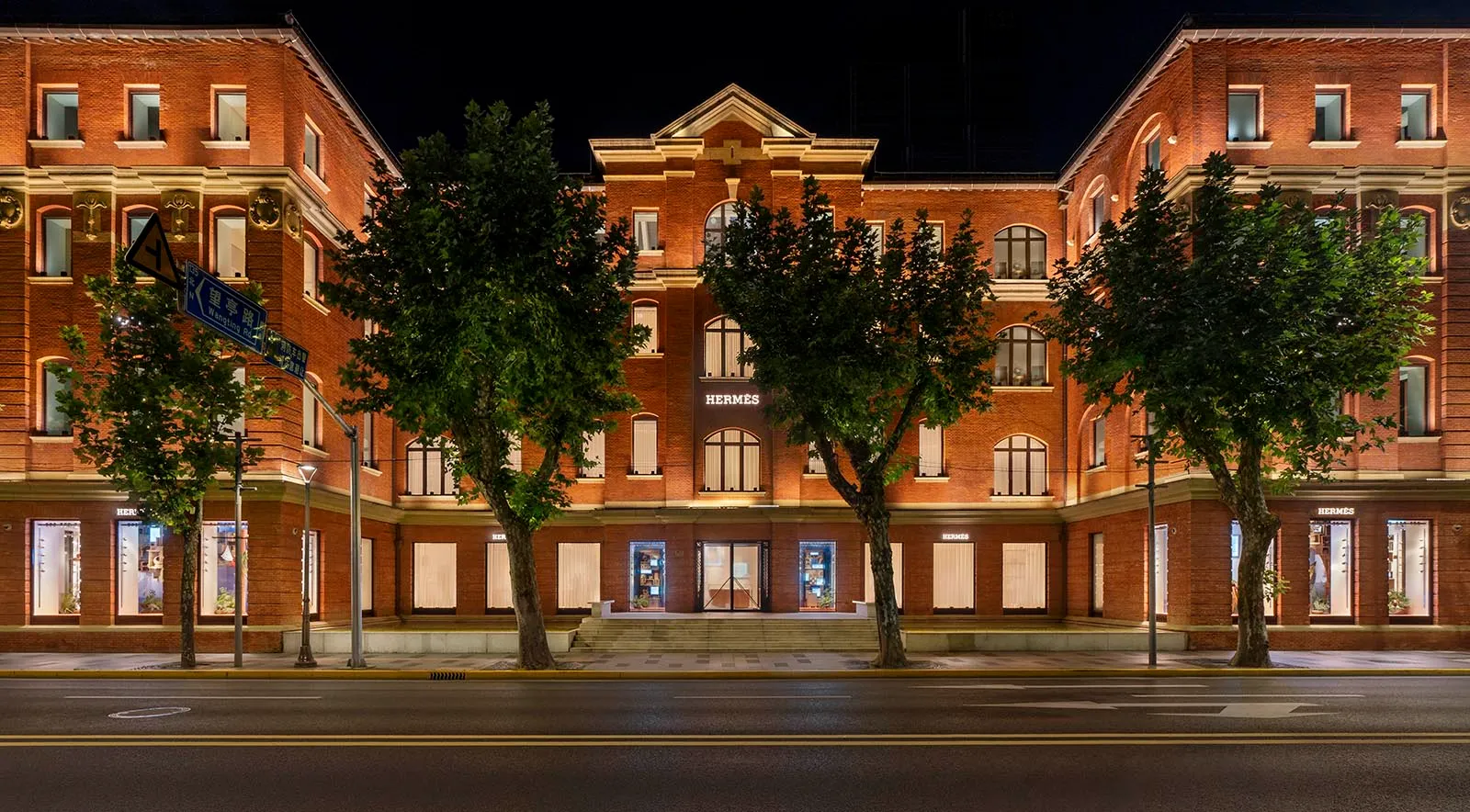
Now living between Brisbane and Los Baños, Laguna, the internationally acclaimed duo finds their latest project in China, where their piece Portals: The Passage of Time is on view at the Hermès Maison Shanghai. Stretching across eight windows on the building’s brick facade, the seasonal display gestures to both the past and the future, heritage and innovation, as well as the state of flux in between, where we find ourselves today. It also marks the flagship’s first collaboration with Filipino artists, a connection forged through shared values of craftsmanship and histories rooted in motion.
When Hermès was founded in 1837, it was a small Parisian workshop that produced saddles, bridles, and harnesses, as horse-drawn vehicles were the primary mode of transportation. Now a world-renowned luxury brand known for its silk scarves, ready-to-wear garments, and leather goods such as the Birkin and Kelly bags, the French house continues to evolve with the times, while maintaining its dedication to quality handcrafts and artisanship.
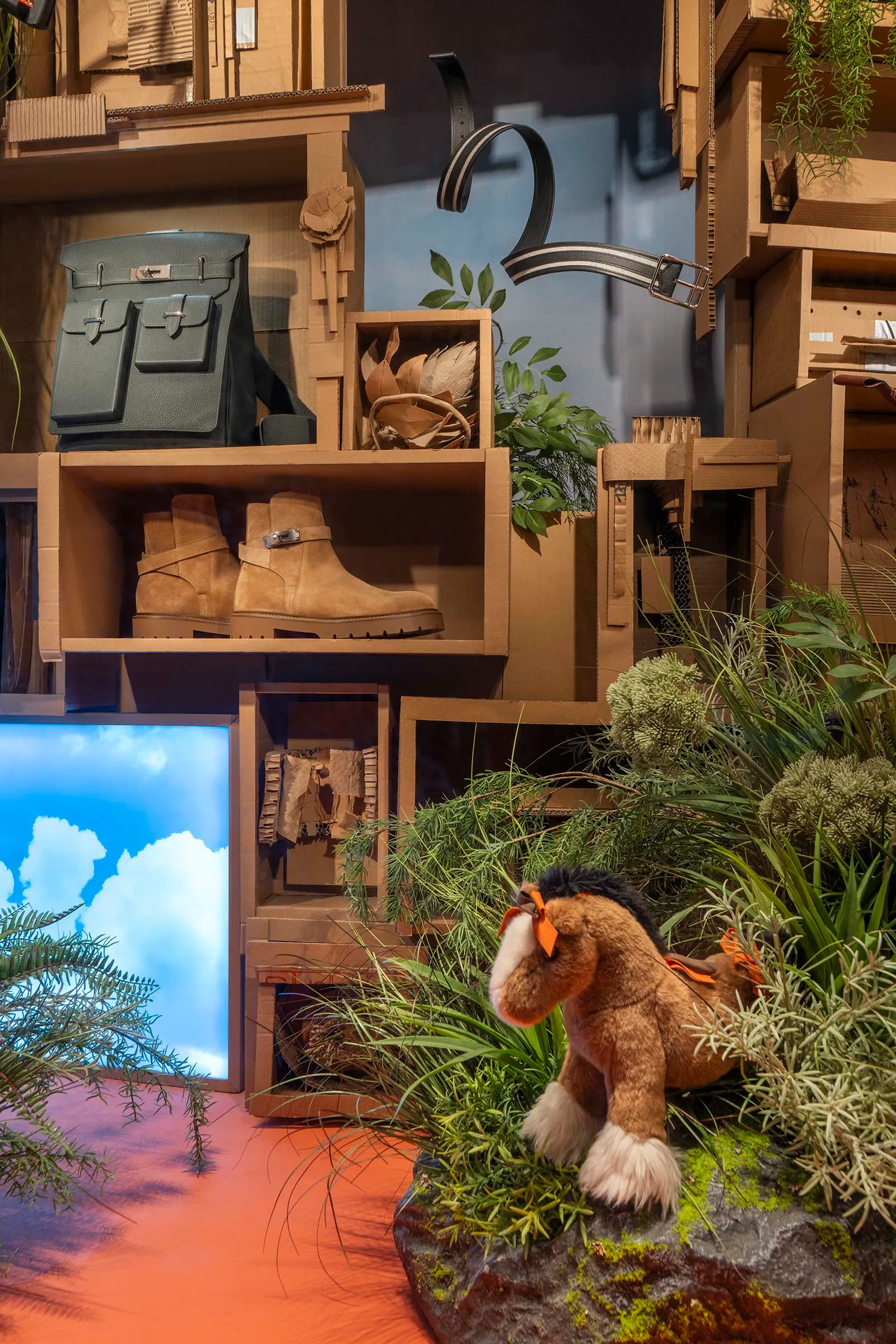
Reflecting on the first time he and Isabel collaborated with the brand, Alfredo muses, “I [would] always fantasize about sitting on an Hermès saddle.” Then unaware that their admiration was returned, the two recall the surprise of being invited to design for the Singapore flagship in 2017. This led to Passage, a window installation that took the shape of a large vessel on the open seas, piled with equestrian motifs and helmed by a plush toy horse.
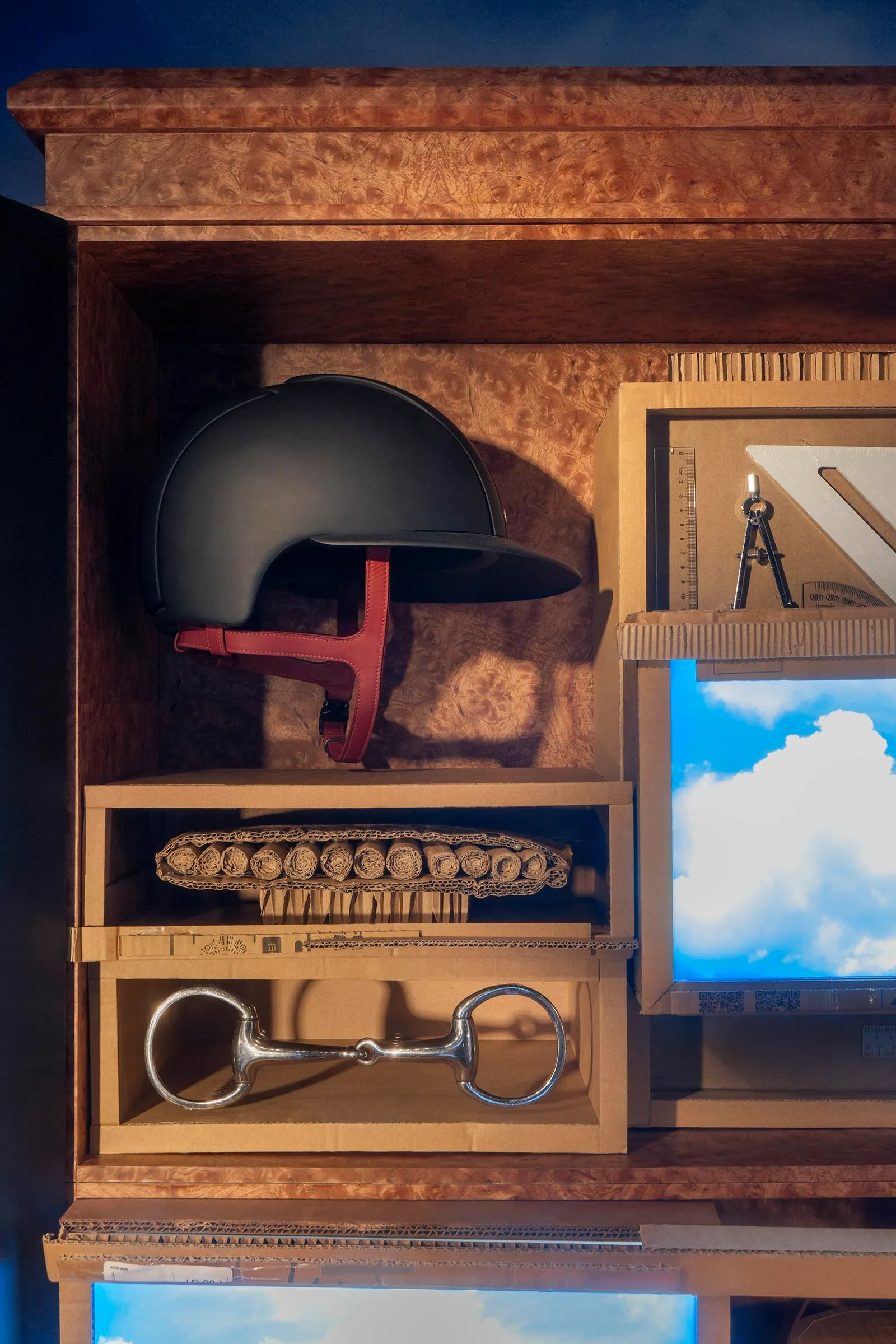
Similar to that piece and many others in their nearly three-decade careers, Portals is largely made out of cardboard, an unassuming material that reveals striking possibilities. Molded into curved walls, open wardrobes, and layered shelves that resemble a floating utopian citadel, the structures form three tableaus that house various Hermès goods, which the artists were invited to respond to.
Isabel recalls how Alfredo found a trampled-on scrap of cardboard that he pasted a small triangular piece (“an ear”) to, transforming it into the bust of a horse, which is placed above two fragrance bottles in the Accessories Window. Alfredo also mentions the Women’s Window, where a female mannequin gazes at the horizon through an arched doorway, her line of sight aligning with a bright yellow purse. Through these details, the two inject their own senses of Pinoy kulit and gigil (playfulness and excitement) into the brand’s history, while channeling the 2026 Hermès theme of “Venturing Beyond” by presenting new ways of seeing.
The piece was partially inspired by their visit to the Shanghai maison earlier this year. In contrast to the neighboring skyscrapers and the technological advancements that mark the city, the heritage building seemed to warp time on that warm, rainy day, and the couple was immediately drawn to its rich sense of history. Cardboard helped capture that lived-in quality, serving as a “visual balm” that passersby could instantly relate to.
“Everyone has their own stories [to tell] with cardboard. A cardboard box is a vessel that carries [people’s] narratives and also has their own history of travel,” Alfredo says. In reference to the balikbayan box, through which overseas Filipino workers (OFWs) send various goods and gifts to their loved ones in the homeland, the material carries the weight of distance and separation, but it also speaks of endurance and the overpowering need to stay connected.
The clouds in the background of each window serve the same purpose, inviting viewers to see the three displays as one interconnected piece. For those walking on either side of the road, the blue glow could summon curiosity, prompting them to step closer and see something new. “Everyone looks at the same clouds, the same sky,” Alfredo remarks, adding that, “Every time we look into the horizon, [we] always wonder what’s on the other side.”
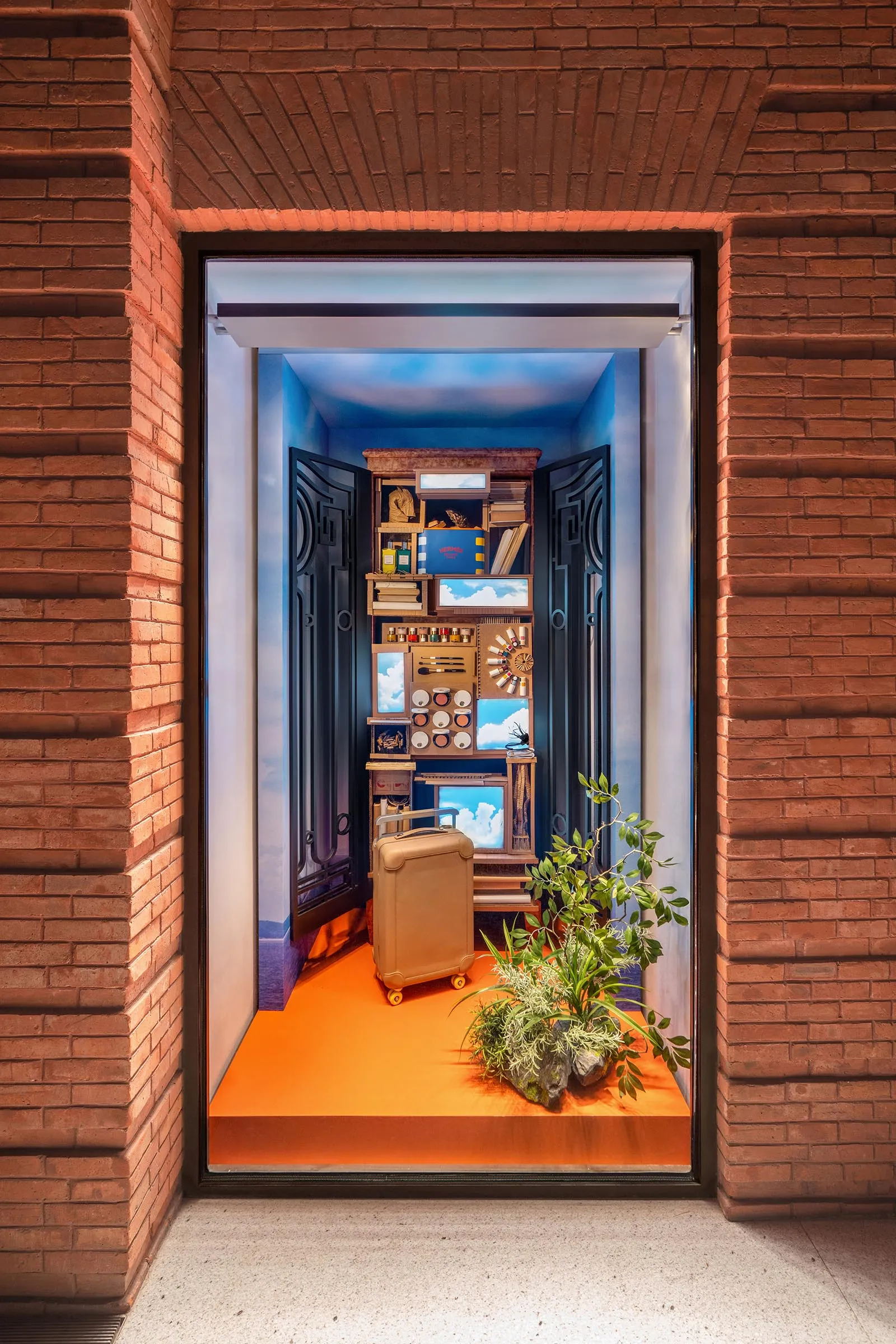
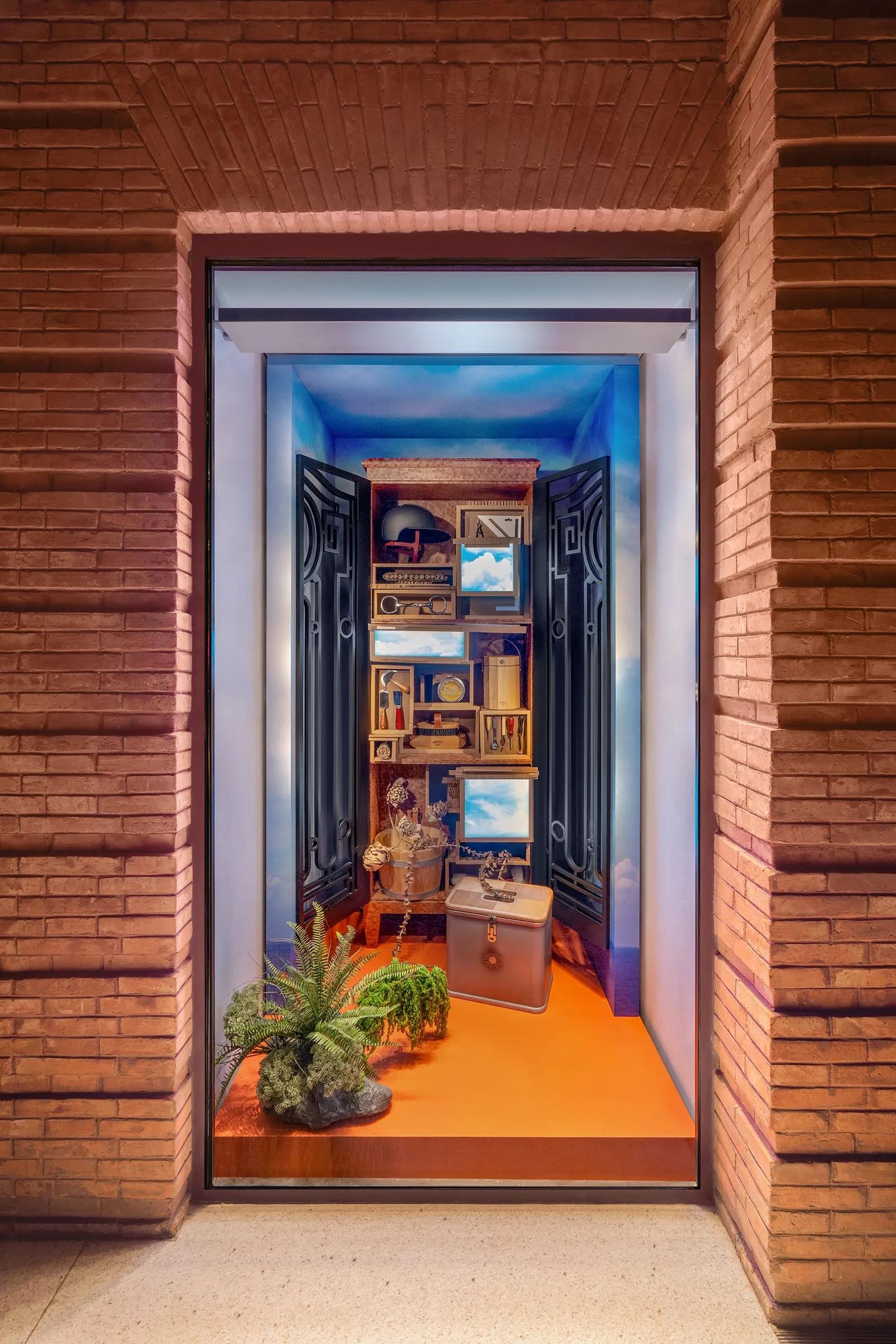
That wonder applies to our everyday lives, the desire to know what our futures hold, but it also extends to the work’s behind-the-scenes process. The artists collaborated with the Hermès staff and the team of Hacienda, a visual merchandising design company that has worked with the maison for over two decades, to bring the physical installation to life over a 15-day period.
Drawing on their backgrounds in community-based art, the Aquilizans found the most meaning in seeing the team, who were used to manufacturing and hanging artworks, become involved in cocreating the piece itself. Some expressed that the task initially felt daunting, but by the project’s end, the feedback Isabel received was that of fun, excitement, and openness.
Portals welcomes transformation in this way: through structures meant to transport you to another time and place, and pieces that aid or equip you on the way. It is built on the awareness that, whether you’re taking your daily commute to work or going to another country, travel is as much an emotional and social journey as it is a physical one. The path you take can’t be prescribed, only discovered.
“Of course we tell stories through the works that we create,” Alfredo expresses, “but we also put something on the [Hermès] window for people to start…”
“Questioning,” Isabel says.
“And looking into and reading in between,” he continues. “You as an audience, who engage with the work, create your own narrative.”
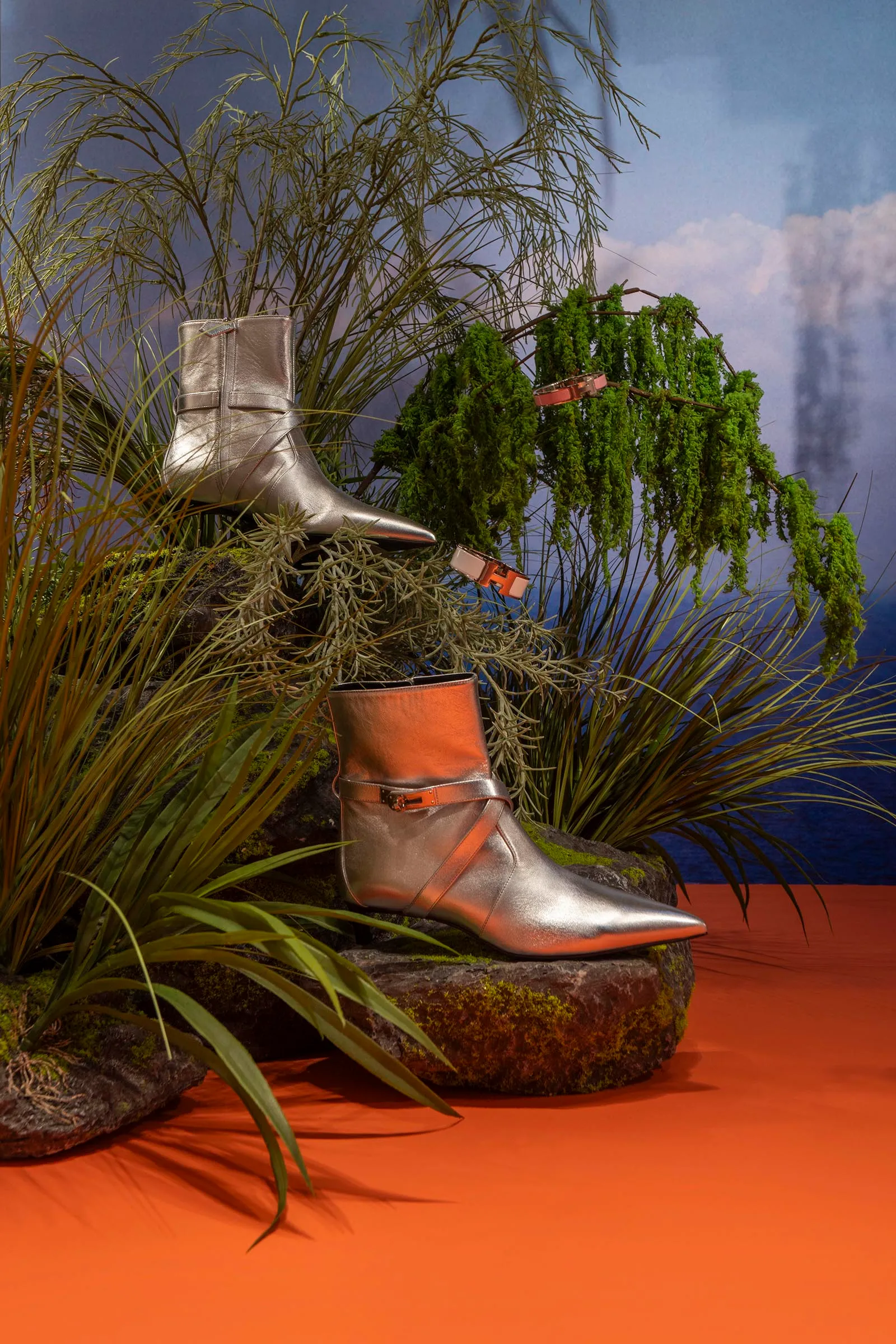
The husband-and-wife team have long explored the use of assorted objects and belongings to embody both the apprehension and anticipation, dislocation and discovery that constant movement entails. Yet their takeaway isn’t one of fear, but adventure, and the belief that one can always find an anchor in the way they respond.
In making Portals: The Passage of Time, Isabel and Alfredo Aquilizan hope that viewers will bring their own perspectives to the piece, but also share in their “double vision.” As migrants and travelers, they know the time spent between destinations can open up new directions, but you can only learn where they lead once you step through the door.
Portals: The Passage of Time by Isabel and Alfredo Aquilizan is on view at the Hermès Maison Shanghai as their Autumn Window display until November 12, 2026.
Frequently Asked Questions
Hermès is a French luxury brand known for their silk scarves, ready-to-wear garments, and leather goods such as the Birkin and Kelly bags. Founded in 1837 by Thierry Hermès, the house is recognized for its commitment to fine craftsmanship and artisanship, and is currently helmed by Axel Dumas, a sixth-generation descendant.
Isabel and Alfredo Aquilizan are a Filipino artist duo known for their site-specific installations and sculptural pieces that focus on migration, memory, identity, and home. They draw on social engagement to construct landscapes and spaces made of found and recycled materials, as a response to global movement, displacement, and community.
Portals: The Passage of Time is a window installation created in collaboration with Hermès for the Shanghai flagship’s autumn display. It celebrates and interprets the brand’s respect for heritage and innovation by capturing the journey between past and future in a non-linear visual narrative.
The collaboration was built on shared values of craftsmanship and similar histories rooted in travel, motion, and evolution. They first worked together in 2017 for the Singapore flagship, and now this year at the Shanghai flagship for the brand’s 2026 theme “Venturing Beyond.”
The installation is on view until November 12 at the Hermès Maison Shanghai, which is open daily from 11 AM to 9:30 PM and is located at 217 Middle Huaihai Road.