
This Japanese Wellness Practice Is Asking Us to Slow Down


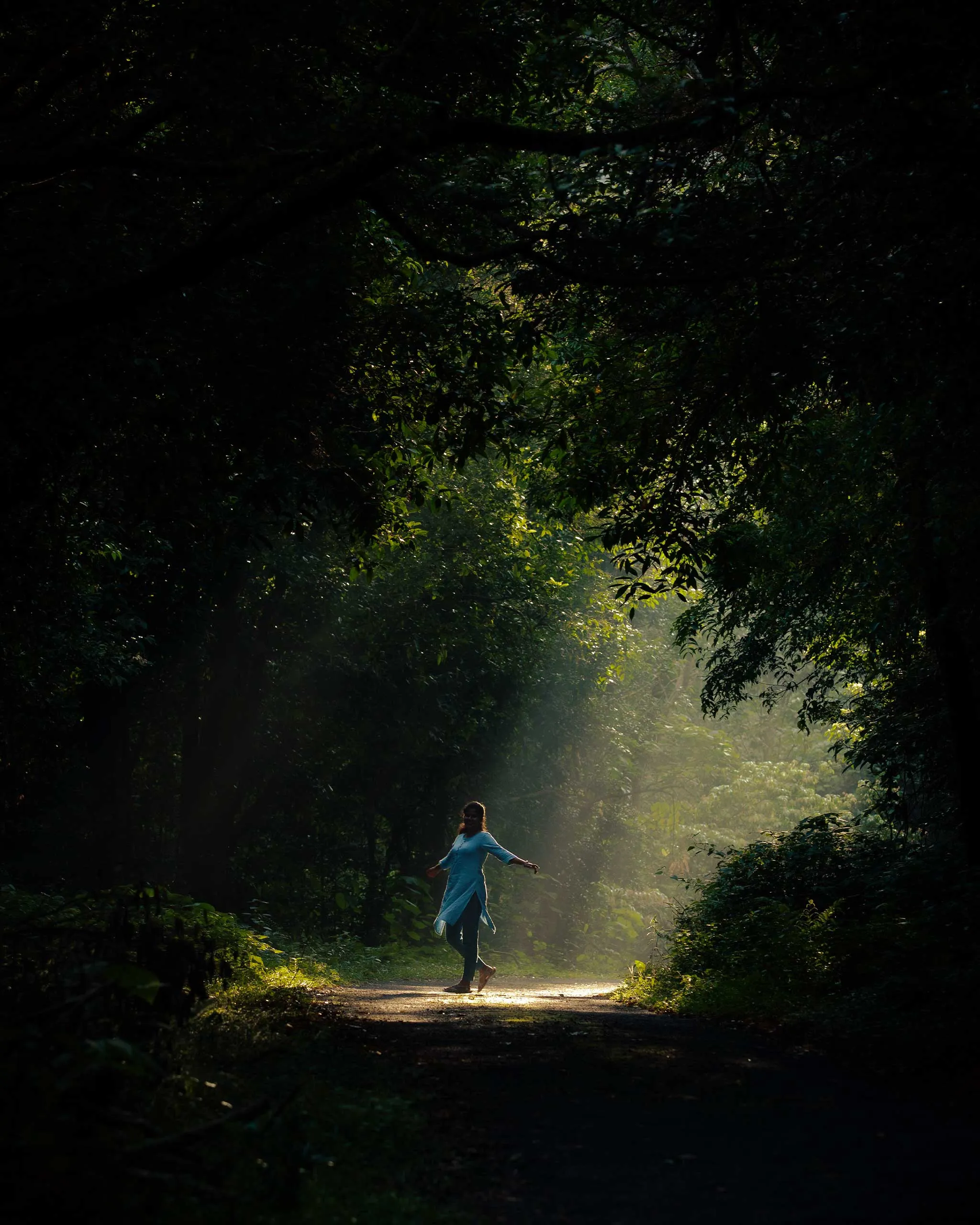
Pexels / Renjith Tomy Pkm
What is forest bathing? Dr. TJ Malvar explains the science, practice, and potential benefits of spending time in the forest.
In a culture of constant notifications, crowded commutes, and screens that rarely leave our hands, slowing down can feel almost unnatural. Forest bathing, or “shinrin-yoku,” offers an alternative that allows us to experience nature.
Originating in Japan, shinrin-yoku began as a response to stress and burnout. As a public health measure led by the Japanese Ministry of Agriculture, Forestry, and Fisheries, Japanese workers were encouraged to spend time in the forest to relieve stress. Eventually, the practice caught on and reached Europe and North America, where the term “forest bathing” or “forest therapy” was popularized.
In the Philippines, community and public health doctor TJ Malvar has been practicing forest bathing for almost 10 years. In 2021, he began Forest Bathing MNL, where he serves as a guide for those who want to try the practice.
For Dr. Malvar, the practice is a response to a highly digital age. “We are not liking how the screen and social media are consuming so much of our attention and energy,” he says. “In contrast to this, there is a growing movement to unplug and go offline. The young ones call it ‘touching grass.’ People are seeking experiences that create real-world connection.”
Dr. Malvar shares the benefits, tips, and other information about forest bathing.
Forest bathing is different from hiking
“Many people thought it involved swimming in the river,” Dr. Malvar says, recalling early Forest Bathing MNL sessions. “But actually, forest bathing is not literally ‘bathing,’ but more of basking, much like sunbathing. It is basking in the forest, or in nature.”
Unlike taking a walk outdoors or hiking, forest bathing is a slower practice that encourages people to use all their senses to take in the natural environment. While it may take place in the mountains, the difference it has from hiking is that there is less emphasis on reaching the summit. “When forest bathing, there is no destination. We adopt the ‘here, not there’ mentality. This actually makes a world of difference because if there is no place to get to, then we can take our time and notice more.”
Forest bathing can reduce stress and boost the immune system
According to Dr. Malvar, forest bathing can elevate mood, reduce stress, and boost our immune system. “After just 20 minutes of sitting in the forest, you feel happier. Your cortisol levels go down, and the activity of your natural killer cells goes up,” he expounds.
He explains that plants and trees also have an immune system. A core component of this system is phytoncides, which are organic aromatic compounds that protect trees against harmful germs, fungi, and insects. “When there are a lot of trees, there is an abundance of phytoncides in the air. And because we breathe the same air, our immune system also gets a boost!”
You can practice it on your own
Whether you’re by yourself or with friends, forest bathing is an activity that doesn’t require a professional guide. “Forest bathing is actually instinctive for us human beings,” he says. “Before civilization, forest bathing was just a part of everyday life. But because we have become so disconnected from nature, we have to be more intentional.”
Although you can practice this on your own, he suggests joining a guided session for beginners. “Forest bathing is a semi-structured activity, usually done in a forest park, a nature trail, or anywhere where there is an abundance of natural elements like plants, trees, grass,” he says. “Since I am a medical doctor, I always tell folks who join my group that when they join my sessions, I also think of them as my patients and nature as our medicine.”
Slowing down can be difficult, but lean into the discomfort
When you lead a busy life, slowing down can be a challenge. “But if we lean into the discomfort, we eventually find ourselves getting more comfortable. Slowing down and connecting with nature comes naturally to us as humans, but for some it might take time because we’ve become very disconnected,” he says.
This is why, for him, a guided forest bathing session can come in handy. With a guide, there is someone alongside you as you connect with nature, as well as other people you can learn from and connect with.
Forest bathing can be practiced in the city
Although “forest” is in the name of the practice, according to Dr. Malvar, it can be done in pocket gardens or urban parks. “For example, I’ve led sessions inside the Ateneo de Manila campus, and it was very conducive,” he says. “I like to think of urban parks as power banks. In the absence of a wall plug, it gets the job done.”
Frequently Asked Questions
Forest bathing, or shinrin-yoku, is a mindful, sensory practice of slowing down and soaking in the atmosphere of a forest. Unlike hiking, it has no destination — practitioners use all five senses to notice their surroundings, an approach doctor TJ Malvar compares to “basking” in nature.
Shinrin-yoku, or forest bathing, originated in Japan in 1982 as a public health measure introduced by the Ministry of Agriculture, Forestry, and Fisheries to help workers relieve stress. The practice later spread to Europe and North America, where it became known internationally as forest bathing or forest therapy.
Forest bathing does not require hiking, mountain climbing, or exercise. The core practice is slowing down and immersing yourself in a natural environment — a forest park, nature trail, or urban green space — using all five senses to notice sounds, textures, and scents rather than reaching any destination.
Dr. TJ Malvar is a Filipino community and public health doctor, health equity advocate, and social entrepreneur. In 2021, he founded Forest Bathing MNL, where he serves as a certified guide leading forest bathing sessions across Metro Manila’s parks and natural spaces.
Forest Bathing MNL is a wellness and eco-therapy initiative founded by Dr. TJ Malvar, a community doctor and certified forest bathing guide. It offers guided sessions in Metro Manila’s parks and green spaces, treating nature as medicine and participants as patients seeking rest and reconnection.