Inside the Mystical World of Michelline Syjuco


Photographed by JV Rabano for the September/October 2026 Issue of Vogue Philippines
Photographed by JV Rabano for the September/October 2026 Issue of Vogue Philippines
After a decade away from the wearable art scene, Michelline Syjuco beckons us back into her twisted, magical, and at times macabre inner world.
Before she became known as an artist and a sculptor, Michelline Syjuco was first and foremost the creator of “tweakies.” These made-up characters were conjured up in childhood, and built to life with bits and pieces of wood, screws, nuts, and bolts scavenged on the floor of her father’s home studio. “While he’d be busy doing his box art, I would be busy putting together all the little odds and ends,” she tells Vogue.
The room was adjacent to the bedroom, and the house’s many tenants included Michelline, her sisters Maxine and Beatrix, brothers Jules and AG, and their parents, poet, painter, sculptor Cesare A.X. and performance artist Jean Marie. Michelline says of her parents, “They’re both pioneers of the avant-garde art scene in the Philippines, so it’s kind of hard to not have some kind of creative gene. But my siblings are also artists, and I grew up in a compound that was full of creative people.”
She rattles off their neighbors casually, as if the list isn’t the stuff of cinephilic dreams: director Peque Gallaga and actors Ronnie Lazaro, Joel Torre, Mitch Valdez, and Jaime Fabregas. “I remember them coming over late at night to have deep talks with my parents,” she reminisces. “And I would just be playing on the floor.”
Where we meet Michelline is the family’s new stomping grounds located in southern Metro Manila. Beside their new house (the old one used to be in New Manila) is a separate estate that hosts a pool, Michelline and her sister Maxine’s separate studios, and the Syjuco Museum; the latter, an initiative of Maxine’s to preserve their parents’ works. The compound moonlights as a bird sanctuary, which Michelline doesn’t take for granted. Among the flora and fauna, where crows and hummingbirds come to visit her and her koi pond, is where she built a habit of spending a couple of minutes in the morning in solitude, to inspire a sense of calm.
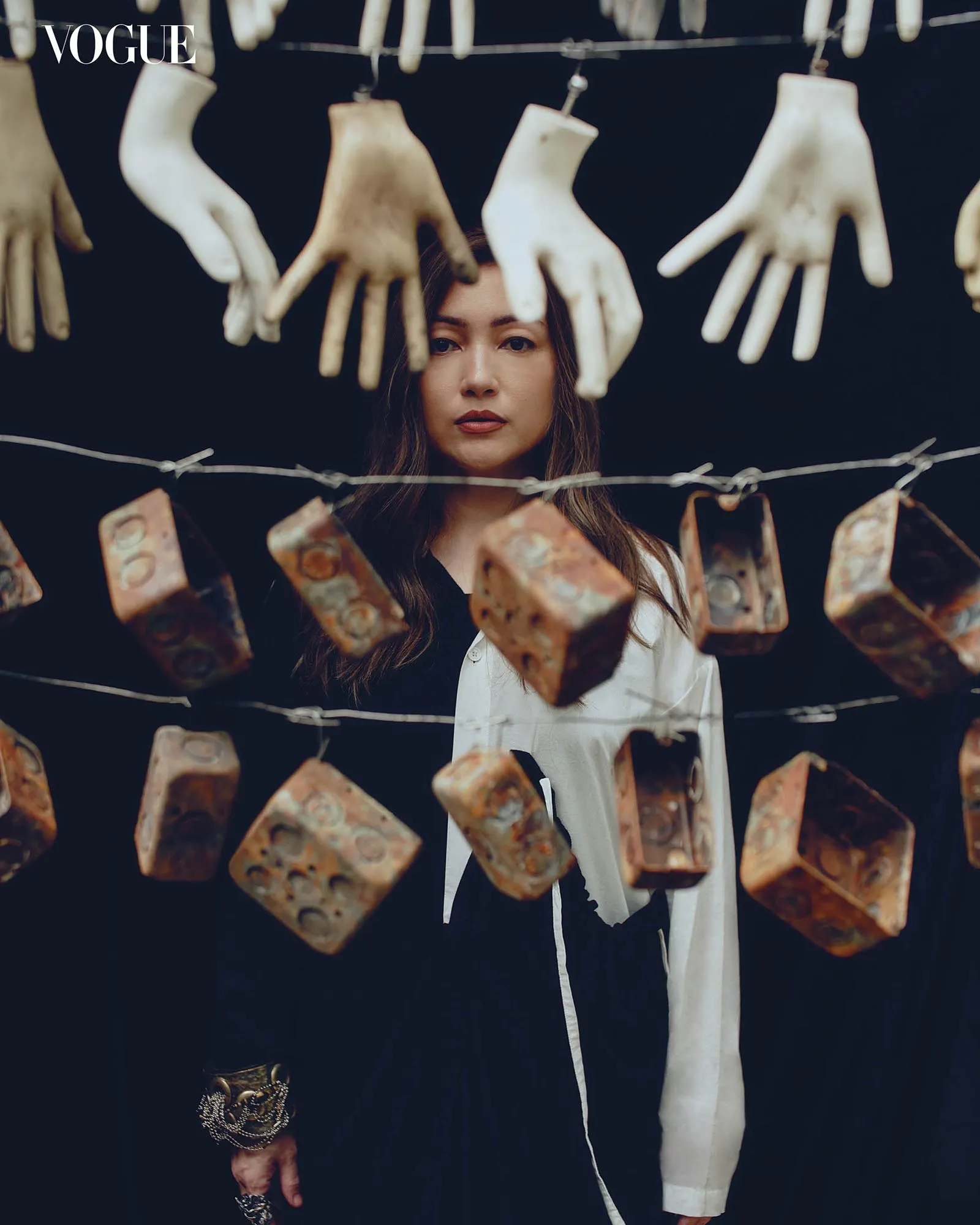
As in, calm before the storm. “After that, I dive straight back into it. I’m sure you’ve heard the term ‘organized chaos.’ My studio is not at all organized. It’s actually just plain chaos,” she refers to her outdoor workshop, shielded from the sun and rain by a canopy overhead. “But it makes sense to me. In my mind, I know where everything is. I know what needs to be done.”
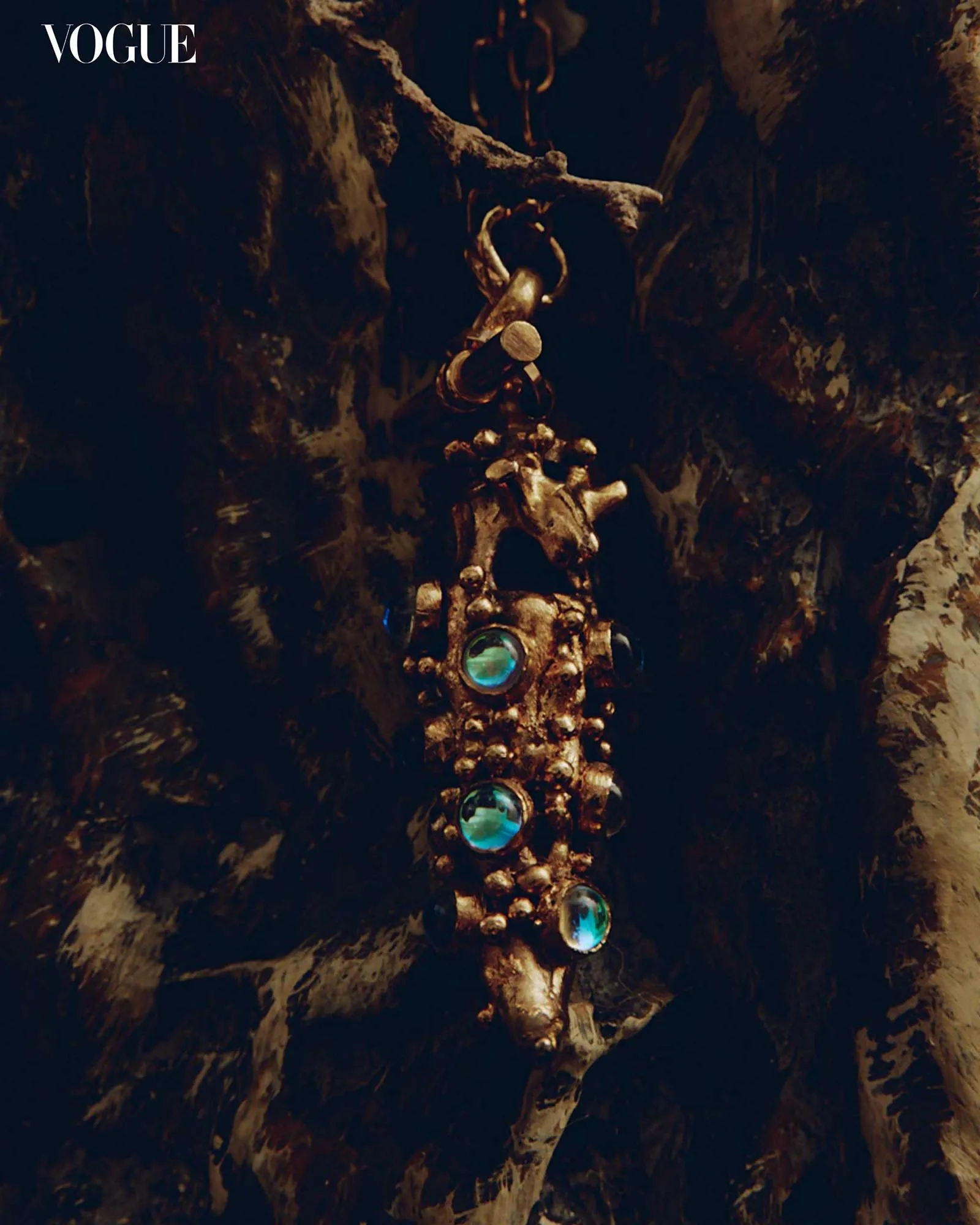
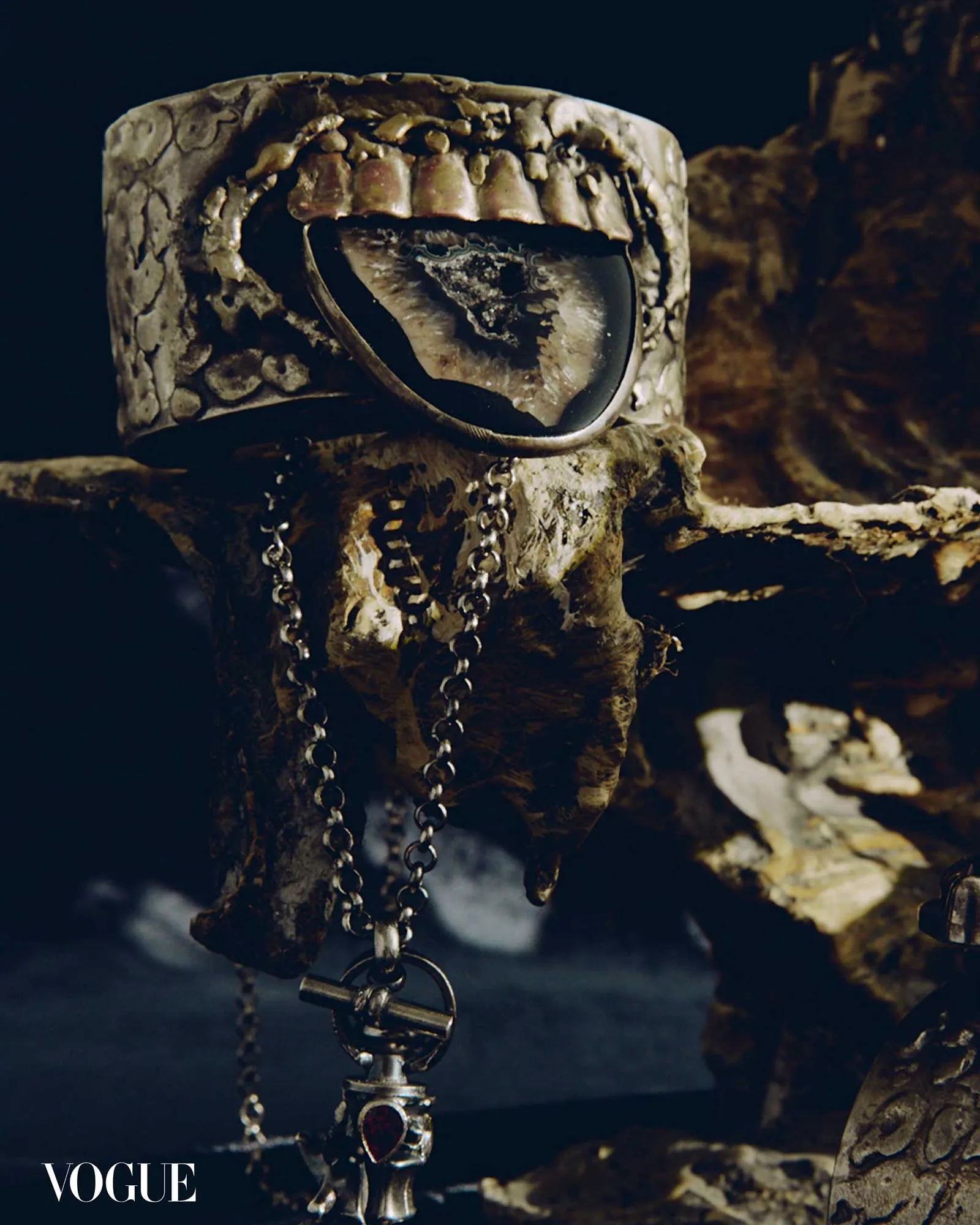
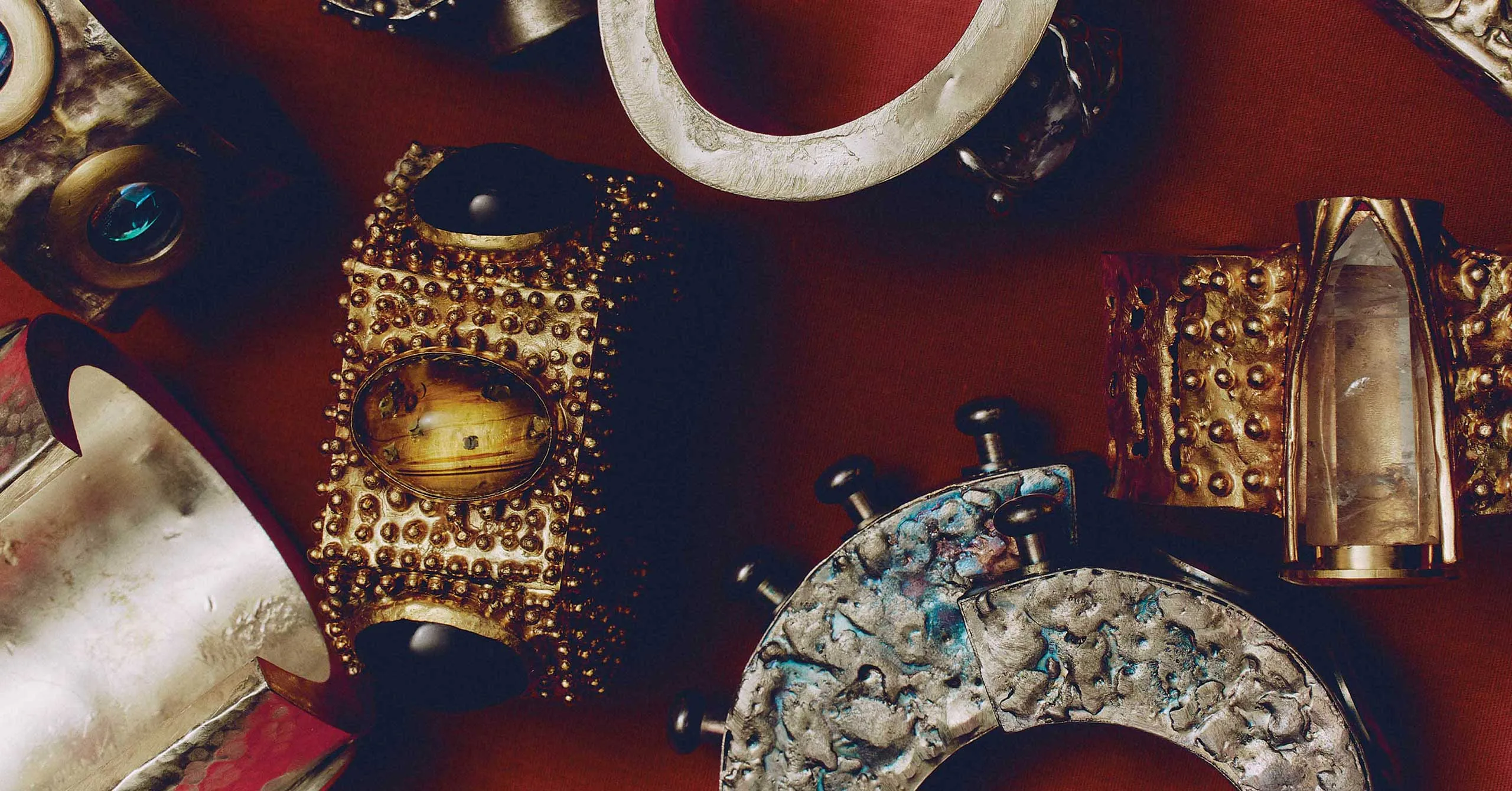
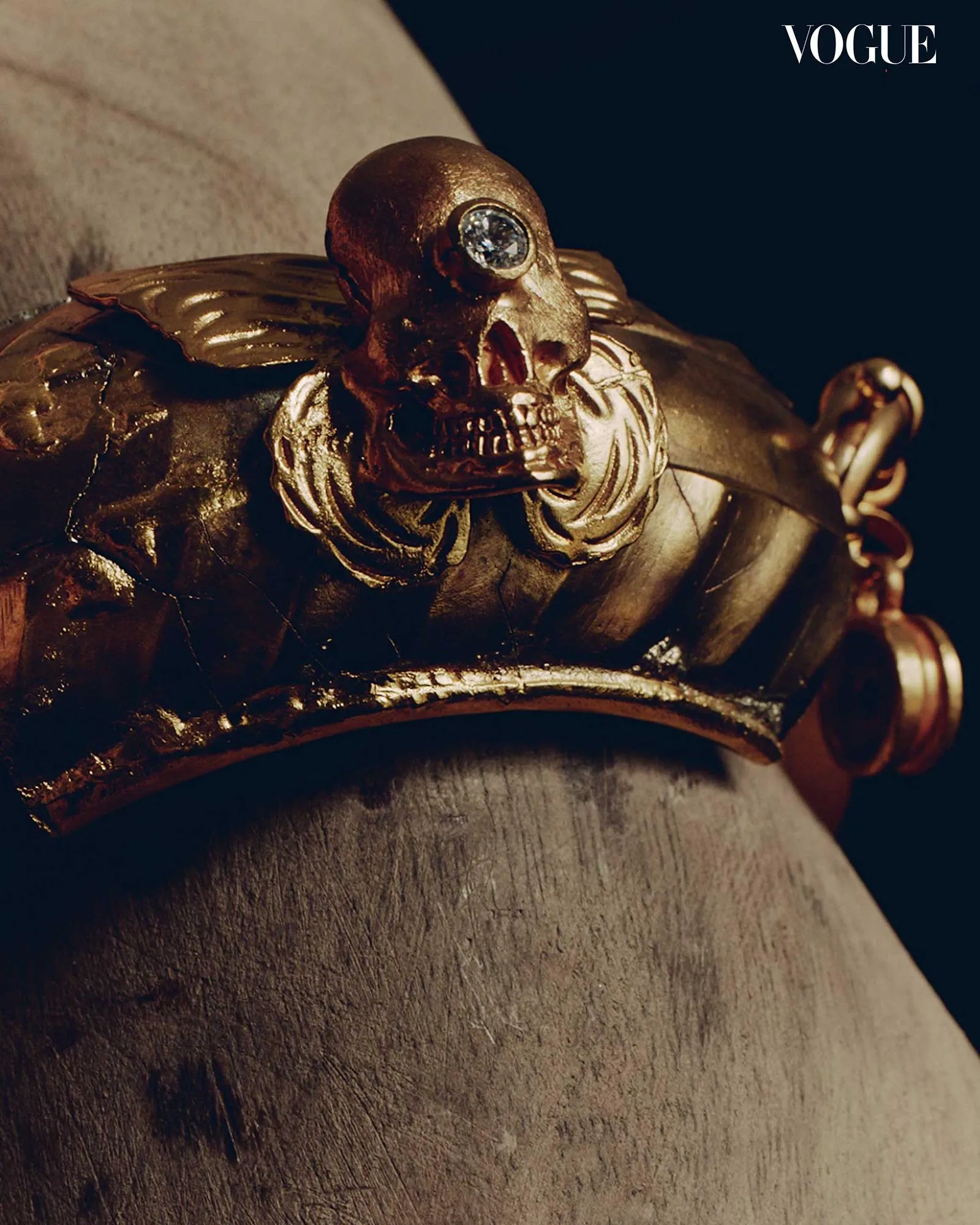
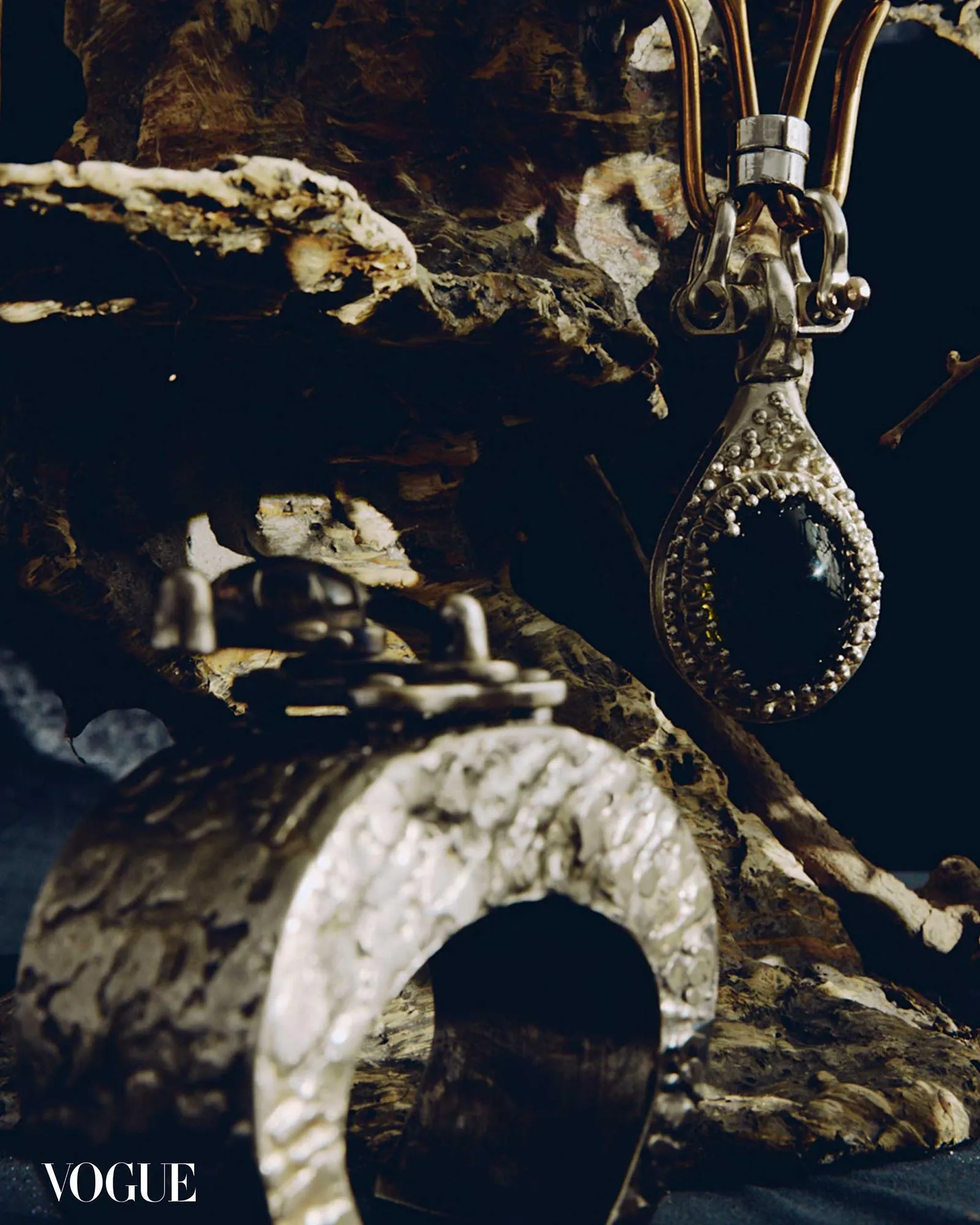
Like her tweakies, Michelline’s wearable art pieces are hefty and mixed in media. “I’m not into the aesthetic of perfection,” she prefaces her work. “I think we get enough of that from mass-produced objects and from fast fashion.” She uses metals and stones, injecting in them a mysticism that draws from her deep love for sorcery, swords, and fantasy. The works register as precious treasures you’d be overjoyed to dig up at a dense antique shop, and in a way, they do carry the charm of an irreplicable object, because they are all one-of-ones. Her statement cuffs are stunning but unpretty; the thick metal bands are melted, hammered, and studded, rough with the ferociousness of a maker whose ideas are vigorously spilling out.
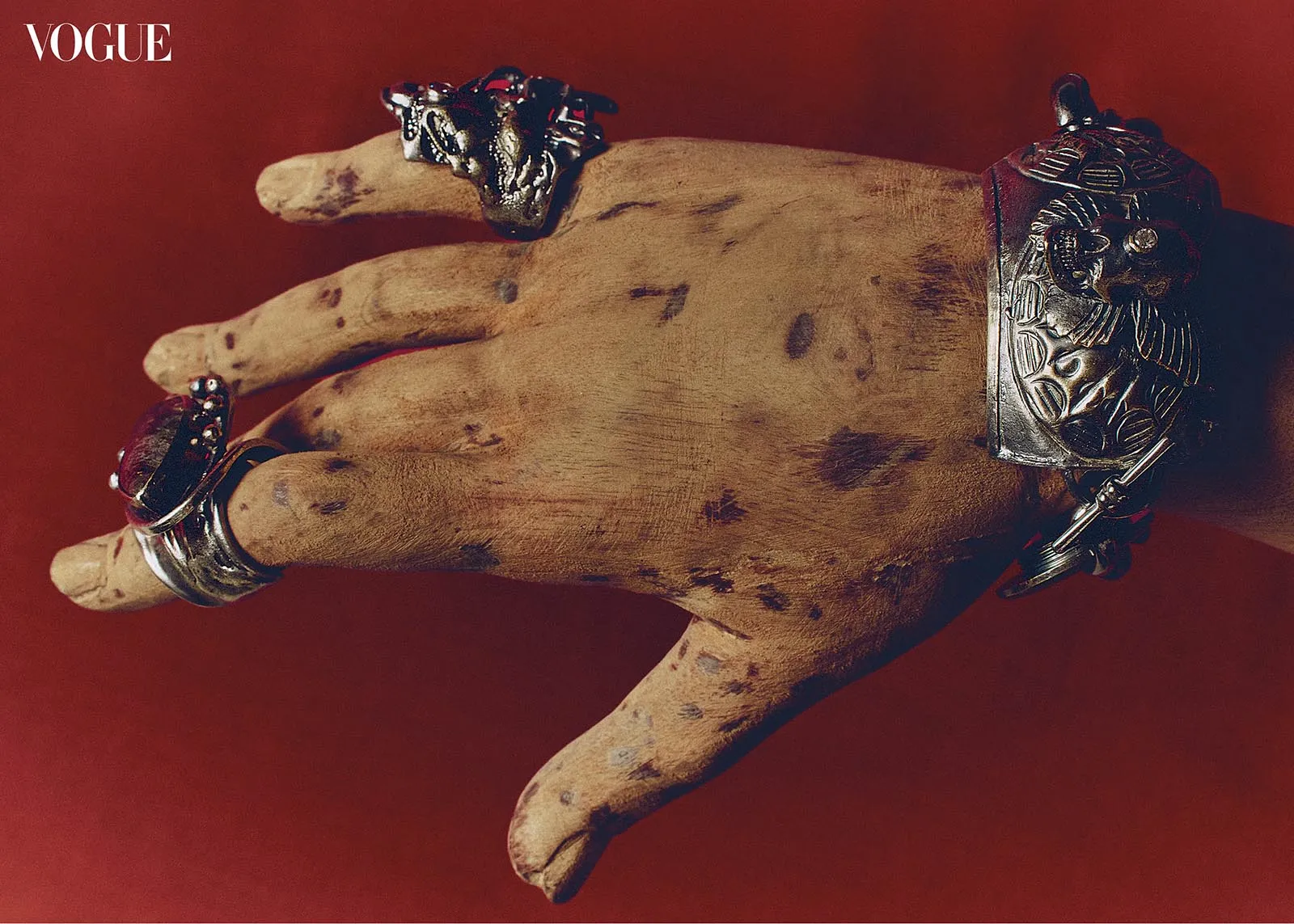
But she has always been this way. She recounts the aftermath of welding classes with sculptor Tata Funilas, before her career began: “I worked like a madman. I produced a collection of 80 pieces.”
Funilas was the long-time collaborator of National Artist for Sculpture Napoleon Abueva. Incidentally, it was Abueva who propelled Michelline’s design journey forward. She recalls their first encounter at an event, some time after she graduated from college with a business management degree, and after she’d decided that a typical 9 to 5 wasn’t for her. “It was just very fortuitous that I had to attend an important art function. I didn’t have anything that I felt represented me and the image that I wanted to convey, so I decided to make a cuff for myself using whatever materials I had at home.”
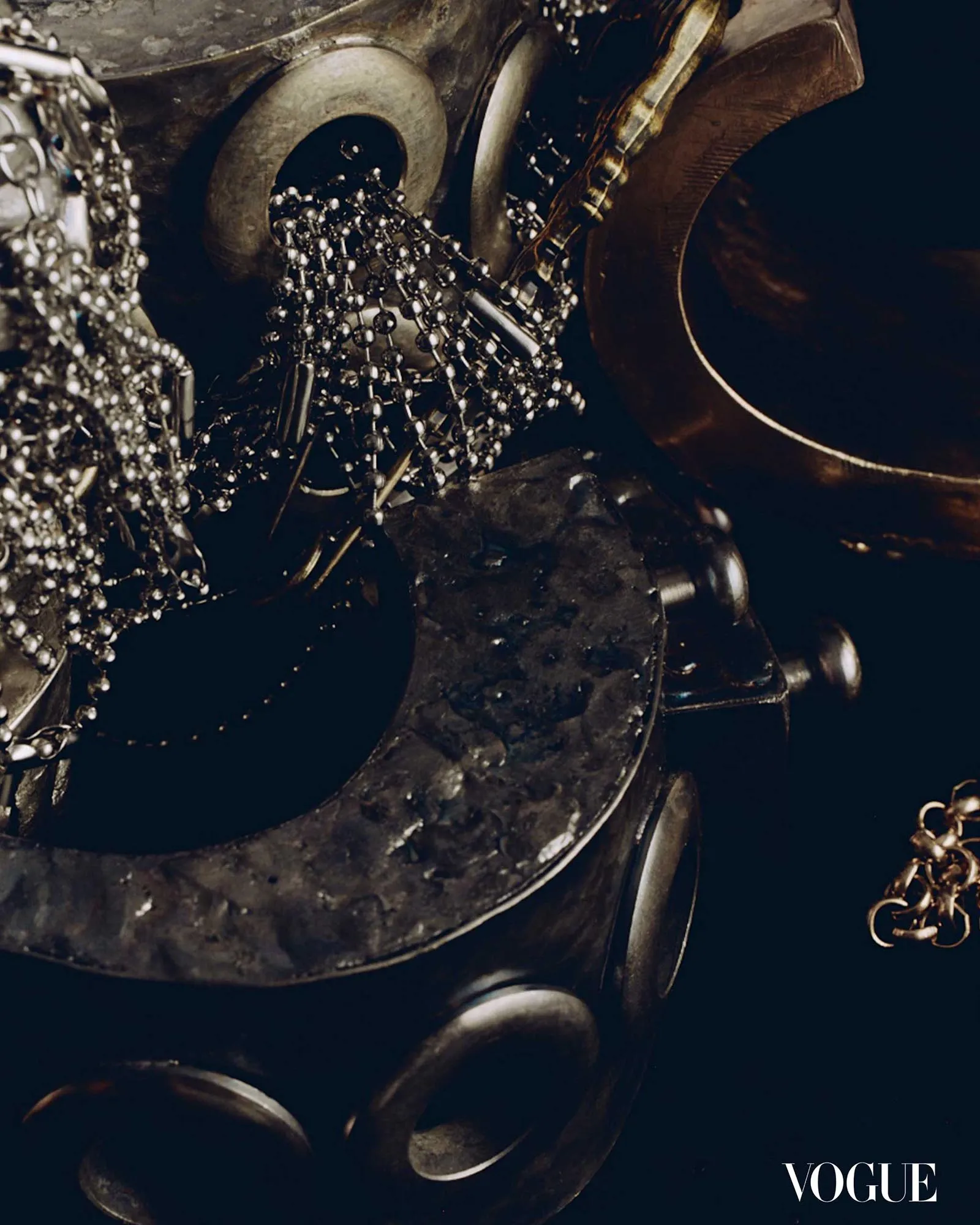
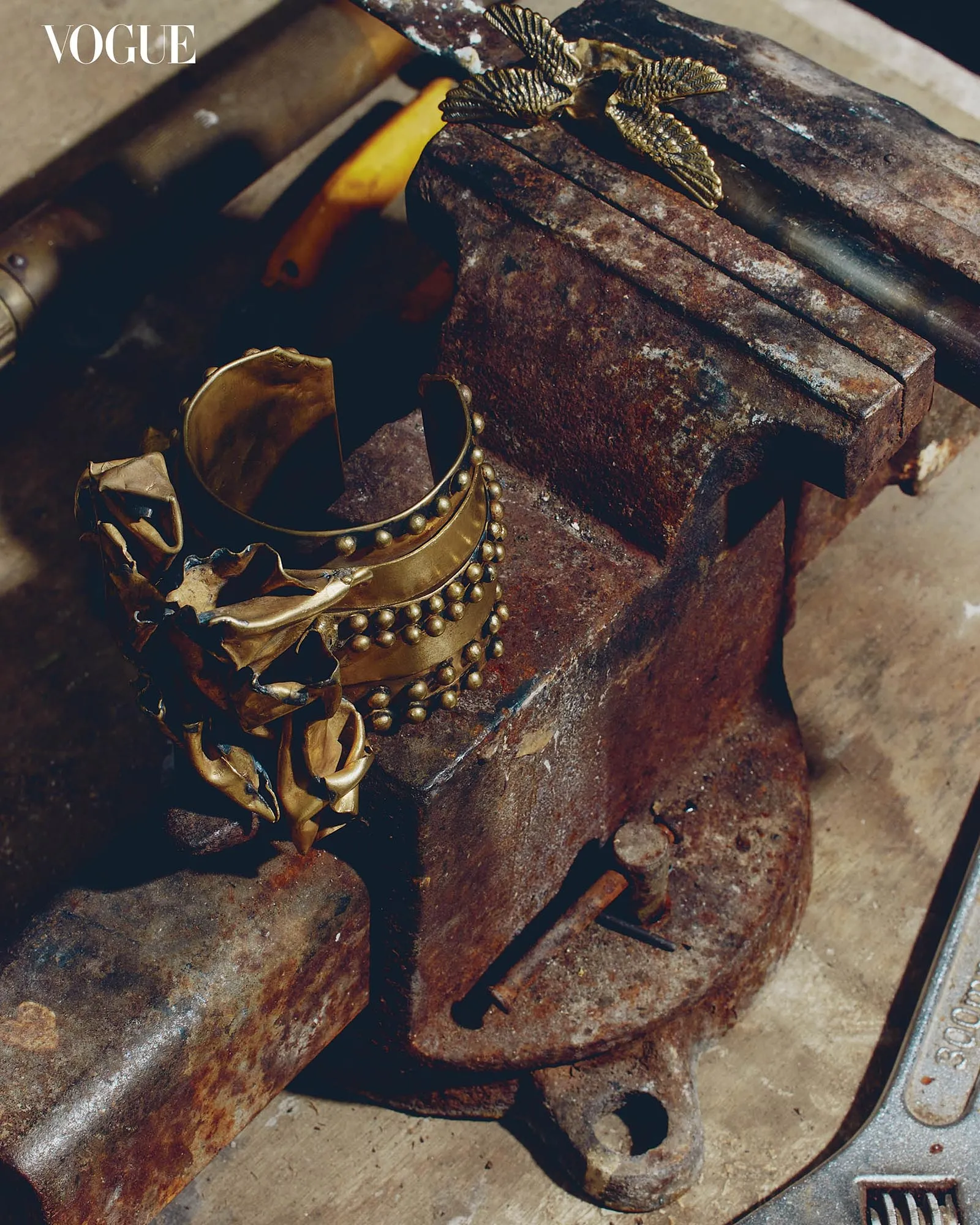
Equipped with a hammer, brass sheet, and basic welding skills, she came up with a piece that she “thought was pretty cool.” The sculptor happened to be at the affair, “and he was talking to me, I remember, but he was staring at the cuff. And he sat me down and he said, ‘That’s a really nice piece.’” When Michelline revealed that it was her own creation, he recommended that she replace him at a wearable art exhibit that he was invited to participate in, but didn’t have the time for. The show, it turned out, included other luminaries in the arts: Ed Castrillo, Ramon Orlina, and Arturo Luz, which daunted the young Syjuco.
“I said, ‘Tito, how can I do that? I don’t even know what I’m doing.’ And he said, ‘You know, I can tell that you have the gift.’”
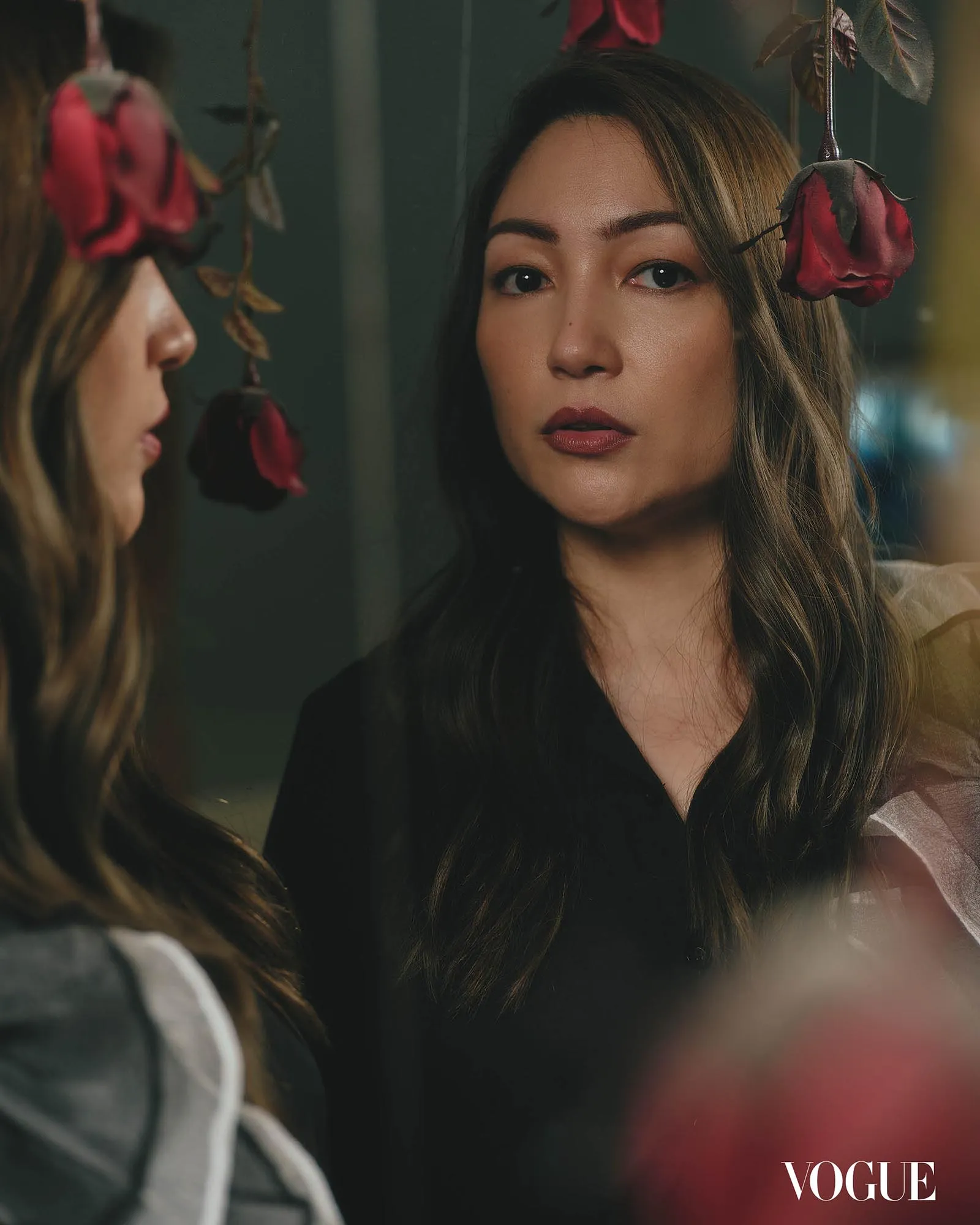
Upon his recommendation, she took up those classes with Funilas at the University of the Philippines, and the resulting 80-piece collection was called Amadillon, based on a fantasy world she had built in her mind. Revisiting the launch, she lets out a laugh. “Of course, Abueva cut my ribbon. Because without him, I probably would not have gone down that path.”
Back in her studio, all surfaces are filled with raw materials and works-in-progress. The mood feels rustic, resembling that of Wonderland where sunlight shines on talking trees and singing animals, before details begin to look amiss. One corner is guarded by a pair of mangled mannequins. From a metal rack eerily hang garlands of wooden hands, and below them, small, patinated trays seemingly reserved for questionable specimens. On a table, vintage locks and keys are strewn about, next to a pristine plate of polished gemstones.
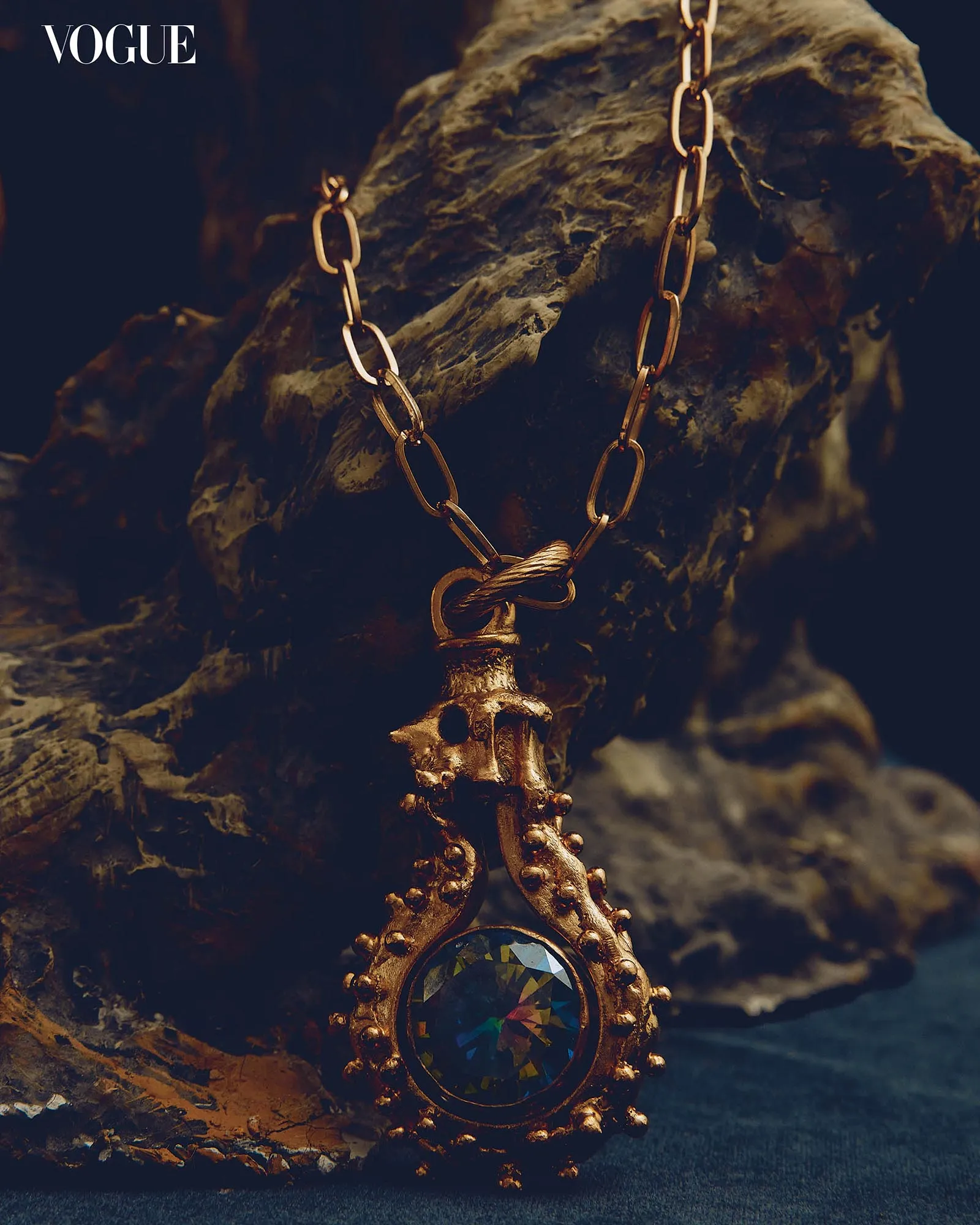
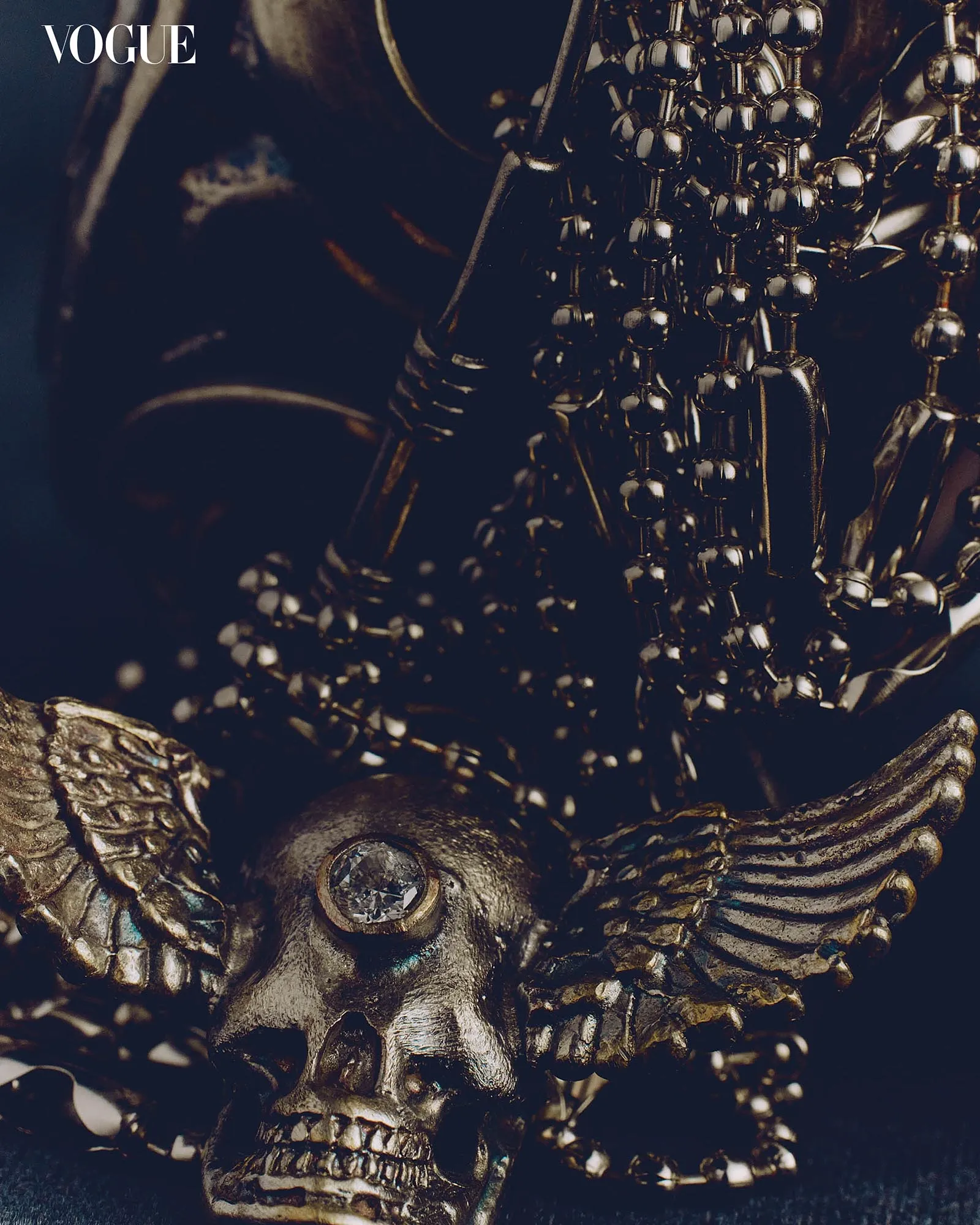
Admittedly, it all looks so tantalizing. Her irreverent take on jewelry (Vogue Philippines fashion editor David will even go as far to describe it as macabre) was honed by a range of influences. She counts British fashion’s “enfant terrible” Alexander McQueen as one of her inspirations; cites Beastmaster, Conan the Barbarian, and Krull among her favored films; and identifies an attraction to talismans brought about by Sunday post-mass trips to Quiapo with her mom.
“I was fascinated by this little street on the side of the church that sold anting-antings,” she shares. “I thought it was so interesting that these talismans were a combination of mythology, folklore, Roman Catholicism, symbolism, and that all of these things were disparate and yet they existed in a single object. I think that that memory still carries on and translates into my work today.”
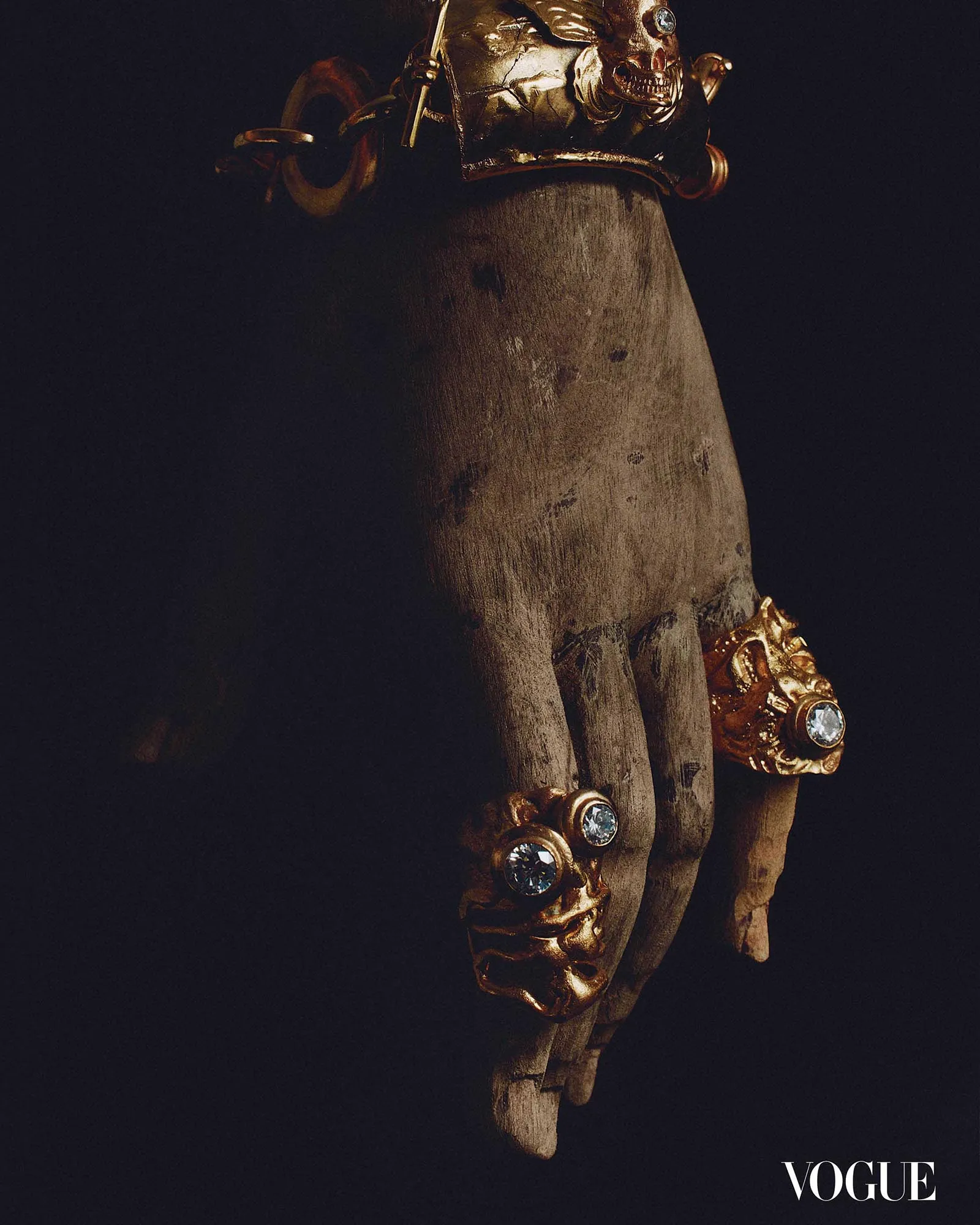
Besides those welding classes, Michelline is entirely self-taught, and expresses how she doesn’t ever want to be schooled. Formulas, she says, and the dichotomy of right and wrong, sap the fun out of the process. This is true for someone like her, who only sketches a design occasionally and mostly allows materials to dictate what they want to become. “My mom always says that when you’re doing art, you are just the vehicle,” she explains. “You have the materials and you’re putting them together, but at a certain point, the art starts making itself, and it’s not really up to you to say when it’s done. And it’s something you’ll only find out when you’re doing it. It tells you, I’m complete. I am what I was designed to be.”
Construction and deconstruction informs much of her work, as they are manifestations of her belief that creativity is limitless and circles around. “I never have discarded pieces. I always set them aside and use them for something else.”
“The challenge is to make something that AI has no access to.”
This is apparent in her anticipated new collection the Return of the Savant-Garde, which is launching this September. The momentous comeback marks the end of her decade-long hiatus from the wearable art scene, although she was never fully gone. In the past 10 years, she’s explored other mediums like painting and sculpture, but insists that they aren’t separate from her jewelry: “The common thread is that when I’m doing them, I’m in a state of play. There are no rules. Anything goes.”
As usual, her upcoming jewelry and objets d’art cull their origins from that feral inner place that she has always honored. “I actually cannibalized pre-existing objects, and then the parts that were remaining were used to create other objects,” she describes. Among them are brass angels, whose wings she cut off and attached to cockroaches and skulls, and a cross-shaped pendant formed by a quartet of now-wingless angels.
The scene she returns to is not the same one she momentarily left behind, and she knows it. “I mean, you have AI collating images from all over the world, and yet it produces certain objects that have already been created in the past. So the challenge is to make something that AI has no access to because it hasn’t yet been made,” she posits. It’s what she endeavors to do with her latest collection and what comes after it; perhaps garments, she teases, for next year.
For Michelline, that’s what art is all about. The notion of singularity and transformation; of introducing something new with objects that have always been here, like imagined characters coming alive through stray objects on a home studio’s floor.
By TICIA ALMAZAN. Photographs by JV RABANO. Fashion Editor: DAVID MILAN. Interview by AYLLI CORTEZ. Media Channels Editor: Anz Hizon. Producer: Bianca Zaragoza. Media Channels team: Wainah Joson (video editor), Angelo Tantuico (producer). Makeup: Patricia Acejo. Hair: Jeremi Nuqui Cabarrios. Videographer: Robyn Josue. Photography Team: PJ Salazar and Erwin Arda. Camera Operator: Vince Cenon.