
Lyra Garcellano Reframes the Labor of Filipino Women Through “Heavy Lifting”


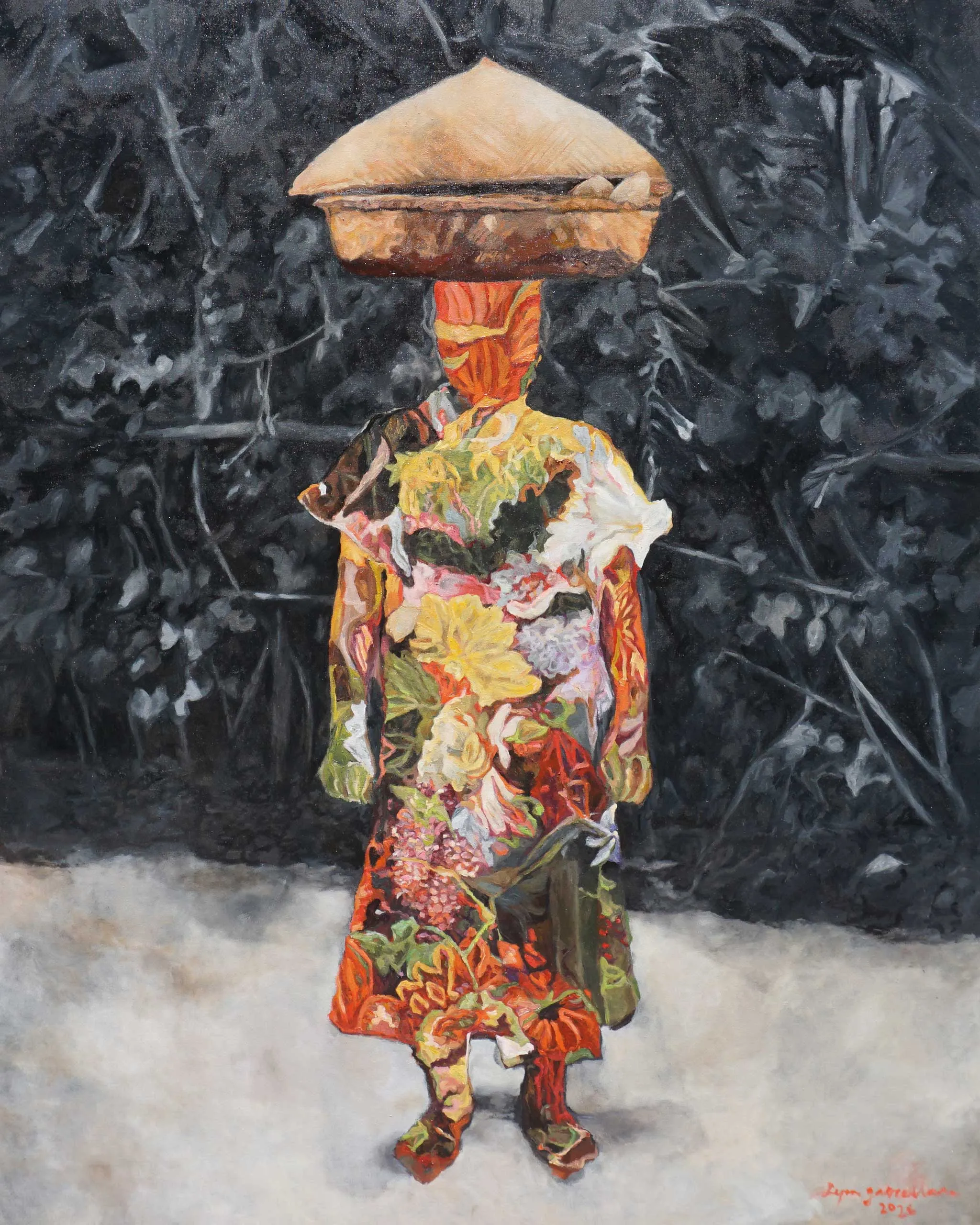
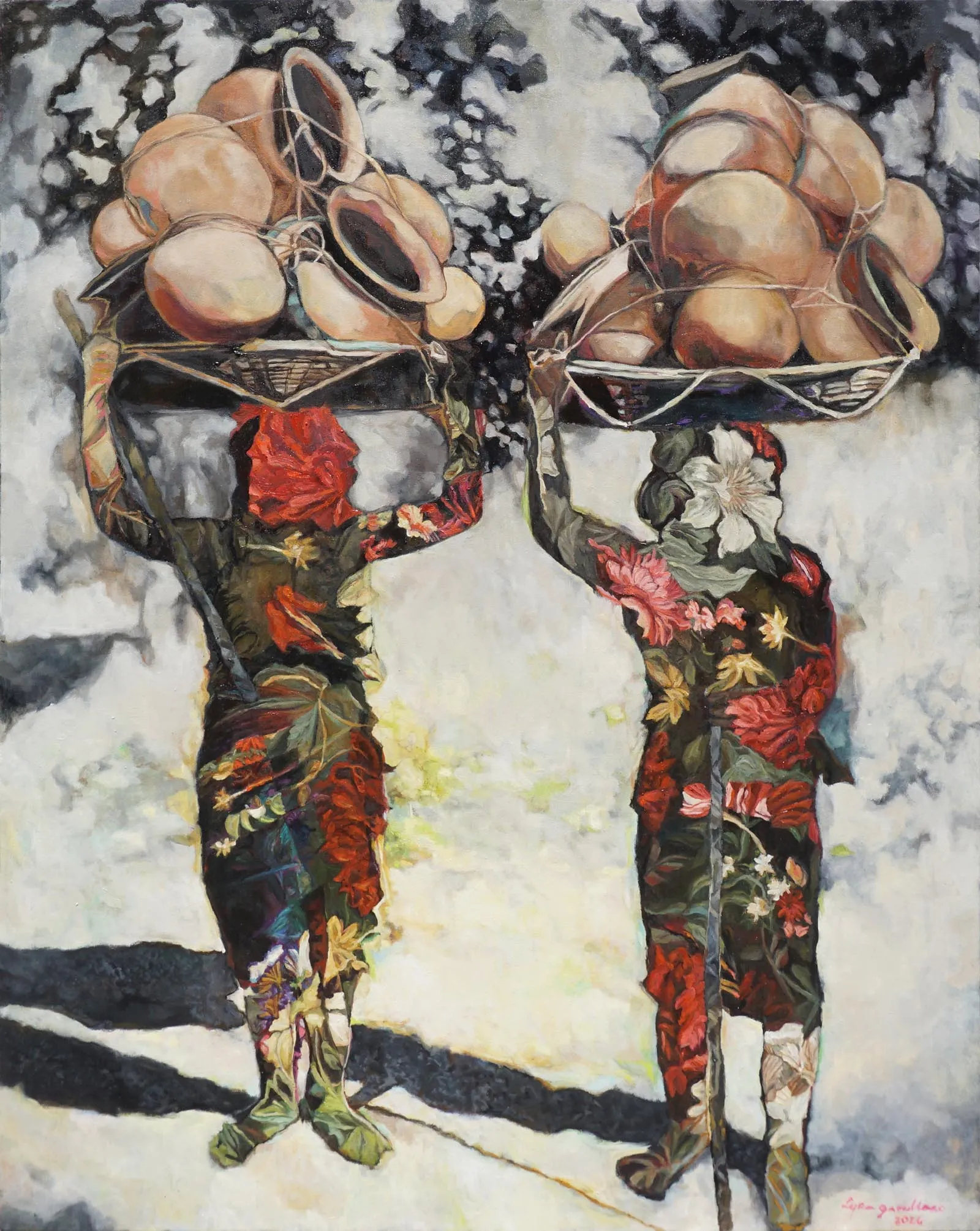
Heavy Lifting II (2026). Courtesy of Finale Art File
The artist revisits colonial-era photographs of women carrying heavy loads, examining how gender, labor, and history shape the way we see them.
Women carrying blouses and baskets of food on their heads while walking around Manila sparked something in Lyra Garcellano. As a child, she was fascinated by women, particularly their strength and balance. But as she grew older, she began to observe the exhaustion that comes with physical labor. Over time, that fascination eventually gave away to the realization that what she once thought was a “pretty sight” was, in fact, the “normalized” suffering of people trying to make a living. With this imagery and concept in mind, her exhibition Heavy Lifting was born.
In her solo show, Garcellano presents a series of paintings that explore the intersections of colonialism, labor, gender, and the politics of representation, drawing on 19th- and 20th-century photographs of Filipino women. By examining this era, she delves deeper into the country’s colonial history and considers how photography, as a medium, was used to serve the interests of the ruling class.
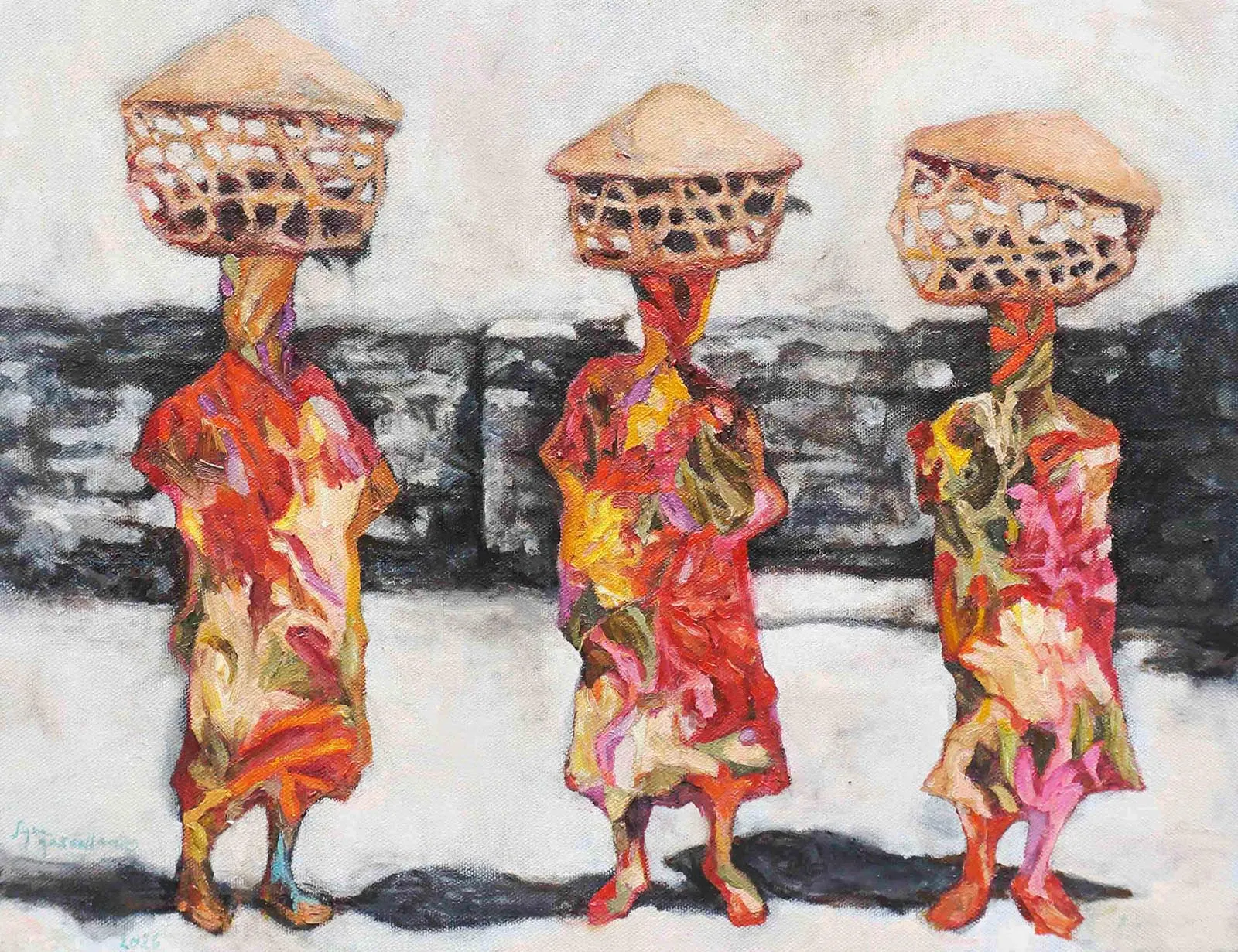
What stood out to her at first were the things that women actually carried: mats, stacks of pillows, sometimes filled with kapok, and pots. “Women from Southeast and South Asia as well as Africa carried an assortment of objects. I am struck by the amount of heavy objects people transported using this particular type of labor or skill, especially during this so-called era of high technology. There is no romanticizing this back-, neck-, or whole-body-breaking labor,” she tells Vogue Philippines.
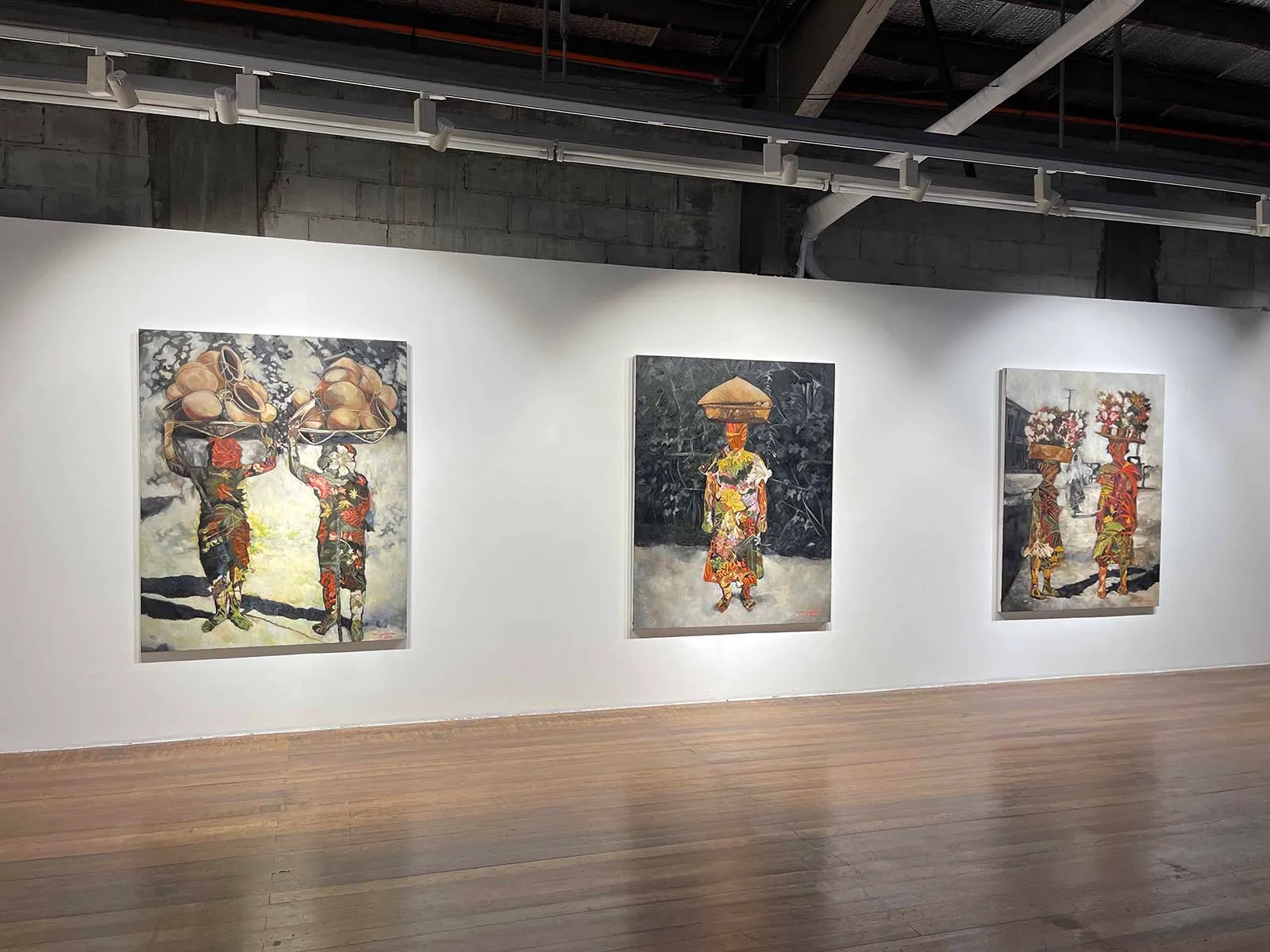
Garcellano has long been interested in patterns and repetitive designs. She thought that enveloping or covering the figures in tropical visual patterns would be a creative way to emphasize their presence. “In my paintings, the background remained monochromatic, as were the original photos, but adding decorative color to the figures was my way to highlight their labor,” she says. She felt that throughout history, women who used this particular method of transportation had been relegated to the background. “It was ‘normal’ or common to see them back then in our lives. In these paintings, I wanted to give them emphasis.”
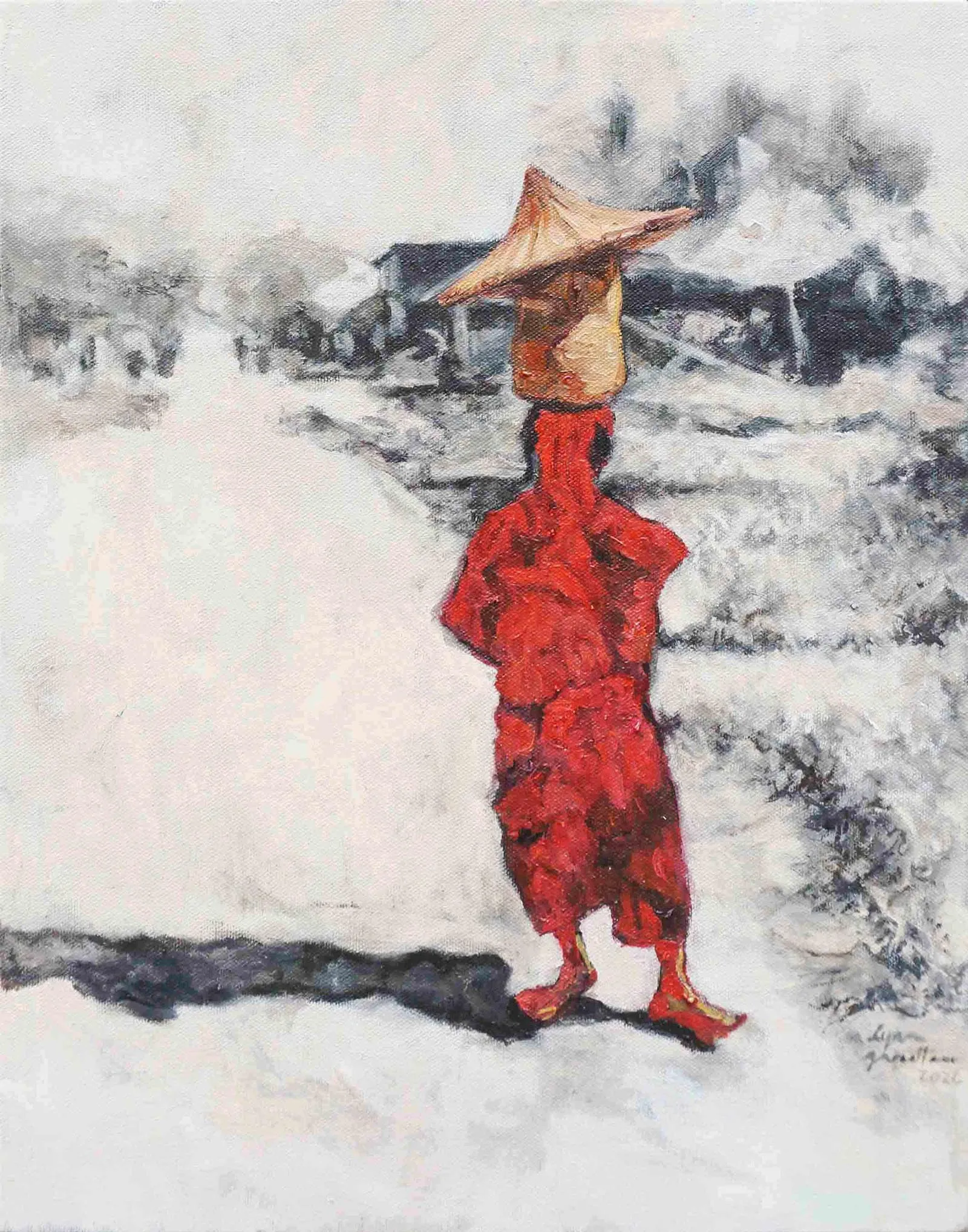
She also acknowledges that some tourists in the country may see women carrying loads on their heads as a sight to behold. But they are often viewed as markers of a struggling nation. While we may not regularly see as many women carrying loads this way in Manila’s urban landscape, Garcellano notes that women and men in more remote, less urbanized areas still utilize this method of transport, particularly as access to transportation remains an issue that needs to be addressed.
Through the process of making her art, Garcellano has also come to recognize that those familiar with her work may see this exhibition as part of her ongoing exploration of Philippine history, particularly her interest in examining historical references and bringing their relevance to present-day issues. “Overall, I am wishing that with my paintings, people can be nudged to see, or maybe, become more attuned to the seemingly ordinary [that] many people may have taken for granted,” she says.
Heavy Lifting is on view at Finale Art File until September 5, 2026.
Frequently Asked Questions
Lyra Garcellano is a Filipino contemporary artist whose work often explores Philippine history, identity, and the politics of representation. In Heavy Lifting, she draws from historical photographs of Filipino women to examine labor and gender.
Heavy Lifting is Lyra Garcellano’s solo exhibition featuring paintings inspired by 19th- and 20th-century photographs of women carrying objects on their heads. The works explore themes of labor, gender, colonialism, and representation.
Finale Art File is located at Warehouse 17, La Fuerza Compound, Gate 1, 2241 Chino Roces Avenue, Makati City. The gallery is open Monday to Saturday, from 10 A.M. to 7 P.M.
Kapok is a light, cotton-like fiber taken from the seed pods of the kapok tree (Ceiba pentandra). It has traditionally been used as filling for pillows, mattresses, and other items.
Heavy Lifting is on view at Finale Art File until September 5, 2026.