
Carla Villanueva on Dressing the World of Filipiñana


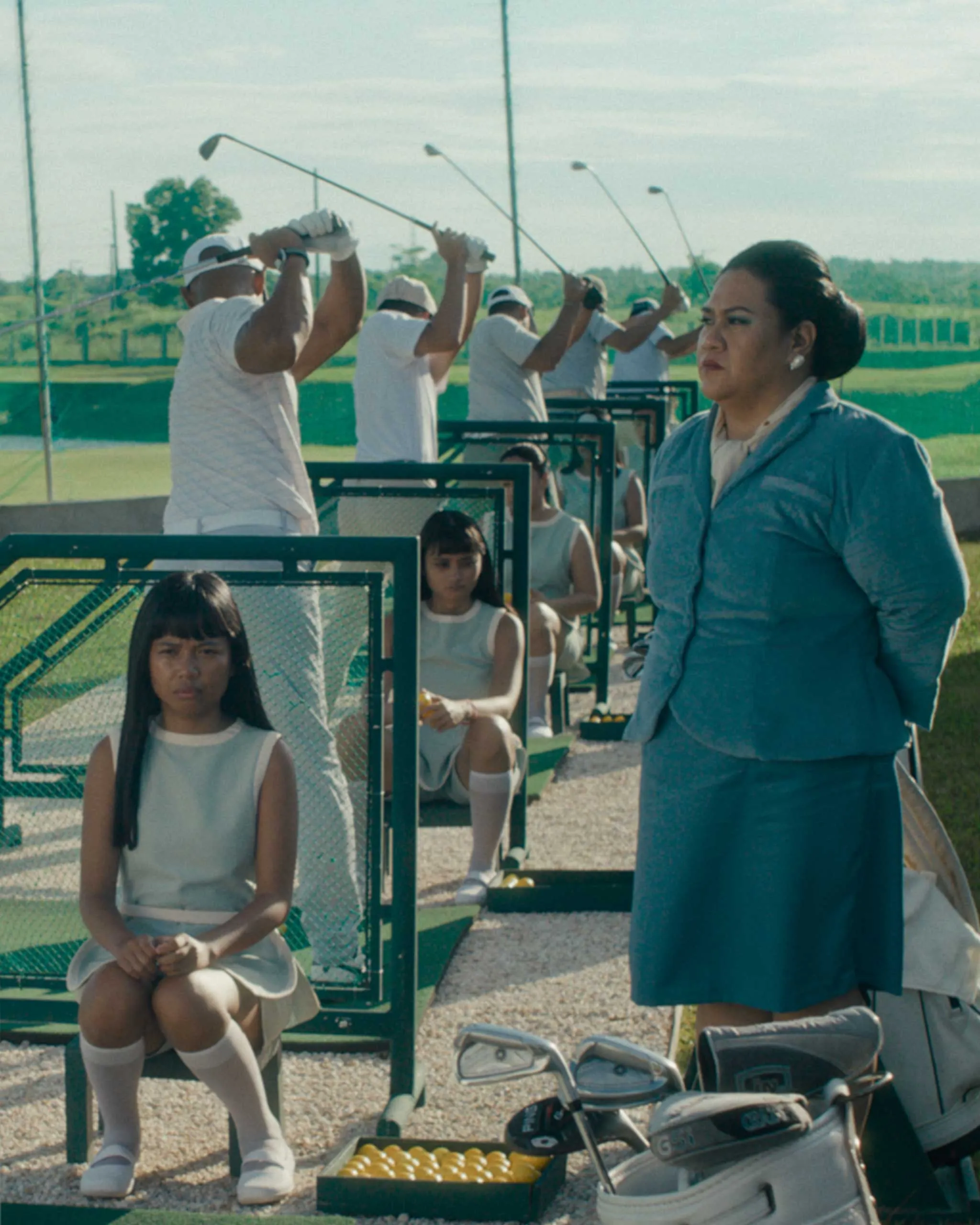
Jorrybell Agoto and Sunshine Teodoro as Isabel and Susan in Filipiñana. Film stills by Xenia Patricia
From pointed salakots to polished golfwear, the costume designer turns clothing into a language of power.
On the manicured lawns of the movie Filipiñana, everything looks stainless. The sprawling golf course, brutalist-built country club, sterile pink uniforms, and rituals of leisure seem to be the modus operandi. Yet behind the smoke and mirrors lies a strict hierarchy, with the golf club functioning as a microcosm of the oligarchic society of the Philippines.
For costume designer Carla Villanueva in collaboration with Tatjana Fanny Honegger, this hierarchy of rule and order is the central nervous system of the film’s plot. After working on the original 2019 short, she returned for the feature, expanding its universe into an entire ecosystem of golfers, caddies, maintenance workers, waitresses, pool boys, managers, and wealthy members.
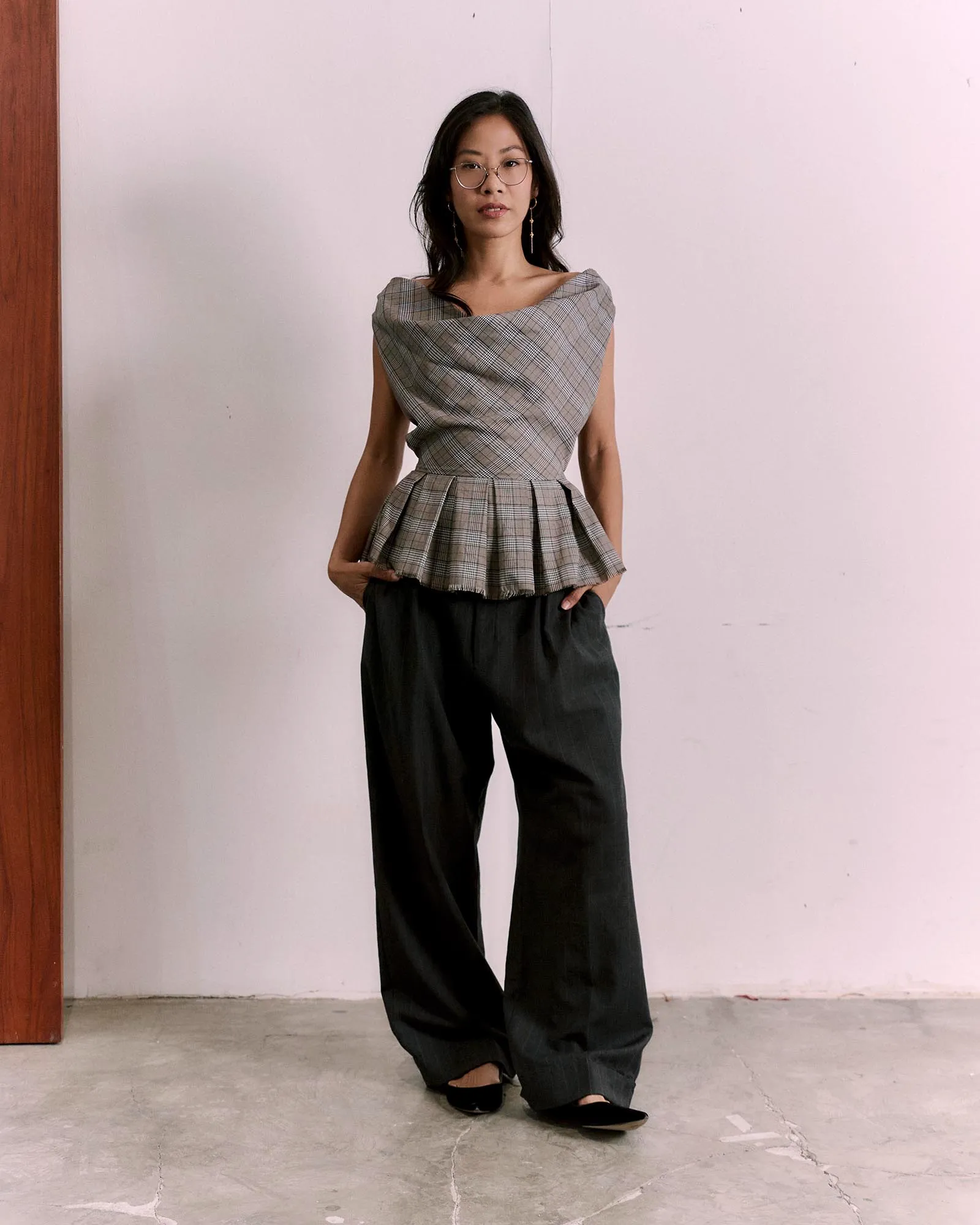
Initially, the original short was “quite small in scale,” Villanueva explains. The feature required the costume department to dress an entire population while giving the country club a surreal dystopian identity. “For me, it was about bringing in a little bit more of the Filipino cultural notes,” she says.
Those details begin with the caddies. Villanueva introduced pointed salakot hats, while small woven bags commonly sold as Filipino souvenirs were transformed into golf bags for carrying balls. “These costumes obviously don’t exist in real life,” she says. “You can’t go to Malarayat or Alabang Golf and Country Club or whatever and see these; this isn’t the look. It’s a lot simpler than this. But when we were creating it together, we really wanted it to feel a little bit out of this world.”
For the wealthy golfers, Villanueva drew on the conspicuous status markers of golf culture, incorporating lifestyle brands including J. Lindberg and Lacoste. Clara, an American returning from New York, wears a polished mix of Massimo Dutti and vintage pieces, including shoes and a patinated leather belt from Villanueva’s mother.
“What I really wanted to bring in was the capitalist idea as well for the golfers,” she adds. “There’s a lot of subtle branding going on. Especially when you’re a rich person and you’re into golf, like it is about your outfit: your Nike, your Titleist, your Lacoste, all of those things.”
Meanwhile, the workers inhabit a distinctly segregated sartorial realm: waiter and waitress uniforms, polka-dot pool-boy looks, and custom jumpsuits for the maintenance staff, who also wear versions of the salakot to shield themselves from the sun. She borrowed extensively from friends and brands, while larger quantities of uniforms were commissioned from local seamstresses and Isabel Sicat’s Toqa.
“My budget was okay, but it wasn’t that big,” she says. “And I had to do 300 costumes. So it was definitely a struggle.” Among the brands that helped in the eyewear department were Sunnies Studios and Ronnie and Joe. She even cold-called J. Lindberg. “I was like, ‘Hey, I’m making a movie, can I have an outfit?’ I didn’t even know them. And they totally pulled through.”

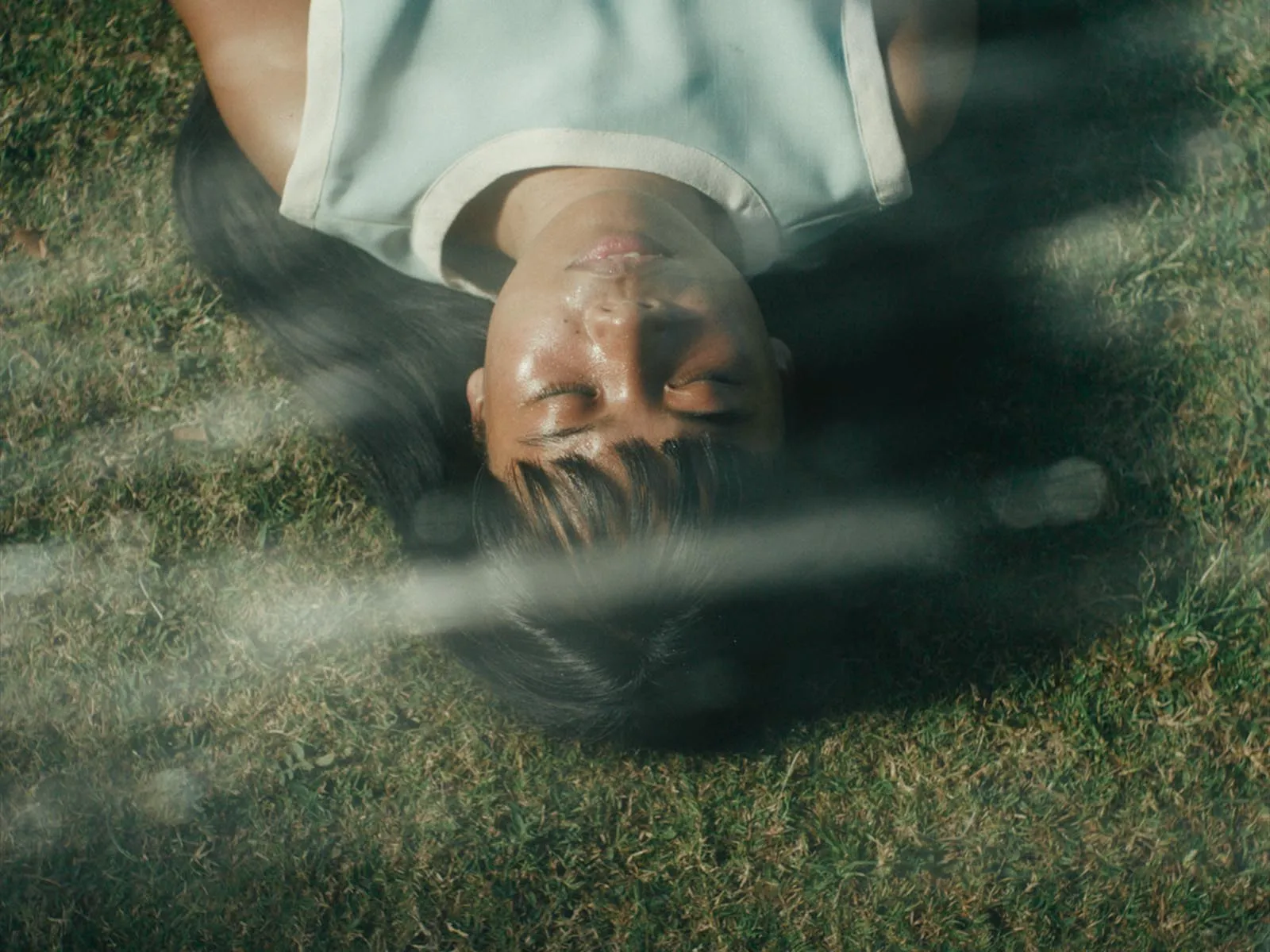
At the heart of the story is Isabel, played by Jorrybell Agoto, whose tee-girl uniform most clearly articulates Villanueva’s vision for her character. Young, naïve, and new to the country club, Isabel’s clothes needed to convey both her innocence and her vulnerability.
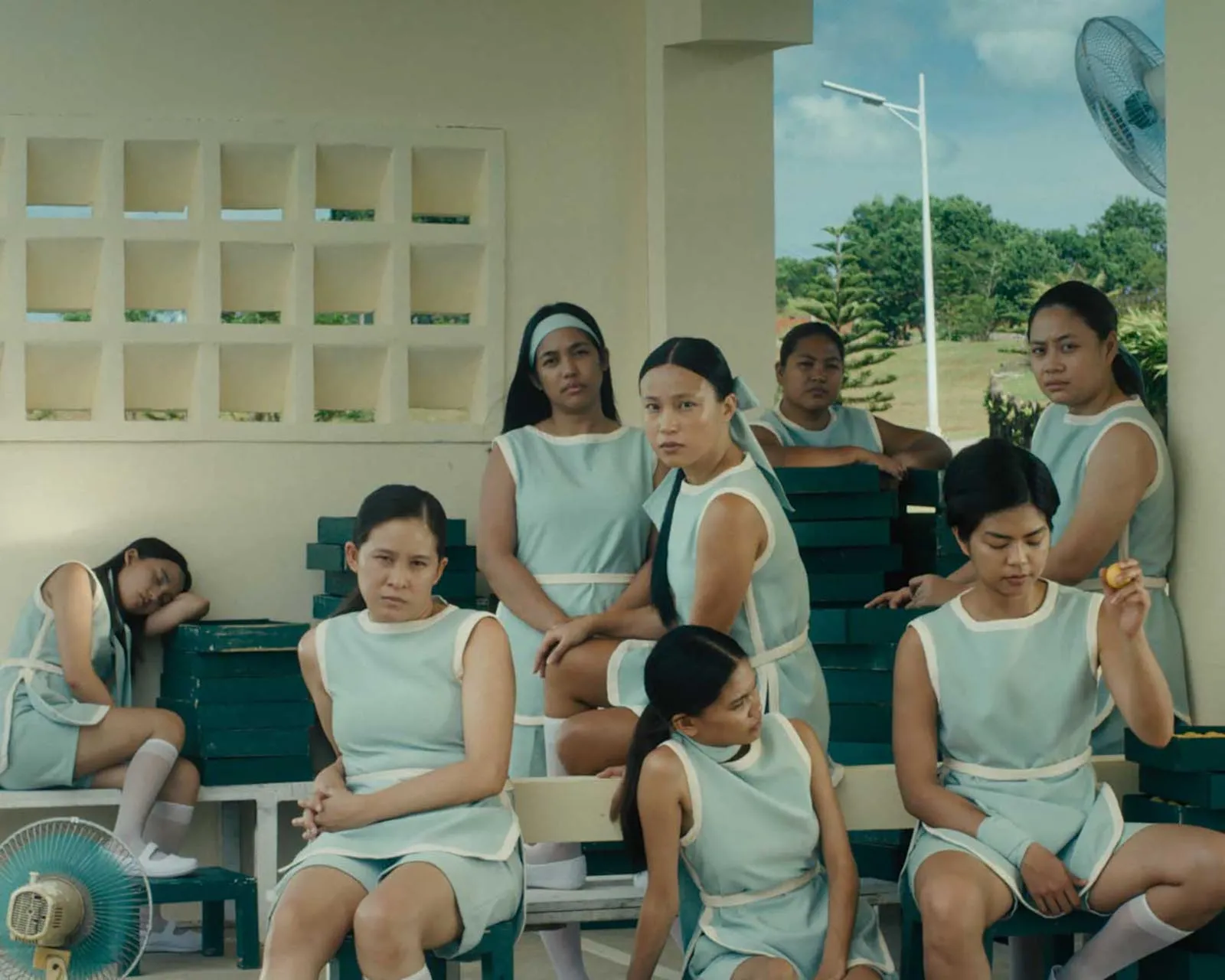
“There’s something very childlike about the uniform that we gave the tee girls,” Villanueva says. The rounded bib, “babyish” mint-green color, and restrictive long sleeves were deliberately infantilizing. “They’re the lowest rung in the entire golf course. They’re the youngest, they’re the lowest, they’re the most innocent, and also probably the most can-be-preyed-upon.”
Even within the strict uniform, the tee girls were allowed small moments of individuality. Their ribbons could be worn in the hair, around the wrist, or as a necktie. Villanueva incorporated further historical references: Security uniforms drew partly from the appearance of secret police during the Marcos-era martial law, while a nanny was given what she describes as a distinctive “French Pinoy nanny vibe.”
Above all, the task became a labor of love and an exercise in visual storytelling. “Film is seen, and the storytelling has to be shown,” she says. “It’s such a great practice for me, especially since I come from, like, you know, an editorial background, and it’s about fashion, and it’s about trends. It’s about retail. It’s about sales. This time it’s really about story.”
In the counterflow rhythm of Filipiñana, where the hierarchy isn’t stated or explained, those details do the work. “It’s always deliberate,” she says. Rather than simply dressing the cast in costumes, Villanueva uses garments not only for aesthetics but as a subtle political device, revealing a social order in which class and power determine one’s place without uttering a single word.
“Everything really, if you see it, it’s such a feast for the eyes,” she says.
Frequently Asked Questions
Filipiñana is a surreal drama set inside a Philippine country club, following Isabel, a young tee girl whose experience exposes the class divisions and power structures beneath the club’s polished exterior. It was written and directed by Filipino filmmaker Rafael Manuel.
Carla Villanueva is a costume designer who worked on Filipiñana alongside Tatjana Fanny Honegger. Villanueva previously collaborated on the original short and returned to develop the feature’s much larger wardrobe.
The costumes incorporate brands including Lacoste, Nike, J. Lindberg, Massimo Dutti, Toqa, Sunnies Studio, and Ronnie and Joe, alongside vintage and personally sourced pieces.
Filipiñana has won the World Cinema Dramatic Special Jury Award for Creative Vision at the 2026 Sundance Film Festival.
- Filipiñana’s Jorrybell Agoto Is Poised to Take on the World of the Silver Screen
- Rafael Manuel’s Filipiñana Brings Stories of the Filipino to Sundance, Berlinale, and Beyond
- This March, Hilda Koronel Returns to Philippine Cinemas with ‘Sisa’
- In Case You Missed It, Filipiñana Had Its European Debut and Michelle Yeoh Earned a Golden Bear at Berlinale 2026