
‘Go Out, Read Books’: Adrian Joffe of Comme des Garçons On Why Creatives Should Put Down Their Phones


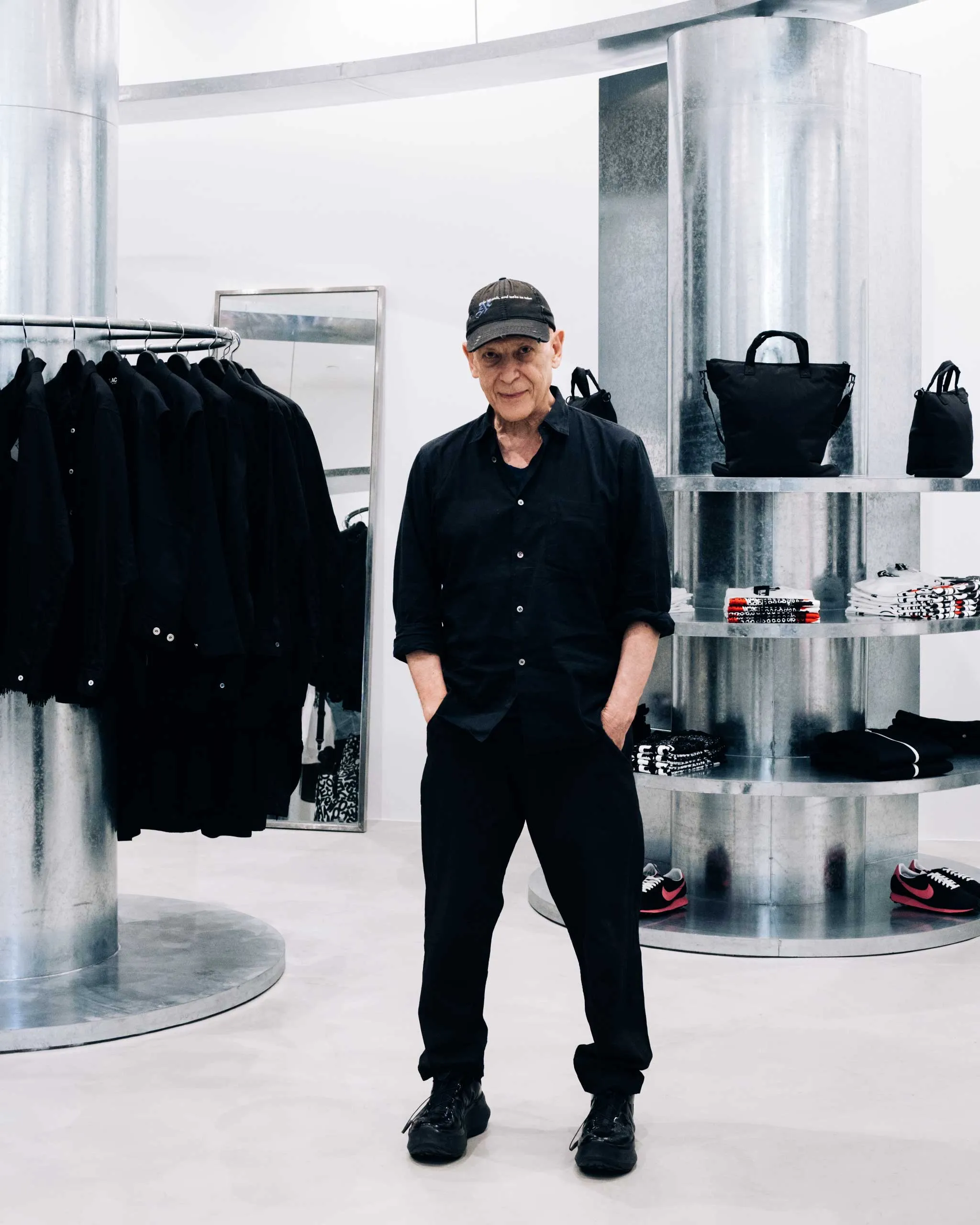
Photographed by Kim Angela Santos
At Comme des Garçons’ Philippine flagship store opening, the brand’s president reflects on creativity, Rei Kawakubo, and the value of staying present.
“We can forget the questions,” the charismatic Adrian Joffe says with a smile, not even a minute into our interview. The piece of paper in my hand, on which all six of my queries are printed, is suddenly useless. But Joffe, dressed in his uniform of head-to-toe black, is warm and encouraging, insisting that our conversation will simply flow. “I think why I don’t like the [practice of sticking to] questions [sent] in advance is that depending on my answer, you might have another question.” Gesturing to my cheat sheet, he continues, “It seems to take away your freedom. It means you can’t go with what comes up, you know? We can’t be spontaneous. I don’t mind the questions you sent me, but if you want to divert and go off piece, please feel free.”
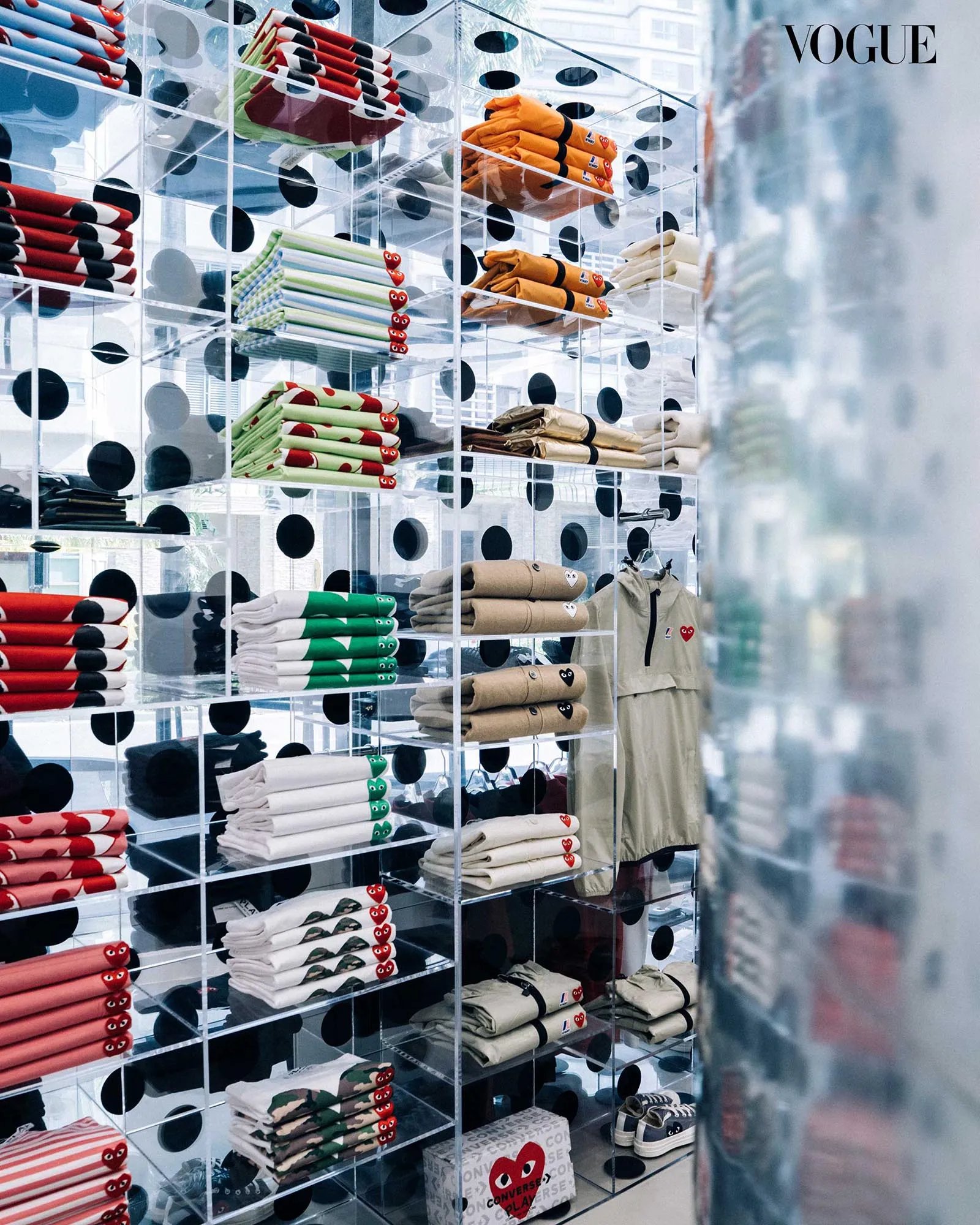
An organic approach is a way of life for Joffe, the president of Dover Street Market (DSM) and Comme des Garçons (CDG). At both brands, he works closely with his wife Rei Kawakubo, co-founder of DSM and founder and creative director of CDG. This year marks 15 years of CDG in Manila, and celebrations were launched in the form of two new boutiques. They join Japanese brand’s first Philippine brick-and-mortar launched in 2012, in partnership with H&F Retail Concepts, Inc. managing director Jappy Gonzalez.
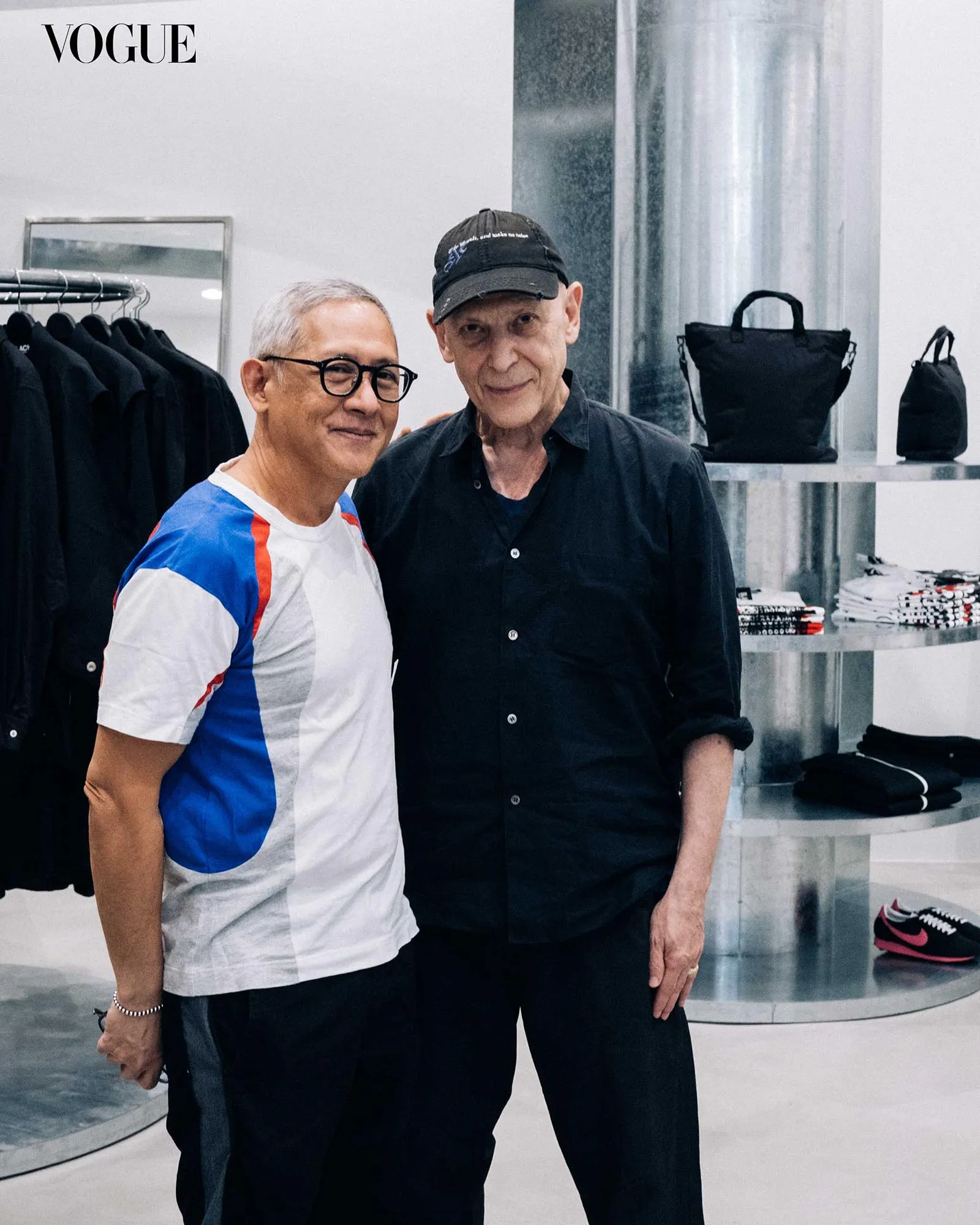
“Almost 15 years later, the market has evolved immeasurably, and Comme des Garçons is proof of that evolution,” he tells Vogue. This July, they welcome clients to the new flagship together with a separate CDG store. “Manila is one of only a handful of markets outside Japan to host this concept, alongside Korea, Hong Kong, Bangkok, and select cities in China. To me, this reflects the local market’s openness and curiosity for ‘what can be,’ if not express one’s self in a nonconformist way,” Gonzalez elaborates.
Three hours before the joint store openings, Joffe and Gonzalez are on-ground for last-minute inspections, ensuring that everything is in order. Though physically elsewhere, Kawakubo is also highly attentive to the launches. In the middle of our chat, Joffe excuses himself to take a phone call from her. “She only calls in an emergency,” he explains of his own urgency. It turns out, she had a comment about the CDG shop’s visual merchandising, which Joffe quickly addressed after.
Joffe reveals that this is his fourth time in the Philippines (having gone to Boracay and Baguio for vacation as a child) but only his second for work. He was last here to conduct market research and assess the viability of CDG’s local market. A decade and a half later, he remains enthusiastic about what he gathered during that site visit.
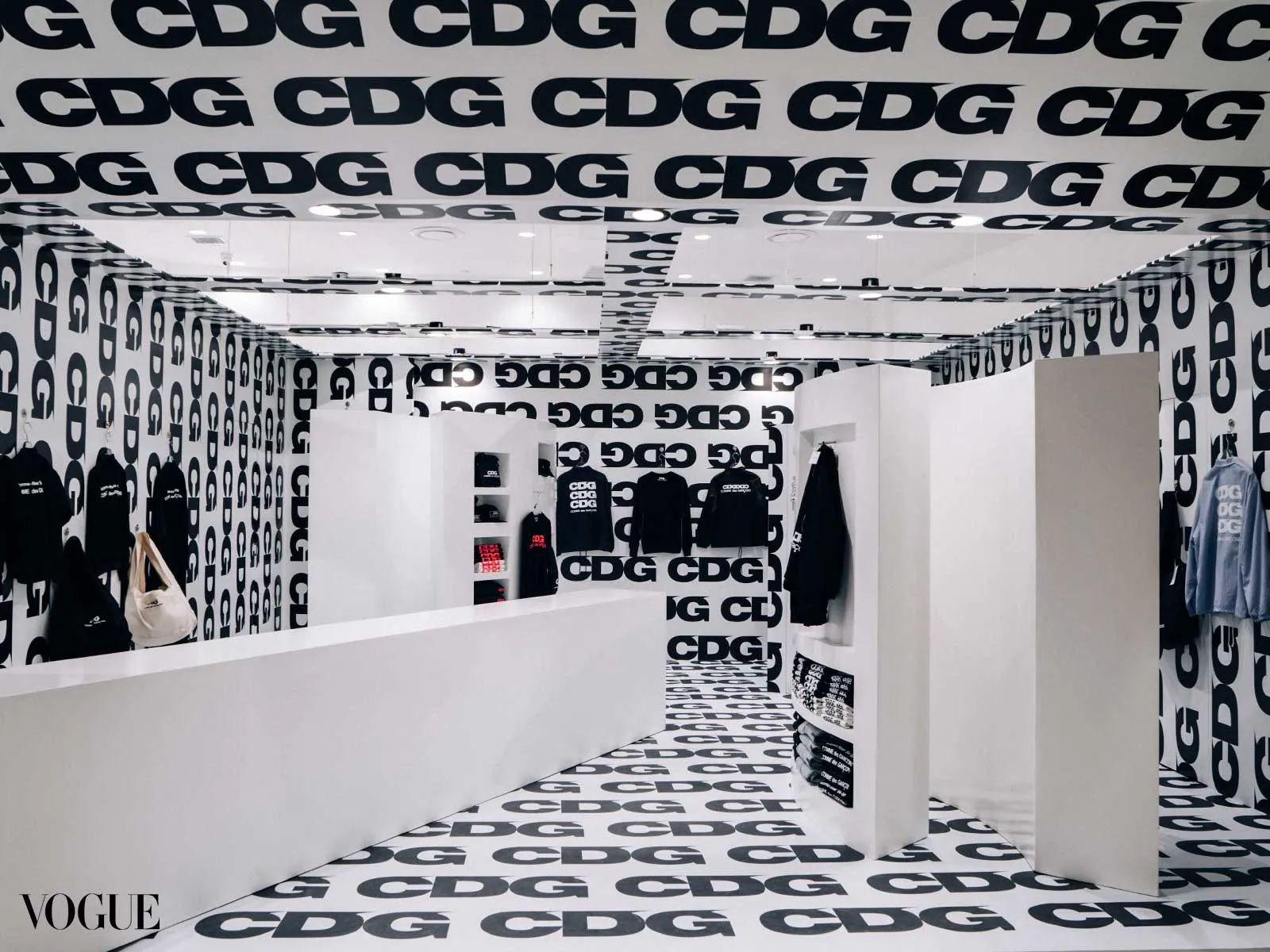
“I think we’re very excited to open a new store in the Philippines because we love Asia anyway, and every Asian market is very different,” he tells Vogue. “I think particularly Manila, Philippines, is a special market, a special taste.” He cites how the country sits at the intersection of South America, Mexico, and Asia, explaining, “I’ve always loved places that are between things. Our exhibition in the Met, 2017, in New York, was called the Art of the In-Between. For me, the Philippines kind of symbolizes that place. We don’t take it for granted.”
Joffe sits down with Vogue to discuss the allure of liminality, the reason CDG does away with five-year plans, and why he thinks creatives should throw away their phones.
VOGUE: Well, I really think it’s interesting that you enjoy liminality. Comme des Garçons has so many different lines, and so many different designers. How do you contend with all of those different elements? What makes all of that work together so well?
ADRIAN JOFFE: Thank you for saying it works together. I think because human nature is so diverse, there’s never one thing. We’ve always believed that everything is connected in a way, and it’s the way we’ve evolved organically. We don’t like to grow vertically, we don’t like to own the factory or own all our stores. We like to work with people and factories that own themselves. So we had to grow horizontally: doing different brands, with different concepts, for different places.
It’s just been an organic thing. It wasn’t so planned. And I think that’s the way to be, because we’re not good at planning. We don’t do five-year plans; we can barely do six-month plans. Because… how do you know? I mean, what’s the point? We always try to grow a little bit by a little bit, organically. It’s really our way. We just have to play it by ear, really, but of course we have budgets, we have planning, but not so much in the future. I think it’s important to show adaptability to what’s happening around you. Otherwise, you’re living in a bubble.
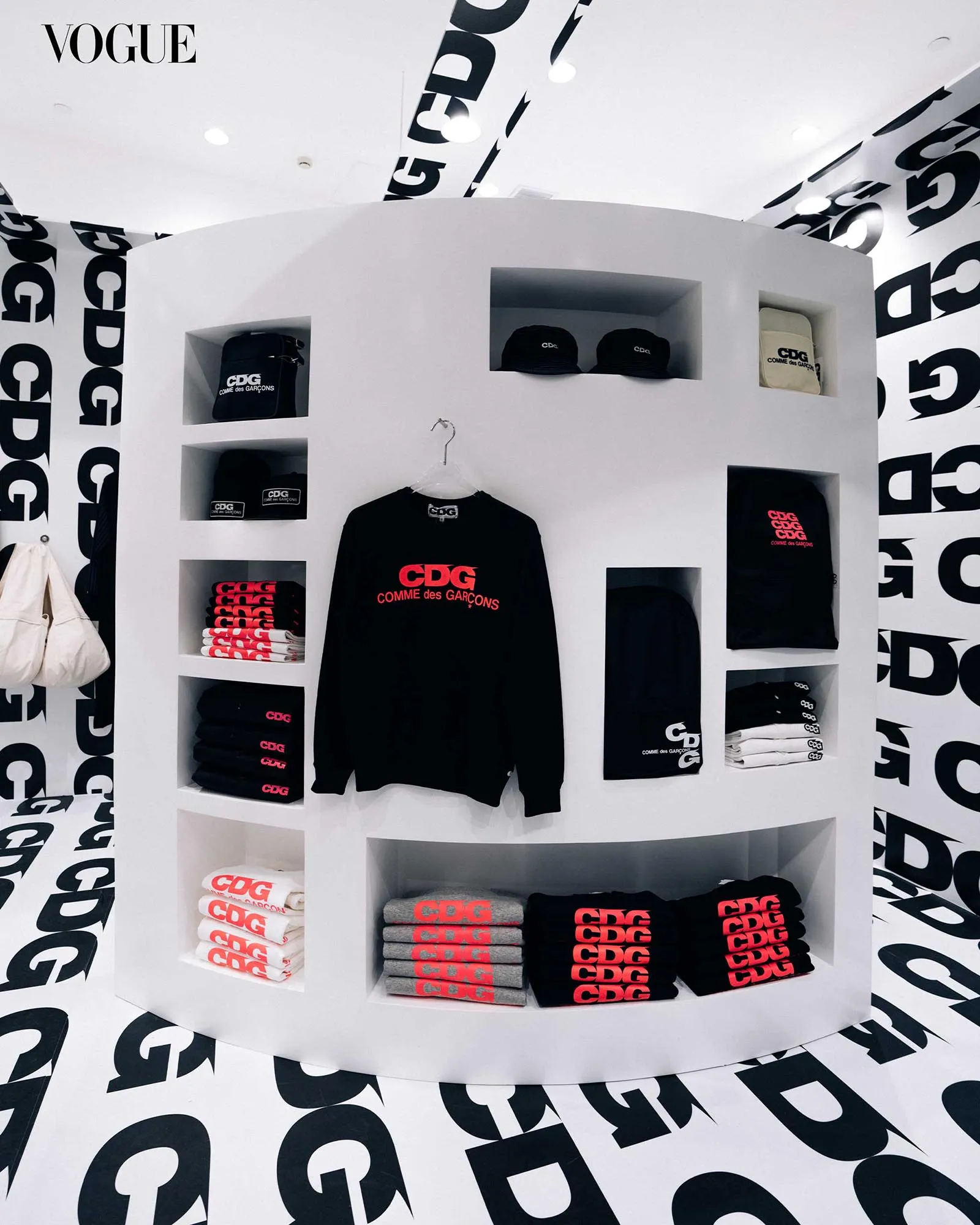
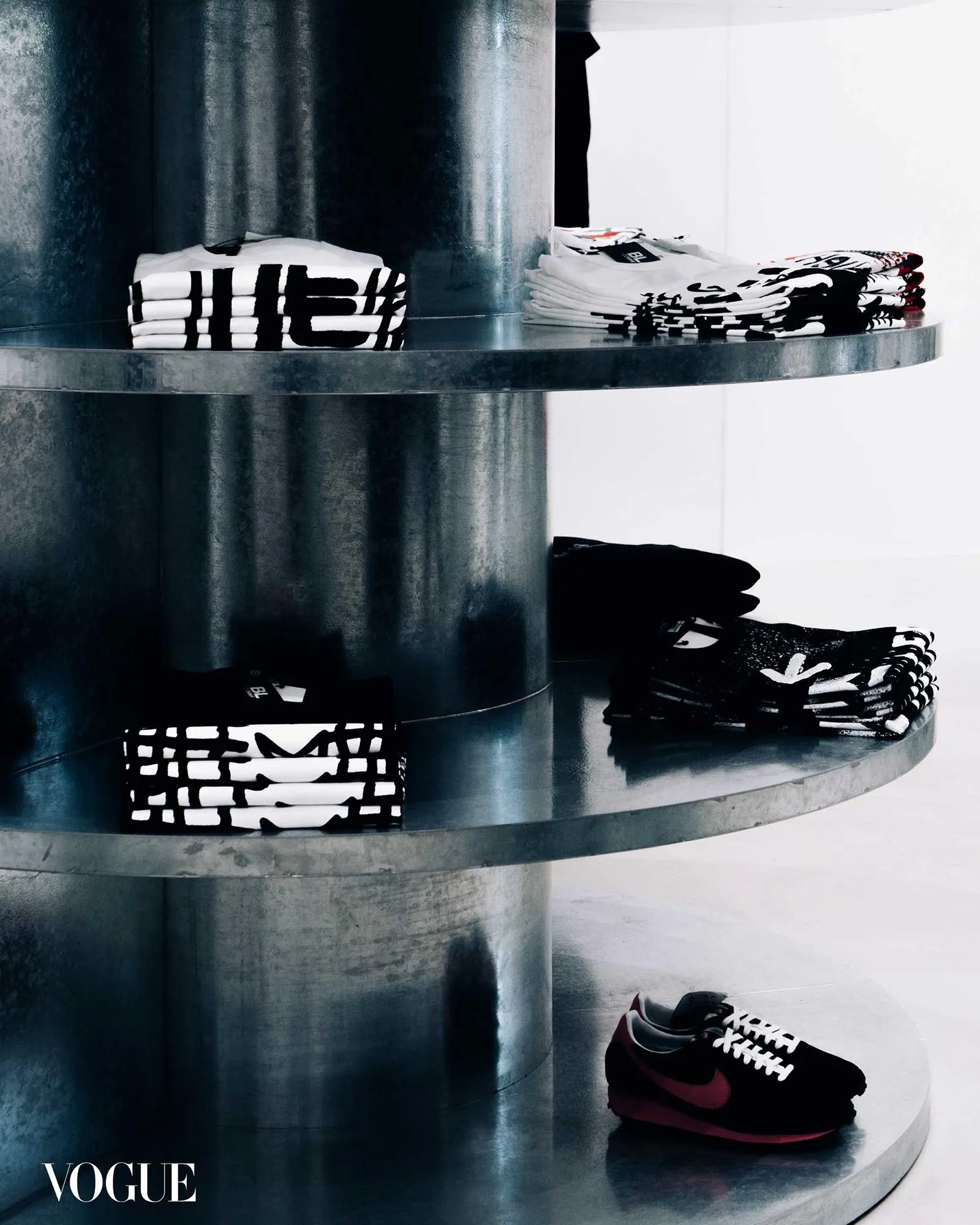
The works of Comme des Garçons are centered on fiery passion, and social commentary on what’s going on in our world today. First of all, why do you think that that’s valuable, or why is it almost a responsibility for a fashion house? And second, how does that social commentary trickle down from the main line to the diffusion lines?
This is just the way that Kawakubo is. All her collections, all her creations, come out from inside. It’s very rare that there’s something that comes from outside. She doesn’t go on a trip to India and get inspired by Rajasthan. Everything is always, from the very beginning, coming from emotion. And I think, especially lately, she’s been very affected by all the terrible things that are happening in the world. Of course, that gets transformed and there’s other subtexts that come into it. Like we said before, nothing is an island.
I think by nature, by organism, it filters down to everything we do at Dover Street or the way we do commercial work. Everything we do is an evolutionary process, and of course has to be true to the values of the company: It has to be new, and has to tell a story.
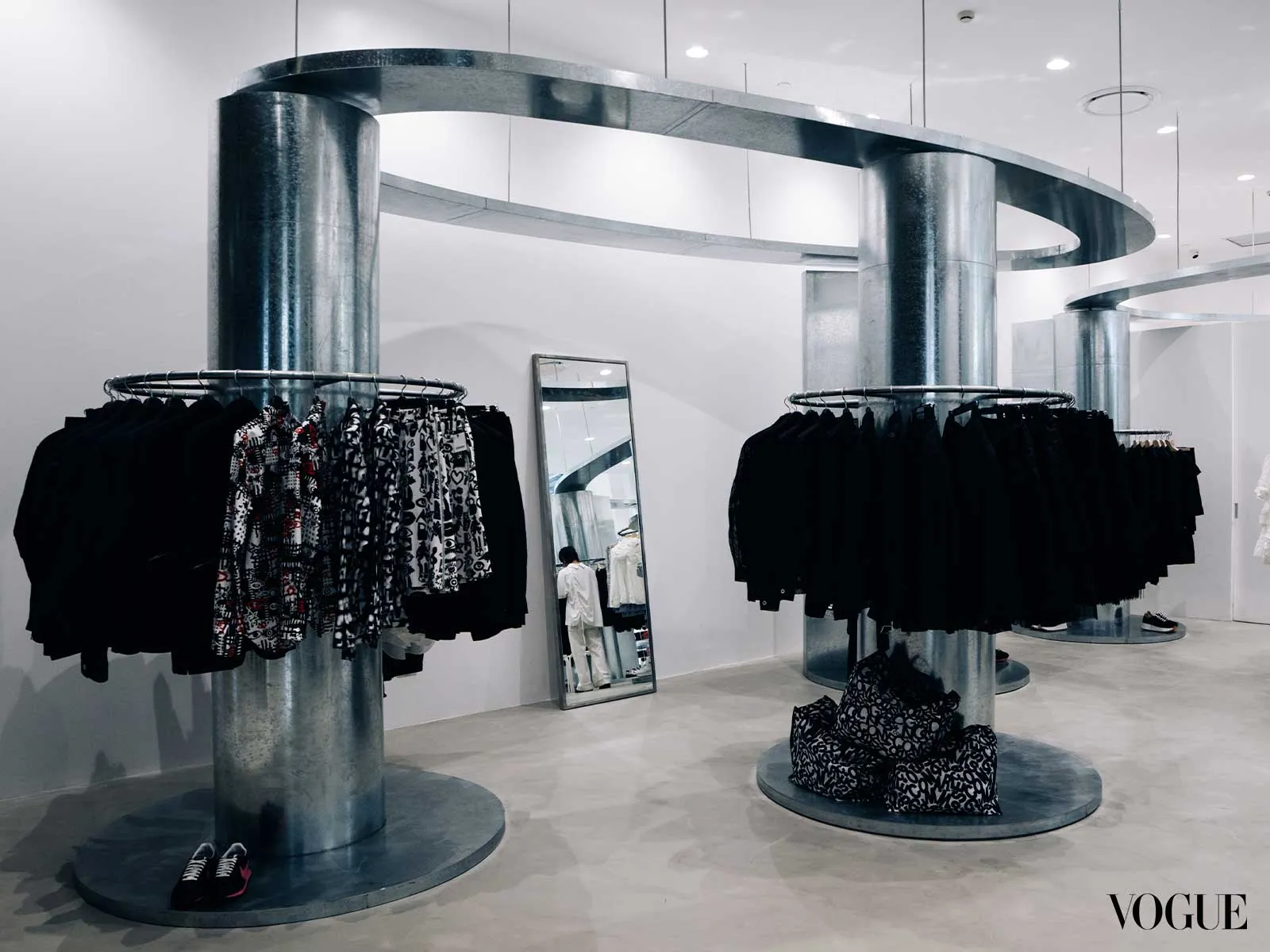
We were talking about Kawakubo. She likes to call the clothes “sculptures” or “objects for the body.” What is the importance of that distinction? And how does it encourage viewers and wearers to have a layered, multisensory experience of the garments?
I think everybody else says sculptures. I’m not sure she’s used that word. She does say objects for the body, and she doesn’t want objects to be in the museum. Everything is wearable, and nothing makes her happier than to see even the show pieces being worn by people. She really has always said to me that she wants to make creations to be worn, to be used and functional. The most important reason is for the person to have a means of expressing themselves.
In the 2000s, around the time Dover Street Market was established, there was already a complete bifurcation within CDG. The main line focused on objects for the body, while diffusion lines were catering to a commercial market. How do you encourage a sense of play and experimentation between those two sections of the brand, while making sure they remain intentional and desirable?
I think we can’t do it any other way, because it’s all connected. For Rei, the most important thing is to do something new. Without creation, there can be no progress. That’s the engine. It always has to come from a starting point; sometimes it’s anger at the world. To be able to create something new, twice a year for 55 years, you can imagine how hard it is. And the weight of experience weighs heavily on her all the time. So she thought of a way to get into making something new, [which] was to not try to make something new, not try to make clothes.
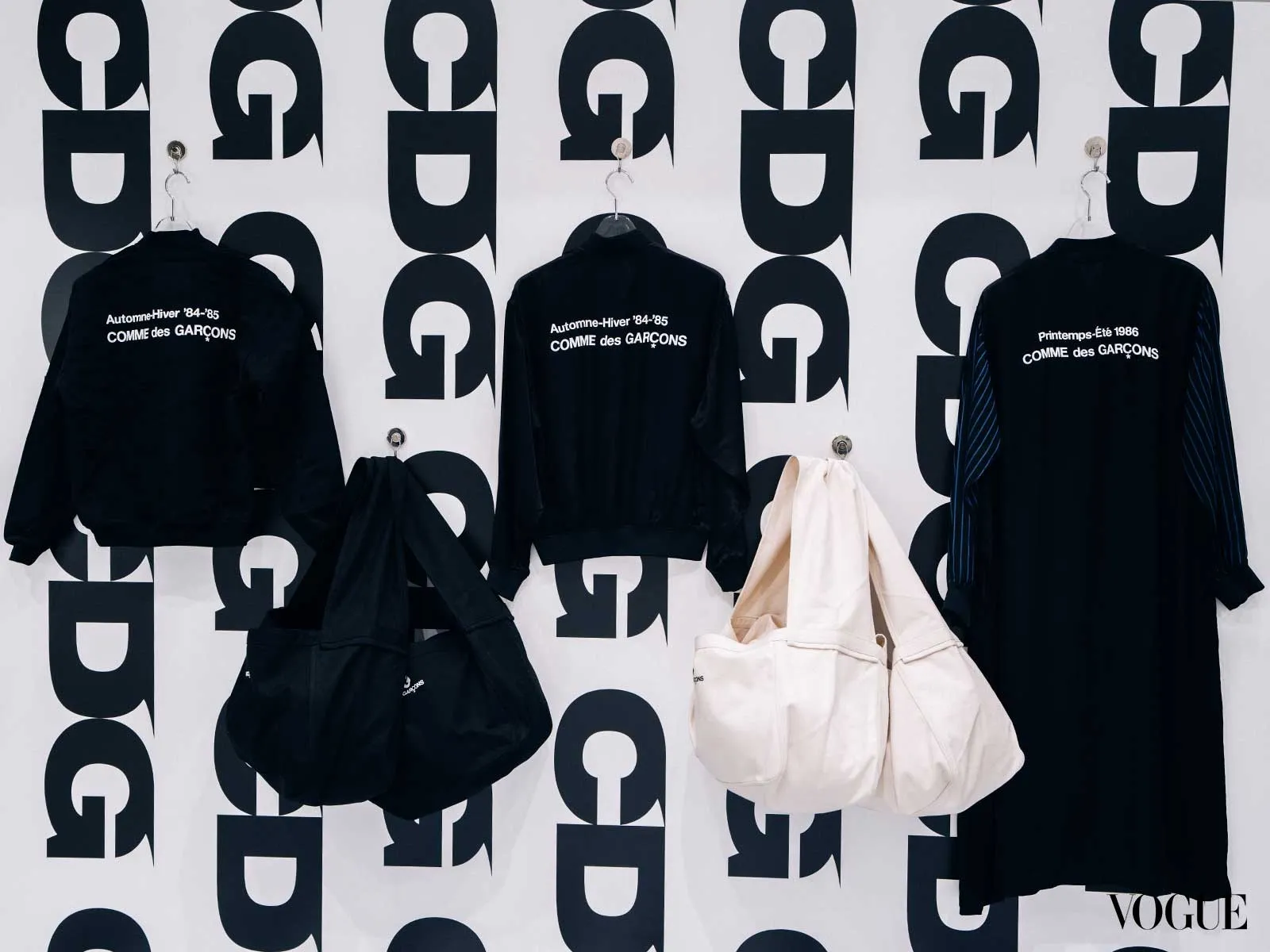
It’s been like that almost ever since. Everything else she does like Comme Comme and Black, it all comes from that but it’s kind of filtered down. It’s maybe more wearable and more accessible, but it still has those same values. It can’t not have those values. Sometimes the creative part of it can be the way we sell it, or how we sell it. Play is a T-shirt with a red heart—what’s creative about that? The creative idea there is the business side. She’s always said, “Without the business, there’s no point in being creative.” Otherwise, it really gets to be a painting in a museum, and that’s not her job. Her job is to do a successful business through creation. The way you can be creative is very myriad.
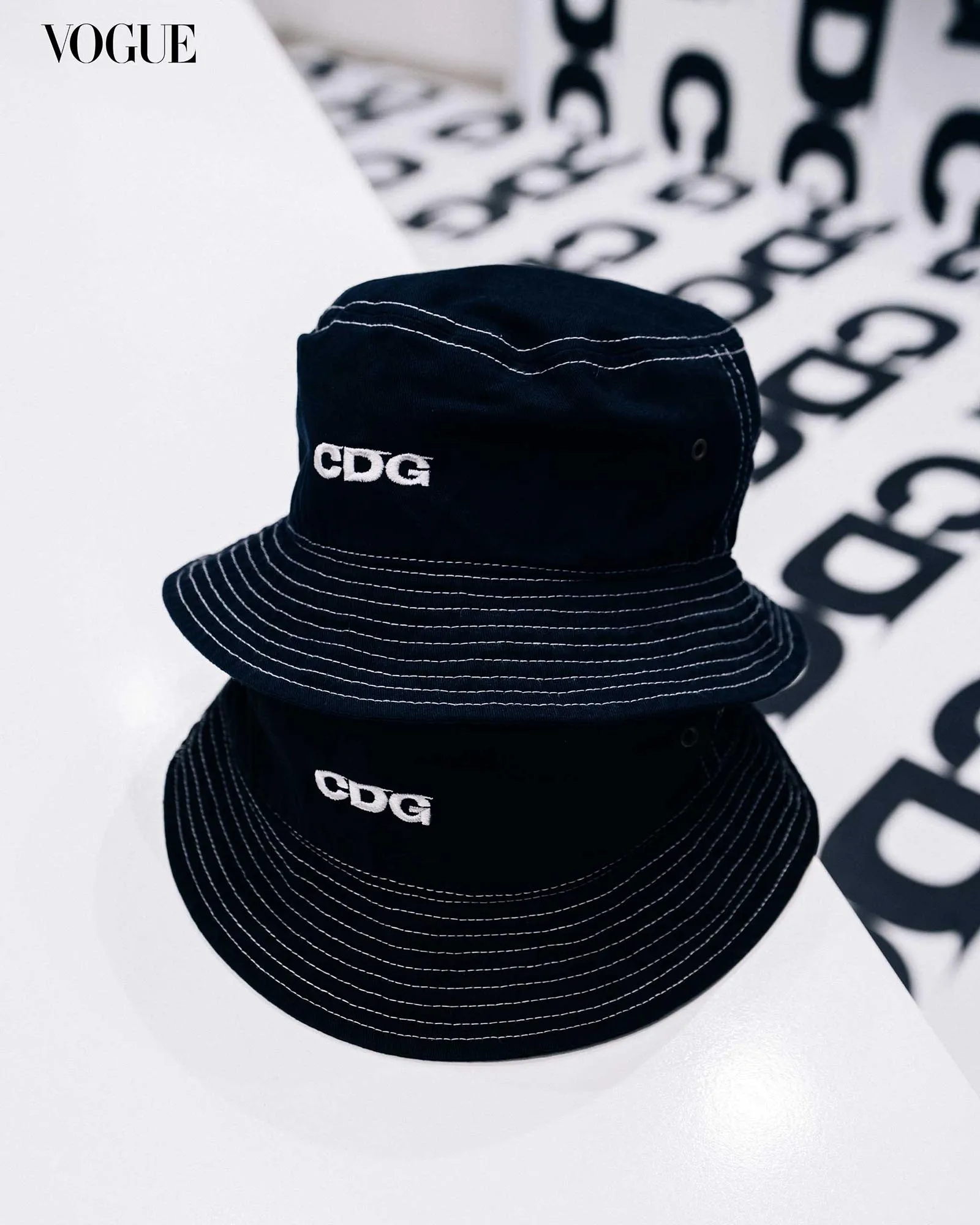
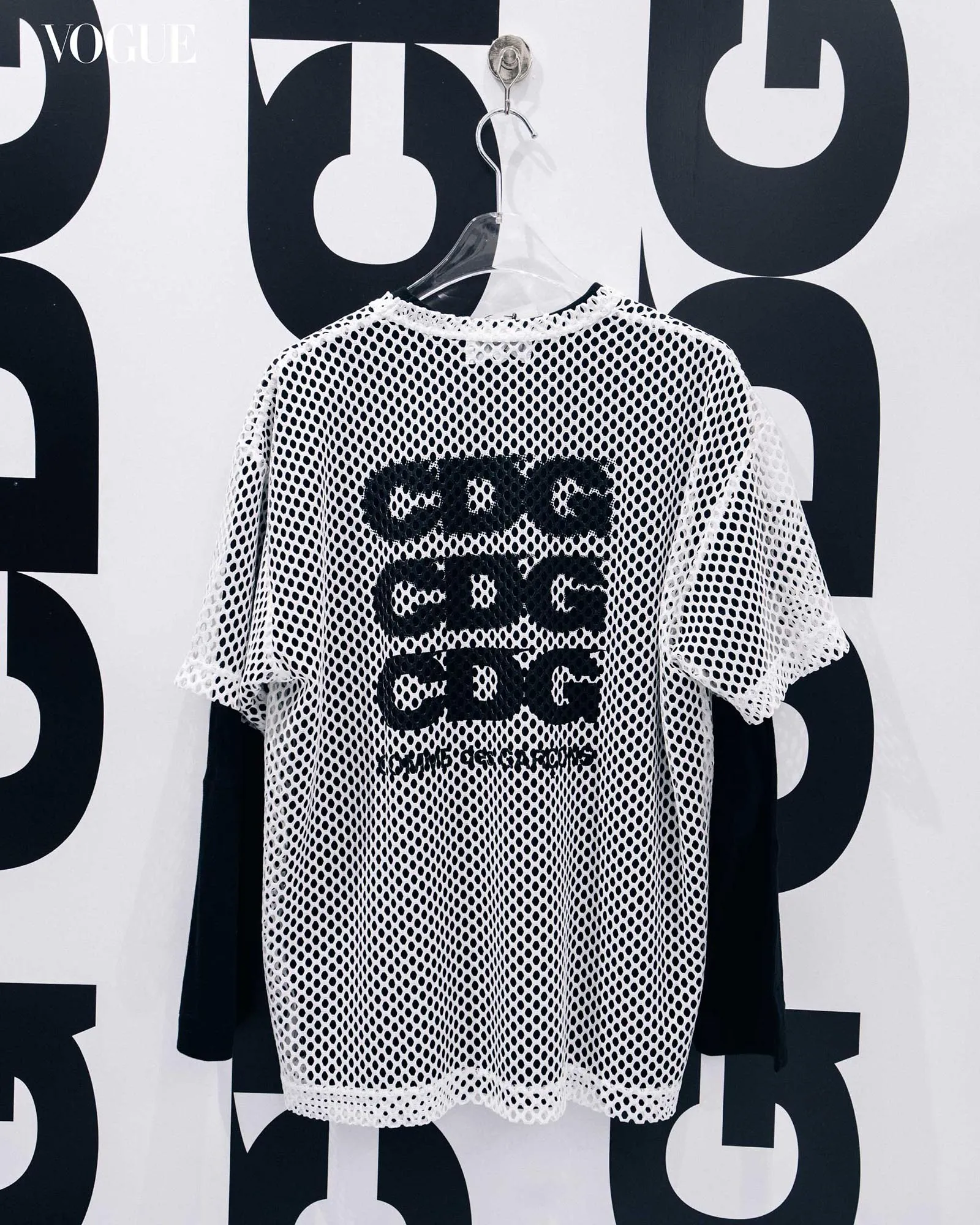
There’s no one single way to be creative.
No, of course not. Don’t be burdened down by preconceived notions about things. Sometimes, I think the young students don’t understand this. When I see the brands for Dover Street, they’re trying to be very creative and it ends up being creative for the sake of it. I think students have to get out of that thing of going over the top or just taking one thing to its logical extreme. I think that’s what’s so great about Kawakubo: She stops before the logical extreme, just before the end. It’s better when you just leave something for the viewer to participate in. If something is perfect, okay, it’s beautiful, but it’s unfeeling. There’s no you in it. If you end just before it’s perfect, then the person can complete it in their way, and that makes a better connection.
In a previous interview, you said: “I would like to think that Dover Street Market has been, whether intentionally or not, an architect in aiding people’s ability to curate how they want to present themselves.” In our hyper-online world where fashion has become somewhat homogeneous, how can individuals, especially young creatives, return to the idea of curation, and by extension, an individual point of view?
Throw away their phones. [Laughs] I think it’s a real big problem. It’s too much. Even I understand; I kind of feel addicted as well. But you have to be very single-minded. Go out, read books. No one reads books [anymore]!
But I think I’m quite optimistic. I think some of the young people I know, they’re limiting their phone use and going out. That’s what I always tell people, and I tell myself: go and look at things, go to a museum. I think people are becoming aware because it’s getting serious. Going to bed with it, waking up with it, you just see mindless things. You can limit it, and I think it’s got its use. I like the way it’s so helpful for farmers in Africa, you know, you can find out which market has the best price for [what you want to buy]. It could be so useful, but we just have to be careful. We have to be more mindful. You agree, right?
Absolutely. And I feel like a lot of people aren’t even able to distinguish what they like and what they don’t like anymore. They let the algorithm tell them what to like.
Exactly, I know! It’s really annoying. [Laughs] Because they get it wrong! Like Rei said one time, you ask a hundred people to make one thing, you’ll get a hundred different things. If you ask a hundred AI apps to make one thing, they’ll probably be almost the same.
My last question: Personally, why do you think what you do has meaning?
Oh, that’s a very big question. [Laughs] I think everything has meaning. You think, “Who needs one more blue striped shirt?” No one. But the fact that we’ve done it, and it’s made some work for people, and people have gotten paid, and people are gonna wear it, they’re going to feel good… there is meaning in everything that everybody does. I think to go down that route of everything is meaningless and there’s no reason why we are here, that’s pretty depressing, right? And we all go there, but I always come back.
I think it’s Buddhist training as well. Everything is here for a reason, but for no reason. Attachment causes suffering, and if you don’t want to suffer, then you can’t be attached. But the thing is, the Buddhists also say that there’s a way to become unattached by being more mindful, by being more present. More living in the now, not dreaming or thinking about the future. Just be here, be now. There’s many ways to make things feel more meaningful. Whether it’s the Lord, or God, or a philosophy, it’s all very important things that humans need. Nothing is meaningless.
Frequently Asked Questions
Adrian Joffe is the president of Dover Street Market and Comme des Garçons, where he works closely with his wife, DSM co-founder and CDG founder and creative director Rei Kawakubo.
Comme des Garçons is a Japanese avant-garde fashion brand founded by Rei Kawakubo.
Comme des Garçons’ first Manila store opened in 2012.
The Comme des Garçons flagship store is located on the ground level of Greenbelt 2, Makati City.
Jappy Gonzalez is the managing director of Homme et Femme, a multi-brand retailer that has brought global brands such as Comme des Garçons, Maison Margiela, Maison Kitsuné, and more to the Philippines.