
The Story Behind Eileen Gu’s Bubble-Blowing Dress at the 2026 Met Gala


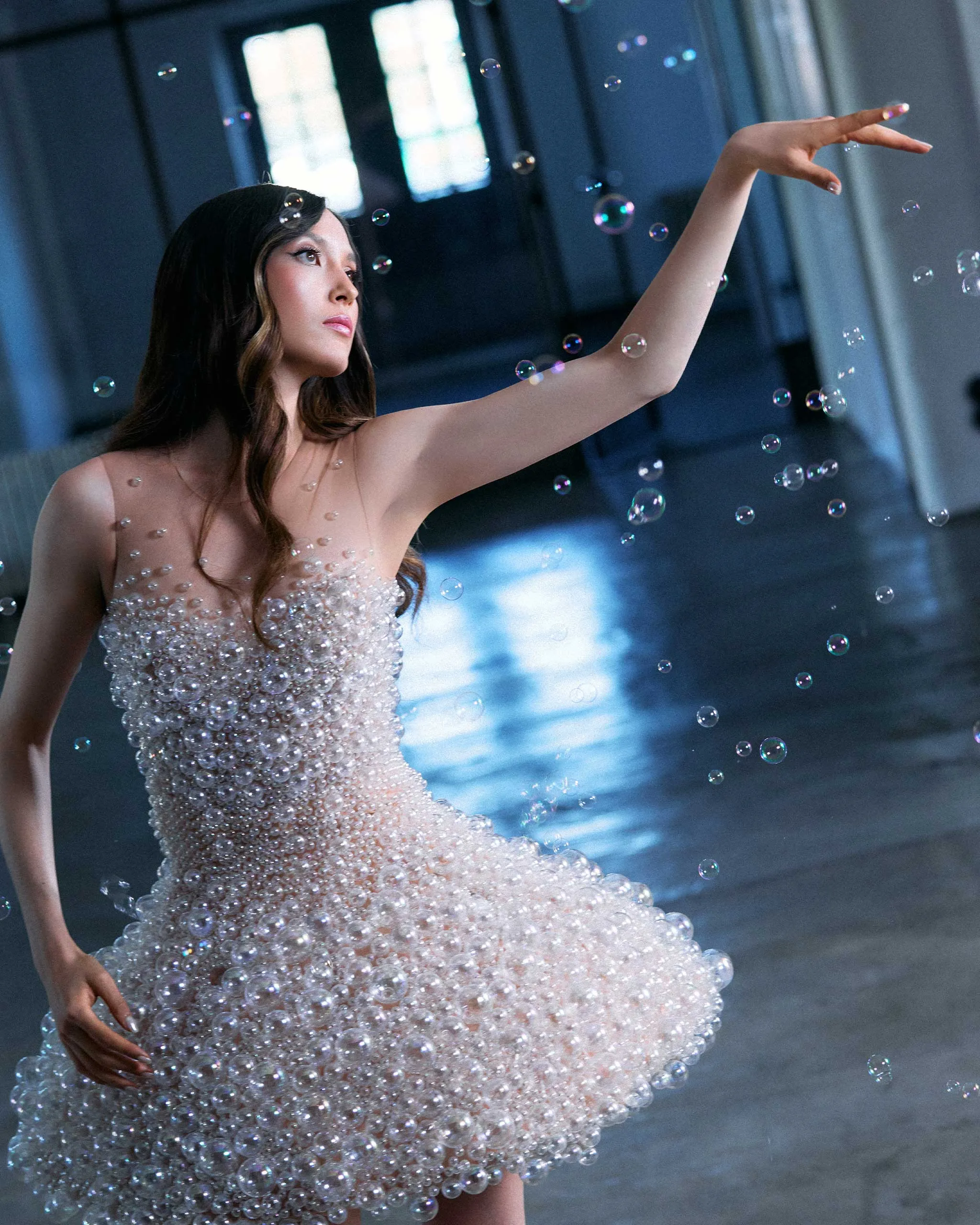
At the 2026 Met Gala, the Fashion Is Art dress code inspired interpretations from across history, including Renaissance renderings of the human body, art-movement-traversing nudes, and Grecian dresses.
In the case of Chinese American freestyle skier and Olympian Eileen Gu, her look reached back pre-time, pre-art, and even pre–human body as we know it, thanks to designer Iris van Herpen and artistic duo Azusa Murakami and Alexander Groves of A.A.Murakami.
“It was a great honor to be entrusted by Iris to introduce this masterpiece to the world,” Gu tells Vogue. “I think in a way we chose each other for it, embodying and contributing different elements to truly bring it to life. ”
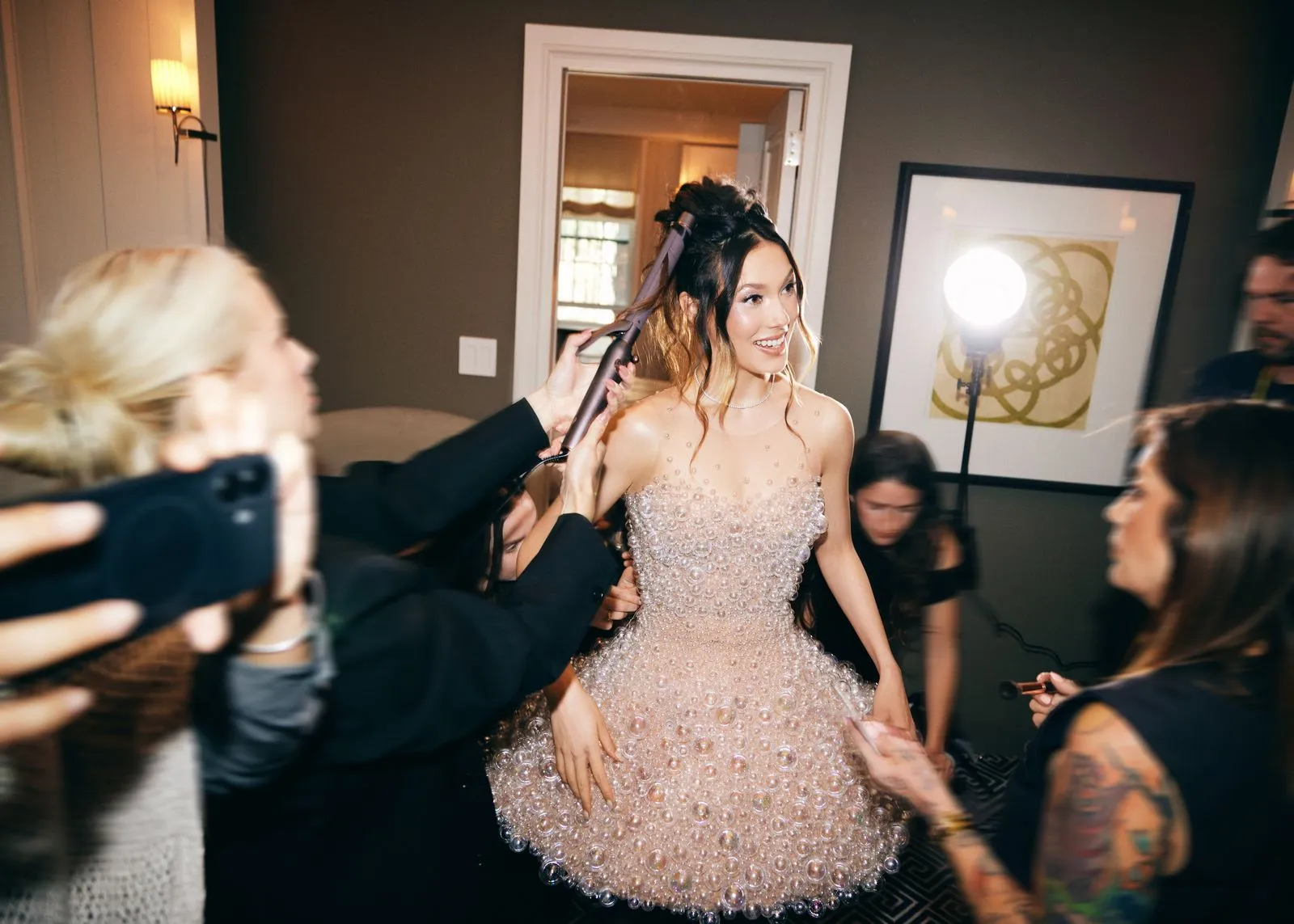
There’s a scientific theory that some of earth’s earliest life-forms emerged from within tiny bubbles known as vesicles—protective compartments for prebiological molecules. The bubble theory proposes that within these tiny expanses, universes independently formed with their own cosmological rhythms and dimensions.
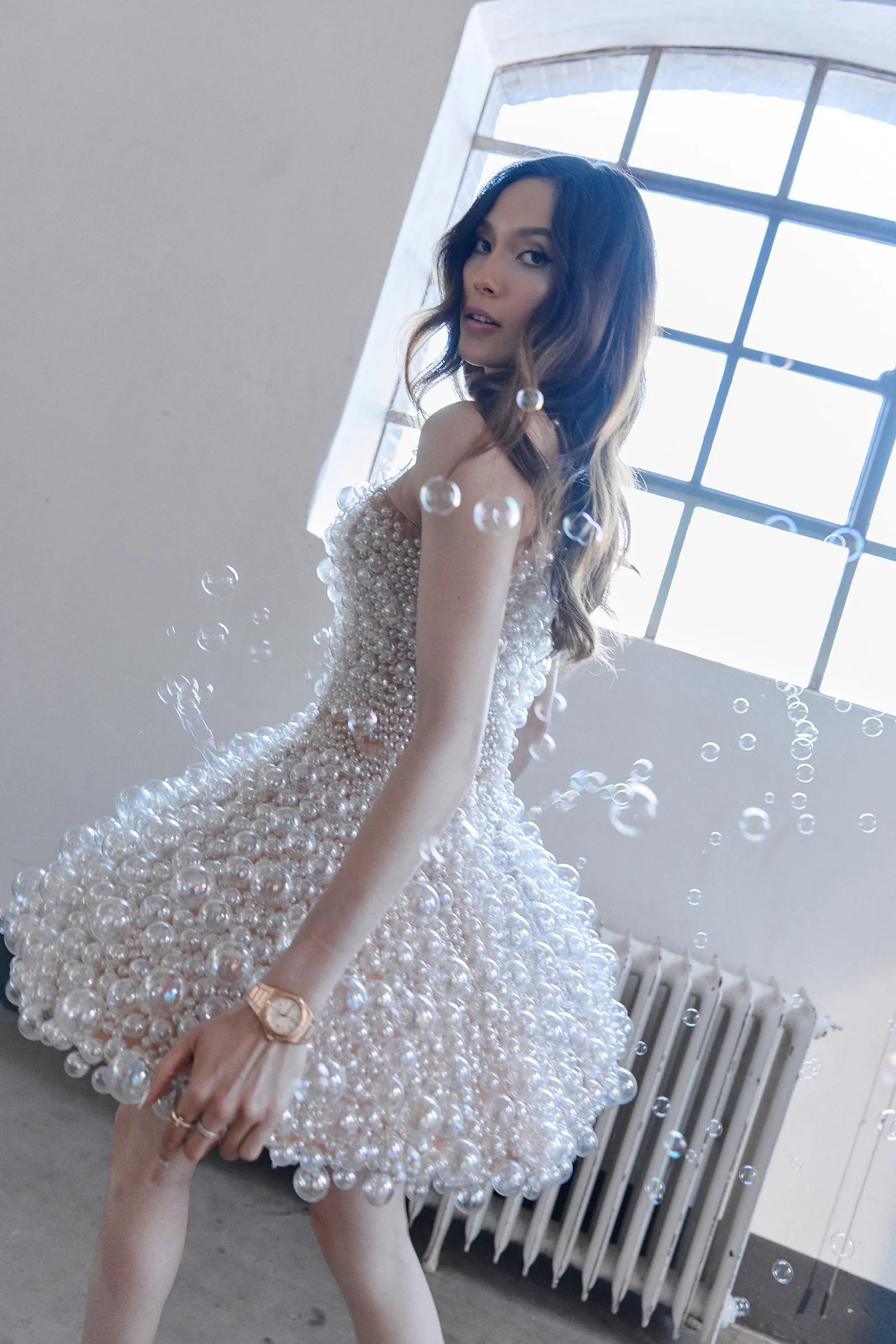
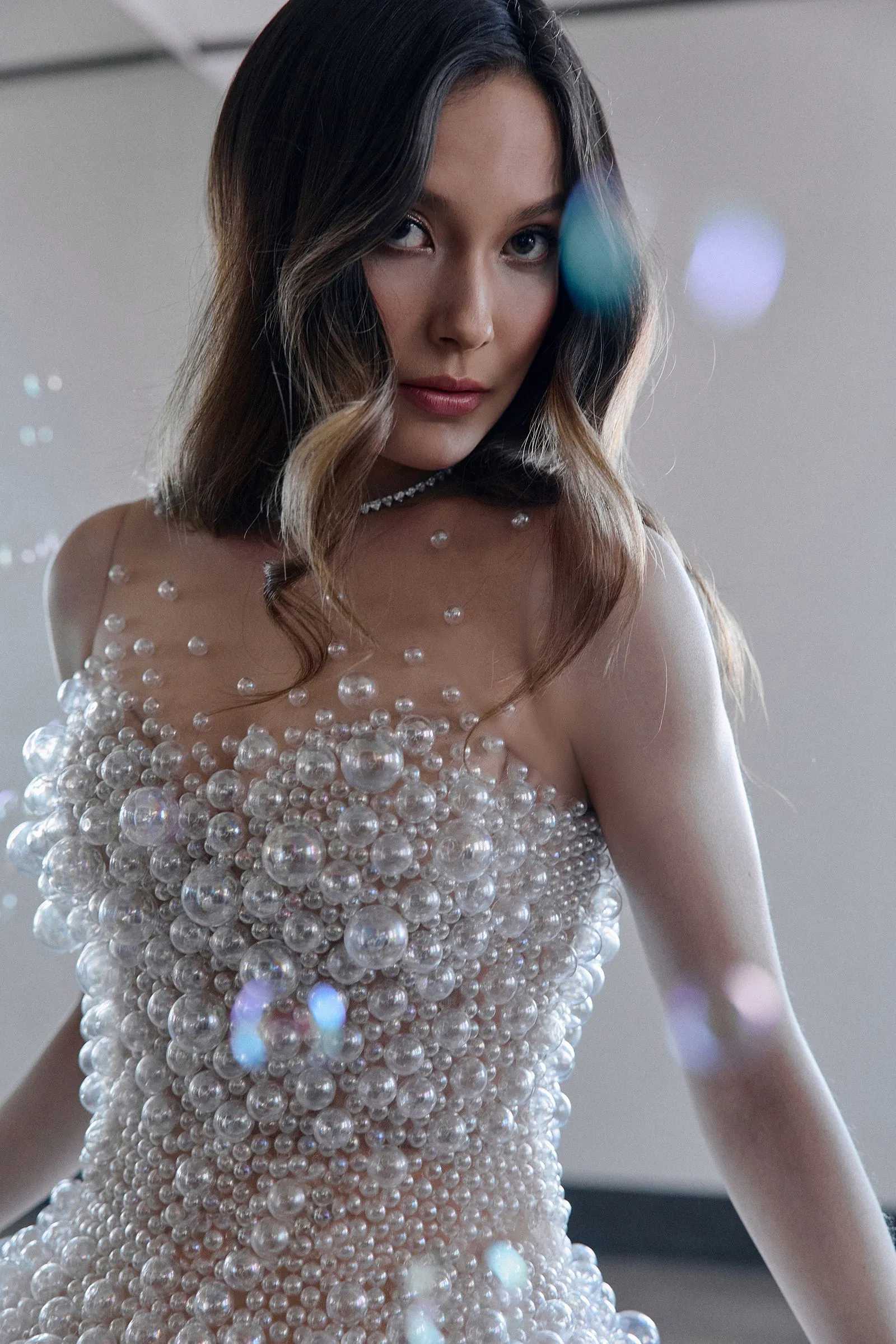
“The body is central in the exhibition, and what fascinates me about our body the most is not the outside but that the atomic anatomy of our bodies is all empty space—99.9% of it is empty space,” van Herpen tells Vogue. “When you think about that, it is so surreal. In this design, I wanted to reflect the realism and the surrealism at the same time.” From these ideas, the designer and artists began to create Gu’s Airo dress.
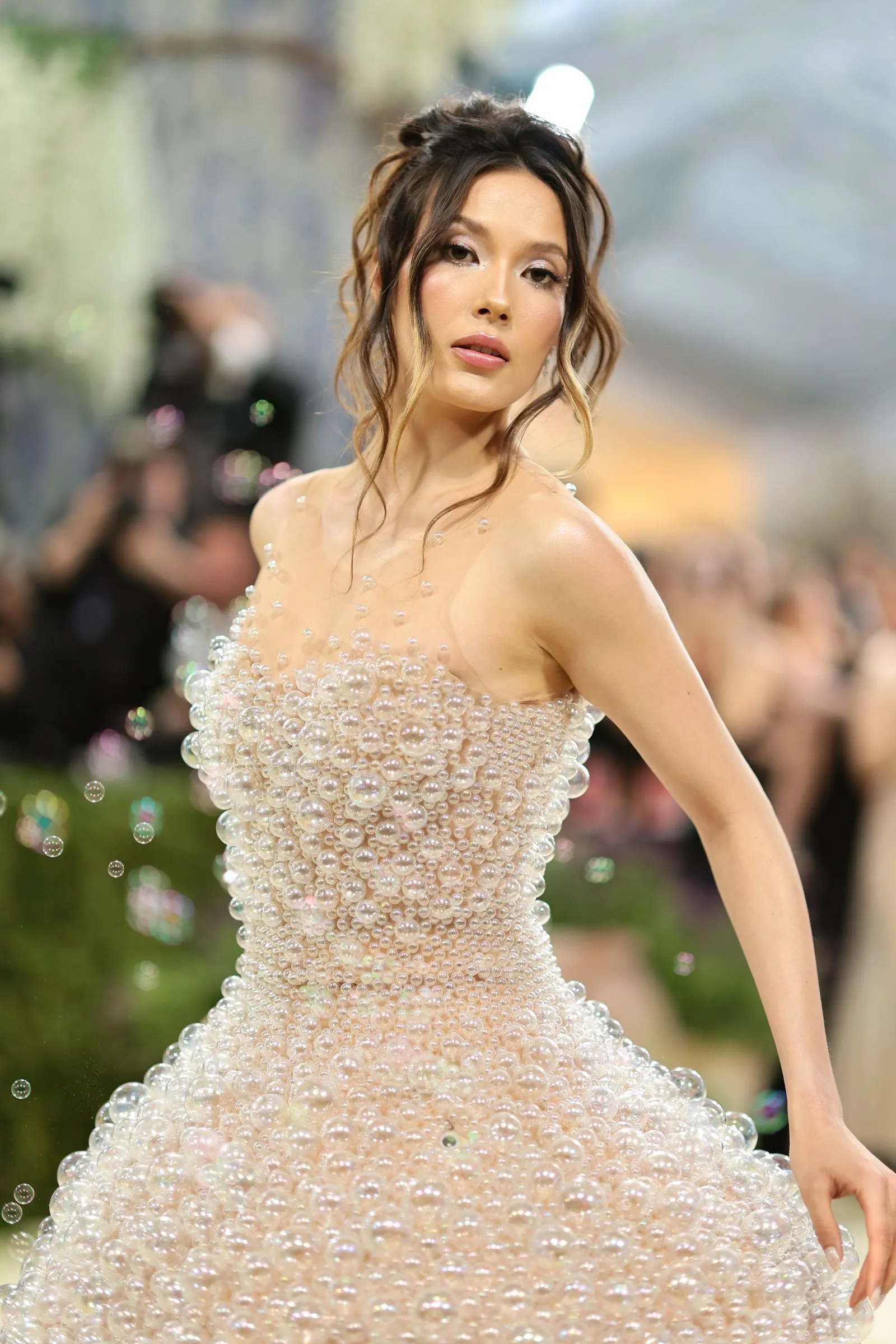
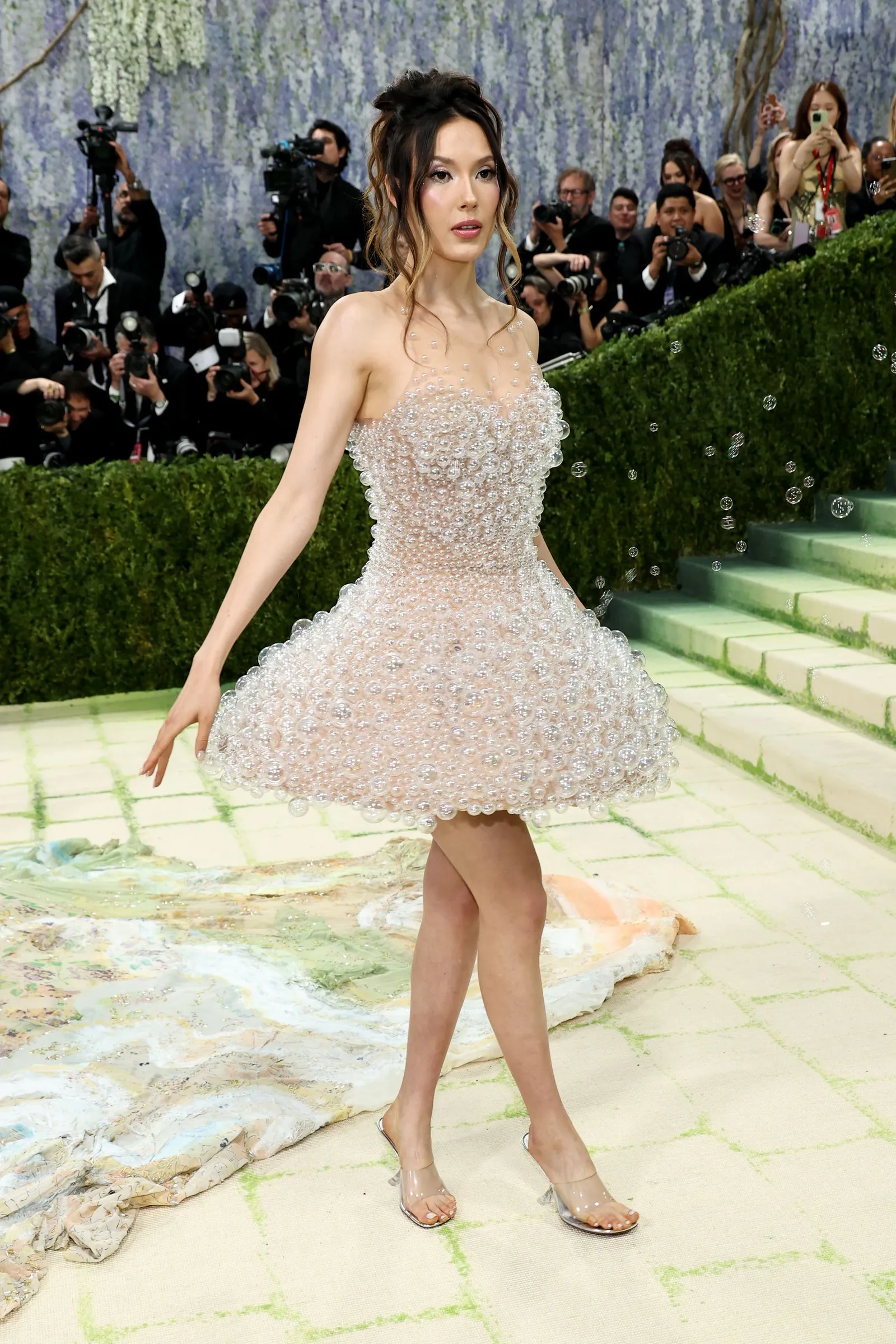
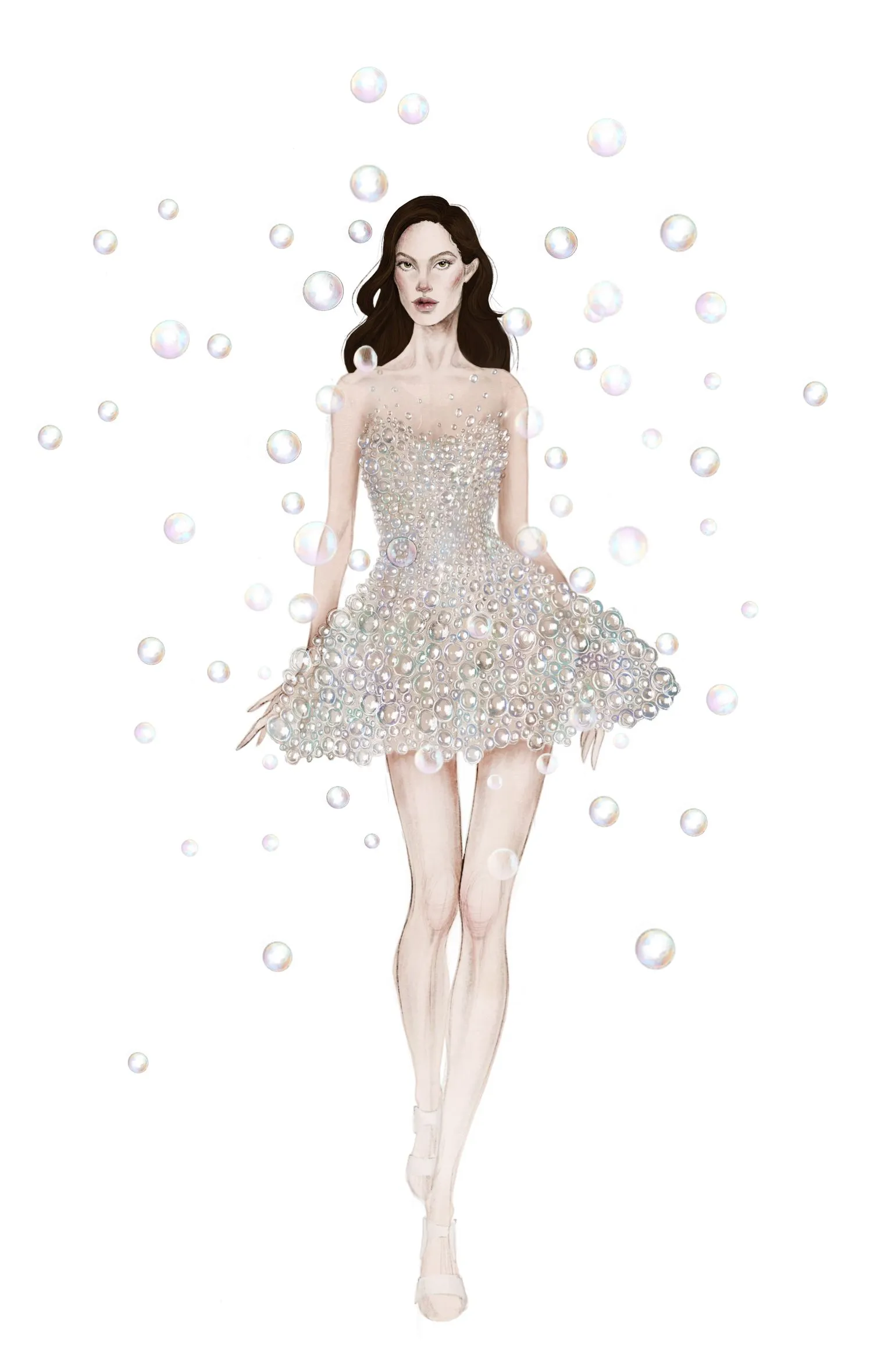
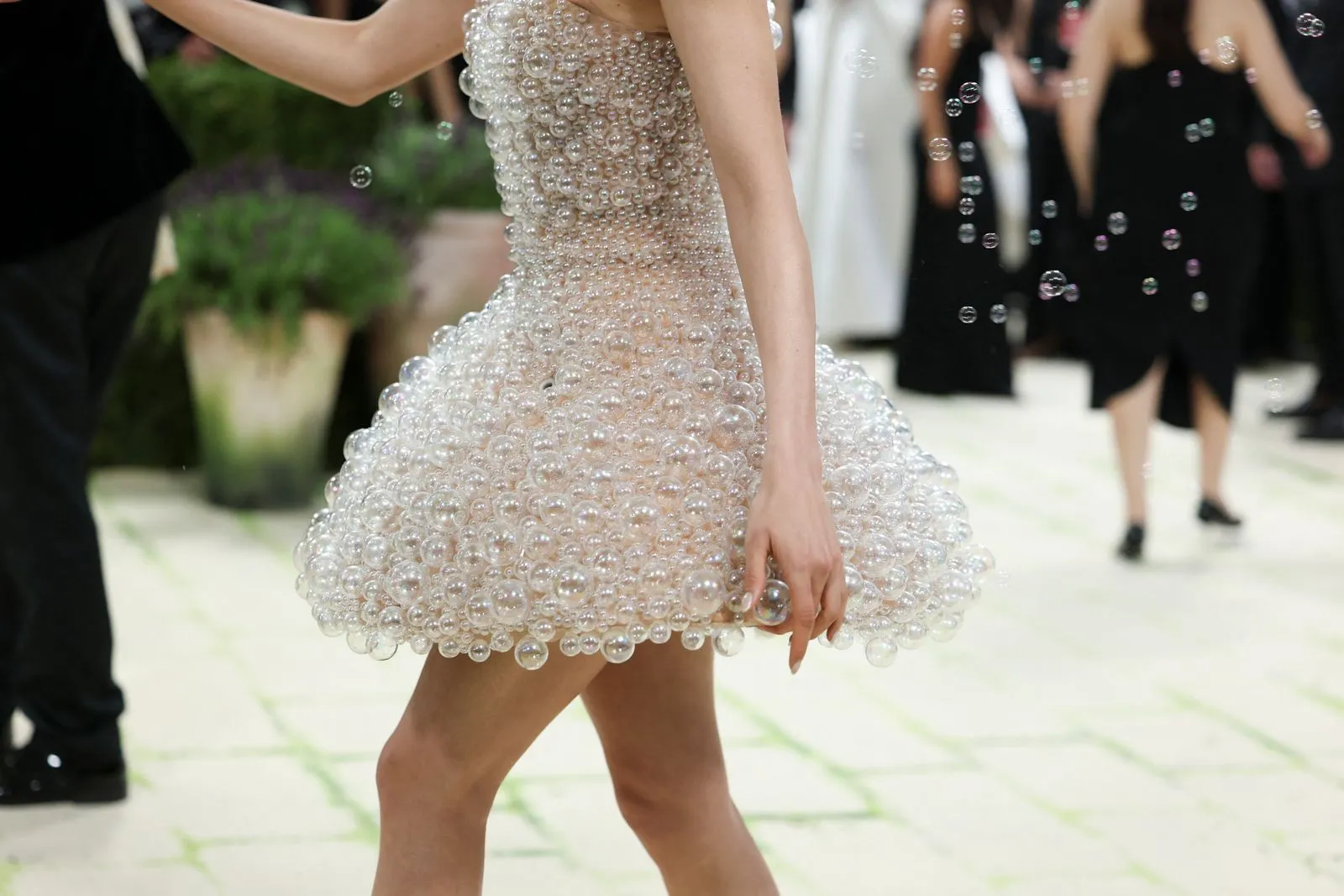
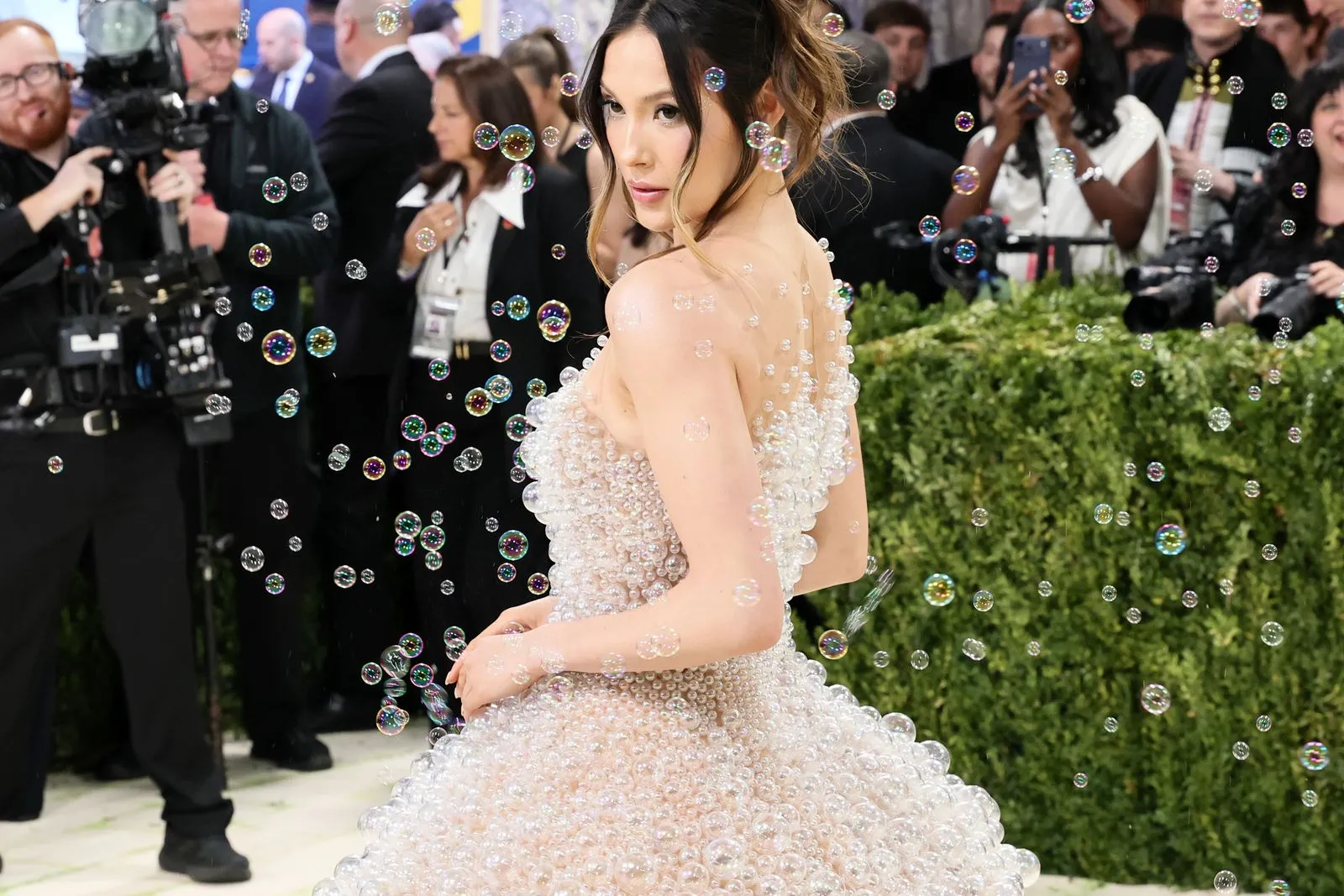
The gown features 15,000 hand-formed, individually bonded, iridescent glass bubbles. Hidden beneath its light and airy silhouette is a complex system of microprocessors, bubble nozzles, air pumps, and a portable power system that releases pressurized gas and bubbles timed by an algorithmically engineered code. What did that mean on the 2026 Met Gala red carpet? Two to five actual bubbles were released per second as Gu walked across the carpet, creating a dreamy, whimsical walking tableau.
“It speaks deeply to me through themes of motion and stillness,” Gu says, “being in the air, when time slows down, and the nature of reality—breaking boundaries of what is traditionally possible, whether it be creating a dress that ontologically inverts a bubble as both an ephemeral and intangible entity or redefining what modern womanhood can look like in the realm of a traditionally male-dominated extreme sport.”
Considering the theme, van Herpen wanted to offer up an alternative view on the human form: “I didn’t want to express our body from the way we normally perceive it—its beauty, its outside. I wanted the dress to inspire people to look at the body from a different perspective, a scientific one also.”
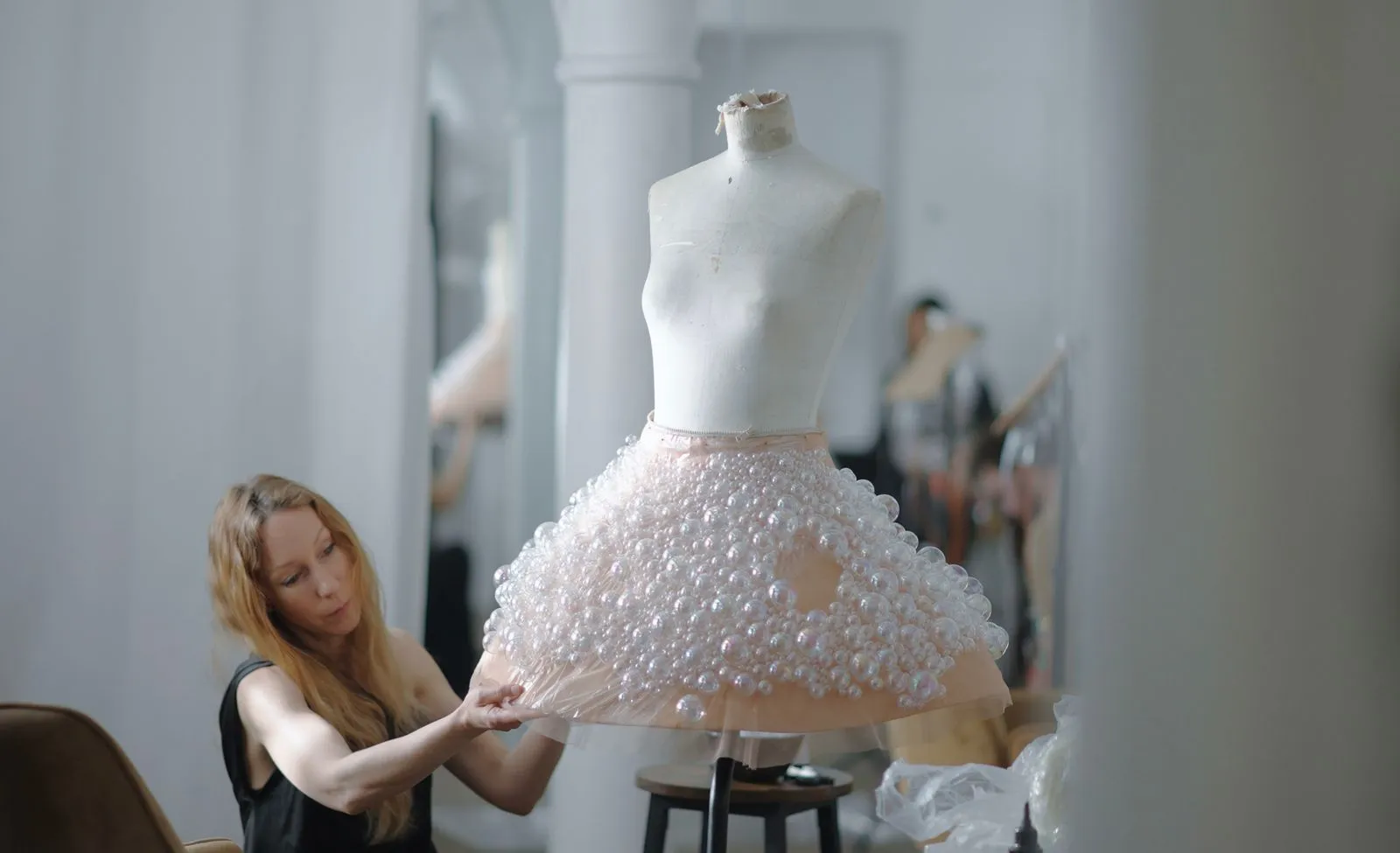
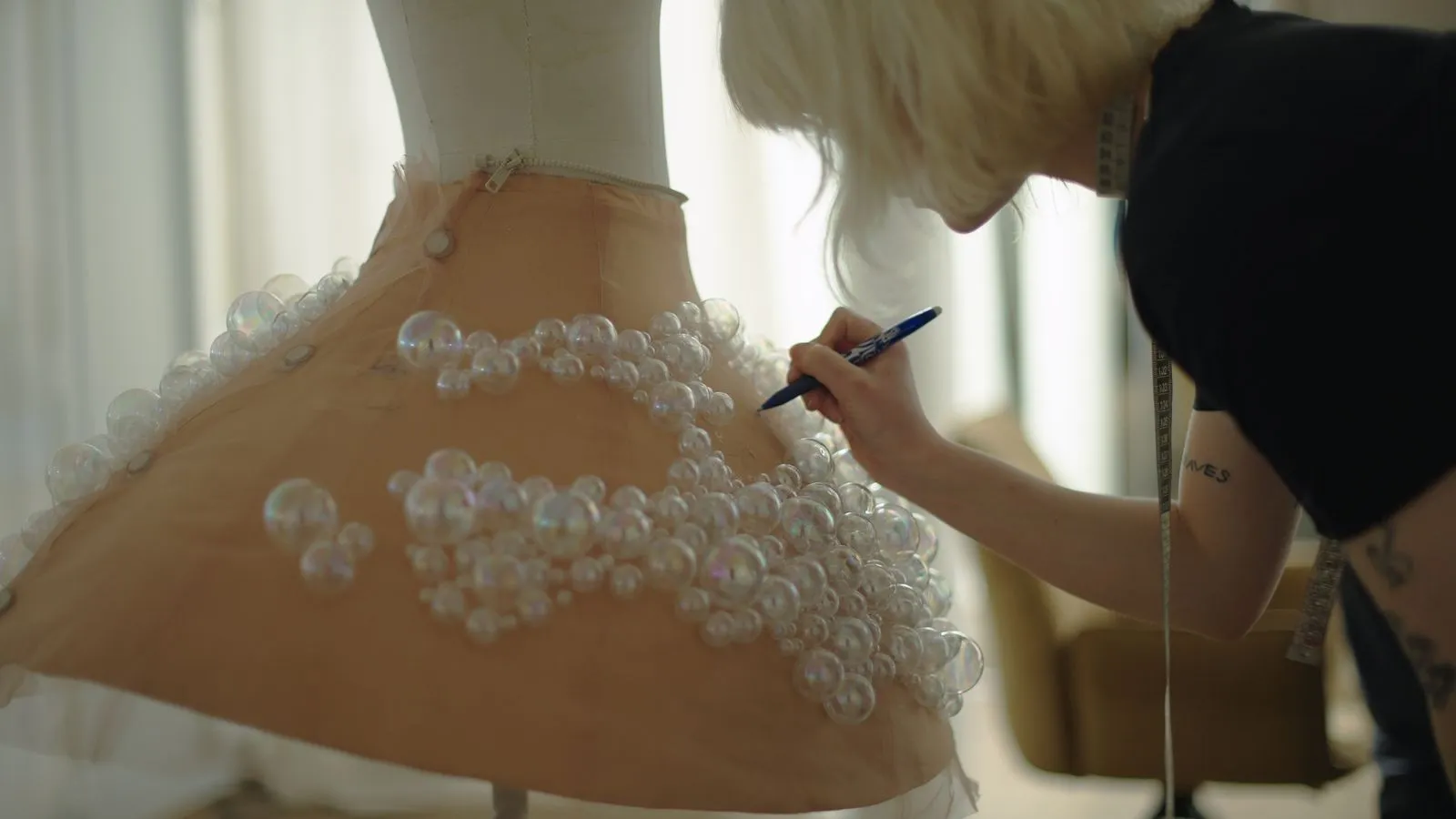
It took the teams working across couture, science, engineering, and computational design 15 weeks of development and 2,550 hours of work to execute the design. Van Herpen says this has been one of the most challenging looks that she and the atelier have ever made. “It looks so seamless and effortless, but inside is an impressive construction. This look required a very diverse team of specialists.”
A trained ballerina herself, the designer had Gu’s sometimes gravity-defying physical feats in mind as well. “The dress expresses the weightlessness of Eileen [and] her athletic skills,” van Herpen says. “It takes her up into the air, and it embodies her airborne grace on the slopes.”
Since 2007, van Herpen has been recognized for her pioneering approach to technology and traditional fashion craftsmanship, challenging ideas of what couture can and should be. She was among the first to use 3D-printing in couture, and she utilizes rare, unexpected, wondrously earthly materials. The living-look dress from her fall 2025 show was created from 25 million bioluminescent algae, and for fall 2025 looks incorporated Spiber Brewed Protein, a biomaterial made from fermented sugarcane. Van Herpen has also worked with clients such as the French female world-champion skydiver Domitille Kiger, who wore her designs while diving. On May 16, “Iris van Herpen: Sculpting the Senses” will open at the Brooklyn Museum, the first major survey of her career in the United States.
A.A.Murakami—the Tokyo– and London–based artistic duo of Azusa Murakami and Alexander Groves—has often employed art and science in their practice, which has produced work featured in the Venice Biennale and in the permanent collections of MoMA and the Centre Pompidou. The next few months will see them exhibit in the Netherlands, Venice, and Seoul and at Art Basel Switzerland. The pair worked closely with van Herpen and her atelier to conceptualize and construct Gu’s gown.
“Beyond being a true masterpiece in fashion, design, and materials innovation, this dress celebrates the arts of motion, nature, and the body,” Gu continues. “For me, as a freeski athlete, these elements are inextricable from one another, and so this dress is the purest distillation of my art.”
This article was originally published on Vogue.com.
Frequently Asked Questions
Designed by Iris van Herpen and A.A. Murakami, the “Airo” dress interprets the 2026 Met Gala theme, “Fashion Is Art,” by exploring the atomic anatomy of the human body. It reflects the scientific concept that matter is 99.9% empty space, visualizing the body as something fluid, transient, and in constant transformation.
The dress features a hidden, noiseless system of microprocessors, air pumps, and reservoirs of pressurized gas and soap. As Gu walked the carpet, this system autonomously released actual floating bubbles in timed sequences, turning the garment into a living, performance-art installation.
The dress is adorned with 15,000 hand-formed, iridescent glass bubbles. These spheres were individually bonded to the sculptural, mini-dress silhouette using UV light, creating a fragile yet highly engineered shell that captures and refracts light.
The “Airo” look was a massive undertaking that required 15 weeks of development and over 2,550 hours of intensive, hands-on craftsmanship. It involved a multidisciplinary team of specialists, including engineers, designers, and computational artists.
Designer Iris van Herpen noted that the dress was inspired by Gu’s “airborne grace” on the ski slopes. The ephemeral nature of the bubbles—which float away and dissolve—is meant to mirror the weightlessness and precision of Gu’s athletic movements, where moments of intense activity are captured in the air before fading.