
From Horse Barbie to Dolls, Geena Rocero Has Lived Life as a Storyteller


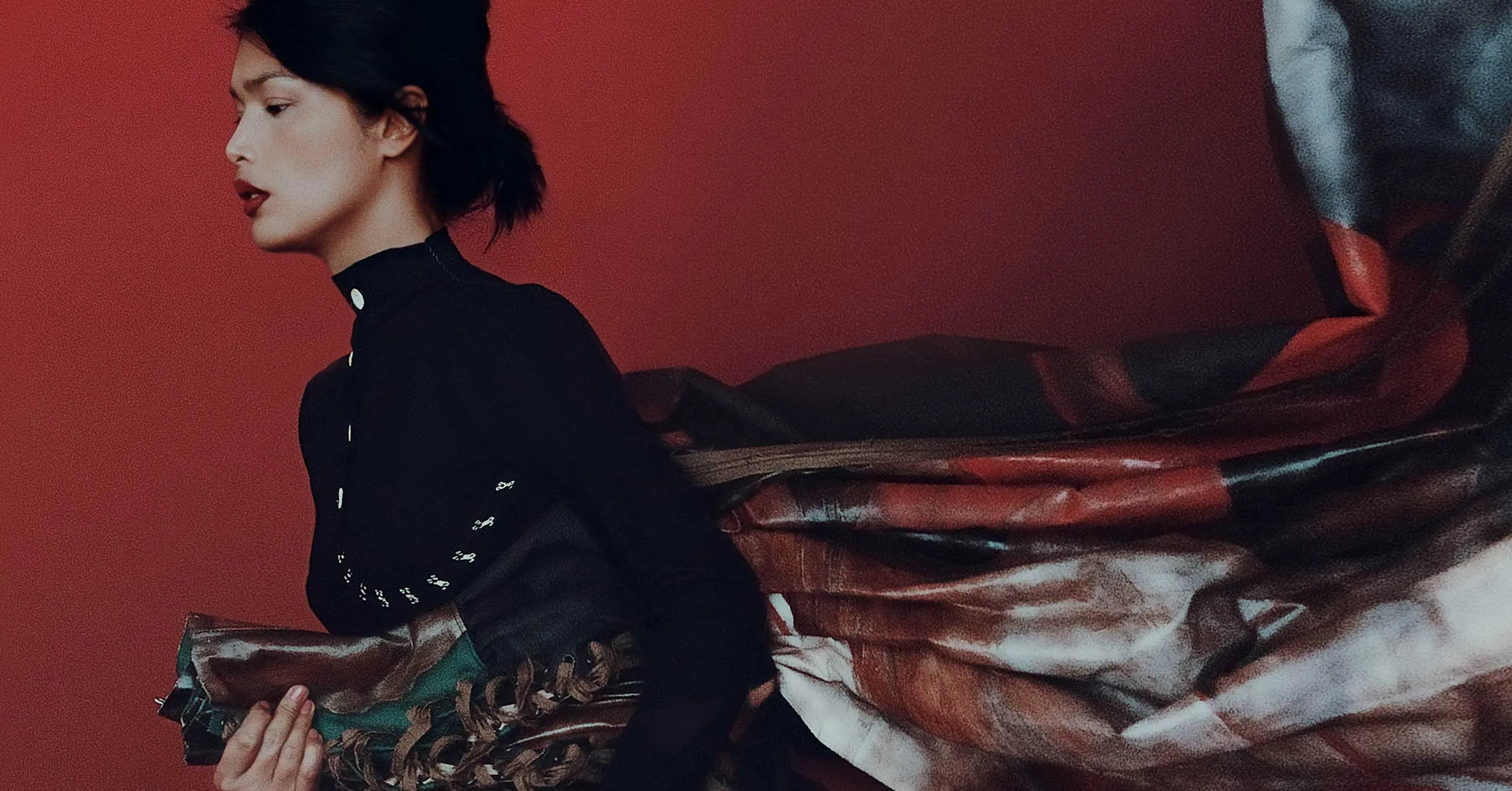
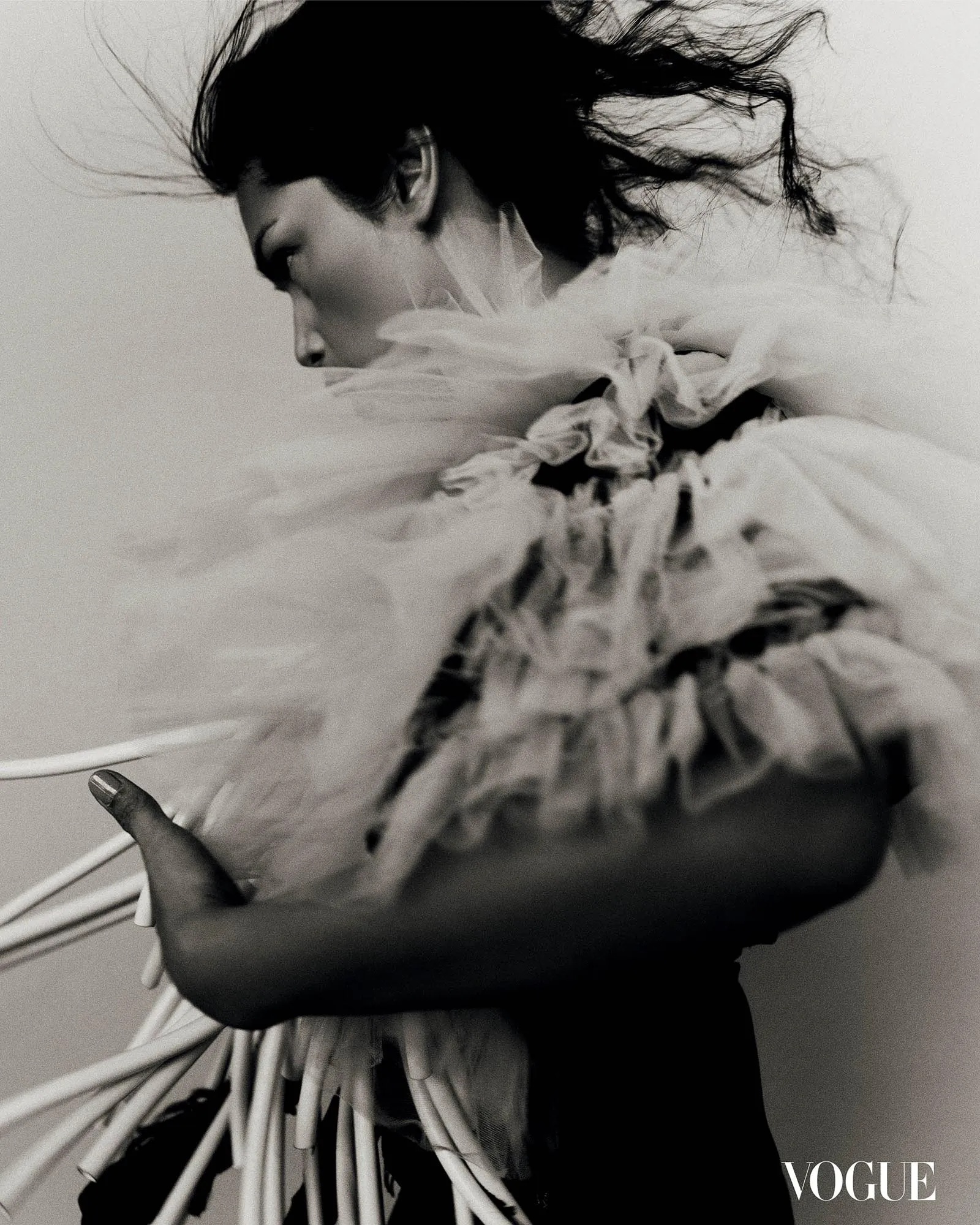
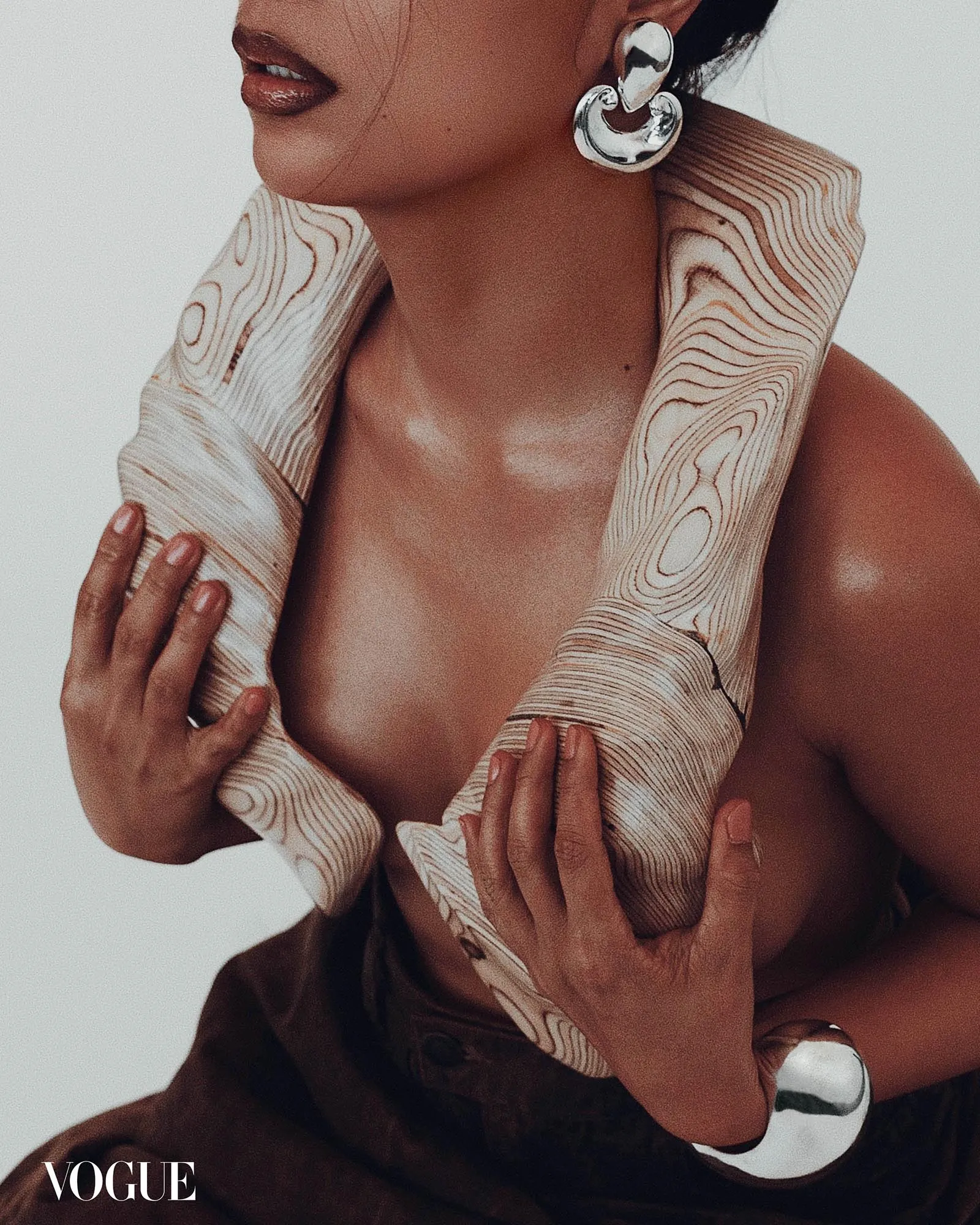
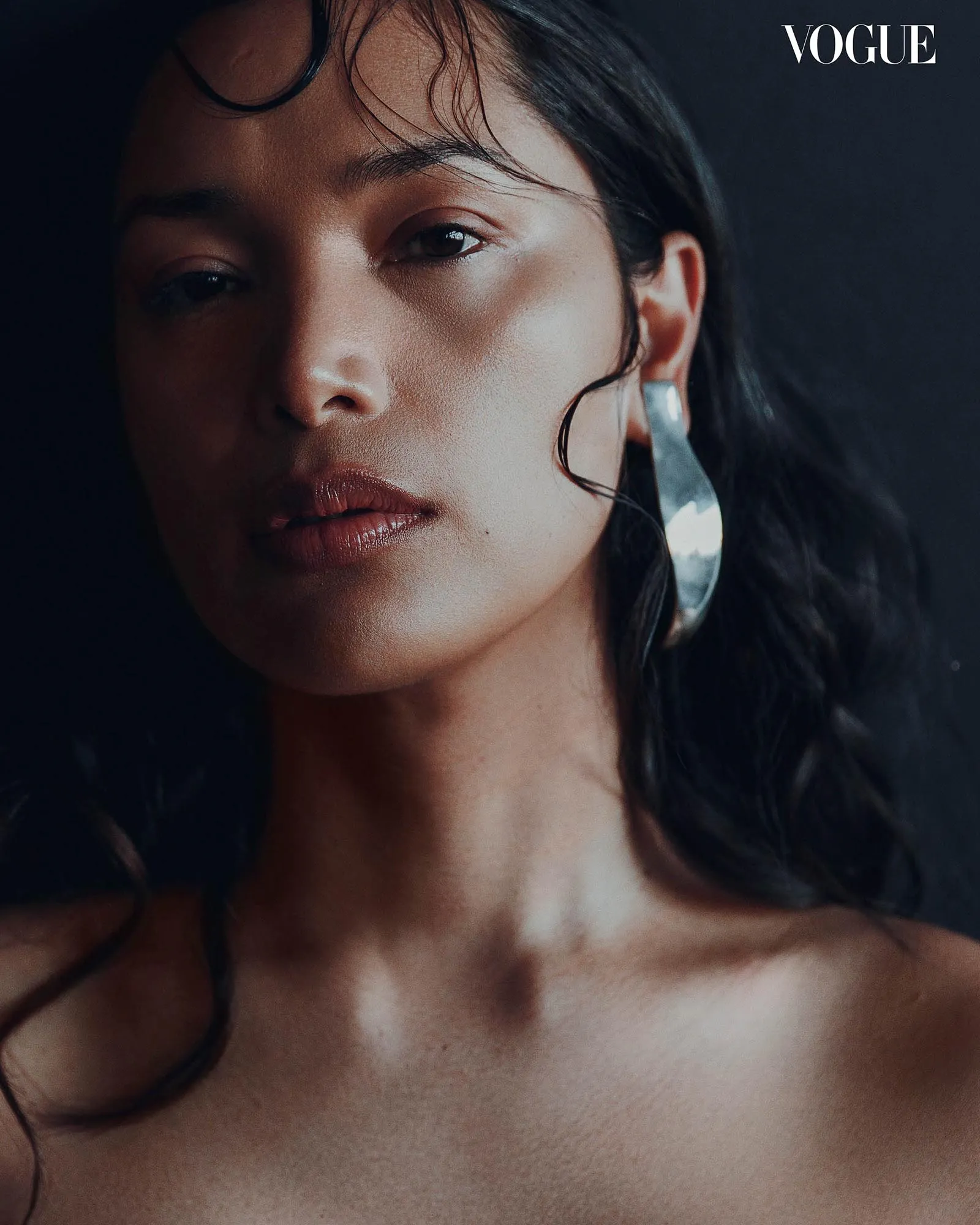
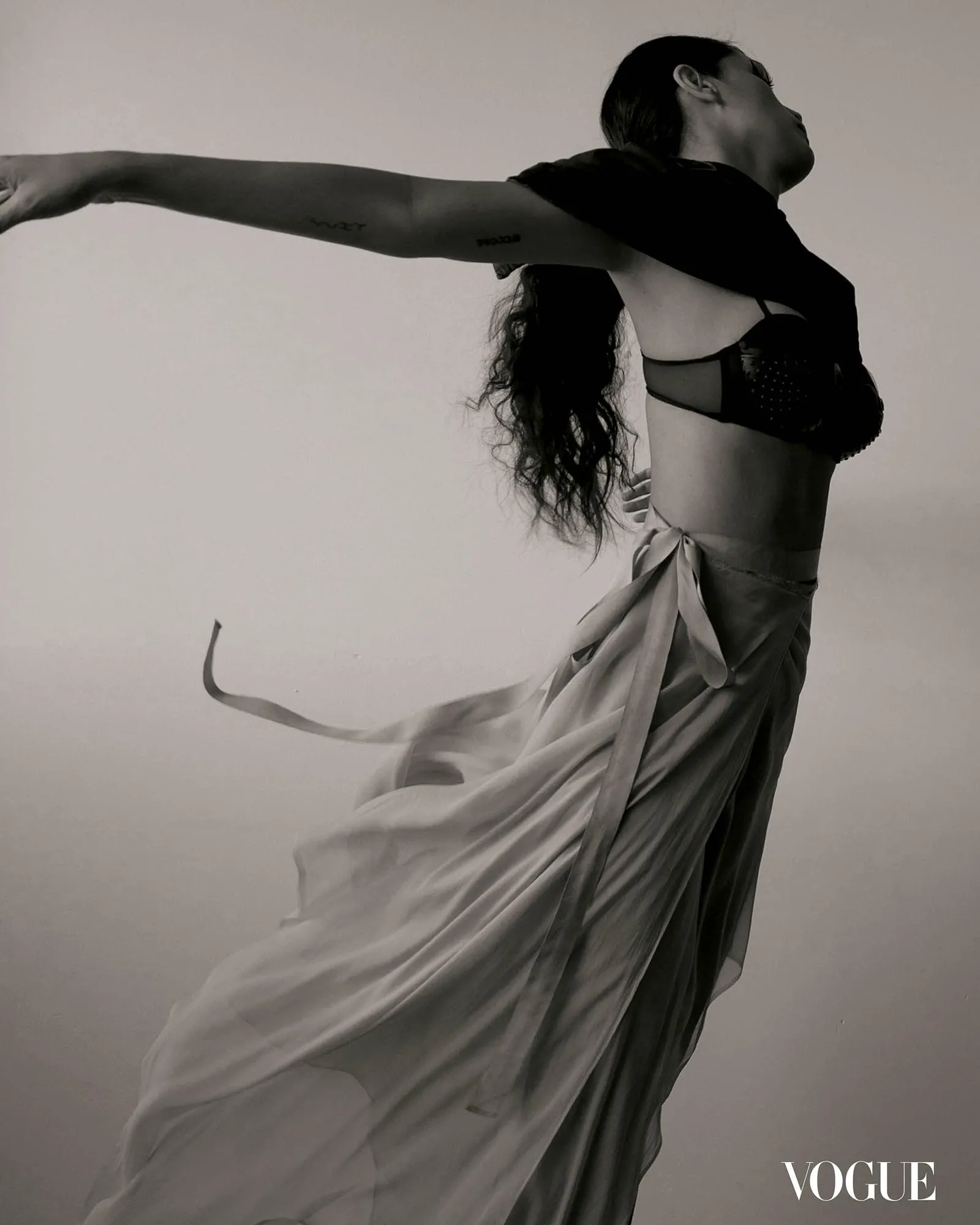
Geena wears a HELENA EISENHART dress made in collaboration with Tara Atefi, STREGA ATELIER top, CHARLOT ABHORS AVOID pants, EDWARD CUMING shoes, and a PATRICIA VON MUSULIN belt, ALICE AUAA pants from CHARLOT ABHORS AVOID. Photographed by Sam Spence for the May 2026 Issue of Vogue Philippines
Geena wears a HELENA EISENHART dress made in collaboration with Tara Atefi, STREGA ATELIER top, CHARLOT ABHORS AVOID pants, EDWARD CUMING shoes, and a PATRICIA VON MUSULIN belt, ALICE AUAA pants from CHARLOT ABHORS AVOID. Photographed by Sam Spence for the May 2026 Issue of Vogue Philippines
Model, memoirist, trans rights advocate, and now director, Geena Rocero has never stayed in her lane. As her sci-fi short Dolls makes the film festival rounds, she reflects on gender fluid divinity, what the pageant stage taught her, and how cooking a kamayan meal for 60 can feel like the deepest form of connection.
When Geena Rocero goes camping, she goes full-throttle remote: hiking for hours up a 10,000-foot mountain where there is no cell signal, just a tent between her small group of girlfriends and elements that can turn unexpectedly. Stripped down to life’s most basic necessities, desires clarify. “You’re in touch with your pure self,” she says. “It’s the ultimate ego dissolution.” Adventure and exploration return her to a childlike state. Sometimes, at the top of a mountain, they’ll do a pageant walk. You can take the queen out of a pageant, but you can never take the pageant out of a queen.
It’s been 25 years since Rocero left the Philippines, walking away from a trans pageant career she had begun dominating at the age of 15. Her 2023 book Horse Barbie: A Memoir of Reclamation, tracks the journey from the eskinitas of Makati to the makeup counters of Macys, through stealth modeling gigs and a John Legend music video, to the propulsive moment she came out as transgender on a TED Talk stage in 2014. Everything changed after that. Rocero became a public advocate for trans rights, speaking at the United Nations, the World Economic Forum, and the White House, while appearing in Playboy as the first trans Asian Pacific Islander Playmate.
Lately, she is orbiting the world of filmmaking, having written, directed, and starred in Dolls, an 18-minute thriller with a mostly trans woman cast, premiering in five international film festivals. Dolls follows a private investigator trying to infiltrate a relationship workshop for trans women processing hurt. Rocero plays Gene, the Tyra Banks-like mother figure and facilitator who encourages her dolls to transmit pain out of their bodies through hypnotic movement. The women dance around each other, chanting hugadoo hugadoo ha ha ha while Gene instructs them to “Make it your own! You own this,” channeling years of pageant training. This self-love exercise is based on the Filipino street game Shagidi Shagidi Shapopo, which challenges players to mimic each other’s dance moves. “I’m always infusing parts of who I am and what I know,” she says. “I’m always just following that instinct.”
Rocero describes the film’s genesis as stemming from one summer when three of her close friends made painful revelations: one was experiencing chronic pain, another was processing relationship trauma, and one had disclosed childhood abuse. The body holding on to trauma is something she is familiar with, having gone through an unexplained bout of eczema she later realized was her body’s reaction to the stress of keeping her then-secret identity. “How do I respond to this?” she asked herself. “As a director, as a writer, do I go to therapy? Because it was really intense.”
The initial script she was working on gave way to this story about a cultish therapy group, layered with inspirations from Stepford Wives and Suspiria. A soundtrack of frenetic piano keys and jarring violin strokes, scored by Pulitzer Prize-winning composer Susie Ibarra, heightens the foreboding sense that something is not quite right. “Sound is an important part of Director Geena Rocero’s creative process in developing narration and building scenes,” Ibarra says. “Building sinister, suspenseful music to match the intensity and beauty of the visual film and script together was a great experience. Her play of humor and dark suspense along with quirkiness comes through in Dolls and is an imaginary world that was thrilling to enter.”
The short film hints at a deeper cyborgian mystery as it examines trans identity and assimilation. Rocero is currently developing the feature length version of Dolls. The writer Raymond Ang, who served as a production assistant on the set of Dolls, describes Rocero as someone who is almost completely self-taught: “Going into a new medium as a beginner, once again starting from scratch, trying to see how she can tell stories in a new way. It’s a very vulnerable process, being someone established in one field going into something new, and it was amazing to see someone grow into their power in real time. She was very open with the crew about what she didn’t know, but also authoritative about what she did know, which is what story she wanted to tell.” When Ang saw the finished film at the NewFest premiere in New York, he was impressed with how polished and visually stunning it was. Lilly Wachowski, co-creator of The Matrix series, felt the same way when Rocero showed her the near-finished product, prompting Wachowski to come onboard as executive producer.
While Dolls is Rocero’s first scripted project, her directorial debut was a New York Emmy-nominated four-part PBS documentary series called Caretakers, shot during the pandemic at a moment when she felt Filipino American representation was lacking. “Filipino caretaking is a part of this very spiritual offering to your community, to the world.” Her network of trans girlfriends who were also nurses led her to four individuals whose stories held distinct perspectives: Belinda Ellis, a veteran nurse who had been caregiving since the AIDS epidemic; Aleksa Manila, a therapist by day and drag performer by night; Channing Centeno, a Black Filipino chef who fed Black Lives Matter protesters in Brooklyn with lumpia and adobo; and Angel Bonilla, a rising trans singer who stepped up as a frontliner and ended up a COVID long-hauler. Throughout these stories runs the theme of community, and the Filipino values that knit them together. The series set out to offer a more complex picture of Filipino Americans in the healthcare industry, and honor their often overlooked contributions.
Even within the documentary format, Rocero was already imprinting her own visual style, influenced by directors she discovered on the Criterion Channel, which functioned as a personal film school: Claire Denis, Lucrecia Martel, Park Chan-wook. The film that reoriented her sense of what directing could be was Denis’s Beau Travail: “That kind of subversion, that kind of poetry. If I was going to be a director of scripted projects, that’s the North Star.”
Caretakers has an element of cinematic poetry that allowed Rocero to transition from documentaries to directing something as stylish as Dolls. “I learn by doing. Call it self-belief, call it holding on to that unapologetic vision and letting it speak for itself. I’ve always been a self starter. Right now, directing, writing, and producing, that’s what’s calling me.”
Horse Barbie is saucy and charming and at times utterly devastating. Listen to the audiobook, like I did, and be immersed in Rocero’s many worlds as she narrates, sings, and acts out scenes from her wildly colorful life with the full commitment of a born diva. She grew up in the Guadalupe Nuevo neighborhood, just kilometers yet a world away from the exclusive enclaves of BGC and Rockwell. As a young femme, she endured taunts and bullying, an alcoholic father, and the early absence of her mother, who emigrated to the United States when Rocero was 12. Then the pageant world found her, and things began to fall into place.
Rocero, who adopted the stage name Assunta de Rossi, won in nearly every pageant she joined, from her first Miss Gay Evangelista in 1999 to her crowning as Miss Gay Universe 2000, the most prestigious title in the industry. It was Tigerlily, her trans mother and beauty queen trainer, who first spotted her and brought her into the Garcia clan. Walking was working: from her winnings, she earned enough money to help support and grow the family. Japan was the next obvious step; many queens become japoneras, cabaret performers who can earn serious money in Tokyo’s nightlife circuit. But then her mother called from America, beckoning her to a country where Rocero could be legally recognized as a woman.
Moving to the States marked the beginning of an entirely different life. But before Rocero boarded a plane for the first time, her father passed away. Writing about him years later, she cried so much she couldn’t form a sentence, and took two weeks away from the manuscript to sit with her feelings. Her father was a complicated man, but he never questioned her femininity. “There is nothing wrong with you,” he would tell her.
“That was the biggest surprise, and also the most difficult, because it was so emotional. And I think that was my attempt to really understand why he was this very typical Filipino macho dad, why he was so accepting and loving. I also wanted to bring a sense of compassion, because he was a difficult person when he drank.” She came to understand that was shaped by a wounded masculinity, unable to express his emotions, weighed down by the guilt of failing to be the provider. It fell to her mother to be the breadwinner, a school teacher with multiple side hustles. “It’s this thing that I couldn’t figure out before I wrote the book. And then when I wrote the book, I thought, okay, I’m at peace with this.”
The craze of pageantry in the Philippines can be seen as an indigenization of various colonial imports. “Before colonization, we honored gender fluid identities. Then the Spanish instituted dozens of festivals for Catholic saints. Beauty pageant culture was imported via American colonization in the early 1900s. Put all those influences together, and you’ve got our vibrant trans beauty pageants, a cultural amalgamation built through centuries of war and conquest,” Rocero writes in Horse Barbie. The Queen of Quiapo Universe pageant, for instance, coincides with the Feast of the Black Nazarene. Candidates consider their participation as a form of panata or devotional vow to the Nazareno.
Despite widespread trans visibility, tolerance, and even celebration, transgender Filipinos cannot legally change their name and gender markers and are afforded little protection by the law. Conservative Christian and Catholic factions continue to oppose anti-discriminatory bills. And therein lies the transgender paradox of the Philippines.
When Rocero arrived in San Francisco in 2001, she didn’t yet know that America would carry its own transgender paradox. She found her tribe with the makeup girls in Macy’s and in the nightclubs of the Castro district, but it was all still underground. When she was able to officially change her name to Geena, she soon realized those gains came with perils. An incident with a group of beer-chugging, lumberjack-dressed men had her running to a wardrobe to hide. “The irony wasn’t lost on me: I had left the Philippines, where everyone knew I was trans, only to find myself in a literal closet in America,” she writes. “I was legally recognized here but culturally misunderstood. Worse, I was invisible.”
But she had the kind of traffic-stopping looks that wouldn’t let her stay invisible, at least as long as she was “wa buking,” or unclockable. At 19, she went to Thailand for gender-affirming surgery, her mother right by her side. Her Catholic mother, who held her hand through it all, and whose knees shook when she saw the results. “My mom has always been that support,” Rocero says. “There was a trust that I was making the right decision.”
When she finally changed her gender marker to F on all her legal documents, she left San Francisco for New York City to become a model.
In New York she was nobody, with no past and no history, except to one or two very close Filipina friends. Keeping her identity a secret was the price she had to pay for being a consistently booked model, landing in glossies and a Times Square billboard. She was a performer of the highest caliber, and she knew it. “I was hiding, lying, and performing, all in plain sight,” she writes. Sometimes, she turned it into a game of espionage to have a little more fun with it.
When things felt hard, she would muster the spirit of Horse Barbie, the internal force that had carried her through every competition and challenge. The name began as an insult from pageant rivals who called her too dark, her features too horse-like. She took the name anyway and ran like the wind.
On her 30th birthday in Tulum, Rocero told her partner that she wanted to come out publicly.
She was ready to tell her story. At that moment, hundreds of newly hatched baby turtles emerged on the shore, crawling haphazardly toward the water. She helped redirect them to the ocean, one by one. It felt like a sign. The past eight years had been building to this: the stress of hiding her truth had erupted as painful blisters all over her body. She had taken a break from modeling, explored other paths, and discovered she could succeed at practically anything. She had found unconditional love with a man she met in the Hamptons. At Burning Man, she dropped acid, had a vision of her father, and realized she wasn’t just where she was supposed to be, she was who she was supposed to be.
Rocero took the TED stage in 2014 as the first trans person to speak about trans identity. A speech coach helped her distill her message to its simplest form: telling her story like she was telling it to one person. In a figure-hugging dress and black YSL stilettos, she opened with the line, “The world makes you something that you’re not, but you know inside what you are.” On the slides, she showed a photo of herself as a young boy. The audience was both shocked and affirming. She knew this talk was the final step in her own self-acceptance. She knew that after this, she would be always labeled as “trans,” but she decided to embrace that power.
Her TED talk, which received a standing ovation and quickly went viral, launched what she calls her Angelina Jolie era of public speaking and advocacy. Through Gender Proud, an advocacy group she founded, she focused on gender recognition laws, speaking at any venue she could, including back in the Philippines at the House of Representatives. A few years of this work also took their toll. “There’s a sense of retraumatizing myself, of constantly telling the story. I remember being in a UN meeting, being in many powerful spaces, and being the only trans person in the room, with that expectation, the burden of representation. And I’m sharing a very particular story, a very personal story,” she says. “As much as I enjoyed geeking out on policy, there’s a limit to what it can do.”
Convinced of her role as a storyteller, she started her own production company. “With no background in production,” she adds, “but I knew I wanted to tell the story from the point of view that I know. I want to honor the artist in me.” Dolls is where that instinct has taken her furthest, a cinematic world built from the stories of her own very cinematic life.
There’s a detail in Dolls that refers back to the connection between Catholicism and trans identity. After the dolls finish the hugadoo exercise, they put on white veils, an act that bonds the undercover investigator with the other women. Rocero has been reaching toward Philippine pre-colonial culture ever since she liberated herself from the internalized shame of being dark skinned. She discovered and immediately recognized the gender-fluidity of the babaylan, spiritual leaders who played an important role in their communities as healers and ritual specialists.
“There’s a thread of Catholicism that was instilled in all of us. There’s a sense of shame, like, you’re bad, you’re a sinner. I wouldn’t say it’s completely gone, but I know I’ve processed that,” she says, explaining how a big part of writing the book was about releasing that shame. “It’s also connected to the babaylan, to this quest of uncovering our pre-colonial pride and history. Catholicism and colonialism [are] tied together. When I’m connected to that pre-colonial spirit, it goes back to our notion of kapwa. That fluidity in gender is divinity for me.”
The concept of kapwa, the Filipino relational ethics of a shared inner self, has always run through Rocero work and life. Her years in the Philippines were defined by community: as a child she was always surrounded by people, and later by her trans pageant family who fiercely protected one another. In America, the culture of individualism fueled her ambition, but it was also very lonely, when she lived a double life. Since coming out, she has been able to fully live as herself. For the past few years, she has embodied kapwa in a distinctly Filipino way, by cooking a kamayan dinner for 60 people.
At the Doll Invasion dinner held on Fire Island, an annual gathering of trans artists and activists, Rocero leads a small kitchen team in preparing a traditional Filipino boodle fight: barbecued meat, seafood, vegetables, and rice laid over banana leaves spread across a long table. She marinates the chicken in a homemade sauce; the dipping vinegar comes from her father’s home province. This communal meal is eaten with bare hands, with Rocero demonstrating to guests how to gather up the food with their fingers, explaining how this practice of sharing and feeding reflect a deep sense of interconnectedness, where one’s well-being is intertwined with another’s.
“I like cooking. I learned how to cook because of how my papa cooked,” she says, reflecting on a childhood home always filled with the comforting smell of a home-cooked meal. Now she has just finished her Moroccan phase, mastering five dishes from that cuisine well enough to impress a local. Sri Lankan is next. As Rocero has proven, she’s always up for a challenge. Ang says she reminds him of a swan: elegant above water while paddling furiously underneath.“There’s always a new exciting project, a new obsession, a new dream when you’re talking to Geena. It’s infectious.”
For years, it was the power of Horse Barbie that moved her up the pageant ladder. Later, the gender-nonconforming babaylan became her guide as she began diving into pre-colonial spirituality. In every form, Rocero has always been able to connect to a higher power, both inside herself and beyond, that has given her an unshakable sense of her own place in the universe. “Trans people represent that kind of freedom and power and beauty, because despite all the systemic rejection and discrimination, trans people dare to live our truth,” she says. This must be what trans joy looks like, and Geena Rocero is here to make sure you feel it, too.
By AUDREY CARPIO. Photographs by SAM SPENCE. Styling by DOMINICK BARCELONA. Beauty Editor: JOYCE OREÑA. Deputy Editor: Pam Quiñones. Art Director: Jann Pascua. Beauty Writer & Associate: Bianca Custodio. Vogue Philippines Producer: Julian Rodriguez. Producer: Stephane Gerbier of Society MGMT. Makeup: Laurel Charleston. Makeup assistant: Nikia Antoniou. Hair: Andrew Chen. Photography Assistant: Luke Stoychoff of Society MGMT. Styling Assistants: Endya Pagan, Dominic Moreno, and Michelle Uribe.
Shot on location at Cooktop Studio.
Frequently Asked Questions
Geena Rocero is a Filipino American model, memoirist, and trans rights advocate who came out publicly at a 2014 TED Talk. She is the author of Horse Barbie: A Memoir of Reclamation and the writer, director, and star of the short film Dolls.
Dolls is an 18-minute thriller starring a mostly trans woman cast, following a private investigator infiltrating a relationship workshop for trans women processing pain. Rocero wrote, directed, and stars in the film, which premiered across five international film festivals with Lilly Wachowski as executive producer.
Horse Barbie: A Memoir of Reclamation, published in 2023, traces Rocero’s journey from a trans pageant career in the Philippines through stealth modeling in New York to her public coming out. The title reclaims an insult once used against her by pageant rivals.
Caretakers is a New York Emmy-nominated four-part PBS documentary series directed by Rocero during the pandemic, profiling four Filipino Americans in healthcare, including nurses, a therapist and drag performer, and a chef who fed Black Lives Matter protesters in Brooklyn.
The babaylan were gender-fluid spiritual leaders in pre-colonial Philippine communities who served as healers and ritual specialists. Rocero connects her trans identity to this pre-colonial tradition, viewing gender fluidity as a form of divinity tied to the Filipino relational concept of kapwa.
- Laufey Is Throwing Away the Rule Book
- Fashion by Bottega Veneta, Jude Macasinag, and More Find a Fitting Sense of Place in Venice
- Ahead of the 2026 Met Gala, We Assembled a Stellar Lineup of Creatives in Fashion Worthy of a Museum
- How Indigenous Women in Bolivia Are Reclaiming Their History With Their Clothes