
What History Can Teach Us About Oil Crises in the Philippines


Creative Commons
Creative Commons
As the world currently faces a global oil crisis, historian and genealogist Mona Magno-Veluz reflects on the Philippines’ history in previous crises.
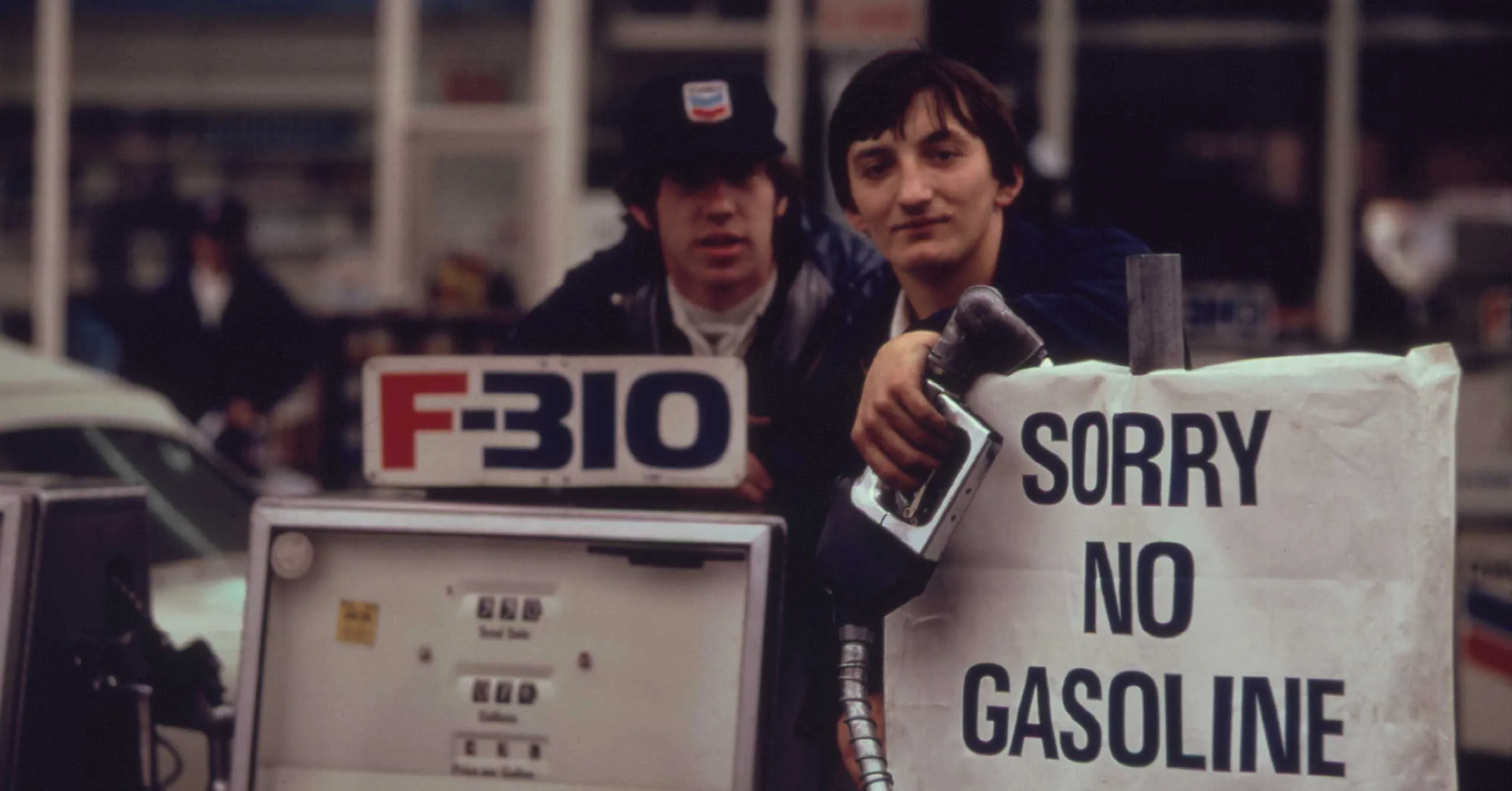
When historian and genealogist Mona Magno-Veluz was growing up, she lived through one of the 20th century’s biggest oil crises. In 1973, Egypt and Syria launched an attack on Israel, now known as the Yom Kippur War. Eleven days after it began, Arab members of the Organization of the Petroleum Exporting Countries (OPEC) announced that they would stop selling oil to countries supporting Israel. In a few months, global oil prices quadrupled, along with a severe shortage.
“I remember gasoline rationing,” she shares, recalling her experience at the time. “There were coupons that were being given away at the barangay level, so people don’t hoard. There were long lines at the gas stations.” In the Philippines, the shortage was so severe that the national government created the Philippine National Oil Company to ensure a stable oil supply during the energy crisis. Then came the four-day work week for government employees, increased tax on gasoline, lubricating oil, and automotive diesel gas, and strict energy conservation measures.
As the U.S. and Israel wage war on Iran this year, the Philippines and the rest of the world are facing an oil crisis once more. And, for Magno-Veluz, it feels like déjà vu. “The discussions that are going on today are very similar to conversations that were happening in the 1970s,” she says. And yet, despite the conversations that were held before, the Philippines is still no better than it was in the ’70s, exposing the country’s weakness as an oil importer.
Since 1973, the government has tried several measures, such as the Oil Price Stabilization Fund in 1984, under the Presidential Decree No. 1956. The goal was to subsidize fuel price spikes driven by exchange-rate fluctuations and oil price increases. But the fund was abolished in the mid-1990s due to a massive PHP 17.6 billion deficit. “Theoretically, it makes sense,” she says. “But in my experience in the Philippines, whenever they create these types of funds that are intended to be subsidies, there’s always mismanagement, and it’s not sustainable.
“The pattern there that I see is while the intent is good, the ideas are great, if there is no sustained management of these intelligent ideas, somehow there is a corruption that gets into play, and that is when it becomes a failure,” she continues. She adds that as long as the proposed solutions impose a fiscal burden and the Philippines remains dependent on imports and oil, the country will continue to experience the same frustration. “We need diversification, we need transparency, and we need long-term energy planning,” she emphasizes.
For her, part of the key to making solutions sustainable is remembering the past. “You would think that since 1973, you would have made some life choices that would have improved the situation,” she says. “But when the situation is okay, we forget, and we focus on other things.”
For that reason, Magno-Veluz hopes that history courses in school would not only cover revolutions but also inform younger generations about such matters. “We need to stay engaged, and we need to remember so that when all of these things happen, we know what to do and what not to do.”
While we can continue to call for better solutions, she also advises people to focus on what they can control. “We have to be in a tipid (saving) mode on everything we consume, from food to energy at home. We should look at ways to save, not just as individuals, but also families, officemates [and others],” she says. “There has to be some bayanihan spirit around how we can help each other.”
And even though elections are still far ahead, she urges everyone to watch and take note of the results of our voting choices during the previous election. “We need strong leaders, not just in the public eye, but really strong when it comes to fundamentals on handling how government should genuinely be run.”
As the country faces the current oil crisis, she remains hopeful that change will happen, especially in the hands of the younger generation. “My generation, we really talk about history. We talk about the bad job that we did in the past. And hopefully, the young people today, the leaders who are in place today, will make better decisions.”
Frequently Asked Questions
The 1973 OPEC oil embargo quadrupled global prices, causing severe domestic shortages. In response, the Philippine government implemented gasoline coupon rationing at the barangay level, established a four-day workweek for state employees, increased fuel taxes, and formed the Philippine National Oil Company.
Established in 1984 under Presidential Decree No. 1956, the Oil Price Stabilization Fund was designed to subsidize domestic fuel prices. It sought to cushion consumers from steep market spikes caused by global crude oil increases and national exchange-rate fluctuations.
The fund was abolished because it became fiscally unsustainable, accumulating a massive PHP 17.6 billion deficit. Historian Mona Magno-Veluz notes that while the policy intent was good, institutional mismanagement and the inherent fiscal burden exposed the limits of state subsidies.
The Philippines remains highly vulnerable during global energy shocks because it is a net oil importer. Without aggressive diversification, transparent long-term energy planning, and alternative infrastructure development, the country remains structurally exposed to foreign supply disruptions and market volatility.
Preserving historical memory ensures that institutional lessons from past energy shocks inform current policy decisions. Incorporating economic and energy histories into school curricula helps younger generations understand systemic import dependencies, encouraging long-term planning over short-term reactive measures.