How Louis Vuitton Is Transforming Luxury with Its Regeneration 2030 Strategy


Courtesy of Louis Vuitton
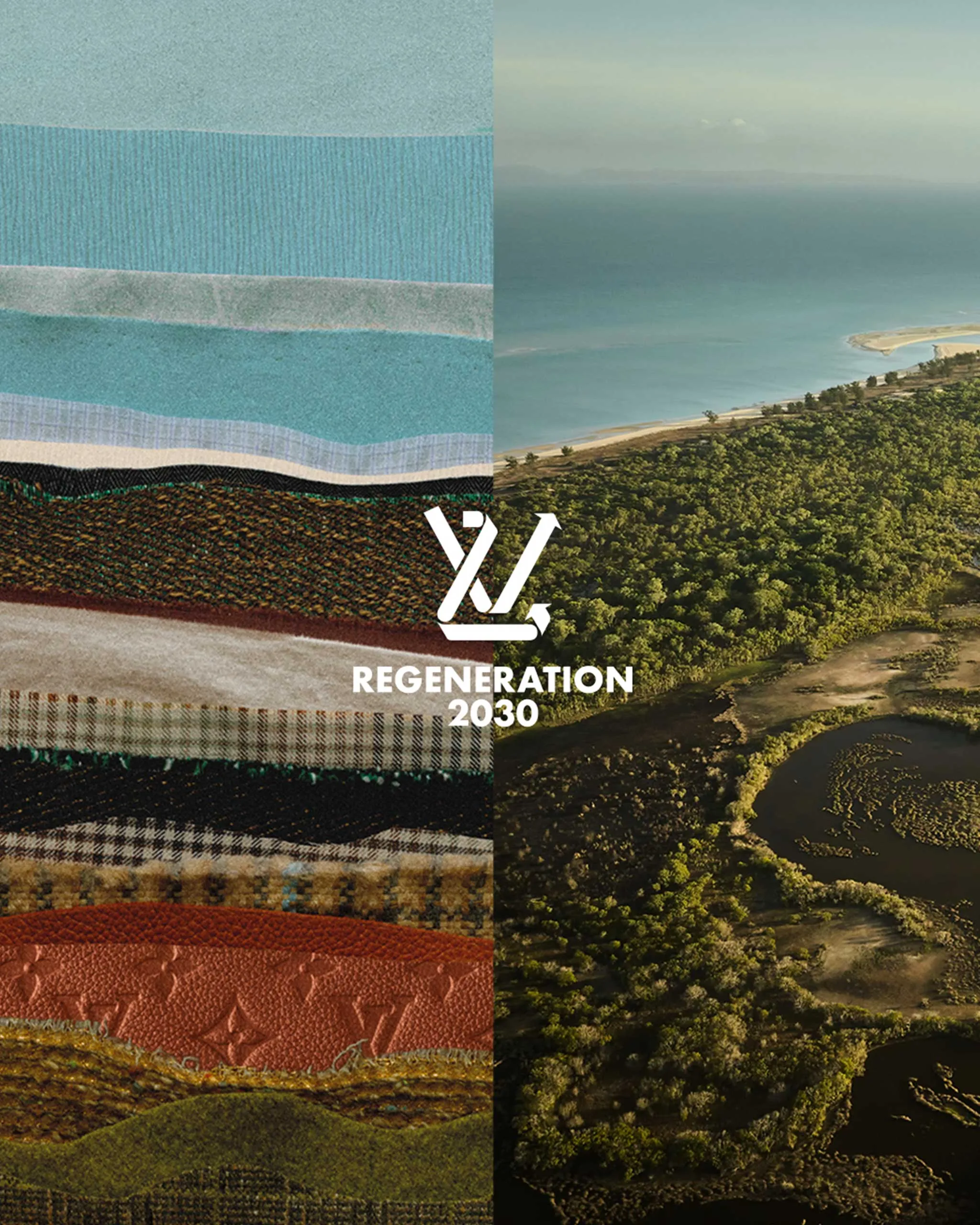
From refillable beauty to upcycled leather goods, Regeneration 2030 introduces circular design and more sustainable materials into the making of Louis Vuitton products.
Adopted in 2015, the Paris Agreement is a global climate accord that aims to limit warming to 1.5°C above pre-industrial levels and requires significant emissions reductions within this decade. 10 years after the international treaty was signed, Louis Vuitton introduces Regeneration 2030, a roadmap that reduces environmental harm while also contributing positively to the ecosystems and communities that sustain the craft of luxury itself.
As a heritage brand built on trunks for travel and the notion that the world should be explored, the initiative responds to the realities of climate change, biodiversity loss, and resource scarcity. It’s integrated across the full lifecycle of a product, from sourcing and design to production and aftercare, embedding circular principles at every stage.
Working to reduce greenhouse gas emissions in line with the Paris Agreement, with a target of cutting emissions per product by 55 percent by 2030, compared to 2018 levels. Alongside this, the House is committing to restoring one million hectares of natural habitats, in part through partnerships with People for Wildlife.
Regenerative agriculture underpins this approach, supporting soil health, biodiversity, and carbon capture across supply chains. The brand has increased its use of certified and recycled materials from 52 percent to 98 percent over the past five years, with a further goal of sourcing 100 percent of its virgin cotton, wool, and leather from regenerative sources by 2030.
Circularity forms a second focus through initiatives such as its Resource programme, reusing deadstock and existing materials, while targeting a minimum of 20 percent recycled or bio-sourced content across products. Repair services are being expanded beyond leather goods across all categories, building on a network that already restores hundreds of thousands of items each year, reinforcing durability and extending product life.
These changes are visible in-store and online. Sneakers integrate recycled components, ready-to-wear pieces such as denim are developed from fully traceable fibers, and leather goods are revisited through upcycled materials. Beauty and fragrance lines are increasingly offered in refillable formats, while packaging is being redesigned with reduced plastic use and simplified materials to improve recyclability.
The strategy also extends to operations, with efforts to strengthen supply chain traceability, reduce transport emissions, and improve manufacturing efficiency. Taken together, Regeneration 2030 reflects a broader recalibration, where luxury is defined not only by what is created but by how it aligns with global climate goals and contributes to the restoration of the world around it.
Frequently Asked Questions
Regeneration 2030 is Louis Vuitton’s sustainability roadmap integrating circular design principles across a product’s full lifecycle, from sourcing and design to production and aftercare, aiming to reduce environmental harm and support the ecosystems that sustain luxury craftsmanship.
Louis Vuitton aims to cut greenhouse gas emissions per product by 55 percent by 2030, compared to 2018 levels, in line with the Paris Agreement’s goal of limiting warming to 1.5°C above pre-industrial levels.
Louis Vuitton has increased certified and recycled material use from 52 to 98 percent over five years, with a goal of sourcing 100 percent of virgin cotton, wool, and leather from regenerative sources by 2030.
The Resource programme is a circularity initiative that reuses deadstock and existing materials, targeting a minimum of 20 percent recycled or bio-sourced content across Louis Vuitton products, alongside expanded repair services beyond leather goods.
Beauty and fragrance lines are increasingly offered in refillable formats under Regeneration 2030, while packaging is being redesigned with reduced plastic use and simplified materials to improve recyclability across product categories.
- Louis Vuitton Keeps Fashion In Dialogue with Arts and Culture
- Takashi Murakami on His Louis Vuitton Re-edition Collection—“20 Years Have Passed in the Blink of an Eye”
- Louis Vuitton Launches La Beauté, In Partnership with Pat McGrath
- Grace Coddington Sends Her Cats Into Space In Her Latest Louis Vuitton Collection