
Jordana Guimaraes and Christopher Hunt Challenge Fashion’s Culture of Excess


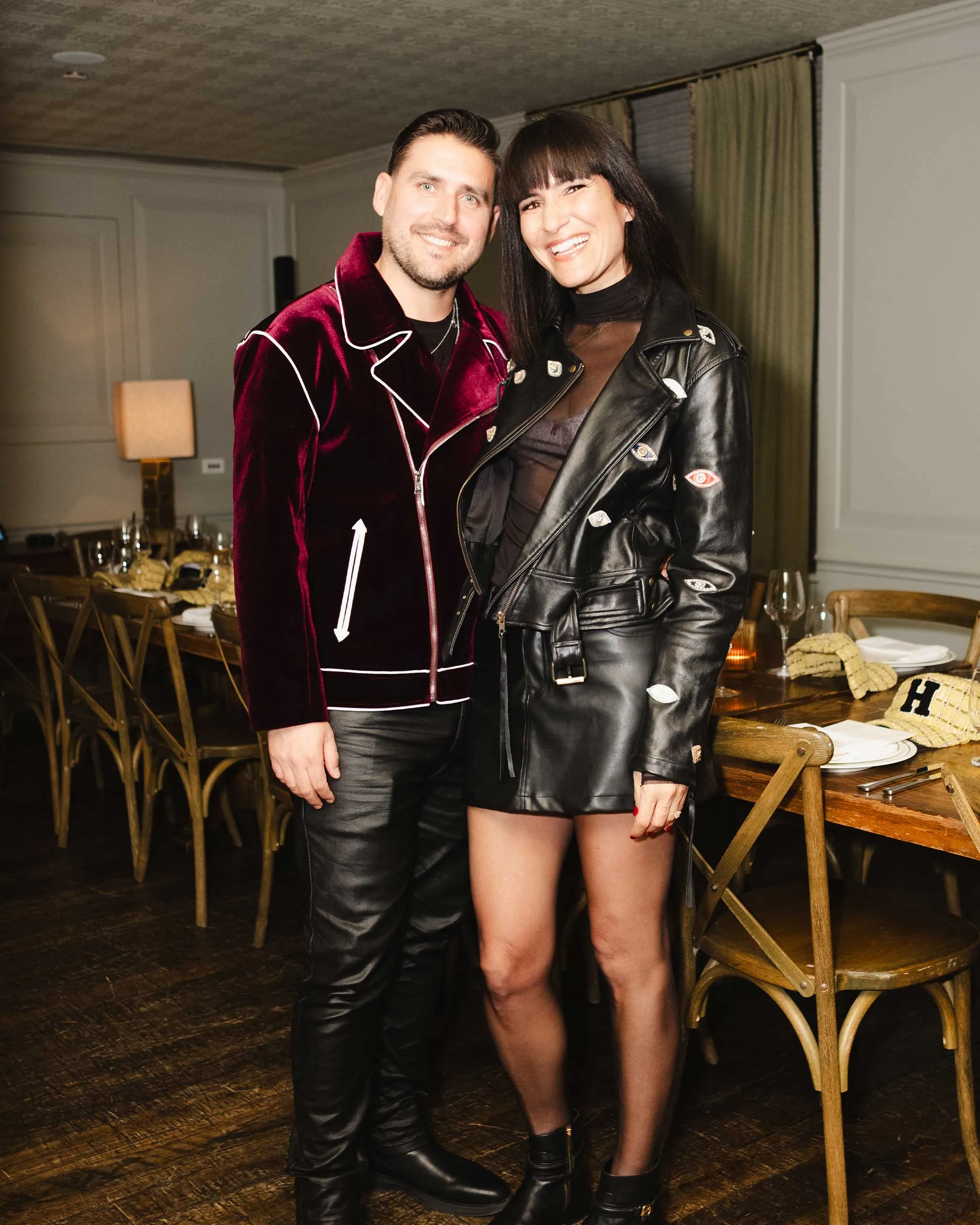
Photographed by Joshua Sim
Turning excess into opportunity, Fashion Forward founders Jordana Guimaraes and Christopher Hunt introduce a circular system that reworks deadstock and archives for a new generation.
Fashion may always be on the hunt for the brand new, yet for partners Jordana Guimaraes, a Brazilian‑born fashion entrepreneur and PR expert, and musician and creative Christopher Hunt, the future begins by looking back. Their platform, which evolved from Fashion Forward Week in New York, is built on what they describe as a “full-circle approach” to the greed of the industry, one that reshuffles how the industry engages with its own past and emphasizes what comes around goes around in the ferocious cycle of trends.
It consists of a three-part model: archive presentation, designer upcyclingUpcyclingThe practice of transforming discarded materials or old garments into new items of higher value and quality. Upcycling reduces waste by reusing fabric and parts, and designers use it toGo to Upcycling Glossary, and marketplace distribution. Instead of one-way flow and creating more waste with new production, each collaboration starts with a brand’s history. “I just think it’s really important to always go back… to see the beginning… how it all started,” Hunt explains, positioning the archive not as a throwback, but a return to the provenance of a garment, akin to an artwork at auction.
This philosophy has already taken off with a flourishing network across the United States, working with figures such as Rebecca Minkoff and Tonne Goodman, alongside executives from brands like Alexander Wang and Michael Kors. Showcasing both established and emerging designers, from All Saints founder Stuart Trevor’s upcycled label to Snow Milk by Doobie Duke Sims, the platform laments its role as a bridge between the established and up-and-coming.
Reflecting on one of the initial presentations with designer Nicole Miller, Hunt recalls the condition of decades-old garments: “They were in perfect condition. Perfect condition. And timeless.” For Guimaraes, moments like these reveal a broader truth about the system. “Everything in life… It’s all interconnected, right?” she says, a perspective that now underpins the entire non-profit.
These presentations aspire to reintroduce stories to younger audiences. Guimaraes points out that the disconnect is not about currency, but visibility and engagement. “The new generation really wants to connect to a story; they want to connect to the founder,” she says, noting how that relationship can fade as brands grow and “it just becomes more about… making money… and no longer an artistic form.” By foregrounding archives, Fashion Forward restores that narrative, allowing consumers to learn about the origins of a brand.
Emerging designers are invited to work with unsold stock from these brands, like how Jean Paul Gaultier’s couture house invites a guest designer each season, to recontextualize these existing products into limited-edition collections. Not to rebrand or erase, but to build on it. “It can’t just be something completely new… it has to live in that world… but just with the next generation touch,” Guimaraes explains. Hunt distills the idea more simply: “new and old.”
This stage is also where the platform’s broader mission becomes tangible, working closely with universities and matching young designers with businesses. “The next generation is the now,” Guimaraes says, adding that she has “always involved students with everything” she does, reflecting a long-standing commitment to mentorship and access to inclusive opportunity.
Each upcycled piece is presented alongside both the narrative of the designer who created it and the legacy of the brand it came from. “That’s in the forefront, the storytelling part of it,” Hunt says, while Guimaraes adds that it is “really about also educating as to the why of this collection,” extending the platform beyond product.
The final stage brings these collections to market. Once completed, the pieces are sold through the Fashion Forward platform, creating a system designed to be both sustainable and commercially viable. “We have the dead stock… and we’re trying to figure out ways to get rid of it in an impactful way,” Guimaraes says, pointing to the scale of the issue the platform is addressing. At the same time, it offers brands a way to “remind people” of their legacy, as Hunt puts it, giving existing work a renewed sense of value and cultural capital.
Beyond the business of clothes, the initiative hopes to become a full ecosystem, incorporating panel discussions, digital storytelling, and educational content. As Guimaraes says, it is about bringing everything “full circle,” weaving past, present, and future into one platform. What Fashion Forward ultimately proposes is a shift in mentality; instead of viewing past collections as obsolete, it treats them as assets.
As Guimaraes questions, “Why are we still seeing every season a new collection when there are previous collections?”
“There’s enough clothes.”
Frequently Asked Questions
Fashion Forward is a platform founded by Jordana Guimaraes and Christopher Hunt that evolved from Fashion Forward Week in New York, built on a three-part model of archive presentation, designer upcycling, and marketplace distribution.
Emerging designers work with unsold stock from established brands to recontextualize existing products into limited-edition collections, similar to how Jean Paul Gaultier invites guest designers, building on brand legacy rather than creating entirely new pieces.
Fashion Forward has collaborated with figures including Rebecca Minkoff, Tonne Goodman, and executives from Alexander Wang and Michael Kors, alongside designers like All Saints founder Stuart Trevor and Snow Milk by Doobie Duke Sims.
Beyond commerce, Fashion Forward aims to build a full ecosystem incorporating panel discussions, digital storytelling, and educational content, while partnering with universities to mentor young designers and connect them with industry opportunities.
Guimaraes and Hunt believe archives restore visibility and storytelling that fade as brands scale commercially, arguing that new generations want to connect with a brand’s founding narrative rather than just its products.