
How Filipino Creatives Celebrate Noche Buena, Their Way


Pexels
From lechon and fruit salad to midnight conversations, Filipino creatives share how they celebrate Noche Buena.
Noche Buena, literally meaning “good night,” arrived in the Philippines through centuries of Spanish colonial rule, eventually turning into an enduring tradition of Filipino Christmas. Traditionally held after the Misa de Gallo on December 24, the midnight meal is an abundant table signaling the end of fasting and the beginning of communal celebration. Over time, Catholic practice merged with local sensibilities, turning Noche Buena into a distinctly Filipino tradition of togetherness, where food, family, and festivity come together well past midnight.
While Noche Buena dishes are widely recognized (lechon, sweet spaghetti, ham, queso de bola), the way it is observed differs from one family to another. Migration, mixed heritage, changing family structures, and the realities of modern life have continuously reshaped the tradition. For today’s creatives, Noche Buena often becomes a moment to honor the past, celebrate personal wins, and a space for chosen comforts.
Glorious Dias
For Glorious Dias’ Jodinand “Jodee” Aguillon, Noche Buena is inseparable from childhood anticipation. “I recall waiting until midnight on Christmas Eve to open presents while my classmates had to wait till Christmas morning,” he says, reflecting on his Filipino-Canadian upbringing. One year stands out vividly, when he received a Popple toy, paired with a calligraphed letter from Santa on festive stationery. The table mirrored his dual upbringing: lechon beside turkey, embutido next to meatloaf, leche flan sharing space with Nanaimo bars. The only constant was sweet Filipino spaghetti with hot dogs.
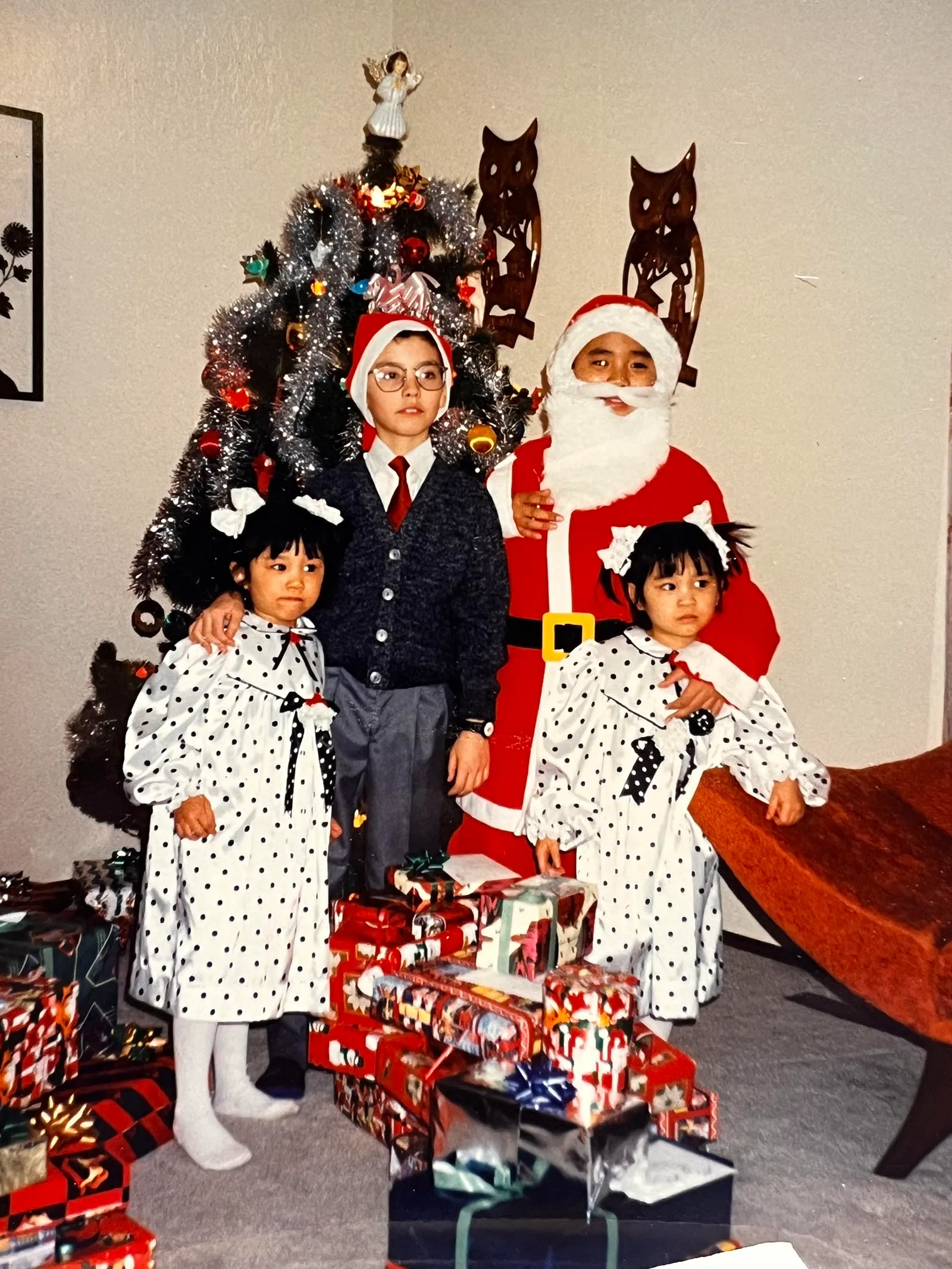
While he no longer observes any formal family traditions, the season has taken on new meaning. “I’ve learned to rediscover Christmas through kids like my nieces and nephews,” he shares. “Experiencing the season through younger eyes, wide with wonder, reminds me that joy is a practice, and it keeps all of us young at heart.”
Vania Romoff
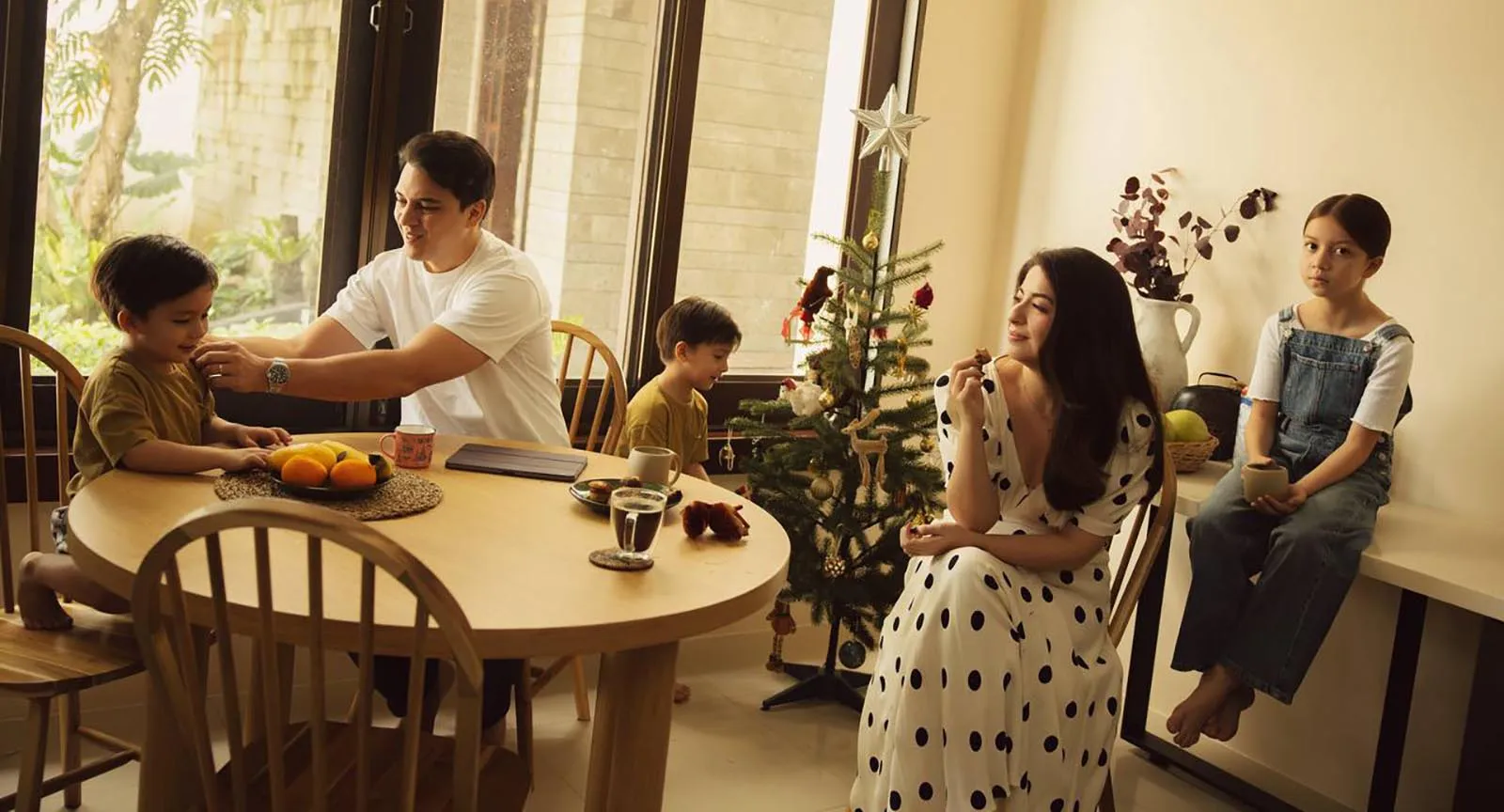
For designer Vania Romoff, Noche Buena is anchored in a single centerpiece. “For Noche Buena, it’s always lechon,” she says. Growing up in Cebu, it was “a family staple during every celebration,” one that she has carried with her and now enjoys with her own family in Manila. Alongside it is a more recent tradition. “We bake Christmas cookies, Guetzli, a tradition from my husband, who is Swiss-Filipino,” Romoff shares.
Fed Pua
In contrast, Atomic World’s Fed Pua describes Noche Buena as deliberately understated. “My family’s Noche Buena is a really small affair, it’s just us,” Pua says, noting how different it is from the large Filipino gatherings many expect. Their choice of meal reflects that simplicity. “This might sound really odd, but we usually order Japanese takeout. It’s our collective comfort food.”
Martin Bautista
For Martin Bautista, the Noche Buena table reflects a personal sense of comfort. “Hot chocolate and fruit salad,” Bautista says simply, admitting he would “normally skip the savory ones.” Family structure shapes his holiday season. “It’s always been with my father’s side during Christmas Eve, and with my mother’s side on Christmas Day,” he shares. More than food or the schedule, however, it’s the pause that makes Noche Buena meaningful. “Just the idea of being with your loved ones, taking a pause from everything that’s happening around,” Bautista reflects. “I think that is so special.”
Frequently Asked Questions
Noche Buena, meaning “good night,” is a Filipino Christmas Eve tradition held after Misa de Gallo on December 24, arriving through Spanish colonial rule. It is a midnight meal marking the end of fasting, traditionally featuring lechon, sweet spaghetti, ham, and queso de bola.
Jodee Aguillon’s Filipino-Canadian upbringing blended lechon with turkey and leche flan with Nanaimo bars, with sweet Filipino spaghetti as the constant. He now finds new meaning in the season by experiencing it through his nieces and nephews.
Vania Romoff’s Noche Buena centers on lechon, a tradition from her upbringing in Cebu. She has also added Guetzli, Swiss Christmas cookies, a tradition brought by her Swiss-Filipino husband.
Fed Pua keeps Noche Buena small and understated, celebrating with immediate family only. Rather than traditional Filipino dishes, they order Japanese takeout, describing it as their collective comfort food.
Martin Bautista favors hot chocolate and fruit salad for Noche Buena, typically skipping savory dishes. His holidays are split between his father’s side on Christmas Eve and his mother’s side on Christmas Day, with togetherness as the season’s central meaning.