
Where the Soul Meets the Sea: Tao Philippines and the Power of Regenerative Travel


Photographed by Katherine Jack
Celebrating 20 years of regenerative travel, Tao Philippines is a portal to another world, where sea, soul and your liberated self reside.
This is a story about connection: to the sea, to culture, to people and community, to regenerative ways of living and growing food, to natural design and architecture, to dogs, to nature, to our true selves.
The ocean breathes and enters our dreams and our bodies through breath and sound. We rest between the forest and the sea. As we sleep, our cells heal and regenerate. We sleep in a bamboo hut in the wilderness of Palawan, a curtain in place of a door, a mosquito net over our mattress, protecting us like jungle armor. The forest creatures around us carry on. A bat flying so close, we feel the breeze of its wings. An owl gently lulling us to sleep with his song: “Wooh.” Like a lullaby.
We wake having earthed all night, absorbing the grounding energies of Mother Earth. Senses and physical body refreshed by the sound of waves and by the negative ions scattered by the movement of those waves. Cool northeast monsoon winds flow through the open window right over the tops of our heads.
Our faces are full from a night of restorative sleep. But we cannot tell because there are no mirrors in the bathrooms. That is part of the liberation. Not constantly seeing and checking our faces.
We walk through a portal created by an old kapok tree with glossy red leaves. We take in the vastness of the sea and the sky, both pink from sunrise, like the sand beneath our feet. Our bodies and nervous systems feel regulated, safe, rested.
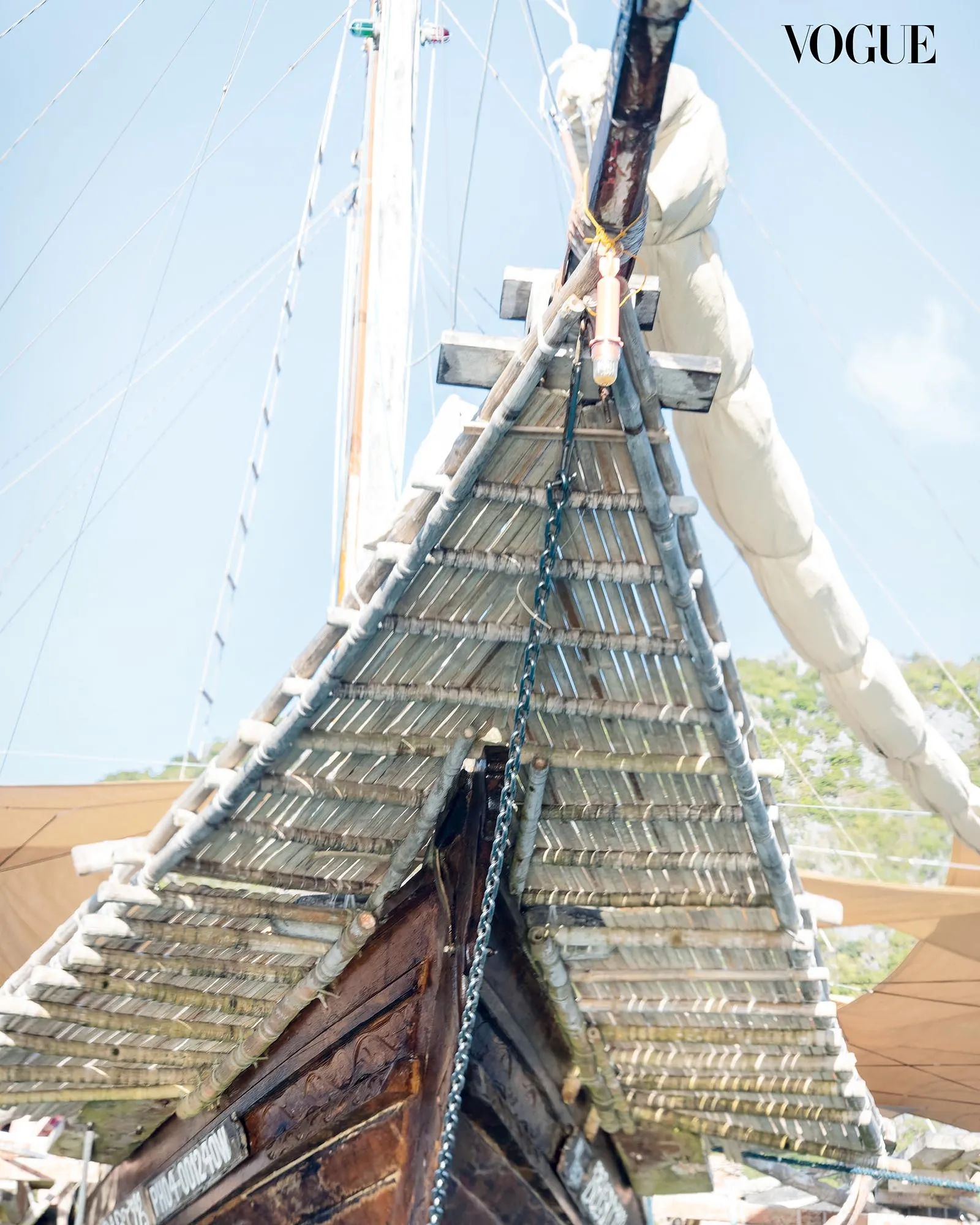
In this place, we shed stress. Disrobing quite literally because we are half naked in swimsuits most of the day. And disrobing figuratively as we shed our city selves, the selves that arrived with us from the busyness of our daily lives and the demands of work in the city. We witness the slow unfurling of our island selves. From living in air-conditioned glass and concrete boxes, we wake up in a swirl of fresh forest and sea air inside our simple and glorious tuka, our one-room bamboo home shaped like the beak of a bird, with arches like a cathedral.
This is where we learn that one needs very little to be happy. We pack for all possible scenarios. We realize we need so little. The luxury is access to nature in a safe setting.
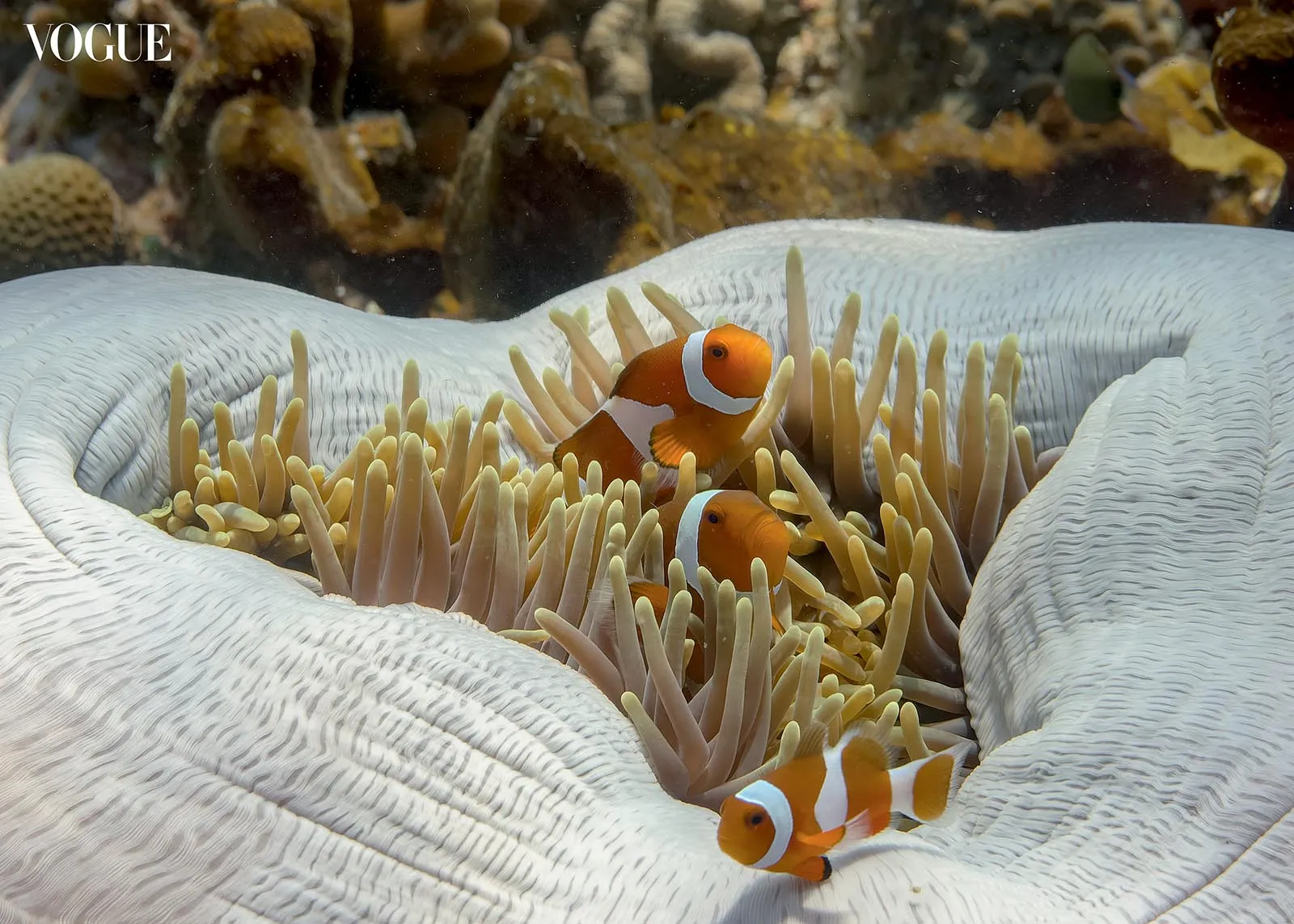
We will look back at this time as the year we chose freedom. Living in a permaculture farm by the sea. Starting our days with swims in the sea. Knowing the reef like a neighborhood. Recognizing the coral formations and the fish who live in them.
My husband Leon and I fall in love all over again. We hold hands while snorkeling. We work out together in a jungle gym. We go for long family swims with our teenage daughter Uma. We swim from the beach to the boats anchored far from shore. This practice makes us physically stronger every day. At first we swim just a few meters. Eventually we make it farther and farther out. At night I wipe the sand off my husband’s feet with a towel, rinsing the towel in a bucket of water, so he does not track sand into our bed. He loves this ritual.
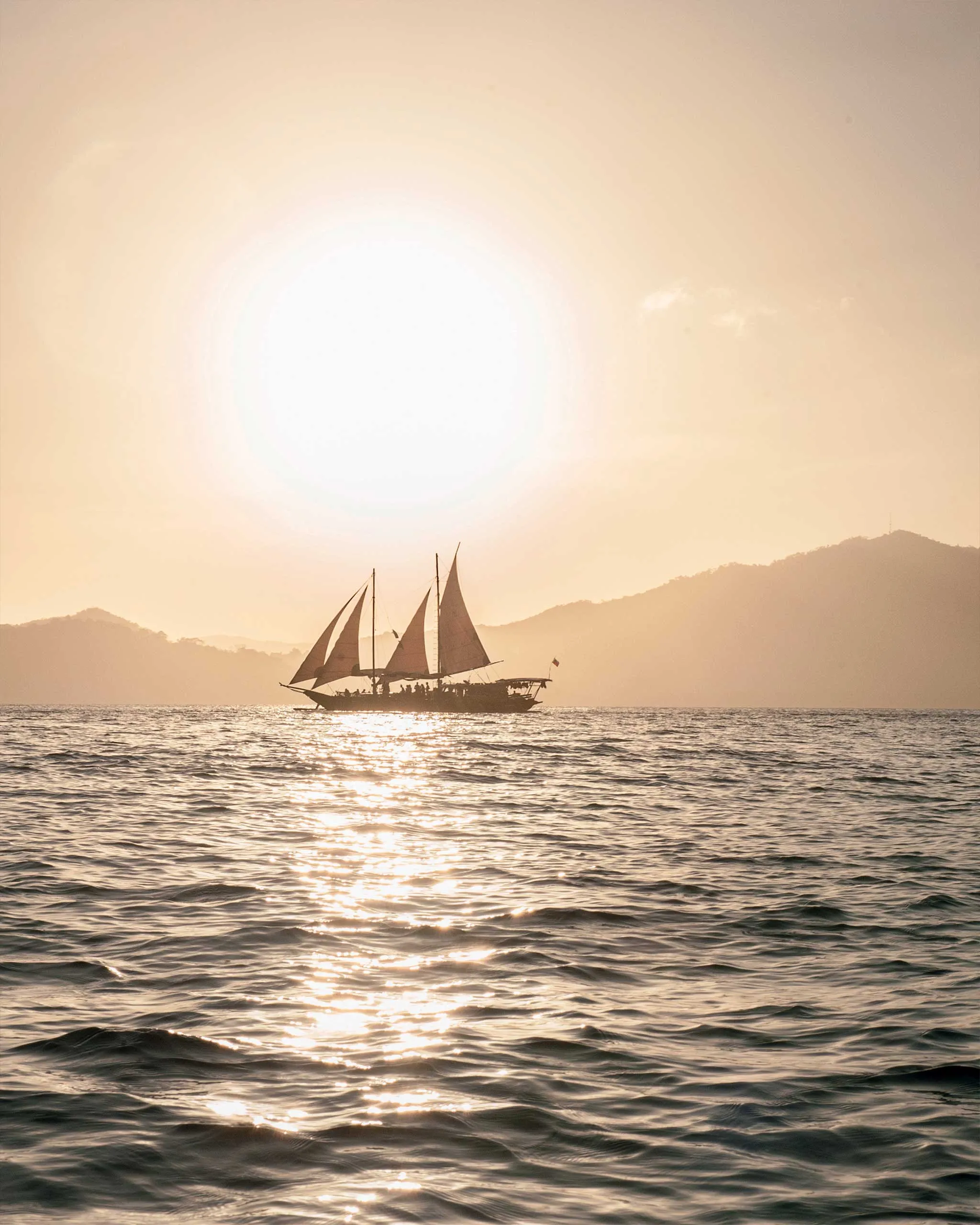
The Balatik, named after Orion’s Belt, is the vessel that carries us into this life. A one-of-a-kind paraw inspired by the designs of boats that transported Filipinos between our islands one thousand years ago. The man who had the vision to build this sailboat calls it “a collaboration between tradition, my imagination and the men who helped me build it.” Gener Paduga and his wife Katherine Jack, a fine art photographer and marine activist, become two of our closest friends on the island.
“This story won’t be complete without the Lost Boys and the vision of Tao founder Eddie Agamos. Tao means human being in Filipino. And Eddie believes in the best of the Filipino.”
Early mornings we run barefoot on the shore. Wind on face. Toes in sand. Feeling free. Some mornings we walk through the permaculture food forest of cashew trees, coconut, pineapple and wild passionfruit. We admire the branches of the mother mango tree as we make our way to the food gardens with rows of kalamansi trees and indigenous vegetables like talinum and talbos ng kamote.
This is the main basecamp of Tao Philippines, where we spend 12 months during the pandemic, three hours by boat, or an hour’s drive from the town of El Nido. We live between two fishing villages on the mainland of northern Palawan. Getting to know Ann, the head chef of Tao, and her children, as family. Getting to know the women who are part of the Tao Women’s Association and the Tao Kalahi Foundation, which give livelihood to eighty women who are the breadwinners of their families.
At 15, Uma starts a social enterprise with the women sewers of Tao so they can keep earning during the pandemic, in spite of the complete tourism shutdown. They sew repurposed flour sacks into bags just like they do for the guests of Tao. But this time, they fashion them into pouches and sling bags which Uma designs with pockets and strips of ikat weaves by the women of Rurungan sa Tubod Foundation, and with fabric from ukay-ukayUkay-UkayA Filipino term for secondhand clothing and thrift shopping, often sold in bundles at markets and shops. Ukay-ukay lets shoppers find unique, vintage, and designer pieces at accessible prices, andGo to Ukay-Ukay Glossary shops selling pre-loved clothing.
In the Tao kitchen, our favorite dishes are mung bean curry, kilawin, banana heart patties, green papaya spring rolls and grilled fish with the most Pinoy sawsawan, house-made cashew vinegar with chopped red onions, a bit of garlic and kalamansi. Or a dipping sauce of soy sauce, kalamansi and red chili peppers.
This story won’t be complete without the Lost Boys and the vision of Tao founder Eddie Agamos. Tao means human being in Filipino. And Eddie believes in the best of the Filipino. Having grown up in the mountains of the Cordillera, between Bauko and Baguio, he was raised by his mother Aurora and his grandmother Abalao. His lola took him to rituals of the ancient Cordillera culture. This exposed him to the power of having a strong community. At 17, he studied engineering in the UK, supported by his aunt. By 18, he was independent, sending money home from his work organizing parties in the underground party scene. At 25, he started Tao in Palawan with enough savings to build a boat.
Recruiting island boys to crew their boat for remote island expeditions, he began by offering home stays, and eventually invested in building sustainable bamboo structures with his architect co-founder Jack Foottit. The Lost Boys, as the crew are called, always have a dash of playfulness just like the boys they are named after in the story of Peter Pan.
Tao is where we have seen some of the most empowered Filipino men: happy, healthy and strong. They cook feasts in tiny boat kitchens and do back flips into the sea.
With Eddie and Jack as leaders, the Tao experience is about connection to the people of the island. Tao creates learning and earning opportunities for islanders, teaching women how to make vinegars for their kitchens, and natural soaps and shampoos for their guests, gifting villagers with piglets and buying pork from them, buying vegetables and fish from small-scale suppliers and building relationships with them, rather than buying from big traders.
Eddie and Jack embody effortless style. They bring a keen sense of design and aesthetics to the Tao basecamps. You get to appreciate natural architecture that breathes. You get to experience the off grid life in the most stylish yet unpretentious way possible.
All the while witnessing the joy of life with dogs. Every Tao boat has a dog on board. Often a Jack Russell, sometimes an Aspin pup (short for Asong Pinoy or street dog), sometimes a mix of both, like Momo, also known as the chief pirate dog of the Balatik. The dogs are like animal therapists and teachers who remind us to live in the moment. We realize the dogs are free and living their best lives We can be free, too, if we allow ourselves to live in the moment.
During our time in Tao, we befriend a Rottie Lab named Dexter, son of Max, who is Jack and Eddie’s black Lab and Laila, their Rottweiler. Dex begins sleeping under Uma’s tuka. They go kayaking and paddle boarding together. He joins us on our family swims. He is an animal therapist, a natural part of our healing.
The Tao experience connects us back to nature and back to our true selves. On the Balatik, wind in our faces, we reconnect back to our sea voyager selves. One sunset on the Balatik, we go for a swim. We emerge from the water to see that the ocean is lilac and gold, reflecting the sky, and the Balatik is reflecting on the water, reminding us of the wisdom of our ancestors.
There is nothing between us and the sea. Nothing between us and our ancestors, the heavens and the earth, the stars, sky, the mountains. We are one with creation. As we stand up from the water, we see that the sea is like a mirror reflecting this oneness and direct connection to the wisdom of our ancestors. What the mirror is reflecting is that we are part of nature.
And that is the story of Tao. Reconnecting to the wisdom of our ancestors, our culture, our heritage and how we arrive at this remembering through living in nature. Remembering to take care of the earth so the earth can take care of us.
Frequently Asked Questions
Tao Philippines is a regenerative travel experience based in northern Palawan, founded 20 years ago by Eddie Agamos. It offers off-grid island expeditions using traditional paraw sailboats, bamboo accommodations, and permaculture farming, connecting guests with local communities and culture.
Eddie Agamos, raised in the Cordillera region between Bauko and Baguio, founded Tao Philippines at age 25 with savings from organizing underground parties in the UK. He built the company with architect co-founder Jack Foottit, emphasizing sustainable bamboo structures and community-based tourism.
The Balatik is a one-of-a-kind paraw, a traditional Filipino sailboat, built by Gener Paduga and inspired by boat designs used to transport Filipinos between islands a thousand years ago. It is named after Orion’s Belt.
Tao Philippines supports island communities through the Tao Women’s Association and Tao Kalahi Foundation, providing livelihood to eighty women. The organization also buys food directly from small-scale local fishers and farmers rather than large traders.
A tuka is a one-room bamboo home shaped like a bird’s beak, used as guest accommodation at Tao Philippines’ basecamps in northern Palawan, designed with open, cathedral-like arches that connect guests directly to the surrounding natural environment.
- Peak Therapy: Romi Garduce on Conquering the Summit of the Self
- 124 Days and Counting: Photographer Raena Abella Travels the Philippines’ 7,641 Islands By Land
- ‘Nature Can’t Speak For Itself’: Ann And Billie Dumaliang On Tackling Climate And Environmental Work With Global Leaders
- Stephanie Kienle Gonzalez on Moving to South Africa and Finding Balance in Nature