
At the Helsinki Biennal, Geraldine Javier Eco-Prints Filipino Plants into a Gunpowder Magazine


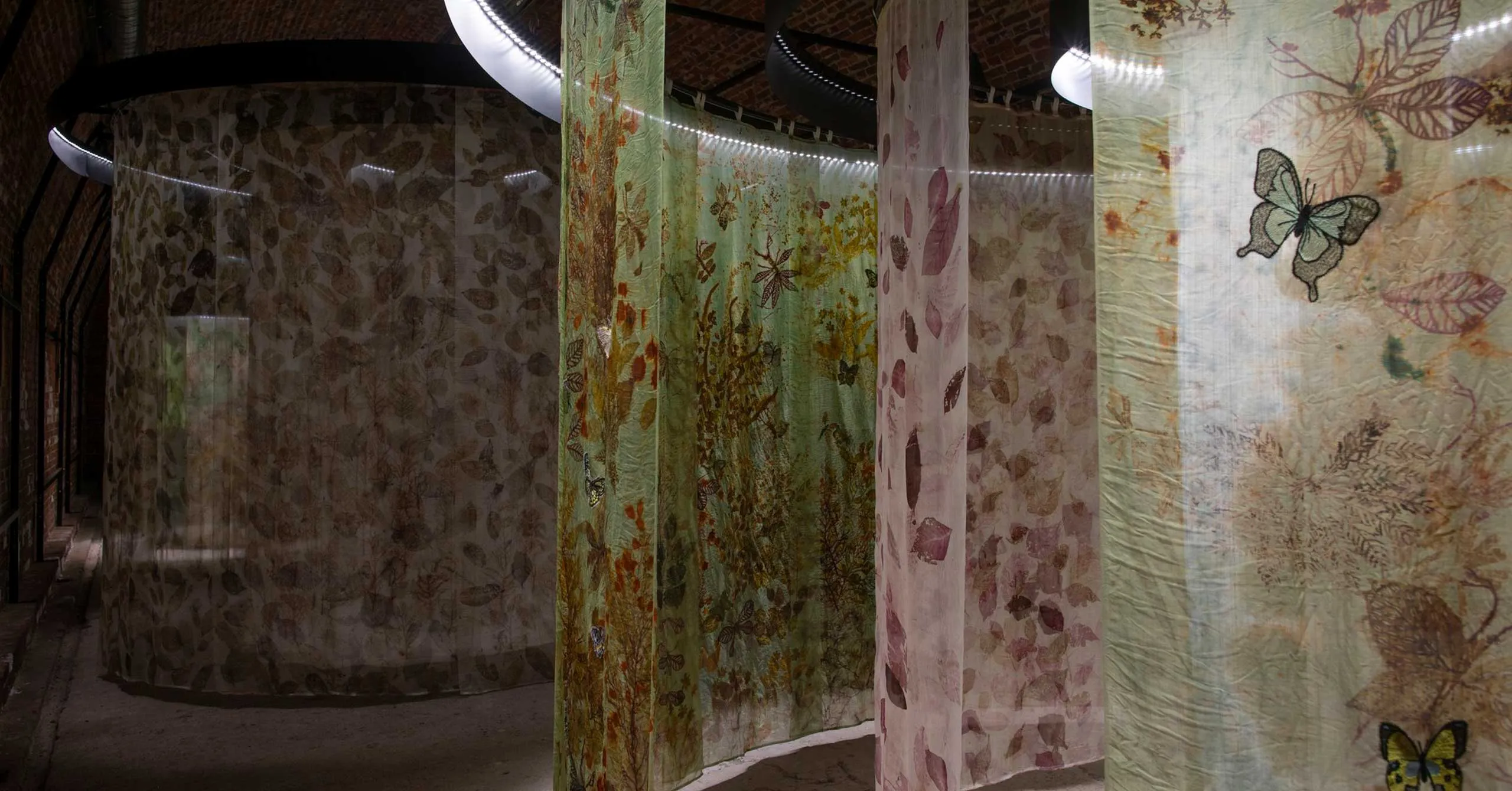
“Witness” by Geraldine Javier. Courtesy of Helsinki Biennal
Courtesy of Helsinki Biennal
For Filipino artist Geraldine Javier, plants have become more than inspirational source or materials for her art, they have also become a statement to push for ecological conservation.
An artist can choose to be optimistic or cynical, and a viewer can choose to operate with thoughtfulness or indifference. Often, humanity finds itself at a crossroads, especially in incredibly politically charged times. Amidst the debris of war, global turmoil, and climate change, art is one of the only aspects of life that never ceases to exist. There is much to be explored in how the environment shapes our inner and collective landscapes. In the case of Filipino artist Geraldine Javier, she uses art as a way to plant seeds of hope, transforming materials drawn from nature to respond to current ecological crises.
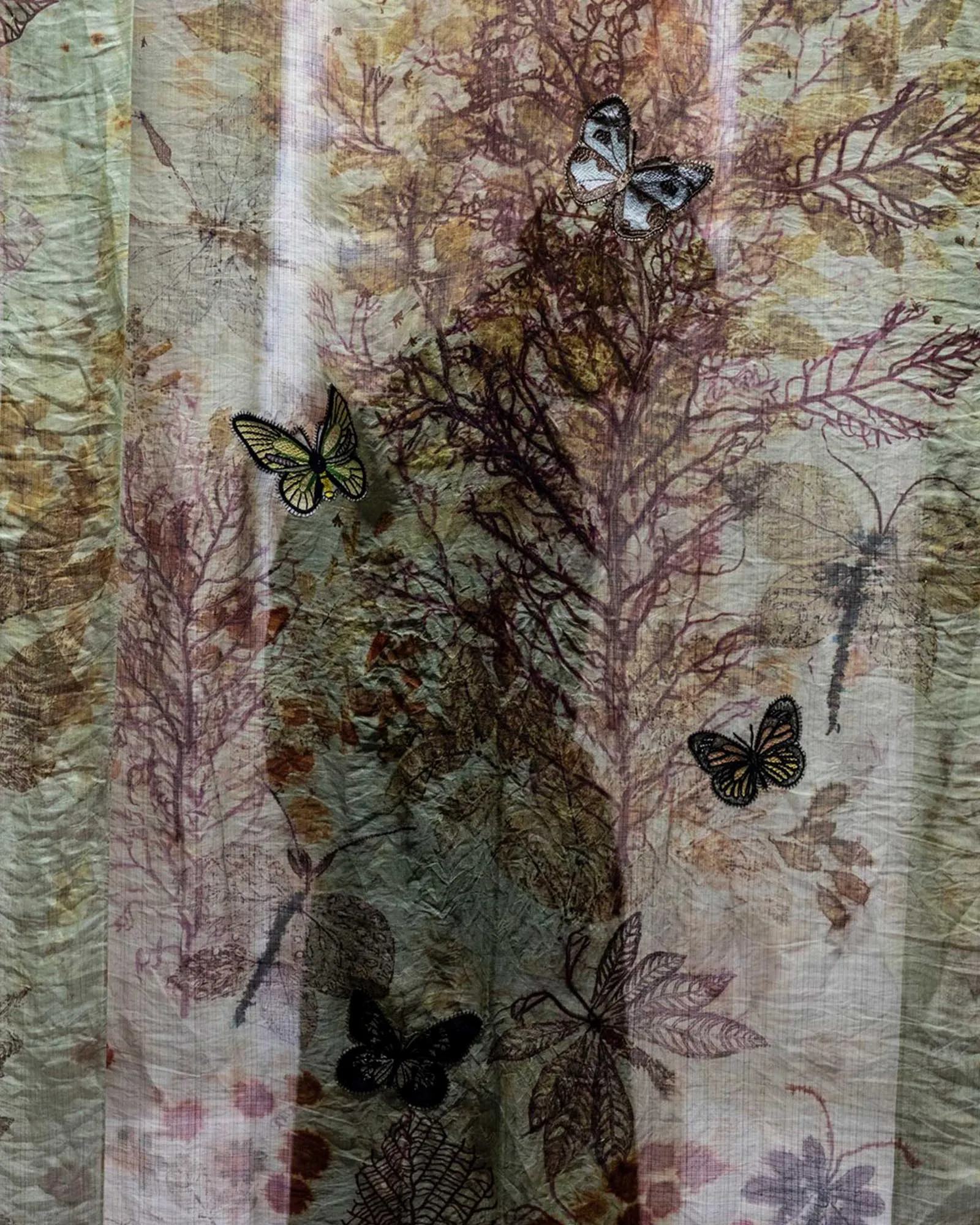
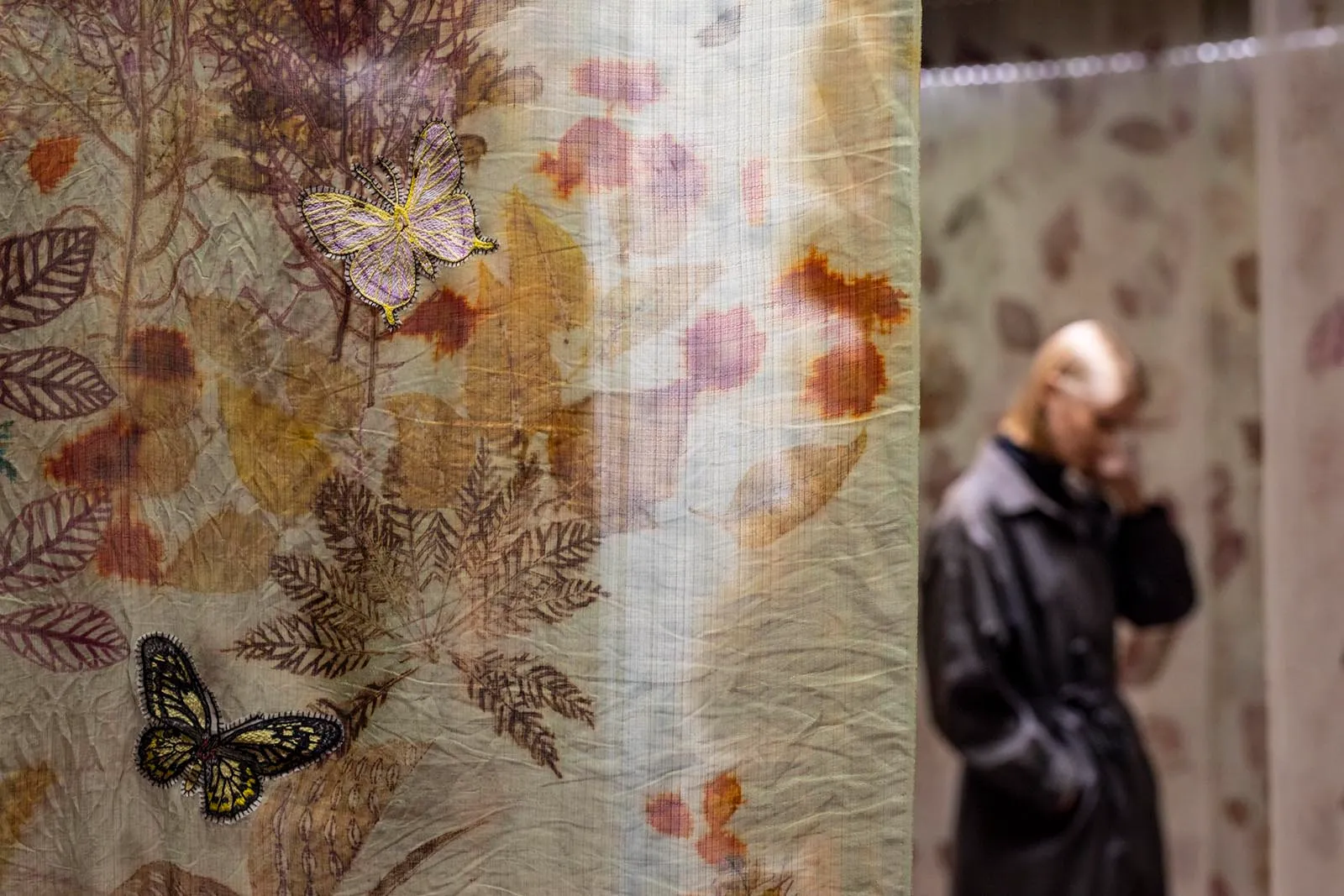
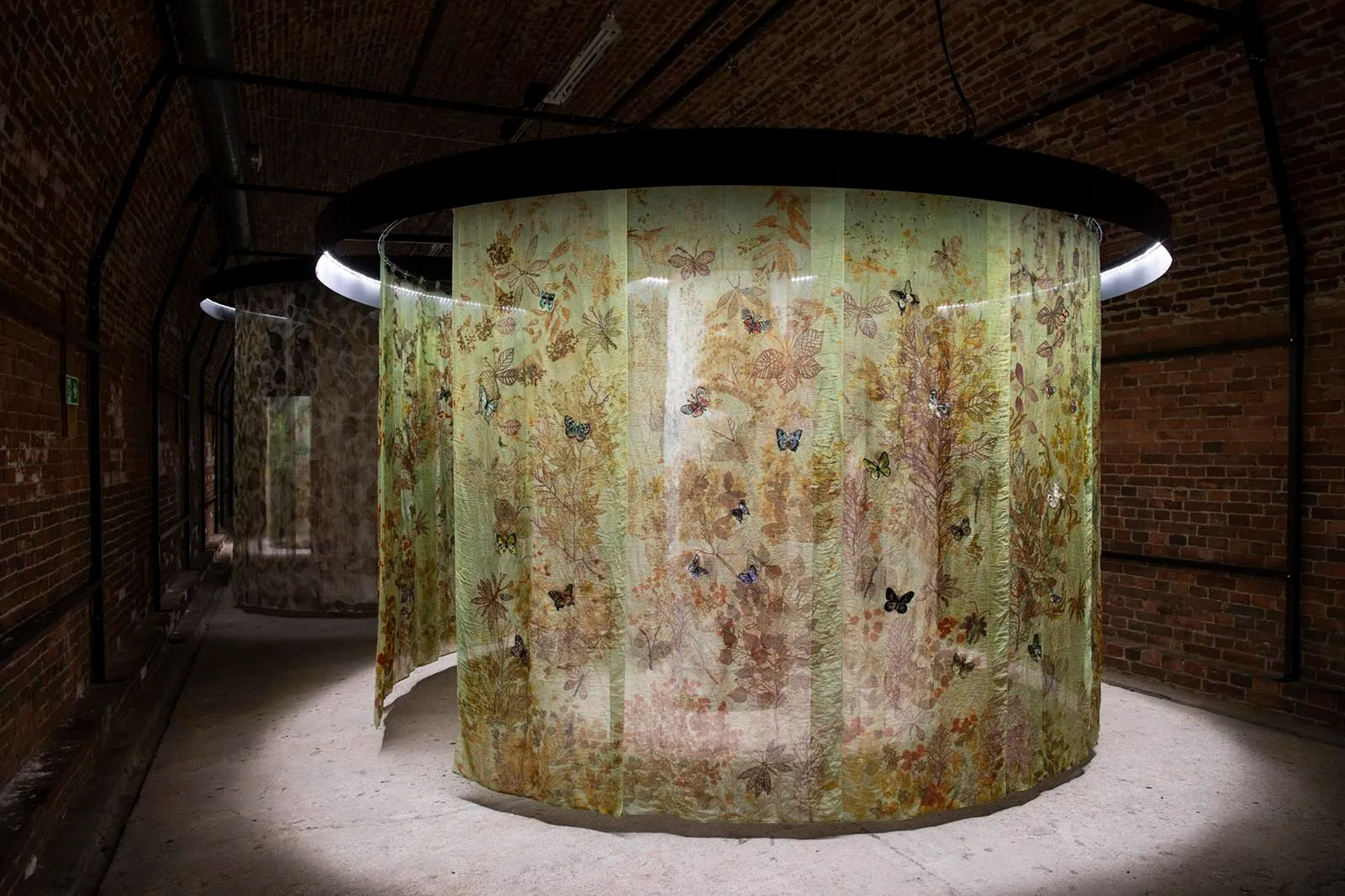
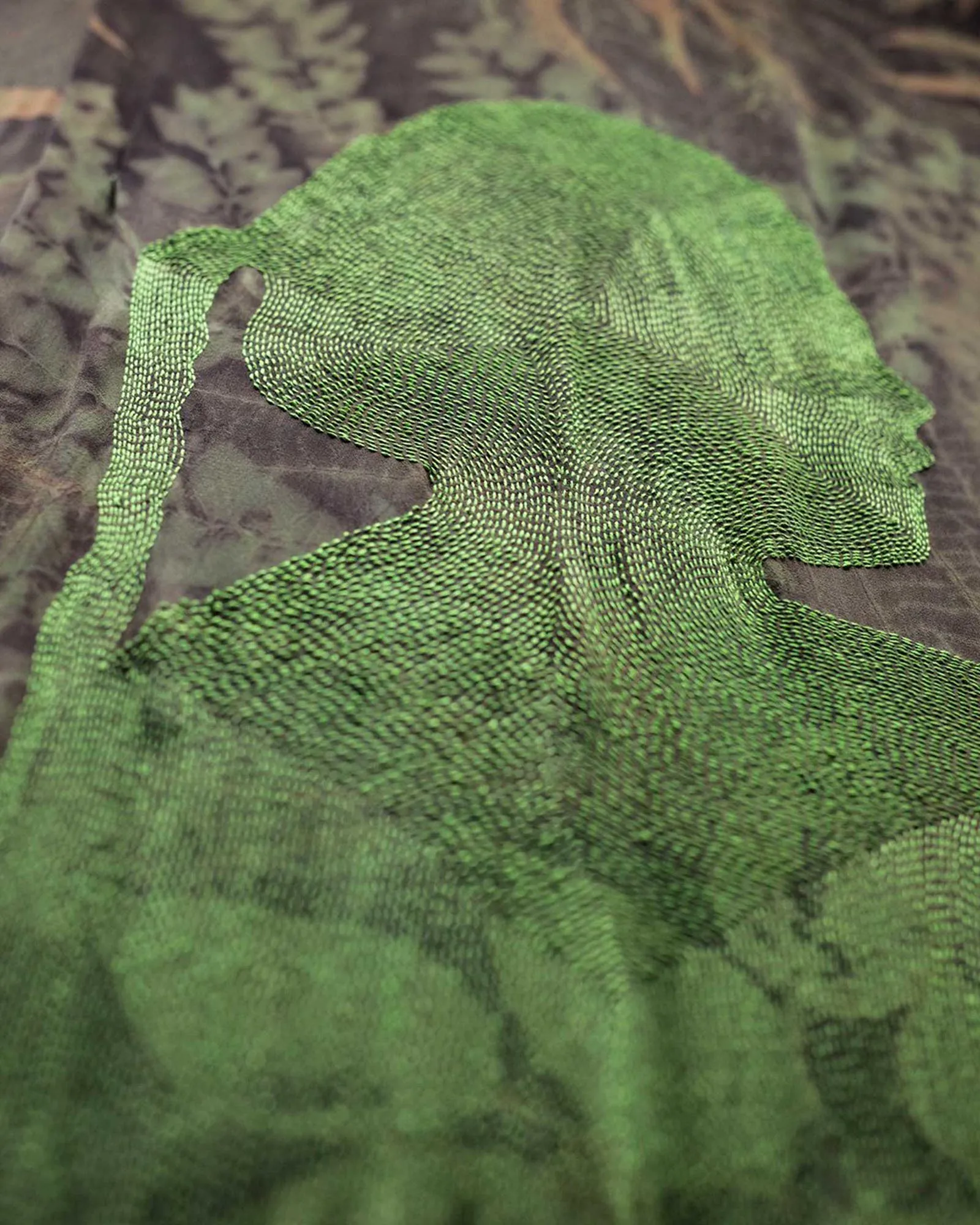
Javier presents two installations at the 2025 Helsinki Biennial, drawing from her deep connection to nature, community, and collaborative art-making. A former urban dweller who now lives in the countryside, Javier incorporates natural materials and sustainable farming practices into her creative process, working closely with workers in her local area. Her art explores adaptation, environmental change, and resilience through techniques like eco-printing, rusting, and embroidery. Eco-printing has become one of Javier’s most recognizable techniques. Through various methods such as hammering and steaming leaves, flowers, roots, and bark, Javier creates impressions of nature on fabric. All of the plants that she uses in her work are sourced from her own garden.
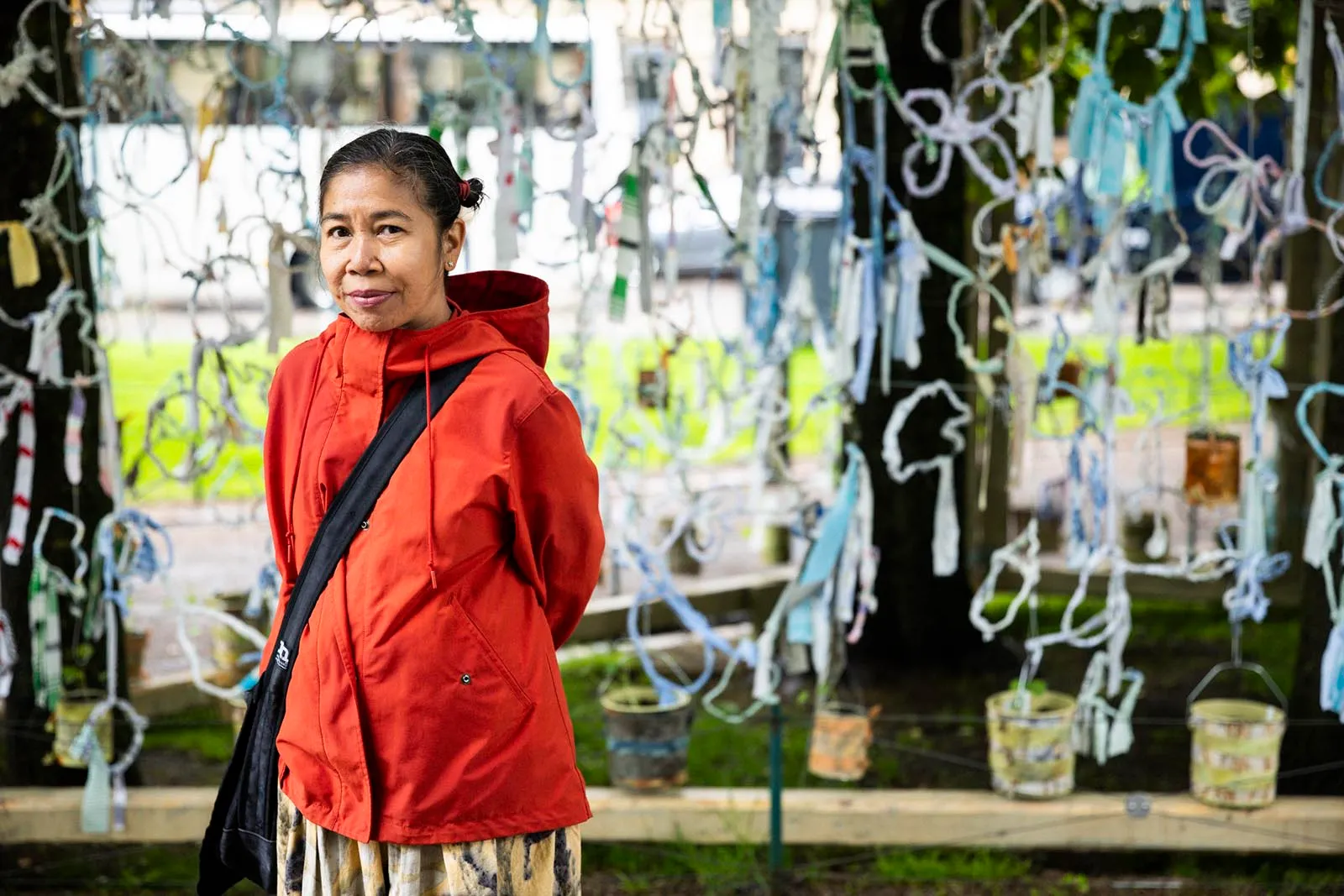
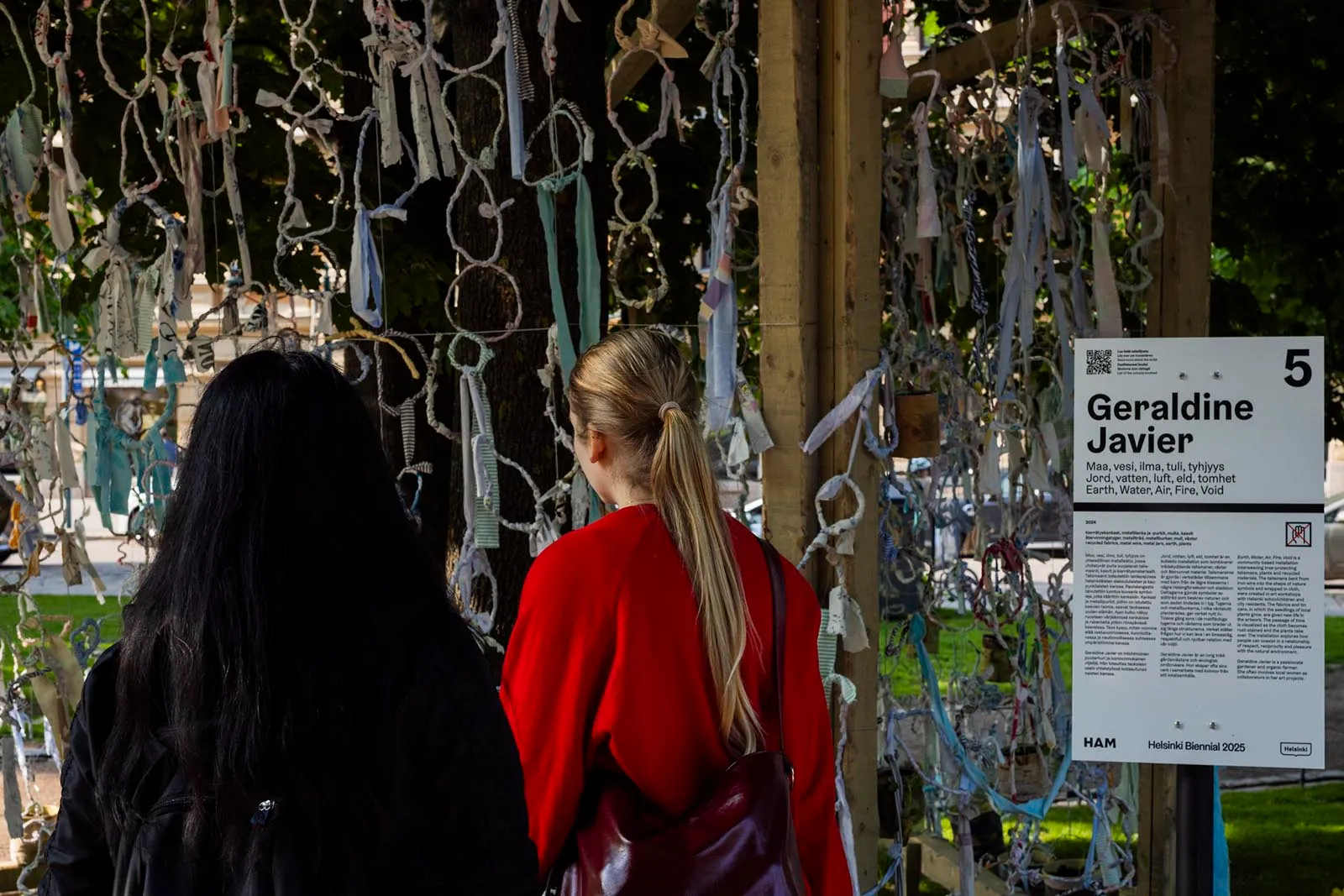
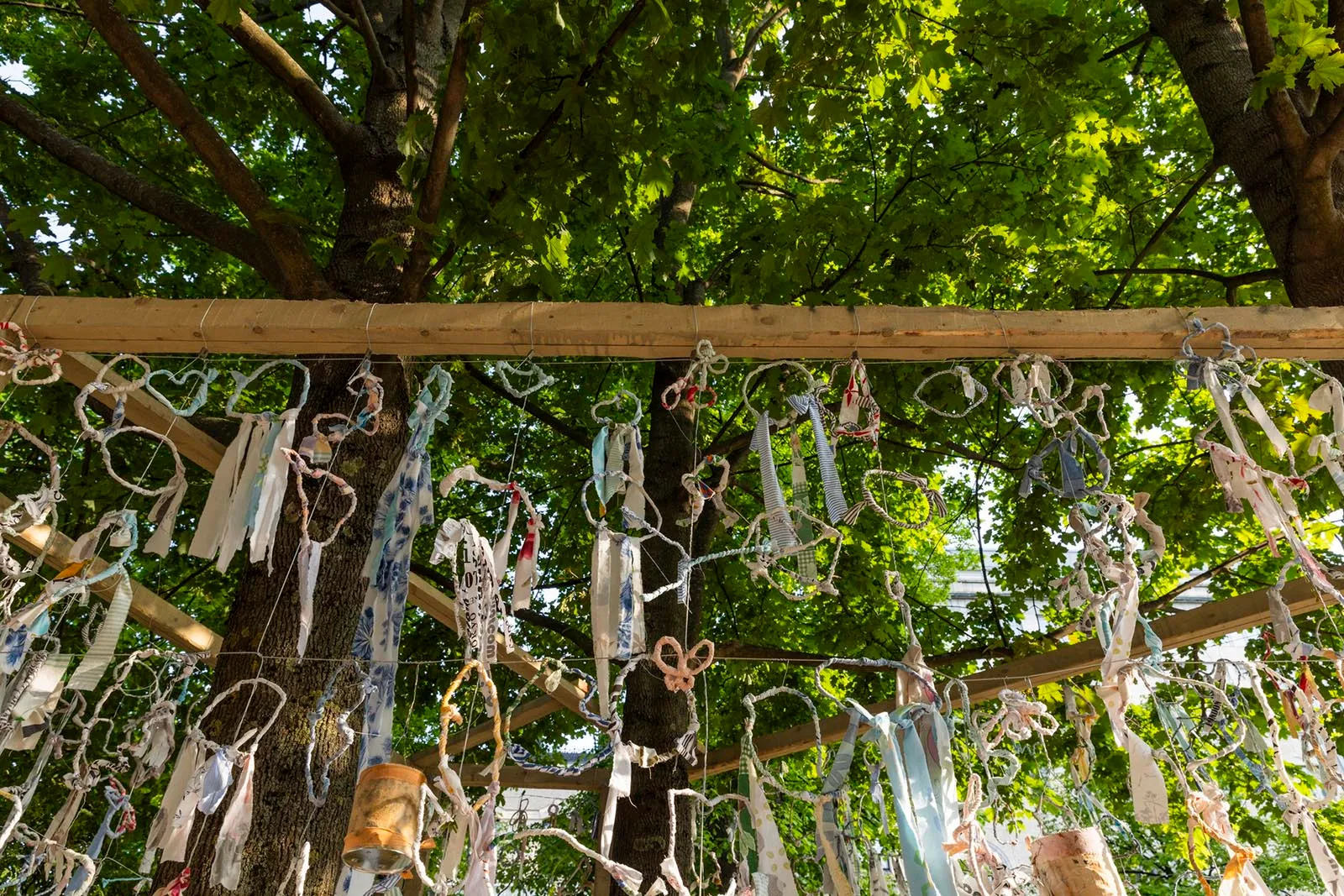
At Esplanade Park, Javier unveils “Earth, Water, Air, Fire, Void”, a community-driven installation made with local schoolchildren and residents. The piece features recycled materials, plant seedlings, and cloth-wrapped talismans shaped into nature symbols from both Finnish and Filipino cultures. As the materials age, rust stains the fabric and plants grow, marking the passage of time and highlighting themes of decay, renewal, and coexistence with nature.
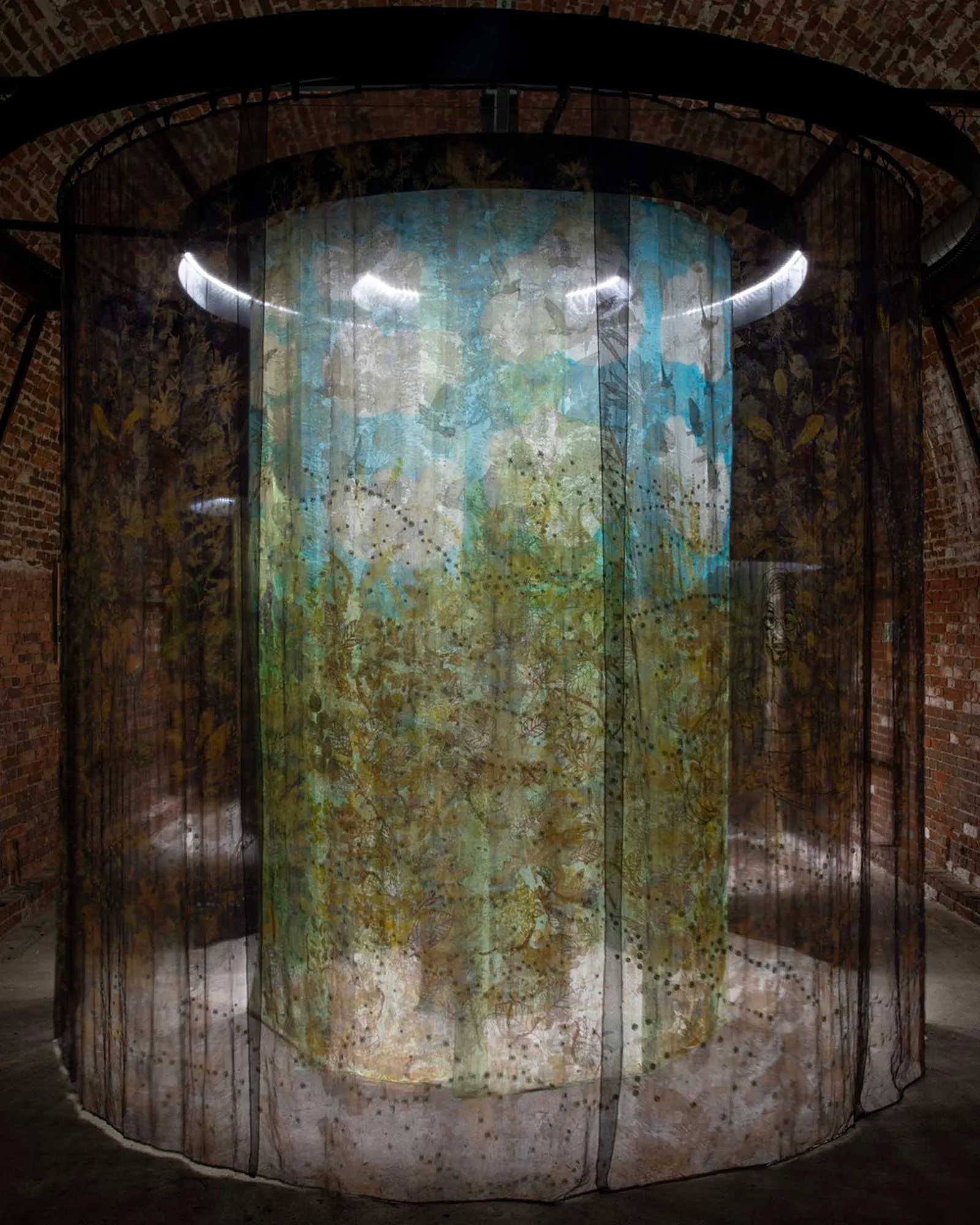
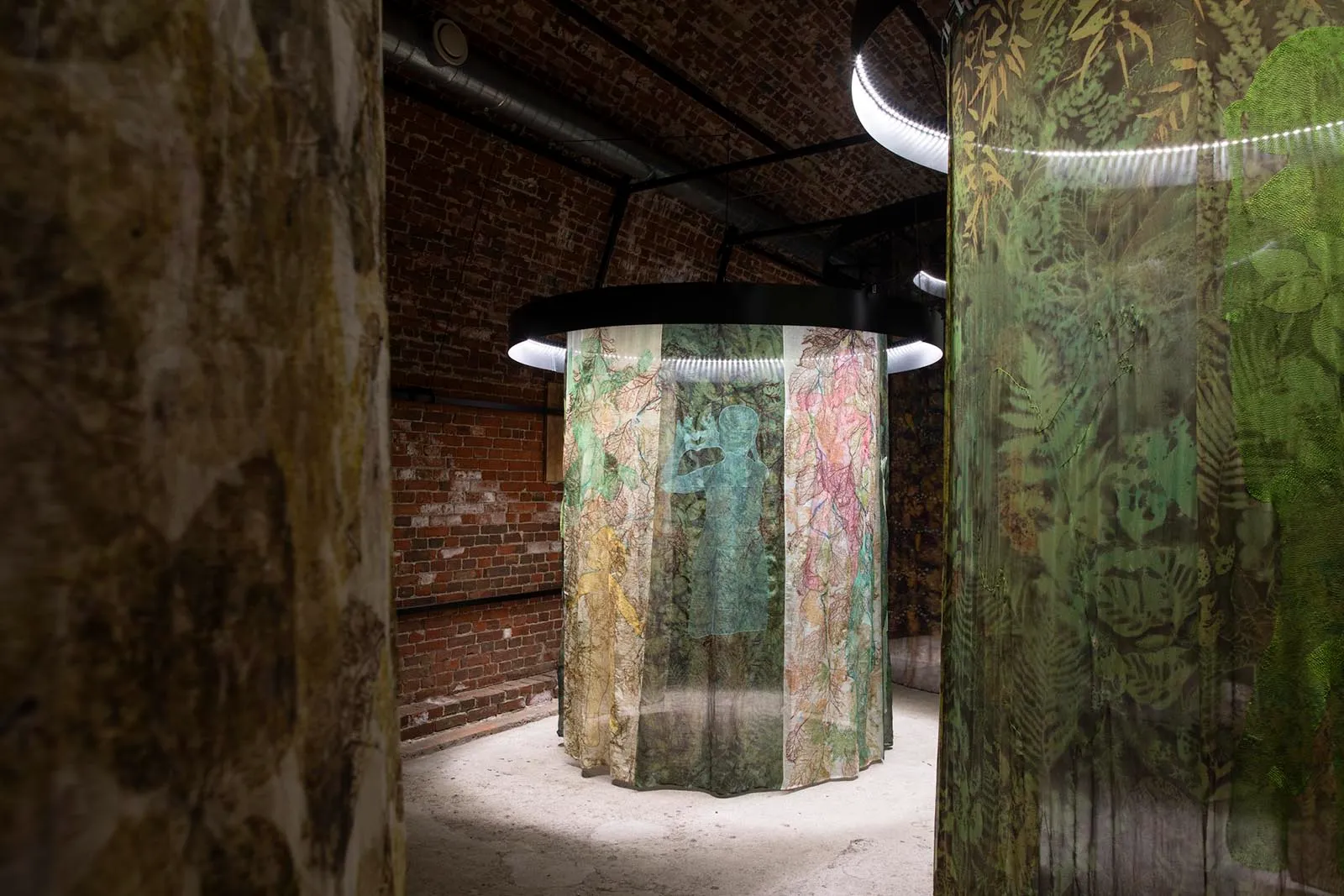
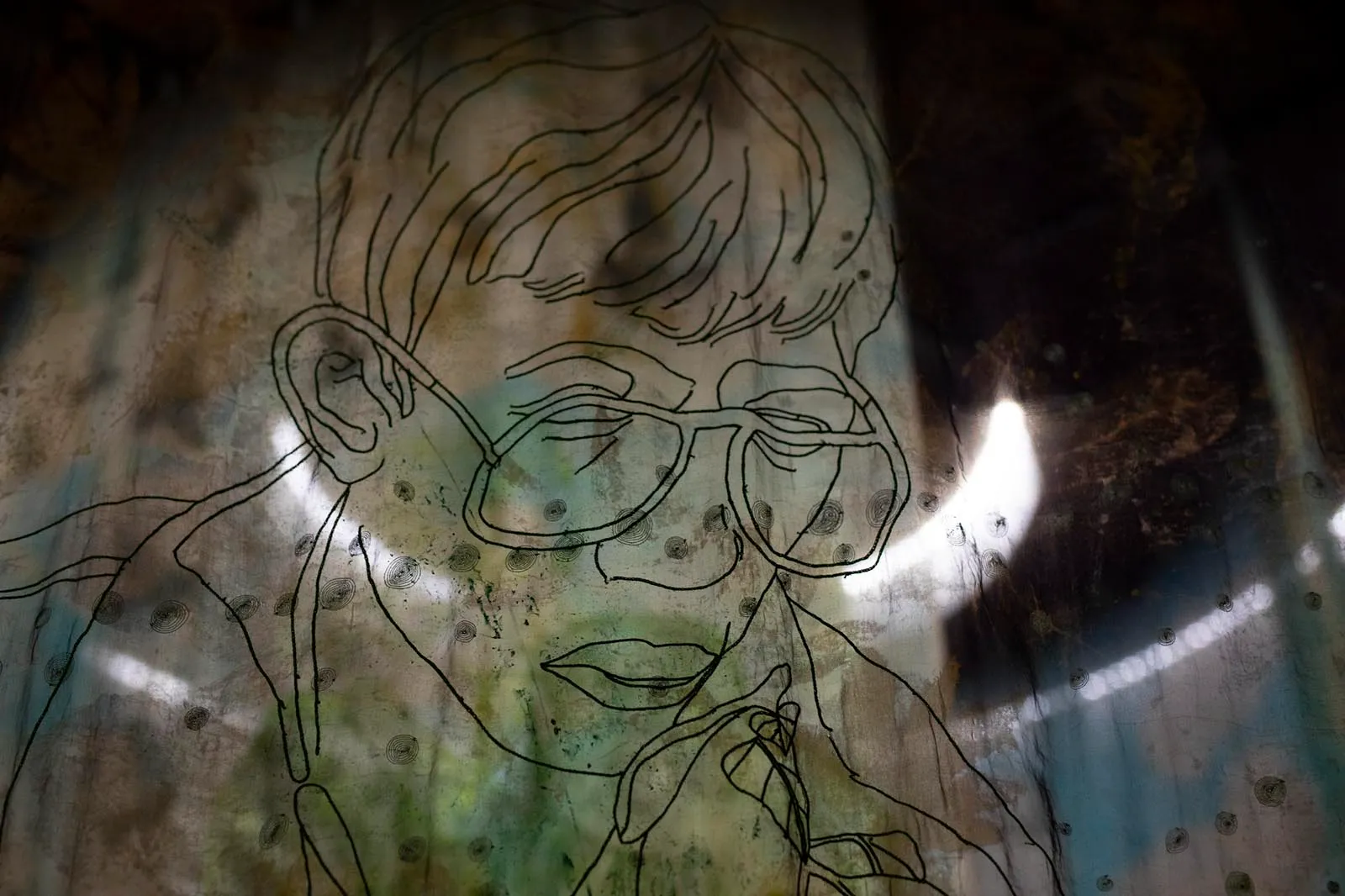
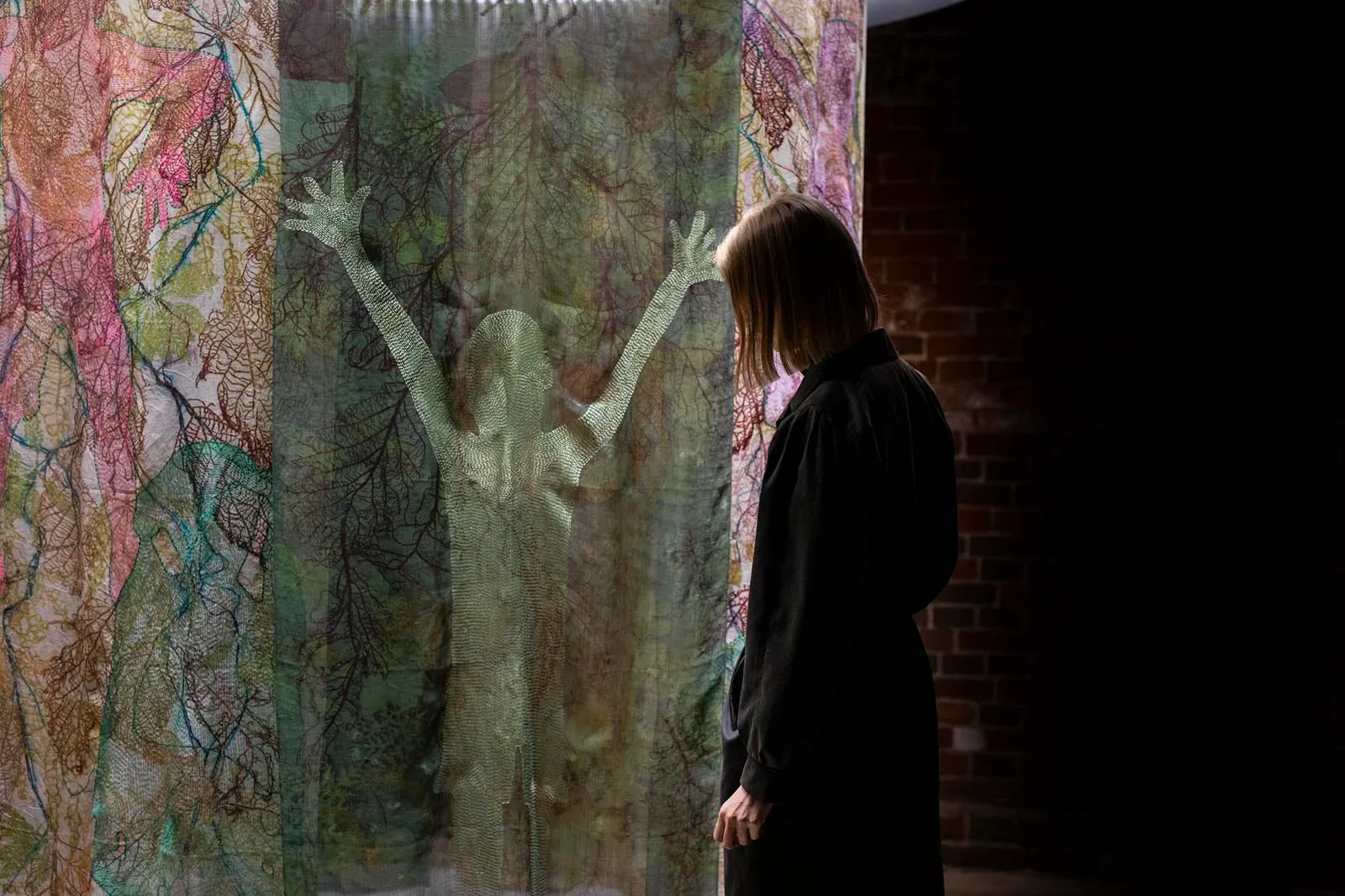
On Vallisaari Island, her work “Witness” features five eco-printed fabric columns displayed inside a former gunpowder magazine. Resembling trees, the columns evoke a speculative vision of futures shaped by climate change. In her statement for “Witness,” Javier calls the exhibition a ‘metaphorical rewilding.’ “To fill what was once a store for explosives not just with images of plants but their very sap is equivalent to beating swords into ploughshares,” she says. Familiar faces decorate the piece including environmentalist Jane Goodall, Filipino botanist Leonard Co, indigenous American botanist Robin Wall Kimmerer, among others.
The installations emphasize the importance of public art in fostering awareness and dialogue about ecological conservation. By placing art in accessible, outdoor settings, the Helsinki Biennal invites viewers of all backgrounds to engage with environmental issues directly, encouraging a more collective sense of responsibility and care for the natural world.
The Helsinki Biennial is an international art event that brings contemporary art into direct conversation with the natural environment. Now in its third edition, the 2025 biennial runs from June 8 to September 21 across Vallisaari Island, Esplanade Park, and the HAM Helsinki Art Museum. With its focus on site-specific works and ecological themes, the event offers a unique platform for artists like Javier to present thoughtful, place-sensitive responses to the global climate crisis.
-
 Courtesy of Helsinki Biennal1/8
 -
 Courtesy of Helsinki Biennal2/8
 -
 Courtesy of Helsinki Biennal3/8
 -
 Courtesy of Helsinki Biennal4/8
 -
 Courtesy of Helsinki Biennal5/8
 -
“To fill what was once a store for explosives not just with images of plants but their very sap is equivalent to beating swords into ploughshares,” she says. Courtesy of Helsinki Biennal6/8
-
 Courtesy of Helsinki Biennal7/8
 -
 Courtesy of Helsinki Biennal8/8