
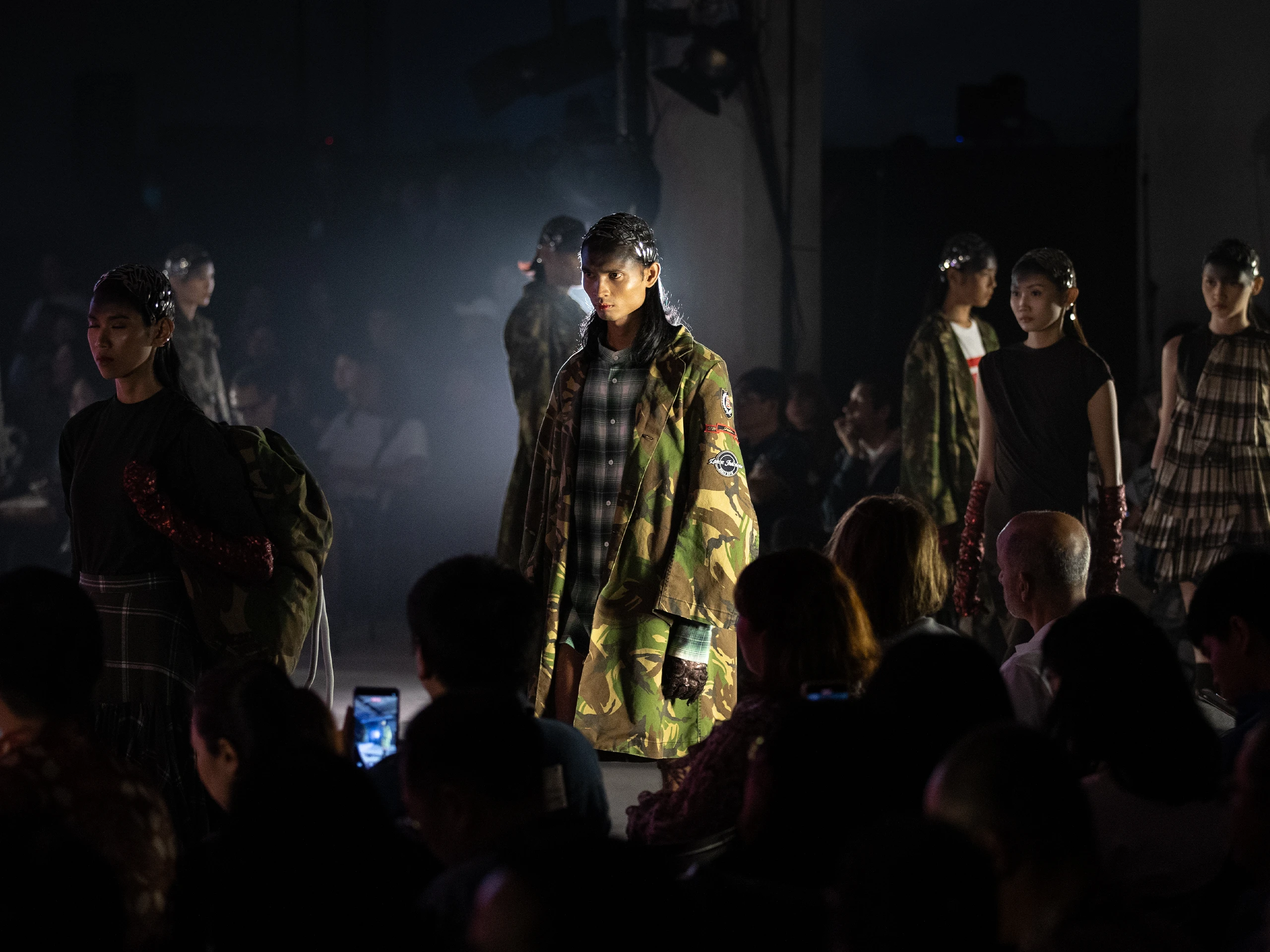
In Indonesia, the JF3 Fashion Festival has become a playground and platform for independent and emerging designers.
“There is a concern,” Thresia Mareta starts, “about culture.” The founder of LAKON Indonesia, a clothing brand and social enterprise dedicated to supporting local artisans and promoting their craft, Mareta is bent on preservation. And an archipelago like Indonesia, which comprises 300 ethnic groups and 1,340 tribes, each with its own fabric and technique tied to a unique identity, has plenty to protect.
But her definition of the word “preservation” is ultra-specific. Writing from the LAKON Indonesia website, she makes the distinction between preserving and archiving, with the latter meaning the passive act of keeping and recording. For her, to preserve goes beyond that; it means to evolve and to learn endlessly, to adapt and to grow. She continues, it’s about “how to pass [culture and tradition] on from generation to generation to keep identity alive.”
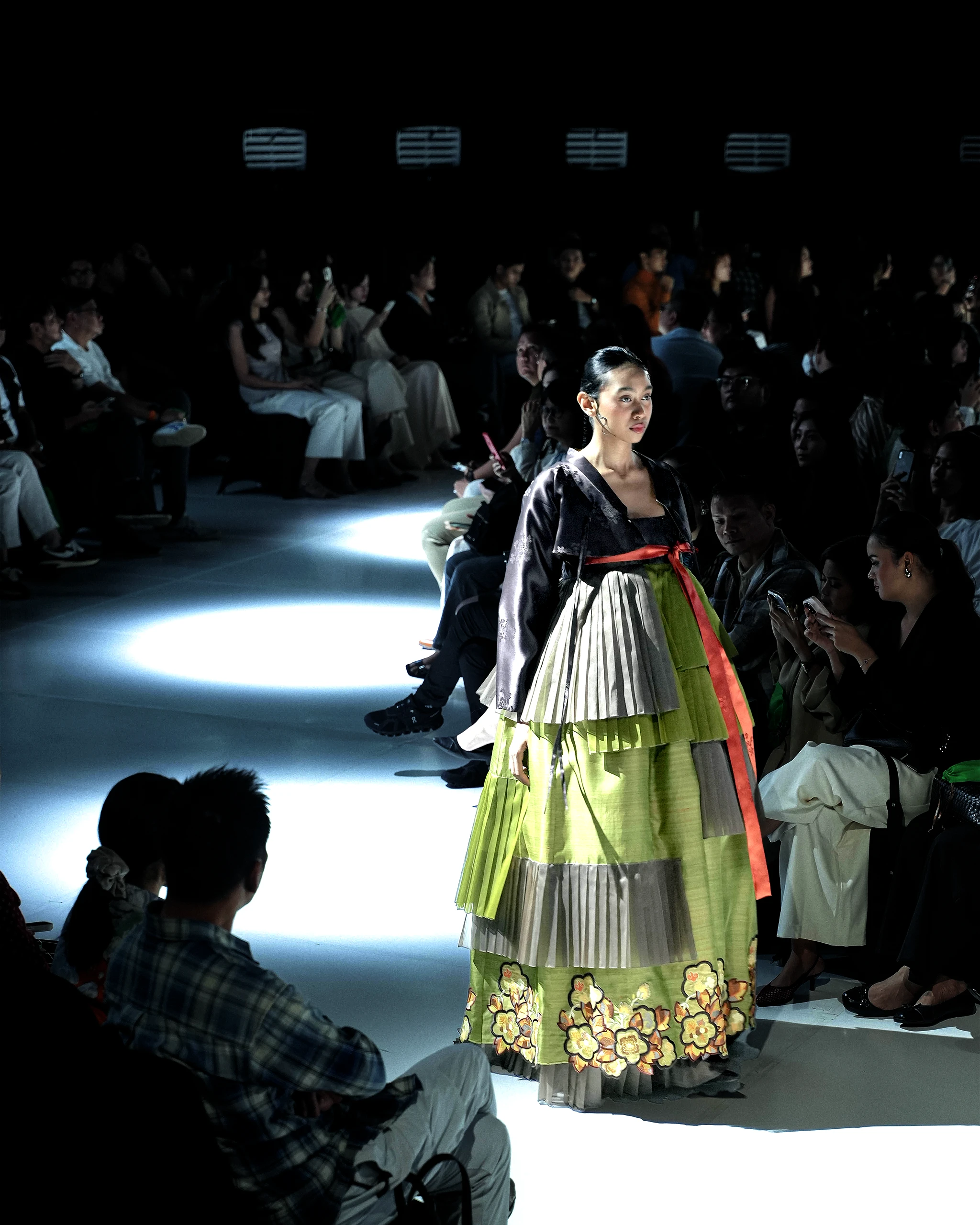
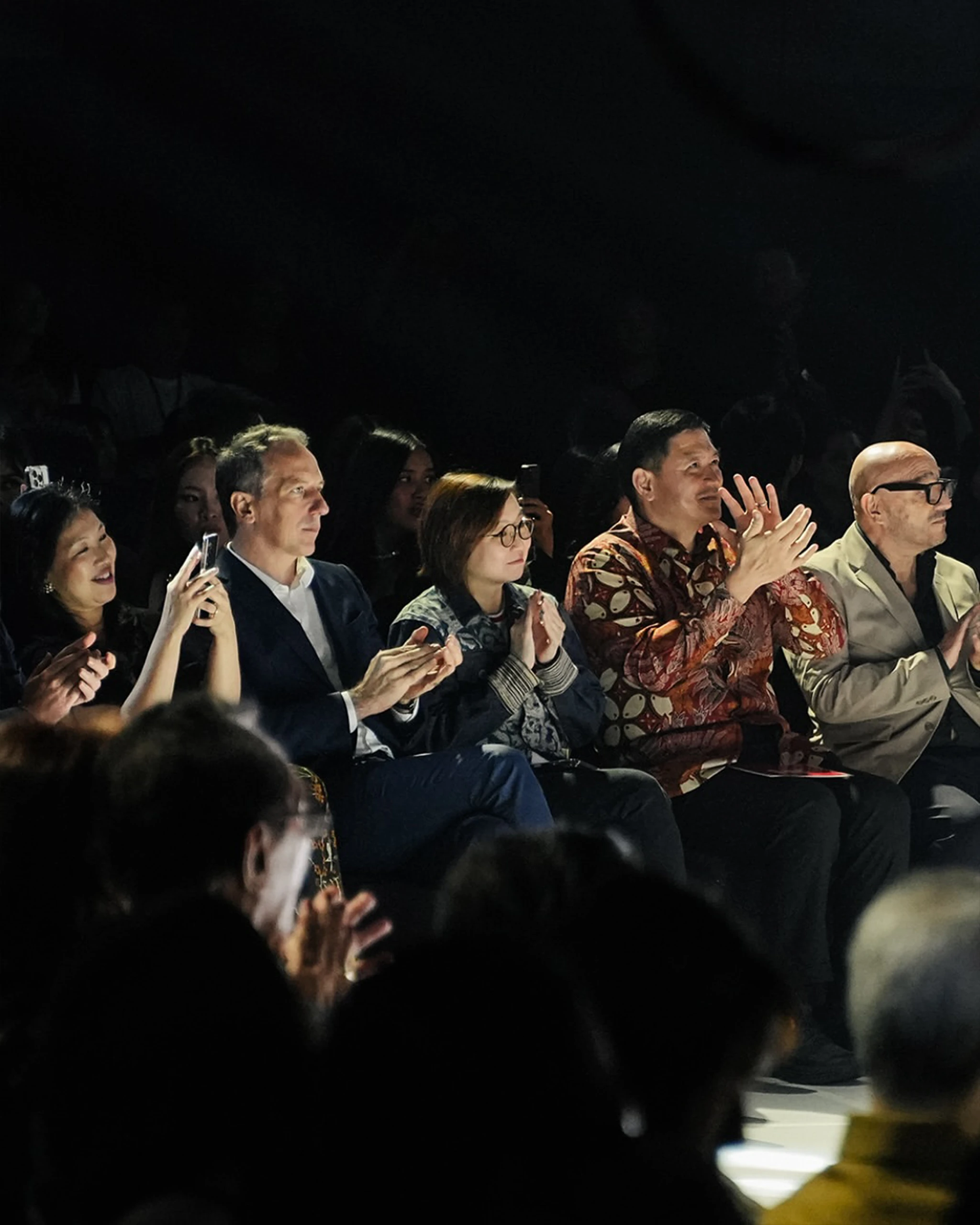
Mareta has also long been an advisor to JF3 Fashion Festival, which is held annually in Jakarta. Since 2004, the festival has been run on this same collective mindset. Today, it’s become a platform for local independent and emerging designers, connecting them with the broader network in international fashion.
JF3 chairman Soegianto Nagaria shared that, in its first decade, JF3 is rooted in all the creativity that was uniquely Indonesian: textiles, fashion, food, and entertainment. Later, from 2014 to 2023, they began honing in on innovation, nurturing young talent and fostering creative collaborations.
“Over the past two decades, JF3 has proven that when creativity is supported by a strong and structured foundation, it can create meaningful impact,”
Soegianto Nagaria
“With world-class facilities and retail connections through Summarecon Malls, JF3 offers real opportunities for brands and designers who are ready to meet global standards.”
Since last year, they’ve begun embarking on their new vision for JF3, centered on the idea of “recrafting.” For Mareta and Nagaria, to recraft isn’t to rewrite Indonesia’s visual past but “a call to action,” Mareta clarifies, “to take bold new steps forward.” Now in its 21st year, their 2025 edition, themed “Recrafted: A New Vision,” introduced collections that used traditional craft as a starting point for innovation.
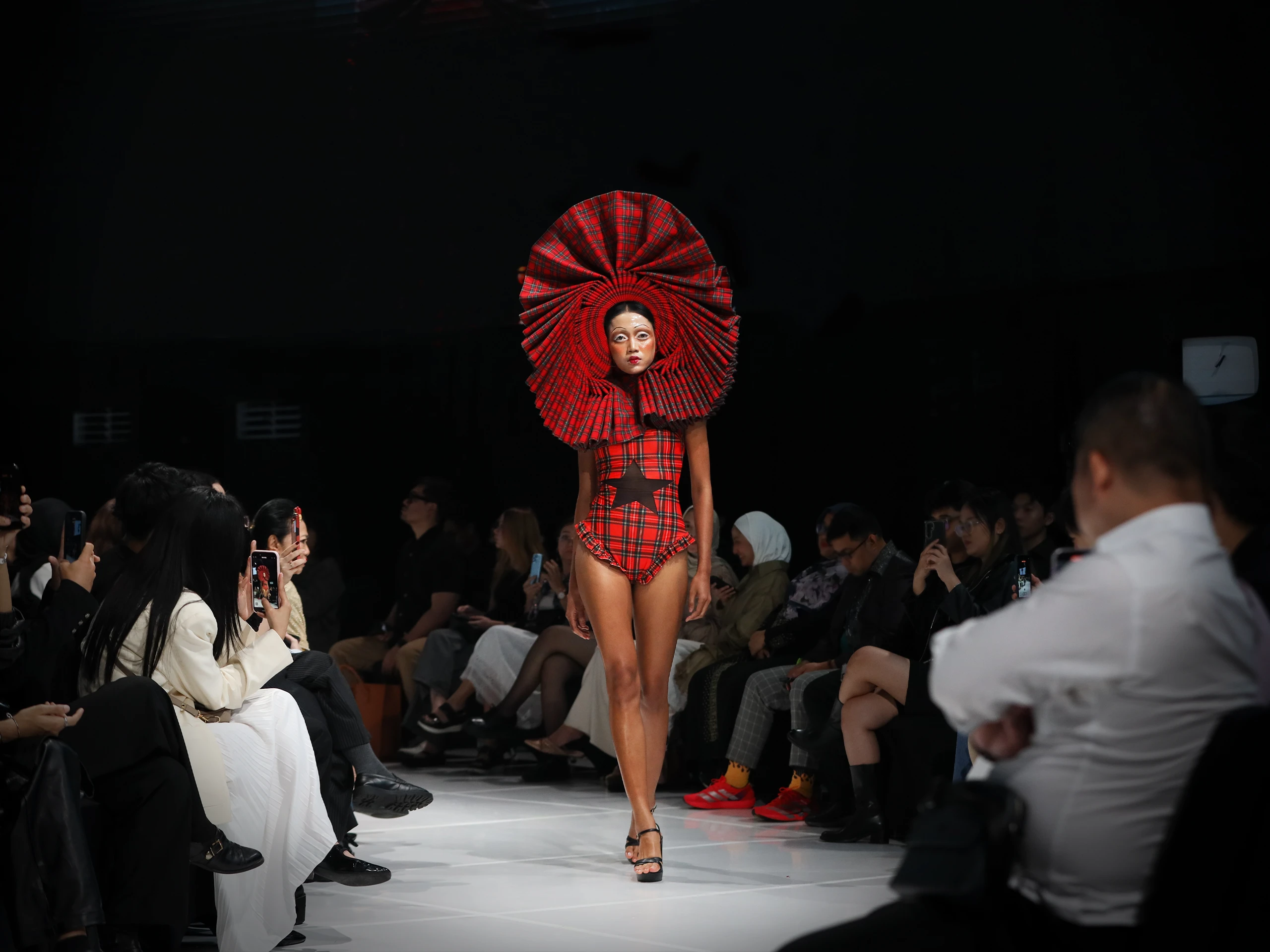
Throughout that week between late July and early August, more than 45 local and international designers were invited to present their personal definitions of “recrafting.” This bright cohort seemed bent on optimism, with circularity, heritage, and creative resourcefulness in mind.
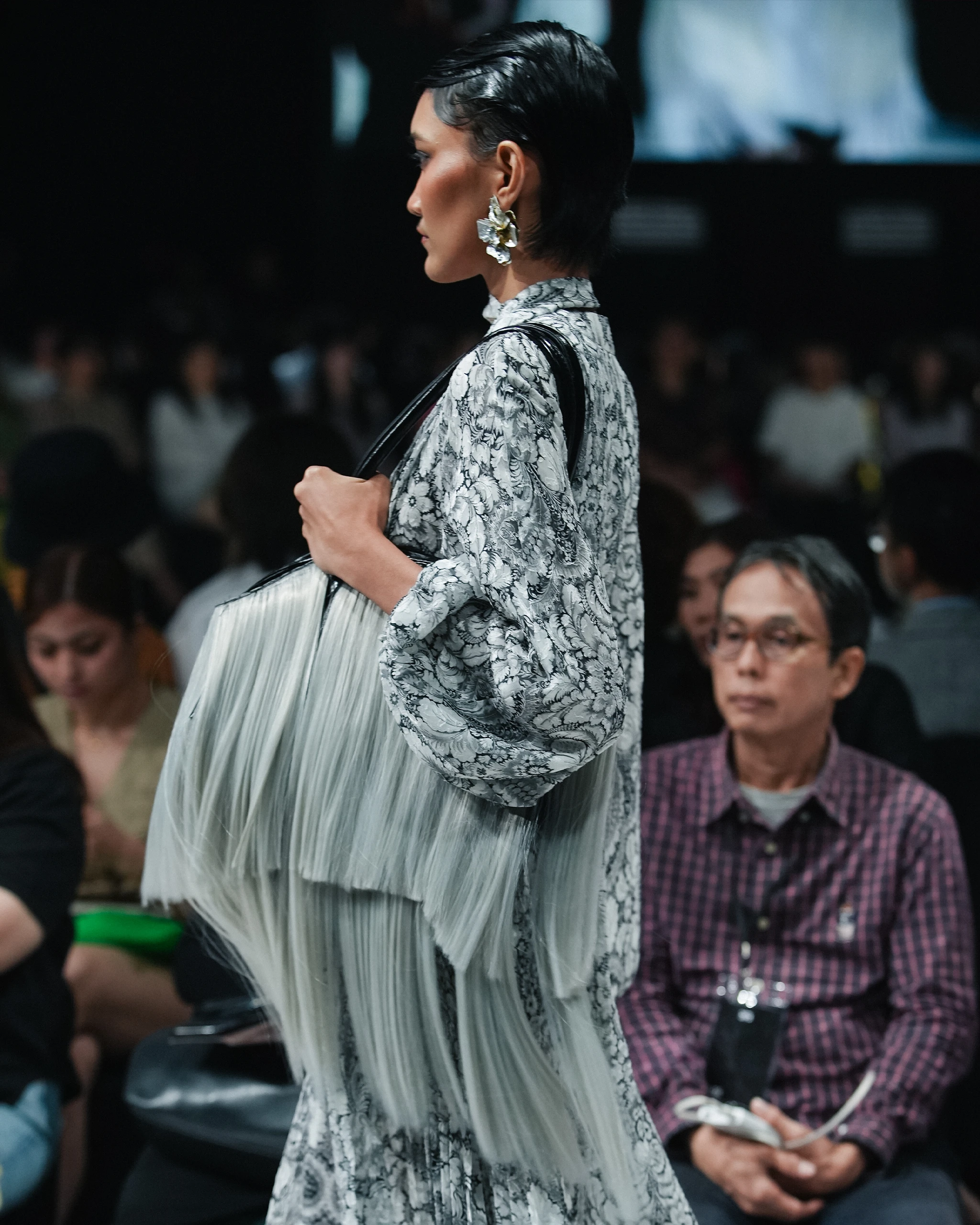
Fresh perspectives spurred from the collections of homegrown designer Adrie Basuki and the 14-year-old South Korean womenswear brand DOUCAN. What the Instituto Marangoni London-trained Basuki calls his signature “marble fabric” is custom, made from discarded textiles sourced or leftover from his previous collections. Its playful speckled print is seen across longline dresses, paired with denim and batik motifs inspired by a personal theme of transformation. Meanwhile, DOUCAN, helmed by Chanel and Kenzo alum Chung Hoon Choi, turned discarded wigs into fringe, floating over ruffled chiffon and dyed lace dresses and flowing down from handbags.
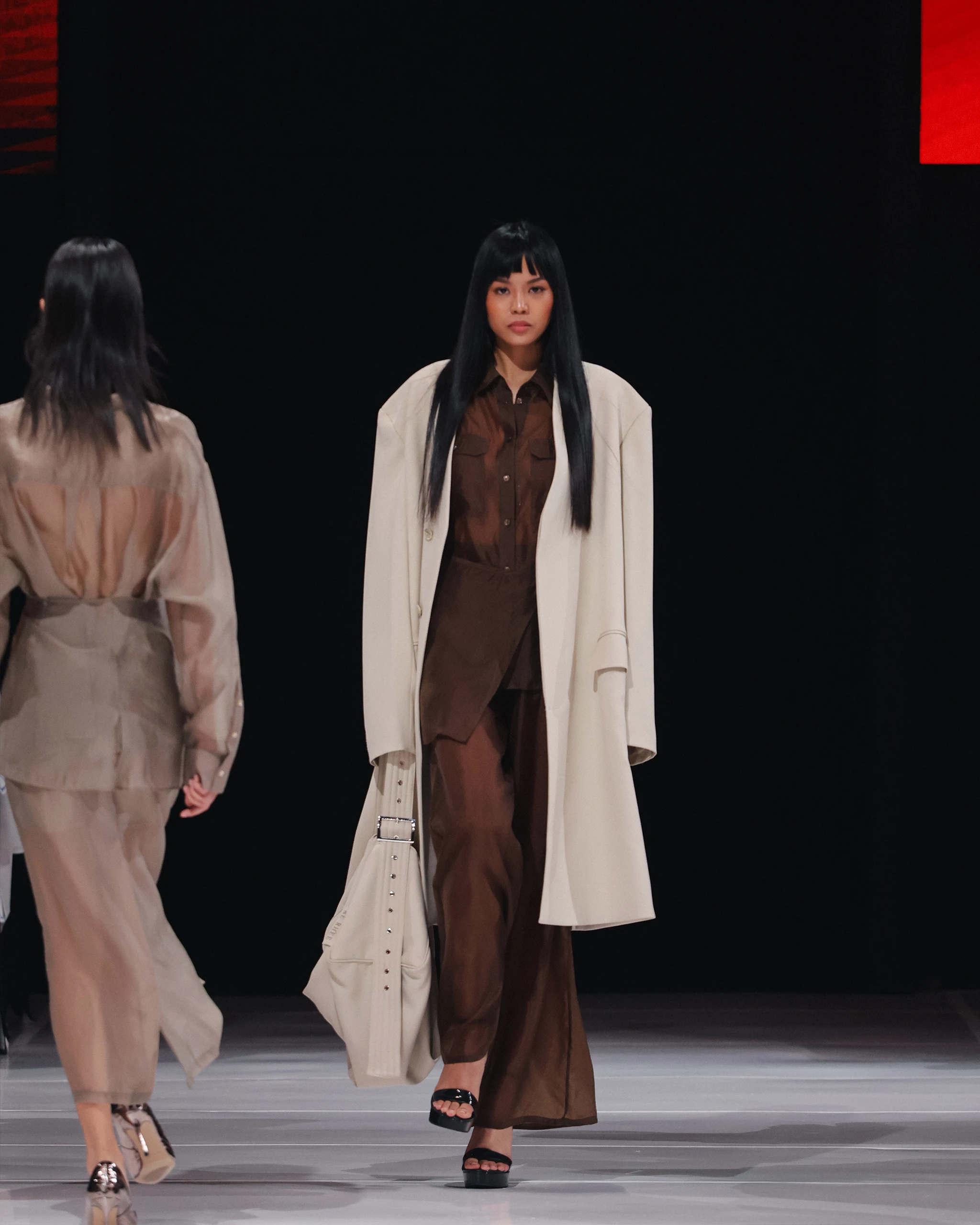
Junebok Rhee, one of the three South Korean designer who made the lineup at this year’s JF3, had pieces that were grounded in self-discovery. His label RE RHEE similarly used recycled fabric across expressive drapes and soft tailoring across a neutral palette.
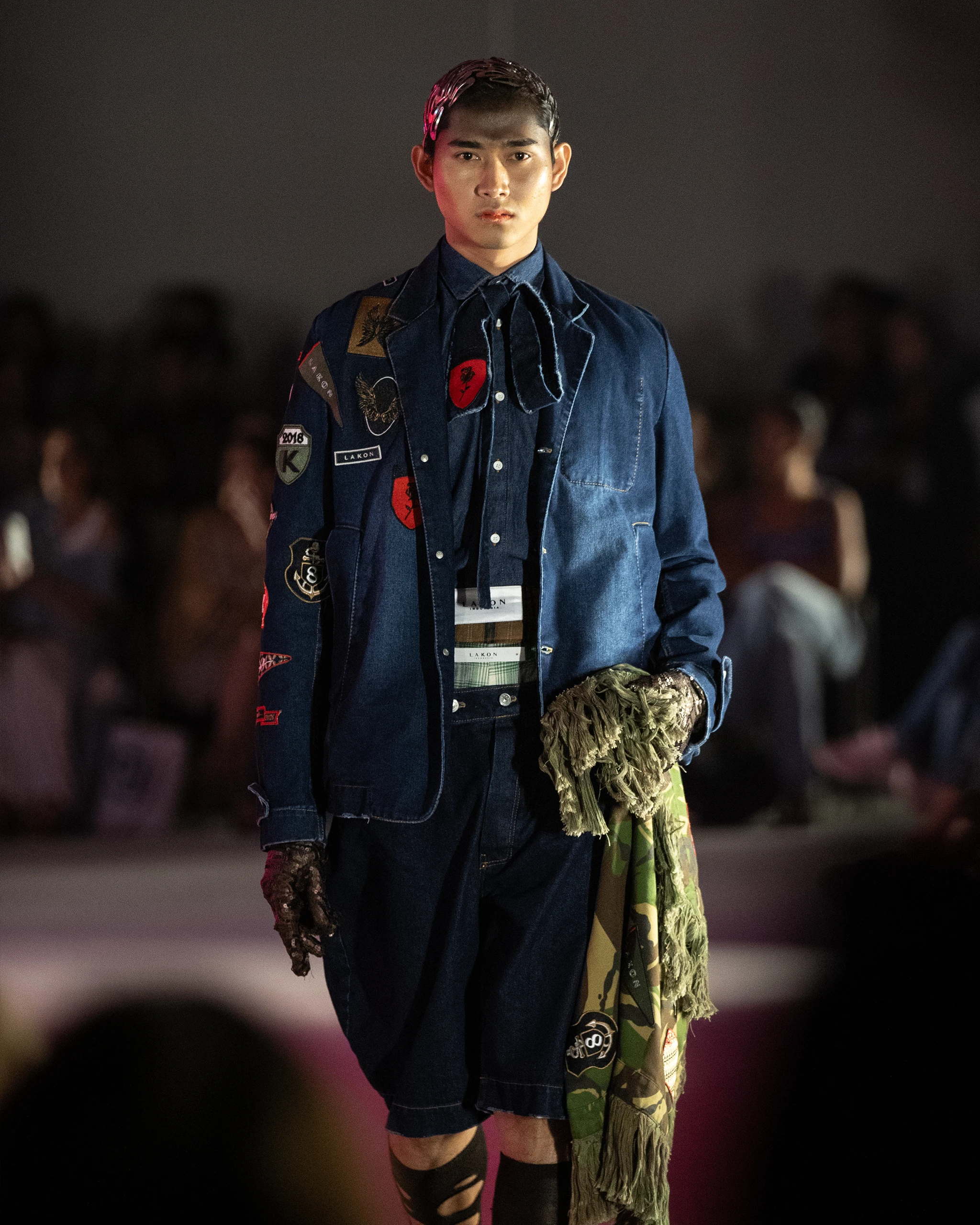
Paris-based designer Victor Clavelly, who has created feathered chainmail for Rick Owens and has collaborated with artists FKA Twigs and Katy Perry, presented a joint showcase with LAKON Indonesia. While LAKON introduced the theme Urub, Victor explored Les Fragments. The two collections, born from distinct cultures, where “bodies are hybrid, reassembled, and evolving, suspended between the organic and the artificial.” He uses reconstructed denim and trompe l’oeil bodysuits resembling liquid steel to depict his vision of a post-anthropocene world. LAKON furthers the narrative with their own characters, presenting layers of denim, plaid, and jersey, some depicting batik motifs, beneath stark light beams that shot across from far ends of the room.
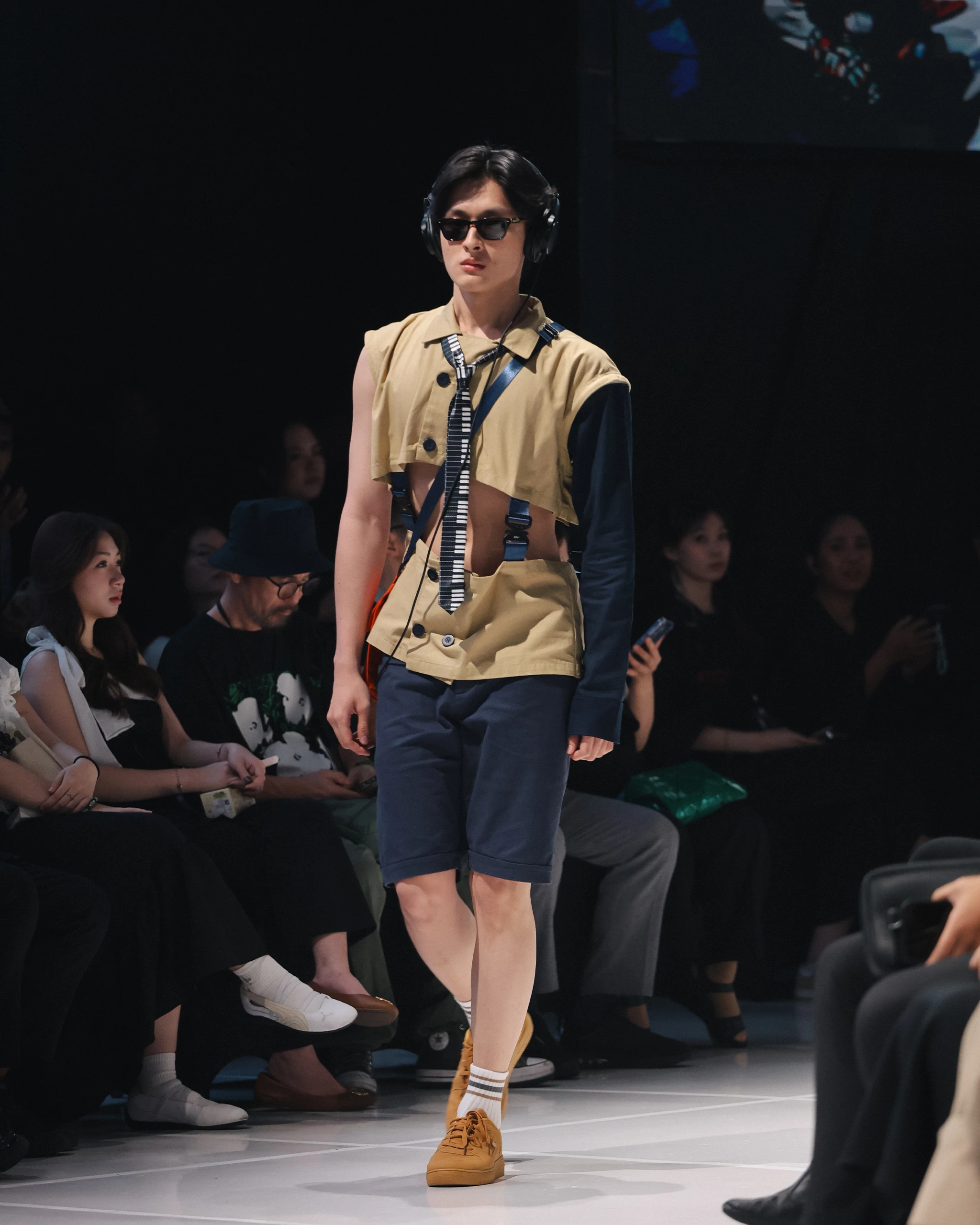
PINTU Incubator, a bilateral fashion incubation initiative by JF3, LAKON Indonesia, and the French Embassy through Institut Français d’Indonésie, culminated its six-month program with a collaborative showcase alongside École Duperré Paris. Indonesian and French rising designers, comprising six PINTU brand participants and three students from École Duperré Paris, paid tribute to heroes that live in their minds, using techniques they’ve honed in their residencies with selected mentors from both Indonesia and France. Pierre Pinget dedicated his collection to the mafia figure in cinema, i.e. The Godfather, Casino, Boralino; Clavi Kirana’s CLV to metaphorical “builders” and craftsmen; and Nona Rona to the Indonesian everywoman, with all her inner strength and grace.
Simultaneous to the shows, JF3 also ran programs in support of the development of new talent. There was the Future Fashion Award, which supports winning fashion brands with financial support and mentorship; the JF3 model search, aimed at discovering new faces to front the local fashion industry; JF3 Talk, which engaged members of the press in thoughtful open panel discussions; and lastly, CODE.STRT, a design program explicitly tailored to streetwear designers from Indonesia, France, and Japan.
“JF3 is now committed to regeneration. We believe the future of Indonesia’s fashion industry lies in the hands of young people who dare to dream,” Nagaria furthers. “JF3 is here to open doors and support them in becoming part of the global fashion ecosystem.”
Apart from ongoing work with the French embassy and institutions École Duperré and organizer of the Paris Trade Show, JF3 signed a Memorandum of Understanding between themselves, Busan Metropolitan City, and the Busan Textile & Fashion Industries, marking future collaborations between JF3 and Busan Fashion Week.
After the signing, Mareta took to Instagram to talk about what this could mean not only for JF3 but for their local creative community as a whole. These efforts to collaborate with the international fashion industry are made “not for the sake of scale,” Mareta wrote, “but to open wider, real opportunities for every designer, brand, and creative who walks with us. When doors open, the whole industry can move forward together.”
The story does not pause. It carries forward. What began as a reimagining now moves into a phase of intention and direction through this year’s “Recrafted: Shaping the Future.” Looking ahead to JF3 2026, anticipation builds around how Indonesian fashion will continue to evolve on a broader stage. That energy now leads into its next chapter. JF3 2026 will take place on 23–26 July at Summarecon Mall Kelapa Gading and 30 July–2 August at Summarecon Mall Serpong. The momentum continues, and the future is already in motion.
For more information, visit JF3 Fashion Festival’s official website.
by CHELSEA SARABIA


