
Your Next Medication Could Come By Drone



Photograph courtesy of &you.
Photograph courtesy of &you.
Danish entrepreneur Emil Eriksen reflects on this reality and what he and his team at &you plan to do for the community.
In the first episode of the HBO show The Pitt, medical student Victoria Javadi (played by Shabana Azeez) asks Dr. Cassie McKay (played by Fiona Dourif) how long patients have to wait in the Pittsburgh Trauma Medical Center waiting room. “Eight hours, if they’re lucky,” McKay replies. “A lot of times, 12.” To even make the point clear, the episode even mentions the words “wait” and “waiting” 16 times.
Drama or no drama, waiting is part of the healthcare experience. In the Philippines, that adds up. A 2022 study revealed that on average, a Filipino patient waits 371 minutes (that’s 6 hours!) in an emergency room before being attended to by a healthcare professional.
For Emil Eriksen, founder of &you, the challenge goes beyond time spent in a waiting room. “Filipinos have been taught to tough it out, to self-medicate, to ask a friend first,” ponders Emil. “By the time someone walks into a clinic, they’ve usually been carrying the question for weeks.”

While many people know the platform through its teleconsultation services, Eriksen describes the consultation as the “smallest visible part of what we do.” The point is to make it easier: no gatekeeping, no judgment. “You open &you and you don’t get a form that makes you feel like a patient before you’ve even been seen,” says Emil. “You get questions that read the way a friend would ask. The conversation is private. The language is plain. No one asks why you waited this long. We treat the first message as the bravest part. The video call is one tile in a much bigger floor plan.”
So what does this all look like in practice? Ideally, not much at all. For the telehealth service, it means a Filipino shouldn’t have to take a day off work to feel better. Through the platform, their aim is that upfront, you know what you’ll pay for and not chase prescriptions.

It’s also why &you is launching the first drone delivery system to the Philippines, a way to close gaps in access. “Geography forces honesty. You cannot pretend a clinic in Makati serves a family in Basilan,” says Emil. “The Philippines has 7,641 islands and one shared reality: care should not depend on where you happened to be born.”
According to &you, the idea of the drone-enabled healthcare delivery system came down to one question: how do you get medicines (maintenance insulin, antibiotics, and post-surgery supplies) that cannot wait for the people who need them? “The drone isn’t about novelty. It’s about closing the gap between when care is prescribed and when care arrives,” says Emil.
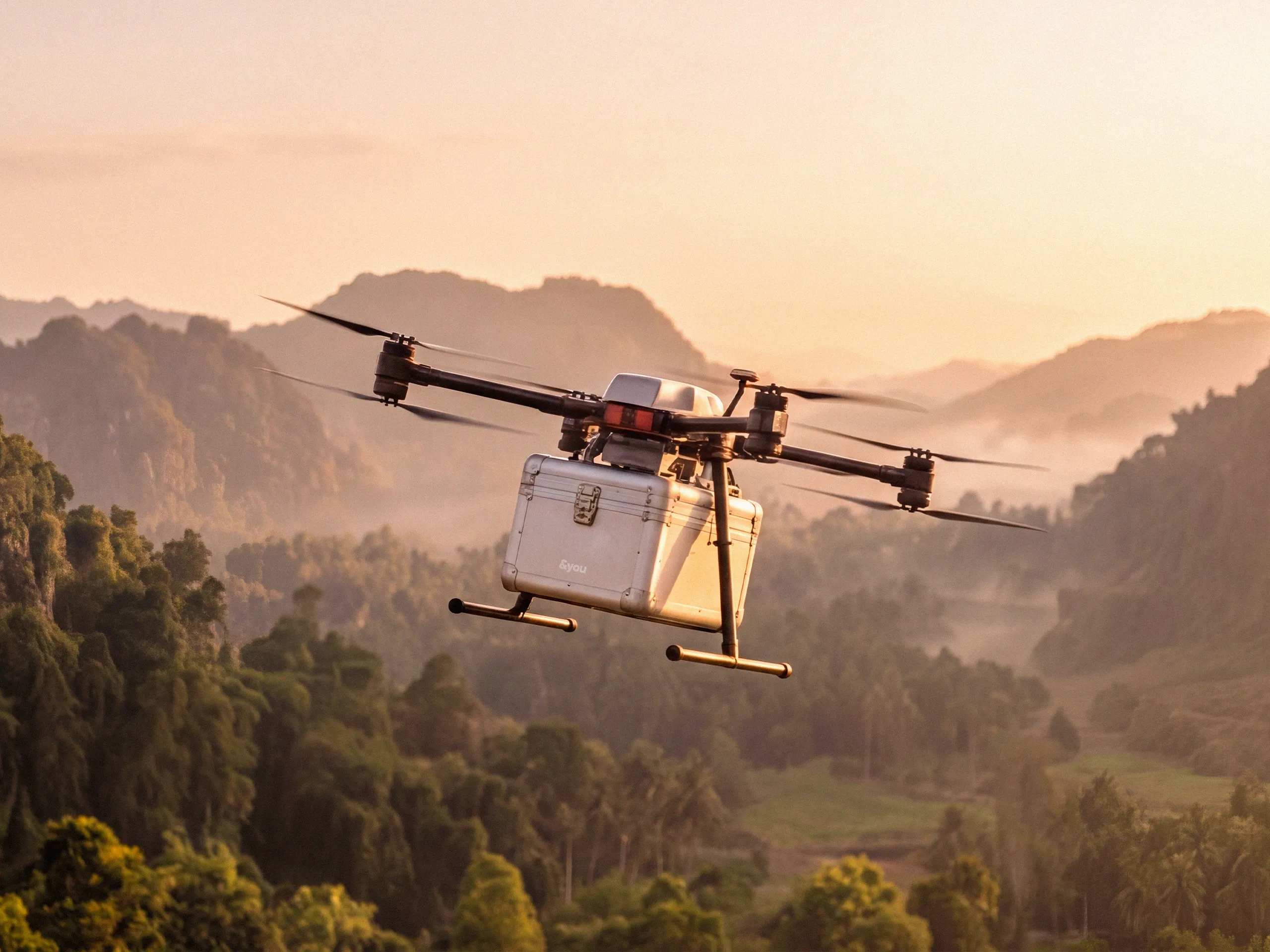
Emil also paints a picture of a real-world scenario for an &you drone delivery: A mother in a remote barangay in Palawan finishes a teleconsult for her child on her phone. She gets a notification that the prescription is coming via drone with an ETA. 40 minutes later, a small package lands at the local barangay health station. She picks it up. No choosing between her child’s medicine and a full day’s income lost to travel.
For all the attention drone deliveries might attract, the technology is only part of the story. The bigger idea is what happens when healthcare is designed around people’s lives instead of the other way around. “The future we’re building is quieter than people expect. It looks more peace of mind, and more Filipinos simply getting on with their lives.”
For more information, visit &you’s official website. Follow them on Instagram.
Frequently Asked Questions
Medical drones bridge geographic barriers by transporting urgent medications directly to remote island communities, effectively eliminating long travel times and reducing systemic patient care delays.
Healthcare drones deliver critical, time-sensitive medical supplies, including maintenance insulin, essential antibiotics, post-surgery necessities, and other urgent prescription medications directly to local health stations.
A drone medical delivery can take as little as 40 minutes to reach remote provincial locations, ensuring patients receive vital care without losing critical income to travel.
Telehealth platforms aim to decentralize patient care by removing financial gatekeeping, social judgment, and geographical limitations through private, accessible digital consultations and efficient localized treatment.
Philippine patients experience an average wait time of 371 minutes, or roughly six hours, before receiving attention from a professional healthcare provider in emergency settings.