
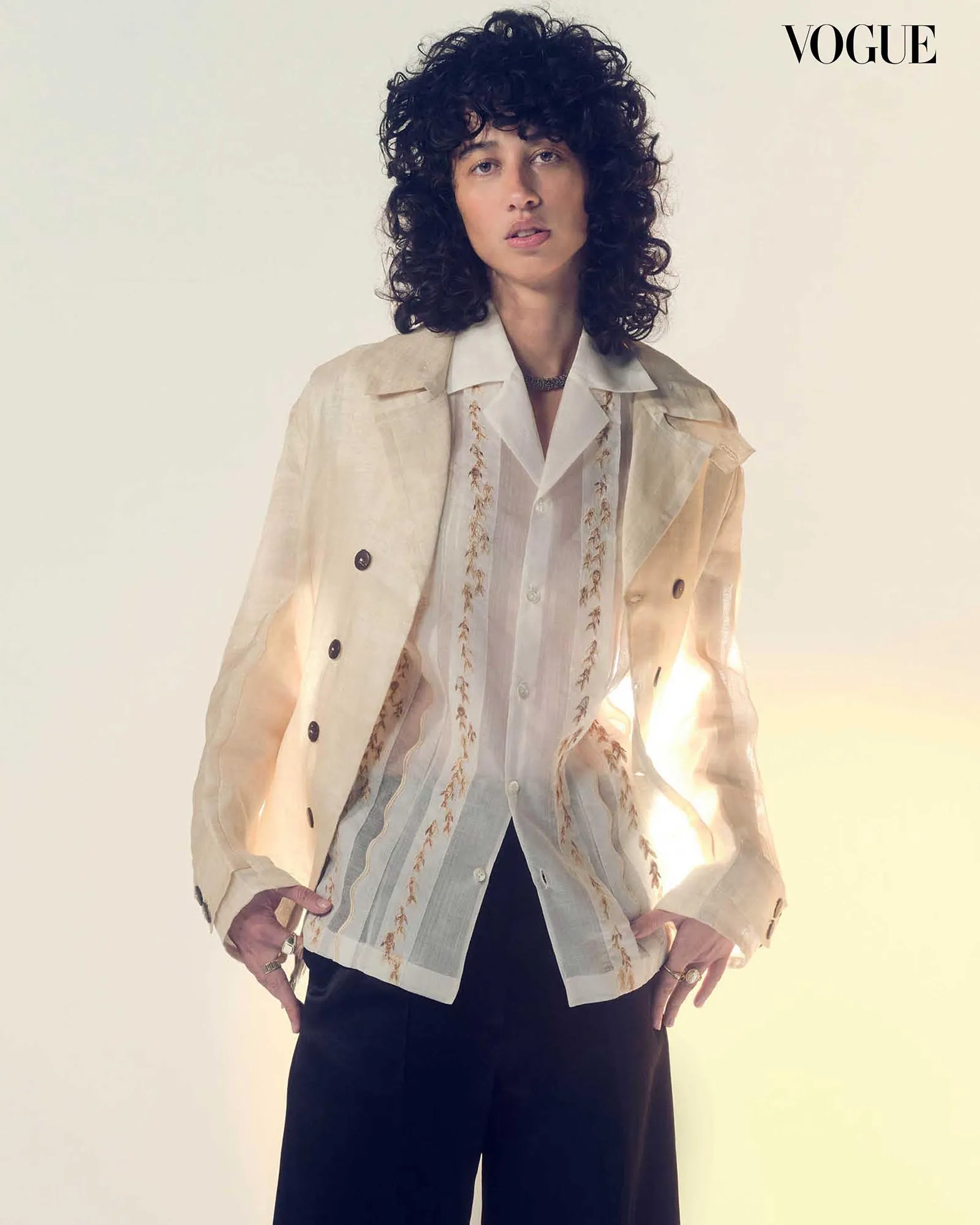
MIU MIU top, jacket, and trousers. Photographed by Richie Talboy for the February 2026 Issue of Vogue Philippines
MIU MIU top, jacket, and trousers. Photographed by Richie Talboy for the February 2026 Issue of Vogue Philippines
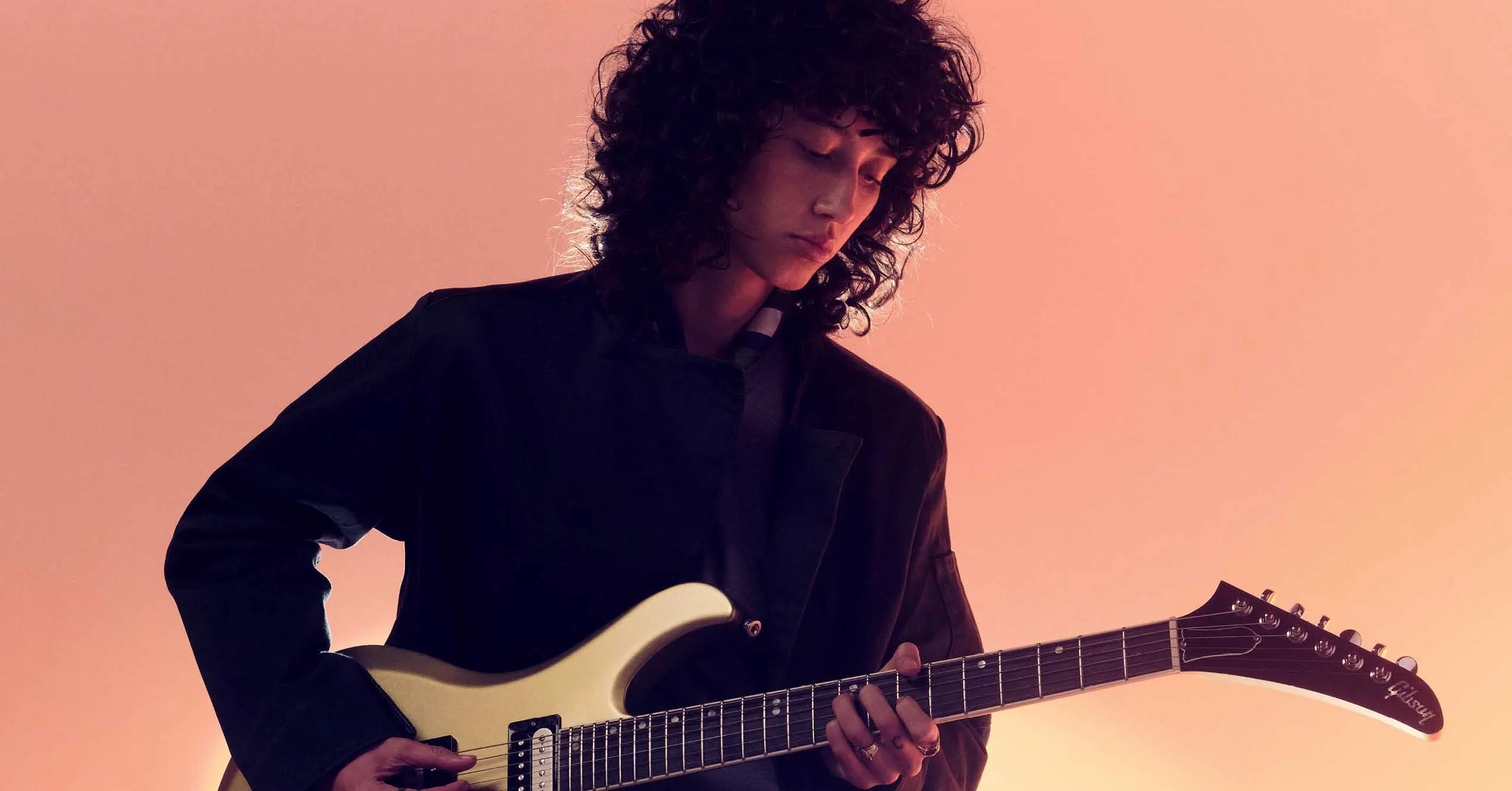
Ahead of her sophomore album, Filipino English musician Towa Bird talks to Vogue about her music, her roots, and the path to defining her own narrative.
Still recovering from jet lag after a 16-hour flight from Los Angeles to Hong Kong, Towa Bird, the guitarist and singer-songwriter charmingly known to her fans as “Grandpa Bird,” is surprisingly energetic for our 11 A.M. chat.
She’s home for the holidays, staying with her parents at their apartment. Her cream shirt is casually unbuttoned to reveal a stack of two necklaces, and a pair of Bose headphones nearly drown in her thick curls, which are still damp from the shower. Signet rings and tattoos make a cameo every time she sips water from a pint glass branded “Guinness,” her favorite beer. She looks startlingly out of place. She knows she does.
“Especially being back at home in Asia, I feel really different. Like if you see me in a crowd, I really, really stand out,” she laughs. “I look so different from everyone! It’s crazy. I’m a head taller than everyone, I dress really differently, I have big, curly hair. Even going to church yesterday, I was like, ‘Should I be covering up my tattoos?’ I really feel that difference, and now, as an adult, I’m like, ‘Oh, it’s okay. This is what makes me special.’”
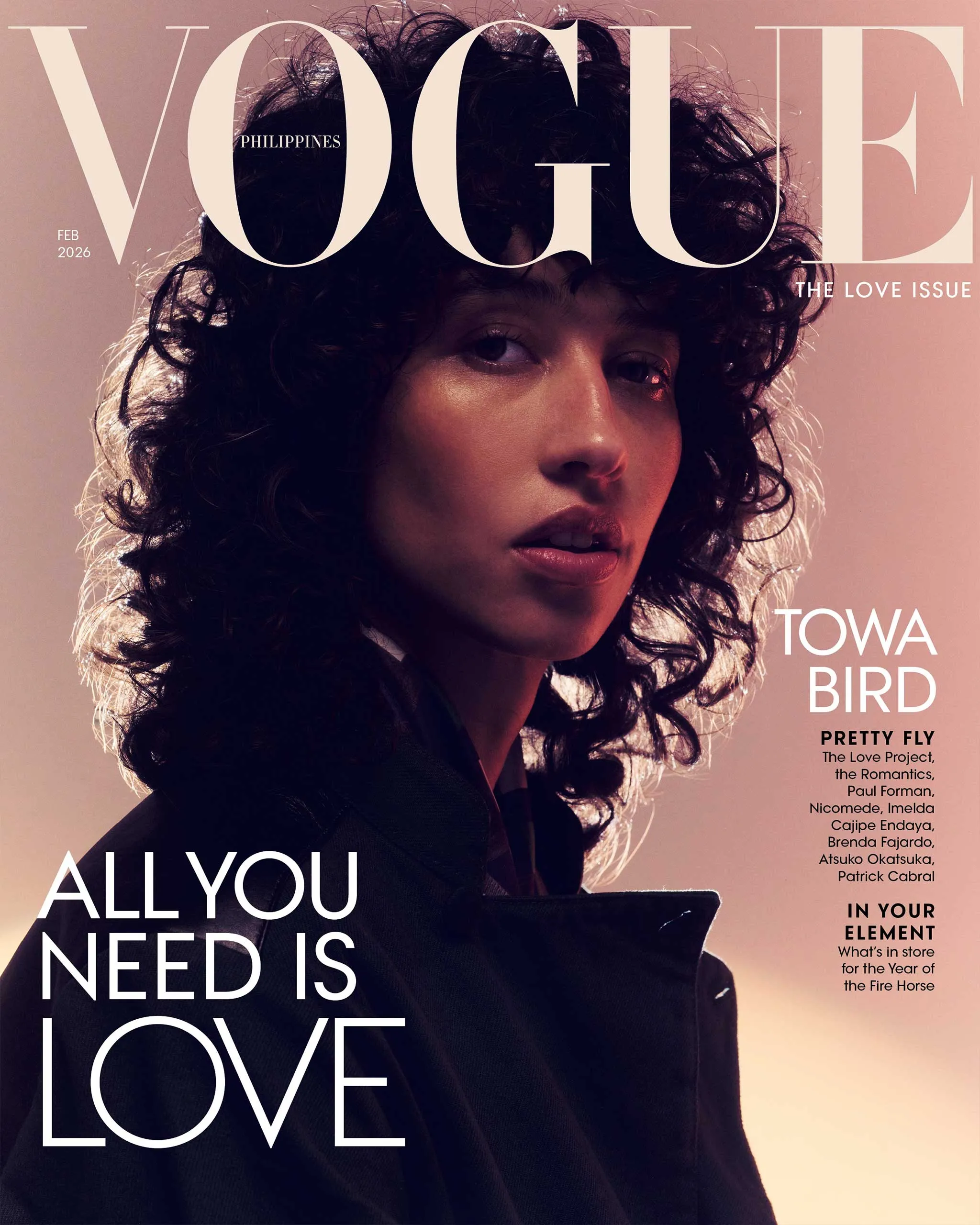
Each year, Towa makes it a point to take a sabbatical at home for Christmas and New Year to reconnect with family. Having grown up Catholic, the act of attending mass is reserved for when she’s in the homeland, as a way to bond with her mother. Well, her mother, and her mother’s friends.
“After the mass, it’s like a whole event as well. I’ll hang out with all the titas, and they usually go get coffee and we all just hang out together and they make chismis, and I just get to hear about all the auntie gossip,” she grins.
Luckily, Towa’s rising fame didn’t seem to be on their agenda that evening, but she does think they know a thing or two about where she’s been. That is, in Olivia Rodrigo’s Driving Home 2 U documentary, and on stages around the world performing her album or opening for fellow Gen Z musicians Billie Eilish and now-girlfriend Reneé Rapp on tour. “I think that they try to play it cool, but they’re also really proud,” she remarks of her titas, before cheekily adding, “and they like to take selfies and put it on their Facebook.”
That she now finds it fun to be photographed might be incomprehensible to a younger Towa, who was once a shy kid. After being signed to a label for nearly half a decade, she’s learned to relish the unspoken responsibilities that come with making music, even if they don’t necessarily involve the studio or stage. You could say it was inevitable, the ease she feels in front of a lens, after countless interviews, campaigns, and events. In 2024, she made her runway debut at Miu Miu’s Autumn 2025 show in Paris, before appearing in that year’s Lotta Volkova-styled Fall campaign alongside Lou Doillon and Kylie Jenner, and walking once more for the brand’s Spring 2026 show.
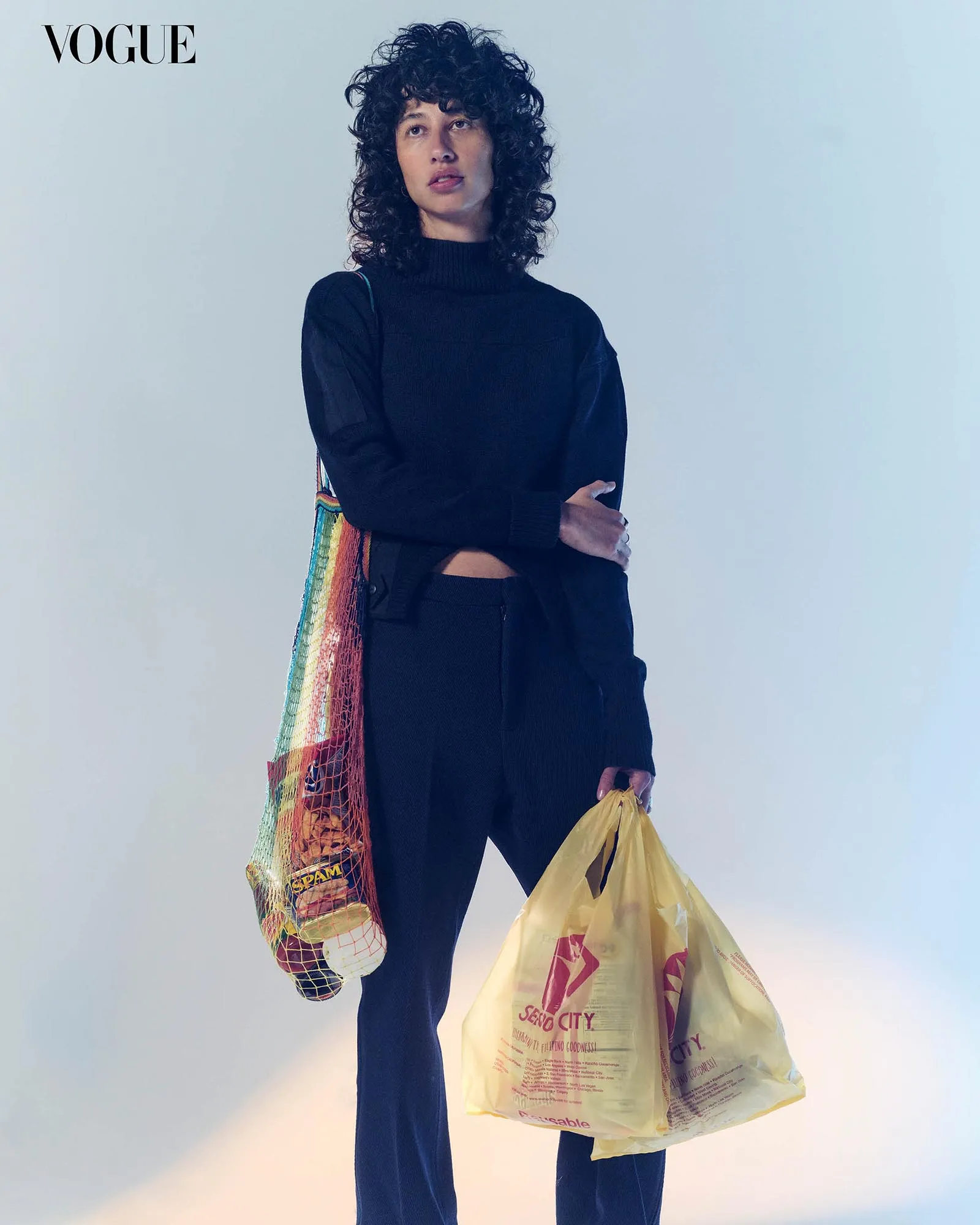
This Vogue Philippines sitting, though, stands out. “There was one look that we did where I had a grocery bag and we got to go to the store and pick out all types of food items. We got vinegar, Spam, banana ketchup, Chippy. We got all of the essentials,” she laughs. “We were able to put some amazing ideas together that reflected the Philippines and how important it is to me. I don’t think I’ve had another shoot where we’ve been so focused on it. It was really meaningful. This shoot felt totally one of a kind.”
Born Victoria Ilagan Vergara-Bird, Towa’s oft-recalled bio is a mouthful of multiplicities. She’s Filipino English, born in Hong Kong, who also grew up in Thailand, moved to London when she was 16, then Los Angeles five years later.
She grew up listening to classic rock with her dad in his Honda, finding resonance in guitar legends Jimmy Page, Joan Jett, Jimi Hendrix, and Prince. She considers Twenty One Pilots her first concert experience, but her actual first was the Eagles with her dad at four or five years old, when, severely past her bedtime, she fell asleep. She thinks The Beatles are the greatest band in history, and she doesn’t care if it’s corny.
Among her heroes, it was Hendrix who showed her the possibilities of music. Home alone one day at 12 years old, she fell into a YouTube rabbit hole and landed on an illegally-uploaded copy of the Jimi Hendrix documentary. That weekend, she watched it over and over, her lanky frame jumping on couches and playing air guitar.
Two years later, she joined her first band called The Glass Onions. Partaking in garage bands and school bands made her “used to being in a room with like, four or five sweaty boys,” and often, there was no other girl but her. “I don’t know if it was intimidating, but I was always very conscious of the fact that I was the only girl, and it was something that really left an impression on me,” she confesses. She remains self-assured, though, of their bond’s sincerity; the boys didn’t mind it as they saw her as a sister, the same way she viewed them as her brothers.
Over a decade later, Towa sometimes still finds herself in rooms where she’s the lone woman. “I mean, it’s not ideal, of course, like I would love to have lots of women around me all the time. But it is really rare to see women in music.” She extols her musical director Heather Baker as “a badass, she’s amazing. She’s like, the best musical director I’ve ever seen work. I love making conscious efforts to hire women, especially onto my live team for live shows.”
As a performer trained in Hong Kong’s dive bars and street festivals, Towa’s connection to an audience is deeply visceral. To behold her is to be enthralled: by her ability to command a crowd, to strum and sing with fervor, all while thrashing, jumping, and playfully rolling her eyes. She never loses the mischievous glint in her eye, and easily breaks out into a smile whenever she spots a sunset lesbian flag or inflated banana (referencing her song “B.I.L.L.S.”) among the sea of people.
Her debut album American Hero was released in 2024, intended to feel like a live gig that compels listeners to get on their feet and dance. Her alternative-rock tunes on new loves, broken hearts, and rampant capitalism conjure up hyper-specific images that invite a complete immersion.
The album ranked 52nd on Rolling Stone’s best 100 albums that year. If she wrote it over a period of two years, her upcoming record was written in half the time, a shift she owes to a strengthened faith and conviction in her own voice. “I found myself being able to ideate and then come to conclusions much faster, because I trusted my own instincts and my own gut.” She widely touted American Hero as “Towa 101,” or an introduction to her persona.
“I want to inspire people and let them become who they want to be, fearlessly and shamelessly.”
She confirms that she’s working on a second album. And that the songs to come are signifiers of growth, with her rawness and honesty amped up a level or two.
She began conceptualizing it in late 2024, jotting down words in the middle of engaging conversations, sometimes collecting offhand phrases at dinners before pulling herself back into the moment. She expounds, “I like to have a little note in my phone. When I was on tour with Billie, that’s when I started to basically just take notes, just like, very formative ideas, really loose, and then I get into the studio, and then look back through that and be like, ‘Okay, what can I pull today? What feels like it really resonates with me today?’ And then start building ideas around that.”
For Towa 102, we meet her in the throngs of a life set ablaze by passion. She’s coy about divulging more details (“I’m also, like, trying to be careful here,” she cautiously chuckles), but forward about how its persona and preoccupations contrast with her introductory project.
This time, it seems, she writes, sings, and plays from the perspective of someone who’s fallen more deeply, maddeningly in love with what and who surrounds her. “On the first album, songs like ‘This Isn’t Me’ [the vulnerable ballad on feeling out of place at her first Paris Fashion Week], it’s explorative, it’s curious, it’s inquisitive,” she explains. “In the second album, I know what I want, and I’m gonna show you how I got it.”’
The most heartfelt feedback she received was that the album feels exactly like having a conversation with her. “And I was like, ‘Fuck yes!’” Towa celebrates. “I feel really, really proud of this album. It feels like immense personal growth. And that’s exactly what I wanted this album to be, really a true reflection of who I am.”
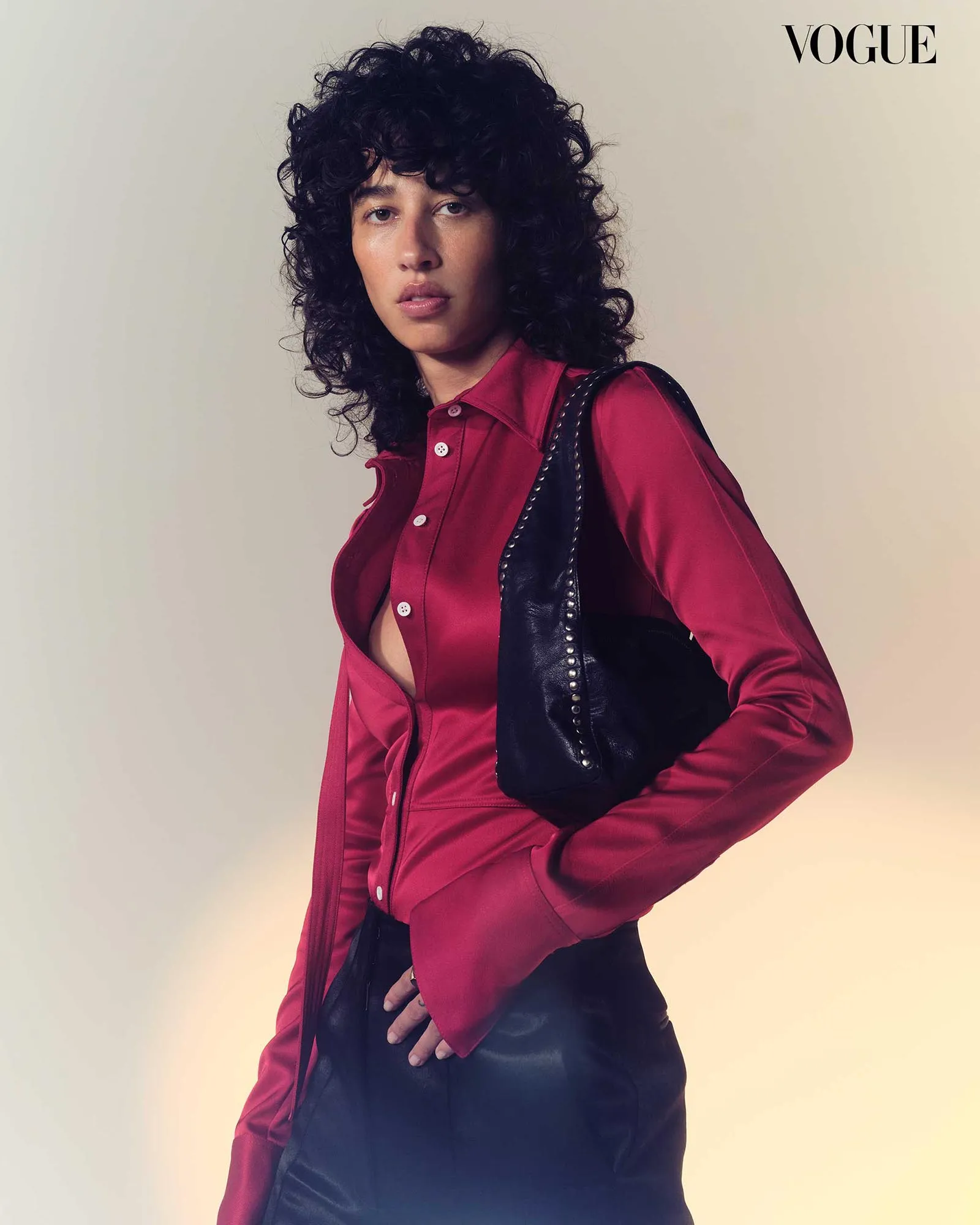
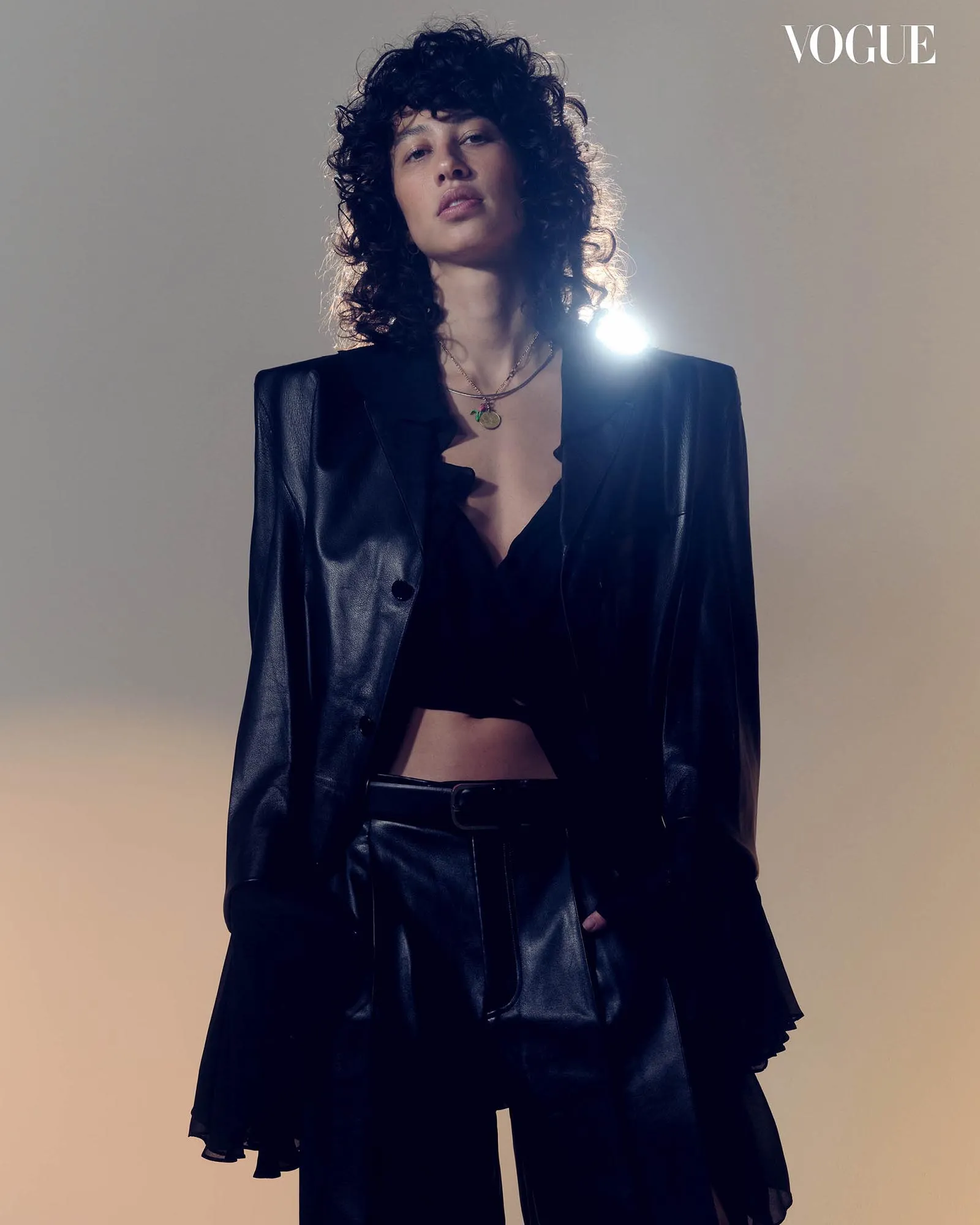
The musician’s thematic preoccupations at present are “confidence, aura, sexiness, and desire.” A couple of her songs may easily be categorized as explicit (take “Drain Me!” with its thinly-veiled euphemisms of “sesbian lex”), but in conversation with Teen Vogue, Towa makes it clear that for her, “it was never explicit. When I was writing that song […] I was like, ‘I’m just writing about love and how I express that.’ And it’s not an explicit thing to me.’”
She’s oblivious to the fact that she just echoed her idol Prince, who told Rolling Stone nearly the exact same thing in 1981, on the topic of his controversial Dirty Mind album that includes the incestuous song “Sister.” Prince narrates, “When I brought it to the record company it shocked a lot of people. But they didn’t ask me to go back and change anything, and I’m real grateful. Anyway, I wasn’t being deliberately provocative. I was being deliberately me.”
Towa holds a sense of pride in who she is and where she’s been, but she’s not afraid to admit that it didn’t come easily. She recounts relatively minute instances like filling up medical or government forms and not knowing which box to tick for her race or ethnicity. “I can’t take any of the options. I’m always ‘other’ in pretty much every aspect of my identity. Growing up and being like, ‘Well, I don’t fit in with the boys, and I don’t really fit in with the girls. How do I fit in?’ And I guess the answer was, I don’t fit in and I can just make my own category.”
She has always looked up to her older sister Cat, whose initial she has tattooed on her left middle finger. “A lot of my fashion influence I attribute to my sister,” she shares fondly.
“Towa always resisted the sartorial boundaries imposed upon her, like skirts or our school uniform, which was a dress,” Cat reminisces. “I think her need for self-expression transcended any expectation to conform. Because of this, it was always a battle to get her in the car to school, but once we did, this is where we would listen to music together.”
Towa first emulated her older sister’s outfits, which helped her solidify her own way of dressing. “A big part of my style is my hair.”
Her curly strands were inherited from her father, and being in an Asian household, “having this kind of texture, no one knew how to do my hair,” she recalls, slightly panicked as if reliving the moment. “We were all confused. My mom was like, ‘I don’t know!’” Towa shrugs, imitating her mother, laughing.
“How do I fit in? And I guess the answer was, I don’t fit in and I can just make my own category.”
Advertisement
“I had every single haircut in the world.” Her tresses were brushed, straightened, shaved. She had a pixie cut for a long time. Now, she wears it long and wild, in Purple Rain-esque fashion. “I think that it took me a really, really long time to become comfortable in that. Hence why I had so many different hairstyles. Now, I feel like I have a handle and grasp on what I want to look like,” Towa declares.
The first accessory she grew obsessed with were a pair of heeled lace-up combat boots she saw on Tumblr as a teen. “I remember being like, ‘Wow, I want to wear this every single day of my life.’” Her mom gifted her a black and brown pair that Christmas, and she wore them exclusively “pretty much for my entire teenhood.” Her affinity for shoes has only grown since. A scroll through her Instagram page will illuminate an array of classic Dr. Martens boots, and a favorite pair of two-tone platform brogues.
When asked if she ever feels conscious about wearing heels when she already stands at 5-foot-10 (“even if I’m wearing tsinelas [slippers]”), she bursts out laughing. “No, I love being taller than all the boys. That’s something that I love. At this point in my life, I want to be taller than every man in the room.”
On the red carpet, Towa favors tailored suit sets, paired with sheer shirts, neckties, or fully undone buttons beneath. She enjoys a flared pant; all the better to accommodate her large boots. At live gigs, you’ll find her in denim jeans and a muscle tank that she appears to have cut up herself. Once, her baby blue baby tee read, “CHICKS DIG MY CURLS.”
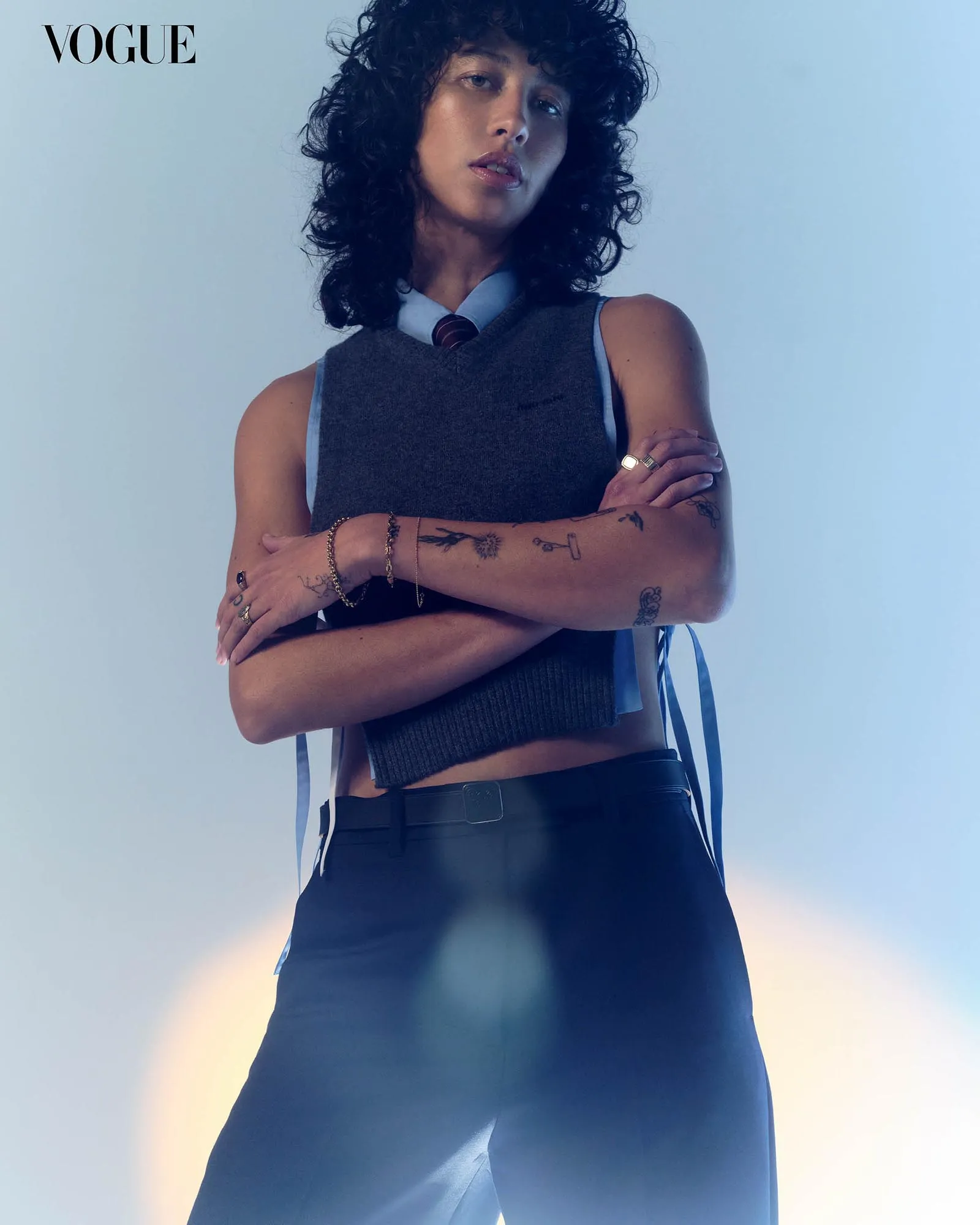
For her Vogue shoot, a key ensemble involved the barong, or traditional sheer embroidered menswear garment. The barong’s patterns are historically ornate and nature-inspired, often executed in the same hue as the textile. Modern interpretations have come to employ unconventional motifs or multi-colored threads, as was the case for the pieces sent by the Vogue team from Manila: Kelvin Morales’ pleated School of Fish barong and Mark Wilson’s abaca double-breasted jacket with Indian cotton gauze lining and coconut buttons. Humberto Leon, the Opening Ceremony alum and Katseye creative director, who was also behind the styling for this shoot, layered both and paired them with heeled boots for a novel take.
“He knows a lot about who I am and how much I care about my heritage,” intimates Towa, who appreciated being dressed in traditionally masculine barongs. There are now options for women, though typically more tapered and slim. “It’s always nice for me to express my gender in that way, whilst also maintaining my Filipino heritage.”
At 26, Towa is only growing more resolute, the clarity of who she wants to be in her craft not just falling into place but actively being striven and worked hard for. She’s an amalgamation of all the greats she admires. She embodies Prince’s androgynous allure, Hendrix’s hypnotic swagger, Jett’s cool insouciance. She knows, so well, The Beatles’ relentless pursuit of the girl.
Slowly, she’s contending with the necessity of taking up space, and finding harmony in the fluidities of her character.
“Just me existing,” she asserts, “it is a tiny act of rebellion.”
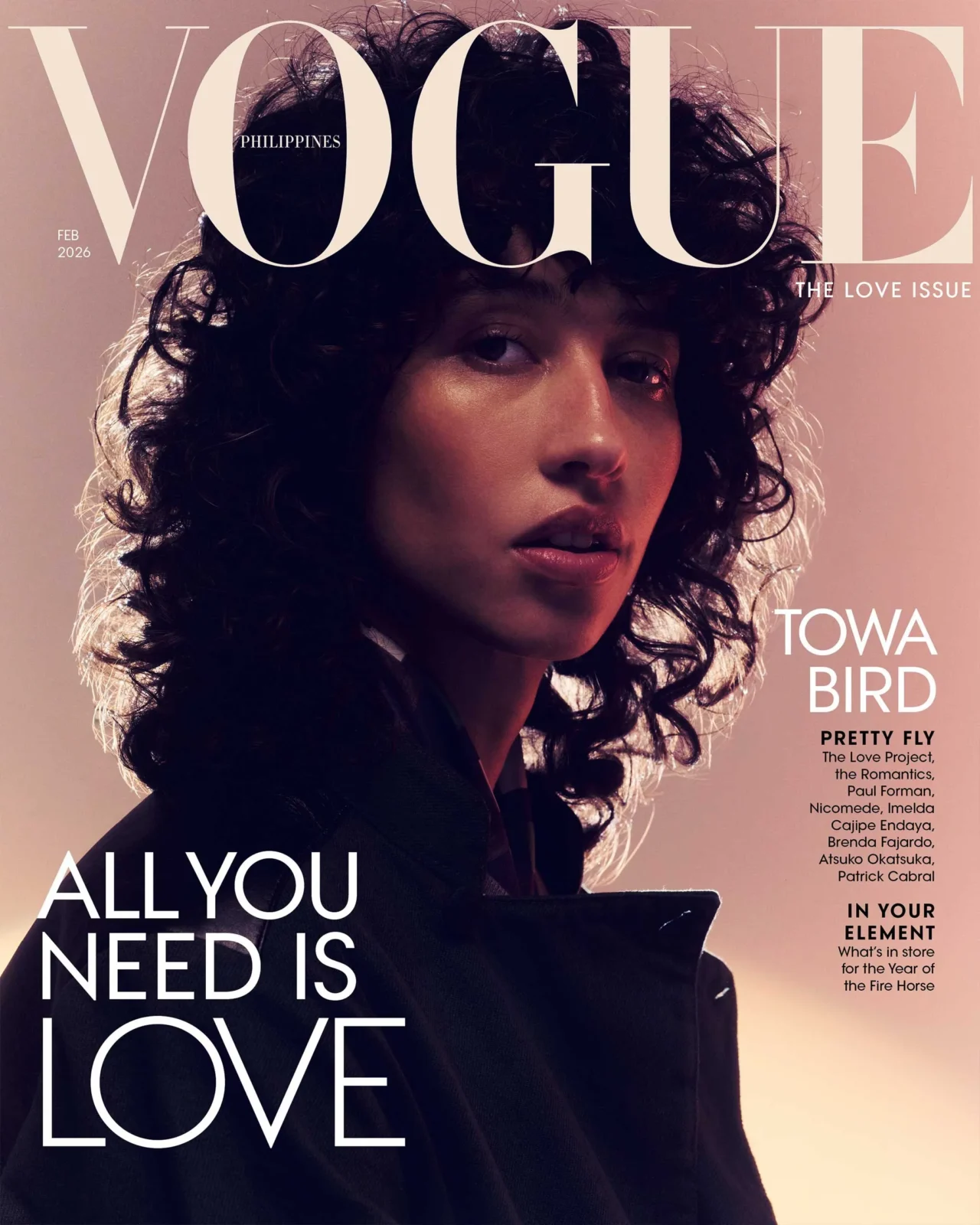
By TICIA ALMAZAN. Photographs by RICHIE TALBOY. Creative Direction and Styling by HUMBERTO LEON. Fashion Direction by NEIL DE GUZMAN. Makeup: Kali Kennedy. Hair: Evanie Frausto. Executive Producer: Anz Hizon. Producer: Alexey Galetskiy. Casting Director: Jill Demling. Photography Team: Michael Kinsey. Styling Assistants: Tina Pogosian, Emma Sacco, Linn Tabudlong, and Jake Held. Makeup Assistant: Ghost Pudelek. Production Team: Justin Barahona. Studio: AGPWEST.
- The Romantics: For Paloma Urquijo, Design Is an Act of Care
- What the Year of the Fire Horse Means for Each of the Signs, According to Feng Shui Experts
- The Secret Garden: An Hour Outside Paris, Inspired by the Stillness of Asian Cinema
- “I’ve Barely Even Scratched the Surface”: Paul Forman Reflects on Life, Acting, and Emily in Paris


