
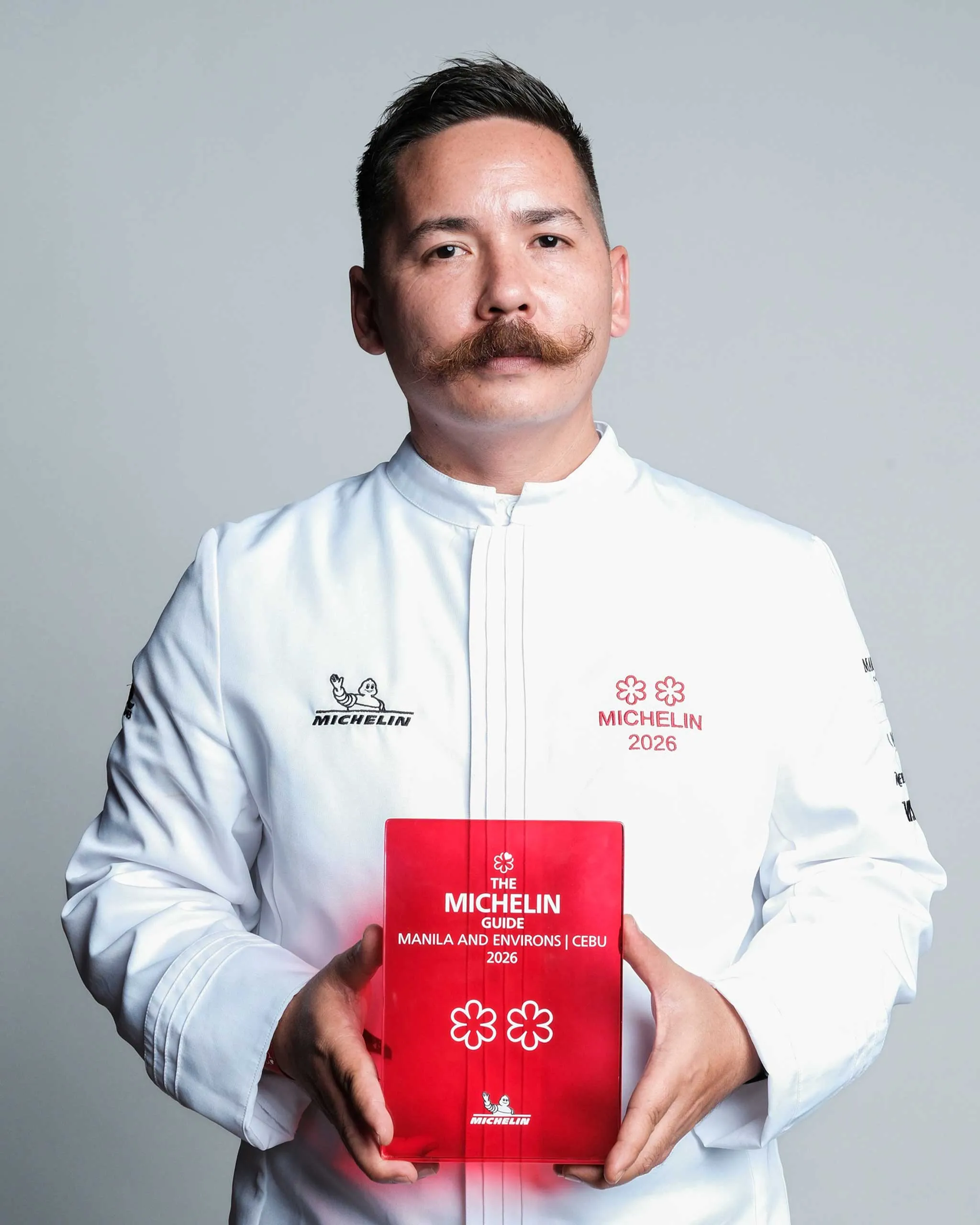
Courtesy of Micheline Guide Philippines
Michelin-recognized Filipino chefs discuss their craft, philosophy, and hopes for the local dining scene.
The Michelin Guide has arrived in the Philippines, setting a milestone for the culinary scene in the country as it highlights the chefs who are redefining Filipino cuisine with their style and techniques.
Founded over a century ago in France, the Michelin Guide has grown as a respected authority in culinary and fine dining, awarding stars to restaurants all over the world using the five universal criteria: ingredient quality, harmony of flavors, the mastery of culinary techniques, the chef’s personality based on the cuisine, and the consistency of the entire menu.
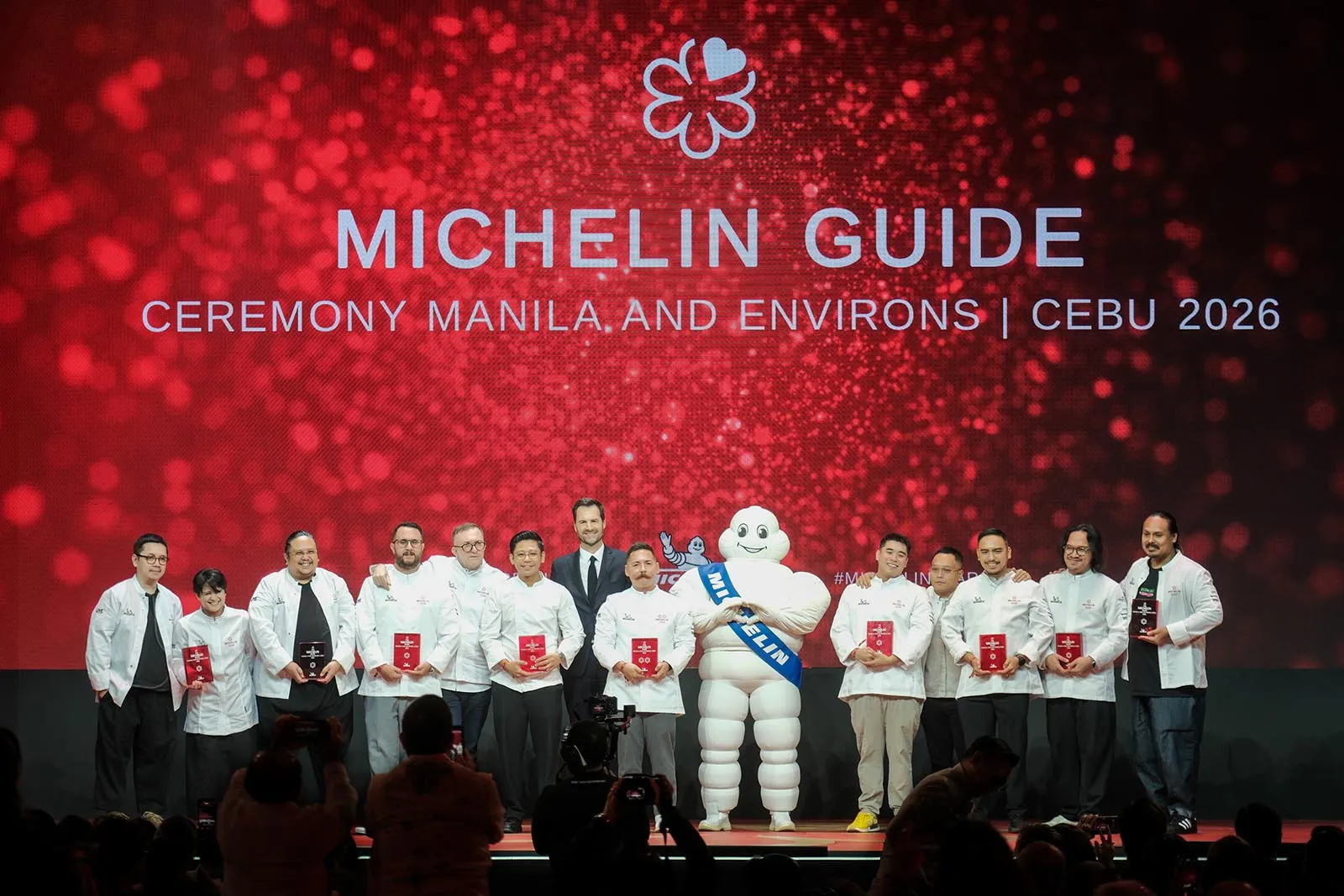
With its arrival in the country, Vogue Philippines spoke with awarded chefs Alphonse Sotero of Lampara, Nico Santos and Quenee Villar of Celera, Jordy Navarra of Toyo Eatery, JP Anglo of Sarsa Kitchen, and Josh Boutwood of Helm about the principles that guide their cooking, their approach to Filipino tradition and innovation, and what the Michelin Guide means for the Philippine cooking scene.
Michelin often celebrates chefs with a clear vision. What core philosophy drives your cooking?
Jordy Navarra: Representation. For me, it’s always been the food we like to eat—the food we can relate to—and the service and feel that reflect who we are and where we come from.
Alphonse Sotero: With Lampara, it’s Filipino traditions with Western techniques, but we should stay true to who we are, our flavors. [At] Lampara, we have the liberty to play around with textures, so the slogan is, “familiar flavors but not so familiar proteins.”
Nico Santos: “For us, it is just really collaboration, a highlight of Filipino ingenuity. For us, that is the core. Next would be the highlight of the produce that is at the same par [with] the produce abroad. But among anything else, it’s really just Filipino ingenuity, hospitality, and pride.”
Josh Boutwood: It’s respecting the ingredient that we make, and we find ways and techniques to amplify the flavor. So ultimately, it’s respect and technique that we apply.
JP Anglo: We just have to go back to basics and make everything good. Simple is good when it is done properly. Sometimes you don’t need to look far; it’s under our noses. If you slow cook the adobo overnight, adobo the next day will always be better. Let’s stop rushing our food. Low and slow.
Many Asian chefs are redefining local flavors for the global stage. How do you balance tradition and innovation in your dishes?
Sotero: We were also very sensitive about our foreign guests. In Lampara, we were known for Filipino cuisine for foreigners. For some foreigners, medyo malakas for them ang flavors natin. And kami, we didn’t really tone it down. But I guess we adjusted the flavors, still true to whatever we were trying to project, but it’s enough for foreigners to appreciate it. Kaya parang naging first stop kami ng tourists when they explore the place [Makati].”
Santos: For me, authenticity is really evolving and growing with the generation as we come. It’s not forgetting the roots and the heritage and taking them along with you as you keep developing new dishes and ingredients. As long as we still support our local farmers and producers, talent, then I think we’re in a good place.
Navarra: Always paying tribute to what came before us, including other chefs, styles, dishes, and techniques, while allowing room for innovation and evolution. Things that do not evolve sort of die out. And for me, paying tribute through both tradition and innovation is important.”
Anglo: Innovation and technique. If it’s a pinakbet, it’s a pinakbet. If it’s an adobo, it’s an adobo. I believe that innovation can be in different shapes and forms; you just need to respect the tradition.
Boutwood: Tradition should be challenged, but culture should never be altered. We have traditional cuisines that we can bend, not break. Evolve and put it in our perspective, but do not tamper with the culture that belongs to it.
Michelin recognition has changed chefs’ careers across Asia. What does this moment mean for you and for Filipino cuisine?
Sotero: “I’m really hoping that the support from the government, especially the Department of Tourism, for our industry, the NFD, will eventually trickle down to the agricultural sector. Na hindi lang tourism, kasi it goes hand in hand. If we have good produce, then we can cook good food. I hope this is the start… na from the Department of Tourism, magkaroon din ng help from the Department of Agriculture. Para hindi lang mapalakas ang tourism dahil meron nang Michelin Guide, but also matulungan ‘yong mga gumagawa at nagpo-produce ng ingredients. Para hindi rin selective sustainability. Hindi lang sustainable for those who can afford it. Right now ang daming add-ons and ang hirap ng logistics. But hopefully we can finally achieve something truly sustainable… something everyone can take part in.”
Santos: If anything, we want to make sure that we will not let Michelin down. If we do get more guests coming in, we want to make sure that we get their value for what they pay for. Also we wanna make the country proud and inspire many young Filipino talents as they open restaurants and go culinary. I just want to provide a stepping stone for them.
Navarra: It’s great to see everyone celebrated today, and [see] Filipino concepts, restaurants, and food recognized on a global stage.
Boutwood: I wasn’t expecting this, and I don’t know how to process this yet. With Michelin starting now, this is only the beginning. I cannot wait for next year, to see how well the restaurant progresses even more than it has in the previous years.
Anglo: It’s a proud moment for everyone. Today, we celebrate, put our guard down, and tomorrow we go back to work. And we go back stronger together.


