
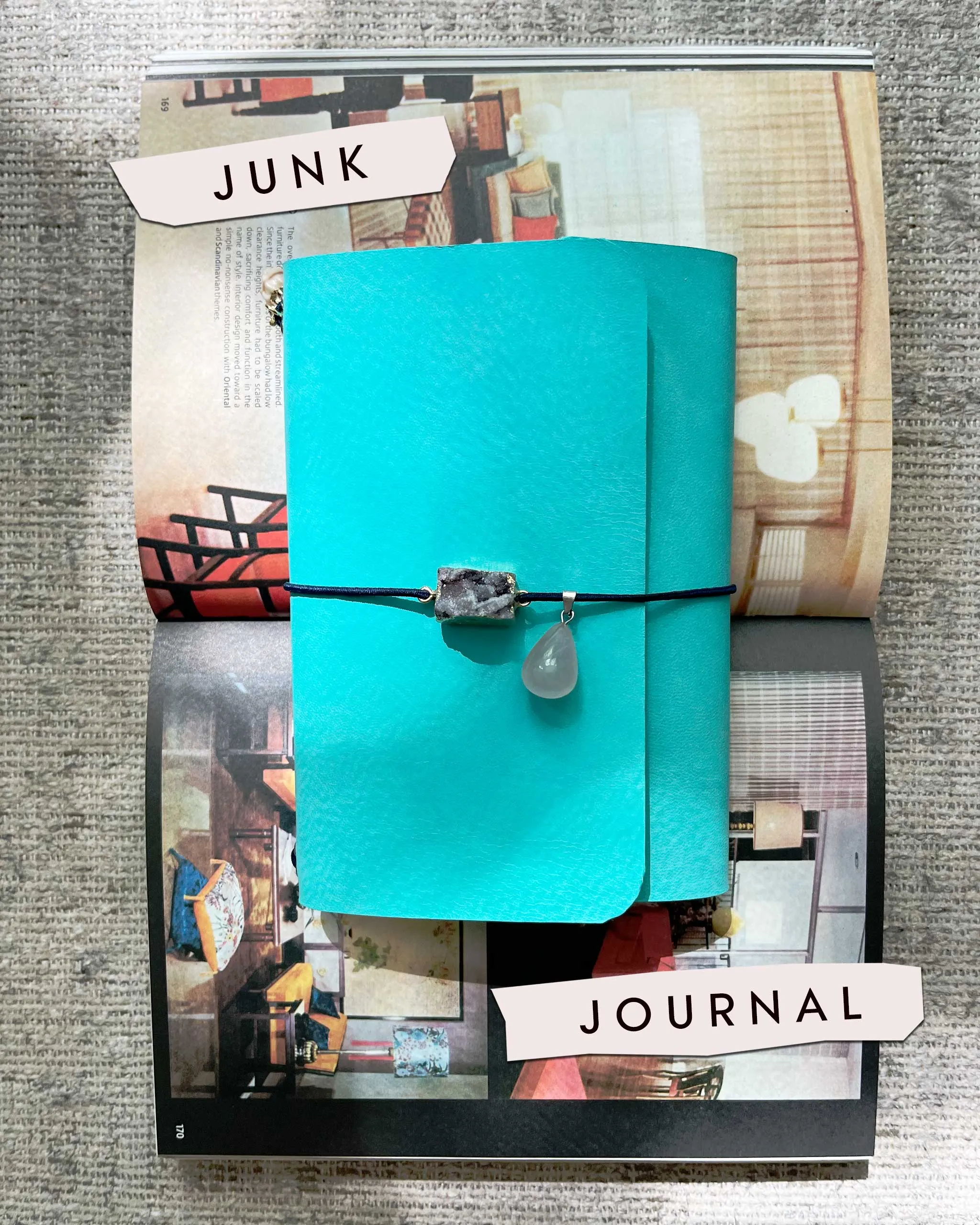
Photo courtesy of Grotto Media. Art by Bea Lu
Junk journals are ready to hold stories of daily life. Here’s why this creative practice feels sentimental and deeply tied to Filipino roots.
As a child, Andie Andrada kept diaries that looked more like oversized scrapbooks. She would layer stickers and scraps, collaging them to capture small moments of her life.
“The first time my mom ever gave me a notebook, it was like those fluffy notebooks that had a heart lock and everything,” she says. This childhood curiosity eventually grew into Grotto and Archive, a brand offering leather journals with custom covers, straps, and charms for fellow enthusiasts. Andrada says her products can even double as a small clutch.
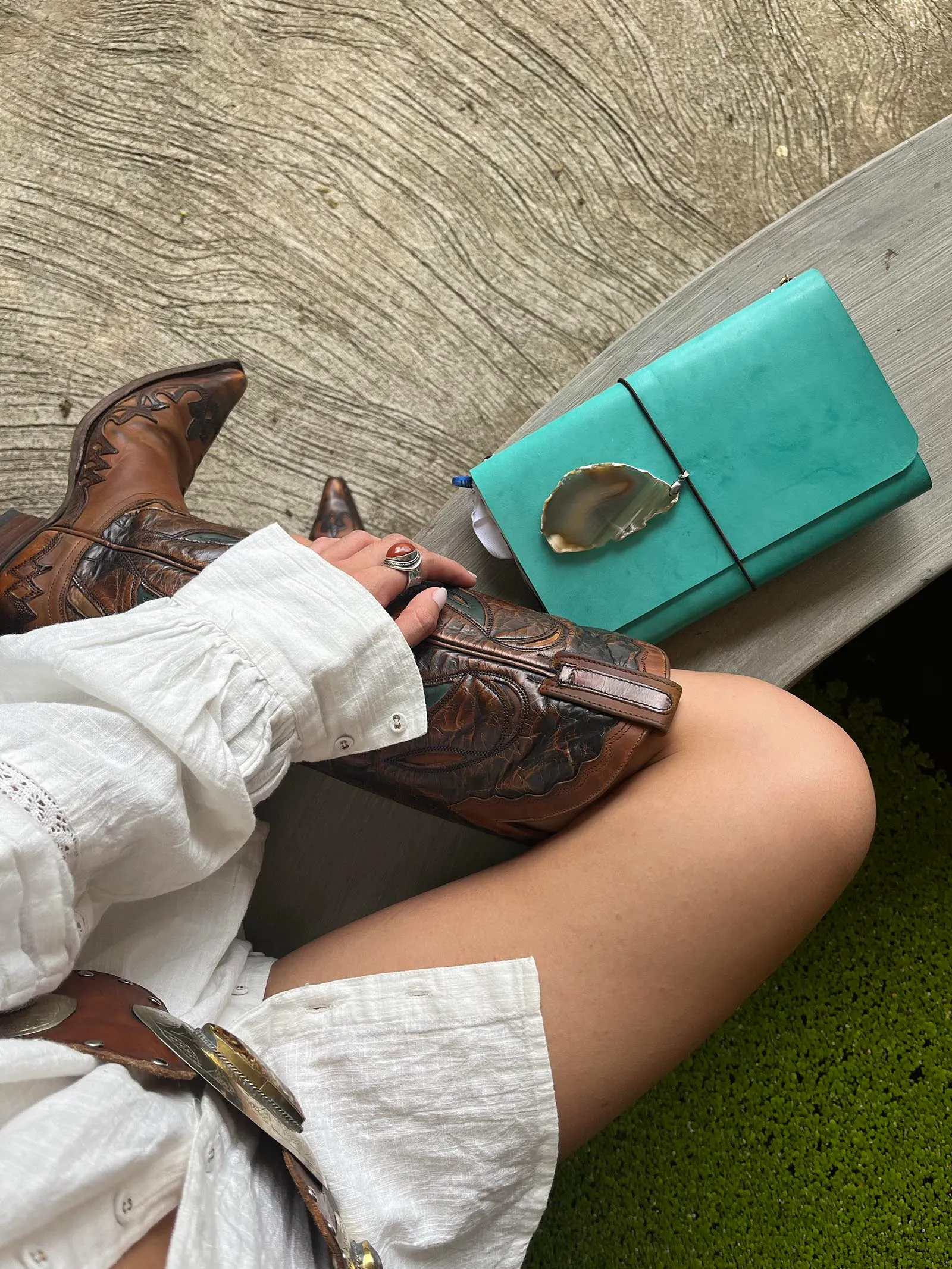
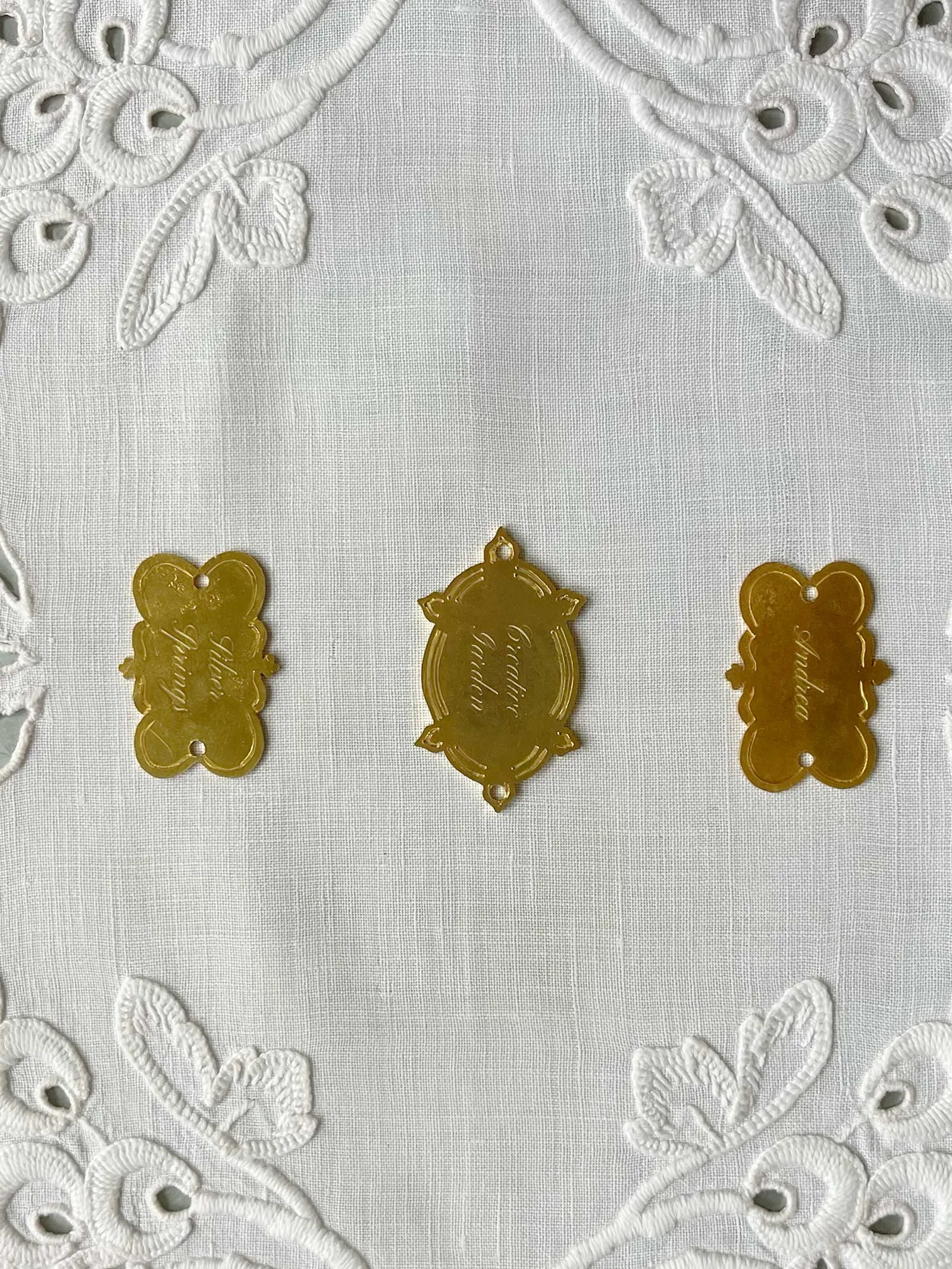
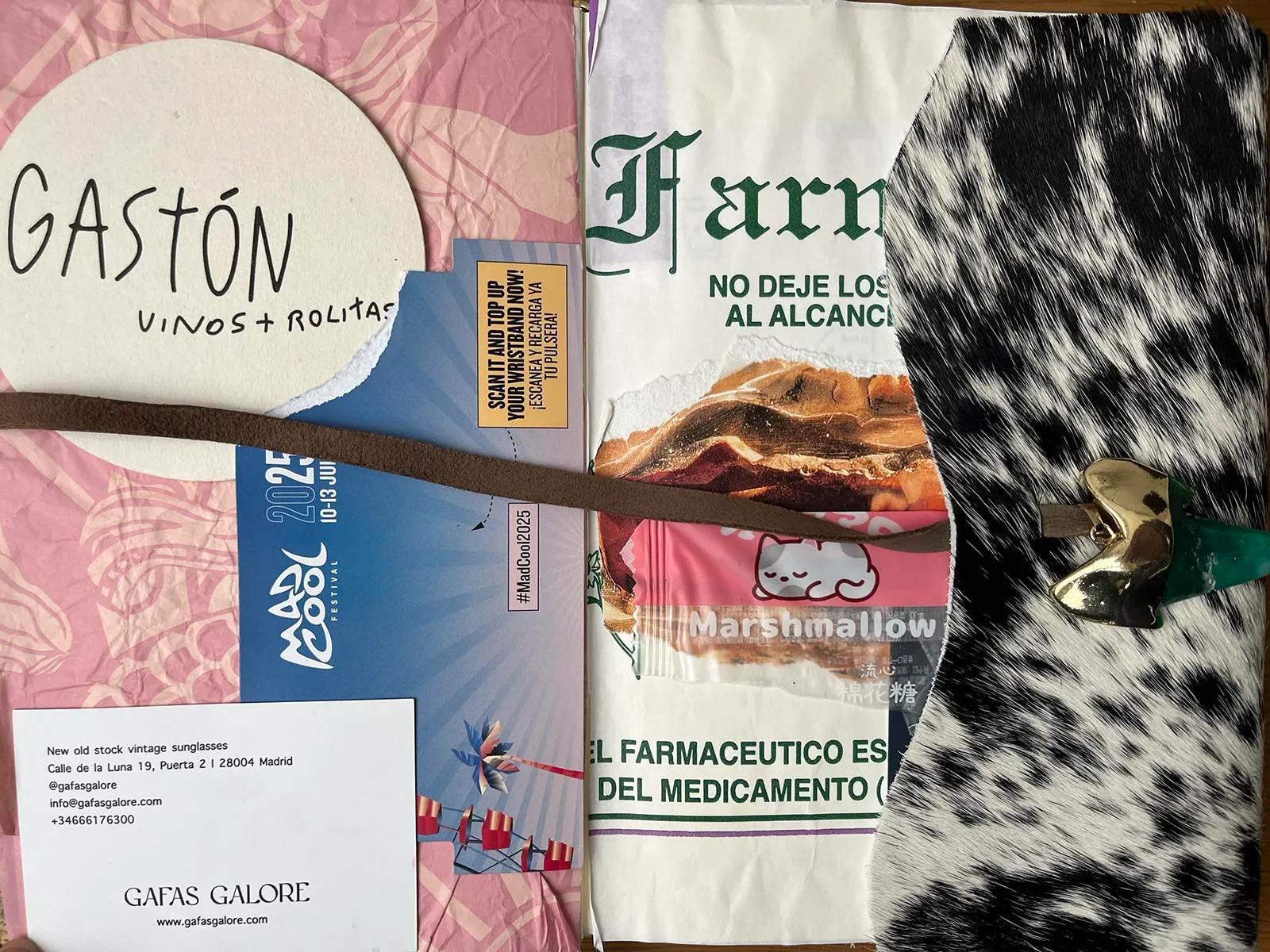
Today, junk journaling is about filling these notebooks with everyday scraps, creating a personal, lived-in collection that truly lives up to its name. Brands like Louise Carmen helped popularize customizable leather journals, inspiring creators like Andrada to offer more affordable options. This growing interest in personalized keepsakes mirrors the Filipino tendency to hold on to objects and memories, a tradition reflected in the anik-anik and abubot culture of keeping “all sorts of things.” It is a habit that has quietly evolved for years and remains easy to see in the way Filipino families fill and decorate their homes.
Architect Clarissa Lorenzo, author of Filipino Culture of Filling up Space in a Gated Community, shares that her study began from a simple curiosity as a child of Filipino parents who kept every little thing and displayed it throughout their home. That same curiosity stayed with her as she became an architect, influencing the way she approached designing other people’s homes. It was in her study where she found that this Filipino habit of keeping things traces back to the country’s history during colonial times and World War Two. Faced with uncertainties beyond their control, people held on to what they could, preserving items to avoid losing them.
“I want to remember how we were living and how our personalities come alive. [And in doing so], we are remembering. We’re making sure our memories aren’t just intangible [for] they become physical, something we can actually see and show,” Lorenzo adds.
Lorenzo also reflects on how keeping things is connected to the country’s modern heroes, our OFW family members. They often hold on to small items as memorabilia, passing them down as a way to keep memories alive. “It’s a reminder of them. You’re putting a smaller version,” she smiles. This thinking of preserving identity and memory also appears in other creative expressions, such as fashion projects like ProudRace, where Filipino heritage is reimagined and expressed through design.
Andrada, who uses junk journaling as a creative outlet, once told her boyfriend that she wanted to cut a piece of leather and make her own journal because she found certain brand journals too expensive for the craft. What began as a personal project has now grown into a brand that creates affordable journals for fellow enthusiasts through Grotto and Archive.
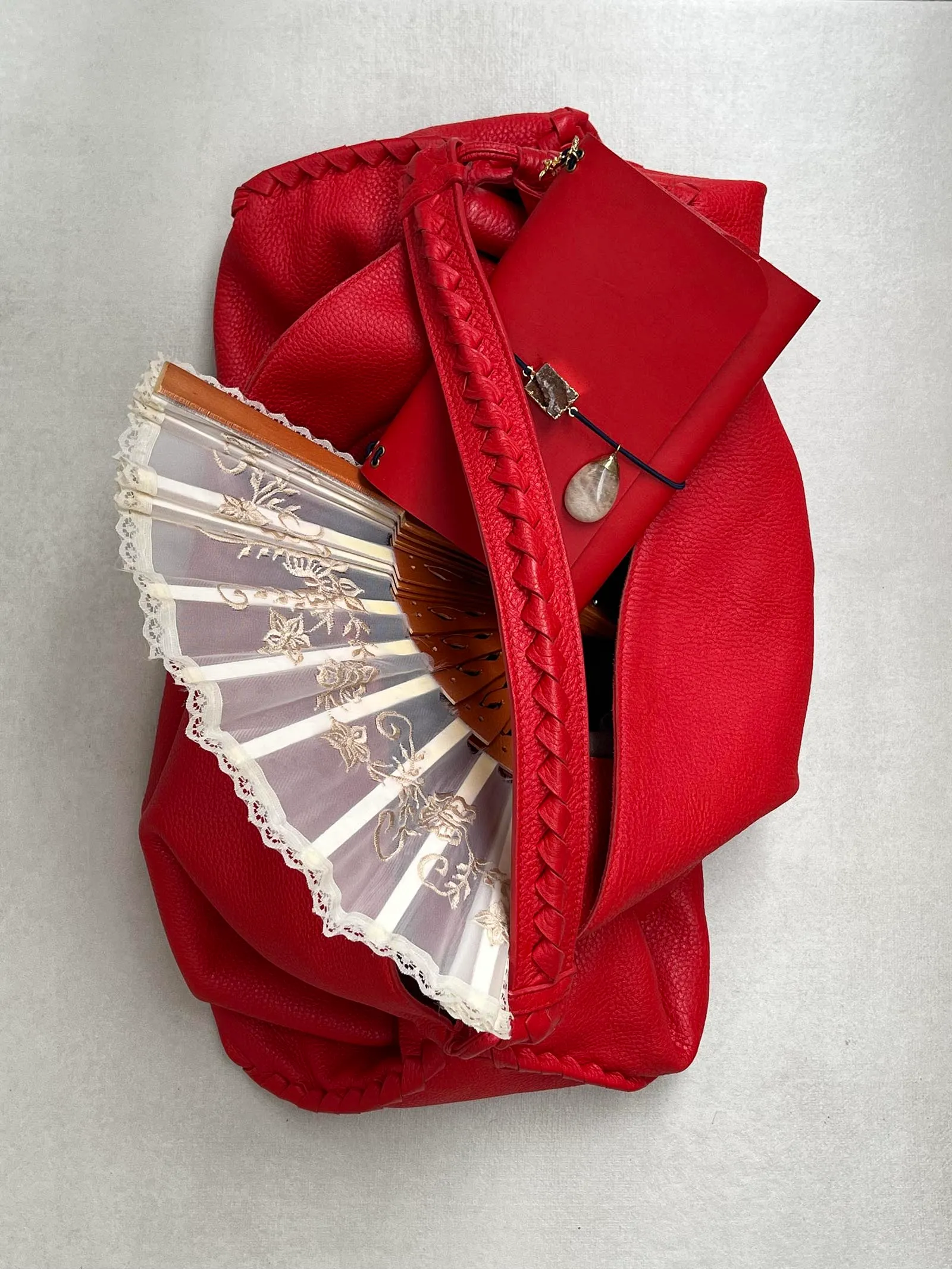
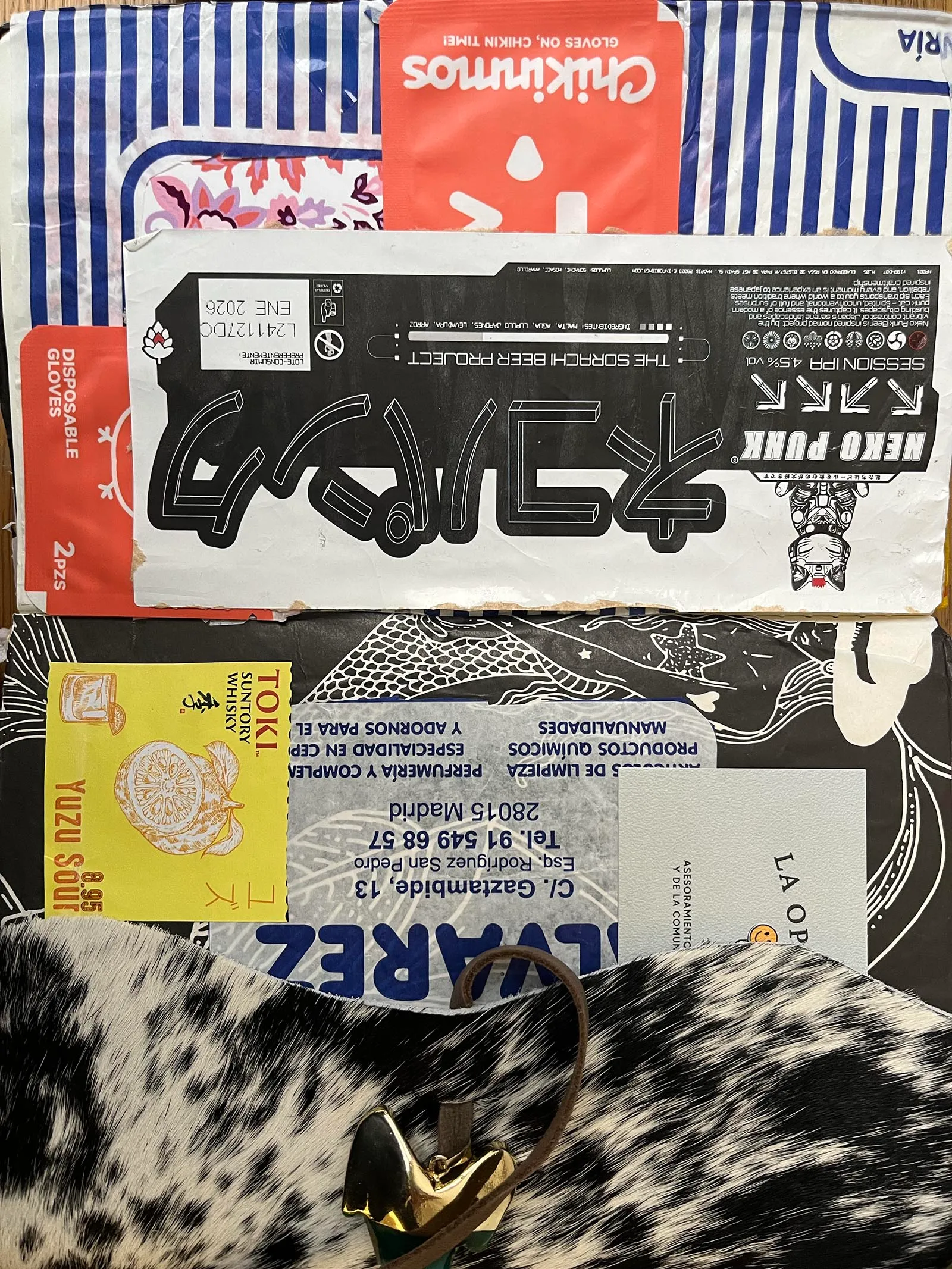
“Grotto and Archive journals are meant to see the world outside. I love that people take them everywhere and aren’t afraid to toss them around. I’ve always brought mine to the beach or wherever, and I don’t want anyone to worry about how it ages. I just want people to feel free to be a little careless with their journal,” Andrada mentions.
For those struggling with brainrot or just wanting to get started, Andrada advises, “Don’t care too much about how it looks. For me, just literally put anything. I feel like the nicest junk journals are always the ones where you can tell it’s really you.”
So for those who see junk journaling as one of their “ins” for 2026, taking a moment during the 2026 reset to reassess what goes in the bin can help ensure nothing meaningful gets tossed and the feeling of “sayang” is avoided.


