
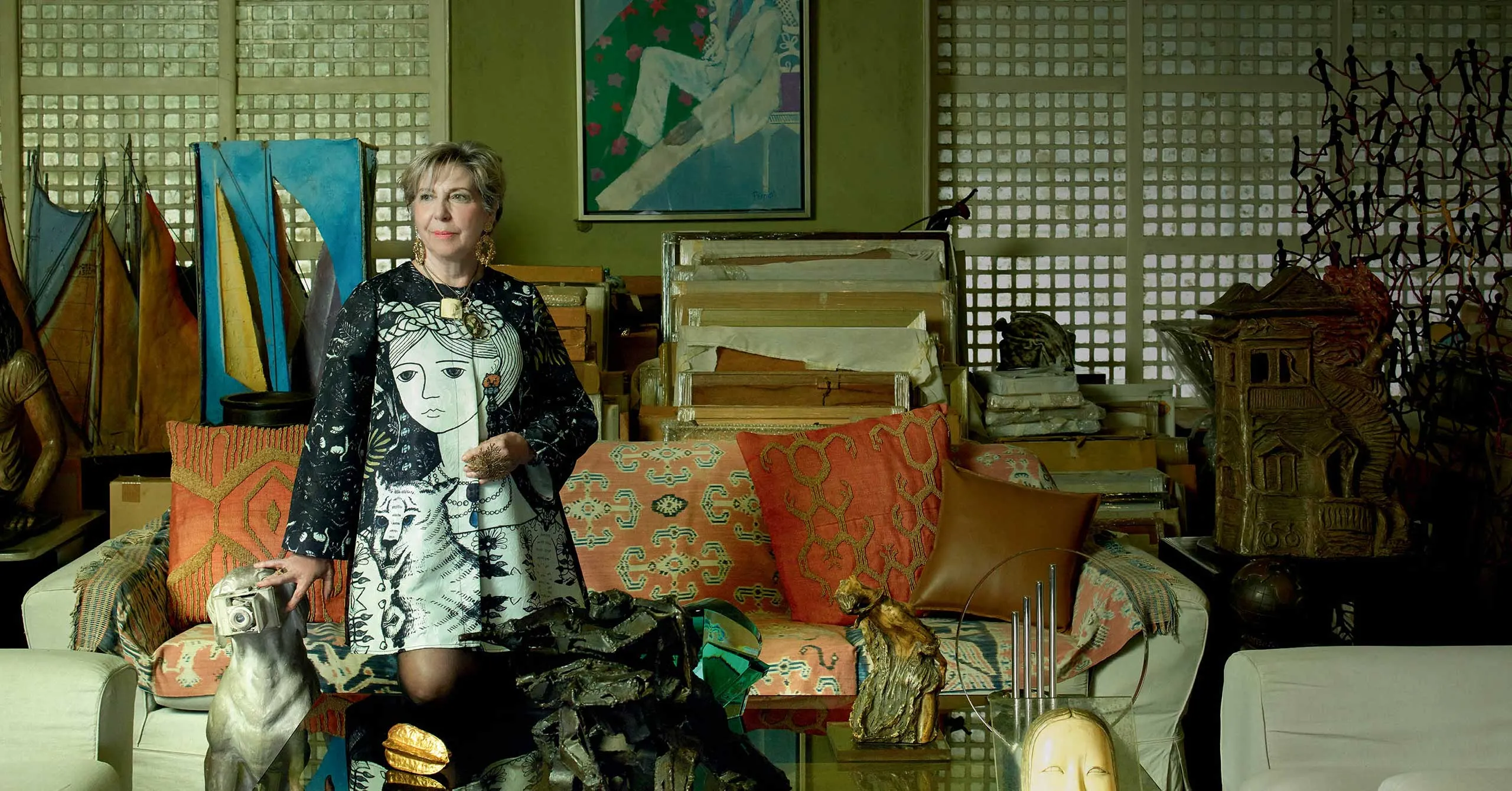
Photographed by Mark Nicdao for the March 2026 Issue of Vogue Philippines
Photographed by Mark Nicdao for the March 2026 Issue of Vogue Philippines
After Italian-born Silvana Ancellotti-Diaz met her husband, it wasn’t only him she fell in love with. She shares how she grew passionate about Philippine art and culture, and the community that surrounds it.
A love story within love stories, 1971. For Italian-born Silvana Ancellotti-Diaz, the pursuit of Philippine art and culture is not just a passion; it is in her DNA. Balancing the indulgent spirit of la dolce vita with a deep sense of responsibility, she moves through the art world as an uninhibited wanderer, driven by a boundless lust for life. At 22, Silvana was a citizen of the skies. A flight attendant for Alitalia, she drifted between continents, touching down in the capitals of Africa, the Americas, Europe, and Australia. Yet, for all the world’s vastness, it was during a layover in Manila that she met artist Ramon Diaz, and in a heartbeat, decided to put her wings away for the greatest adventure of all: love.
After a whirlwind six-month romance, they married on the first day of Spring on a majestic mountain top in her beloved Brescia. True to her refined yet artistically daring sense of style, Silvana chose a viridian chiffon dress adorned with anemone floral prints for her wedding. In doing so, she quite literally wore its symbolism, embodying excitement, trust, and protection for their union’s future. Her inspiration came from Botticelli’s magnificent “Primavera,” a fitting muse for a bride who viewed fashion as both art and expression.
There’s a saying that when one marries into a Filipino family, they’re marrying at least a hundred people. In Silvana’s case, her new, tightly woven extended family included parents-in-law, 10 sisters-in-law, and one brother-in-law, along with their spouses and children. For this unconventional European cosmopolitan, finding a room of her own proved challenging. Yet, as early as her honeymoon in New York, Silvana began to discover her calling in a most unexpected and meaningful way.
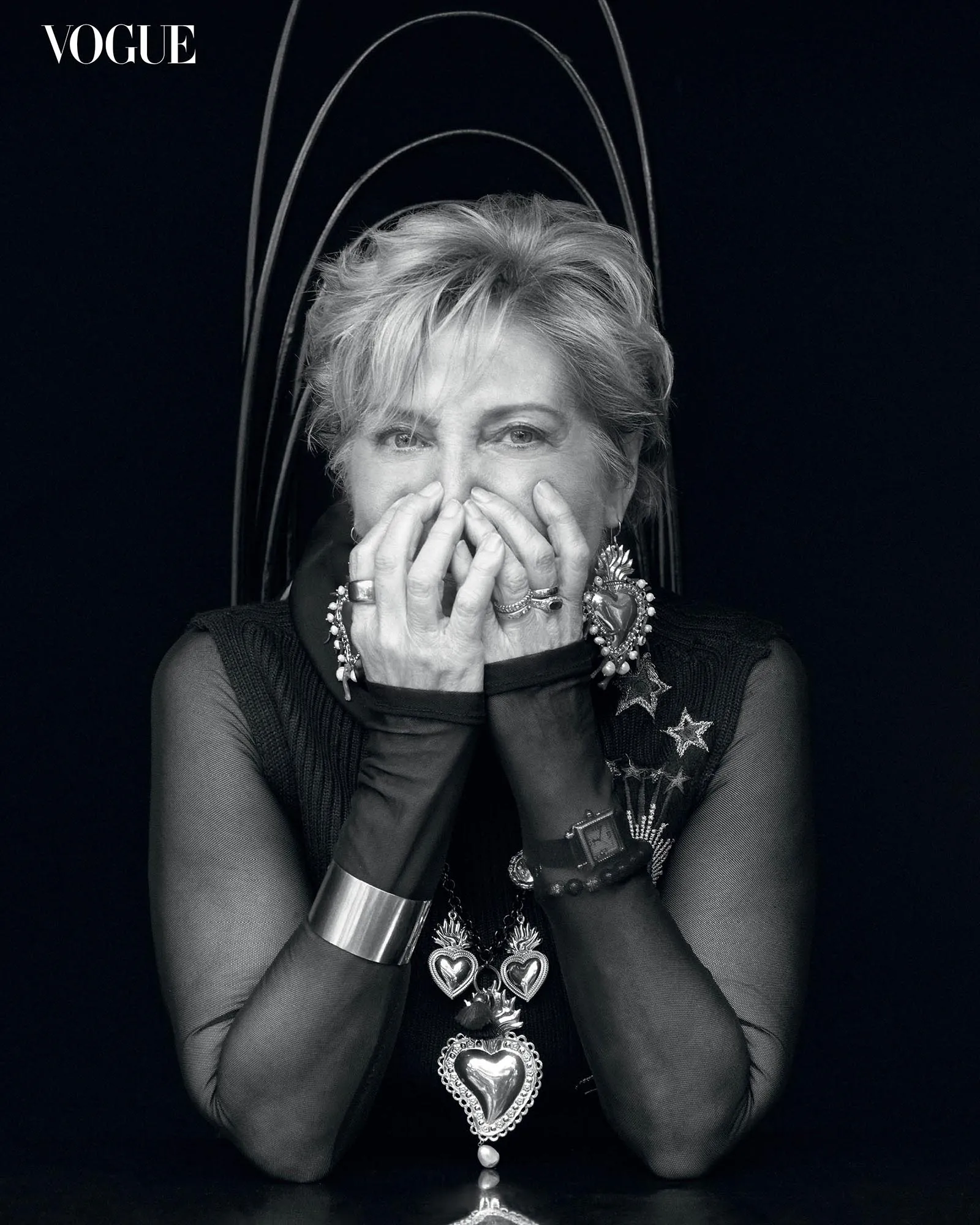
It was Ramon who first suggested to his sister Isabel Diaz that she exhibit her paintings in Manila and tasked Silvana with this fateful idea. And of course, being the risk-taker she has always been, armed with confidence and charisma, she did just that. The timing, was perfect. She was introduced to Mila and Jose Dayrit, owners of the Miladay Art Center in Makati and the curator and painter Lito Severino. He approved the exhibition proposal just as an artist had withdrawn from the gallery’s schedule. Isabel sold out her first solo exhibition in Manila and Silvana’s destiny had been sealed.
Manila, 1974. Two years later, word spread quickly through the close-knit art community that a magnetic 26-year-old Italian, stylishly dressed with piercing green eyes, was working as Miladay’s art assistant. Tiny Nuyda and Onib Olmedo were the first of a parade of artists to see who this mysterious woman was. Tiny and Onib, two of Silvana’s future musketeers, introduced her to the now legendary Saturday Group, 1968 -1978: a group of painters, sculptors, printmakers, writers, art critics, collectors, gallerists, friends and acquaintances, professional and amateur models who came through the Taza de Oro coffee shop doors in Ermita. These early encounters were to be the beginning of Silvana’s life-long love affair with Philippine modern and contemporary art, and the artists who create it. Her education in Philippine art came not from a classroom, but from multicultural immersion, cultivating a discerning eye for the great periods of Philippine art, listening to, and engaging with artists at every opportunity.
“To love a work of art is to follow the life of an artist”
And really, how could she be otherwise? Silvana was raised in the embrace of Mantova, an ancient northern Italian city whose roots reach back to the Etruscans. During the Renaissance, it flourished as a radiant center of culture that could rival Florence, where grand palaces and over two hundred churches rose amidst verdant landscapes and encircling lakes. In such a place, art was never an occasion. It was a way of being, its beauty woven seamlessly into the fabric of everyday life. It was this way of seeing that she sought to pass on to her three children: Illac, Marco, and Romina. She wanted them to feel the same swelling pride for the Philippines that she had come to cherish, to know its stories, its resilience, and its grace. Just as her mother and grandfather had once taught her to study a painting or a weathered façade to find its hidden poetry, Silvana taught her children to look deeply, not just at art, but at life itself, and to recognize the beauty that lives within it.
Galleria Duemila, 1975 to 2025. When the news broke that Miladay Art Center would close its doors due to soaring rent, Silvana was heartbroken. Yet, in a eureka moment, she turned to her closest friend, Christina Pagaspas Hagedorn, with a daring question: Why not build a gallery of our own? To fund this dream, Silvana approached her father-in-law, Jaime Balthasar Diaz. His response was candid, skeptical, and ultimately, an act of love. “This is the worst investment of my life,” he declared. “I cannot understand how anybody would want to invest in a painting like the kind you are selling. But to make you happy, I will give you PHP20,000.” Christina matched the sum, and with that modest capital, Galleria Duemila 2000, its original, forward-thinking name, was born. It was a remarkable feat, launching against the backdrop of a menacing dictatorship. Yet it was precisely this era of struggle that ignited an explosion of diverse expression and visceral passion in the arts.
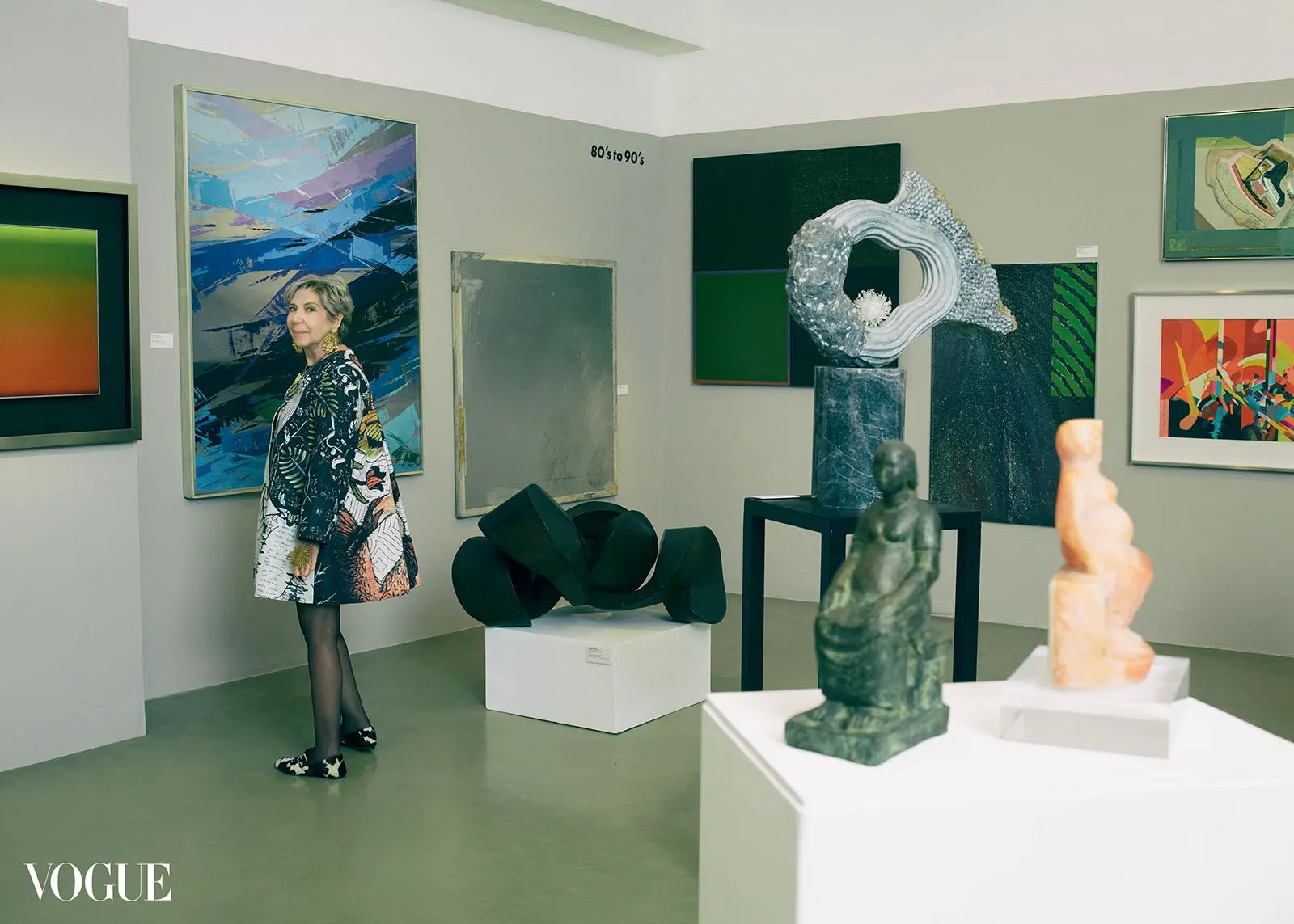
In opening the doors of a modest rented office on the second floor of the Vernida Building, Silvana was stepping into a lineage of formidable women, carrying the torch of the postwar modern art movement pioneered by matriarchs like Purita Kalaw-Ledesma and Lydia Villanueva-Arguilla. That “worst investment” would go on to become a vital part of Philippine art history. And like these visionary women, she remained remarkably hands-on, even going so far as to design the gallery herself, down to its minimalist furnishings. Fifty years on, Galleria Duemila, now nestled in Pasay on her residential property, where it has stood since 2006, has become a dynamic hub: a sanctuary where hundreds of artists have launched or expanded their careers. What began in a small, rented office has evolved into a pillar of modern and contemporary art, serving not only as a venue for exhibitions, but as a home for social gatherings, cultural discourse, and community.
Avanti Sempre Avanti, “forward always forward.” Silvana’s lifelong motto, osmotically inherited from her cherished father, who was incarcerated for two years in one of Mussolini’s prison camps, captures her transformative legacy. This spirit of perseverance inspired the title of the gallery’s golden-anniversary exhibition, currently on view until March 28. It also lends its name to the forthcoming book I am editing, celebrating five decades of vision, courage, and rebellion. The book brings together essays by curators, critics, and educators: Australia-based Gina Fairley, Patrick Flores, Victoria (Boots) Herrera, Lisa Ito, Eileen Legaspi-Ramirez, Cid Reyes, and myself, alongside reproduced works by artists whom Silvana and Galleria Duemila have championed over the decades. It will also gather artifacts from her expansive archive, as well as oral-history excerpts drawn from interviews with artists, members of the art community, family, and other collaborators in the cultural sector.
“Memories play dirty tricks,” something my dearest friend, New York-based novelist and playwright, Jessica Hagedorn once said to me while looking for the docks she landed at in San Francisco Bay Harbor in 1963. And they do indeed. As is the case in my numerous interviews with Silvana who recounted her own labyrinthine journey, stories grew richer and deeper with each retelling. It was actually Jessica who introduced me to Silvana and Ramon in the summer of 1988, when our lifelong friendship first began. Our intricate relationship, founded in Ramon and Jessica’s childhood bonds, has been a tapestry woven across decades.
That friendship ushered me into a nuanced world of creative citizens bound by a shared humanity. I would like to share a few anecdotes, vivid testaments to Silvana’s straight-shooting and loyal persona. The trailblazing Los Baños–based artist Junyee once recounted how Silvana turned up with her young children so they could donate blood to his wife, whom they barely knew at the time. None of them turned out to be a match, and Silvana was disappointed. Yet she was deeply moved when Junyee expressed his gratitude by choosing to exhibit his works exclusively with Duemila.
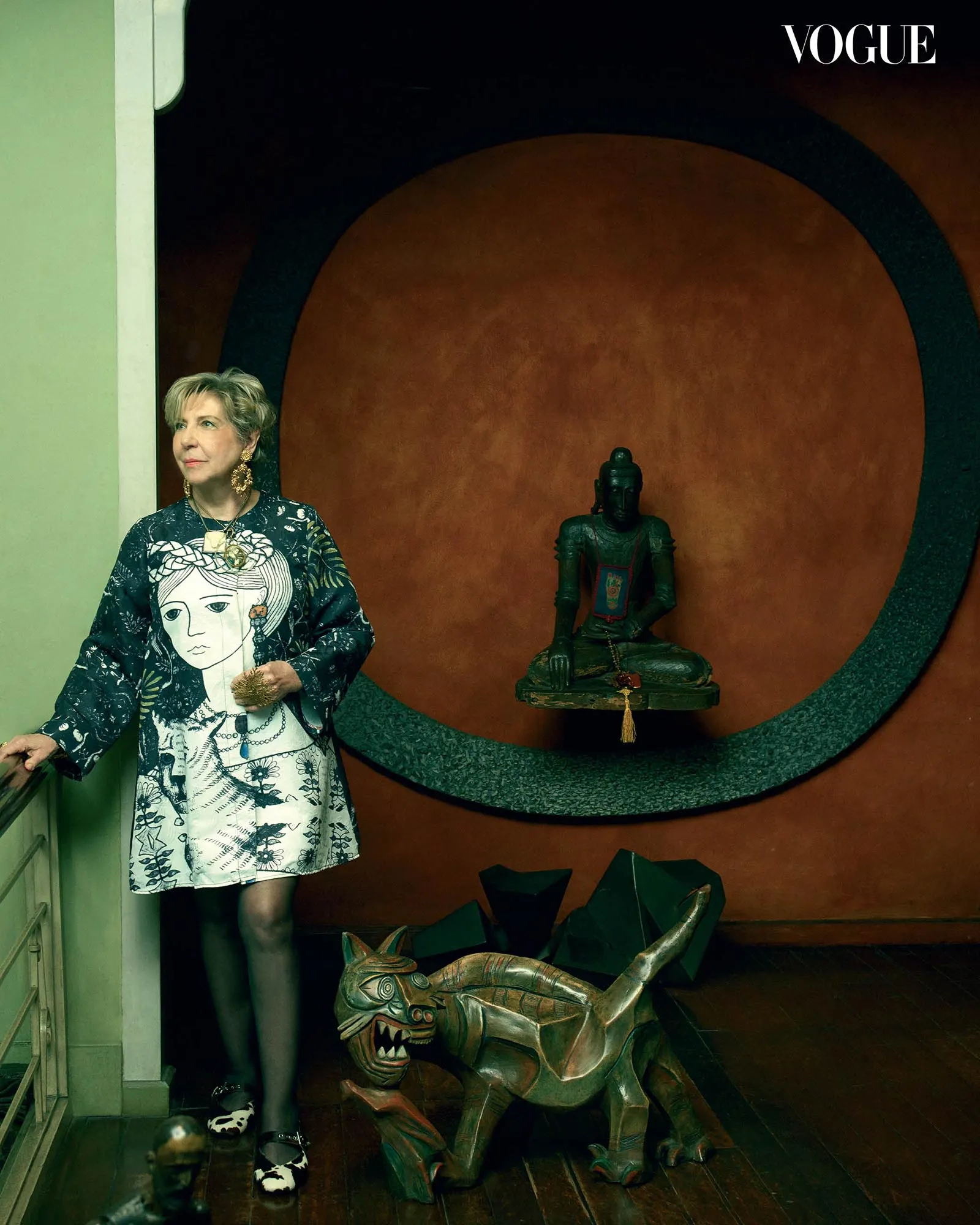
The illustrious Bacolod-based artist Charlie Co perhaps captures her best when he says that Silvana is “more Filipino than Italian,” a compliment felt more than merely heard. During his interview, he recalled stories that explain why she is, in his words, “very close to my heart.” Because Silvana believed in supporting artists across the archipelago, she never treated Charlie as an artist from the provinces. He was an artist. Period. After he left Hiraya Gallery in the early 1990s, she exhibited him regularly and made a point of attending his national and international shows, as well as his Orange Gallery and VIVA EXCON endeavors. She visited him in the hospital on several occasions when he was gravely ill and undergoing dialysis. Even in those most difficult moments, they made each other laugh. He was privy to her abundant, sarcastic humor, and her delicious streak of naughtiness.
Over the decades, Silvana has championed many women artists, among them Lebanese sculptor Mary Baddour (featured in Galleria Duemila’s inaugural exhibition), Agnes Arellano, Lina Llaguno-Ciani, Imelda Cajipe-Endaya, Julie Lluch, Impy Pilapil, and Phyllis Zaballero. Although the late Brenda Fajardo was not an artist she exhibited, Silvana’s enduring respect for her was unmistakable when we attended Brenda’s memorial service together in September2024. True to form, Silvana danced unabashedly, swaying to Indigenous music as she filmed the occasion (just as she so often does at the events she attends) inside a circle of Brenda’s close friends, most of whom she had never met. No matter the setting, Silvana’s kapwa spirit is genuinely felt.
It is an innate Filipino value, yet universally practiced by all who possess empathy and faith in the human condition. Exhibition after exhibition, art fair, after art fair Silvana has profited and lost in the marketplace; for her, art has never been about capital gains. The AVANTI, SEMPRE AVANTI/ FORWARD, ALWAYS FORWARD exhibition celebrates the imaginative impulses, whimsical playfulness, and tactile brilliance of artists whose careers helped galvanize Philippine Modern and Contemporary Art into its present vibrancy. Consisting of 37 artists, 12 of them were members of the famed Saturday Group (1968 to 1978), these 47 artworks, created in 1957 to 2018, were culled from Galleria Duemila’s vast collection and archive treasure trove.
Five decades of art history diverge and converge within, across, and between time. This exhibition, the hardest one I have curated to date, invites viewers to experience abstract and minimalist paintings, artworks on paper and sculpture into a convergent world of artists and art director Silvana Ancellotti Diaz. When asked about the difficulty in selecting the artists included in this exhibition, she explained that she wanted to feature “artworks that speak to the soul.” An impossible task, perhaps, but one guided by intuition and her love for works that surprise, bewilder, and awaken curiosity. At its core, this exhibition is her tribute, each work like notes of a grand composition, their titles like lines in an ode.
By ANGEL VELASCO SHAW. Photographs by MARK NICDAO. Deputy Editors: Trickie Lopa and Pam Quiñones. Features Editor: Audrey Carpio. Art Director: Jann Pascua. Fashion Editor: David Milan. Producer: Julian Rodriguez. Multimedia Artist: France Ramos. Senior Lighting Director: James Bautista. First Assistant Photographer: Arsan Hofileña. Second Assistant Photographer: Cris Soco. Makeup: Neal Allen Laureano. Hair: Miggy Carbonilla. Shot at Galleria Duemila
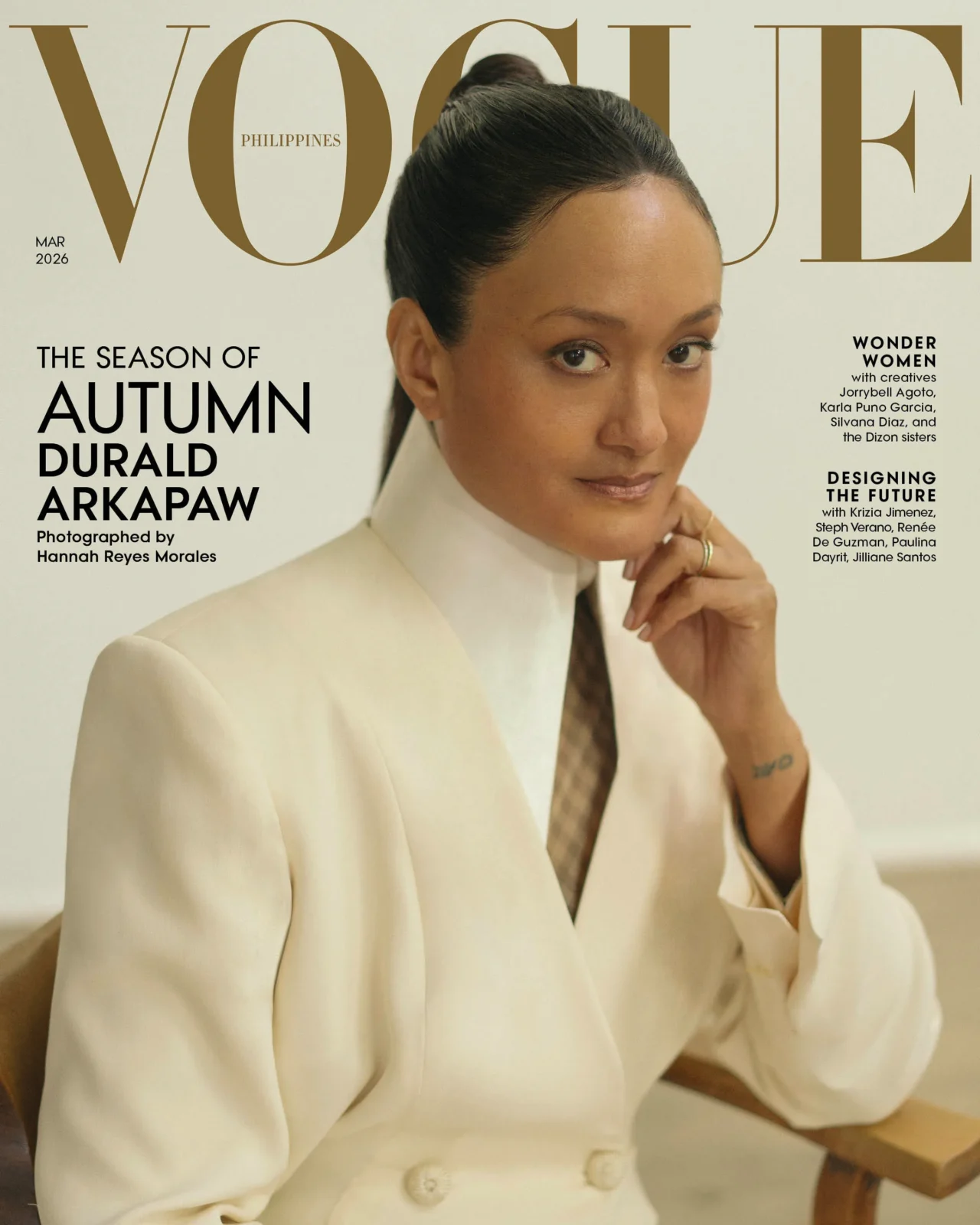
- Autumn Durald Arkapaw Reflects on a History-Making Year, From Sinners to the Super Bowl
- A Portrait of Silvana Ancellotti-Diaz in Bold, Expressive Strokes
- How the Sisters Behind Jewelry Brand Jul B. Dizon Propel a Legacy Forward
- Watch: Filipiñana’s Jorrybell Agoto Is Poised to Take on the World of the Silver Screen


