
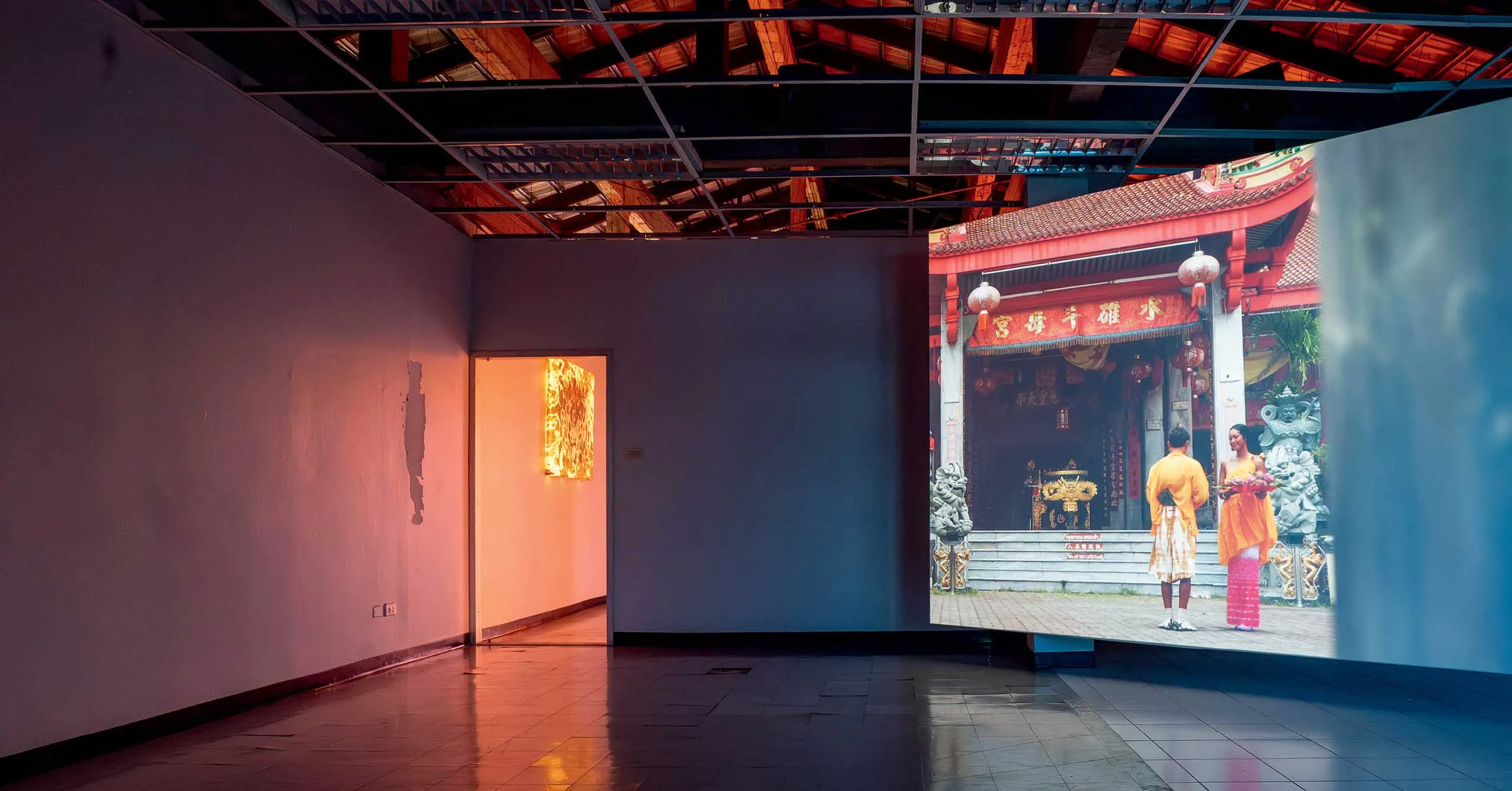
Photographed by Wide Walker for the April 2026 Issue of Vogue Philippines
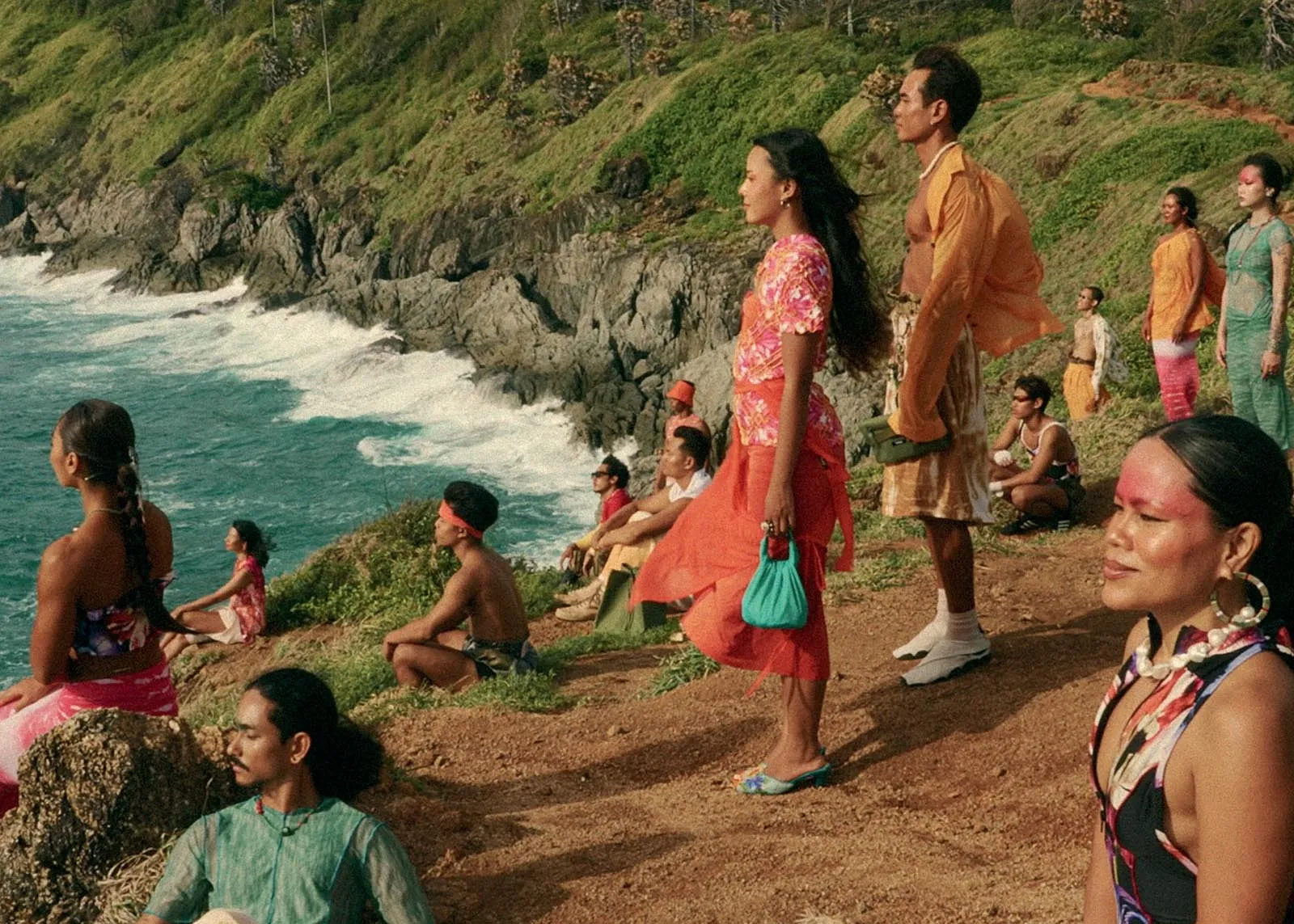
For the fourth Thailand Biennale, TOQA founder ISABEL SICAT dressed 120 cultural actors in functional workwear cut from hand-painted batik. Photographed by Atiwat Sukkhum for the April 2026 Issue of Vogue Philippines
For the fourth Thailand Biennale, TOQA founder and creative director Isabel Sicat dressed 120 cultural actors in functional workwear cut from hand-painted batik.
How often does one return to Phuket? Last year, Isabel Sicat of TOQA made the journey on five separate occasions, each visit in service of her projects for the Thailand Biennale.
“I feel like this was my entire 2025,” she says from her hotel room in New York, in between crisscrossing the globe for the press tour of Rafael Manuel’s Filipiñana, with stops at Sundance and the Berlin Film Festival. What began as a curatorial invitation soon expanded into a full ecosystem for the fourth edition of the nomadic contemporary art festival. “Developing three original fabrics, one full fashion collection, 120 uniforms, and then shooting a film and building an installation; that sounds insane when I say it out loud, and that’s why I have white hair.”
The project came into fruition when curator Hera Chan visited Sicat’s Manila studio and encountered earlier works for the Hawaii Triennial (Midnight Smoothie), Bellas Artes (Moodyisle), and the Manila Biennale. At the time, Sicat was already in the midst of reimagining the label’s direction. “I was shifting TOQA toward uniforming, thinking about clothing as functional workwear and uniforming as a design language, worn for everyday adventure.” Chan proposed extending that philosophy into the framework of the Biennale. “From there, the collaboration unfolded very organically.”
While most art fairs opt for something simple: a souvenir T-shirt, graphic sweatshirt, or a pin badge, TOQA took a more ambitious route and created a capsule collection that would feel right at home in a hypebeast’s wardrobe. It was designed with practicality in mind for docents, curatorial and management staff, and installation teams, garments intended to be worn daily across more than 20 exhibition venues throughout the island, including Saphan Hin Park, Phuket Old Town, Promthep Cape, and the Municipal Gymnasium.
Conceived in collaboration with Ying Batik Paint between Manila and Phuket, the uniforms blended Ying Batik’s hand-painted techniques with TOQA’s sport-resort sensibility. “We developed motifs together and taught each other how to create something hybrid between our practices.” All the textiles were 100 percent hand-painted batik, featuring fruit motifs, pineapple, mangosteen, durian, and rambutan, rooted in Phuket yet recognizable across Southeast Asia.
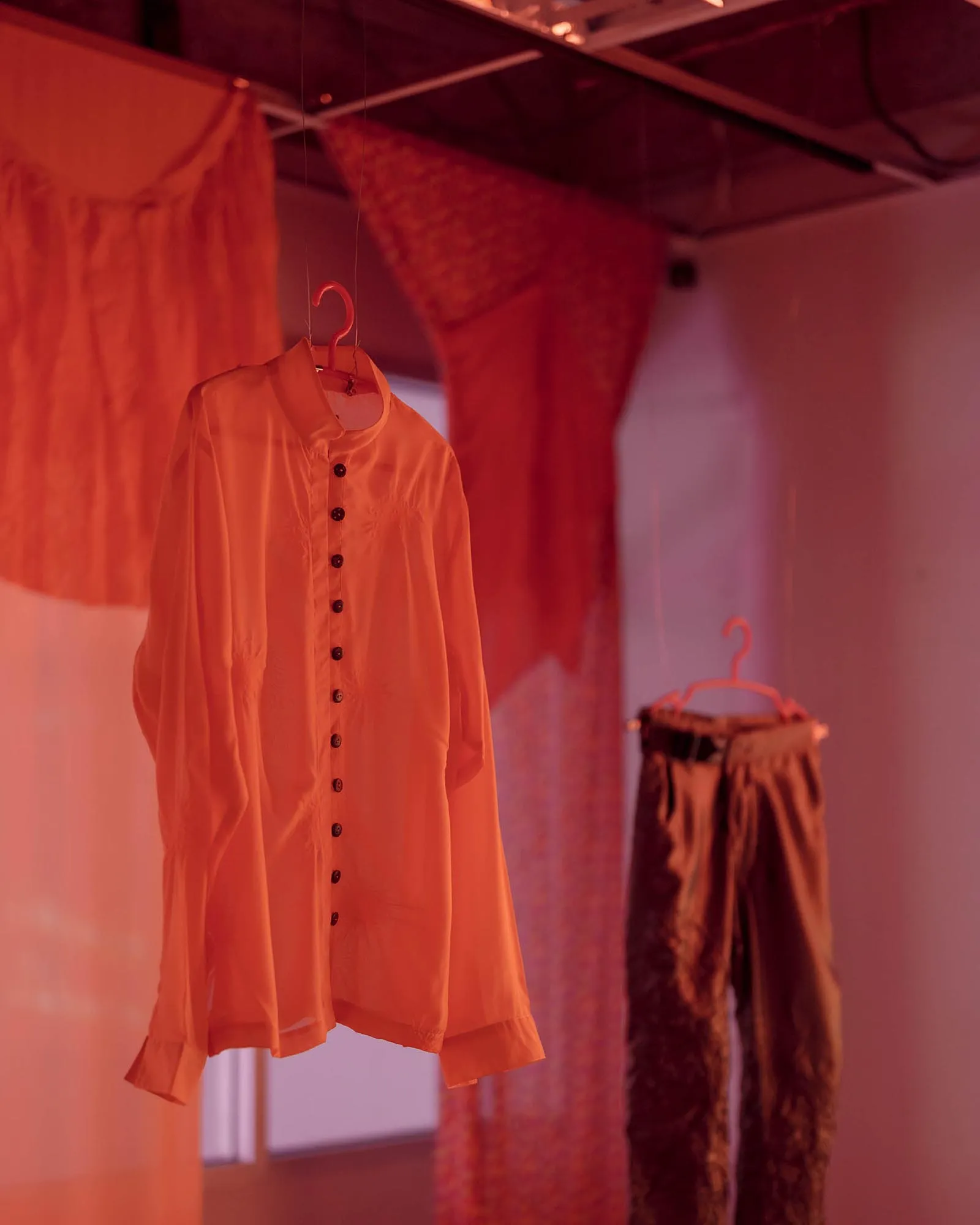
Each garment was cut with rigorous research and layered with local habitus. A shirt drawn from Ying Batik’s archive and traditional Thai government uniforms, softened with feminine detailing. A boxier shirt nodded to school uniforms, acquainted and structured. The fisherman pants reinterpreted banana leaves and traditional Thai garment with a flexible, one-size-fits-all cut.
“It can be worn in various ways, adaptable to different bodies and personal preferences.” Sicat was intent on allowing participants to claim the garments for themselves. “We encouraged every participant in the Thailand Biennale to wear it their own way and make it their own.”
Color, too, demanded careful calibration. “In Thailand, certain colors carry specific political connotations, so the main directive was to ensure that what we created sat outside of any existing political charge.” Within those parameters, there was still room to experiment. As she notes, “we were given a great deal of trust and freedom.” Sicat is especially proud that the collection “speaks to all the things that TOQA is about on such a big level,” and completing such a magnitude of a commission. “120 sets mean 240 pieces. That is so much. And I am excited that that much of it is actively living in the world.”
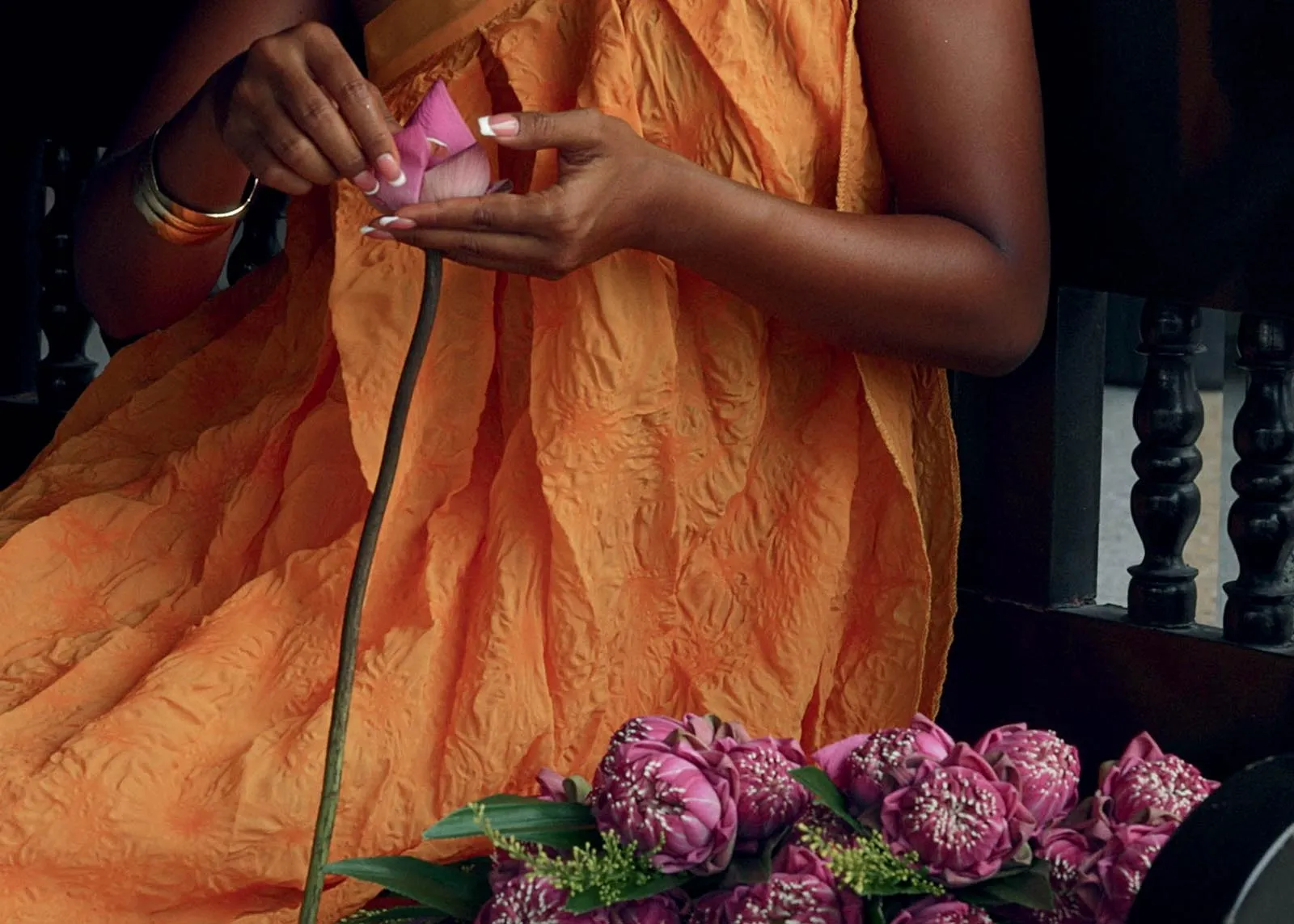
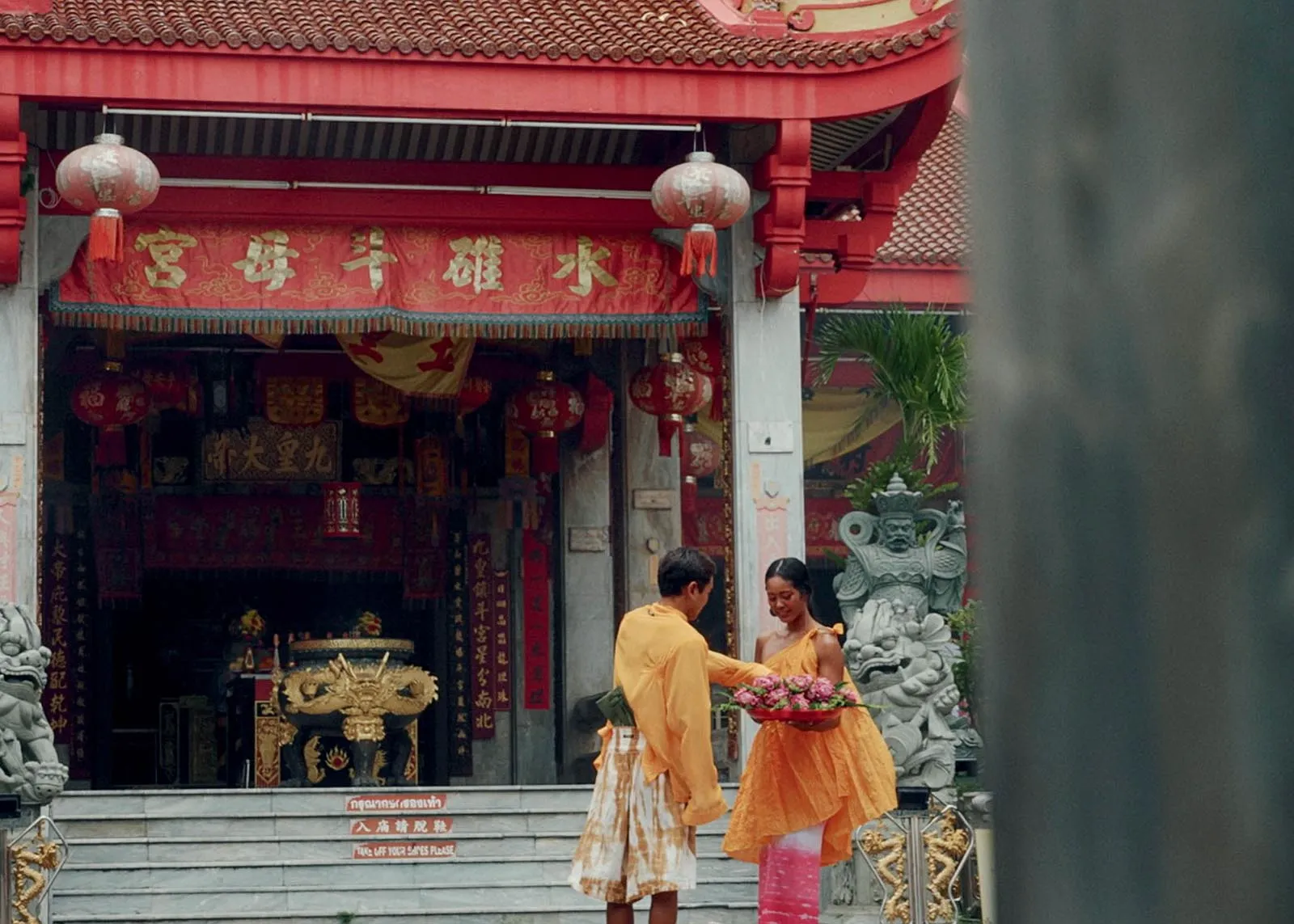
The uniforms flow directly into the film created for the Thailand Biennale, produced by Clementine Comoy and Dominic Bekaert of Zoopraxi Studio. Titled Like the Sun, I Love the Sky, it takes its cue from a 1950s Thai love song shared by Hera Chan. “Even though I didn’t understand the words, I got how it made me feel, and I wanted to share that sensation: unprecedented, but somehow familiar.”
The film traces the arc of a single day, from morning market to sunset, mapping rituals and gestures across Phuket. It was initially conceived around three acts of affection: a birdsong competition, a Muay Thai fighter performing Wai Kru, and temple rituals. Yet it evolved in response to the realities of the people she encountered along the way, with the storyline and script adapting to lived experience.
Capturing the story required time and multiple return flights. The first expedition was spent in the field with batik artisans, refining mangosteen iterations and testing textile possibilities for the costumes. The second focused on casting and styling, while the third turned to location scouting, mapping the physical lands.
What may have appeared to outsiders as leisure was essential research. “Just like maybe to some people it might sound like going on vacation, but to me it’s just really getting to know a place through. It’s like people, places, and the kind of experiences that are specific there.” In Phuket, she found both familiarity and difference, echoes of home tempered by distinction. “I was really, I think, excited by and engaged by this relationship to another Southeast Asian place that reminded me of Manila, but it wasn’t Manila, but there were so many things that I could draw connections to.”
She was drawn to parallels in the most unexpected corners. “There’s this thing called Kwanok in Phuket where these guys will have their pet birds compete for the beauty of their song. But I feel like it’s such a much more beautiful version than cockfighting in Manila, right?”
Rather than relying on agents or self-tapes, casting became a conversation between the street and the community that naturally gathered around the project. “It was a combo of street casting and then kind of like organic, the community that formed underneath it.” The fishermen who appear on screen were not performers stepping into roles, but men inhabiting their own daily rituals. “The guys on the boat, those guys are not like actors. They really are just like fishermen on the boat.
The principal photography on location progressed with little room to pause, particularly at the crack of dawn to shoot the trucks filled with pineapples and lemongrass, which she describes as “ready-made sculptures.” The finale, in particular, tested everyone’s limits. “We had to hike 27 people up there in full costume and like, try and not get hit by the rain.”
At one point, the weather threatened to undo it all. “We almost turned back because it started raining. And I remember the crew looked at me, and they’re like, ‘Do you want to go forward or not?’ And I was like, ‘OK, yeah, let’s go.’” The gamble paid off in something unforgettable. “Because we switched forward and literally made everyone to the end and stare into the sun for the last hour of the day, we were able to get this really, really majestic shot.”
Although the film may look expensive, she describes the project as an exercise in frugal problem-solving and improvisation. “It looked big-budget, but it was not big-budget. It was big creativity.” When asked what she hopes viewers and audiences take away from viewing the film, her answer is simple and uncomplicated. “Lightness, happiness, joy, like the feeling of a fresh morning or a fresh start.” A sensation that lingers long after the credits roll. “The kind of positivity and love you can feel when you belong to a community, and you can all share that and create something together.”
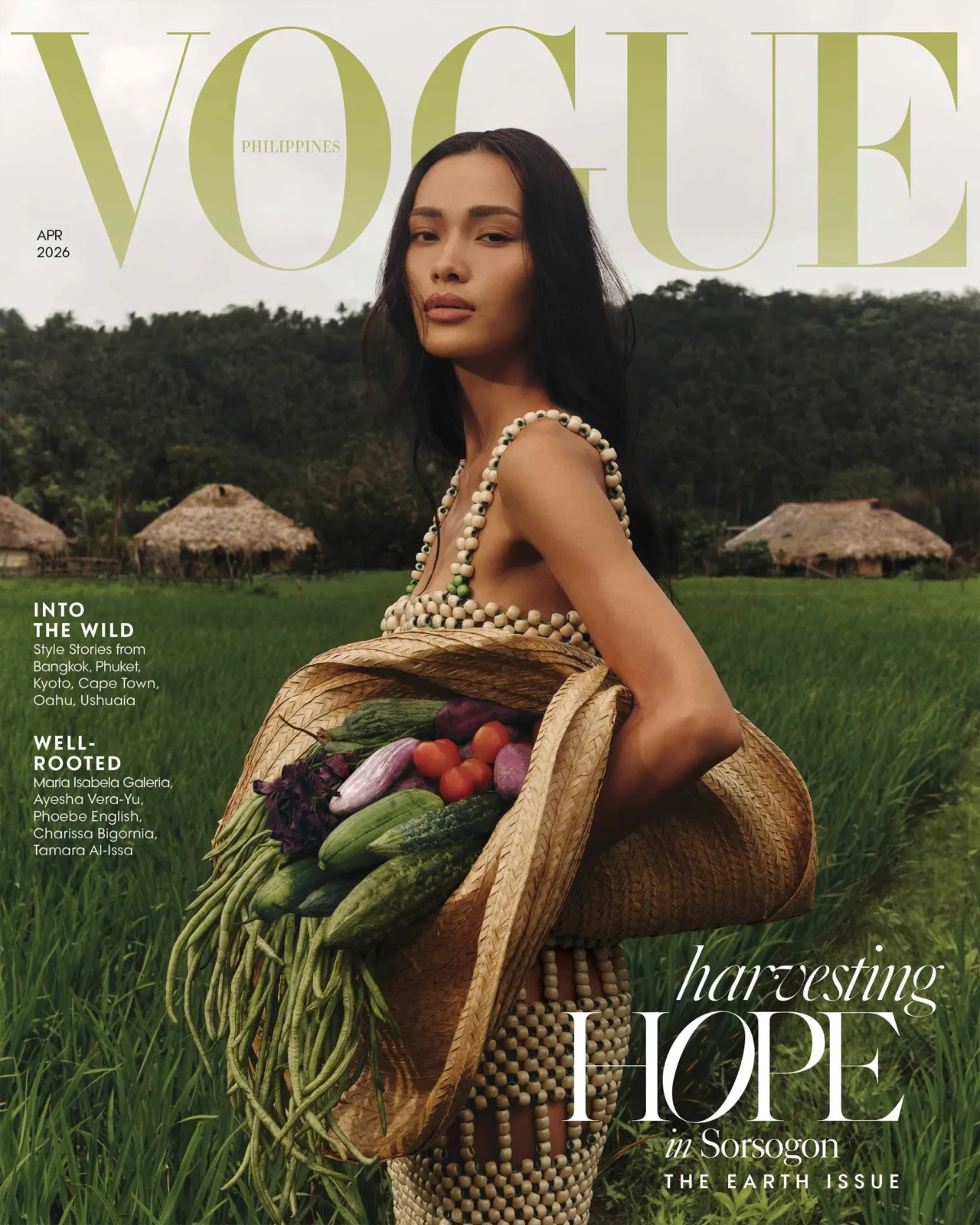
By LAWRENCE ALBA. Photographs by WIDE WALKER and ATIWAT SUKKHUM. (Textile & Fashion) Phuket Coordinator: Chanathinat Chaiyapoo. Uniform Artisan Collaborator: Ying Batikpaint. Mangosteen Dye Artisan: Ms. Wanna Tansakul. Styling & Casting: Mano Gonzales (Film) Producer: Clementine Comoy of Zoopraxi Studio. Director of Photography & Editor: Dominic Bekaert of Zoopraxi Studio. Styling & Casting: Mano Gonzales. Assistant Director: Kamonpan Pakpised. Glam Assist: Chutima Changpums.


