
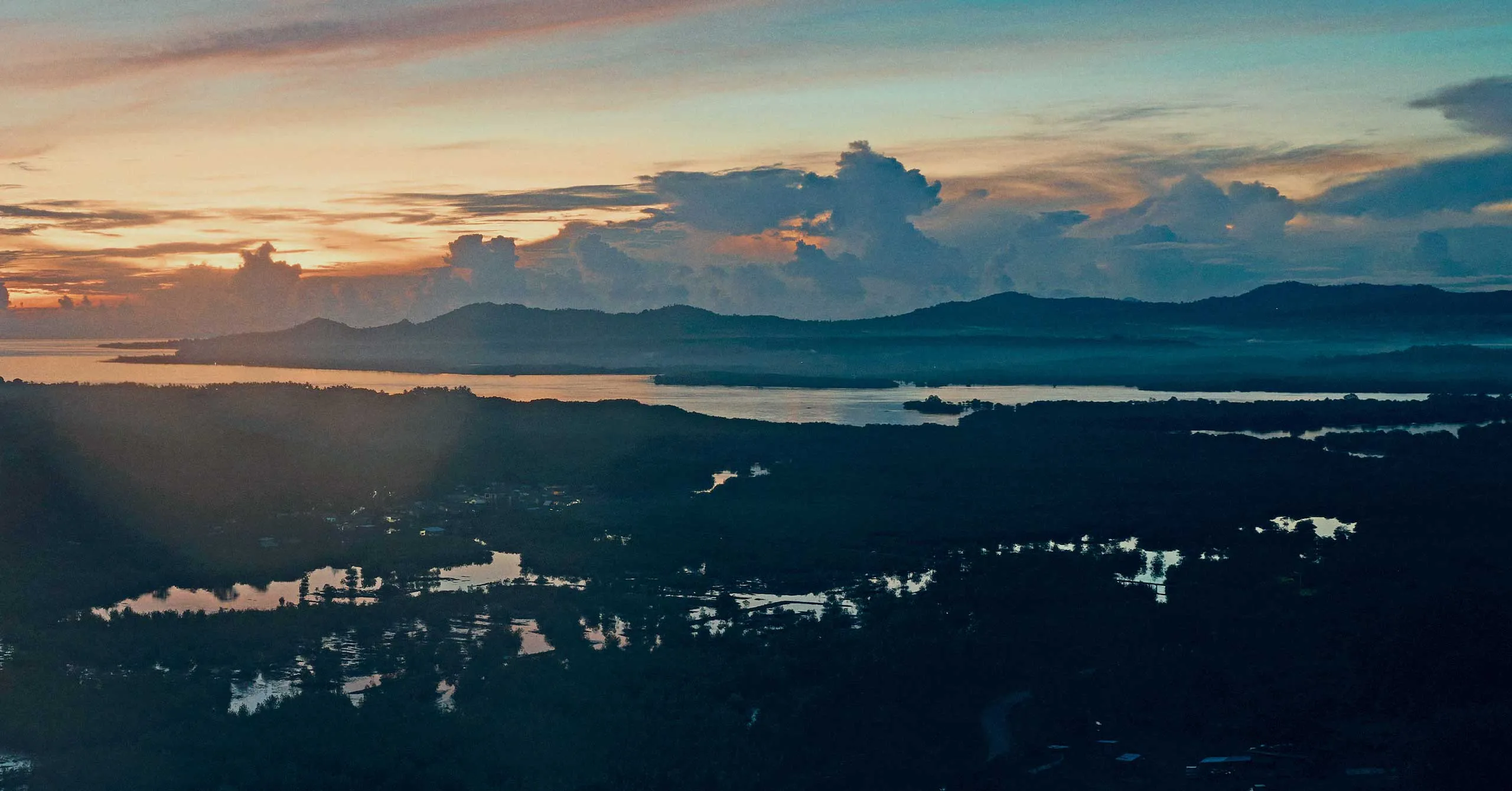
Gideon Lacso chronicles a dream fulfilled in Basilan.
The Philippines is an archipelago of mountains. Borne of the living earth, the enduring volcanism within the Ring of Fire, its islands not only rise above the waters, but touch the skies, allowing for sea-to-summit adventures. In my journey to over a hundred mountains in the country, I’ve had the privilege of experiencing such adventures, from Dinem Island in Itbayat, Batanes to Bud Bongao in Tawi-Tawi, with the volcanoes of Babuyan, the karst mountains of Palawan, and the bonsai forests of Dinagat in between.
But there’s one mountain that has long captured my imagination: Punu Ulayan, the highest peak in Basilan. Even as I was frolicking in the pink beach of Sta. Cruz Island off Zamboanga City, it loomed large as a part-beckoning, part-foreboding presence, one that I knew I would have to eventually pursue. And as I took the ferry to Tawi-Tawi during that memorable trip, I caught more glimpses of Basilan’s cloud-capped summits, awed by the island’s vastness and its rugged terrain.
Back then, however, the possibility of visiting Basilan, let alone climbing its mountains, seemed impossible. The notorious Abu Sayyaf was still at the height of its menace, with their kidnappings and terrorist attacks; tourism was virtually non-existent. At the time, there was barely any account of hiking in what is now known as the Bangsamoro region, and there were also very limited accounts of Basilan’s biodiversity, notwithstanding its lushness even from a distance. As a further testament to the island’s ecological value, a “Basilan National Park” had been declared as early as the American colonial period, even as their converted vast sections of the island into rubber plantations.
And yet, I held on to the hope that peace would come, and that one day I could set foot on Basilan’s mountains. That hope was grounded by my faith in the goodwill, and even friendship, within our peoples, despite our different backgrounds: a faith that was vindicated by my own journey. In 2013, I was able to climb Mount Ragang in Lanao del Sur (also received as an impenetrable mountain within MILF territory), and just last year, I climbed two of the venerable mountains of Sulu: Bud Dajo and Bud Tumantangis. What I have learned as a mountaineer is that you must have patience. For various reasons, I’ve also had to wait for some mountains to be open for hiking, like Halcon due to conflict, and Kanlaon due to volcanic activity. Surely, if we imbue our thinking with a sense of deep history, we can imagine that people must surely have climbed up Basilan’s mountains across its many eras, from sultanates and colonies past.
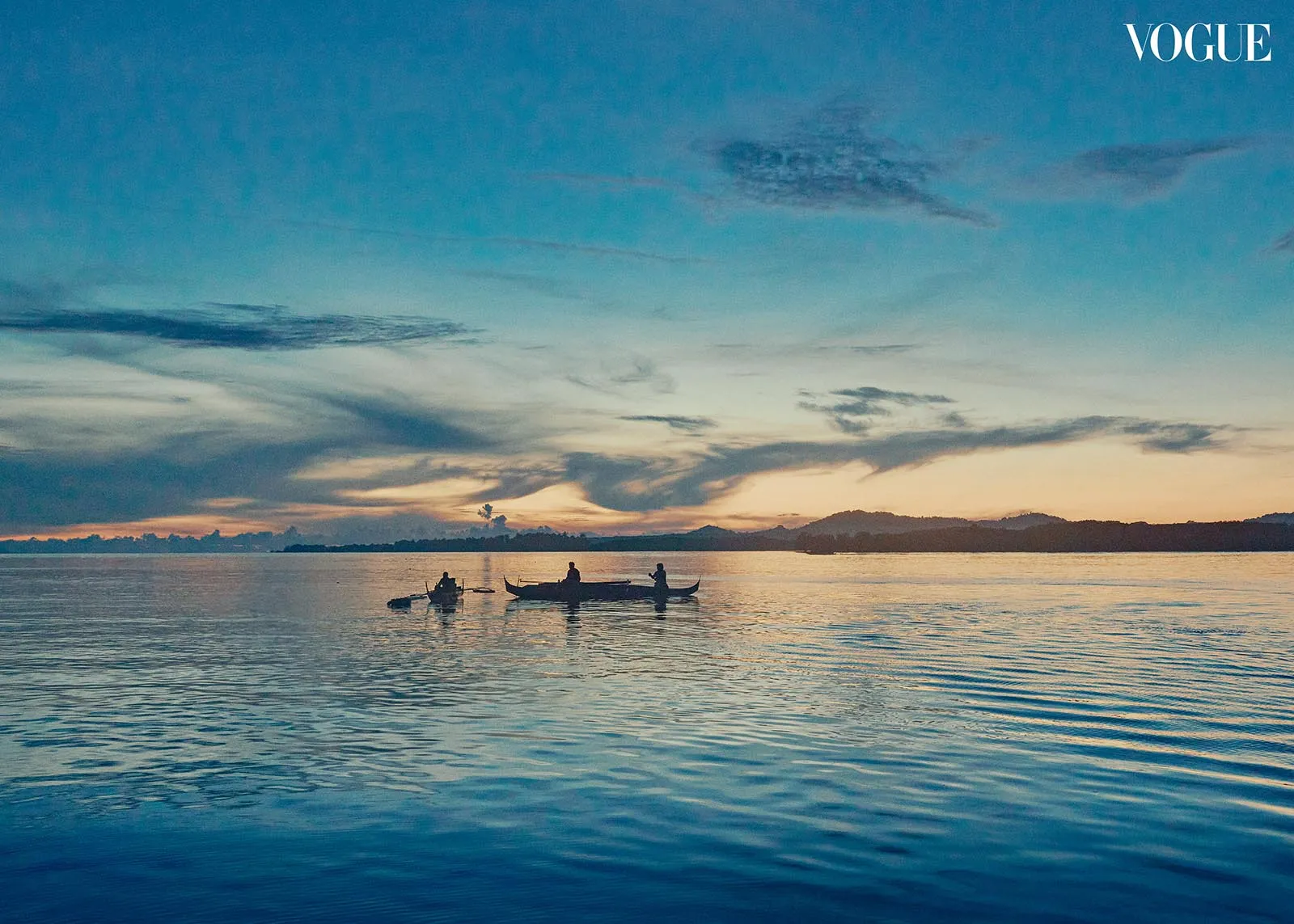
For Punu Ulayan (or Uleyan, depending on the transliteration), it took almost two decades. Even after tourism had started in Isabela City, the island’s interior remained off-limits to most anybody. The opportunity finally came this year, when the island was finally declared Abu Sayyaf free, and elections concluded peacefully, creating a relative, and hopefully-not-fragile, peace. The military leadership, which has been pursuing development as part of its peace-building measures, supported the initiative, just as they had when Sulu’s peaks opened last year.
To my delight, our proposal to climb Basilan Peak received overwhelming support, from national and Bangsamoro authorities to provincial and local officials, and the military itself. When I arrived on the island with fellow hikers John de Castro, Julius de Vera, and Charina Javier, we were met with warm enthusiasm. Ameen Camlian, a young councilor from Isabela City, joined us, and to our surprise, Governor Mujiv Hataman decided to come along as well. “We grew up here but never reached our own peak,” he said. “It will be a special day for Basilan.”
And so, on September 14, 2025, we left Isabela early in the morning and followed the island’s circumferential road past the municipalities of Lamitan to rendezvoused somewhere in Sumipit to commence the hike. The military, led by Brig. Gen. Frederick Sales and the battalions under his command, had already prepared for the hike.
“We grew up here but never reached our own peak. It will be a special day for Basilan.”
The starting elevation was almost 600 meters, and the first part was a logging road that led to secondary forest through a trail that was quite gradual and increasingly more verdant. By the time we reached 800 meters, the trees were mossier, and pitcher plants began to appear, a remarkable feature that I hope someday will be documented for the possibility of new subspecies or species.
At times, the trail was quite steep, but we were aided by the roots and branches in our ascent, and I was delighted to breach past the 971-meter mark (the official elevation) and measure altitudes around and perhaps 1,000 meters, the only point in the archipelago to reach such lofty heights. Overall, it took us just over 2.5 hours to reach the summit. But I can also say it took almost 20 years from dream to reality, making the moment even more meaningful, as we looked up at the ancient tree that parks the first summit and the gravesite of a village ancestor that marked the second, slightly higher one.
The convivial atmosphere continued throughout our brief bivouac at the summit, with Gov. Mujiv even holding a Facebook Live session, and everyone else celebrating the historic moment. The descent took us much faster, just over an hour, although it took others much longer, given the understandable challenges posed by the slippery trails. As we started going down, we could glance at the Sulu Sea and the coastlines of Lamitan from the foliage.
As we ended the day at the beautiful beach of Malamawi Island, I could only thank God for a dream come true and for the ascent, symbolic and real, for the people of Basilan, and for our country. Inshallah, peace will continue to reign and more people will discover, explore, and protect the once-inaccessible mountains in Basilan and elsewhere in our beautiful archipelago.

By GIDEON LACSO. Photographs by GABRIEL NIVERA.


