
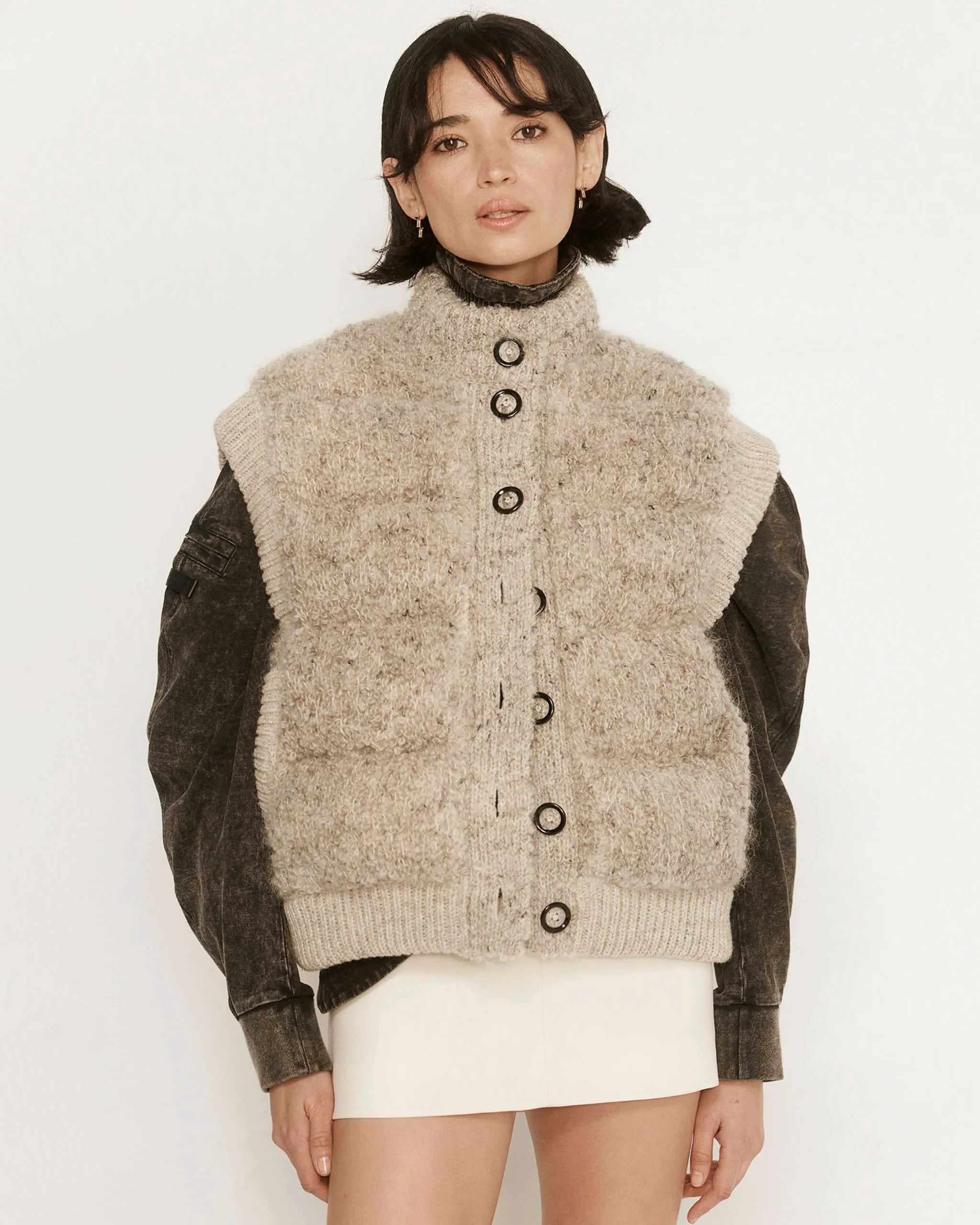
Carla Uriarte. Photographed by Steph Pedersen for the September 2025 Issue of Vogue Philippines
A new generation of Filipino-Australian creatives shares what it means to practice within a global landscape,
grounded in networks of creative communities.
How does movement shape work? More precisely, how does uprooting reshape perspectives that inform cultural production? After all, creative work is more than just a material practice, it’s a vessel for story, memory, and selfhood.
For many creatives, identity is not just a backdrop but a generative force. In this series, we spotlight a new generation of Filipino-Australian creatives making waves trans-national, and ask what it means to belong, to make, and to move. How do they navigate the local and the global? And what role does community play in their practice? These creatives are rooted in the Philippines by heritage, but their lives have been profoundly shaped by migration to Australia. Their work becomes a site of cultural negotiation, a marrying of worlds that is far more complex than simple duality. It is not just a blending of Filipino and Australian cultures, but a continual process of translating lived experience.
Australia itself, an island continent marked by deep Indigenous histories and rich multicultural realities, demands that meaning-making be both personal and collective. Creative practice here unfolds not only through the lens of the individual but also in relation to community, space, and place.
PAULINA PAIGE ORTEGA
Creative director and designer
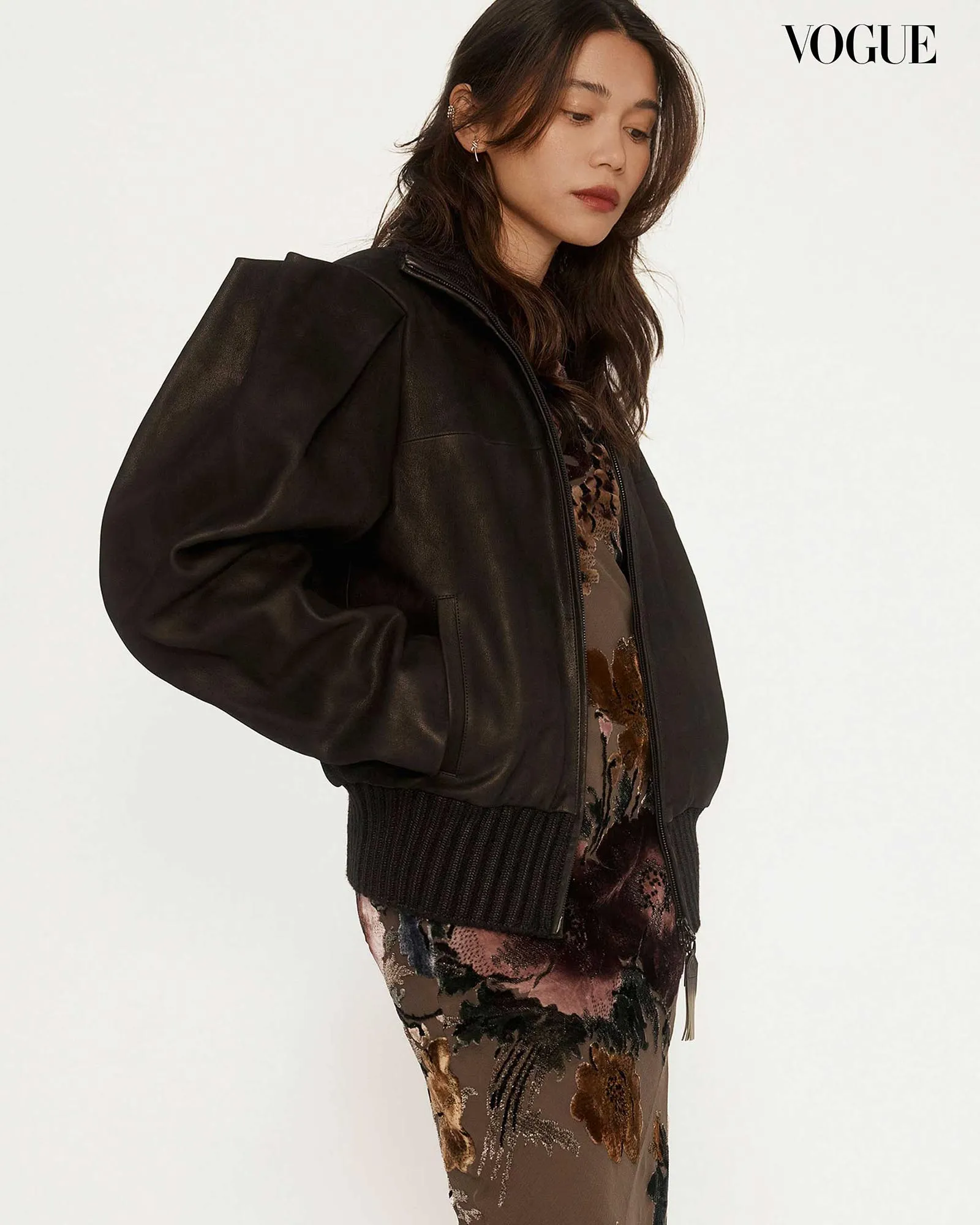
Creative director and designer Paulina Paige Ortega is at the top of her game. Her career has taken her through multinational agencies, boutique studios, and fashion retail, before she took the leap to build something of her own. Originally from Cebu, Paulina moved to Sydney and is now co-founder of Actuel, a creative studio launched with industrial and interior designer David Caon. Their work includes branding, editorial, and spatial design. “I decided I wanted to really build my roots in Sydney,” she shares about starting her own agency. “And I wanted to grow and expand my practice outside of myself. I think having a studio setup allows me to bring on board and provide opportunities for more talent.” For Paulina, leading a studio is about making space for connection, a conduit for collaboration. “I feel like the studio sort of allows me to reach other people more. It does feed into that idea of community and makes for a richer creative practice.” She brings this expansive vision to all facets of her work, including her recent role as a contributor for Vogue Philippines’ September issue. She is also the co-founder of Recess, a Manila-based sportswear label built around movement and functionality. “I think being creative is allowing space to follow your curiosity, and I think when you are creative professionally, you need to have that childlike curiosity survive.”
CARLA URIARTE
Multidisciplinary artist
For Carla Uriarte, making art is like breathing. A multidisciplinary artist whose practice spans painting, design, writing, and video, she says creative expression has always helped her feel centered. “I spent a lot of time trying to find my voice as an artist. It’s a lot of exploration to figure out your style. But now, I think, because I’ve been doing it for so long, you just kind of become your own.” When the Copenhagen label Ganni opened its first store in Australia, they tapped Carla to create artwork for the space and released a limited run of T-shirts with her art. She has also collaborated with esteemed Australian brands including Romance Was Born, Oroton, and Incu. Born in the Philippines and shaped by life in California and Madrid, Carla is now based in Sydney. There, you will most probably find her at Bar Freda’s in Darlinghurst, the nightclub she co-owns with her husband David Abram. The two-story venue is thoughtfully designed with a space carved out for everyone: an area for easy-drinking, banquettes for sharing tapas, and a floor for dancing. As a bar owner, she takes pride in being able to foster a space of belonging. “I think growing up culturally Filipino, you learn about community. You learn about family values. You learn about respect. And I think those things I have carried throughout my work. That feeling of just being open to sharing your experiences and creating a safe space for people, I think that’s very Filipino.”
MARIAM ELLA ARCILLA
Writer, curator, and events organizer
At Mariam Ella Arcilla’s home, everyone is welcome. From her redesigned 19th-century Victorian terrace in Redfern, Sydney, she runs Magenta House, a multi-modal space where people can co-learn, share meals, join workshops, or browse her impressive library and shop of zines, art books, and handicrafts. It’s a dynamic hub: a test kitchen for chefs, or a sanctum for ancestral herbal medicine-making. Born to a Filipino artist and a Singaporean flight stewardess, Mariam quips, “My whole being is basically art and placemaking.” Magenta House began with a modest idea: her doors were open to anyone who wanted to peruse her collection of over 2,000 books. “If you wanted a space to read, or to work, or to write, you could use our library. And I’d make some snacks.” At first, she says, neighbors stopped by. And then tourists started finding out about it. People stayed longer. And soon, it turned into long lunches and supper clubs. Mariam traces her love of hosting back to her childhood in Quezon City, where she grew up in her lola’s corner-store bakery. “Every morning, I’d wake up at 5 A.M., not to an alarm clock, but to the smell of pandesal,” she says. “My lola would be downstairs, busy cooking, and I would go and help in the bakery. We always had strangers coming in and out of the house, and she always taught me the importance of, you know, barkada.” Of community, friendship, and kinship.
NICOLE OLIVERIA
Fashion designer
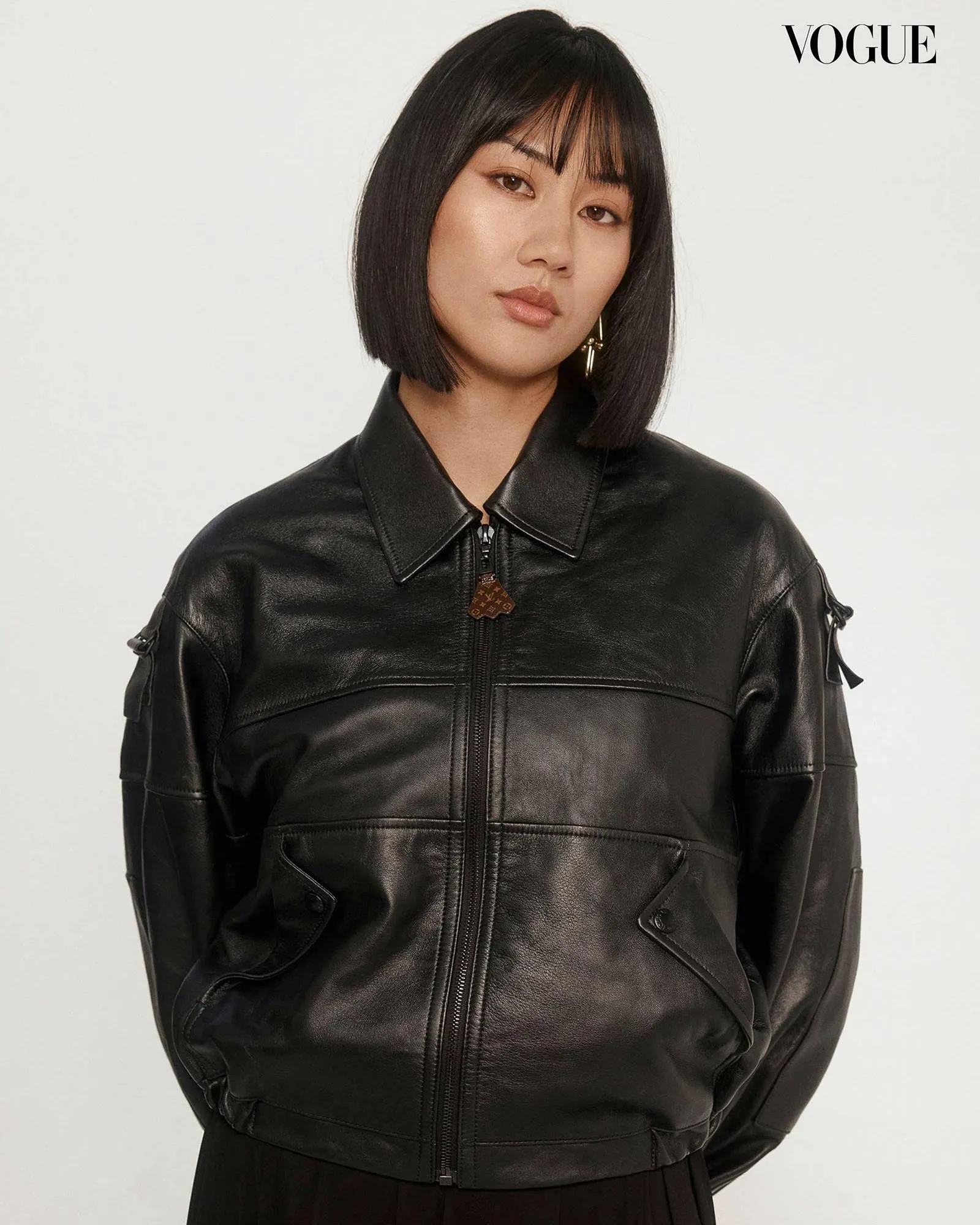
The daughter of two Filipino migrants, Nicole Oliveria grew up in a family of seamstresses. “My auntie would always make me clothes when I was growing up. I pretty much grew up in her little home studio, in her garage, and I just thought it was like a little wonderland of just bolts and fabric and pattern books.” The Sydney-based fashion designer’s work was notably showcased at the 100 percent West runway show in 2020. She is a proud local of Blacktown, an area known for its vibrant Filipino community, where carinderia-style eateries line the streets across the train station. “I grew up with a very strong sense of Filipino-ness because it was spoken at home, and all my friends in school were Filipinos. We culturally understood each other. So just seeing myself reflected in my community, I never felt othered, in a way.” Nicole’s work draws from a deep sense of place and belonging. Formally trained at the University of Technology Sydney, she breathes life into second-hand clothing and deadstock materials, grounding her designs in sustainability and storytelling. “Collage is a very big part of my process. I feel like I am a collage of different things, so I kind of start off from there. I piece together different fabrics. In Blacktown, there’s a lot of streetwear and sportswear, so I try to collage that with beautiful lace. And I try to tie in traditional Filipino fabrics with more modern fabrics. It’s just a way of me trying to make sense of who I am.”
MIKE ICO
Entrepreneur
Sydney’s Inner West is home to a long list of beloved cafes, and among the new wave are venues co-owned by Filipino-Australian business owner Mike Ico. With Superfreak, Soulmate Newtown, and Splash Coffee in Petersham under his belt (each known for excellent coffee and a menu of top-tier sandwiches), Mike has carved out a following in the local cafe scene. The funny thing is, his hospitality journey began quite literally by accident. “I was in a car park, and I was riding my friend’s Vespa, and I crashed into another friend’s car. I had to pay for it,” he laughs. To earn the money, he took a job in a warehouse, climbed the ladder, and did well, but felt an unfulfilled desire. “I kind of saw no purpose in going to work every day and not enjoying what you do. I thought I needed to make a change somehow.” He collaborated with a few friends to open a cafe and found success by developing an understanding of the local neighborhood. “We knew what the market wanted and needed in the area. At the time, people didn’t know what sourdough was yet, and avocado toast was not really a thing,” he says. But beyond good food and coffee, he believes the heart of the cafe is its atmosphere. “I think something that all of our venues share is a real sense of community and vibe.” He says this is built not only through the diners, but the people who work behind the bar. “Our staff retention is great. I’ve got people working with me now for almost 15 years.”
CLARK KENT KOGA
Brand strategist
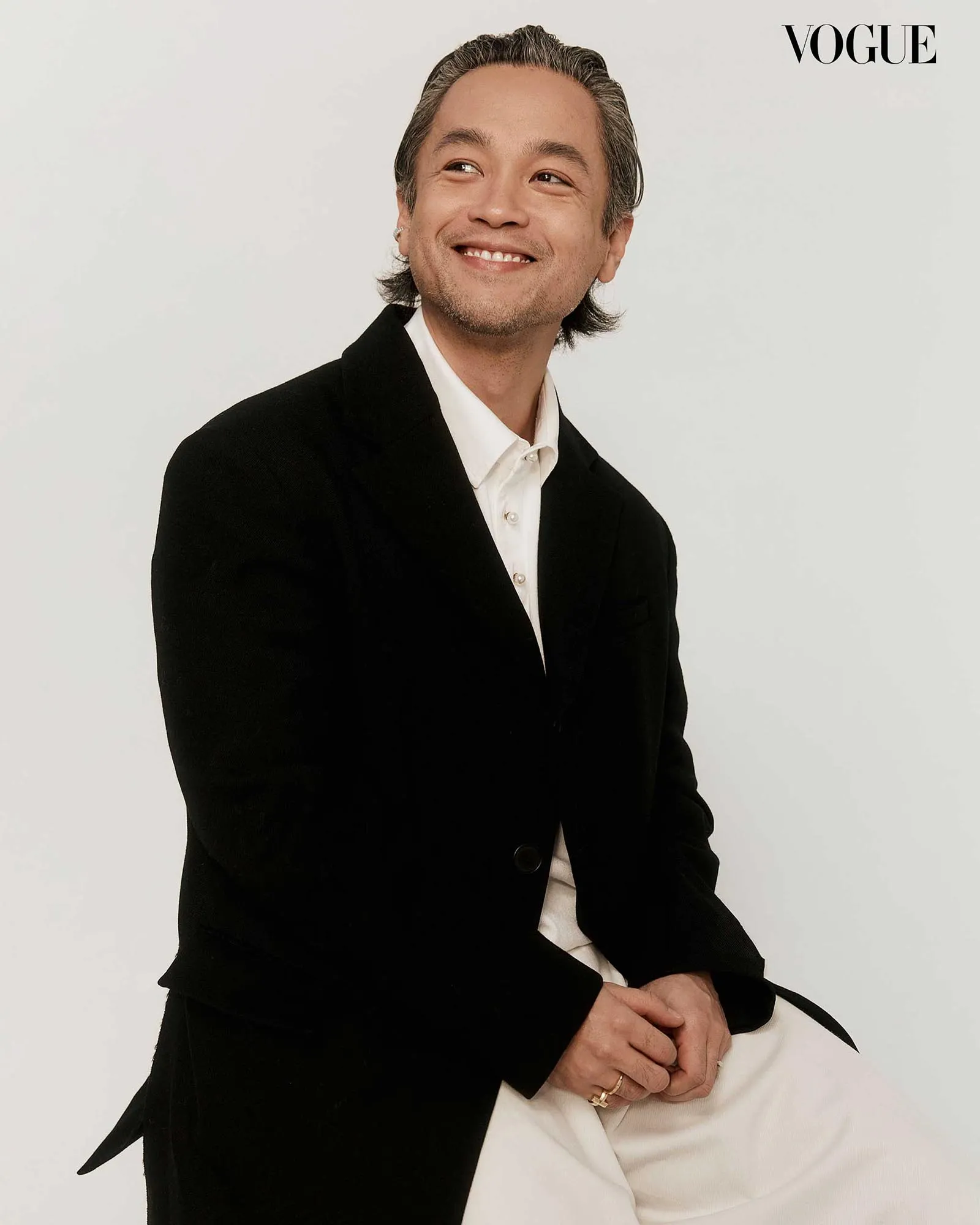
Clark Kent Koga, a brand strategist and founder of Department, a Sydney-based consultancy, is almost always dressed for work, even if he’s working remotely. “I like the potential of it,” he says. His work spans digital marketing, growth strategy, and data analytics, working with fresh brands like UP THERE, Emma Mulholland on Holiday, and Studio Henry Wilson. Before founding his firm, Clark worked at Google. Ready for change and propelled by the pandemic that forced businesses to rapidly pivot online, he found himself at the center of that shift. “I kind of rode that wave,” he says, starting by doing pro bono digital strategy for his local community. “The bookstore across the road, the cafe that my friend owns, the stores I liked to buy from, these places were not getting any foot traffic. So, I thought, how can we figure this out? And it started from there.” One of his favorite projects, however, was helping launch the app for Chargrill Charlie’s, a beloved Aussie charcoal chicken chain whose street cred is in the line of “if you know, you know.” “The nature of my work is that I can sort of forecast. If a business wants to hit a certain sales target, I work backward to help figure out the math of that. But it’s not just logic. It’s kind of like dating,” he says. “There must also be a shared understanding of the brand and what the brand is meant to do.” For Clark, strategy involves not just numbers, but intuition and connection. And maybe a sharp outfit, too.
CARLOS MANGUBAT
Fashion stylist
Carlos Mangubat has carved out a place for himself in the fashion industry across both Australia and the Philippines, with his styling work featured in the pages of Vogue, Harper’s Bazaar, Elle, GQ, and more. Carlos’s story began in Baguio, Philippines. His family migrated to Australia in 1988, and he spent his childhood in Wangaratta, a rural town in Victoria. “I used to read GQ when I was young and always wanted to be a part of that world,” he recalls. At 16, he moved to Melbourne, positioning himself closer to the creative scene he long admired. He went on to study fashion at RMIT University and worked his way up the mythical fashion ladder, working as a volunteer, an assistant, and an intern before landing high-fashion collaborations. “A memorable moment in my career was realizing that these were not just dreams anymore, it was my reality. As a wide-eyed country kid, I never thought I would have the chance to contribute to magazines of this caliber.” When asked about access and barriers in the industry, he reflects, “I think that it’s not necessarily just about where you’re from, it’s about what you do with the opportunities you get when you’re an adult. As Filipino people, we’re not just dictated by our backgrounds. Not anymore, anyway.”
See more of this story in the Anniversary Issue of Vogue Philippines, available at the link below.
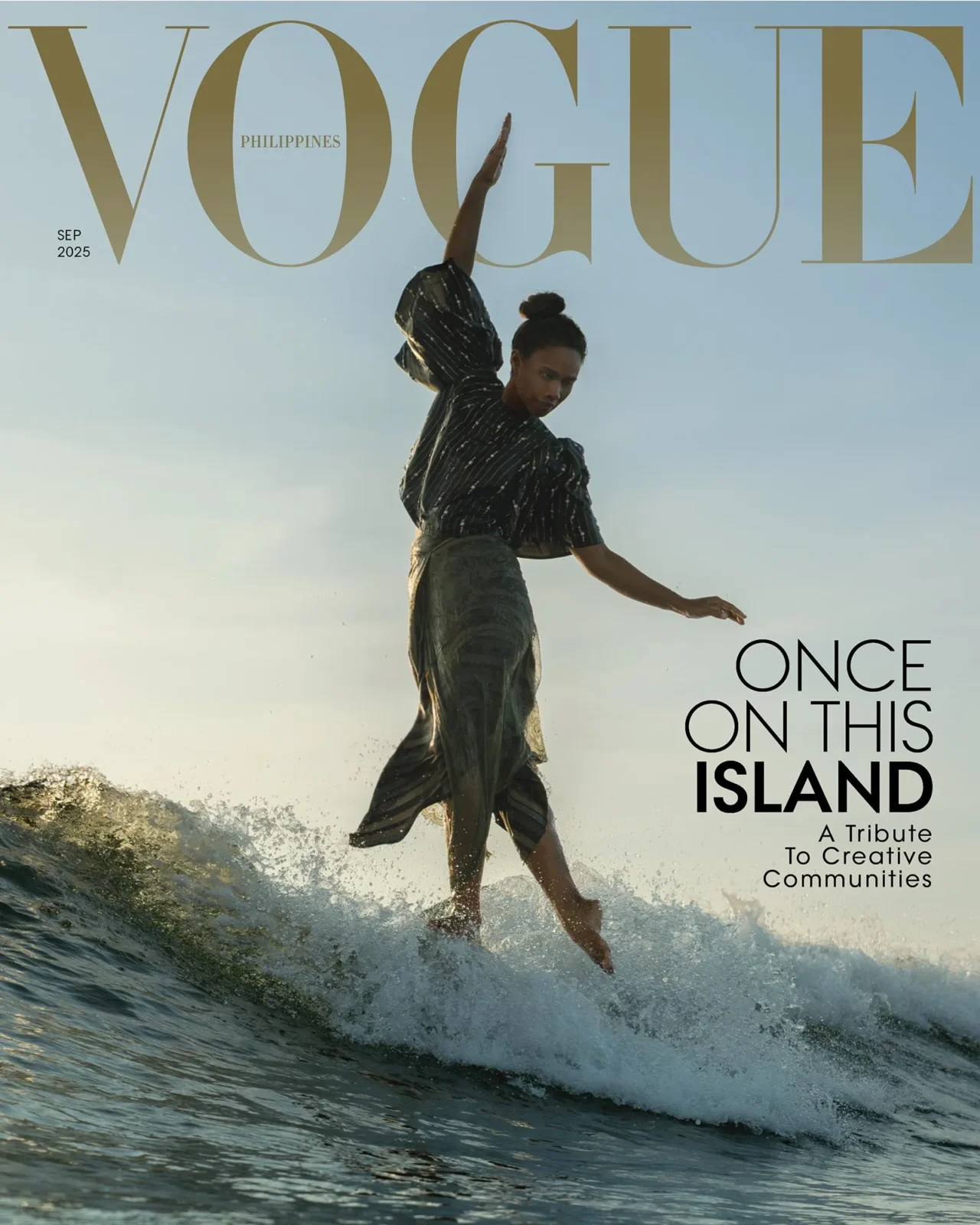
By KARA ORTIGA. Photographs by STEPH PEDERSEN. Styling by MIGUEL URBINA TAN. Styling: Miguel Urbina Tan. Makeup: Monique Jones. Hair: Kyye. Producer: Lauren Barge. Digital Operator: Brock McFadzean. Lighting Assistant: Stelios Stylianou. Videographer: Nawealth Keopaseuth. Videographer Assistant: Simon Riel. Fashion Assistant: Liat Swartz. Makeup Assistant: Sonia Yunn. Assistant Producer: Nicole Yagdulas.
- Over 200 Filipino Creatives, Spread Across Decades of Behind-the-Scenes Work, Unite to Share the Frame
- How Filipino Creatives in Berlin Are Shaping Its Contemporary Scene
- The Mahal Kita Crue Is Building a Home for Filipino Creativity in Copenhagen
- Four Pioneers of Philippine Fashion Image-Making Look Back on an Era They Helped Define


